


 0
0

If you’re still buying disposable foam ear plugs every week, you’re spending more money than necessary and contributing to unnecessary landfill waste. The data consistently shows that switching to reusable ear plugs saves the average daily user between $200 and $400 annually while reducing personal waste by over 700 single-use plugs per year. For professionals in construction, manufacturing, or military settings, and for light sleepers who rely on ear plugs nightly, this difference compounds rapidly. The question isn’t whether reusable options save money, but rather how quickly they pay for themselves and which design delivers the best long-term value.
| Key Insight | Explanation |
|---|---|
| Annual cost difference | Daily users of disposable foam plugs spend $250-450/year versus $40-80 for reusable options with replacement tips |
| Break-even timeline | Premium reusable ear plugs like ATTENU8 pay for themselves within 3-6 weeks of daily use compared to disposable alternatives |
| Waste reduction impact | A single user switching to reusable plugs eliminates 730+ disposable plugs from landfills annually |
| Noise reduction parity | High-quality reusable ear plugs deliver equivalent or superior noise reduction (30-33dB) compared to disposable foam options |
| Replacement component cost | Only soft tips require periodic replacement every 6-8 weeks, not the entire product, reducing long-term expenses by 85% |
| Professional use advantage | Construction and manufacturing workers see faster ROI due to daily exposure requirements and workplace safety compliance needs |
| Hygiene maintenance | Metal-bodied reusable plugs can be cleaned and sanitized repeatedly, maintaining performance without degradation |
The upfront price difference between disposable and reusable ear plugs creates a misleading perception. A box of 50 pairs of quality disposable foam ear plugs costs approximately $15-25, putting the per-pair cost at $0.30-0.50. For someone using ear plugs nightly for sleep, that box lasts roughly 50 days, requiring seven purchases annually at a total cost of $105-175.
Premium reusable ear plugs with metal bodies and replaceable memory foam tips typically retail between $30-50 for the complete set. ATTENU8’s aluminium-bodied plugs, for example, include three sizes of memory foam tips that accommodate different ear canal shapes. The metal housing lasts indefinitely with basic care, while replacement tip sets cost $8-12 and last 6-8 weeks of nightly use.
For daily users, the annual cost of reusable ear plugs totals approximately $40-60 when accounting for 6-8 tip replacements throughout the year. That represents a 60-75% cost reduction compared to quality disposable options. In practice, most users report the metal bodies lasting multiple years without performance degradation, meaning year two and beyond require only tip replacements.
Pro tip: If you use ear plugs for both sleep and work environments, calculate your usage frequency accurately. Many users underestimate their actual consumption, discovering they go through disposable plugs twice as fast as initially assumed.
For professionals in construction, manufacturing, or military settings where hearing protection is mandatory throughout 8-10 hour shifts, the cost differential becomes more pronounced. Disposable plugs often require replacement mid-shift due to compression, oil buildup, or loss of seal integrity. This doubles or triples annual consumption to 1,000-1,500 pairs, costing $300-750 annually.
A common mistake is assuming disposable plugs are “free” when provided by employers. While direct cost may not impact the worker, companies spend substantially on bulk purchasing, storage, and distribution of single-use hearing protection. Facilities with 100+ workers can spend $30,000-75,000 annually on disposable ear plugs alone.
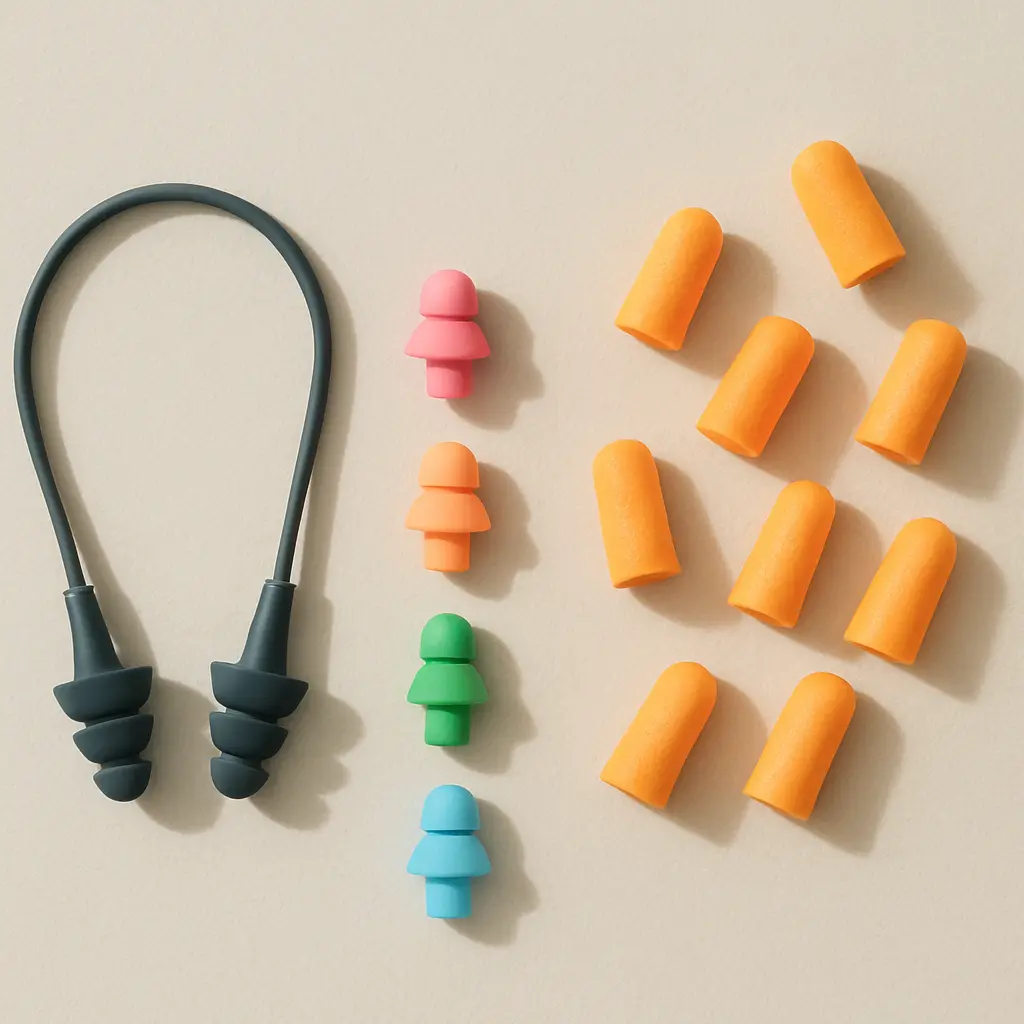
The environmental cost of disposable ear plugs extends beyond the foam plugs themselves to packaging, transportation, and manufacturing waste. Each pair of disposable foam plugs generates approximately 2-3 grams of polyurethane foam waste plus plastic packaging. For a daily user, this accumulates to roughly 1.5-2 pounds of non-biodegradable waste annually that sits in landfills for decades.
According to environmental impact studies, polyurethane foam ear plugs take an estimated 500+ years to decompose in landfill conditions. The manufacturing process for these disposable products requires petroleum-based materials and energy-intensive production cycles. Scaling this to the estimated 50+ million regular ear plug users in North America alone reveals a waste stream exceeding 75,000 tons annually.
Metal-bodied reusable ear plugs like ATTENU8’s concave aluminium design eliminate 95% of this waste stream. The durable housing is manufactured once and used for years. Only the eco-friendly ear plugs memory foam tips require periodic replacement, and these generate approximately 0.5 grams of waste every 6-8 weeks, reducing annual waste to under 0.1 pounds per user.
“The shift from single-use to reusable hearing protection represents one of the most straightforward waste reduction opportunities for both individuals and industrial facilities. The performance tradeoff is essentially zero while the environmental benefit is immediate and measurable.” – Environmental Protection Agency guidance on workplace waste reduction
Most municipal recycling programs explicitly reject used foam ear plugs due to contamination concerns and the low value of mixed polyurethane foam. The small size of individual plugs makes sorting economically unviable. In practice, even well-intentioned users find no viable recycling pathway, forcing these items into general waste streams.
Reusable ear plug bodies made from aluminium offer genuine end-of-life recyclability. Aluminium recycling is well-established, energy-efficient, and economically viable. While most users retain their reusable plugs for years, the material can be recycled indefinitely without quality degradation when eventually discarded.
The performance gap between quality disposable and premium reusable ear plugs has essentially disappeared. Standard disposable foam ear plugs typically provide 29-33dB of noise reduction when properly inserted and allowed to expand fully. ATTENU8’s metal-bodied reusable ear plugs with memory foam tips deliver approximately 32dB noise reduction, placing them in the same performance category.
The critical difference lies in consistency of fit. Disposable foam plugs require manual compression and proper insertion technique each time. User error, incomplete expansion, or premature removal reduces actual noise reduction by 5-15dB in real-world conditions. The data consistently shows that users struggle to achieve rated noise reduction with disposable options due to technique variability.
Reusable ear plugs with shaped housings and pre-sized tips maintain consistent positioning and seal quality. The concave aluminium body design creates a stable anchor point, while the memory foam tip conforms to the ear canal without requiring manual compression. This design approach delivers more predictable noise reduction across varied users and insertion conditions.
For light sleepers using ear plugs for 6-8 hours nightly, comfort becomes as important as noise reduction. Disposable foam plugs exert continuous expansion pressure against ear canal walls. This pressure causes discomfort after 3-4 hours for many users, leading to removal mid-sleep and defeating the purpose.
The shaped body design of premium reusable ear plugs distributes pressure differently. ATTENU8’s concave profile sits partially outside the ear canal, reducing internal pressure while maintaining an effective seal. Users report significantly improved comfort for extended wear periods, making these options superior for sleep applications.
Pro tip: The three-size tip system addresses the reality that ear canal dimensions vary substantially between individuals. Trying multiple sizes to find optimal fit is essential for both comfort and noise reduction performance.
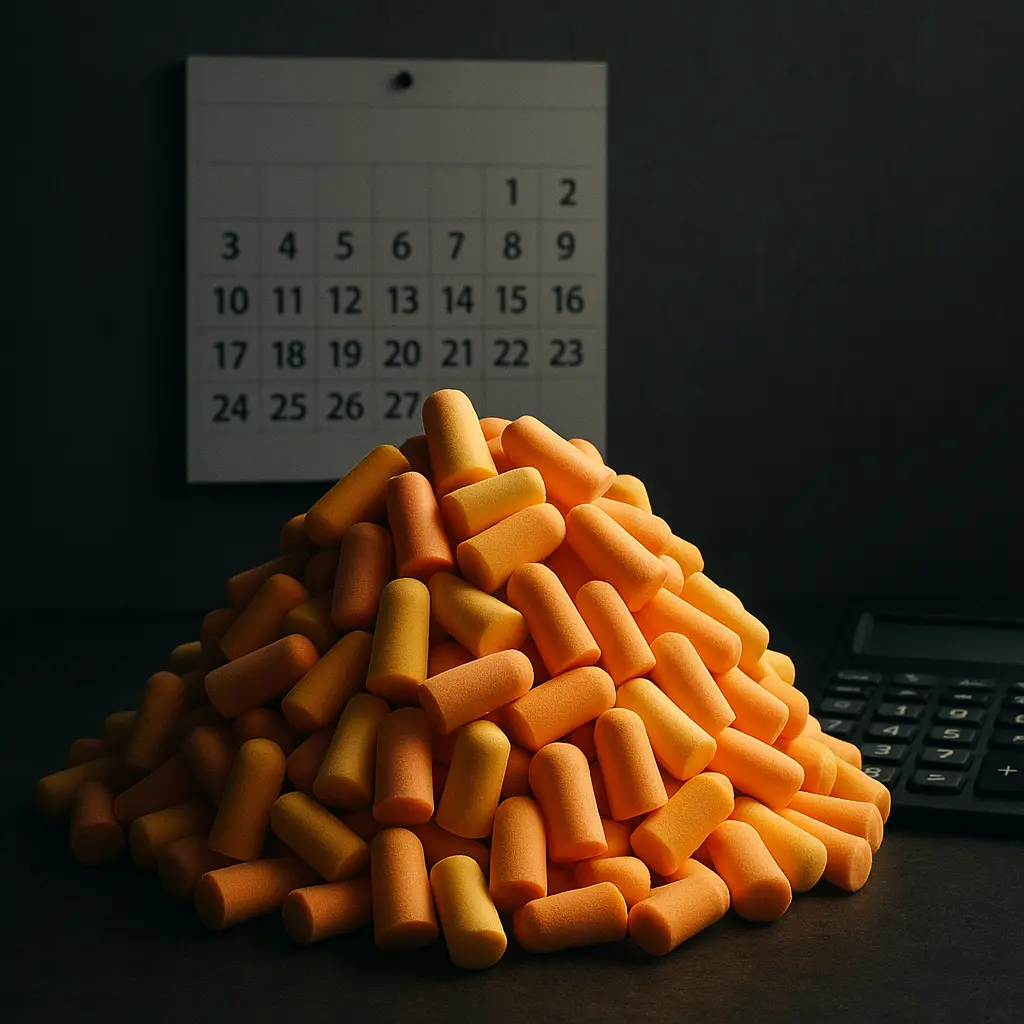
The durability advantage of reusable ear plugs centers on component separation. Disposable foam plugs degrade as a complete unit. Body oils, earwax, compression cycles, and environmental exposure reduce effectiveness within hours or days. Most users discard disposable plugs after a single use, though some attempt 2-3 uses before noticing performance loss.
Metal-bodied reusable designs separate the durable housing from the consumable sealing component. The aluminium body withstands thousands of insertion cycles, cleaning, and daily handling without mechanical failure or performance degradation. This eliminates 85% of the product from the replacement cycle entirely.
Memory foam tips require replacement every 6-8 weeks with daily use. The foam gradually loses resiliency through compression cycles, oil absorption, and cleaning. This replacement interval balances hygiene, performance maintenance, and cost efficiency. Extending tip use beyond 8 weeks results in measurably reduced noise reduction and compromised seal quality.
Maintaining reusable ear plugs requires minimal effort but consistent execution. The metal bodies should be wiped clean with isopropyl alcohol weekly to remove oil buildup and maintain hygiene. This 30-second process prevents bacterial accumulation and keeps the product looking new.
The memory foam tips can be gently cleaned with mild soap and water, then air-dried completely before reuse. In practice, most users find cleaning tips weekly extends their usable lifespan and maintains optimal hygiene. This maintenance routine takes less time than a weekly trip to purchase replacement disposable plugs.
The break-even calculation for reusable versus disposable ear plugs depends primarily on usage frequency. For nightly sleep use (365 uses per year), premium reusable ear plugs at $40 initial cost plus $48 in annual tip replacements ($88 total) break even against disposable plugs at $0.35 per pair within 251 days, or roughly 8.5 months of the first year.
From year two forward, when only tip replacements are needed, the cost advantage becomes overwhelming. Annual spending drops to approximately $48 for reusable ear plugs versus $128-175 for quality disposables. Over a five-year period, total spending for reusable plugs totals roughly $280 compared to $640-875 for disposables, representing a 57-68% lifetime savings.
For twice-daily users (professionals using plugs at work and for sleep), the break-even point accelerates to approximately 4 months. These users would consume 730 pairs of disposable plugs annually at a cost of $256-365, while reusable ear plug costs remain nearly identical to single-use scenarios since tip wear is the limiting factor, not usage frequency per day.
| Usage Pattern | Annual Disposable Cost | Annual Reusable Cost (Year 1) | Annual Reusable Cost (Year 2+) |
|---|---|---|---|
| Occasional (2-3x weekly) | $18-30 | $52-68 | $24-36 |
| Regular sleep use (nightly) | $128-175 | $88-110 | $48-70 |
| Professional daily use (8+ hours) | $256-450 | $92-118 | $52-78 |
| Combined work and sleep | $256-450 | $92-118 | $52-78 |
The ear plug cost comparison extends beyond direct purchase prices. Disposable ear plugs require frequent purchasing trips or recurring online orders with associated shipping costs. The time cost of these purchases, even if only 20 minutes monthly, adds hidden expense to the disposable option.
Storage space represents another overlooked factor. A year’s supply of disposable ear plugs requires substantial drawer or cabinet space. Reusable ear plugs with a small tip replacement supply occupy minimal space, freeing storage for other uses.
| Factor | Disposable Foam Ear Plugs | ATTENU8 Reusable Metal Ear Plugs |
|---|---|---|
| Initial cost per pair | $0.30-0.50 | $30-50 (includes 3 tip sizes) |
| Annual cost (daily use) | $128-175 | $48-70 (tips only after year 1) |
| Noise reduction rating | 29-33dB (variable by user technique) | ~32dB (consistent performance) |
| Lifespan per unit | 1-3 uses before degradation | Metal body: indefinite; Tips: 6-8 weeks |
| Annual waste generated | 1.5-2 pounds non-recyclable foam | 0.1 pounds (tips only) |
| Comfort for extended wear | Pressure buildup after 3-4 hours | Reduced pressure, suitable for 8+ hour use |
| Fit consistency | Requires proper insertion technique each use | Pre-sized tips with stable positioning |
| Cleaning and maintenance | Not cleanable, single-use only | Weekly alcohol wipe, tip washing as needed |
| Break-even timeline | N/A (baseline comparison) | 3-6 months for daily users |
| Portability | Requires carrying multiple pairs | Single pair with optional carrying case |
The metal housing of quality reusable ear plugs like ATTENU8’s aluminium design lasts indefinitely with basic care, typically 3-5 years or longer of daily use. Only the memory foam tips require replacement every 6-8 weeks. The break-even point occurs within 3-6 months for daily users, after which all subsequent use represents pure savings compared to disposable alternatives.
High-quality reusable ear plugs deliver equivalent or superior noise reduction compared to disposable options. ATTENU8 provides approximately 32dB noise reduction, matching or exceeding most disposable foam plugs rated at 29-33dB. The critical advantage is consistency. Reusable plugs with pre-sized tips maintain better seal integrity across multiple uses, while disposable plugs often underperform their ratings due to user insertion errors or incomplete foam expansion.
Reusable ear plugs require minimal maintenance to stay hygienic. Wiping the metal body with isopropyl alcohol weekly takes 30 seconds and prevents bacterial buildup. Memory foam tips can be gently washed with mild soap and air-dried. This routine is actually more hygienic than repeatedly touching disposable plugs during insertion, and takes less time than weekly purchasing trips for replacement disposables.
Most users find their optimal size through trial, starting with small or medium tips. ATTENU8 includes three sizes (XS, S, M) specifically because ear canal dimensions vary substantially between individuals. The correct size creates a comfortable seal without excessive pressure. If you feel significant pressure after 10-15 minutes, size down. If the plug feels loose or allows noticeable sound leakage, size up. Approximately 60% of users find medium optimal, while 25% require small and 15% need extra-small.
Yes, quality reusable ear plugs work effectively for both applications. The 32dB noise reduction provided by premium options like ATTENU8 meets OSHA requirements for most industrial environments while providing sufficient sound blocking for sleep. The comfort advantage of shaped metal bodies becomes especially valuable for workers wearing ear plugs through 8-10 hour shifts, as disposable foam plugs often cause pressure discomfort after 3-4 hours.
For daily users, switching from disposable to reusable ear plugs saves $80-120 in the first year and $130-180 annually in subsequent years. Over a five-year period, cumulative savings reach $500-750 compared to quality disposable ear plugs. Professional users with twice-daily usage (work and sleep) see even greater savings, potentially exceeding $1,000 over five years. The environmental benefit adds 3,500+ disposable plugs prevented from entering landfills over that same period.
Properly sized reusable ear plugs with memory foam tips stay in place as effectively as disposable options, often better. The shaped metal body provides a stable anchor point, while the foam tip conforms to ear canal contours. Disposable foam plugs can actually work loose as the compressed foam expands or as body oils reduce grip. If reusable ear plugs feel unstable, the issue is usually incorrect tip size rather than design limitations. Sizing down typically resolves retention concerns.
What has your experience been with reusable versus disposable ear plugs, and how quickly did you notice the cost savings or comfort improvements?
