


 0
0

Partner snoring disrupts sleep for an estimated 40% of adults sharing a bed, creating a cycle of frustration, exhaustion, and strained relationships. The solution isn’t just about tolerating the noise. It’s about implementing proven strategies that address both the acoustic problem and the sleep environment. This guide walks through practical, tested approaches to help you sleep through snoring without sacrificing comfort or intimacy.
| Key Insight | Explanation |
|---|---|
| Snoring frequency matters more than volume | Irregular, intermittent snoring disrupts sleep cycles more than consistent white noise, triggering constant micro-awakenings |
| Memory foam ear plugs outperform wax and silicone | Memory foam creates a superior acoustic seal and adapts to ear canal shape, delivering 30-32dB reduction versus 20-25dB from other materials |
| Pre-sleep timing creates a critical advantage | Falling asleep 15-30 minutes before your snoring partner reaches deep sleep gives you a head start in achieving stable sleep cycles |
| Dual-layer sound management works best | Combining ear plugs with low-volume white noise masks irregular snoring patterns more effectively than either solution alone |
| Reusable metal-bodied ear plugs reduce long-term costs | Quality reusable ear plugs with replaceable foam tips cost less over 12 months than disposable options while maintaining consistent performance |
| Side sleeping on the opposite side minimizes vibration | Sleeping on your side facing away from your partner reduces both direct sound transmission and mattress vibration from snoring |
| Partner snoring often indicates treatable sleep disorders | Persistent loud snoring with breathing pauses suggests sleep apnea, which affects 22 million Americans and requires medical intervention |
Snoring creates a uniquely disruptive acoustic pattern. Unlike consistent environmental noise such as traffic or air conditioning, snoring varies in volume, frequency, and rhythm. This unpredictability prevents your brain from habituating to the sound.
Research from the National Sleep Foundation indicates that irregular noise patterns interrupt sleep architecture by triggering alertness responses. Each volume spike in snoring can pull you from deep sleep into lighter stages, even if you don’t consciously wake. Over time, this fragmentation accumulates into significant sleep debt.
The proximity factor amplifies the problem. Snoring typically ranges from 50-100 decibels at the source, equivalent to a vacuum cleaner or lawn mower. When the source is 12-24 inches from your ears, standard bedroom acoustics do nothing to attenuate the sound. The data consistently shows that people sleeping next to snorers lose an average of 49 minutes of sleep per night.
Pro tip: Track your actual sleep quality for one week using a basic sleep app before implementing solutions. This baseline helps you measure which interventions actually improve your rest versus those that just feel like they should work.
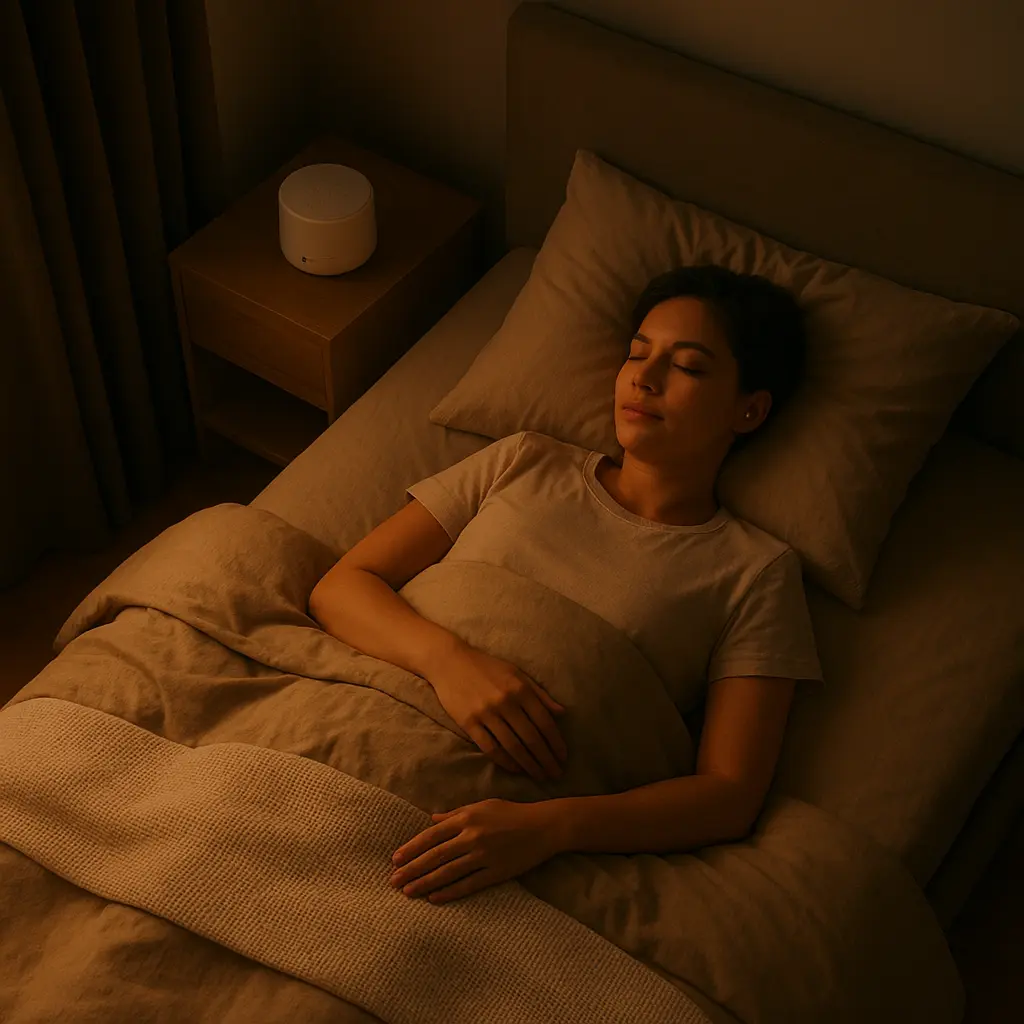
Not all ear plugs deliver the noise reduction needed to block snoring effectively. The critical specification is the Noise Reduction Rating (NRR), measured in decibels. For snoring, you need a minimum 30dB reduction, preferably 32dB, to bring typical snoring volume below the threshold that disrupts sleep.
Memory foam ear plugs provide superior acoustic performance for snoring. The foam compresses during insertion, then expands to create a complete seal within the ear canal. This eliminates sound leakage that occurs with rigid materials.
Wax and silicone ear plugs sit in the outer ear rather than the canal, blocking only 20-25dB. This reduction isn’t sufficient for moderate to loud snoring. In practice, users report still hearing snoring clearly through these materials.
Flanged silicone designs offer better insertion depth but create pressure points that become uncomfortable after 2-3 hours. For all-night wear, this discomfort forces removal, defeating the purpose.
Disposable foam ear plugs cost approximately $0.25-0.50 per pair and lose effectiveness after one use. The foam degrades, oils from your ears reduce compression, and the material becomes less hygienic. Using them nightly costs $90-180 annually.
Premium reusable ear plugs with metal bodies, like ATTENU8, use replaceable memory foam tips that maintain acoustic performance. The aluminum or steel body provides structural integrity while the foam tips compress and seal effectively. Replace only the tips every 6-8 weeks for approximately $30 annually in ongoing costs.
The practical advantage extends beyond cost. Reusable designs include size options (XS, S, M tips) to match your specific ear canal dimensions. A proper fit increases noise reduction by 3-5dB compared to one-size-fits-all disposables. That difference determines whether you hear muffled snoring or sleep through it completely.
Pro tip: Test ear plugs during daytime naps first. This lets you assess comfort and noise reduction without the pressure of needing to sleep through the night immediately. Adjust size and insertion depth based on these trial runs.
Blocking noise addresses only one variable in sleep quality. Temperature, light exposure, and bedding choices interact with acoustic solutions to determine overall effectiveness.
Room temperature affects how deeply you sleep and how easily snoring wakes you. The optimal range is 60-67°F (15-19°C). Higher temperatures keep you in lighter sleep stages where noise disturbances have greater impact.
Separate bedding allows temperature customization when partners have different preferences. Your snoring partner might prefer warmth, but you need cooler conditions to achieve deep sleep that’s more resistant to noise disruption.
Even small amounts of ambient light reduce melatonin production and make noise-related awakenings more likely. Blackout curtains or shades eliminate streetlights, moonlight, and early sunrise that compound snoring disruption.
Remove or cover LED indicators from electronics. These small light sources create enough stimulation to prevent your brain from fully disengaging, making snoring noises more noticeable.
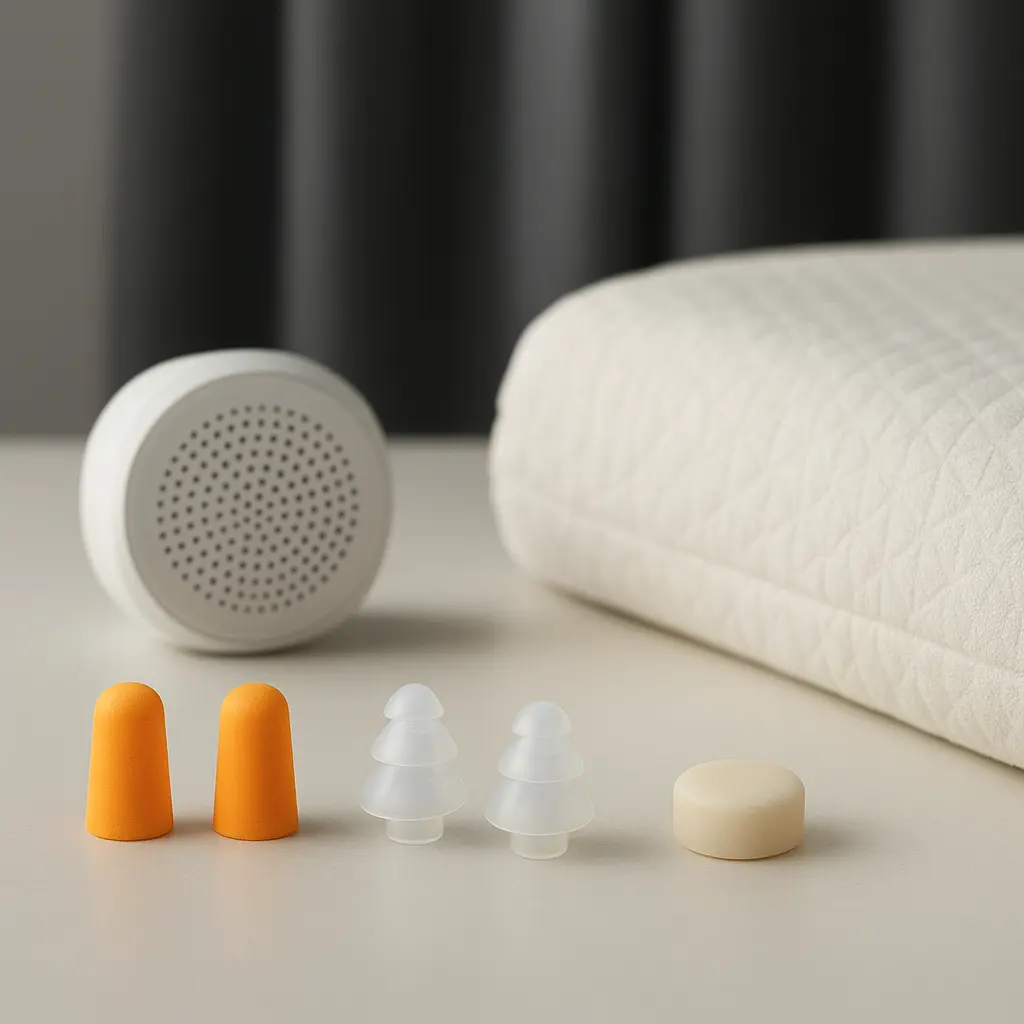
White noise machines create consistent ambient sound that masks irregular snoring patterns. The key is matching the frequency spectrum and volume to your specific situation.
Pure white noise contains all audible frequencies at equal intensity, creating a static-like sound. Pink noise reduces higher frequencies, producing a softer sound similar to rainfall. Brown noise emphasizes lower frequencies, resembling ocean waves or thunder.
For snoring, which concentrates in mid to low frequencies (150-500 Hz), brown or pink noise provides better masking than white noise. The overlapping frequency ranges make snoring less distinct against the background sound.
Volume calibration matters significantly. Set white noise at a level that barely masks conversational speech, typically 50-60dB. Higher volumes can damage hearing over time, while lower volumes leave snoring audible. A common mistake is setting volume too high, which itself disrupts sleep.
According to sleep researchers at Johns Hopkins Medicine, sound masking works by reducing the difference between background noise and peak sounds like snoring. This minimizes the contrast that triggers awakening responses in the brain.
Dual-layer noise management delivers superior results compared to either method alone. Use ear plugs for primary noise reduction (30-32dB), then add low-volume white noise to mask residual sound that penetrates the ear plugs.
This combination addresses both loud snoring peaks and the psychological aspect of hearing any snoring at all. Even barely audible snoring can trigger anxiety and prevent sleep if you’re anticipating it. The white noise occupies that acoustic space, preventing your brain from searching for and fixating on snoring sounds.
Position the white noise source 3-6 feet from your head, not on the nightstand. This creates ambient fill rather than a point source that could itself become irritating.
Physical positioning affects both how much snoring you experience and how easily you fall asleep before it starts. These variables are free to implement and provide immediate benefit.
Most people enter deep sleep 15-30 minutes after falling asleep. Deep sleep is significantly more resistant to noise disruption. If you fall asleep before your partner, you establish stable sleep cycles before their snoring reaches peak intensity during their own deep sleep phases.
Implement a 20-30 minute buffer. Complete your bedtime routine and get into bed earlier than your partner. Use this time for reading with a small book light or gentle breathing exercises. Avoid screens, which delay sleep onset and eliminate your timing advantage.
Side sleeping on your left or right side, facing away from your partner, provides three advantages. First, you maximize the distance between your ear and the snoring source. Second, your body mass absorbs some sound transmission. Third, you reduce mattress vibration impact from your partner’s breathing.
Pillow configuration reinforces this positioning. Use a firmer pillow that maintains head elevation without collapsing. This keeps your ear positioned higher than your shoulder, creating additional acoustic distance from the mattress surface where sound conducts.
If you naturally roll toward your partner during sleep, place a body pillow behind you as a physical barrier. This maintains your advantageous position throughout the night.
Your sleep adaptations should run parallel to your partner addressing their snoring, not replace that conversation entirely. Certain snoring characteristics indicate medical issues that require intervention beyond your acoustic management.
Loud snoring (audible through closed doors) combined with breathing pauses, gasping, or choking sounds suggests obstructive sleep apnea. This condition affects oxygen levels and increases risks of hypertension, stroke, and heart disease. The American Academy of Sleep Medicine reports that 80% of sleep apnea cases remain undiagnosed.
Encourage your partner to complete a sleep study if their snoring includes these warning signs. Treatment options like CPAP machines, oral appliances, or positional therapy reduce snoring by 70-90% while improving their health outcomes.
For simple snoring without apnea indicators, practical interventions include maintaining healthy weight, avoiding alcohol within 3 hours of sleep, sleeping on the side rather than back, and using nasal strips or dilators if congestion contributes to snoring.
Position this as mutual benefit rather than criticism. Both partners sleep better when snoring is reduced, and the long-term health implications make it worth addressing regardless of your ability to sleep through it.
| Solution | Effectiveness for Snoring | Implementation Details |
|---|---|---|
| Premium reusable ear plugs (32dB NRR) | Highest single-solution effectiveness, blocks 85-90% of snoring volume | ATTENU8 metal-bodied design with memory foam tips, size selection critical, replace tips every 6-8 weeks, approximately $60 initial cost plus $30 annually |
| Disposable foam ear plugs (30-33dB NRR) | High effectiveness when fresh, degrades quickly with reuse | Requires proper compression and insertion technique, single-use only for full performance, $90-180 annual cost, fit consistency varies |
| White noise machine plus moderate ear plugs | Excellent combined effectiveness, addresses psychological and acoustic factors | Use brown or pink noise at 50-60dB, position 3-6 feet from head, pair with 28-32dB ear plugs, $40-100 for quality machine |
| Wax or silicone putty ear plugs | Insufficient for moderate to loud snoring, 20-25dB reduction | Comfortable for side sleeping but doesn’t seal ear canal, better for light snoring or daytime use, $8-15 for multi-use set |
| Sleeping in separate rooms | 100% effective for noise elimination, may affect relationship dynamics | Requires available space, discuss openly with partner to avoid misinterpretation, maintain intimacy through intentional connection time |
Ear plugs do not damage ears when used correctly. The key is proper hygiene and correct insertion depth. Clean reusable ear plugs after each use with mild soap and water, and never insert plugs beyond the ear canal entrance. Replace memory foam tips regularly as they accumulate oils and debris that can cause irritation. Avoid pushing plugs too deep, which can impact earwax against the eardrum. Used properly, ear plugs are safe for nightly use indefinitely.
You need a minimum 30dB Noise Reduction Rating to effectively block snoring. Typical snoring measures 50-70dB, and you want to reduce this below 20-25dB where it becomes ignorable during sleep. Ear plugs rated 30-33dB NRR achieve this threshold. Lower ratings around 20-25dB leave snoring audible enough to disrupt sleep. ATTENU8 ear plugs deliver approximately 32dB reduction, placing them in the optimal range for snoring specifically.
Proper insertion technique prevents ear plugs from falling out. For foam ear plugs, roll them into a tight cylinder, reach over your head with the opposite hand to pull your ear up and back, then insert the compressed plug and hold for 30-60 seconds while it expands. This creates a secure seal deep enough to resist dislodging. Side sleepers should use softer foam or low-profile designs that don’t create pressure when your ear contacts the pillow. If plugs consistently fall out, you likely need a different size or haven’t inserted them deep enough initially.
Use ear plugs rather than attempting habituation. Sleep research shows that people do not successfully habituate to irregular noise patterns like snoring. While you might consciously stop noticing the sound, it continues fragmenting your sleep architecture at a subconscious level. This sleep fragmentation accumulates into chronic sleep debt with measurable cognitive and health impacts. Ear plugs provide immediate, complete noise management without the weeks or months of poor sleep that habituation attempts require.
White noise alone rarely blocks snoring completely unless the snoring is very mild. Snoring typically peaks at 60-100dB, while safe white noise volumes should not exceed 50-60dB. This means louder snoring will remain audible through white noise. White noise works best as a complementary solution paired with ear plugs. The plugs provide primary noise reduction while white noise masks residual sounds and prevents you from fixating on any snoring you might barely hear through the plugs.
Separate rooms is a legitimate solution when snoring is severe and other methods prove insufficient. Approximately 25% of couples sleep separately, often due to snoring or conflicting sleep schedules. The relationship impact depends entirely on how you frame it. Present separate sleeping as prioritizing both partners’ health rather than avoiding each other. Maintain physical intimacy through intentional time together before sleep. Many couples report improved relationship quality after sleeping separately because both partners function better when well-rested.
Most people adjust to ear plugs within 3-7 nights of consistent use. The first night often feels strange due to the sensation of fullness in your ears and the altered sound environment. By night three or four, your brain adapts and the ear plugs become unnoticeable. The adjustment period shortens significantly when you use properly fitted ear plugs in the correct size. Poorly fitted plugs that cause discomfort or fall out prevent adaptation. Start with daytime naps to accelerate the adjustment process and build confidence before relying on them overnight.
What strategies have you found most effective for sleeping through snoring, and what surprised you about the solutions that worked or didn’t work?
