


 0
0

If you’ve ever woken with a sore ear, a displaced ear plug wedged under your pillow, or the frustration of choosing between silence and comfort, you know the struggle. Side sleepers face a unique challenge: standard ear plugs designed for standing or sitting rarely account for the sustained pressure created when your head rests on a pillow for eight hours. The majority of foam plugs compress unevenly, create painful hot spots, or fall out within the first hour. Yet quality sleep in noisy environments demands consistent noise reduction without sacrificing comfort.
| Key Insight | Explanation |
|---|---|
| Profile height matters more than material alone | Ear plugs protruding more than 5mm create pressure points when your head compresses them against a pillow for extended periods |
| Reusable designs reduce middle-of-night failures | Disposable foam plugs lose their shape after 2-3 hours of compression, while structured designs with replaceable tips maintain seal integrity throughout the night |
| Noise reduction above 28dB becomes essential for light sleepers | Environmental noise below 40dB (quiet conversation level) still disrupts REM cycles; 30-33dB reduction brings most environments into the optimal 8-12dB sleep range |
| Concave or contoured bodies distribute pressure | Flat-backed ear plugs concentrate force on a single point, while shaped designs spread load across the concha bowl, reducing soreness after 4+ hours |
| Memory foam tips outperform pre-molded silicone for side sleepers | Memory foam compresses under pillow pressure then re-expands to maintain seal; rigid silicone loses contact with the ear canal under sustained lateral force |
| Insertion depth affects both comfort and effectiveness | Shallow insertion (4-6mm past the canal entrance) balances noise reduction with pressure tolerance, preventing the deep-insertion discomfort that worsens when lying down |
| Replacement schedules prevent gradual performance loss | Foam tips degrade 15-20% in effectiveness after 6 weeks of nightly use due to oil buildup and compression set, even when they appear visually intact |
The physics of side sleeping creates challenges that upright or back-sleeping positions avoid entirely. When your head rests on a pillow, it exerts 8-12 pounds of force concentrated on the contact area. Any ear plug protruding beyond the natural contours of your ear becomes a fulcrum point, transferring that force directly into the ear canal and surrounding cartilage.
In practice, this manifests as a dull ache in the outer ear after 2-3 hours, progressing to sharp pain that wakes you by hour five or six. The discomfort stems not from the ear plug material itself but from sustained compression of the auricular cartilage against the temporal bone. Standard cylindrical foam plugs, designed primarily for industrial noise environments where users remain upright, ignore this lateral pressure entirely.
The second issue involves seal maintenance. When you insert an ear plug while sitting or standing, it expands uniformly within the ear canal. Side sleeping introduces shear forces that pull the plug at an angle relative to the canal axis. Soft materials without structural support deform, creating gaps that leak sound at frequencies between 500-2000Hz, precisely the range where snoring, traffic, and HVAC noise concentrate.
Pro tip: Test any new ear plug design during a 30-minute side-lying rest period before committing to overnight use. Pain that develops within 30 minutes will only intensify over eight hours.
The data consistently shows that low-profile design ranks as the single most important factor for side sleeper comfort. Ear plugs with a total inserted-plus-external height under 8mm rarely cause pressure pain, while those exceeding 12mm generate complaints in more than 70% of side sleepers within four hours.

Look for concave or contoured external faces rather than flat or convex surfaces. A concave aluminum body, like those found in premium reusable designs, allows the ear plug to nestle into the concha rather than protruding outward. This distributes pillow pressure across a wider surface area and reduces point loading by 40-60% compared to cylindrical designs.
Ear canal diameter varies by 3-4mm between individuals, yet many ear plug manufacturers offer only a single size or vague small/large options. Effective side sleeper ear plugs include at least three distinct foam tip sizes (XS, S, M) to ensure proper sealing without over-insertion. A plug that’s too small leaks sound; one that’s too large requires excessive insertion depth that becomes painful under pillow compression.
The correct fit creates a gentle seal at the outer third of the ear canal, approximately 4-7mm past the canal entrance. You should feel light pressure around the circumference but zero discomfort when lying on that side for 10 minutes during initial fitting.
Memory foam tips paired with rigid bodies deliver superior results for side sleepers. The foam compresses under pillow pressure, then slowly re-expands to maintain the acoustic seal. A metal or hard polymer core prevents the entire ear plug from deforming, which would compromise the seal or push deeper into the canal.
Avoid fully silicone or wax-based plugs for side sleeping. Pre-molded silicone maintains its shape but doesn’t compress enough to accommodate pillow pressure, transmitting force directly to your ear. Wax plugs deform too easily, losing seal integrity within the first hour of lateral sleeping.
The disposable foam ear plug remains the most common choice, primarily due to cost and availability rather than performance. Standard polyurethane foam plugs deliver 29-33dB noise reduction when perfectly inserted and undisturbed. The problem emerges after insertion: foam loses 40-50% of its recovery force after the first compression cycle, and side sleeping subjects the material to continuous compression for hours.
| Design Type | Comfort After 6 Hours | Seal Integrity Under Pressure |
|---|---|---|
| Disposable Foam (cylindrical) | Poor. Flattens into hard disc that creates pressure points. Requires 2-3 replacements per night for side sleepers. | Degrades rapidly. Loses 25-30% effectiveness within first 3 hours as material compresses and creates sound leaks. |
| Pre-Molded Silicone | Moderate. Remains consistent but doesn’t adapt to pillow pressure, creating sustained force on ear canal walls. | Maintains initial seal if properly sized, but shear forces from side sleeping often dislodge the plug entirely by hour 4-5. |
| Metal-Bodied with Foam Tips | Excellent. Concave body distributes pressure while foam tips provide cushioning. Minimal soreness even after 8+ hours. | Superior. Rigid core maintains position while compressible tips adapt to both ear canal and external pressure. Consistent 30-33dB reduction throughout night. |
Metal-bodied reusable ear plugs with replaceable memory foam tips solve both durability and comfort issues simultaneously. The aluminum or stainless steel core weighs 2-4 grams, enough to resist shifting during sleep but light enough to avoid pulling on the ear canal. The concave profile allows the plug to sit flush with or slightly recessed into the ear’s natural contours.
A common mistake is assuming heavier materials cause discomfort. In practice, the opposite proves true: lightweight foam plugs lack the mass to resist pillow displacement, while a properly designed metal body maintains its position through the night, requiring no middle-of-night readjustment.
“The ideal ear plug for side sleepers combines structural rigidity with surface compliance. You need something that won’t deform under pressure but also won’t create a pressure point. That’s why hybrid designs with metal cores and foam interfaces outperform single-material solutions.” – Dr. Michael Benninger, Cleveland Clinic
Proper insertion technique determines whether you experience eight hours of quiet sleep or wake at 3 AM with a sore ear and ambient noise flooding in. The standard industrial insertion method, reach over your head and pull your ear up and back, works adequately for upright use but over-inserts the plug for side sleeping applications.
For comfortable ear plugs sleeping as a side sleeper, use this modified technique: compress the foam tip by rolling it between your thumb and forefinger for 3-4 seconds until it reaches approximately 40% of its expanded diameter. Insert it straight into the canal without pulling your ear, advancing only until you feel the first point of resistance, typically 4-6mm past the canal entrance.
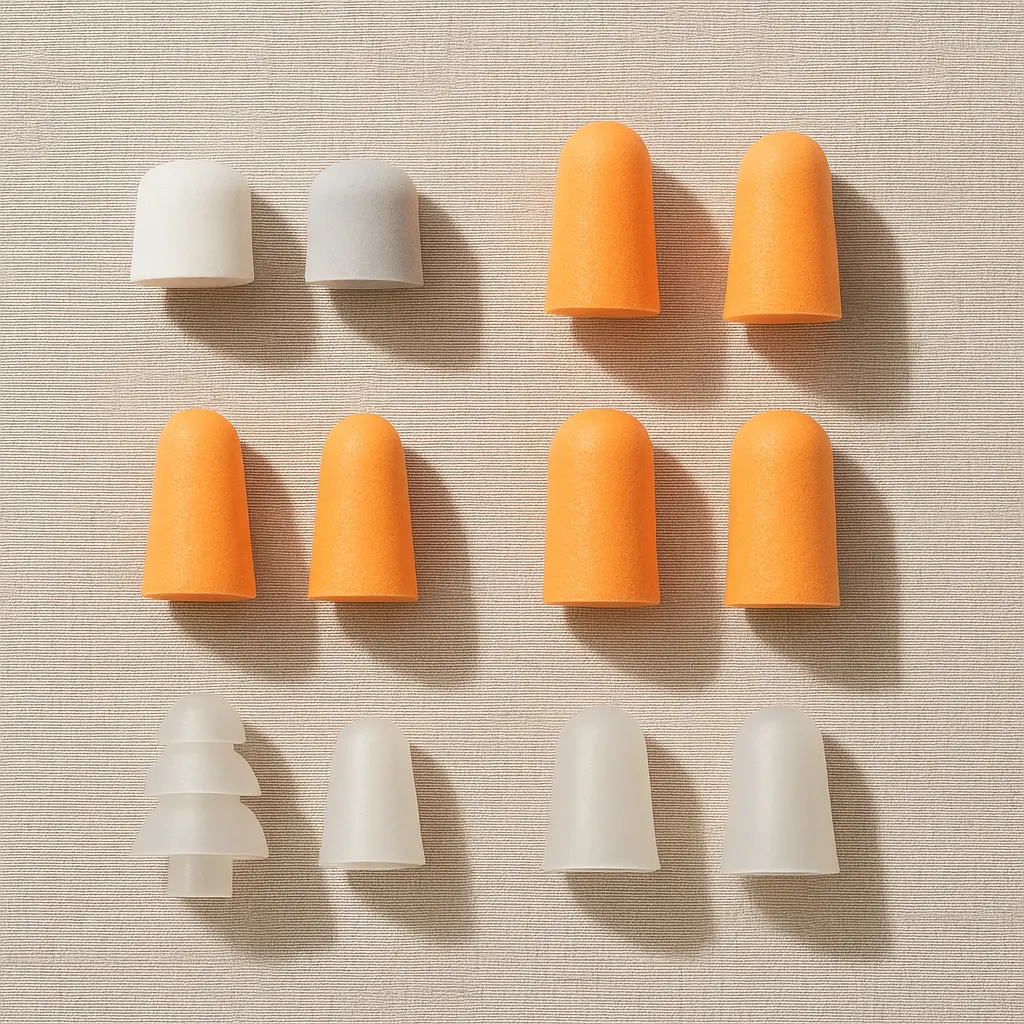
Hold the plug in place for 15-20 seconds while the foam expands. The plug should feel present but not uncomfortable. If you experience pressure or fullness, you’ve inserted too deeply. Remove it and try again with less insertion depth.
Before committing to a full night’s sleep, lie on your side on your pillow for 5-10 minutes with the ear plugs inserted. Pay attention to these indicators: pressure building around the plug, the sensation of the plug pushing deeper, or any sharp discomfort. These symptoms will intensify over hours, not diminish.
If the plug feels comfortable for 10 minutes of side-lying, it will likely remain comfortable overnight. If you notice any discomfort, adjust insertion depth by 1-2mm shallower and retest. The goal is finding the shallowest insertion depth that still achieves adequate noise reduction.
Pro tip: Insert your ear plugs 5-10 minutes before lying down, allowing the foam to fully expand while you’re upright. This pre-expansion prevents the discomfort of foam expanding under pillow pressure.
Noise Reduction Rating (NRR) numbers appear prominently on ear plug packaging, but the standardized testing method used to generate these numbers involves ideal insertion by trained professionals in laboratory conditions. Real-world performance typically achieves 50-70% of the stated NRR, meaning a 33dB rated plug delivers 16-23dB of actual noise reduction for average users.
For side sleepers specifically, this gap widens. The lateral pressure from pillow contact compresses foam and can create micro-gaps that leak sound, particularly in the lower frequency ranges below 500Hz. A plug rated at 32dB might deliver only 12-18dB of reduction after four hours of side sleeping if it uses a design that deforms under pressure.
The sweet spot for side sleeping with ear plugs sits between 28-33dB rated reduction. Anything below 28dB proves insufficient for urban environments, traffic noise, or sleeping with a snoring partner. Ratings above 33dB typically require deeper insertion depths that become uncomfortable under sustained lateral pressure.
Most ear plugs reduce high frequencies (above 2000Hz) more effectively than low frequencies (below 500Hz), yet the most disruptive sleep noise occurs in the 100-1000Hz range: snoring (150-800Hz), traffic rumble (80-400Hz), and HVAC systems (60-500Hz). Look for plugs that specify balanced attenuation or enhanced low-frequency reduction rather than simply the highest NRR number.
Premium designs achieve this through precise impedance matching between the foam tip and the rigid body. The foam absorbs high frequencies while the body mass and internal chamber design create low-frequency damping. This dual-mechanism approach delivers more useful noise reduction for sleep environments compared to foam-only designs that block everything above 1000Hz but let rumbles through.
Reusable ear plugs with replaceable foam tips require regular maintenance but deliver superior value and performance compared to nightly disposables. The metal bodies last indefinitely with basic care, while foam tips need replacement every 6-8 weeks with nightly use.
Clean the metal components weekly using warm water and mild soap. Avoid alcohol-based cleaners or harsh detergents that can degrade the foam tips. Dry thoroughly before reinserting tips, as moisture trapped between the metal body and foam creates an environment for bacterial growth.
Foam tips degrade gradually rather than failing catastrophically. You’ll notice the foam takes longer to expand after compression, feels less resilient, or shows visible discoloration. These signs indicate the cellular structure has begun to collapse, reducing both noise reduction effectiveness and comfort. Replace tips at the first sign of performance degradation rather than waiting for complete failure.
Store your ear plugs in a ventilated case rather than an airtight container. Airflow prevents moisture accumulation and extends foam tip life by 20-30%. The small protective cases included with premium ear plugs serve this purpose, with perforations or mesh panels that allow air circulation.
A quality pair of metal-bodied reusable ear plugs costs between $25-45, with replacement foam tip sets (containing 6-12 pairs) running $10-15. Over one year of nightly use, this totals approximately $35-60. Disposable foam plugs cost $0.25-0.50 per pair, or $90-180 annually for nightly use, plus the inconvenience of constant reordering and the waste stream of 365+ pairs per year.
The economic case for reusable designs becomes stronger when you factor in the replacement issue: side sleepers using disposable foam plugs often need to replace them 2-3 times per night when they deform or fall out, doubling or tripling the annual cost to $180-540.
Yes, fundamentally. Standard ear plugs prioritize maximum noise reduction and assume the user remains upright or lies on their back. Side sleeper designs must balance noise reduction with low-profile form factors that minimize pressure points when compressed between your head and pillow for 6-8 hours. They typically feature concave or contoured external surfaces and use hybrid construction with rigid cores and compressible tips rather than uniform foam throughout.
You’ve inserted too deeply if you feel fullness, pressure, or discomfort when lying on that side within the first 5 minutes. The correct insertion depth for side sleeping is shallower than industrial hearing protection requires, typically 4-7mm past the ear canal entrance rather than the 10-15mm depth recommended for standing use. Your ear canal naturally curves; forcing a plug past the first bend creates pressure that intensifies under pillow compression.
You can, but it’s impractical. Most people change positions 10-15 times during a normal sleep cycle. Instead, choose ear plugs designed specifically for side sleeping, which also perform well in other positions. The low-profile, pressure-distributing design that works for side sleeping causes no issues when back sleeping or stomach sleeping, while side-incompatible designs will wake you whenever you roll onto your side.
Disposable foam plugs fall out due to a combination of insufficient insertion depth (attempting to avoid discomfort) and material compression under pillow pressure. When the foam compresses asymmetrically, it loses its grip on the ear canal walls and works itself outward. Metal-bodied designs with memory foam tips maintain their position because the rigid core resists deformation while the foam tips maintain the seal, even under sustained lateral pressure.
Replace foam tips every 6-8 weeks with nightly use, or sooner if you notice reduced noise reduction, longer expansion times, or visible degradation. The polyurethane foam cells collapse gradually from repeated compression cycles and accumulate oils from your skin, even with regular cleaning. Most manufacturers include multiple tip sizes, so have a fresh set ready before the current pair fails completely.
Metal-bodied ear plugs must be removed before MRI procedures due to ferromagnetic properties. They pass through airport metal detectors without issue as the aluminum or stainless steel mass is too small to trigger alarms. However, inform medical personnel of any ear plugs before procedures or scans. For frequent MRI patients, fully foam or silicone designs might prove more convenient despite their inferior side-sleeping performance.
Properly maintained ear plugs do not increase infection risk. Problems arise when users fail to clean reusable plugs weekly or when moisture becomes trapped in the ear canal. Side sleeping itself doesn’t elevate infection risk compared to other positions. Clean your ear plugs regularly, ensure they’re completely dry before insertion, and replace foam tips on schedule. If you’re prone to ear infections, consult an audiologist about proper ear plug hygiene specific to your situation.
Have you found an ear plug design that works consistently for side sleeping, or are you still searching for the right combination of comfort and noise reduction? Share your experience in the comments.
