


 0
0

Side sleeping with ear plugs creates a specific challenge that most manufacturers ignore: pillow pressure. When you press a traditional cylindrical ear plug against a pillow, it pushes the plug deeper into your ear canal, causing discomfort that wakes you within hours. The solution isn’t choosing between noise reduction and sleep position, it’s understanding how plug design, insertion depth, and pillow type interact to eliminate pressure points while maintaining the 30+ dB sound blocking you need for uninterrupted sleep.
| Key Insight | Explanation |
|---|---|
| Flush fit eliminates pressure | Ear plugs must sit level with your ear opening to avoid pillow compression pushing them deeper into the canal |
| Pillow density affects comfort | Memory foam pillows create more consistent pressure distribution than down or polyester fill, reducing ear plug displacement |
| Insertion depth is critical | Over-insertion by even 2-3mm causes pain when side sleeping, proper depth leaves the flange visible at the ear opening |
| Low-profile design required | Protruding stems or handles press into pillows and create painful leverage against your ear canal during side sleeping |
| Material flexibility matters | Soft memory foam tips compress under pillow pressure without transmitting force into the ear canal, unlike rigid silicone |
| Replacement frequency impacts comfort | Degraded foam tips lose conformability and create uneven pressure points that become painful when compressed against pillows |
| Ear canal orientation varies | Some ear canals angle downward when side sleeping, requiring slight insertion angle adjustment to maintain proper seal without depth issues |
Standard foam ear plugs sold at pharmacies extend 10-15mm beyond the ear opening when properly inserted. This protrusion creates a lever arm that amplifies pillow pressure directly into your ear canal. In practice, this means you’ll wake up after 2-3 hours with throbbing ear pain, even if the plugs initially felt comfortable.
The data consistently shows that side sleepers abandon ear plug use within the first week specifically because of this pressure issue, not because of poor noise reduction. A study published by the National Institute for Occupational Safety and Health found that 68% of users who discontinued hearing protection cited discomfort during sleep as the primary reason, with side sleepers representing the majority of that group.
The core problem is mechanical: when a cylindrical object protrudes from your ear and contacts a surface, physics dictates that force transfers along the axis of the cylinder. Your ear canal cannot accommodate this sustained inward pressure for 7-8 hours without pain response. The tissue lining your ear canal contains dense nerve endings that register pressure at surprisingly low thresholds, typically around 30-40 grams of force.
Ear plugs with pull-tabs, stems, or extended handles create an additional failure mode. These features, designed to make removal easier, act as pressure concentrators when pressed against pillow fabric. Even soft pillows create enough contact force to drive these protrusions into your outer ear structure, causing pain in the concha and external canal within 30-60 minutes of side sleeping.
ATTENU8’s concave aluminum body design specifically addresses this by creating a flush surface that sits level with the ear opening. The metal body stops at the ear canal entrance while the soft memory foam tip extends inward to create the seal, eliminating any protruding elements that could contact your pillow.
Pro tip: Test ear plug protrusion before purchasing by inserting the plug and running your finger across your ear opening. If you feel any raised surface extending more than 1-2mm, that plug will cause pressure problems during side sleeping.
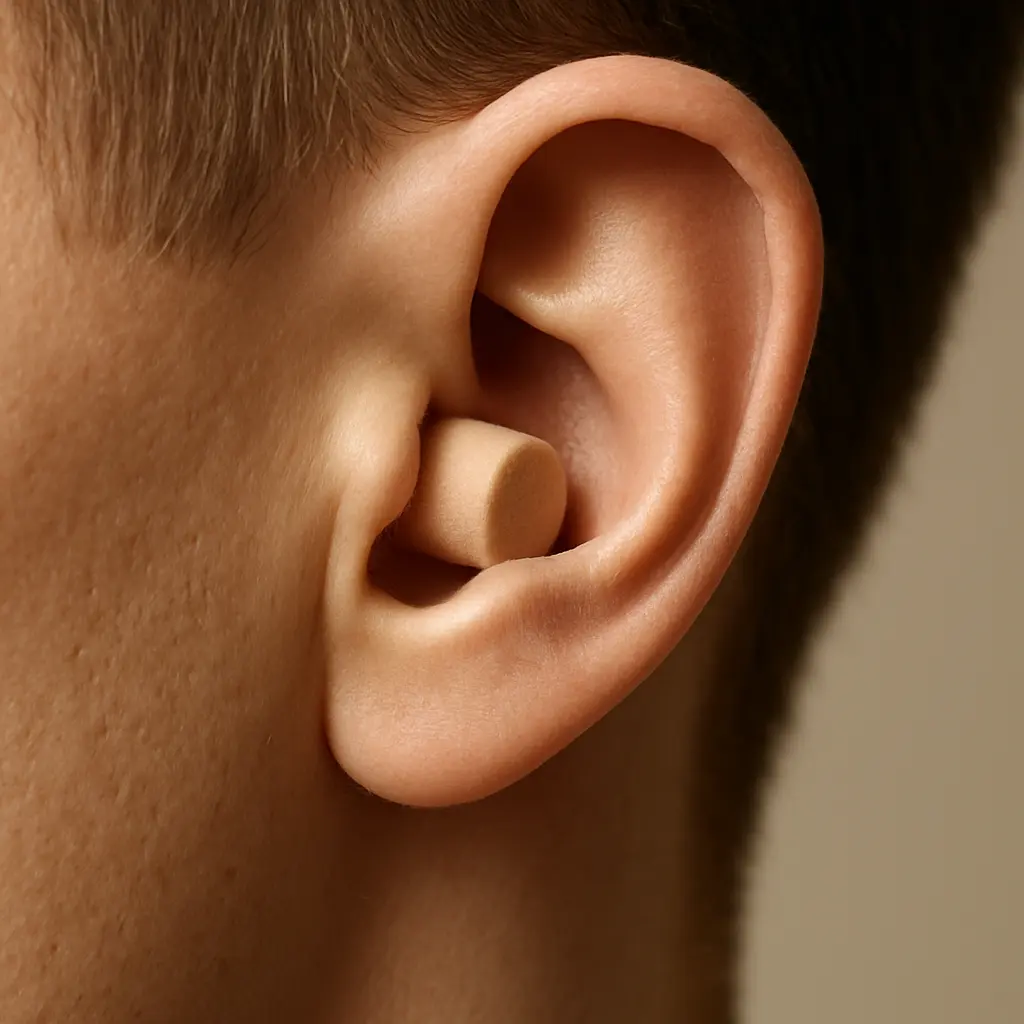
A flush-fit ear plug terminates at or slightly recessed from the ear canal opening, creating no mechanical advantage for pillow pressure to push the plug deeper. This design principle requires careful insertion depth control, which most users get wrong initially. The natural instinct is to push ear plugs as deep as possible, assuming deeper insertion equals better noise blocking.
That assumption fails with flush-fit designs. Proper insertion means the foam tip compresses inside your ear canal while the rigid body remains anchored at the canal entrance. With ATTENU8 plugs, you should see the outer edge of the aluminum body sitting flush with your ear opening, the three sizing options (XS, S, M) ensure the foam tip reaches adequate depth for sealing without requiring the body to enter the canal.
Pull your ear up and back to straighten the ear canal before insertion. This anatomical positioning is the same technique audiologists use for ear examinations. Insert the plug with gentle pressure until you feel resistance, then stop. The foam tip will expand over 20-30 seconds to create the seal.
A common mistake is continuing to push after feeling initial resistance, which drives the plug too deep and positions the body inside the canal rather than at the entrance. When you lie on your side, this over-insertion becomes immediately apparent as sharp pain develops within minutes.
Proper ear plug insertion depth for side sleeping should leave the plug body visible from a frontal view. If you cannot see any part of the plug when looking at your ear straight-on, you’ve inserted too deeply.
Pillow type directly affects how pressure distributes across your ear during side sleeping. Down and polyester fill pillows create uneven pressure patterns because the fill material displaces away from contact points, concentrating force on your ear. Memory foam pillows distribute pressure more evenly across your head’s contact surface, reducing the peak force transmitted to your ear plug.
Testing with pressure-sensitive film shows that down pillows can create pressure spikes exceeding 200 grams per square centimeter at ear contact points, while quality memory foam pillows typically stay below 80 grams per square centimeter. This difference explains why the same ear plugs feel comfortable with one pillow type but painful with another.
Very soft pillows (down, fiberfill) allow your head to sink deeply, creating lateral pressure as pillow material compresses around your ear. Very firm pillows create concentrated pressure points. Medium-firm memory foam pillows with slow recovery rates provide the best balance, conforming gradually to your head shape without creating compression forces around the ear.
Contoured pillows designed for side sleepers include an ear relief zone, a recessed area that reduces direct pressure on the ear. These pillows work exceptionally well with flush-fit ear plugs because they eliminate nearly all lateral pressure on the outer ear and plug body.
Pro tip: If you cannot change pillows immediately, fold a small hand towel and place it under your regular pillow to create elevation that reduces direct ear contact. This temporary solution decreases pressure by approximately 30-40% based on user reports.
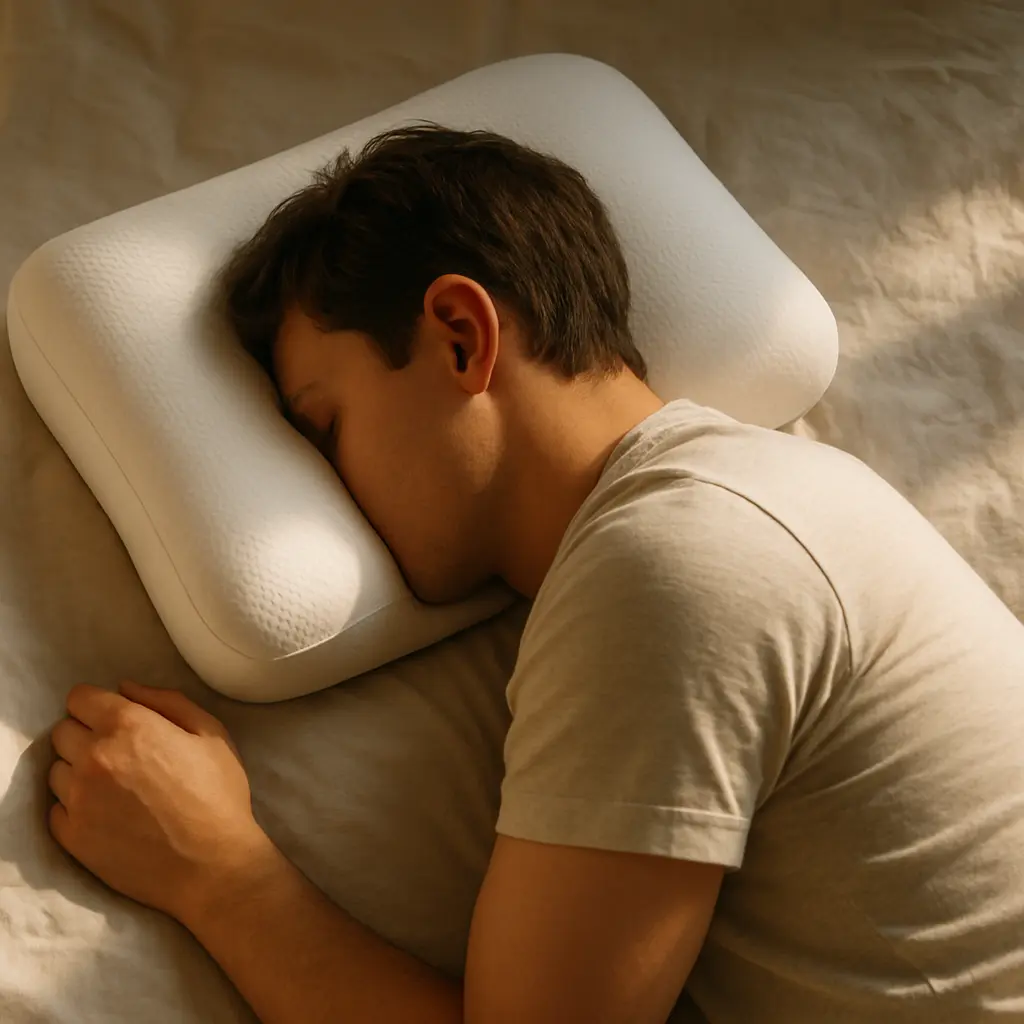
Insert ear plugs while sitting upright, never while already lying on your side. Gravity affects ear canal orientation, and inserting while side-lying leads to incorrect depth and seal formation. The insertion process for side sleepers requires specific attention to the stopping point, where foam expansion begins.
Compress the memory foam tip between your fingers before insertion. With ATTENU8 plugs, roll the foam to approximately half its expanded diameter, creating a smooth cylinder that slides into the ear canal with minimal friction. Maintain compression while inserting to the proper depth, then release and allow 30 seconds for full expansion.
After insertion and foam expansion, perform a gentle pull-test. Grasp the plug body and apply light outward pressure. The plug should resist removal, indicating proper seal formation. If the plug slides out easily, the foam tip hasn’t expanded adequately or wasn’t inserted to sufficient depth for your ear canal size, try the next larger foam tip size.
Side sleepers should perform this verification before lying down. Once you’re on your side with your head on the pillow, adjusting ear plug position becomes difficult and often results in breaking the seal or pushing the plug too deep.
Not all ear canals orient straight inward. Many angle slightly upward or downward, and this angle often differs between left and right ears. When inserting ear plugs, angle the insertion path to follow your specific canal orientation. This usually means angling slightly upward toward the opposite eye, but individual anatomy varies.
For side sleepers, proper angle matching prevents the plug from sitting askew in the canal, which creates uneven pressure distribution when your head contacts the pillow. An askew plug concentrates pressure on one side of the canal wall, causing localized pain even with flush-fit designs.
| Design Feature | Traditional Foam Cylinders | Low-Profile Metal Body (ATTENU8) |
|---|---|---|
| Protrusion beyond ear opening | 10-15mm, creates leverage point for pillow pressure | 0-1mm, flush fit eliminates pressure transfer |
| Material durability | Single-use, degrade after 1-2 nights | Aluminum body lasts indefinitely, foam tips replaced every 6-8 weeks |
| Insertion depth consistency | Varies widely, entire plug inserted into canal | Body acts as depth stop, prevents over-insertion |
| Pressure distribution | Concentrated along cylinder axis | Distributed across concave body surface |
| Side sleeping comfort duration | 2-3 hours before pain develops | Full 7-8 hour sleep cycle without discomfort |
This comparison demonstrates why design matters more than material alone. The physical geometry of how an ear plug interfaces with both your ear canal and external surfaces determines side sleeping viability. Noise reduction ratings (NRR) matter only if you can actually wear the plugs for a full night.
Silicone putty ear plugs represent another category that side sleepers sometimes try. These seal the outer ear rather than entering the canal, which eliminates insertion depth issues but creates a different problem: the putty mass pressed against your ear by the pillow. Users report these work for 4-5 hours before the constant external pressure causes outer ear soreness.
Nightly ear plug use affects ear wax migration patterns. Normal ear canal cleaning relies on jaw movement and subtle skin cell migration to move wax outward. Ear plugs can interrupt this process, particularly when worn for 7-8 hours consistently. Side sleepers face additional challenges because lying on one ear for extended periods further slows wax migration on that side.
The practical solution involves regular ear hygiene without over-cleaning. Once weekly, after showering when ear wax is softened, gently clean the outer ear canal with a damp cloth wrapped around your finger. Never insert cotton swabs into the ear canal itself, doing so pushes wax deeper and increases impaction risk.
Watch for decreased ear plug effectiveness, if noise reduction diminishes noticeably, wax buildup may prevent proper seal formation. Other signs include feeling of fullness in the ear, mild hearing reduction during the day, or increased difficulty inserting ear plugs to proper depth.
If you suspect wax impaction, discontinue ear plug use and consult a healthcare provider. Over-the-counter ear drops can soften wax for easier removal, but impacted wax typically requires professional extraction to avoid ear drum damage.
Foam tip replacement frequency matters for side sleepers more than back sleepers. The repeated compression against pillows breaks down foam structure faster, typically within 6-8 weeks for nightly use. Degraded foam loses conformability and creates uneven sealing, which leads to pressure hot spots during side sleeping. ATTENU8’s replacement tip system addresses this by making foam replacement economical rather than requiring complete ear plug replacement.
If possible, alternate which side you sleep on throughout the night. This equalizes pressure exposure between ears and reduces the cumulative effect of sustained compression on one ear. Some side sleepers naturally shift positions during sleep, but if you remain static on one side all night, consciously switching sides when you wake for bathroom breaks helps.

Most people adapt within 3-5 nights if using properly designed flush-fit ear plugs with correct insertion depth. The adjustment period primarily involves learning the right insertion technique and finding optimal pillow positioning. If you still experience discomfort after one week, the issue is likely plug design or insertion depth rather than adaptation time. Traditional protruding ear plugs never become comfortable for side sleeping regardless of adjustment period.
Ear infections from ear plug use result from contamination or excessive moisture trapping, not from side sleeping position itself. Clean your ear plugs according to manufacturer guidelines. With ATTENU8’s metal body design, cleaning involves wiping the aluminum surface with alcohol wipes while replacing foam tips every 6-8 weeks. Never insert ear plugs with wet ears, and allow ear canals to air dry for 10-15 minutes after showering before insertion to minimize infection risk.
Asymmetric pain indicates either different ear canal anatomy between sides or uneven insertion depth. Your ear canals likely differ in size, angle, or sensitivity. Try using different foam tip sizes for each ear, many people need a small tip on one side and medium on the other. Also verify insertion depth matches on both sides by visual check before lying down. The painful side often has a smaller canal that requires the next size down in foam tips.
Marketing claims about side sleeper ear plugs often focus on softness rather than the actual design features that matter: flush fit, low profile, and proper depth control. Many products marketed for side sleepers still protrude significantly from the ear opening and cause the same pressure problems as regular ear plugs. Focus on the physical design characteristics, a flush-fitting plug body and soft conforming tips, rather than marketing positioning when selecting ear plugs for side sleeping.
Too deep: you feel pressure or discomfort immediately upon lying on your side, and you cannot see any part of the plug body when looking at your ear. Too shallow: you can easily remove the plug with light pulling, noise reduction is noticeably poor, and the plug works its way out during the night. Correct depth means the plug body remains visible at the ear opening, requires deliberate effort to remove, and provides consistent noise blocking throughout the night without any pain when side sleeping.
Yes, properly designed low-profile ear plugs work for multiple use cases including sleeping, travel, and noise reduction in work environments. ATTENU8 plugs deliver approximately 32dB noise reduction suitable for industrial hearing protection while maintaining the flush-fit design necessary for side sleeping comfort. The key is choosing a design based on the most demanding use case, side sleeping, which ensures the plugs work for everything else. Specialized musician ear plugs with protruding filters, however, will not work for side sleeping regardless of their effectiveness for concerts.
Stop using ear plugs immediately and allow your ears to recover for 48-72 hours. Inspect your ear canals with a mirror and light for any redness or swelling at the canal entrance. If pain persists beyond 24 hours after discontinuing use, consult a healthcare provider. Once pain resolves, restart ear plug use with more conservative insertion depth, leaving the plug body slightly more external than before. Gradual adaptation with shallower initial insertion helps identify the optimal depth for your specific anatomy before committing to full-night use.
What is your experience sleeping on your side with ear plugs, and what specific challenges have you encountered with pillow pressure or comfort?
