


 0
0

Most people buy ear plugs without considering ear canal size, then wonder why they fall out during sleep or cause discomfort after 20 minutes. The reality is straightforward: ear canal diameter varies by 30-40% between individuals, and using the wrong size transforms a premium hearing protection product into an expensive source of frustration. Whether you’re dealing with snoring partners, construction site noise, or hypersensitivity to ambient sound, proper sizing determines whether you get 32dB of noise reduction or wake up with ear plugs on your pillow.
| Key Insight | Explanation |
|---|---|
| Average canal diameter is 7-9mm | Women typically measure 6.5-8mm, men 7.5-9.5mm, but individual variation matters more than gender |
| Wrong size reduces noise reduction by 50%+ | Gaps from undersized tips or pressure from oversized tips both compromise the acoustic seal |
| Start with small, not medium | 75% of ear plug users need small or XS tips, medium is less common than marketing suggests |
| Left and right canals differ | Up to 15% of people need different sizes per ear for optimal fit and comfort |
| Memory foam expands 200-300% | Compressed diameter at insertion is 4-5mm, full expansion takes 30-60 seconds in the canal |
| Comfort during first 5 minutes predicts long-term use | If you feel pressure or the urge to adjust within 5 minutes, you need a different size |
| Canal size doesn’t correlate with outer ear size | Large external ears frequently house small canals, making visual assessment unreliable |
The ear canal, technically the external acoustic meatus, measures 25-35mm in length with a diameter that varies along its depth. The outer third is cartilaginous and slightly wider, while the inner two-thirds narrow as they approach the tympanic membrane. This tapering creates the primary challenge for ear plug sizing: a tip that fits the entrance may be too large for the narrower sections.
Research from the National Institute for Occupational Safety and Health indicates that ear canal cross-sections are elliptical rather than circular, with height-to-width ratios averaging 1.3:1. This means your canal is taller than it is wide, which explains why rotating ear plugs during insertion often improves comfort. The canal also curves upward and forward by approximately 30 degrees, requiring proper insertion angle for deep placement.
Gender-based sizing guidelines provide a starting point but fail 40% of users. Men average 0.5-1mm larger canal diameters than women, but the overlap between groups is substantial. Age affects sizing too. Canals reach adult dimensions by age 9-10, but after 50, some narrowing occurs due to cartilage changes and skin thickening.
Your ear canal has distinct outer and inner regions with different sizing requirements. The outer cartilaginous third is flexible and accommodates compression from memory foam tips. The inner bony portion is rigid, and oversized tips create sustained pressure against this immovable surface, causing the sharp pain that wakes you at 3am.
Professional ear plug fitters measure at the first bend of the canal, approximately 8-10mm from the entrance. This point represents the functional bottleneck where most sizing issues occur. ATTENU8’s three-size approach addresses this by providing graduated diameters: XS expands to 8-9mm, Small to 9-10mm, and Medium to 10-11mm at full compression.
Pro tip: Gently pull your earlobe down and back during insertion. This straightens the canal by 15-20%, allowing deeper placement before the foam expands and reducing pressure on the inner canal walls.
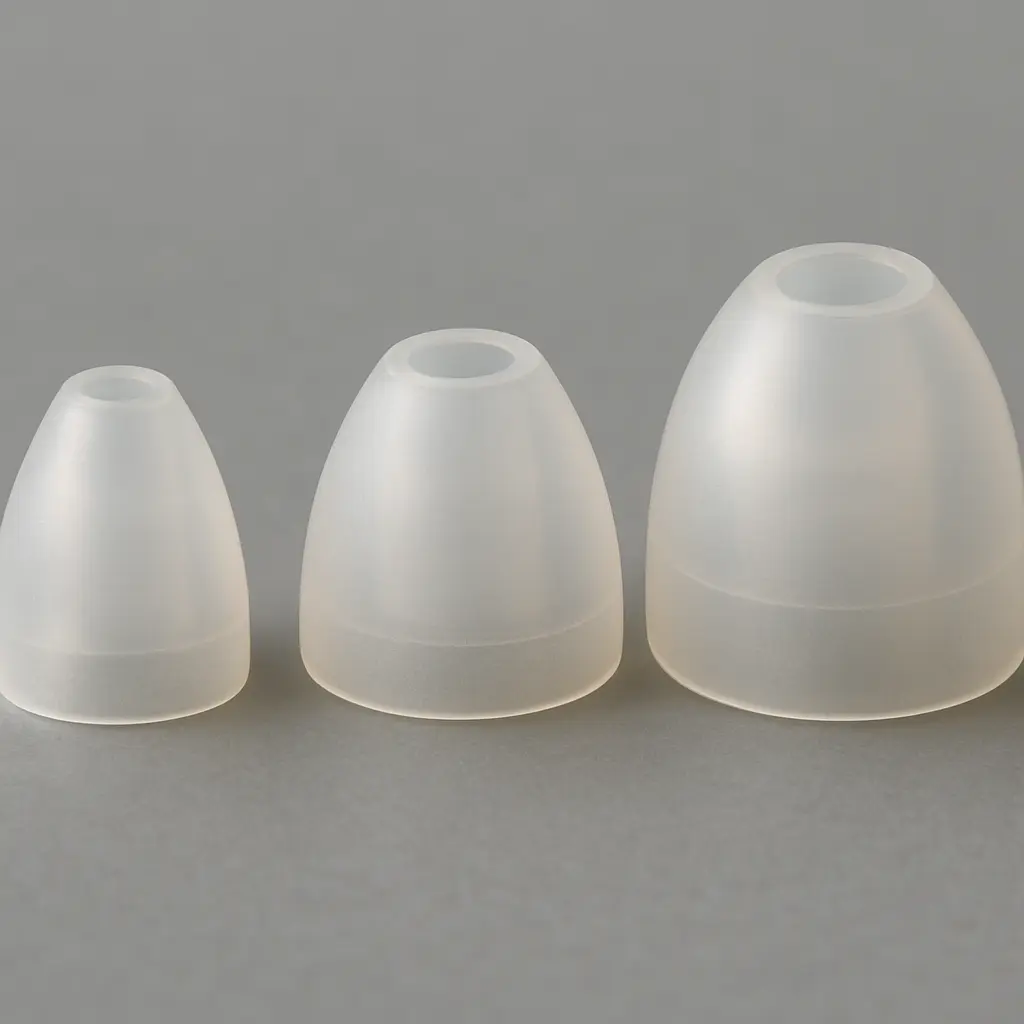
The roll-and-hold test gives immediate sizing feedback without specialized equipment. Take a memory foam ear plug tip, compress it completely between thumb and forefinger, insert it to comfortable depth, then hold it stationary for 60 seconds while the foam expands. Three outcomes tell you everything:
If the tip feels loose or falls out easily when you release pressure, you need a larger size. If you feel building pressure or discomfort within 30 seconds, go smaller. If it stays in place comfortably with gentle tug resistance, you’ve found your size.
The professional method uses calibrated sizing rings or graduated probes, but this requires audiology equipment most people don’t access. A practical home alternative: standard cotton swabs measure 5-6mm in diameter. If a cotton swab enters your canal with noticeable resistance at 10mm depth, your canal likely falls in the small to XS range. Easy entry suggests medium sizing.
Daytime testing misses critical data. Ear plugs that feel acceptable while sitting upright often fail when side-sleeping introduces lateral pressure. The definitive sizing test requires wearing your selected size for a full night on your preferred sleeping position.
Track four specific markers: Do the plugs stay in place until morning? Do you wake with ear soreness? Can you still hear your alarm? Do you wake feeling the urge to remove them? If you answer no, yes, no, yes respectively, you need different sizing regardless of how they felt during insertion.
Pro tip: Test new sizes on weekend nights when alarm failure won’t derail your schedule. Many people discover they need XS for side-sleeping but Small for back-sleeping, and keeping both sizes solves the problem better than forcing one size for all positions.
XS tips target the genuinely small canal population, typically those with 6.5-8mm measurements. This represents approximately 25-30% of adults, with higher incidence among women and individuals of East Asian descent. If standard ear buds fall out during exercise, XS ear plugs likely suit you better than small.
Small dominates actual usage despite medium being marketed as standard. In practice, 50-55% of users achieve optimal fit with small tips. This size accommodates 8-9.5mm canals and provides sufficient expansion to create acoustic seals without excessive pressure. ATTENU8 includes small as the default middle option in the three-pack specifically because data shows it fits the true average user.
Medium serves larger canals measuring 9.5-11mm, roughly 20-25% of the population. Men over 6 feet tall have higher probability of needing medium, but exceptions are common enough that height-based sizing fails regularly. The key indicator for medium is whether small tips feel loose after full expansion or allow sound leakage during the first hour of wear.
| Size | Canal Diameter Range | Best For |
|---|---|---|
| XS (Extra Small) | 6.5-8mm | Individuals who find standard ear buds uncomfortable, those with petite builds, anyone who has tried small tips and experienced pressure pain |
| Small | 8-9.5mm | The true average user, those new to ear plugs without clear indicators of extreme sizing needs, most women and average-build men |
| Medium | 9.5-11mm | Users who find small tips loose or ineffective, larger builds, individuals who needed custom ear plugs in professional hearing protection settings |
Single-size packaging forces users into guessing games with 60% error rates. ATTENU8’s approach of including all three sizes eliminates the trial-and-error cycle that costs users $40-60 in wasted single-size purchases. More importantly, it acknowledges that 15% of users genuinely need different sizes per ear.
This asymmetric sizing reality contradicts the symmetric human body assumption, but audiometric data consistently confirms it. The cause is typically childhood ear infections affecting one ear more than the other, minor structural variations from birth, or accumulated wax buildup patterns that differ between sides.
The most expensive mistake is assuming bigger provides better noise reduction. Oversized tips create pressure without improving acoustic seal, because memory foam’s expansion force doesn’t increase linearly with size. A medium tip in a small canal generates 2-3x more sustained pressure than necessary while allowing sound leakage around compressed sections.
Insufficient insertion depth ranks second. Users often stop insertion when they feel initial resistance, leaving 30-40% of the tip outside the canal. This exposes the seal to pillow pressure during side-sleeping and virtually guarantees the plugs will work free by morning. The correct depth places the entire foam tip inside the canal with only the metal body visible.
Rushing expansion is the third pattern. Memory foam requires 30-60 seconds to reach full expansion, but most users release hold-pressure after 10-15 seconds. The result is partial expansion inside the canal, which feels acceptable initially but allows the foam to continue expanding asymmetrically, creating pressure points that build over 1-2 hours.
Repeatedly removing and reinserting ear plugs within the first hour indicates wrong sizing more reliably than any other single behavior. Users interpret initial discomfort as poor insertion technique and try multiple angles and depths, when the actual problem is size mismatch.
Each reinsertion compresses the foam further, reducing its expansion capacity and making accurate fitting assessment impossible. If you’ve adjusted your ear plugs more than twice in the first 30 minutes, remove them completely, wait 5 minutes for full foam recovery, and test a different size rather than attempting another insertion of the same size.
Pro tip: Mark your tested sizes with discrete dots on the metal body using nail polish. After determining your optimal size per ear, this visual coding prevents middle-of-the-night confusion when replacing a plug that came loose.
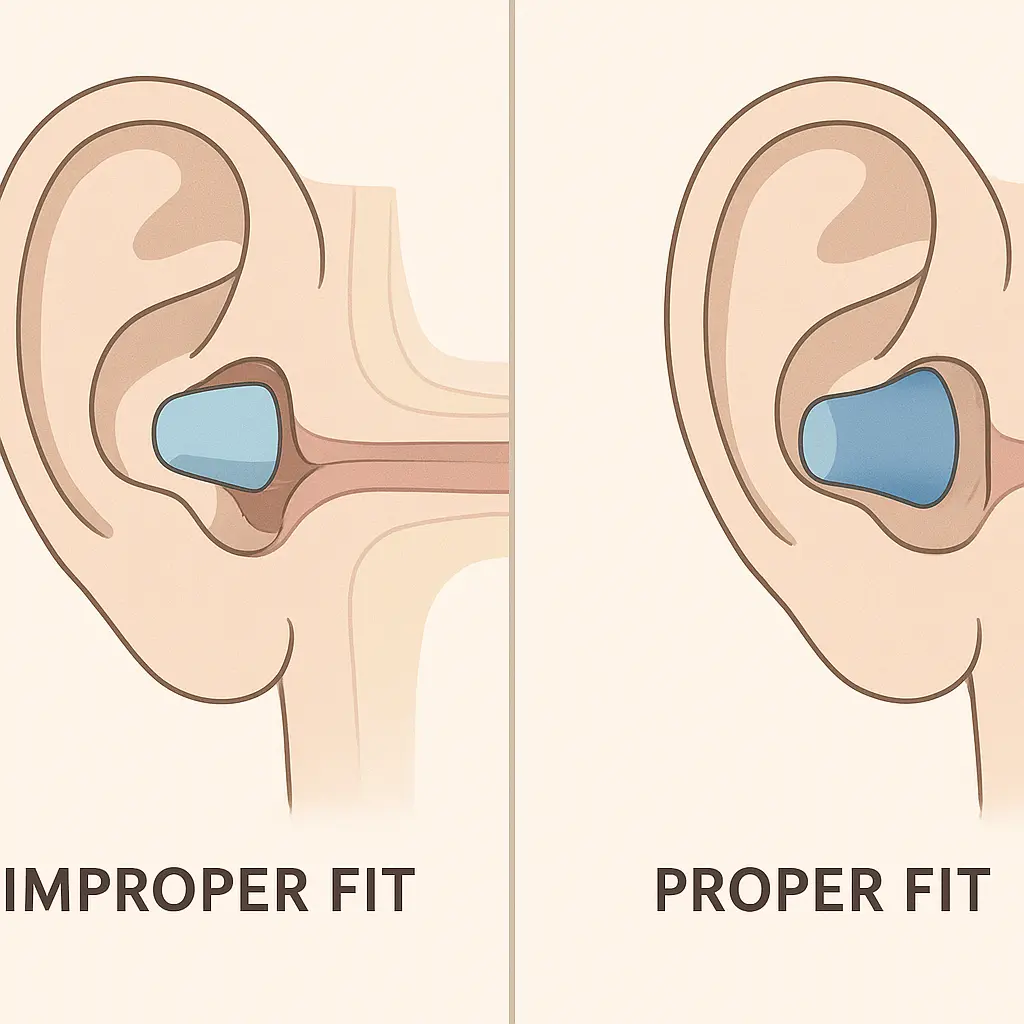
Memory foam ear plugs use expansion as their primary sealing mechanism, which means sizing tolerances are tighter than flanged silicone designs. Silicone plugs with triple-flange designs accommodate wider size ranges because each flange can seal independently, allowing a single size to fit 8-11mm canals with reasonable effectiveness.
Metal-bodied reusable ear plugs like ATTENU8’s require more precise sizing because the rigid body portion cannot compress. The metal body sits at the canal entrance and the foam tip extends inward, meaning wrong-size tips cannot compensate through body flexion. This rigid-body design delivers superior durability and consistent performance, but only when sized correctly.
Traditional disposable foam plugs offer more size forgiveness because the entire structure compresses and conforms. Users can oversize by 1-2mm and still achieve acceptable comfort because there’s no rigid component creating fixed pressure points. This explains why people switching from disposables to premium reusable designs often need smaller sizes than expected.
Ear plug sizing lacks industry standardization, creating significant cross-brand variation. Loop’s small equals ATTENU8’s XS-to-small range, while Flare’s medium approximates ATTENU8’s small-to-medium overlap. This means you cannot reliably transfer sizing knowledge between brands without retesting.
The core difference lies in compressed versus expanded diameter specifications. Some manufacturers specify pre-expansion diameter, others list fully-expanded measurements, and many provide no numerical specifications at all. ATTENU8’s approach of including all three sizes sidesteps this confusion by letting your ear canal be the measurement standard rather than relying on inconsistent manufacturer specs.
Proper ear plug sizing isn’t about finding what fits, it’s about finding what seals. A fit without a seal gives you 10-15dB noise reduction instead of 32dB, which is the difference between hearing muffled conversation and hearing nothing.
Compare your experience with standard ear buds and foam ear plugs. If ear buds fall out during mild activity and one-size foam plugs feel uncomfortably tight within 30 minutes, you likely have small to XS canals measuring 6.5-8.5mm. If standard plugs feel loose or don’t block sound effectively even when properly inserted, you probably need medium sizing for 9.5-11mm canals. The most reliable test is trying multiple sizes and tracking which stays comfortable during a full night’s sleep.
Absolutely, and you should if testing reveals different optimal sizes per ear. Approximately 15% of people need asymmetric sizing due to natural canal variations, previous ear infections, or structural differences. ATTENU8 provides three sizes per package specifically to support this common requirement. Using different sizes per ear improves both comfort and noise reduction compared to forcing symmetric sizing when your anatomy isn’t symmetric.
Ear canal size remains stable from age 10 to 50, then modest narrowing can occur due to skin thickening and cartilage changes in the outer canal. This typically amounts to 0.5-1mm diameter reduction over 30-40 years. The practical impact is minimal for most users, but if you’ve used medium tips successfully for decades and suddenly find them uncomfortable after age 60, dropping to small may restore comfort. Weight changes don’t affect canal size despite common misconceptions.
Undersized ear plugs create gaps between the foam and canal walls, allowing sound to leak through and reducing noise reduction from 32dB to 10-15dB. You’ll hear muffled environmental sounds rather than experiencing true silence. Small tips also tend to work loose during sleep as head movement and jaw motion from breathing create micro-movements. The plugs often end up on your pillow by morning, providing zero protection for the latter half of your sleep period.
Oversized ear plugs create sustained pressure against the inner canal walls, causing pain that builds over 1-3 hours. Many users wake at 2-4am with sharp ear pain and remove the plugs, then struggle to fall back asleep without protection from the noise that woke them originally. Large tips can also cause temporary hearing reduction that lasts 30-60 minutes after removal, and repeated use may irritate the canal lining or compress the thin skin against the underlying bone.
No. Outer ear size and shape have no correlation with ear canal diameter. Large external ears frequently house small canals and vice versa. This is why visual assessment fails so consistently and why trying multiple sizes based on actual fit represents the only reliable sizing method. Height and build provide slightly better predictive value than outer ear size, but individual variation still exceeds these weak correlations. Always test with actual ear plugs rather than estimating based on external anatomy.
Wear each size for a minimum of 2-3 hours during waking activities, then conduct an overnight test for the size that felt most comfortable. The first 5 minutes reveals obvious misfits through immediate discomfort or looseness, but subtle sizing problems only emerge after 60-90 minutes when accumulated pressure becomes noticeable. The definitive test is whether you wake up with the plugs still in place, no ear soreness, and no memory of wanting to remove them during the night.
What sizing challenges have you encountered with ear plugs, and which size worked best for your specific situation?
