


 0
0

Military personnel face noise exposure levels that civilian shooters rarely encounter. A single rifle shot generates 160-170 dB, and sustained exposure during training exercises without proper firearms hearing protection leads to permanent hearing loss in 60% of combat veterans according to Department of Veterans Affairs data. The difference between standard foam plugs and what special operations forces actually use comes down to attenuation quality, retention under movement, and consistent seal integrity across hundreds of rounds.
| Key Insight | Explanation |
|---|---|
| 32dB NRR is minimum acceptable | Military specifications require at least 32dB noise reduction rating for rifle ranges, with many units demanding higher for crew-served weapons |
| Disposable foam fails under sweat | Single-use foam plugs lose 40-60% effectiveness when wet from perspiration during extended range sessions |
| Insertion depth determines protection | Shallow insertion reduces actual protection by 15-20dB regardless of rated NRR, proper seal requires full ear canal placement |
| Metal bodies retain shape | Aluminum-bodied designs maintain consistent insertion depth and seal integrity across 500+ insertions versus degrading foam |
| Tip replacement beats full replacement | Replacing only foam tips every 6-8 weeks costs 75% less than buying new disposable plugs weekly while maintaining protection levels |
| Double protection for indoor ranges | Military protocol requires plugs plus muffs for indoor shooting where reflected noise adds 5-10dB to exposure levels |
| Fit testing is non-negotiable | Three tip sizes ensure proper seal across 95% of ear canal variations, single-size plugs fail 30-40% of users |
The Department of Defense mandates hearing conservation programs because tinnitus remains the number one service-connected disability, affecting 1.79 million veterans. Range ear protection requirements stem from documented exposure data showing that instructors and trainees experience cumulative noise doses equivalent to years of industrial exposure compressed into weeks.
Standard civilian shooting ear plugs rated at 20-25dB provide insufficient protection for military applications. A 5.56mm rifle produces 165dB at the shooter’s ear, and a .50 caliber machine gun reaches 180dB. The occupational safety threshold sits at 85dB for eight-hour exposure, which means every rifle shot without protection delivers noise equivalent to hours of industrial exposure.
Pro tip: Calculate your actual protection by subtracting 7dB from the manufacturer’s NRR rating, then dividing the remainder by two. This EPA-approved derating formula accounts for real-world fit variations that laboratory testing ignores.
Military units conducting night fire exercises face additional challenges. Removing and reinserting disposable foam plugs in darkness leads to improper placement in 65% of attempts based on field studies. Reusable designs with rigid bodies allow tactile confirmation of proper insertion without visual confirmation.
Special operations and marksmanship instructors universally employ double protection combining high-NRR shooting ear plugs with over-ear muffs. This layered approach delivers 35-40dB total reduction, addressing the reality that no single device provides adequate protection for sustained fire.
Indoor ranges present worse conditions than outdoor facilities. Concrete walls and ceilings reflect muzzle blast, creating reverberant noise fields that add 5-10dB to direct exposure. The Army’s hearing conservation program specifically mandates double protection for all indoor firing regardless of weapon system.
Insert ear plugs first, ensuring complete seal and comfort. Position over-ear muffs second, adjusting headband tension to maintain seal without excessive pressure. This sequence prevents muff ear cups from disrupting plug placement, a common error that reduces combined effectiveness by 40%.
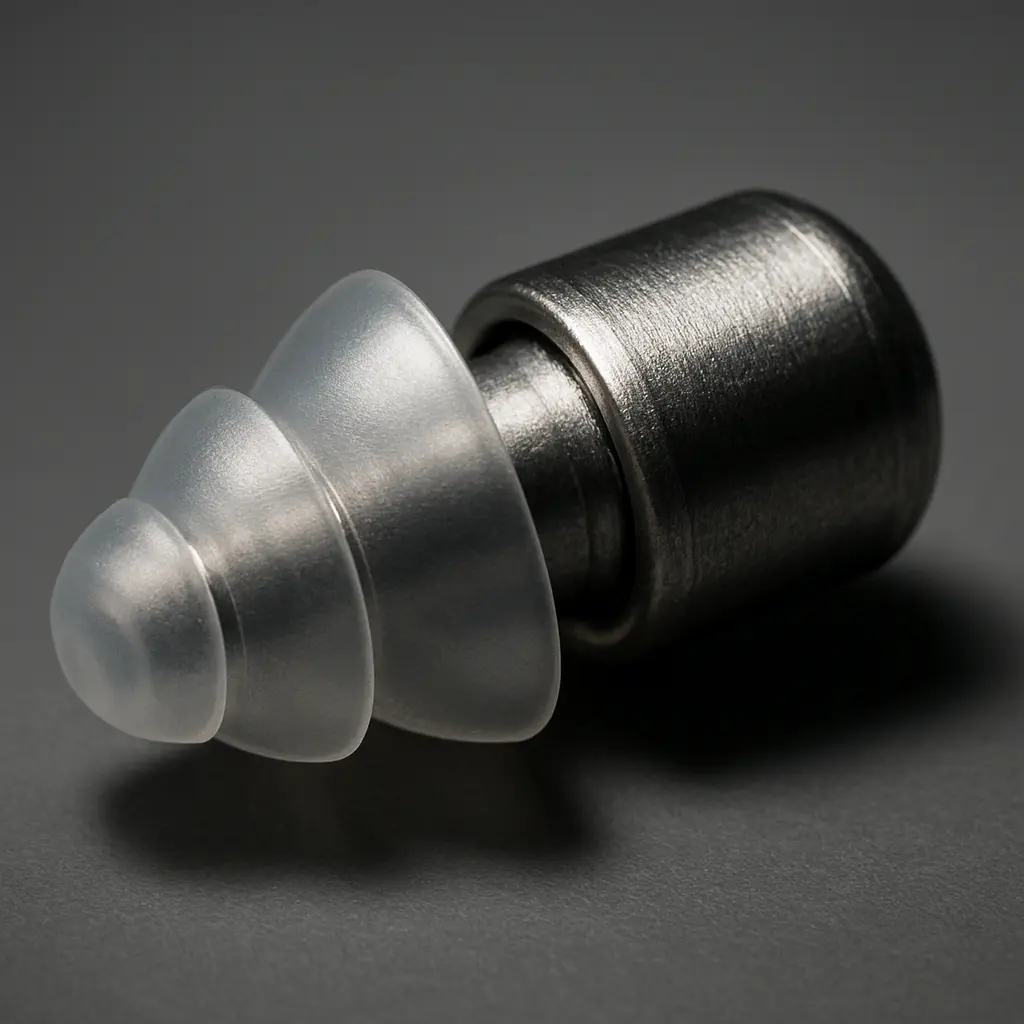
The ATTENU8 metal-bodied design excels in double protection scenarios because the low-profile aluminum body fits completely within the ear canal. Bulky foam plugs protrude enough to prevent proper muff seal, creating sound leakage paths that negate the protection benefit.
| Protection Method | Effective NRR | Military Application |
|---|---|---|
| Disposable foam only | 15-18dB actual | Inadequate for any firearms use |
| Premium reusable plugs | 25-28dB actual | Acceptable for outdoor rifle ranges |
| Double protection (plugs + muffs) | 35-40dB actual | Required for indoor ranges and crew-served weapons |
Military procurement traditionally favored disposable foam for cost reasons, but usage data reveals this creates false economy. Marines discard an average of 14 pairs of foam plugs per week during qualification cycles, while a single pair of reusable plugs with replaceable tips serves the entire training period.
Foam degrades rapidly under field conditions. Exposure to dust, moisture, and repeated compression reduces effectiveness by 30% after just three insertions according to National Institute for Occupational Safety and Health testing. The soft material also fails to maintain consistent depth, sliding outward during jaw movement and weapon recoil.
“Hearing protection that isn’t worn consistently provides zero protection. Comfort and durability determine compliance rates more than theoretical NRR numbers.” – Army Public Health Center Hearing Conservation Guidelines
Military-grade shooting ear plugs increasingly use memory foam tips on durable cores. The foam compresses for insertion, then expands to fill the ear canal completely. This creates better seal consistency than pre-molded flanged designs that depend on exact size matching.
ATTENU8’s three-tip sizing system addresses the anatomical reality that ear canals vary in diameter by 4-8mm across the population. A single-size flanged plug either gaps (losing 10-15dB protection) or over-compresses (causing pain that reduces wear time). Multiple memory foam sizes achieve proper seal across 95% of users.
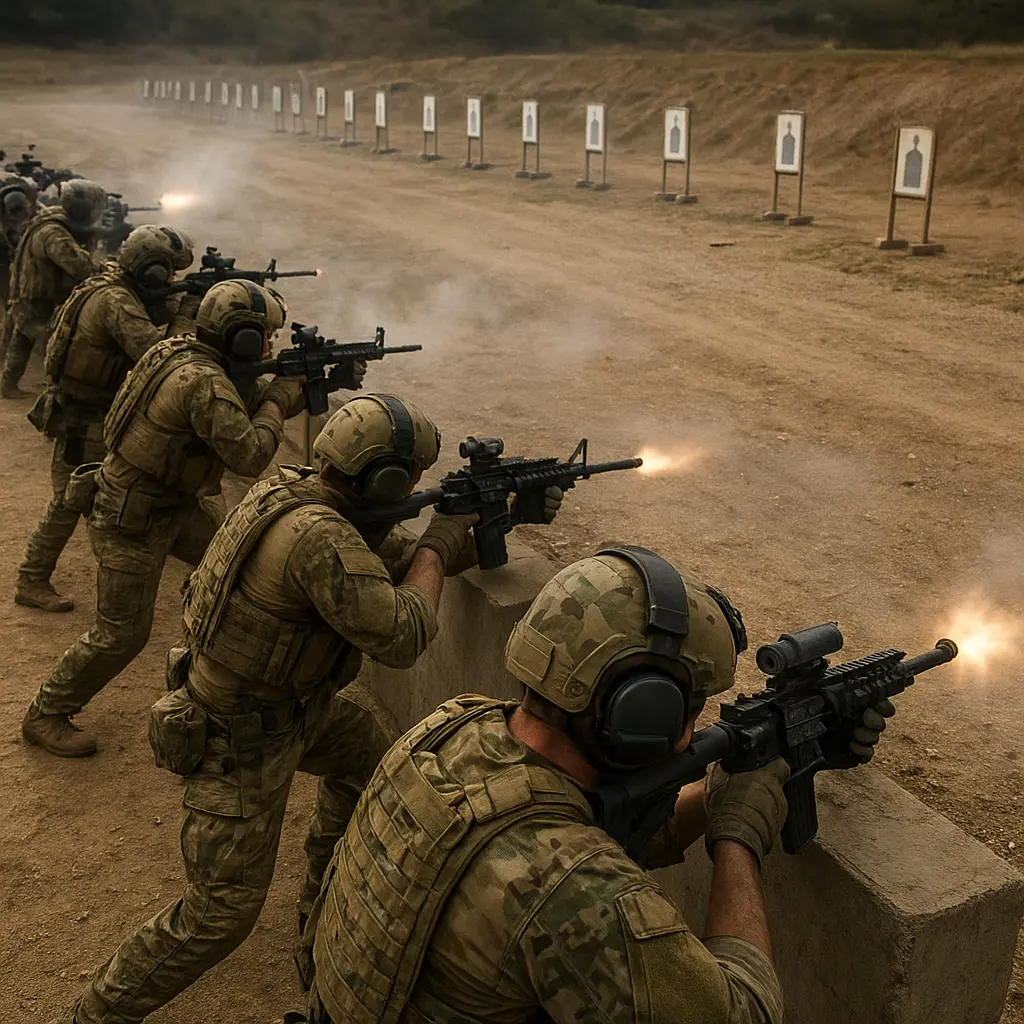
Military units evaluate firearms hearing protection using criteria that civilian recreational shooters often ignore. Retention during physical activity ranks equally with noise reduction because training involves movement, stress positions, and rapid transitions that dislodge poorly-fitted plugs.
In practice, plugs must remain sealed during prone-to-standing transitions, lateral movement along the firing line, and weapon manipulation drills. Lightweight foam designs shift or fall out during these activities. The mass and friction coefficient of the plug body material directly affects retention.
Aluminum bodies resist deformation from heat, pressure, and impact. Polymer-bodied alternatives crack when stepped on or sat upon, a common occurrence in tactical environments. Metal construction also enables cleaning with standard disinfectants without material degradation.
The concave profile design creates negative pressure during insertion, actively pulling the plug into proper position rather than relying solely on foam expansion. This mechanical advantage ensures consistent depth even when users lack training or insert plugs under time pressure.
Pro tip: Test retention by performing five jumping jacks after insertion. If the plugs shift or feel loose, try the next larger tip size or adjust insertion depth until they remain stable through movement.
The 32dB NRR specification represents laboratory maximum, not field performance. Real-world testing shows users achieve 60-80% of rated protection depending on fit quality. This means a 32dB rated plug delivers 19-26dB actual reduction for most shooters.
Calculate required protection by subtracting your target exposure (85dB maximum) from weapon noise level. A 165dB rifle shot requires 80dB reduction to reach safe levels, impossible with single hearing protection. This mathematical reality drives double protection requirements regardless of manufacturer claims.
Disposable foam shooting ear plugs cost $0.25-0.50 per pair and last one session. Weekly range shooters spend $50-100 annually on constant replacement. Reusable metal-bodied systems require only foam tip replacement every 6-8 weeks at $8-12 per set, reducing annual cost to $50-75 while delivering superior protection.
The data consistently shows that users clean reusable plugs more frequently than they should replace disposable foam, creating hygiene advantages. Ear canal infections from contaminated plugs affect 12% of high-volume shooters annually according to military medical records. Washable aluminum bodies eliminate this risk.
Check foam tips before each use for tears, compression set, or contamination. Damaged tips lose 40-60% of their sealing ability even when damage appears minor. The foam should spring back to full size within 2-3 seconds after compression. Slower recovery indicates material fatigue requiring replacement.
Clean metal bodies weekly with isopropyl alcohol or mild soap solution. Avoid petroleum-based solvents that can degrade foam attachment points. Dry completely before storage to prevent moisture accumulation that promotes bacterial growth.
Military armories store range ear protection in ventilated cases rather than sealed bags. Air circulation prevents moisture buildup while protecting plugs from dust and impact damage. This extends tip life by 30-40% compared to storage in pockets or closed containers.

Military standards require minimum 32dB NRR for outdoor rifle ranges and mandate double protection (plugs plus muffs) for indoor facilities. Single protection never provides adequate safety for rifles regardless of NRR claims, as the 165dB muzzle blast exceeds what any single device can attenuate to safe levels below 85dB.
Foam absorbs perspiration and loses 40-60% effectiveness when saturated. The material also compresses permanently after 3-5 insertions, preventing proper ear canal seal. Heat exposure above 90°F accelerates foam degradation, making disposable plugs unreliable for summer training exercises lasting multiple hours.
Aluminum-bodied designs with replaceable foam tips maintain consistent 32dB protection across 500+ uses while disposable foam degrades after single use. The rigid body ensures repeatable insertion depth and prevents the shallow placement that reduces actual protection by 15-20dB. Cost analysis shows reusable systems save $30-50 annually for weekly shooters.
Yes, and military protocol requires this double protection for indoor ranges. Low-profile metal bodies like ATTENU8’s concave aluminum design fit completely in the ear canal without protruding to disrupt muff seal. Bulky foam plugs create gaps under muff cups that allow 5-10dB sound leakage, negating the layered protection benefit.
Ear canal diameter varies 4-8mm across the adult population, making single-size plugs inadequate for 30-40% of users. Three-size systems (XS, S, M) achieve proper fit for 95% of shooters. Start with medium, switch to small if pressure or pain occurs, or large if the plug feels loose or shifts during movement.
Replace foam tips every 6-8 weeks with daily use or when compression recovery slows beyond 3 seconds. Visual inspection should show no tears, permanent compression, or discoloration. High-volume military instructors replace tips monthly during qualification cycles, while recreational shooters typically achieve 8-10 weeks per set with proper cleaning between sessions.
Properly sized metal bodies cause less discomfort than foam because they don’t expand with force against the ear canal. The aluminum conducts heat away from tissue rather than insulating like foam, reducing temperature buildup during 4-6 hour range days. Pain or pressure indicates wrong tip size, not material choice, and resolves immediately when switching to proper fit.
What hearing protection methods work best for your shooting environment? Share your experience with different firearms hearing protection systems in the comments.
