


 0
0

If you have ever grabbed a pair of ear plugs off a pharmacy shelf and wondered whether the numbers printed on the packaging actually matter for your sleep, you are not alone. 32dB noise reduction sounds impressive on a label, but most people have no practical frame of reference for what that figure translates to when a partner is snoring at 2am or traffic outside refuses to quiet down. Understanding this number, what it measures, how it is calculated, and what it genuinely delivers in a bedroom context can be the difference between a product that works and one that collects dust in a drawer.
| Key Insight | Explanation |
|---|---|
| 32dB is a logarithmic reduction, not a simple subtraction | A 32dB drop cuts perceived loudness to roughly one-eighth of the original volume, not one-third, because decibels follow a logarithmic scale. |
| The NRR rating is tested in lab conditions, not your bedroom | Real-world attenuation is typically 50 percent of the listed NRR. A 32dB NRR plug realistically delivers around 16dB in everyday use. |
| 32dB is sufficient to bring heavy snoring into a tolerable range | Snoring averages 60-80dB. A reliable 32dB NRR plug reduces that to approximately 44-64dB, which sits below the level that typically disrupts sleep architecture. |
| Fit determines whether the rating is achievable at all | An improperly inserted foam tip can drop effective attenuation to under 10dB, making the product nearly useless regardless of its label. |
| Multiple tip sizes are essential for consistent 32dB performance | One-size-fits-all ear plugs cannot form a proper acoustic seal across the natural variation in human ear canals. Sizing options like XS, S, and M directly affect how close you get to the rated figure. |
| Durable bodies maintain seal geometry over time | Cheap disposable housings deform quickly, widening the gap between rated and actual attenuation the more you use them. |
| 32dB is the highest commonly available consumer NRR rating | Most over-the-counter ear plugs sit between 26dB and 33dB NRR, making 32dB a strong benchmark for sleep-focused hearing protection. |
The decibel scale is logarithmic, and that one fact changes everything about how you should interpret an ear plug’s rating. A reduction of 10dB cuts the perceived loudness of a sound roughly in half. A reduction of 20dB cuts it to about one-quarter. A 32dB noise reduction therefore brings perceived volume down to somewhere around one-eighth of the original intensity, which is a genuinely significant change in how your ears and brain process background noise.
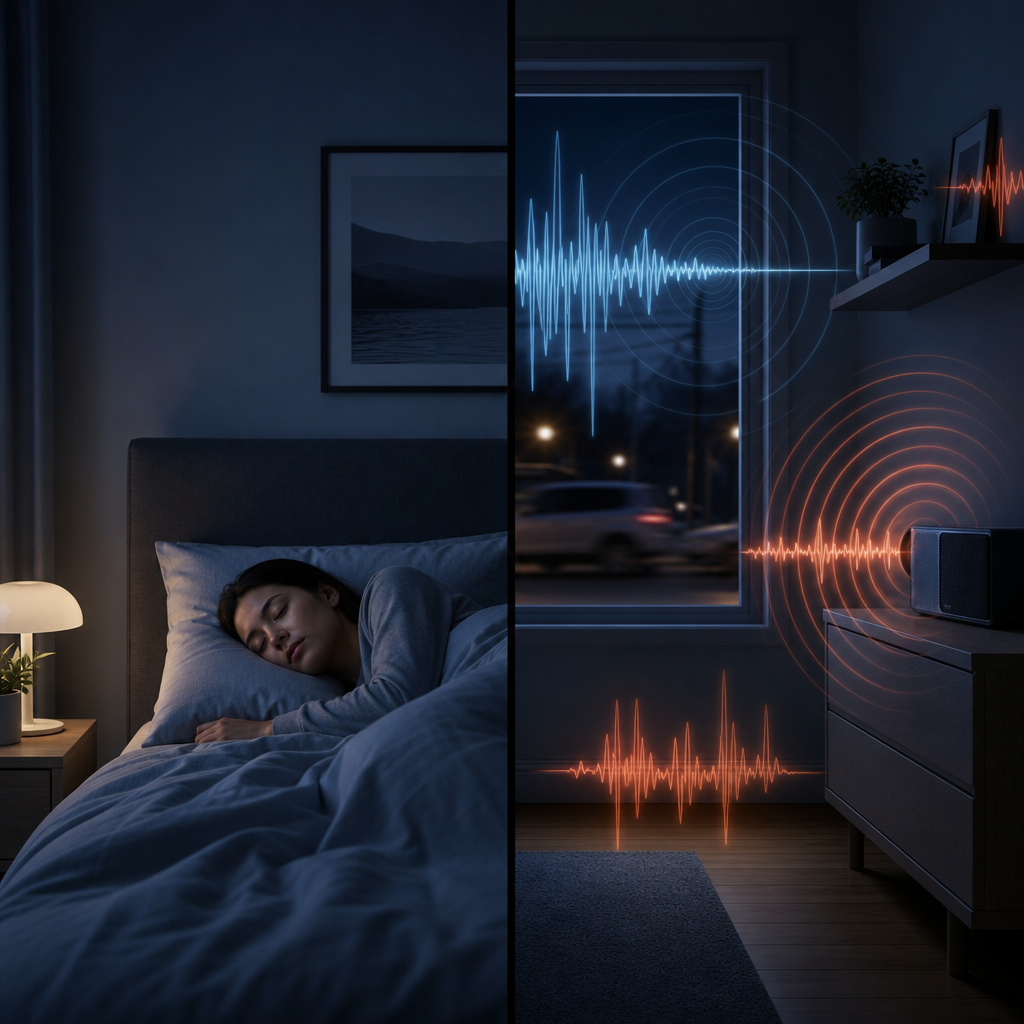
In practice, what that means for sleep is this: a noise source sitting at 70dB, which is roughly the level of a conversation happening in the next room or a moderately busy street, becomes approximately 38dB after a 32dB reduction. Research published through the National Institute for Occupational Safety and Health identifies 40dB as approximately the threshold below which most people can maintain normal sleep without significant disruption to sleep stages. 32dB gets you within striking distance of that threshold from a wide range of real-world noise environments.
The common mistake people make is reading the rating as a simple linear subtraction. They assume 32dB off a 70dB source leaves 38dB, which happens to be arithmetically correct but misses the critical point: the decibel scale means that 38dB sounds dramatically quieter than 70dB in a way that a simple numeric difference cannot convey. The subjective experience of the reduction is far larger than the gap between two numbers suggests.
The Noise Reduction Rating (NRR) is the standard used in the United States and regulated by the Environmental Protection Agency. The Single Number Rating (SNR) is the equivalent European standard. They measure similar things but use different testing methodologies, and they produce numbers that are not directly comparable. A product listing an SNR of 35 and a product listing an NRR of 32 are not delivering the same real-world result.
The NRR is derived from laboratory tests where subjects with no experience wearing ear plugs insert them following written instructions only, without hands-on training. The resulting attenuation measurements are then reduced by a safety margin. The EPA recommends consumers further halve the NRR to estimate real-world performance. That means a 32dB NRR ear plug should be expected to deliver approximately 16dB of attenuation in realistic conditions for an untrained user.
That sounds discouraging, but 16dB of consistent, reliable attenuation is still meaningful for sleep. It brings a 65dB noise source down to 49dB, which is close to the ambient level of a quiet library. The key word is consistent. A well-fitted ear plug with a metal body that maintains its shape, and foam tips sized correctly to the wearer’s canal, can actually deliver closer to the full 32dB than the EPA’s worst-case estimate suggests.
For Australian and European buyers, the SNR tends to run 3 to 5 points higher than an equivalent NRR rating because its testing methodology is somewhat more generous. When comparing products across markets, subtract roughly 4 points from an SNR figure to get an approximate NRR equivalent. This is relevant if you are comparing an Australian-market product against US-standard ratings.
“Hearing protector attenuation can be highly variable. The EPA’s derating recommendation of 50 percent exists because laboratory conditions produce results that most real users cannot replicate without proper fitting technique.” – United States Environmental Protection Agency, Noise Reduction Rating guidance documentation.
To make the number concrete, it helps to map common sleep-disrupting noise sources against what a 32dB NRR ear plug realistically achieves. The data below reflects typical measured sound levels from published acoustic research, not hypothetical scenarios.
A partner snoring at moderate intensity produces approximately 60-70dB measured at the listener’s ear position. Heavy snoring or sleep apnea-related sounds can reach 80-90dB in close proximity. City traffic filtered through a closed window typically sits between 55 and 65dB inside a bedroom. An air conditioning unit generates approximately 50-60dB at sleeping distance. A noisy neighbour or adjacent apartment produces anywhere from 45 to 75dB depending on wall insulation.
With a well-fitted 32dB NRR ear plug, all of those sources land in a range that the sleeping brain can process without triggering arousal responses. The threshold at which noise reliably fragments sleep architecture, according to research reviewed by the World Health Organization, is around 45dB sustained exposure. 32dB attenuation reduces every scenario above, except extreme close-proximity snoring, to below that threshold.
Pro tip: If your primary sleep noise is a partner who snores above 80dB, position yourself to maximize the distance between your ear and the source. Even a 30cm increase in distance can reduce sound intensity by 5-6dB, which compounds with your ear plug’s 32dB NRR to push the combined attenuation to near-silence for most snoring frequencies.
The rating on the packaging is a ceiling, not a guarantee. Every dB of the rated attenuation depends on forming a complete acoustic seal between the ear tip and the walls of the ear canal. Any gap, no matter how small, creates a path for sound to bypass the protective material entirely. In practice, fit is the single largest variable separating people who report that ear plugs work for their sleep from those who say they do not.
Human ear canals vary significantly in diameter and length. Studies conducted by hearing protection researchers consistently show that a foam tip sized for a medium canal achieves less than 15dB attenuation in a small canal because it cannot compress to fill the space correctly. The same tip in a large canal achieves even less because it cannot expand far enough. This is not a marginal difference. It is the difference between a functional sleep aid and an expensive piece of foam sitting loosely at your ear opening.
Products that ship with a single tip size force every buyer to accept whatever attenuation that size happens to produce in their specific anatomy. Products that include multiple tip sizes, such as XS, S, and M options, allow users to select the fit that actually seals the canal, bringing real-world performance significantly closer to the rated 32dB.
Even with the right tip size, the housing structure holding that tip in place matters. A soft plastic or foam body can deform under the pressure of a pillow or the repeated insertion-and-removal cycle of nightly use. When the housing changes shape, the tip’s position in the canal shifts, breaking the seal and reducing effective attenuation by an unpredictable amount. A rigid aluminium body maintains consistent geometry regardless of how often the plug is inserted, removed, or slept on, which means the seal, and therefore the attenuation, remains stable night after night.
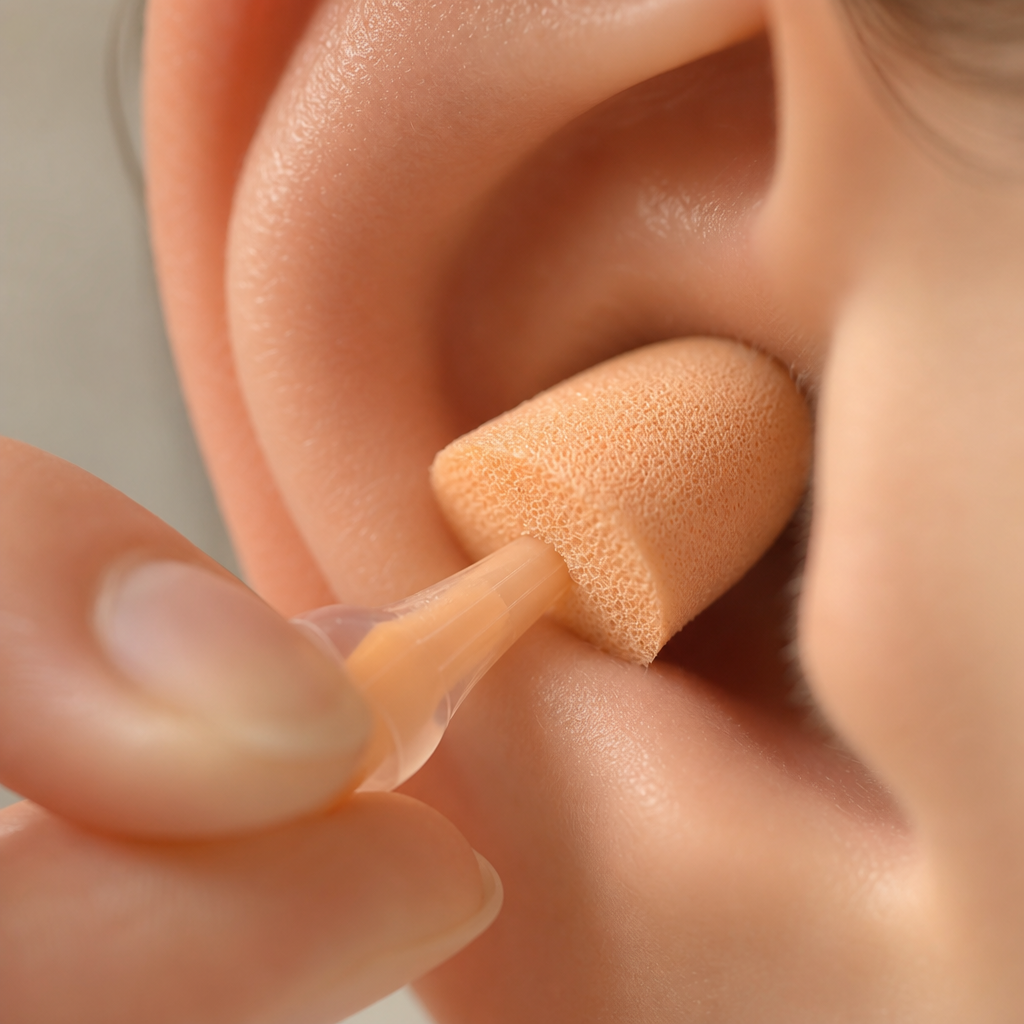
Pro tip: Before going to sleep, insert your ear plugs while sitting upright, pull the top of your ear gently upward and backward to straighten the canal, then compress and insert the foam tip. Lie down only after the foam has fully expanded. This single technique can increase your effective attenuation by 4 to 8dB compared to inserting them while already lying on a pillow.
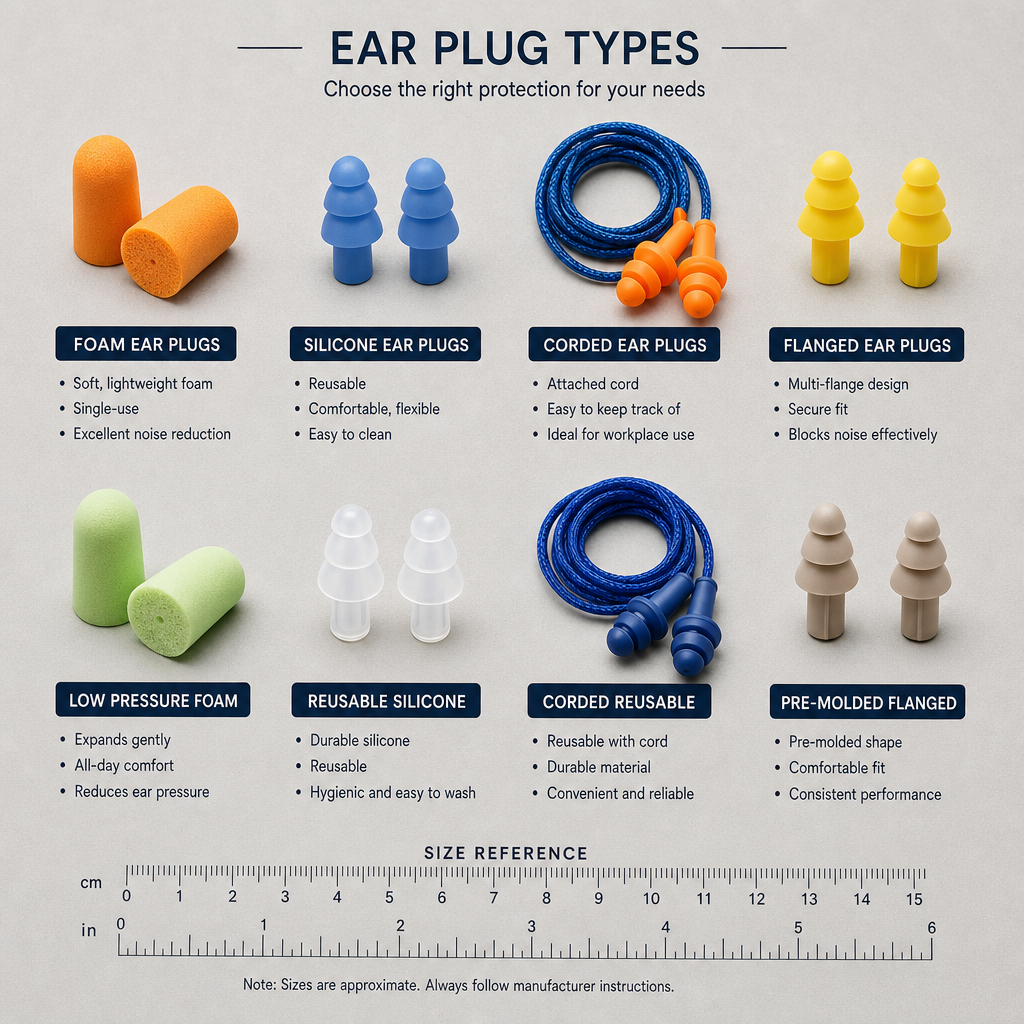
Not all ear plugs rated at or near 32dB NRR deliver that rating with the same consistency, comfort, or durability. The format and materials of the product directly affect whether the rating is achievable in real sleep conditions.
| Ear Plug Type | Typical Real-World Attenuation vs Rated NRR | Sleep Suitability Factors |
|---|---|---|
| Disposable foam cylinder (single-use) | 40-55% of rated NRR in practice. Housing deforms quickly, reducing seal integrity after first use. | Low durability. No size options. Uncomfortable under pillow pressure. Generates significant waste for nightly users. |
| Silicone flanged reusable plug | 50-65% of rated NRR. Flanges can achieve a better canal seal than a cylinder but are highly sensitive to ear geometry mismatch. | More comfortable than foam cylinders for some users. However, rigid flanges can cause pressure pain during side sleeping. |
| Metal-bodied plug with sized memory foam tips (e.g., ATTENU8) | 65-90% of rated NRR when the correct tip size is used. Aluminium body holds geometry under pillow pressure. Memory foam conforms to individual canal shape. | Superior comfort for side sleepers due to low-profile concave design. Replaceable tips every 6-8 weeks maintain consistent attenuation without replacing the entire unit. |
The data consistently shows that the weakest link in any ear plug system is not the foam material itself but the stability of the housing that positions it. Once you solve the housing problem with a rigid body, the foam tip can do its job, and rated NRR figures become much more achievable in practice.
Memory foam is the preferred material for ear plug tips in sleep applications for one straightforward reason: it conforms slowly to the specific contours of the user’s ear canal rather than applying a single fixed shape. Standard foam expands quickly after compression, which can create pressure before the tip has fully seated itself. Memory foam takes 10 to 20 seconds to reach its final expanded shape, which allows the tip to travel deeper into the canal and form a more complete acoustic seal before the expansion force becomes noticeable.
The acoustic consequence of this conforming behaviour is measurable. A memory foam tip in a size-matched canal will achieve a tighter seal at the mid and high frequency ranges, which are precisely the frequencies most responsible for perceived sleep disruption. Snoring, traffic rumble, and human speech all contain significant energy in the 500Hz to 4000Hz range, which is where memory foam’s superior conforming behaviour produces the most meaningful attenuation compared to standard polyurethane foam.
Tip replacement frequency matters here too. Memory foam degrades with repeated compression and body oil exposure. A tip that has been compressed and re-expanded every night for ten weeks will no longer return to its original shape, reducing its effective diameter and therefore its canal seal. The six to eight week replacement cycle recommended for ATTENU8’s memory foam tips is not an arbitrary commercial decision. It reflects the realistic usable lifespan of memory foam under nightly use conditions before attenuation begins to measurably decline.
The metal body, by contrast, does not degrade in the same way. The aluminium housing of each ATTENU8 plug maintains its geometry indefinitely, meaning the cost of maintaining peak 32dB performance reduces over time to only the tip replacement, rather than the entire product. For a light sleeper using ear plugs every night, that represents a significant practical and financial difference compared to buying disposable foam cylinders weekly.
Complete blocking of snoring is not a realistic expectation from any passive ear plug. What 32dB NRR does in practice is reduce moderate snoring (around 60-70dB) to approximately 38-50dB after attenuation. That range sits below the level that typically triggers arousal responses during sleep, so most users experience significantly fewer disruptions without the source being inaudible. Very loud snoring above 80dB may still be detectable, though at a greatly reduced intensity.
The NRR is a laboratory rating. The EPA recommends dividing it by half to estimate real-world performance for an untrained user. However, with correct insertion technique and a properly sized tip, attenuation closer to the full NRR is achievable. A 32dB NRR product can realistically deliver between 16dB (poor fit, incorrect size) and approximately 28-30dB (correct size, proper insertion technique) in real sleep conditions.
Yes. Wearing hearing protection during sleep presents no risk of hearing damage. The concern about overuse of ear plugs typically relates to hygiene, specifically earwax impaction from repeated deep insertion, and to skin irritation from material contact. Using replaceable foam tips on a regular replacement schedule, keeping the housing clean, and selecting the correct tip size that seals without requiring excessive insertion depth all address these concerns effectively.
Start with a medium tip if you are uncertain. Insert it using proper technique, pull the ear upward and back, compress the tip, insert, and wait for full expansion. If you feel significant pressure or pain during expansion, drop to a small. If the tip feels loose or slides out during the night, move up a size. The correct size creates a sense of fullness without pain, and background noise drops noticeably the moment expansion completes. This trial process takes two to three nights to complete reliably.
Yes, provided the body is designed with sleeping posture in mind. A concave or low-profile aluminium design sits recessed relative to the ear’s outer structure, meaning pillow contact does not drive the plug deeper into the canal or create painful pressure points. Cylindrical or protruding designs, whether plastic or metal, are a worse choice for side sleepers because they transfer pillow force directly into the ear canal. The body geometry matters more than the material when evaluating sleep comfort.
The majority of consumer ear plugs for sleep sit between 20dB and 33dB NRR. Products marketed toward aesthetic or lifestyle positioning, such as some filtered ear plugs from competitors, often rate between 16dB and 26dB NRR because their acoustic filter design prioritises sound fidelity over maximum attenuation. For sleep-focused buyers whose primary goal is noise reduction rather than hearing environmental sounds clearly, 32dB NRR at the top of the consumer range is the appropriate target, and the housing quality determines whether that rating is actually achievable.
Have you tried ear plugs for sleep and found the real-world performance matched the rating on the packaging? Share what worked and what did not in the comments below.

