


 0
0

Most people walk through their day completely unaware that the sounds around them are quietly eroding their hearing. Everyday noise levels in decibels from sources like blenders, commuter trains, and leaf blowers regularly hit thresholds that cause permanent damage after just minutes of exposure. The World Health Organization estimates that 1.1 billion young people are at risk of hearing loss due to unsafe noise exposure. If you have ever ended a day with ringing ears or muffled hearing, you have already crossed into dangerous territory. This article names the ten worst offenders, gives you the real numbers, and tells you exactly what to do about it.
| Key Insight | Explanation |
|---|---|
| 85 dB is the damage threshold | NIOSH sets 85 dB as the level at which hearing damage begins with prolonged exposure. Many daily sounds exceed this comfortably. |
| Decibel scale is logarithmic | An increase of just 10 dB means the sound is 10 times more intense acoustically. 100 dB is not slightly louder than 90 dB, it is ten times more intense. |
| Restaurants routinely hit 85-95 dB | A busy restaurant is not a calm environment. Ambient noise at peak service can match a power lawn mower. |
| Earbuds at full volume reach 110 dB | Listening through earbuds at maximum volume for 15 minutes can cause the same damage as eight hours in a loud factory. |
| Disposable foam plugs lose NRR fast | Compressed single-use foam plugs provide inconsistent protection because most people do not insert them correctly. A reusable plug with a structured body and proper fit delivers more reliable noise reduction. |
| Hearing loss from noise is irreversible | Unlike some medical conditions, noise-induced hearing loss (NIHL) cannot be reversed with medication or surgery. Prevention is the only effective strategy. |
| Sleep disruption starts at 45 dB | The WHO recommends that nighttime outdoor noise should not exceed 40 dB to prevent sleep disturbance. Traffic noise in most cities far exceeds this level. |
The decibel scale does not behave the way most people expect. Every 3 dB increase doubles the sound energy reaching your ears, which means the safe exposure time is cut in half. At 85 dB, NIOSH guidelines allow 8 hours of exposure. At 88 dB, you are down to 4 hours. At 100 dB, you have about 15 minutes before damage accumulates.
The data consistently shows that people dramatically underestimate the intensity of sounds in their immediate environment. This is not a perception problem, it is a physics problem. Sound pressure increases far faster than human perception suggests, so your brain tells you a sound is only a little louder when it is actually multiple times more intense.
Understanding everyday noise levels in decibels is the first step to making rational decisions about when to protect yourself and when normal conversation levels pose no real risk.
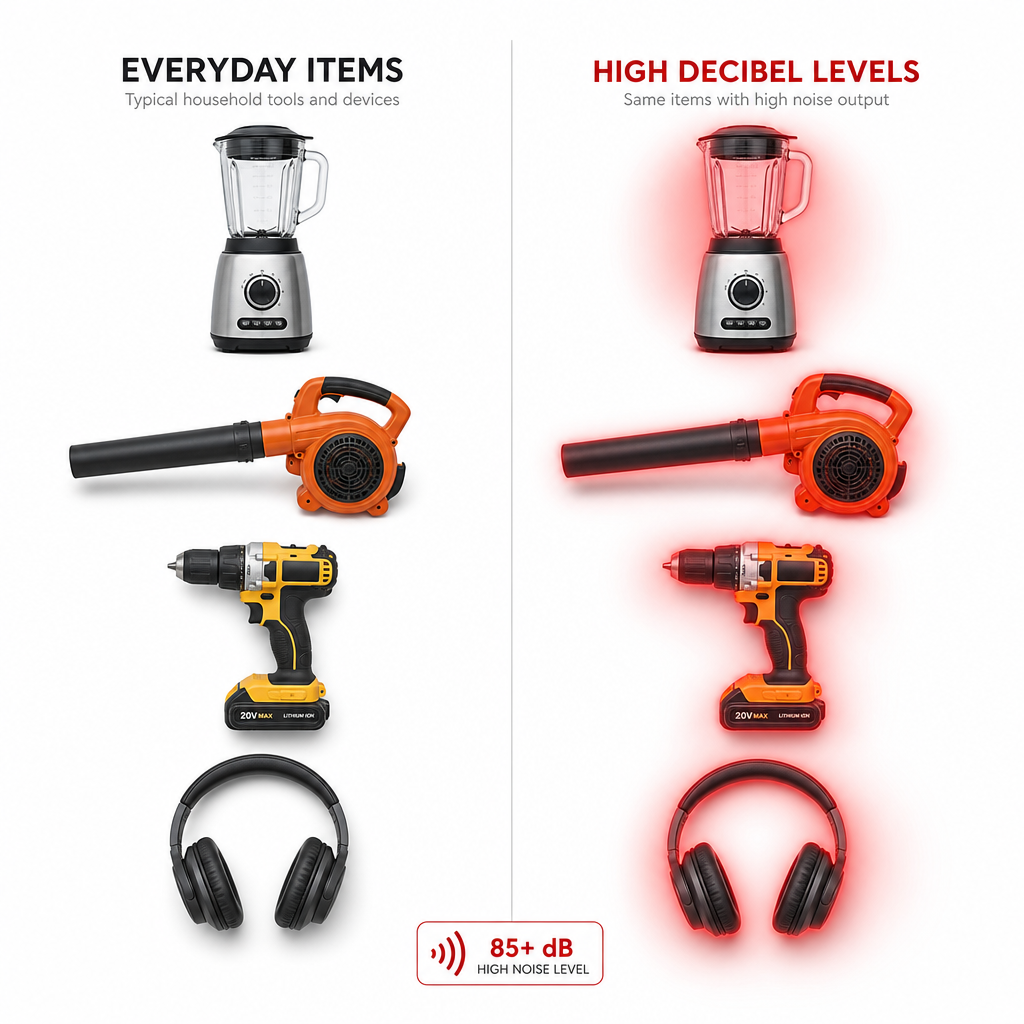
The following list is ordered from surprising to genuinely alarming. Each entry includes real measured decibel ranges drawn from published occupational health and audiology research, not estimates.
Your kitchen blender runs between 88 and 95 dB at one metre of distance. Most people use it for 30-60 seconds at a time without a second thought. A single use is unlikely to cause permanent damage, but daily repeated exposure compounds. Construction workers understand cumulative noise dose. Home cooks generally do not.
A 2019 study published in the journal Ear and Hearing measured ambient noise in 37 New York City restaurants and found average levels of 89 dB. If you eat out three times per week and linger over meals, your cumulative weekly dose from restaurant noise alone approaches occupational exposure limits. Noise-sensitive individuals often report exhaustion after social dining, and this is a physiological response, not anxiety.
At maximum volume, consumer earbuds can produce over 110 dB. At 70% volume, most devices output between 94 and 100 dB. Teenagers and commuters using in-ear headphones on public transport are particularly at risk because they instinctively raise the volume to mask background noise rather than wearing sound-isolating ear protection.
Petrol-powered lawn mowers typically measure 90-96 dB at the operator’s ear. Leaf blowers are worse, ranging from 95 to 106 dB. An hour of weekend gardening without protection represents a serious noise exposure event. The EPA’s noise standards have not been updated since 1974, so these tools remain legal regardless of how damaging they are.
Rail transit noise is one of the most overlooked sources of daily hearing risk. The New York City Transit Authority has published platform noise measurements showing levels routinely above 94 dB during train arrivals, with peaks up to 102 dB. Commuters waiting on platforms multiple times daily receive meaningful cumulative exposure.
Modern cinema sound systems are calibrated to produce peak levels exceeding 100 dB during action sequences. A two-hour film with frequent loud scenes delivers a substantial noise dose. In practice, most audiologists advise wearing discrete hearing protection during action films, which most moviegoers find socially uncomfortable even when it is medically justified.
Wind noise on a motorcycle at 100 km/h generates approximately 90-95 dB at the rider’s ear inside a standard helmet, before the engine noise is added. Motorcycle riders have among the highest rates of high-frequency hearing loss of any non-industrial group. Reusable ear plugs that fit securely inside a helmet without shifting are a practical and underused solution.
A standard circular saw produces around 100-110 dB. Angle grinders and pneumatic nail guns are worse. Occupational safety regulations in most countries require hearing protection above 85 dB in workplace settings, yet DIY users working on weekend home projects apply none of the same standards to themselves despite identical exposure.
This one genuinely surprises people. A crying baby can produce peaks of 110-117 dB at close range. New parents often spend hours per day in close proximity to an infant in distress. Sleep deprivation, stress, and repeated high-decibel exposure combine in a way that is particularly hard on the auditory system.
Sports arenas and concert venues routinely hit 100-110 dB, with peak crowd events reaching 120 dB or higher. The 2014 Seattle Seahawks crowd noise record measured 137.6 dB. Even a two-hour concert at 105 dB represents a noise dose that exceeds NIOSH’s safe daily exposure by a factor of several hundred. Yet most concert-goers would feel conspicuous wearing ear plugs, despite the fact that the permanent hearing damage is entirely preventable.
NIOSH guidelines provide the clearest framework for understanding cumulative noise dose. The table below shows the maximum safe exposure times at various decibel levels before hearing damage is considered likely.
A common mistake is treating these thresholds as pass or fail events. Damage is cumulative. If you spend 30 minutes at 100 dB and then 4 hours at 90 dB in the same day, you have likely exceeded your safe dose for that day even though neither event alone crossed the maximum threshold.
“The dose of noise is what matters, not any single exposure event. Audiologists who treat noise-induced hearing loss consistently find that patients underestimate how many moderate-level exposures they accumulate across an ordinary week.” – American Academy of Audiology guidance on occupational hearing conservation
Pro tip: Download a free sound level meter app on your smartphone (NIOSH’s SLM app is one of the more accurate free options) and measure the environments you spend the most time in. Most people are shocked by what their commute, office, or kitchen registers.
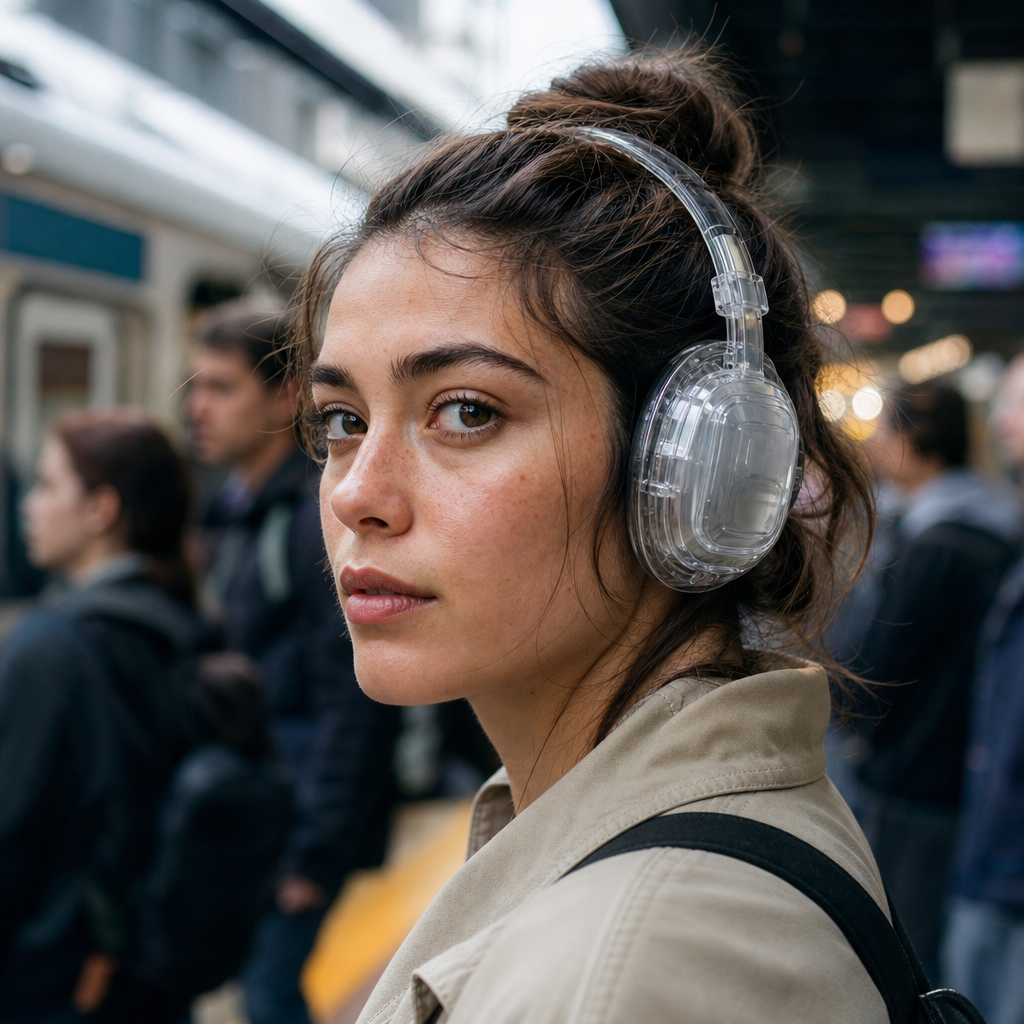
Not all hearing protection delivers what it promises under real-world conditions. The noise reduction rating (NRR) printed on packaging is measured in controlled laboratory conditions with correct insertion technique. In practice, most users achieve only 50% of the listed NRR because of improper fit or inconsistent insertion.
The comparison below covers the three most common categories of everyday hearing protection, assessed on the factors that actually matter for daily use.
| Protection Type | Real-World NRR Performance | Best Use Case |
|---|---|---|
| Single-use disposable foam plugs | Inconsistent. Lab NRR often 29-33 dB, real-world typically 10-15 dB due to poor insertion. Must be replaced after every use to maintain even this level. | Emergency one-off use when nothing else is available. Not suitable for daily use or professional environments. |
| Reusable metal-bodied ear plugs with memory foam tips (e.g., ATTENU8) | More consistent due to structured body guiding correct depth. ATTENU8 delivers approximately 32 dB NRR with included XS, S, and M foam tips allowing proper sizing. Tips replaced every 6-8 weeks, body lasts indefinitely. | Daily sleep protection, commuting, motorcycle riding, concerts, construction, and any scenario requiring reliable repeatable performance. The aluminium body does not compress or degrade the way full-foam plugs do. |
| Electronic earmuffs | High NRR (25-30 dB) with consistent fit. Amplify quiet sounds while blocking loud ones. Bulky and not suited to discreet daily use or sleep. | Industrial and construction environments, shooting ranges, situations where situational awareness matters but loud impulse sounds must be blocked. |
The practical conclusion here is straightforward. If you need hearing protection you will actually use every day, including for sleep, travel, and commuting, a reusable ear plug with a rigid body and replaceable foam tips outperforms disposable options in both consistency and long-term cost. A pair of ATTENU8 ear plugs with tip replacements every 6-8 weeks costs a fraction of what repeated disposable foam plug purchases add up to over a year, while delivering more reliable protection.
The sounds that damage hearing most are not the dramatic ones. The concert you attend twice a year is a risk, but the subway commute you take five days a week is a larger cumulative threat. Noise exposure risk is a daily management problem, not an occasional precaution.
Traffic, partners snoring, and early morning urban noise typically register 50-70 dB inside a bedroom. This is above the WHO’s 40 dB nighttime recommendation and high enough to prevent restorative deep sleep even if you do not fully wake. Wearing ear plugs during sleep is not excessive, it is a direct physiological intervention for sleep quality. The critical requirement is comfort across 6-8 hours, which is where a structured aluminium body with soft memory foam tips outperforms a rolled foam cylinder that slowly expands and shifts during the night.
Construction workers, manufacturing floor staff, and military personnel face occupational noise at 90-120 dB for extended periods. NIOSH data shows that 22 million US workers are exposed to hazardous noise at work each year. Compliance with employer-mandated hearing protection is a legal floor, not a ceiling. Using a secondary pair of reusable, well-fitted ear plugs during off-duty hours in noisy environments gives additional protection to a hearing system that is already under sustained daily load.
Airplane cabin noise during cruising flight measures approximately 85 dB, right at the standard damage threshold. A four-hour flight represents four hours of exposure at exactly the level where the eight-hour safe limit begins. Business travelers taking multiple flights per week accumulate meaningful exposure that most occupational health frameworks would flag as a concern if it were occurring in a factory instead of an airplane seat.
Pro tip: Keep a pair of reusable ear plugs accessible in your commute bag, not stored at home. The ones you have with you are the only ones that protect you. ATTENU8’s aluminium body is durable enough to keep in a bag pocket without being crushed or contaminated the way loose foam plugs are.
NIOSH sets the threshold at 85 dB for an 8-hour exposure. Above this level, safe exposure time halves with every 3 dB increase. Instantaneous sounds above 120 dB, such as gunshots or some industrial machinery, can cause immediate permanent damage with a single exposure. The key point is that damage is dose-dependent: duration matters as much as intensity.
For consistent daily use, yes. Single-use foam plugs provide unreliable protection because most people do not insert them correctly, achieving only about 50% of the stated NRR. A reusable plug with a structured body, like the aluminium-bodied ATTENU8, guides correct insertion depth and stays positioned throughout the night or workday. The replaceable memory foam tips maintain hygiene without requiring you to replace the entire plug, which makes long-term use both cheaper and more consistent.
The practical indicators are ringing or buzzing ears after leaving an environment, muffled hearing that takes minutes or hours to clear, and needing to raise your voice to be heard by someone an arm’s length away. Any of these signals means the ambient level was above 85 dB. A free smartphone sound level meter app can give you real numbers before the exposure rather than after the damage.
Yes, when used correctly. Ear plugs designed for sleep, particularly those with soft memory foam tips and a body that does not press against the ear canal wall when lying on a pillow, are safe for nightly use. The main risk with poorly fitting plugs is discomfort and wax build-up if the plug is too large or sits too deep. Using the correct tip size (ATTENU8 includes XS, S, and M options) and replacing tips every 6-8 weeks prevents hygiene issues.
The sounds that create the highest cumulative risk are not the most dramatic ones. Daily commuter rail, headphone use above 60% volume, and regular restaurant dining collectively represent more cumulative exposure than an occasional concert for most people. Prioritise protection during your most frequent high-noise activities, not just the obviously loud ones.
No, and this is the most dangerous misconception in hearing health. Sounds between 85 and 100 dB often feel merely loud or uncomfortable, not painful. Pain typically begins around 120-130 dB. The absence of pain does not indicate a safe exposure level. Noise-induced hearing loss accumulates silently, often over years, before the affected person notices a functional decline in speech clarity or high-frequency perception.
Have you recently discovered that a sound in your daily routine was louder than you expected? Share what it was and how you are handling it now.

