


 0
0

Most people know noise keeps them awake. What most people do not know is exactly which sleep stage noise destroys first, and why that destruction has consequences that ripple through the next 16 hours of waking life. The relationship between sleep stages and noise is not simply about being startled awake. It is about neurological architecture being quietly dismantled every night. Research from the National Institutes of Health confirms that even noises below the threshold of conscious waking can suppress slow-wave and REM activity. If you are a light sleeper, a shift worker, or someone in a loud environment, this is not abstract science. This is your daily reality.
| Key Insight | Explanation |
|---|---|
| Noise damages sleep even without waking you | Sub-awakening sounds above 40dB suppress slow-wave sleep and reduce restorative delta wave activity without causing conscious arousal. |
| Deep sleep (Stage 3) is the most vulnerable stage | Slow-wave sleep is the hardest sleep to enter and the easiest to disrupt. A single noise event can abort a deep sleep cycle that took 45 minutes to reach. |
| REM sleep disruption impairs memory and emotion | Noise during REM prevents the brain from consolidating memories and processing emotional stress, leaving you cognitively impaired the next day. |
| Intermittent noise is worse than constant noise | The brain habituates to steady background noise more readily. Unpredictable sounds, like traffic or snoring, trigger repeated micro-arousals throughout the night. |
| 32dB noise reduction is the minimum effective threshold for sleep protection | Standard disposable foam plugs rated at 33 NRR degrade quickly and fit poorly. A consistent 32dB seal from a well-fitted reusable plug delivers more reliable protection night after night. |
| Early sleep cycles contain more deep sleep | The first two sleep cycles (approximately hours 1 to 4) are disproportionately rich in Stage 3 sleep. Noise exposure early in the night does the most cumulative damage. |
| Ear plug comfort determines whether people actually use them | An ear plug that causes physical discomfort by 2am will be removed, eliminating all protection. Fit consistency matters more than peak NRR rating on paper. |
Human sleep is not a single uniform state. It cycles through four distinct stages across the night, each serving a different biological function. Understanding what each stage does is the only way to understand precisely what you lose when noise interrupts it.
The four stages are: Stage 1 (light NREM), Stage 2 (intermediate NREM), Stage 3 (deep slow-wave NREM), and REM sleep. A full cycle through all four takes approximately 90 minutes, and a healthy adult completes four to six of these cycles per night. The problem is that the composition of each cycle changes across the night, and not in a forgiving way.
Stage 1 is the transition between wakefulness and sleep. It lasts only a few minutes and is where you are most easily jolted awake. A car door slamming outside during Stage 1 will almost certainly reset the entire process. Stage 2 involves the emergence of sleep spindles, which are bursts of neural activity believed to play a role in protecting sleep from external disturbances. Think of sleep spindles as a weak biological noise gate. They exist, but they have clear limits.
Slow-wave sleep, also called deep sleep or Stage 3, is where the body does its most critical repair work. Growth hormone is released almost exclusively during this stage. The glymphatic system, which clears metabolic waste from the brain, operates at peak efficiency here. Immune function is consolidated. If you lose Stage 3 sleep, you wake up feeling physically unrestored regardless of how many total hours you spent in bed.
The data consistently shows that Stage 3 sleep is front-loaded. You get the most of it in the first half of the night. This means that noise exposure between roughly 10pm and 2am, for someone sleeping at a standard time, does disproportionate damage to the restorative function of sleep.
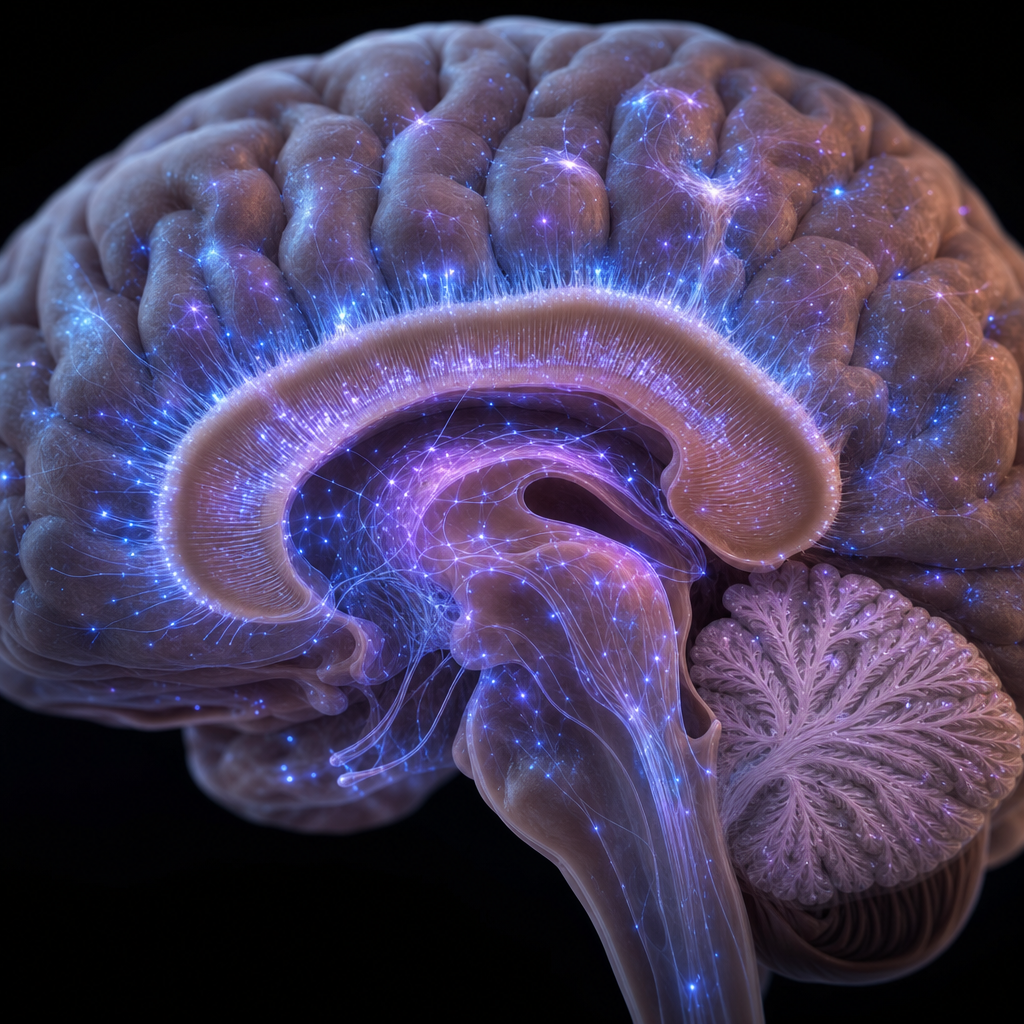
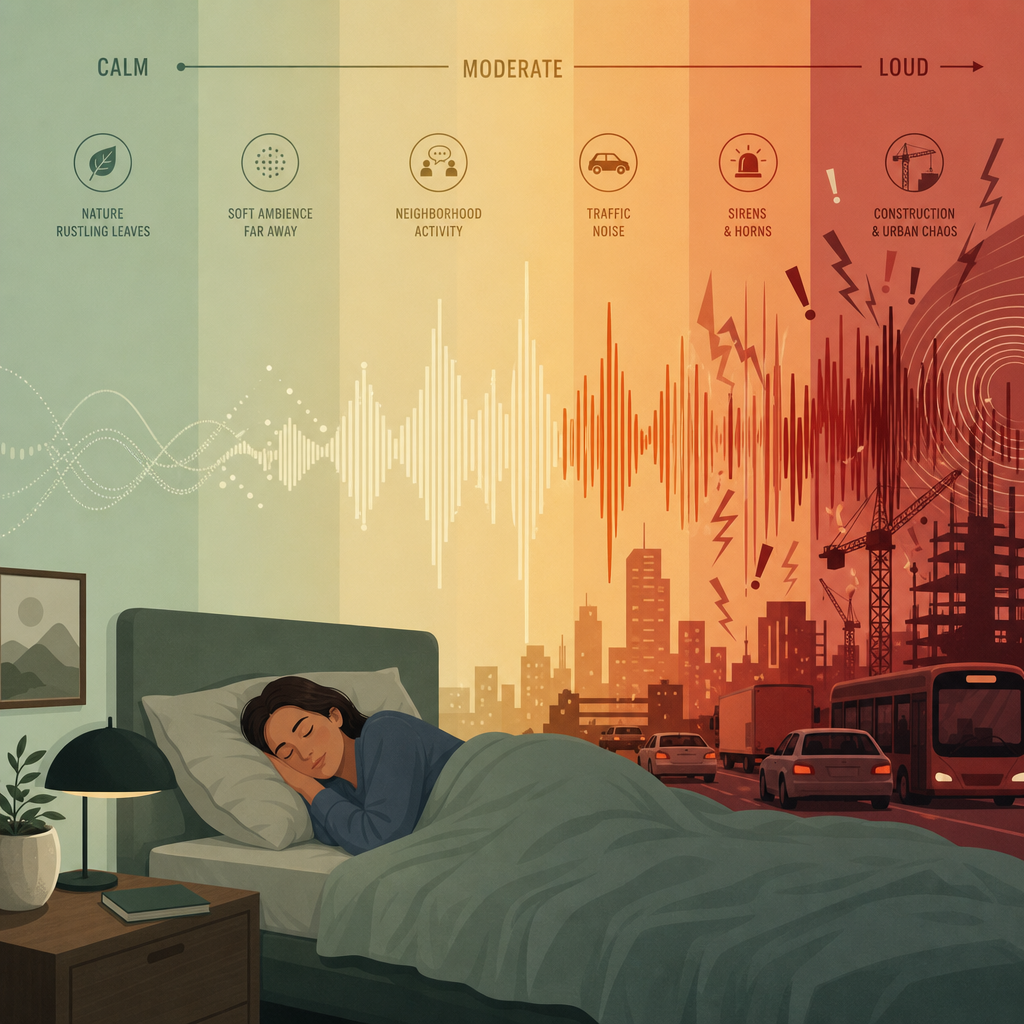
The mechanism by which noise disrupts deep sleep is more insidious than most people assume. You do not need to wake up for the damage to occur. The auditory cortex remains active during sleep. Even when you are fully unconscious, your brain is still processing acoustic information and deciding whether it represents a threat.
Research published in the journal Sleep Medicine Reviews documents that noise events above approximately 40dB during slow-wave sleep trigger measurable changes in EEG activity, reducing delta wave power, which is the specific brain wave pattern associated with deep restorative sleep. The body does not fully wake. It simply gets pulled up from Stage 3 toward the lighter stages, and the restorative process is interrupted.
Micro-arousals are brief shifts in brain state, typically lasting 3 to 15 seconds, that do not produce conscious wakefulness but do disrupt sleep architecture. A person can experience 20 or 30 micro-arousals per night from environmental noise and wake up with no memory of any of them. They simply feel unrefreshed and assume they are not a good sleeper.
In practice, this is one of the most commonly misdiagnosed sleep problems. People in urban environments, people sleeping next to a partner who snores, and people in shared living spaces often attribute their poor sleep quality to stress, diet, or aging when the primary cause is acoustic. A common mistake is assuming that because you do not recall waking up, noise is not affecting your sleep. That assumption is wrong.
Pro tip: If you consistently wake up feeling unrefreshed despite logging 7 to 8 hours in bed, track the noise environment in your bedroom for one week using a free decibel meter app. You may find your room regularly exceeds 45dB during the night, which is enough to suppress slow-wave sleep without ever fully waking you.
A single noisy night is recoverable. Chronic noise exposure across weeks and months produces cumulative deep sleep deprivation, which is associated with increased risk of cardiovascular disease, metabolic dysfunction, and cognitive decline. The World Health Organization’s European office identified road traffic noise as the second largest environmental health risk in Western Europe, accounting for more healthy life years lost than any environmental pollutant except air quality.
“Night-time noise causes sleep disturbance which leads to a number of health effects including cardiovascular disease, cognitive impairment in children, mental health problems and annoyance.” – World Health Organization, Environmental Noise Guidelines for the European Region
While most people have heard that deep sleep matters, REM sleep noise disruption is less discussed and arguably just as damaging for cognitive and emotional function. REM sleep, which stands for Rapid Eye Movement sleep, dominates the second half of the night. This is when the brain processes emotional experiences, consolidates declarative and procedural memory, and generates novel connections between ideas.
Because REM sleep is concentrated in the early morning hours, typically between 4am and 7am for most adults, this is also when many noise environments get louder. Early morning traffic, garbage trucks, delivery vehicles, birds, construction start times. The cruel irony is that the noise you are most likely to hear in the morning is targeting the sleep stage you most need for emotional regulation and cognitive performance.
People who consistently lose REM sleep due to noise report poor emotional regulation, reduced creativity, difficulty with complex problem-solving, and a general sense of mental fogginess. This is distinct from the physical heaviness that comes from losing Stage 3 sleep. REM deprivation specifically impairs the prefrontal cortex’s ability to regulate the amygdala, which means your emotional responses become disproportionate and harder to manage.
For professionals in high-stakes environments, whether that is construction site management, military service, or manufacturing supervision, this is not a minor inconvenience. It is a direct performance and safety risk. The same hearing protection that workers use on site to protect against noise-induced hearing loss should be part of the conversation about protecting the sleep that makes those workers cognitively functional.
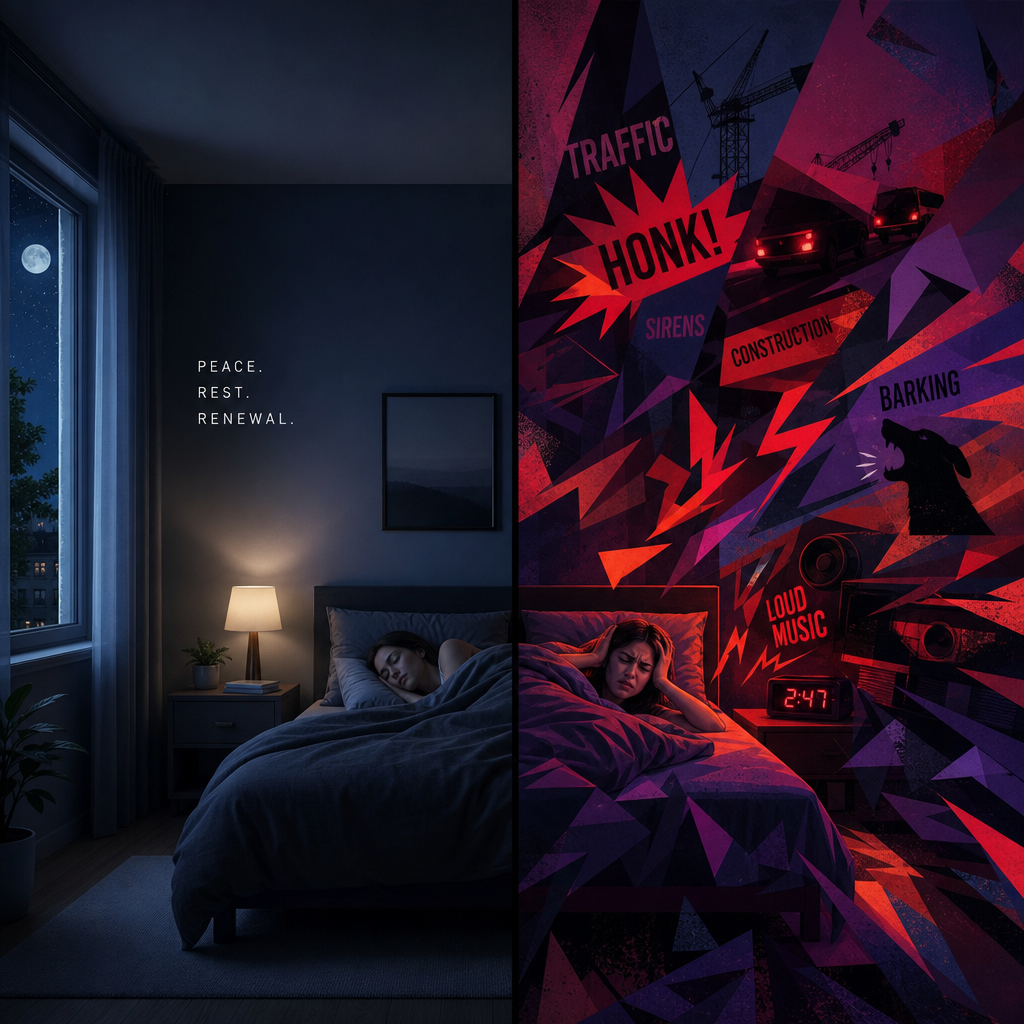
Not all noise is equally destructive to sleep. The research is clear on this: it is not just the volume of a sound that determines how much damage it does. It is the combination of volume, unpredictability, and perceived relevance to the sleeper.
Studies consistently show that sounds with biological or social significance, a baby crying, a voice calling your name, a sudden alert sound, trigger arousal responses at significantly lower volumes than neutral sounds like traffic or rain. This is an evolutionary holdover. The brain is wired to protect against threats, and a meaningful sound gets treated as a potential threat even during sleep.
Snoring from a partner is one of the most common and most damaging noise sources for sleep, and it combines several of the worst features. It is intermittent enough to prevent habituation. It can reach 60 to 80dB at close range. And it often contains vocal qualities that the brain is hardwired to process. A report from the CDC’s sleep health data identifies partner sleep disturbance as one of the leading contributors to short sleep duration in adults.
Traffic noise presents a different but equally serious pattern. It tends to include low-frequency content that travels through walls more effectively than high-frequency sound, making standard cheap foam plugs less effective than their NRR ratings would suggest, since those ratings are measured under controlled conditions that do not reflect real-world use.
Pro tip: When evaluating ear plugs for sleep protection, prioritize consistent fit over maximum NRR rating. A plug that achieves a reliable 28 to 32dB real-world seal every night outperforms one rated at 36dB that you cannot insert correctly or that falls out after an hour. Memory foam tips sized correctly to your ear canal geometry make the difference between lab-rated protection and actual protection.
There are several approaches people use to manage bedroom noise. They are not equally effective, and the differences matter more than most product marketing suggests.
| Approach | Noise Reduction Effectiveness | Practical Limitations |
|---|---|---|
| Standard disposable foam ear plugs | Up to 33dB NRR on paper, but real-world performance is typically 10 to 15dB lower due to poor insertion technique and degradation after first or second use. | Single-use or very short lifespan. Inconsistent fit. Accumulate waste. Many users report discomfort from cylindrical shape pressing on ear canal by 2am to 3am. |
| White noise or sound masking machines | Does not reduce total acoustic energy in the room. Adds a constant sound at approximately 65dB to mask variable noise. Effective for habituation but increases total noise load. | Requires electricity. Masks some sounds but not sudden loud events. Some users find it difficult to sleep without the machine once habituated. Not appropriate for shift workers or travel. |
| Reusable metal-bodied ear plugs with sized memory foam tips (such as ATTENU8) | Consistent 32dB noise reduction with correct tip sizing. Metal body maintains shape integrity over months of use. Multiple tip sizes (XS, S, M) allow genuine anatomical fit rather than one-size-forces-all compression. | Slightly higher upfront cost than disposable foam. Requires learning correct insertion technique once. Foam tips need replacing every 6 to 8 weeks rather than the entire unit. |
Improving sleep quality through noise management requires approaching the problem at two levels: the environment and the ear. Acoustic treatment of a bedroom, meaning heavy curtains, door seals, and soft furnishings, can reduce ambient noise levels by 5 to 10dB. That is meaningful but rarely sufficient for urban environments or partner snoring scenarios.
The more reliable intervention is physical noise attenuation at the ear canal level. This is where the quality of your ear protection directly translates into the quality of your sleep architecture. A consistent 32dB reduction means that a 70dB truck passing outside becomes approximately 38dB at the ear canal level, which is below the threshold at which sleep disruption typically occurs.
Fit consistency is the variable that most ear plug products fail on. Standard cylindrical disposable foam plugs compress into the ear canal in a way that works reasonably well when first inserted but degrades through the night as the foam relaxes. By 3am, the effective seal may have dropped by half. This is precisely when REM sleep is most active and most vulnerable.
The concave design of ATTENU8 ear plugs, combined with memory foam tips in three sizes, is a direct engineering response to this problem. The aluminium body does not deform, and the tip sizing means the foam is working with your ear canal geometry rather than against it. The result is a seal that is as effective at 6am as it was at 10pm. For people whose primary sleep problem is early morning REM disruption from traffic or birds, this consistency is the difference between a functional and a dysfunctional sleep architecture.
Consistency is what converts a good sleep intervention into a good sleep pattern. Using quality ear plugs nightly resets your sleep architecture over time. Within one to two weeks, most light sleepers report a measurable improvement in morning alertness, reduced mid-afternoon energy crashes, and better emotional regulation. These are the downstream effects of protecting Stage 3 and REM sleep rather than treating sleep as a passive, automatic process.
For professionals in loud workplaces who are already wearing hearing protection during the day, extending that protection philosophy to nighttime sleep is a logical and high-return decision. The same principle that prevents occupational hearing loss, consistent, well-fitted noise attenuation, also prevents occupational sleep debt.
Research consistently places the threshold for sleep disruption at around 40 to 45dB for continuous noise and somewhat lower for sudden or intermittent sounds. The World Health Organization recommends average nighttime noise levels below 40dB outdoors, which translates to approximately 30dB or lower inside the bedroom. Even sounds you do not consciously perceive can suppress slow-wave sleep if they exceed this range.
Yes, significantly. Intermittent and unpredictable sounds cause more micro-arousals than steady background noise at the same average volume. Sounds with biological relevance, voices, crying, alarms, also trigger stronger arousal responses at lower decibel levels than neutral sounds. This is why snoring from a partner is often more disruptive than street noise at a similar volume.
Stage 3 slow-wave sleep is the most physiologically vulnerable to noise disruption because it is both the hardest stage to enter and the most easily pushed into lighter stages by acoustic events. However, REM sleep disruption carries its own serious consequences for memory consolidation and emotional regulation, particularly because REM is concentrated in the early morning hours when many noise environments intensify.
Partial habituation does occur for steady, predictable sounds. However, habituation at the conscious level does not mean habituation at the level of sleep architecture. EEG studies show that even long-term urban residents continue to show measurable reductions in slow-wave sleep duration in response to traffic noise, despite reporting that they are used to it and rarely wake up. The damage continues even when awareness of it does not.
In practice, most people notice improved morning alertness within three to five nights of consistent, well-fitted ear plug use. Full restoration of sleep architecture, meaning the return of normal Stage 3 and REM duration and timing, typically takes one to two weeks of consistent noise reduction. This assumes the ear protection maintains an adequate seal throughout the night, which requires a properly sized fit rather than a generic one-size product.
For nightly sleep use, reusable ear plugs with replaceable memory foam tips outperform disposable foam plugs on two critical dimensions: consistency of fit and comfort across the full night. Disposable foam plugs are designed for single short-term industrial use and degrade in seal quality and comfort over hours. A reusable metal-bodied plug with correctly sized foam tips maintains its geometry and seal from first use to last, which is exactly what protecting sleep architecture requires.
There are no documented negative effects of nightly ear plug use when plugs are kept clean and the foam tips are replaced on schedule, approximately every six to eight weeks for regular users. The common concern about ear wax buildup is associated with dirty or damaged plugs left in for extended continuous periods, not with clean, well-maintained ear plugs used for a normal sleep duration. If you experience any ear canal irritation, switching to a smaller foam tip size is usually the first corrective step.
If you have been managing noise-related sleep problems, share what has worked or not worked for you. Firsthand experience helps other readers make better decisions about protecting their sleep.
We would love your feedback and any insights you would share with others. What perspective would you add?

