


 0
0

Most people wearing reusable ear plugs never think about their foam tips until the tips are visibly dirty, compressed beyond recognition, or no longer sealing properly. By that point, they have already been sleeping through noise they should have been blocking. Ear plug tip replacement is one of the most neglected aspects of hearing protection hygiene, yet it directly determines whether your ear plugs are delivering the noise reduction you paid for. This guide lays out exactly when to replace, how to spot degradation early, and how to build a maintenance habit that keeps your protection performing at full strength.
The foam tip is doing almost all of the acoustic work. The metal body of a premium reusable ear plug like those from ATTENU8 provides structural integrity and durability, but the memory foam tip is the component that physically seals the ear canal and absorbs sound energy. Once that foam degrades, you are not getting 32dB of noise reduction. You might be getting 15dB, or less.
According to the National Institute for Occupational Safety and Health (NIOSH), the actual attenuation delivered by an ear plug in real-world use is often significantly lower than the labeled NRR, largely because of poor fit and degraded materials. Fresh, properly sized foam tips are the single biggest controllable variable in that equation.
A common mistake is treating a reusable ear plug like the body is the consumable. It is not. The body lasts for years. The foam tip is the consumable, and replacing it on schedule is what separates a functional hearing protection tool from an expensive piece of metal sitting in your ear doing almost nothing.
For most users, 6 to 8 weeks is the optimal ear plug tip replacement interval. This is the timeframe ATTENU8 recommends, and it aligns with what happens to memory foam under regular nightly or daily use conditions: compression fatigue accumulates, the foam loses its rebound speed, and the surface picks up enough earwax and skin oils to compromise both hygiene and acoustic seal.
In practice, this interval is not a hard cutoff. It is a maximum, not a target. If you are using your ear plugs every night for sleep, you will likely hit the replacement threshold closer to 6 weeks. If you use them three or four nights a week, 8 weeks is reasonable. The key is tracking actual usage sessions, not calendar time.
Pro tip: Note the date you install a new set of foam tips on a small piece of tape inside the storage case. This takes five seconds and eliminates the guesswork that leads to using degraded tips for months longer than you should.
What Happens to Foam After 8 Weeks of Daily Use
Memory foam works by slowly expanding to fill the shape of your ear canal, creating a passive acoustic seal. Fresh foam rebounds fully within a few seconds of being compressed. After 6 to 8 weeks of daily use, the foam’s cell structure begins to break down. It still compresses, but it no longer rebounds with the same speed or consistency.
The result is a looser, less consistent seal. High-frequency sounds, which require the tightest fit to block, start leaking through first. For light sleepers, that means the ambient noise that woke them up last week starts waking them up again, even though nothing about their environment has changed. The ear plug body is fine. The tip has simply aged past its useful life.
You do not always need to wait for the calendar. There are physical signs that your foam tips have degraded and need immediate replacement, regardless of how many weeks have passed.
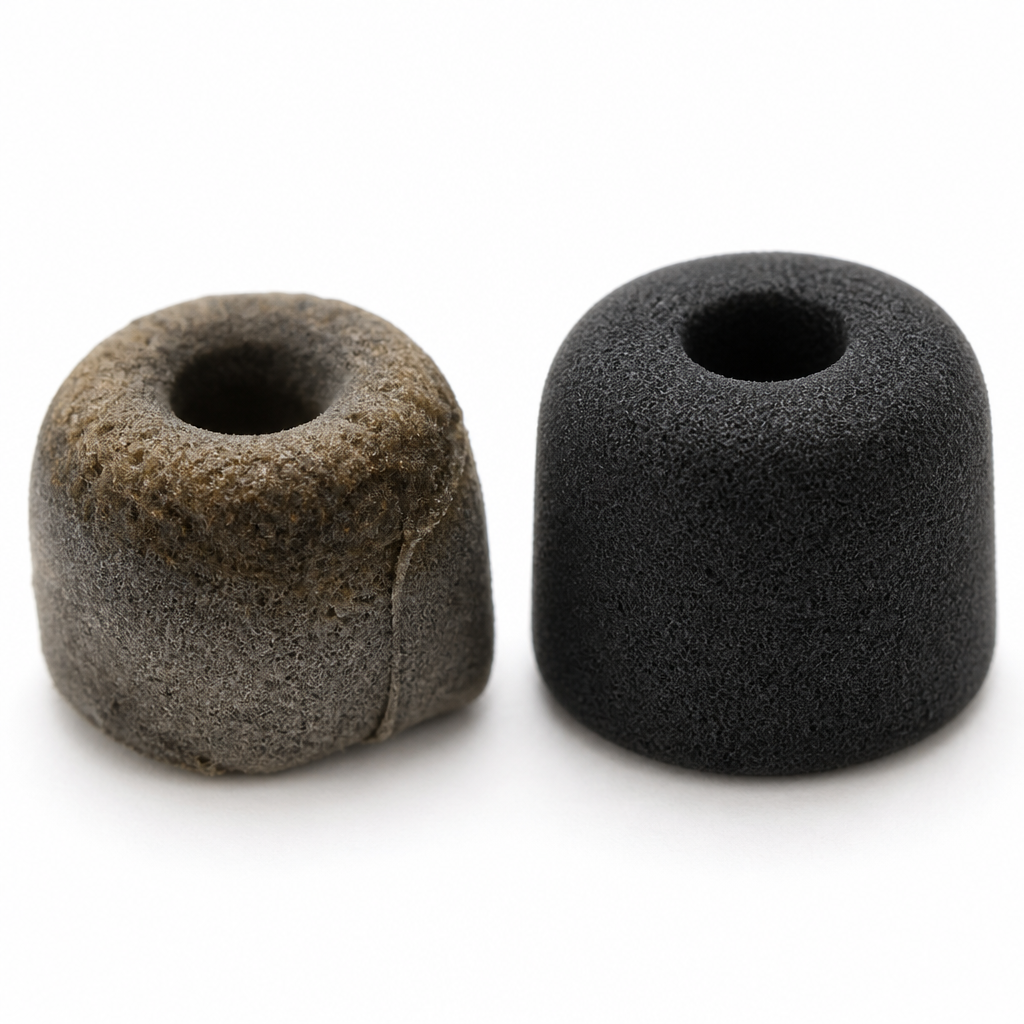
A healthy memory foam tip looks round and full when it is not being worn. If yours has developed a permanent flat spot or indent from repeated compression, the foam’s cell structure is compromised. It will not seal your ear canal properly, and no amount of cleaning will restore the foam’s mechanical properties.
Earwax is yellow to brown and accumulates on the outer surface of the foam over time. Light surface discoloration after a few weeks is normal and manageable with gentle cleaning. Dark discoloration that penetrates into the foam, or visible debris that cannot be wiped off, is a clear signal to replace. You cannot fully sterilize porous foam, and using heavily soiled tips introduces bacteria directly into the ear canal.
This is the most practical test. If you are noticing sounds that the ear plugs used to block, and you have ruled out changes in your environment, the foam tips are the most likely culprit. Put in a fresh set. If the blocking performance improves noticeably, the old tips were overdue for replacement.
Pro tip: Keep a spare set of foam tips in your travel bag or nightstand so you can do an immediate like-for-like comparison when you suspect your current tips have degraded. This removes all the second-guessing.
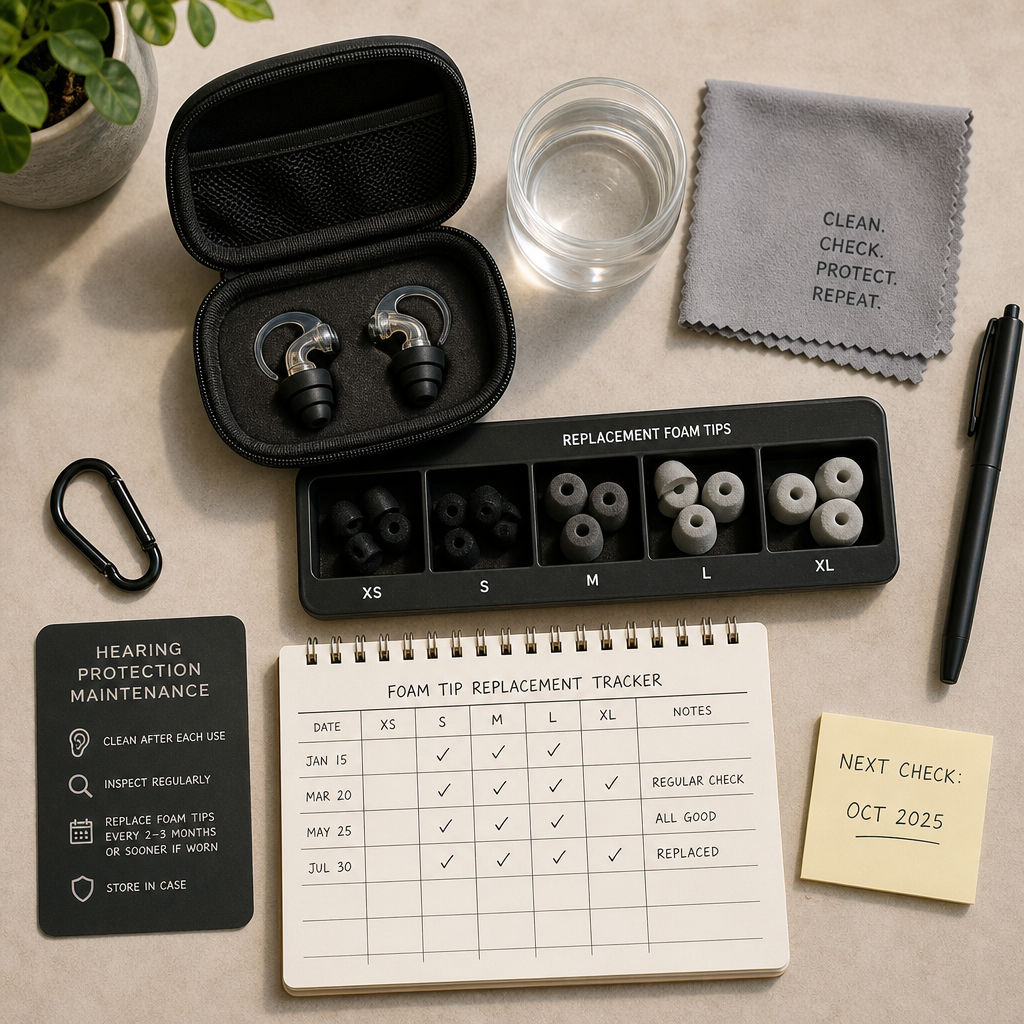
The 6-8 week guideline assumes roughly daily use. But many ATTENU8 users fall outside that pattern. Construction workers and manufacturing professionals may use their ear plugs for 8-10 hours a day, five days a week. Travelers might use them intensively for a two-week trip and then not again for a month. Light sleepers might use them every night without exception.
A more accurate way to think about tip lifespan is in usage sessions rather than calendar weeks. Approximately 40 to 50 sessions of use is a reasonable maximum for a memory foam tip before replacement. For daily users, that lands right at 6-7 weeks. For weekly users, that could stretch to 3 months or more.
Users in industrial environments expose their foam tips to additional stressors: dust, sweat, and mechanical vibration. Sweat in particular is corrosive to open-cell foam over time and accelerates the breakdown of the foam’s surface layer. In hot, sweaty environments, replacement every 4 weeks is more appropriate than every 6-8.
Sleeping with ear plugs introduces a different stressor: pressure. Sleeping on your side pushes the ear plug against your pillow, compressing the foam tip in a consistent direction night after night. This directional compression is harder for the foam to recover from than the circumferential compression of normal insertion. Side sleepers may find their tips degrading faster than the standard timeline suggests.
Understanding the replacement schedule for reusable ear plug tips makes more sense when you see it alongside how disposable ear plugs work. The economics and hygiene profiles are genuinely different, and the comparison helps justify why a structured maintenance approach matters for reusable systems.
| Approach | Replacement Interval | Key Consideration |
|---|---|---|
| Disposable foam ear plugs (single-use) | After every use, or at most 2-3 uses | No maintenance required, but generates significant waste and ongoing cost at high frequency of use |
| ATTENU8 reusable ear plugs with memory foam tips | Foam tips every 6-8 weeks; metal body lasts years | Lower long-term cost, consistent performance when tips are replaced on schedule, environmentally sustainable |
| Competitor solid-body reusable ear plugs (e.g., Loop, Flare Audio) | No tip replacement; clean the full unit | No foam seal, different acoustic mechanism, no tip degradation concern but different fit and attenuation profile |
The key difference in the ATTENU8 model is that you are maintaining a system with two distinct components. The body is a long-term asset. The foam tip is a consumable that needs regular attention. Treating the whole unit as permanent is the single most common reusable ear plug maintenance mistake.
“The ear plug that is not maintained is the ear plug that is not working. A degraded foam tip provides false confidence, not hearing protection.” — NIOSH Hearing Loss Prevention Program guidance on personal protective equipment maintenance.
Replacement on a schedule is essential, but daily cleaning between replacements is what keeps hygiene at an acceptable level and extends the functional life of each set of tips as close to 8 weeks as possible.
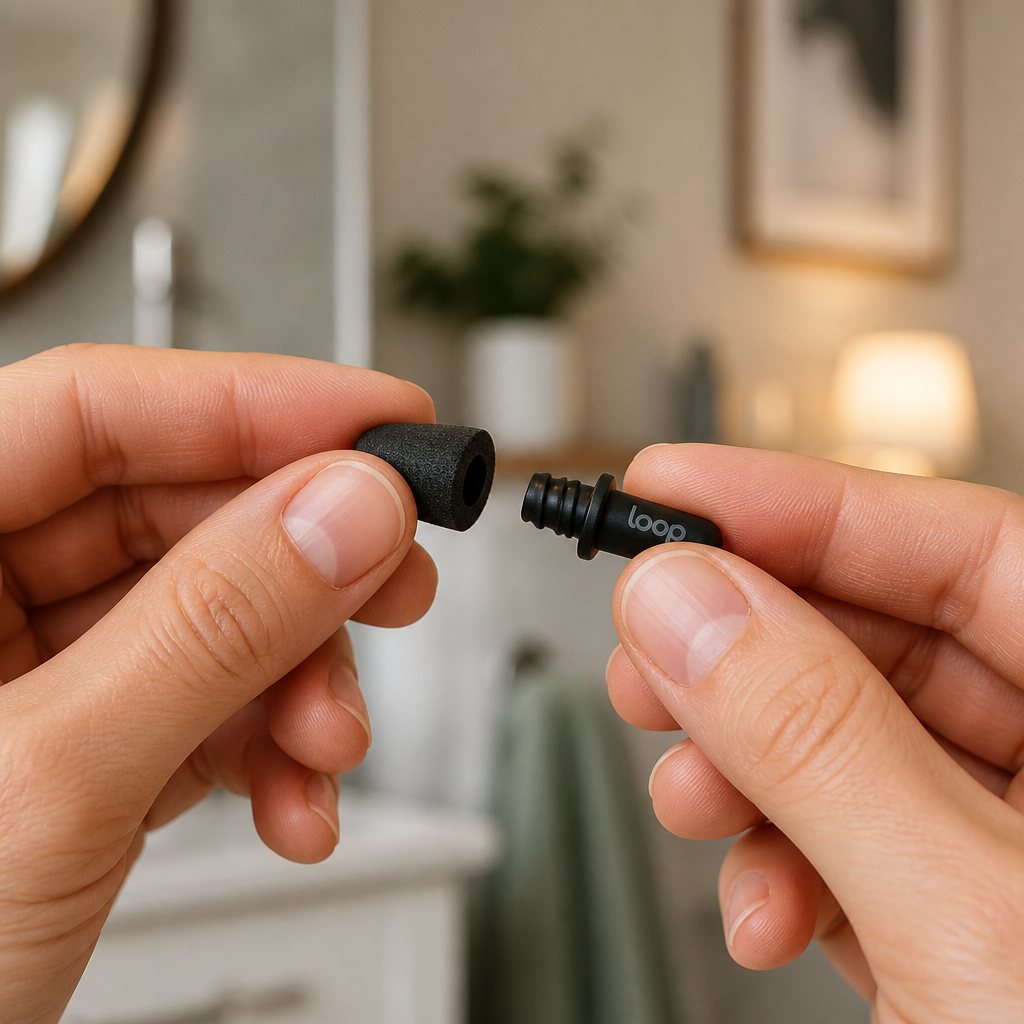
Use a dry or very lightly damp lint-free cloth or cotton pad to wipe the outer surface of the foam tip after each use. Remove visible earwax before it hardens. That is the entire routine for daily maintenance. It takes under 30 seconds.
Do not soak foam tips in water or cleaning solution. Open-cell foam absorbs liquids and does not dry evenly, creating a moist environment where bacteria can thrive. Do not use alcohol wipes directly on the foam itself. Alcohol degrades the foam’s cellular structure and accelerates the very breakdown you are trying to prevent. Alcohol wipes are appropriate for cleaning the metal body of the ear plug, not the foam tip.
Store your ear plugs in a clean, dry case after each use. Leaving them on a nightstand or in a pocket exposes the foam to dust and debris. A closed case also prevents accidental compression from objects sitting on top of the tips, which contributes to premature deformation.
Reusable ear plug maintenance is not complicated. It is consistent. The users who get the most life out of their foam tips are the ones who wipe the tips clean and put them back in a case every single time without exception, not the ones who do a deep clean once a month and otherwise ignore them.
ATTENU8 supplies three tip sizes: XS, S, and M. The right size is not about comfort preference. It is about achieving a proper acoustic seal. An undersized tip will feel comfortable because it does not exert pressure on the ear canal wall, but it will not seal, and you will not get anything close to 32dB of attenuation.
How to Know If Your Current Size Is Correct
With the correct size tip properly inserted, you should notice a clear, immediate reduction in ambient sound. Your own voice should sound slightly muffled when you speak. If you insert the ear plug and the sound reduction feels minimal or inconsistent, try the next size up before assuming the ear plug itself is the problem.
Ear canal size does not change over time, but the way a foam tip fits does change as the foam degrades. A fresh tip at size S may seal effectively. The same tip after 8 weeks may have compressed enough that it no longer fills the canal adequately. This is another reason why replacement on schedule matters. You may have found the right size and then unknowingly reverted to poor attenuation simply because the tip aged past its useful life.
If you have never tested all three sizes against your own ear, do so with a fresh set of each. The difference in perceived noise reduction between a correctly sized fresh tip and an incorrectly sized or worn tip is substantial enough that most users notice it immediately.
If you are using your ATTENU8 ear plugs every night for sleep, replace the foam tips every 6 weeks. Daily use accumulates compression fatigue and earwax buildup faster than the standard 8-week guideline assumes. Setting a recurring reminder every 42 days removes the need to judge tip condition by feel.
Do not use alcohol wipes on the foam tips. Alcohol degrades open-cell foam at the cellular level, shortening the tip’s functional lifespan. Use alcohol wipes only on the metal body of the ear plug. For the foam tips, a dry lint-free cloth is sufficient for daily maintenance.
Appearance is not a reliable hygiene indicator for porous foam. Foam tips can look acceptable while carrying a significant bacterial load from weeks of contact with the ear canal. This is why replacement on a schedule matters independently of how the tips look. Hygiene maintenance means regular wiping and timely replacement, not just cleaning when they appear dirty.
If your ear plugs feel looser than they used to, or if ambient noise is getting through more than you expect, try a fresh set of tips in the same size. If fresh tips restore the performance, your old tips were worn out. If fresh tips at the same size still feel loose, move up to the next size. A proper fit should feel snug with noticeable sound attenuation immediately upon insertion.
Yes, significantly. Disposable foam ear plugs cost roughly 10 to 30 cents per pair, and at daily use you are spending at least $36 to $110 per year on disposables. ATTENU8 replacement tips are replaced every 6-8 weeks, meaning you need 6 to 8 replacement sets per year. The ongoing cost is substantially lower, the waste is far less, and the metal body never needs replacing under normal use.
Appearance is unreliable as a replacement trigger. The foam’s mechanical properties, specifically its rebound speed and ability to maintain a seal, degrade before visible wear becomes obvious. The 6-8 week guideline exists precisely because degradation happens at a cellular level that you cannot see. Extending use beyond 8 weeks risks both reduced attenuation and deteriorating hygiene, regardless of how the tips look.
Have you noticed a difference in noise blocking after replacing your foam tips on schedule? Share what your replacement routine looks like and whether the 6-8 week guideline has matched your experience.

