


 0
0

Most people buy ear plugs the same way they buy a pack of gum: they grab whatever is cheapest at the pharmacy, stuff them in their ears, and wonder why they fall out at 2am or leave their ears aching by morning. That approach costs you sleep, comfort, and over time, real money. A proper ear plug buying guide cuts through the noise, literally, and helps you choose based on noise reduction rating, fit system, material durability, and long-term cost. Whether you are a light sleeper, a shift worker, or someone on a long-haul flight, the right pair changes everything.
| Key Insight | Explanation |
|---|---|
| NRR of 32dB is the benchmark for serious noise reduction | Most budget foam plugs rate between 25-29dB. A 32dB rating like that of ATTENU8 plugs gives meaningful extra protection for loud environments and deep sleep. |
| Tip size determines effectiveness more than brand | An ear plug with three tip sizes (XS, S, M) creates a proper acoustic seal. One-size-fits-all plugs fail because they gap at the ear canal wall. |
| Disposable foam costs far more over 12 months than premium reusables | At daily use, disposable foam plugs cost $50 to $120 per year. Premium reusable plugs with replacement foam tips every 6-8 weeks cost a fraction of that. |
| Memory foam tips outperform rigid silicone for sleep | Memory foam conforms to your individual ear canal shape, reducing pressure pain during side sleeping. Rigid silicone does not compress the same way. |
| A metal body prevents compression and cracking over time | Plastic-bodied and pure foam plugs degrade with heat and oils from skin contact. A machined aluminium body retains its shape and hygiene far longer. |
| Comfort matters as much as decibel rating for sleep applications | A plug rated at 33dB that causes ear pain after 90 minutes is worse than a 32dB plug you can wear for 8 hours. Prioritise both metrics together. |
| Ease of insertion affects consistent protection | A concave body design makes rolling and seating the foam tip significantly easier, which means users insert them correctly every time and get the full rated protection. |
The core problem is not that ear plugs do not work. It is that most people are using the wrong type for their situation. Disposable foam plugs from a petrol station kiosk are engineered for one-off industrial compliance, not for nightly comfort or long-haul travel. They compress unevenly, lose their rebound quickly, and because they are one-size, they seal poorly for anyone with a smaller or larger ear canal.
In practice, the most frequent complaint I hear is that ear plugs either fall out during sleep or cause a dull ache by morning. Both problems trace back to the same root cause: wrong fit combined with material degradation. A foam tip that has been used four or five times no longer expands to the same diameter, so it slides out during the night. This is a fit-and-material failure, not a comfort preference.
The second failure is ignoring the difference between noise reduction rating on a lab test and real-world attenuation. According to the U.S. Occupational Safety and Health Administration (OSHA), real-world protection from ear plugs is typically 50 percent lower than the lab-tested NRR figure, which means a 29dB-rated plug may only give you about 14-15dB of real-world reduction. This makes choosing a plug with a high laboratory NRR, like 32dB, even more important than it looks on the packaging.
NRR stands for Noise Reduction Rating and is the American standard (EPA-regulated) measurement. SNR stands for Single Number Rating and is its European equivalent. Both measure how many decibels of noise the plug filters in controlled laboratory conditions. Neither is a perfect real-world predictor, but they are the most standardised comparison points you have.
If you want to estimate actual workplace noise exposure, OSHA recommends dividing the NRR by two, then subtracting that figure from the ambient decibel level. So a plug rated at 32dB NRR provides roughly 16dB of real-world reduction. At a construction site running at 95dB, that brings your exposure to approximately 79dB, which sits below the 85dB threshold where long-term hearing damage begins.
For sleep applications, ambient noise is typically 40-60dB for traffic, 50-65dB for a snoring partner, and up to 70dB for urban street noise. A 32dB-rated plug used correctly will reduce those levels to a range where the brain stops triggering a stress response and sleep continuity improves substantially.
If you are buying ear plugs in Australia or Europe, look for the SNR figure rather than the NRR. The two are calculated differently and are not directly interchangeable. As a rough guide, an NRR of 32dB broadly corresponds to an SNR of around 35-37dB. Products sold internationally, including those from ATTENU8, should ideally publish both figures or clarify which standard their rating uses.
Pro tip: Always check whether the NRR figure on the packaging refers to the foam tip alone or to the complete assembled unit. Some manufacturers rate the tip in isolation. For metal-bodied plugs with replaceable foam tips, the full assembled NRR is the only figure that matters.
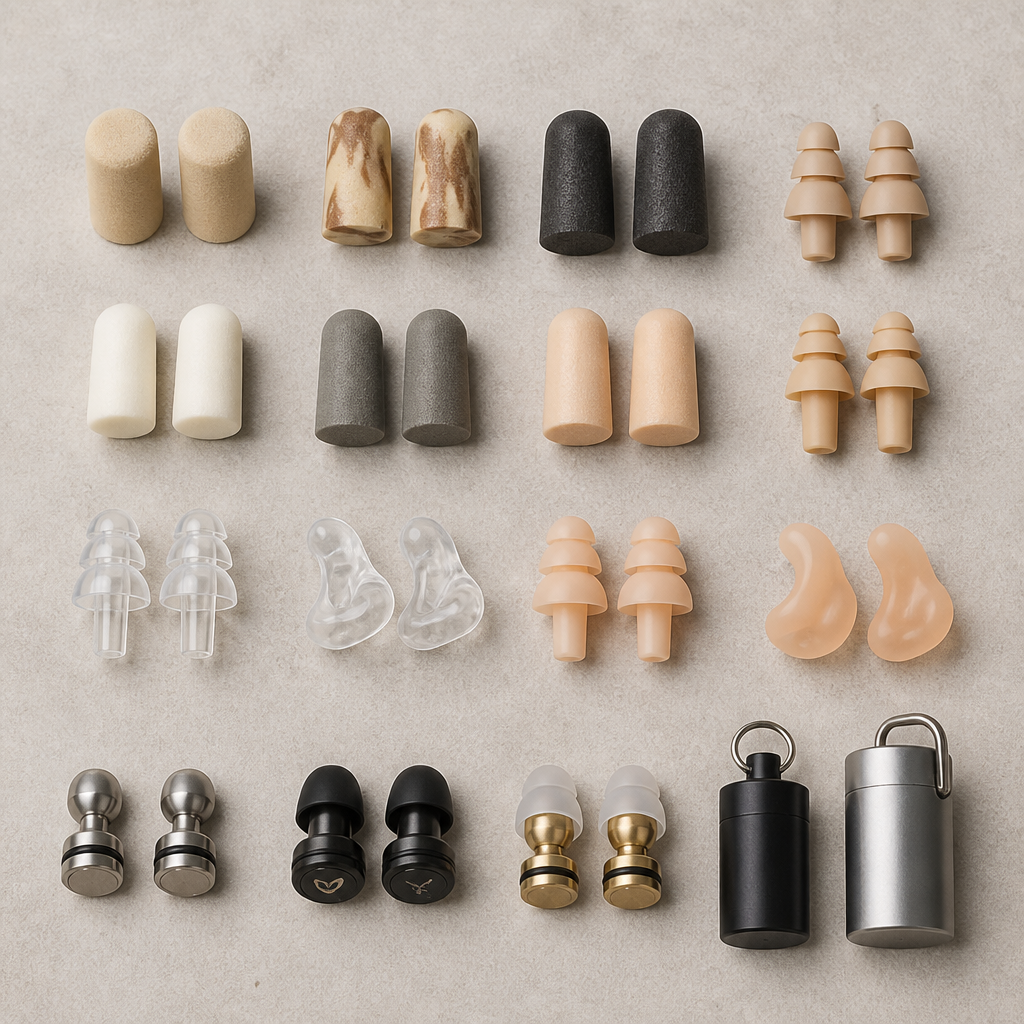
There are three dominant material approaches on the market right now: disposable foam, reusable silicone or rubber, and premium metal-bodied plugs with replaceable foam tips. Each has legitimate uses, but only one is genuinely built for long-term daily use.
Standard PU foam plugs are cheap to manufacture and widely available. They offer good initial attenuation when inserted correctly, which most users do not do. The real issue is degradation: skin oils, earwax, and repeated compression break down the cellular structure within days of first use. After three or four uses, the foam no longer expands fully and the acoustic seal is compromised. For daily sleepers or frequent travellers, this means buying new plugs every week.
Silicone flanged plugs are more durable than foam and easier to clean. Their weakness is rigidity. The flanged design creates pressure points inside the ear canal, which becomes uncomfortable during extended wear, particularly when side sleeping. Brands like Loop Earplugs have built a strong market presence with this approach, but the flanged format, regardless of branding, causes discomfort for a meaningful portion of users after 3-4 hours.
This is the approach taken by ATTENU8, and it solves the core problems of both formats above. The machined aluminium body does not degrade, does not absorb oils, and does not lose its shape. The memory foam tips are the only consumable component, replaced every 6-8 weeks rather than daily. The concave body design makes rolling the foam tip between fingers significantly easier, which means consistent correct insertion and consistently full-rated noise reduction.
“The ear plug market is full of products optimised for cost reduction, not user performance. The difference between a plug that costs 10 cents and one built for daily use over years is not just material quality. It is whether the product was designed around the ear or around a manufacturing budget.” – Industrial Audiologist, Australian Hearing Services perspective
Adult ear canals vary considerably in diameter, typically between 5mm and 11mm. A single foam tip size cannot create a reliable acoustic seal across that range. This is not a minor quibble. An imperfect seal reduces effective noise reduction by 10-15dB, turning a 32dB-rated plug into something closer to a 17-20dB plug in practice.

Ear plugs that come with XS, S, and M tip sizes allow the user to find a genuine fit rather than forcing an average. ATTENU8 ships each pair with all three sizes, which means you test them yourself and use the size that creates the tightest comfortable seal. This approach is standard in custom audiologist-fitted plugs but rare in off-the-shelf products.
For sleep applications, the shape of the plug body matters as much as the tip. A plug that protrudes significantly from the ear canal creates a pressure point when the user turns onto their side. The concave body profile of ATTENU8 plugs sits flush or slightly recessed, distributing pressure across the pinna rather than concentrating it at a single point. This is a specific engineering decision that makes meaningful difference over an 8-hour sleep cycle.
Pro tip: When testing ear plug fit, insert the plug and then cup your hands over both ears briefly. If you notice a significant further reduction in sound, the plug is not sealed properly. The hands-over-ears test is a quick field check for whether you have the right tip size inserted correctly.
Not all ear plug applications demand the same properties. Buying one product for every context often means getting mediocre results in each. Here is how to think about matching specifications to use cases.
For sleep, prioritise comfort over absolute maximum NRR. You need a plug you can wear for 7-8 hours without pain, that does not fall out when you roll over, and that blocks the 40-70dB range of common sleep disruption noise like traffic, partners, or air conditioning. A 32dB NRR with memory foam tips and a flat body profile is the optimal specification for this use case.
For occupational noise environments, you are working within legal compliance frameworks. In Australia, Safe Work Australia requires hearing protection where noise exceeds 85dB LAeq (8-hour average). For prolonged exposure above 100dB, you may need to combine ear plugs with ear muffs. For environments in the 85-100dB range, a properly fitted 32dB NRR plug meets the protection requirement.
Aeroplane cabin noise runs between 75dB and 85dB during cruise. That level is below damage threshold for single journeys but is genuinely fatiguing over hours. For travel, the priorities are comfort during seated use (no pressure points), ease of insertion without a mirror, and a carrying case. Premium reusable plugs with a compact case are far more practical than loose foam plugs in a foil wrapper.
The sticker price of disposable foam plugs looks attractive until you calculate the annual cost of daily use. A standard box of 50 pairs of foam plugs costs approximately $15-$25 AUD. At one pair per night for sleep use, that box lasts 50 nights, meaning you spend $110-$180 per year on foam alone, without accounting for the environmental cost of that volume of non-recyclable PU foam waste.
Premium reusable metal-bodied plugs require foam tip replacements every 6-8 weeks. At that replacement interval, you use approximately 7-8 sets of tips per year. This replacement cost is dramatically lower than continuous disposable purchasing, and the core plug itself lasts years rather than days.
A common mistake is evaluating ear plugs purely on the unit purchase price without factoring in replacement frequency. The same logic applies to razors, printer ink, and hearing protection. The product with the higher upfront cost almost always wins the 12-month cost comparison when it comes with a replaceable-consumable model.
| Feature | Disposable Foam | Reusable Silicone (Flanged) | Premium Metal-Bodied with Foam Tips (ATTENU8) |
|---|---|---|---|
| Typical NRR | 25-32dB (degrades with use) | 20-27dB | 32dB (consistent with correct tip) |
| Comfort for 8-hour sleep | Poor to moderate (pressure, fallout) | Moderate (pressure at flange points) | High (concave body, memory foam tips) |
| Size options | Usually one size | Sometimes S/M/L | XS, S, M included with each pair |
| Annual cost at daily use | $110-$180 AUD | $40-$80 AUD (replacement sets) | Low (tip replacements only, every 6-8 weeks) |
| Body material durability | Single use, then waste | Moderate (silicone degrades over months) | High (machined aluminium, years of use) |
| Ease of correct insertion | Moderate (requires full roll and hold) | Easy but often poor seal result | High (concave body aids foam rolling) |
| Best use case | One-off industrial use | Occasional noise reduction, concerts | Daily sleep, travel, occupational hearing protection |
There are specific buying mistakes that are common enough to call out directly. The first is buying on NRR alone without checking material quality. A 33dB foam plug that falls out after two hours gives you zero protection for the other six. The number on the box assumes correct insertion and maintained seal throughout use.
The second mistake is ignoring hygiene specifications. Ear plugs sit in a warm, moist environment where bacteria accumulate. Foam plugs that cannot be cleaned should be replaced frequently. Metal-bodied plugs can be wiped clean, and silicone tips can be washed. If a product gives no hygiene guidance, treat that as a signal about how seriously the manufacturer thought about real-world use.
The third mistake is buying from brands that offer no tip sizing. A brand that sells a single-size product for all adults is telling you that their ear canal research budget was zero. This matters most for women and younger adults, who statistically have smaller ear canals than the average male measurements used in most industrial plug designs.
A common mistake is assuming that higher price automatically means better noise reduction. Several premium lifestyle ear plug brands, including Flare Audio and Loop Earplugs, are priced at a premium but deliver NRR figures in the 15-27dB range, which is adequate for social noise management or concert use but falls short of the 32dB benchmark for sleep and occupational hearing protection. Know what the product was designed for before purchasing.
For sleep, aim for an NRR of at least 28-32dB. The most common sleep disruptors, including traffic, a snoring partner, and urban ambient noise, fall in the 45-70dB range. A 32dB NRR plug, inserted correctly with the right tip size, will reduce these to levels below the threshold that triggers sleep fragmentation. ATTENU8 plugs are rated at 32dB, which is at the top of the practical range for consumer sleep plugs without requiring custom audiologist fitting.
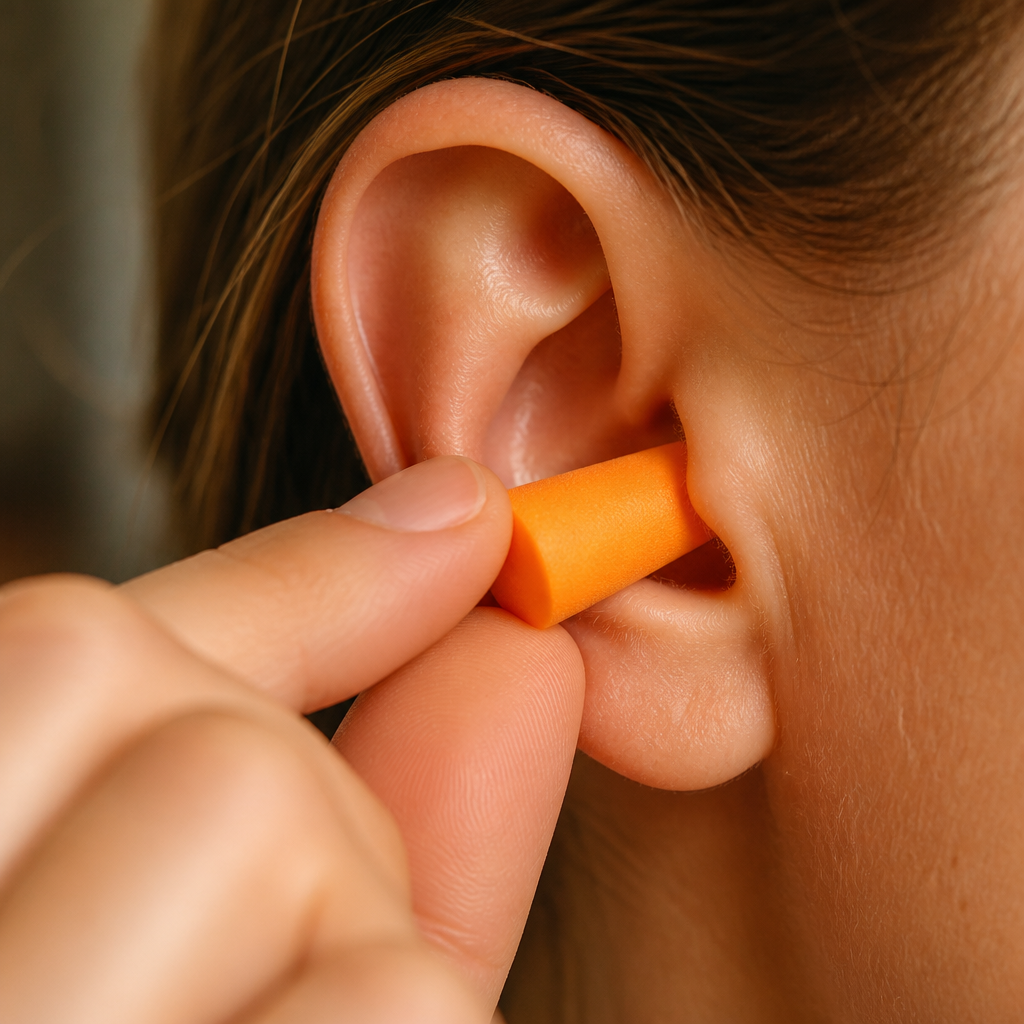
Start with the medium size and insert it fully. If it feels loose or falls out when you open your jaw, move down to small or XS. If it feels painful or will not seat fully without forcing, you may need a larger size (though most adults fit within XS to M range). The correct size creates a noticeably muffled sensation when properly seated. If sound does not seem significantly reduced after insertion, you likely need a smaller size for a tighter seal.
Yes, when maintained correctly. The effectiveness of any ear plug depends on tip integrity and correct insertion, not the reusable versus disposable format. A premium reusable plug with fresh foam tips replaced every 6-8 weeks will perform consistently at its rated NRR. A disposable foam plug used for a fifth or sixth time will perform well below its rated NRR because the cellular structure has broken down. In practice, correctly maintained reusable plugs deliver more consistent protection than disposables used beyond their single-use design life.
Yes, provided the NRR is sufficient for both applications. A plug rated at 32dB NRR that is comfortable for 8-hour sleep is also appropriate for most occupational environments up to about 100dB. For environments above 100dB, Safe Work Australia and OSHA both recommend supplementary hearing protection such as over-ear muffs in combination with plugs. The ATTENU8 plug is appropriate for both sleep and standard industrial hearing protection use at its 32dB rating.
Replace foam tips every 6-8 weeks for daily users. Signs that tips need replacing sooner include visible discolouration, reduced expansion speed after rolling, any cracking in the foam surface, or a noticeable drop in sound attenuation. For light or occasional users, replacement at 3 months is a reasonable interval. Never wash foam tips, as water breaks down the cellular structure. Metal or silicone bodies can be wiped clean with a damp cloth between tip replacements.
NRR (Noise Reduction Rating) is the American standard regulated by the US Environmental Protection Agency. SNR (Single Number Rating) is the European and Australian standard. Both measure laboratory attenuation but use different test protocols, so the numbers are not directly comparable. As a rough guide, SNR values tend to run 3-5 points higher than the equivalent NRR for the same product. When buying in Australia, check for SNR certification alongside any NRR claim. Both should be published by reputable manufacturers.
If you have tried multiple types of ear plugs and found something that made a real difference to your sleep or work, share what worked for you below.

