


 0
0

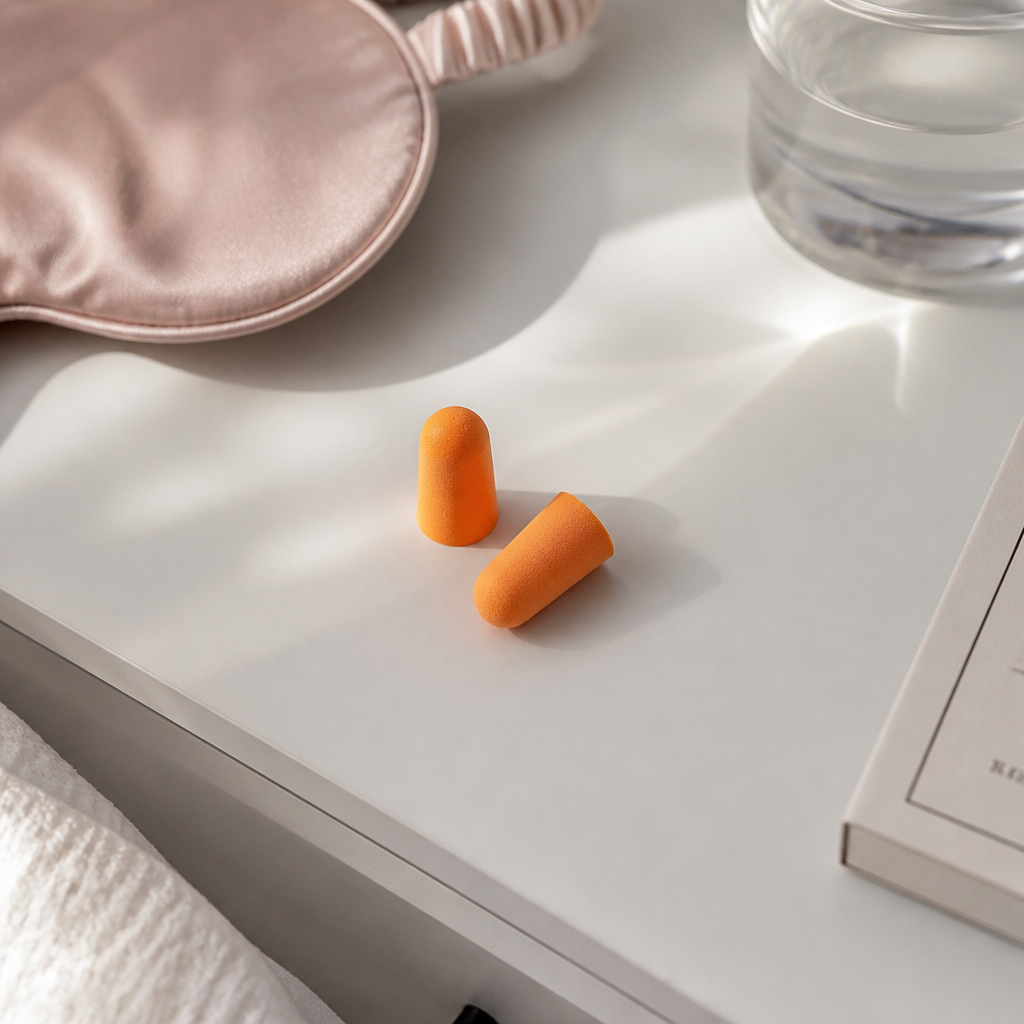
Roughly 20% of the workforce in industrialised countries works rotating or permanent night shifts, and the single biggest complaint is not fatigue during the shift itself. It is the inability to sleep when the rest of the world is wide awake and making noise. Lawnmowers, traffic, neighbours, delivery drivers, barking dogs – daytime sleep is a war against your environment. Ear plugs for shift workers are not a nice-to-have; they are a core tool for protecting the only recovery window you have. This guide covers exactly how to use them effectively, what to look for, and why getting this wrong costs you more than a bad nap.
| Key Insight | Explanation |
|---|---|
| 32dB attenuation is the practical minimum for daytime sleep | Daytime ambient noise routinely hits 55-70dB outdoors. You need to drop that to below 40dB to reach the threshold where sleep onset becomes possible. Low-rated plugs simply do not get you there. |
| Fit matters more than the NRR number on the box | A plug rated 33dB worn incorrectly delivers closer to 15dB of real-world attenuation. Consistent fit, achieved through proper insertion and the right tip size, is where the actual protection comes from. |
| Disposable foam plugs degrade after a single use | The foam compresses permanently over repeated nights, reducing noise reduction noticeably by day three or four. Shift workers using the same pair all week are sleeping on compromised protection without realising it. |
| Reusable metal-bodied plugs outlast disposables by months | Products like ATTENU8’s aluminium-bodied plugs require only foam tip replacement every 6-8 weeks. The structural attenuation performance stays consistent across that entire period. |
| Daytime noise is spectrally different from night noise | Traffic and construction peak in mid frequencies (500Hz-2kHz), which is exactly where human hearing is most sensitive. Ear plugs with good mid-frequency attenuation are specifically valuable for day sleepers. |
| Three tip sizes dramatically change comfort across a full sleep cycle | Ears that feel fine at insertion often become sore after two or three hours if the tip size is wrong. XS, S, and M options let each individual find the size that stays comfortable through a full 7-8 hour sleep. |
| Side-sleeping puts lateral pressure on the plug body | Hard plastic bodies can cause pain and early removal during the night. A low-profile metal body with a concave design reduces the contact surface and makes side-sleeping genuinely sustainable. |
The circadian rhythm is not a polite suggestion. Your body runs on a deeply wired biological clock that treats daylight as a wake signal and darkness as a sleep signal. When you are a night shift worker, you are asking your brain to override millions of years of evolutionary programming every single day.
Noise compounds the problem directly. Research published through the National Institutes of Health shows that even low-level noise – sounds below the threshold of conscious awakening – increases cortisol production and fragments sleep architecture. You do not need to be woken up fully for noise to devastate your rest. Micro-arousals triggered by irregular sounds (a truck, a door, a conversation outside) pull you out of slow-wave and REM sleep without you ever registering it consciously.
The result is a shift worker who sleeps seven hours but recovers as if they slept four. Daytime sleep noise is not just annoying. It is medically consequential.
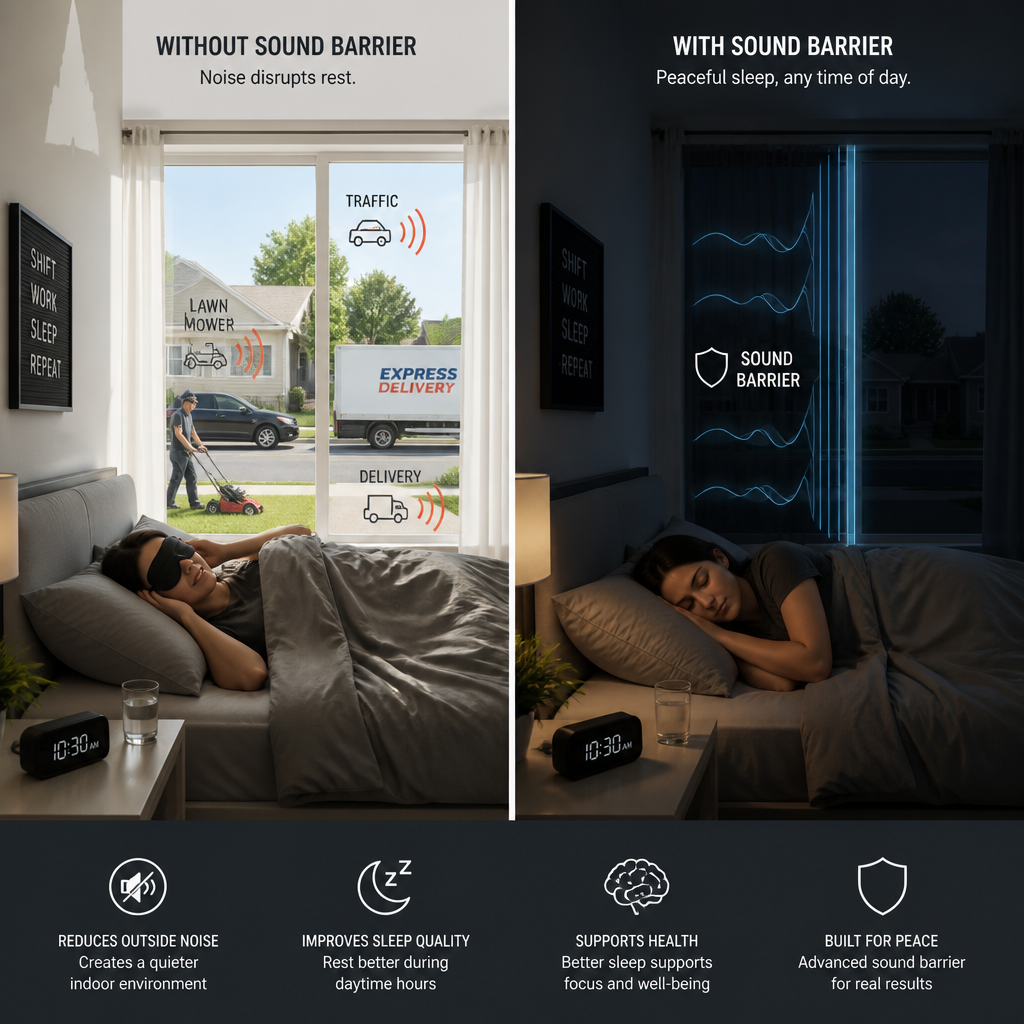
The mechanism is straightforward. Sound waves enter the ear canal, trigger the auditory processing system, and even during sleep, the brain continues to evaluate those sounds for threat relevance. This is a survival function. It kept your ancestors alive. For a nurse trying to sleep at 10am on a Tuesday while a neighbour uses a leaf blower, it is a liability.
Irregular, unpredictable sounds cause far more sleep disruption than steady background noise. A constantly running fan is easy for the brain to habituate to. A dog that barks once every eight minutes is not. The brain keeps processing it as a potential signal.
Construction noise, traffic surges, voices, and phone notifications are all high in irregularity. These are precisely the sounds most common during daytime hours in residential areas, and they are exactly what shift workers face every morning when they try to sleep after a night shift.
Sleep deprivation from noise does not hit physical performance first. It hits cognitive performance. Reaction time, decision-making accuracy, and emotional regulation all degrade before gross motor function does. For shift workers in healthcare, manufacturing, transport, or security, that is not an abstract concern. It is a direct occupational safety issue.
A study from Harvard Medical School’s Division of Sleep Medicine found that workers with chronic sleep disruption showed cognitive impairment equivalent to being legally drunk after just 17 hours of wakefulness. Shift workers regularly operate well past that threshold.
“Sleep disruption from environmental noise is not a comfort issue. It is a public health issue. The downstream effects on metabolic, cardiovascular, and cognitive health are well-documented and dose-dependent.” – Dr. Charles Czeisler, Harvard Medical School Division of Sleep Medicine
The market for ear protection is large, but most of it is designed for industrial hearing conservation during active work hours, not for sleep. The requirements are genuinely different, and conflating the two leads to poor choices.
The Noise Reduction Rating (NRR) system in the US and the Single Number Rating (SNR) used in Europe both measure attenuation across frequencies. For daytime sleep in a typical residential environment, you need a minimum of 30dB attenuation to meaningfully reduce the acoustic load on your auditory system. 32dB is the practical target that covers most real-world daytime noise sources.
Anything rated below 28dB is not adequate for shift workers in urban or suburban environments. Products marketed primarily at concerts or light office noise will not perform here.
Industrial ear plugs are designed to stay in an ear canal during physical movement and variable temperatures. Sleep ear plugs need to stay in during lateral pressure from a pillow. These are different engineering problems.
A concave aluminium body, like the design used by ATTENU8, sits lower in the ear than a protruding foam plug, which means there is less leverage for a pillow to push against. In practice, this allows side-sleepers to maintain a consistent seal throughout the night without repositioning.
Hard plastic bodies create a pressure point that becomes painful after 2-3 hours. This is the most common complaint among shift workers who try standard foam plugs and give up. The plug is uncomfortable, they remove it at 3am, and the noise wakes them at 5am. The solution is not to endure discomfort. It is to choose a plug designed for extended wear.
Human ear canal dimensions vary significantly. A plug that fits one person perfectly creates no seal in another person’s ear, delivering effectively zero noise reduction regardless of the product’s rated NRR. Multiple tip size options are not a premium feature. They are a basic functional requirement for any product claiming to work for sleep.
ATTENU8 includes XS, S, and M memory foam tips with each pair, which covers the vast majority of adult ear canal sizes. The memory foam material conforms to individual canal geometry, which improves both the acoustic seal and long-term comfort compared to rigid tips.
Pro tip: If you wake up with your ear plugs on the pillow rather than in your ears, the tip size is almost certainly wrong. A properly fitted plug stays in place throughout a normal sleep cycle without adhesive or retention straps.
There are three main categories of ear plug that shift workers consider. Each has genuine trade-offs worth understanding before committing to a routine.
| Type | Real-World Performance for Daytime Sleep | Practical Drawbacks |
|---|---|---|
| Disposable foam plugs (e.g., 3M, Howard Leight) | Good NRR on first use (up to 33dB). Widely available, very low per-unit cost. Soft enough for initial comfort. | Foam compresses and loses effectiveness after 2-3 uses. Daily replacement adds up to significant cost over months. No size options. Generates considerable single-use plastic waste. |
| Acoustic filter plugs (e.g., Loop, Flare Audio) | Designed for concert-level noise reduction, typically 18-27dB. Good for reducing overall volume without full blockage. Comfortable for short periods. | Attenuation levels are too low for daytime sleep in noisy residential areas. Designed to preserve sound quality, not maximise blockage. Not purpose-built for extended sleep wear. |
| Premium reusable metal-bodied plugs (ATTENU8) | Consistent 32dB attenuation across the product lifespan. Aluminium body with concave profile designed for side-sleeping. Three memory foam tip sizes. Tips replaced every 6-8 weeks, body lasts indefinitely. | Higher upfront cost than disposables. Requires tip replacement on a schedule. Not suitable for use during active work in loud industrial environments (designed for sleep and travel use). |
The honest comparison here is not about which product has the highest rated NRR on a spec sheet. It is about which product delivers consistent, comfortable attenuation night after night for someone sleeping on a non-standard schedule. Disposables fail at consistency. Acoustic filter plugs fail at absolute attenuation. Reusable premium plugs fail only at upfront cost, which amortises quickly over weeks of daily use.
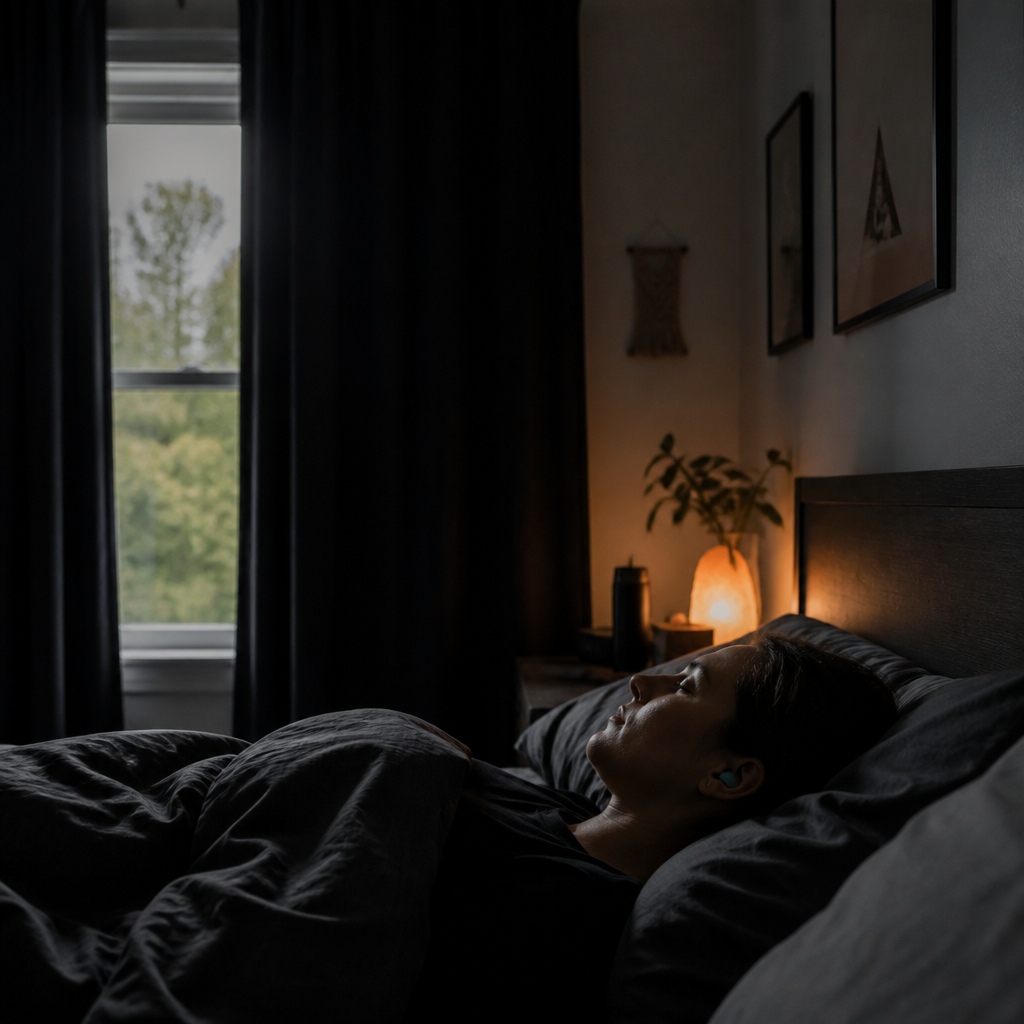
Ear plugs are a necessary component of a daytime sleep setup, but they work best as part of a layered approach. Treating them as the only intervention is like installing a deadbolt but leaving the window open.
Light is the primary circadian disruptor, and noise is the primary sleep-architecture disruptor. Both need to be addressed, but the order of priority depends on your specific situation. If your room is already reasonably dark and you are still sleeping poorly, noise is almost certainly the remaining variable. If you have never properly blackouted your room, start there and add ear plugs simultaneously.
Blackout curtains that also have sound-dampening properties (heavy lined curtains rather than thin blackout fabric) address both problems partially. They are not a substitute for ear plugs, but they reduce the workload on your acoustic protection.
White noise machines and fans are sometimes recommended as alternatives to ear plugs. The mechanism is different and the outcomes are different. Masking adds a steady-state sound to raise the ambient noise floor, making irregular spikes less perceptually prominent. Blocking physically prevents sound energy from reaching the ear canal.
In practice, masking alone is insufficient for urban daytime environments because the noise spikes (trucks, construction, voices) are too large in amplitude. Masking plus blocking together outperforms either approach alone. A white noise machine running at moderate volume combined with 32dB ear plugs creates an acoustic environment genuinely competitive with a quiet nighttime bedroom.
Pro tip: Set your white noise machine to a volume where you can just barely hear it with your ear plugs inserted. That is the correct calibration point. Louder than that means the machine itself becomes part of the noise problem.
No ear plug eliminates all noise. A physical knock on the door or a smoke alarm will still penetrate. More practically, housemates, partners, and family members making normal household noise are a social problem as much as an acoustic one. A clearly communicated sleep schedule, door signage, and phone settings (such as a custom silent mode from 9am to 5pm) address the variable that ear plugs cannot.
The research on shift worker health is extensive and consistent: sleep quality, not just quantity, determines health outcomes. You can sleep eight hours in a noisy, bright room and recover less than you would from six hours of deep, uninterrupted sleep in a controlled environment.
One of the most counterproductive things shift workers do is eat a full meal immediately after arriving home. Digestion raises core body temperature, which directly inhibits sleep onset. The same applies to vigorous exercise. Light stretching, a low-carbohydrate snack, and a brief wind-down period of 20-30 minutes before getting into bed improve sleep onset speed significantly.
Caffeine half-life is approximately five to six hours. A coffee consumed at 4am is still 50% active in your system at 9-10am when you are trying to sleep. Shift workers who drink coffee throughout the night should stop at least five hours before their planned sleep time.
The biggest mistake shift workers make on their days off is reverting to a conventional sleep schedule. This creates a social jet lag cycle where the body is constantly switching between two incompatible rhythms. Sleeping four hours earlier than your shift schedule on a day off is more damaging than it feels in the moment. Maintaining a consistent anchor time for sleep, even if shifted by only one or two hours, produces better long-term outcomes than full reversal on rest days.
The data consistently shows that rotating shift workers who maintain the most consistent sleep timing across work and non-work days have lower rates of metabolic syndrome, cardiovascular disease, and cognitive decline than those who swing widely between schedules.
Core body temperature needs to drop by approximately 1 to 2 degrees Celsius for sleep onset to occur. Sleeping in a room that is too warm delays this process. The recommended sleep room temperature for most adults is between 16 and 19 degrees Celsius (60 to 67 degrees Fahrenheit). Shift workers sleeping in warm afternoon conditions should use air conditioning or a fan directed away from the body to achieve this ambient temperature.
Hydration matters because mild dehydration increases heart rate and cortisol, both of which impair deep sleep. Drinking 400-500ml of water before sleeping and keeping water available for any mid-sleep wake is a simple intervention that many shift workers overlook.
Yes, provided you maintain basic ear hygiene and replace foam tips on a regular schedule. The risk associated with daily ear plug use comes primarily from reusing foam tips past their effective lifespan, which can harbour bacteria. ATTENU8’s design separates the durable aluminium body from the replaceable foam tips, with tip replacement recommended every 6-8 weeks. This structure makes daily use safe and practical without accumulating earwax buildup or hygiene concerns associated with standard reusable plugs.
For most suburban environments, an NRR of 28-32dB is the target range. Urban environments with regular traffic or construction noise warrant the full 32dB. The key point is that a rated NRR assumes correct insertion. Real-world attenuation is typically 30-50% lower than the rated value if fit is poor. This is why tip size selection and correct insertion technique matter as much as the rating itself.
Yes, with conditions. A standard smartphone alarm at maximum volume generates roughly 75-85dB. After 32dB of attenuation, you would still hear approximately 43-53dB, which is clearly audible. The practical concern is for people who use very quiet alarms or vibration-only alerts. Using a smartwatch with wrist vibration as a backup alongside your standard alarm is a reliable system for shift workers wearing high-attenuation ear plugs.
Loop and Flare Audio products are primarily designed for noise reduction during waking activities, concerts, and social situations where you want to reduce volume without eliminating sound clarity. Their attenuation ratings typically fall in the 18-27dB range. ATTENU8 targets 32dB specifically for sleep, travel, and high-noise environments where maximum blockage is the goal. The aluminium body and concave profile are designed for side-sleeping comfort over 7-8 hour periods, which is not a design priority for lifestyle noise-filter products.
The aluminium body is designed to last indefinitely with normal use. The soft memory foam tips are the only consumable component, requiring replacement approximately every 6-8 weeks depending on frequency of use and individual earwax levels. Three tip sizes (XS, S, M) are included with each pair. Over a one-year period, the total cost of ownership for a reusable pair is substantially lower than purchasing disposable foam plugs daily, even before accounting for the consistency advantage.
This is a real concern for many shift workers, particularly parents or people with dependents. High-attenuation ear plugs do reduce ambient sound substantially, but they do not eliminate all sound. Loud alarms, crying, or a knock at the door will still be audible at 32dB attenuation. For additional reassurance, using a baby monitor or home alert system with visual indicators alongside ear plugs gives you acoustic protection without removing your ability to respond to genuine emergencies.
If you are a shift worker with a specific routine that has helped you get better daytime sleep, share what has worked for you in the comments below. Real-world experience from people living this schedule is more useful than any generalised advice.
We would love your feedback and any insights you would share with others. What perspective would you add?

