


 0
0

If you wake up at the sound of a car door closing three streets away, you already know that light sleeping is not a personality quirk. It is a physiological reality that leaves you exhausted, irritable, and hunting for solutions that actually hold up through a full night. The problem with most advice on ear plugs for light sleepers is that it treats every plug as roughly equal. It is not. The gap between a cheap foam roll-and-insert and a precision-fit, high-attenuation plug is the difference between waking up rested and waking up at 3am because someone flushed a toilet two rooms away.
Light sleepers spend more time in the lighter stages of the sleep cycle, which means their brain is closer to full wakefulness for a greater portion of the night. A noise that a deep sleeper processes and ignores is enough to pull a light sleeper fully conscious. This is not a weakness. In many contexts, it is a useful sensitivity. But in a modern noise-polluted environment, it becomes a chronic problem.
The sounds that trigger waking are rarely the loud, obvious ones. It is the intermittent drip, the distant traffic surge, the partner shifting and breathing. Intermittent noise is consistently harder for the brain to habituate to than steady background sound, because the brain keeps flagging each new instance as a potential threat requiring attention.
This means the solution is not simply “block all sound.” It means reducing ambient noise to a level low and consistent enough that the brain stops flagging it. That is exactly what a well-fitted, high-attenuation ear plug does.
| Key Insight | Explanation |
|---|---|
| Intermittent noise is worse than steady noise | The brain cannot habituate to sounds that keep changing. Cutting the peaks of intermittent noise is the priority for light sleepers. |
| Fit determines attenuation more than material | A poorly fitted ear plug with a 33dB rating will underperform a well-fitted plug rated at 28dB. Seal is everything. |
| Memory foam tips outperform rigid silicone for sleep | Memory foam conforms to the unique shape of your ear canal and maintains a seal when you roll over in your sleep, which rigid tips cannot reliably do. |
| Reusable metal-bodied plugs hold their shape indefinitely | Unlike disposable foam plugs, a metal-bodied plug does not degrade. Only the foam tips need replacing, roughly every 6 to 8 weeks. |
| Around 32dB noise reduction is the target for sleep use | This level reduces most ambient noise to a tolerable background hum without creating the disorienting total silence that some sleepers find uncomfortable. |
| Sizing matters more than most brands admit | Ear canals vary significantly between people. A plug supplied with multiple tip sizes (XS, S, M) gives you a genuine chance of finding the right fit. |
| Pressure on the ear canal kills compliance | If your plugs hurt after an hour, you will take them out at 2am without realising it. Comfort is not a luxury feature; it is what determines whether the plug actually works all night. |
Noise disrupts sleep at the architectural level. Before you fully wake up, noise triggers micro-arousals, brief shifts from deeper sleep stages to lighter ones that you may not consciously register but that accumulate into a night of fragmented, unrestorative sleep. You wake up feeling like you barely slept even though the clock says eight hours.
The sounds that cause the most damage are not necessarily the loudest. Research on sleep and noise consistently points to two factors: unpredictability and relevance. A sound that changes volume suddenly, or one that carries meaning (a name, a siren, a child crying) is far more disruptive than a steady loud hum. This is why traffic noise from a busy road is often more damaging to sleep than living near a motorway where the sound is constant.
The goal for a light sleeper is not silence. It is acoustic consistency. Remove the peaks and spikes, and the brain can finally stop standing guard.
For light sleepers, even low-level noise spikes (a partner snoring, a neighbour’s TV, an air conditioning unit cycling on) are enough to cause arousals multiple times per hour. Over weeks and months, this compounds into genuine sleep deprivation and its downstream effects: poor concentration, mood instability, impaired immune function.
Pro tip: If you wake up feeling unrested despite sleeping a full eight hours, noise-triggered micro-arousals are one of the first things to rule out. Wearing well-fitted ear plugs for a week is a simple, low-cost diagnostic as much as it is a solution.
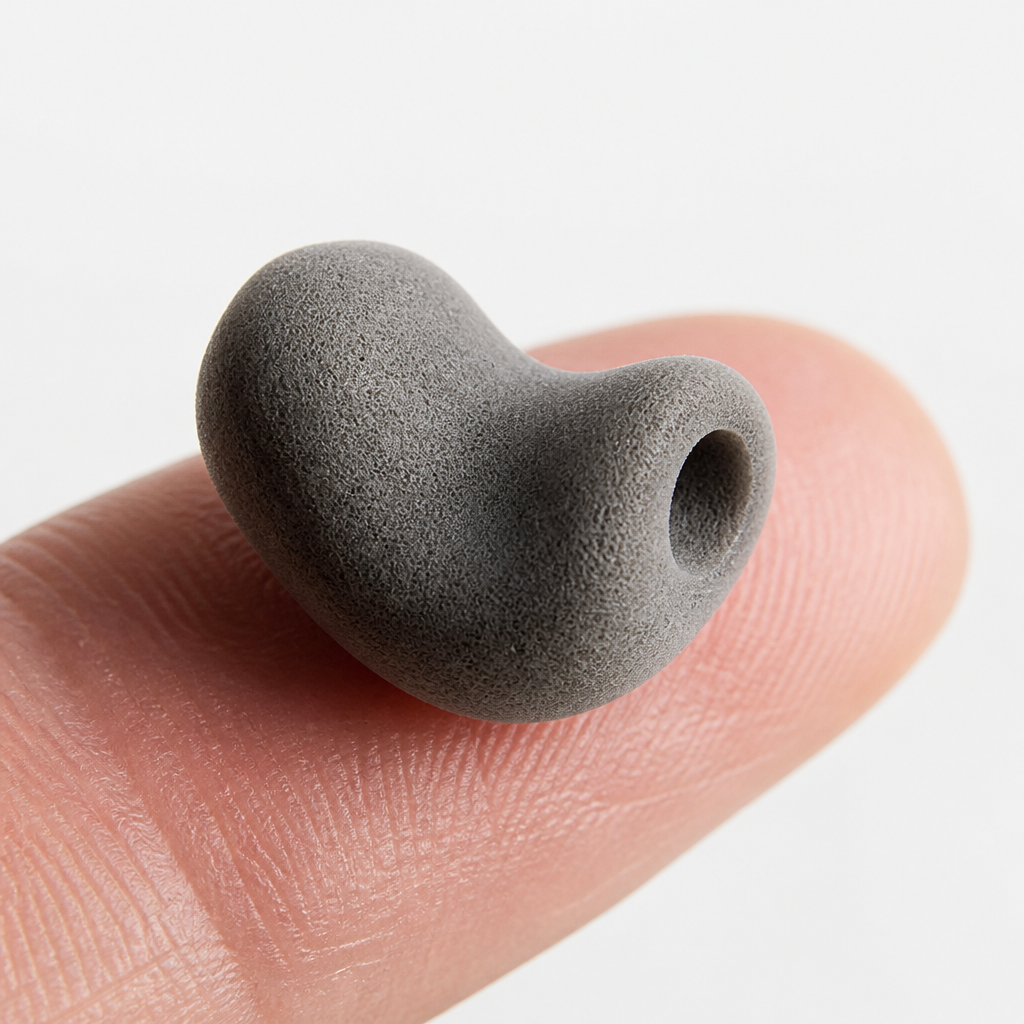

The Noise Reduction Rating (NRR) printed on ear plug packaging is a laboratory figure. It describes the maximum attenuation measured under controlled conditions with a correct fit. In real-world use, actual attenuation is lower, because most people do not insert plugs with the same precision as a lab technician.
A rating of around 32dB, like that delivered by ATTENU8’s metal-bodied plugs, represents a strong real-world reduction that brings most bedroom noise environments into the range where sleep disruption drops sharply. You are not eliminating sound entirely. You are taking a room at, say, 55 to 65 decibels of intermittent noise and reducing what your ear canal receives to a quiet background murmur.
Why the Correct Fit Closes the Gap Between Lab and Real Life
The single biggest reason people do not get the rated attenuation from their ear plugs is poor fit. With foam roll-and-insert plugs, users frequently do not compress the foam enough, do not pull the ear up and back to straighten the canal, or do not hold the plug in place long enough for the foam to expand fully. The result is a partial seal that delivers perhaps half the rated attenuation.
A plug with a rigid or semi-rigid body and replaceable memory foam tips removes much of this variability. The body positions the tip accurately in the canal, and the memory foam conforms to the specific geometry of your ear rather than relying on you to insert it at exactly the right angle every single night.
Pro tip: When testing a new ear plug for the first time, insert it in a noisy room rather than a quiet one. You will immediately feel the difference in seal quality when you rotate the plug slightly to find the optimal position, which is impossible to assess in silence.
Disposable foam ear plugs are the default choice for most people because they are cheap and widely available. For occasional use in a construction environment or a noisy flight, they are fine. For nightly sleep use, they have significant practical problems.
Disposable foam plugs are designed to expand to fill the canal, which means they generate outward pressure against the canal wall. That pressure is tolerable for an hour. Across eight hours, especially for side sleepers where the plug is also being compressed by a pillow, it becomes genuinely uncomfortable. Most people remove their plugs at some point in the night without realising it, which means the protection disappears exactly when they need it most, during the lighter sleep stages in the early morning hours.
Disposable foam plugs are supposed to be discarded after each use but rarely are. Reused foam plugs accumulate ear wax and skin oils, become stiffer, and lose their expansion ability, reducing their attenuation progressively. Most people are using plugs that are performing well below their rated NRR because the foam has been used past its effective lifespan.
A reusable metal-bodied plug solves both problems. The body does not generate expanding pressure. The foam tips are replaced on a clear schedule (every 6 to 8 weeks) so you always have fresh, properly performing foam. And because you are replacing tips rather than entire plugs, the ongoing cost is a fraction of continually buying disposable packs.
There are three realistic categories of ear plug available for regular sleep use. Each has a clear use case, and understanding the trade-offs makes the decision straightforward rather than overwhelming.
| Type | Best For | Main Limitation |
|---|---|---|
| Disposable foam plugs (e.g., standard polyurethane roll-and-insert) | Occasional use, travel, first-time users. High NRR ratings available. Low upfront cost. | Pressure discomfort over long wear; hygiene degrades quickly when reused; inconsistent fit without technique; significant ongoing waste and cost for nightly users. |
| Reusable metal-bodied plugs with memory foam tips (e.g., ATTENU8) | Nightly sleep use, travel, noise-sensitive individuals who need consistent, comfortable attenuation every night. Durable. Multiple tip sizes for fit. | Higher upfront cost than disposables. Foam tips need replacing every 6 to 8 weeks, though this cost is minimal compared to ongoing disposable purchase. |
| Electronic sleep earbuds (e.g., advanced earbud-style devices with passive noise cancellation and audio playback) | Users who want to pair noise blocking with ambient sound or sleep audio. Battery-powered options with companion apps. | High cost (some options priced above $250). Battery dependency. Bulkier profile uncomfortable for side sleepers. Overkill for users who simply need reliable noise attenuation without audio features. |
For someone who struggles with noise every night, the reusable metal-bodied plug sits in the practical sweet spot. It delivers consistent, high attenuation without the pressure problem of disposable foam, without the cost and complexity of electronic options, and without the hygiene issues that accumulate when you reuse foam you were supposed to throw away.
Fit is the variable most guides skip past. Even a well-designed plug will underperform if it is inserted incorrectly, and for light sleepers there is no margin for error. A partial seal that lets in 40% of ambient noise can be the difference between sleeping through the night and lying awake at 4am.
First, reach over the top of your head with the opposite hand and gently pull your ear up and back. This straightens the ear canal, which curves slightly in most people. Second, insert the plug with a slow, gentle rotating motion rather than pushing it straight in. Rotation helps the tip seat properly against the canal wall. Third, hold the plug in place for a few seconds to allow the memory foam to begin conforming to the canal shape.
If you can still hear conversation clearly with both plugs in, the seal is not right. Reinsert and try pulling the ear further back before inserting. Sizing is the other variable. A foam tip that is too large creates excessive pressure; one that is too small cannot form a seal. This is why having three tip sizes available (XS, S, and M) is not a marketing feature. It is a functional requirement for achieving real attenuation across the range of adult ear canal sizes.
Side sleepers face an additional challenge: pillow pressure on the outer ear can partially dislodge or compress a plug, breaking the seal. A plug with a low-profile, concave body sits closer to the ear, reducing the leverage a pillow has on it. Flat, protruding plug designs are particularly bad for side sleepers because the pillow acts as a lever against the body of the plug, slowly working it loose during the night.
When evaluating the best ear plugs for sleeping, the criteria that matter most for light sleepers are different from what matters for occasional industrial use. Here is what actually determines whether a plug works through the night, every night.
For sleep, you are looking for roughly 28 to 33dB of noise reduction. Below 28dB, intermittent noise spikes (snoring peaks, traffic surges) can still clear the threshold for micro-arousal. Above 33dB starts to feel disorienting and can make you miss sounds you actually need to hear, like an alarm. The 32dB sweet spot that ATTENU8’s plugs deliver sits right in the effective range for sleep-specific noise reduction for sleep.
Memory foam tips win for overnight wear. They conform and hold their position without generating sustained outward pressure. Silicone tips are more durable but create a harder seal that many people find uncomfortable after several hours. The body material determines the overall profile: a lightweight aluminium body keeps the total weight and bulk low, which matters when your ear is pressed against a pillow for eight hours.
A disposable foam plug used every night costs more per year than most people realise when they do the arithmetic on a pack-by-pack basis. A reusable metal-bodied plug with replaceable foam tips front-loads the cost and then drops it to the minimal recurring expense of replacement tips every six to eight weeks. Over 12 months of nightly use, the reusable option is consistently cheaper and generates significantly less waste.
Pro tip: Keep a second pair of tips accessible on your nightstand. If you remove your plugs in the night and the tips feel compressed or uncomfortable, swapping to a fresh pair takes seconds and means you are not lying awake trying to reinsert a fatigued foam tip at 3am.
Wearing well-fitted ear plugs for sleep does not damage hearing. The risk associated with ear plugs is primarily related to incorrect insertion or excessive force, not routine nightly use. If you experience pain or discomfort, it is a sign the fit is wrong or the tip size is too large, both of which are easy to correct. Regular gentle cleaning of the outer ear remains good practice regardless of ear plug use.
At around 32dB of noise reduction, a standard smartphone alarm set to a moderate to high volume will still be audible. The attenuation reduces ambient noise significantly but does not create total sound isolation. If you are concerned, test your alarm volume with plugs in before relying on it, and use a phone alarm rather than a distant clock across the room.
Start with a medium tip. Insert it and assess two things: whether the seal feels complete (ambient noise drops noticeably) and whether the pressure is comfortable. If the medium tip creates significant discomfort or feels like it is stretching the canal, move to a small. If you can hear clearly around the seal with minimal outside noise reduction, try medium before moving to large. Most adults find medium fits one ear and small fits the other, which is completely normal.
Yes, provided the foam tips are replaced on schedule (every 6 to 8 weeks) and the metal body is wiped down periodically. This is actually more hygienic than the common practice of reusing disposable foam plugs well beyond a single use, which is how most people use them despite manufacturer guidance. Fresh foam tips on a clean metal body beat degraded, ear-wax-saturated disposable foam that has been used twenty times.
Snoring is one of the most common reasons people seek sleep ear plugs, and a well-fitted, high-attenuation plug is an effective first-line solution. Snoring typically peaks at 50 to 60 decibels at close range. A plug delivering 32dB of attenuation reduces that to the low-20-decibel range, which for most light sleepers sits below the threshold for sleep disruption. It does not fix the snoring, but it removes it as a barrier to your sleep.
Most people adapt within three to five nights. The first night often feels slightly unusual, particularly if you are not accustomed to the sensation of something in your ear canal. By the third or fourth night, the sensation becomes background and most people report they stop noticing the plugs entirely. The key is starting with a correctly sized, comfortable tip rather than pushing through discomfort from a poor fit, which will make the adaptation period longer and more unpleasant.
Have you found a particular ear plug style or technique that finally solved your sleep noise problem? Share your experience below so other light sleepers can benefit from what actually worked for you.

