


 0
0

Most people treat noise as a minor annoyance, something to endure on a noisy street or in a thin-walled apartment. That framing is dangerously wrong. Noise pollution health effects extend well beyond irritation, touching your cardiovascular system, your hormones, your cognitive function, and, most immediately, your sleep. The European Environment Agency ranks noise second only to air pollution as the environmental exposure most harmful to public health, yet it receives a fraction of the attention. If you are waking up tired, feeling on edge without a clear reason, or struggling to concentrate, the sound environment around you may be doing more damage than you realize.
| Key Insight | Explanation |
|---|---|
| Noise ranks second among environmental health hazards in Europe | The European Environment Agency places noise pollution behind only air pollution in terms of public health harm, yet it is far less regulated. |
| Your brain never fully switches off from sound | Even during deep sleep, the brain continues monitoring noise for signs of danger, meaning disruptive sound raises stress hormones without waking you consciously. |
| Noise disrupts REM sleep, not just total sleep time | Environmental noise reduces the depth and quality of sleep, specifically cutting into rapid eye movement sleep, which governs mood and memory consolidation. |
| Chronic exposure alters your stress response permanently | Prolonged noise exposure raises baseline sensitivity to stress, meaning over time you react more intensely to the same level of noise. |
| 32 dB noise reduction can meaningfully change your sleep quality | A well-fitted ear plug delivering around 32 dB of attenuation can reduce the noise floor in a typical urban bedroom to a genuinely quiet level. |
| Disposable foam plugs are not the only option | Metal-bodied reusable ear plugs with memory foam tips offer the same or better fit without generating weekly plastic waste or losing their shape overnight. |
| Noise-sensitive individuals need a tiered response, not a single fix | Ear plugs handle the immediate problem tonight. Longer-term solutions include room acoustics, white noise, and advocating for quieter environments. |
Noise pollution is not just an urban inconvenience. It is a genuine physiological stressor. The brain processes sound continuously, even during sleep, treating sudden or sustained noise as a potential threat signal. That response triggers the release of stress hormones, elevates heart rate, and keeps the nervous system partially activated when it should be resting.
With repeated exposure, something more insidious happens: your sensitivity to stress increases. Research reviewed by the BMJ indicates that the mechanism involves noise pollution’s effect on stress hormone levels and the autonomic nervous system, and that over time this sustained activation may contribute to the development of cardiovascular and metabolic disease. This is not a fringe hypothesis. It is documented in peer-reviewed literature and increasingly recognized in public health policy.
The mental health consequences are equally real. People living in consistently noisy environments report higher rates of irritability, anxiety, and a persistent sense of being on edge. A key factor is the feeling of having no control over the noise source, which amplifies its psychological impact significantly.
Noise is a relatively neglected pollutant, less well understood, and insufficiently regulated compared with air pollution, despite its measurable impact on cardiovascular and mental health outcomes.
Most people associate noise with hearing loss, and that connection is real. Severe or repeated loud noise exposure can cause tinnitus (a persistent ringing in the ears), abnormal loudness perception, and distorted hearing. But focusing only on hearing damage misses the broader picture.
The more widespread harm from noise pollution health effects comes from lower-level, chronic exposure: traffic rumbling through bedroom walls at night, a snoring partner, HVAC systems cycling on and off, early-morning deliveries. None of these sounds are loud enough to damage your hearing directly. All of them are loud enough to fragment your sleep and sustain a low-grade stress response night after night.
Pro tip: If you wake up feeling unrested despite sleeping a full seven or eight hours, noise-induced sleep fragmentation is one of the first things to investigate. You may not be hearing the disruptions consciously, but your nervous system is registering them.
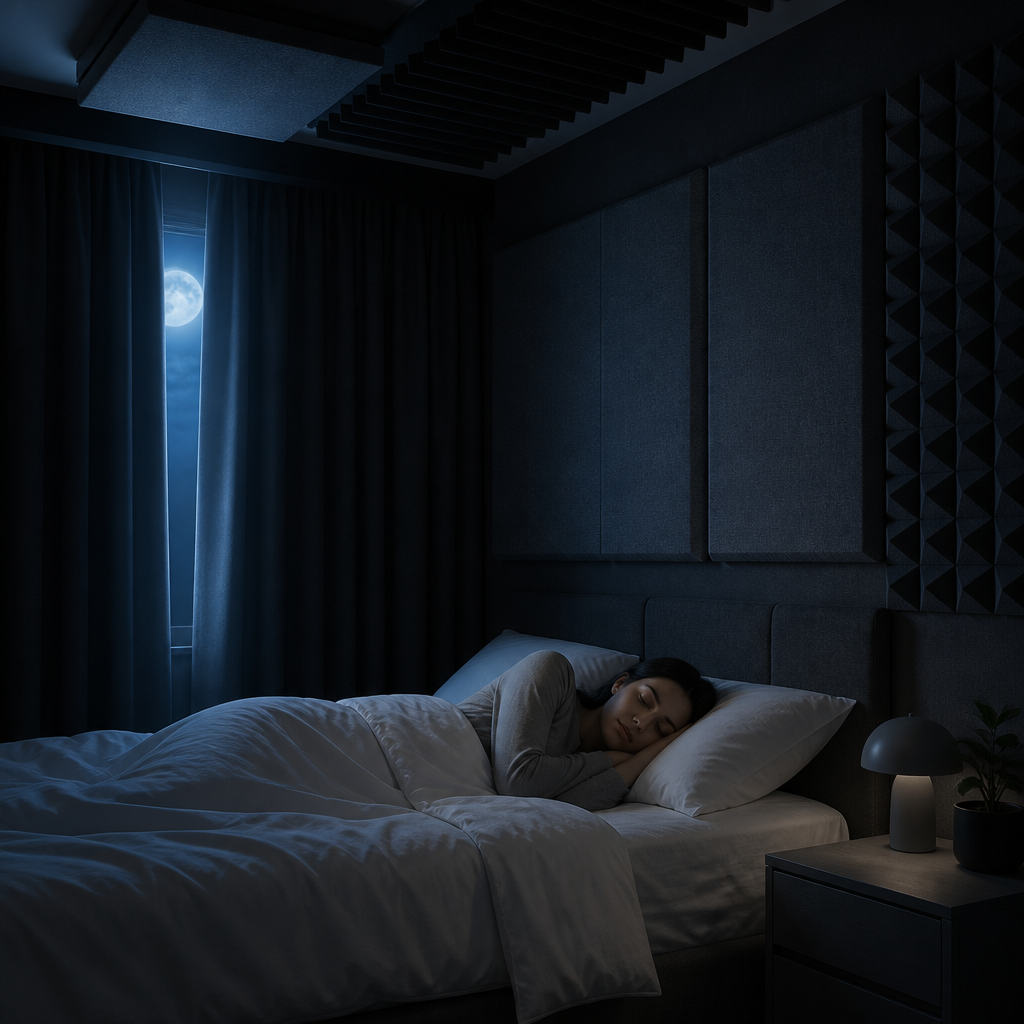

Noise and sleep deprivation are tightly linked in a way that most people underestimate. Sleep is not simply an absence of wakefulness. It is an active biological process during which the brain consolidates memory, regulates hormones, repairs tissue, and clears metabolic waste. Interrupt it repeatedly and the consequences compound fast.
Environmental noise disrupts sleep in three distinct ways: it delays sleep onset (you struggle to fall asleep in the first place), causes mid-night awakenings (often so brief you do not remember them), and reduces sleep depth by cutting into REM and slow-wave stages. All three are damaging. The third is often the least appreciated because the person wakes up believing they slept through the night, not realizing their sleep architecture was repeatedly flattened by noise events.
Not everyone responds to noise equally. Lighter sleepers spend more time in the shallower stages of sleep where noise-triggered arousal is easier to trigger. For this group, a sound that would not wake a deep sleeper, such as a car passing outside or a neighbor’s television, can cause a full cortical arousal that takes several minutes to recover from. Multiply that across a typical night and the total sleep quality is dramatically worse than it appears on paper.
The practical implication is clear: if you are a light sleeper, passive acoustic measures (curtains, carpets, closing windows) are often insufficient. You need a direct interface between your ear canal and the noise source, which is precisely what a well-fitting ear plug provides.
Common sources of nighttime noise pollution include road traffic, aircraft flight paths, neighbors, and partners who snore. In all of these cases, the noise event itself is intermittent, which makes it particularly disruptive. Steady-state sounds like a fan or air conditioner are far less sleep-disturbing than unpredictable peaks, which is why the brain keeps monitoring even at low volume.
Pro tip: Pairing ear plugs with a consistent white noise source (a fan, an air purifier) can reduce the contrast between silence and sudden noise events, making the remaining sound that passes through even less disruptive.
The link between chronic noise exposure and cardiovascular outcomes is one of the more robustly documented areas in environmental health research. The proposed mechanism runs through stress hormone activation. Sustained or repeated noise triggers cortisol and adrenaline release, and over time this persistent low-grade activation stresses the heart and blood vessels.
According to research cited by the UC Davis Center for Occupational and Environmental Health, environmental noise pollution includes exposure to road traffic, railway traffic, airports, and industrial sites. People living near these sources face involuntary, chronic noise exposure that accumulates over years and decades, not just during waking hours.
UCLA Health also identifies cognitive impacts as a significant concern, noting that noise pollution affects not only stress levels and heart health but also concentration and overall mental health. For professionals in noisy occupational environments, such as construction, manufacturing, and military service, this is particularly relevant. Hearing protection in these settings is not optional, and the cognitive burden of sustained noise exposure on the job compounds the harm done by noise at home during sleep.
The Occupational Noise Problem Does Not End at the Workplace
Workers in loud environments often return home with noise-induced fatigue and an already-elevated stress baseline. If their home sleep environment is also noisy, they have no recovery window. The body needs silence, or close to it, to reset the autonomic nervous system overnight. Denying it that window consistently is a compounding problem.
This is why hearing protection for high-noise workers is not just a workplace issue. What happens during the eight hours of sleep that follow the shift determines whether the nervous system recovers or stays chronically activated.
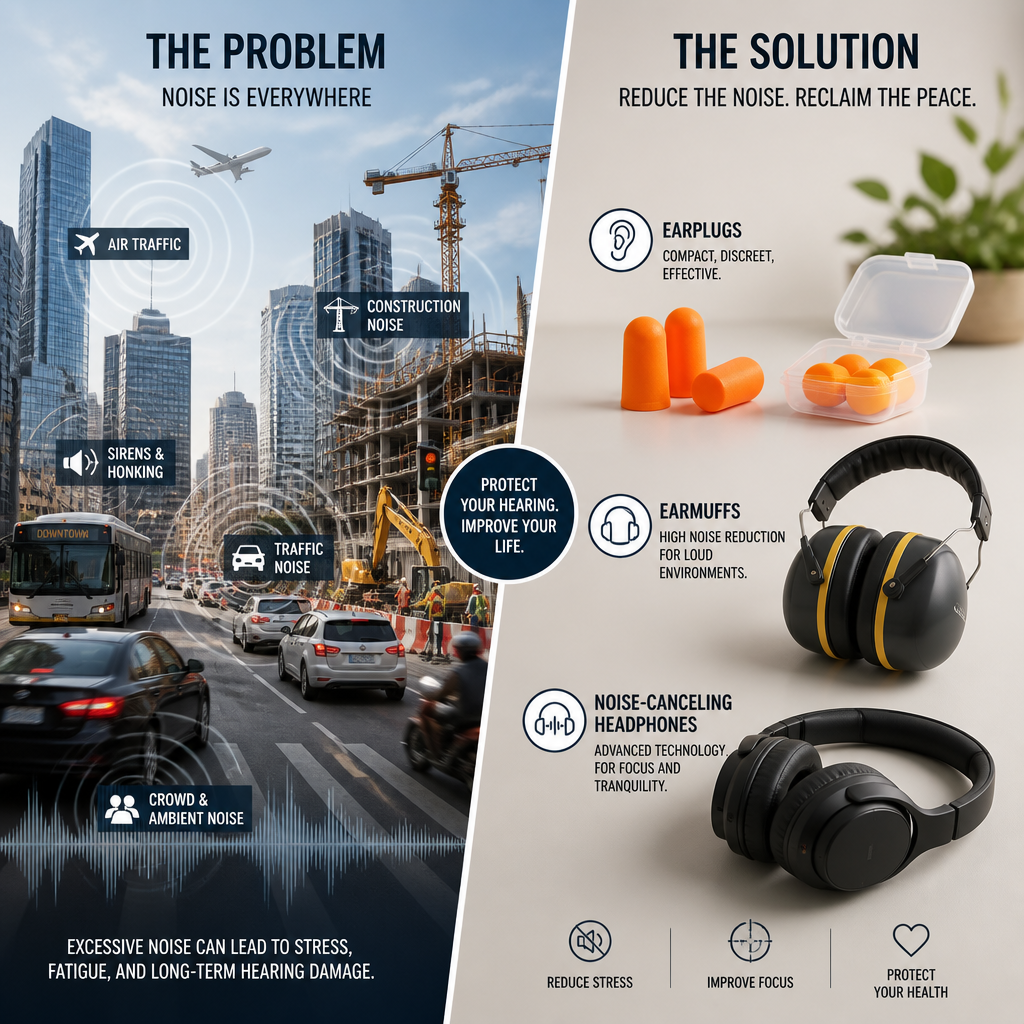
There is no shortage of products claiming to help with how to block noise at night, but they vary enormously in effectiveness, comfort for extended wear, and long-term cost. The comparison below covers the three main approaches people actually use.
| Approach | Noise Reduction Performance | Practical Considerations |
|---|---|---|
| Disposable foam ear plugs | Typically 29-33 dB NRR when inserted correctly, but correct insertion is rarely achieved consistently, reducing real-world performance significantly | Low upfront cost but high ongoing cost and waste. Foam degrades and loses shape during use. Must be replaced frequently. Often uncomfortable for side sleepers due to pressure buildup. |
| Premium reusable ear plugs (metal-bodied, e.g. ATTENU8) | Around 32 dB noise reduction with soft memory foam tips that conform to the ear canal and maintain fit throughout the night | Higher upfront investment but lower long-term cost. Only the foam tips need replacing every 6-8 weeks. Durable aluminium body does not degrade. Multiple tip sizes (XS, S, M) allow a proper anatomical fit. Suitable for both sleep and occupational use. |
| Acoustic earmuffs / over-ear protection | High attenuation, often 25-35 dB, but designed for short-duration occupational use | Not practical for sleep. Bulky, hot, and incompatible with side-sleeping. Best reserved for daytime noise environments rather than overnight use. |
The honest answer is that disposable foam plugs work in principle but fail in practice for most people because consistent correct insertion is harder than it looks, and because they shift and lose shape during the night. A reusable plug with a rigid body and replaceable memory foam tips solves both problems: the body maintains its position and the fresh foam tip conforms precisely to the ear canal every time.
Fit is the single variable that determines whether an ear plug actually delivers its rated noise reduction. A poorly fitted plug, regardless of its material or price, allows noise to travel around the seal rather than through the attenuating foam. This is why multiple tip sizes matter more than most buyers realize.
The ATTENU8 design addresses this directly. The concave aluminium body seats comfortably and stably in the ear, while the three included memory foam tip sizes (XS, S, and M) allow you to match the plug to your actual ear canal geometry rather than hoping a one-size-fits-most foam cylinder happens to fit. In practice, many adults who have only ever used standard disposable plugs discover they have been wearing the wrong size their entire lives and therefore getting significantly less attenuation than they thought.
The upfront cost of premium reusable ear plugs is higher. But disposable foam plugs used nightly need replacing constantly, generating ongoing cost and a surprising amount of waste. With ATTENU8, the aluminium body is a one-time purchase. The only recurring cost is a fresh set of memory foam tips every six to eight weeks, which keeps hygiene high and performance consistent without replacing the entire product.
For anyone using ear plugs as a regular part of their sleep routine rather than an occasional travel aid, the reusable model is both cheaper over time and better for the environment. It also removes the common problem of reaching for a fresh plug and finding the box empty at 2am.
First-time ear plug users often find the experience of blocked ears mildly disorienting. This is normal and resolves quickly, usually within two to three nights as the brain adjusts to the new baseline. The discomfort people report is nearly always pressure, not the attenuation itself, and is most often caused by incorrect sizing or an over-inserted plug. Switching to a smaller tip size or reducing insertion depth typically solves it immediately.
People who sleep on their side should look specifically for a plug with a low-profile body that does not protrude from the ear canal and create pressure against the pillow. A concave metal body design sits more flush with the ear than a cylindrical foam plug that projects outward, making side-sleeping considerably more comfortable.
If you want to understand more about fit options and which tip size is right for you, the ATTENU8 product pages walk through sizing in detail alongside the full specification of noise reduction performance.
Hearing damage from direct sound exposure requires fairly high decibel levels sustained over time. But the subtler health effects of noise pollution, including sleep disruption, elevated stress hormones, and cardiovascular strain, occur at much lower levels. Traffic noise audible through a bedroom window, a snoring partner, or an HVAC system cycling overnight are all sufficient to fragment sleep architecture and sustain a low-grade stress response without ever approaching hearing-damage thresholds.
Partially, but not fully, and the adaptation has a cost. People who regularly sleep in noisy environments often report that they no longer notice the noise. What research shows, however, is that the brain continues to register and respond to those sounds at a physiological level even when the person reports not being disturbed. Sleep quality as measured objectively (by sleep stage distribution and arousal frequency) remains impaired even after subjective habituation has occurred.
The fastest and most reliable single intervention is a well-fitting ear plug. Room-level acoustic improvements (thick curtains, rugs, door seals) reduce noise but rarely eliminate it. Combining a physical barrier at the ear canal with a steady background sound (a fan, for example) to reduce the contrast between silence and noise peaks gives you the best chance of an uninterrupted night starting immediately.
A reusable ear plug with fresh memory foam tips and a correctly fitted body can match or exceed the real-world performance of disposable foam plugs. The key word is real-world. Disposable plugs have high rated attenuation values, but those values assume perfect insertion, which most people do not achieve consistently. A reusable plug with a stable rigid body and correctly sized replaceable foam tips maintains its fit throughout the night more reliably than a foam cylinder that shifts position as you move.
Yes. Light sleepers, people with anxiety disorders, shift workers, and those with pre-existing cardiovascular conditions are all more vulnerable to the health effects of noise pollution. Children and older adults also show heightened sensitivity. Professionals working in high-noise occupational environments carry a compounded burden because they are exposed during the day and then need quality sleep to recover, making nighttime noise protection especially important for this group.
For regular nightly use, replacing memory foam tips every six to eight weeks is a reasonable guideline. At that interval, the foam retains its ability to conform tightly to the ear canal, hygiene remains acceptable, and you are getting the full rated attenuation. Tips that have flattened, hardened, or become visibly soiled should be replaced immediately regardless of how long they have been in use.
Have you noticed a difference in how you feel after sleeping in a quiet environment versus a noisy one? Share your experience in the comments below.

