


 0
0

Most people grab a pair of ear plugs, shove them in, and wonder why they can still hear their partner’s snoring or feel a dull ache after an hour. The problem is almost never the ear plug itself. It is almost always the size. Getting your ear plug sizes guide right is the single biggest factor in whether you actually block noise or just muffle it slightly while creating a new problem: discomfort. This guide breaks down how XS, S, and M memory foam tip sizing works, how to figure out which size fits your ear canal, and what a bad fit actually costs you in noise reduction and wearability.
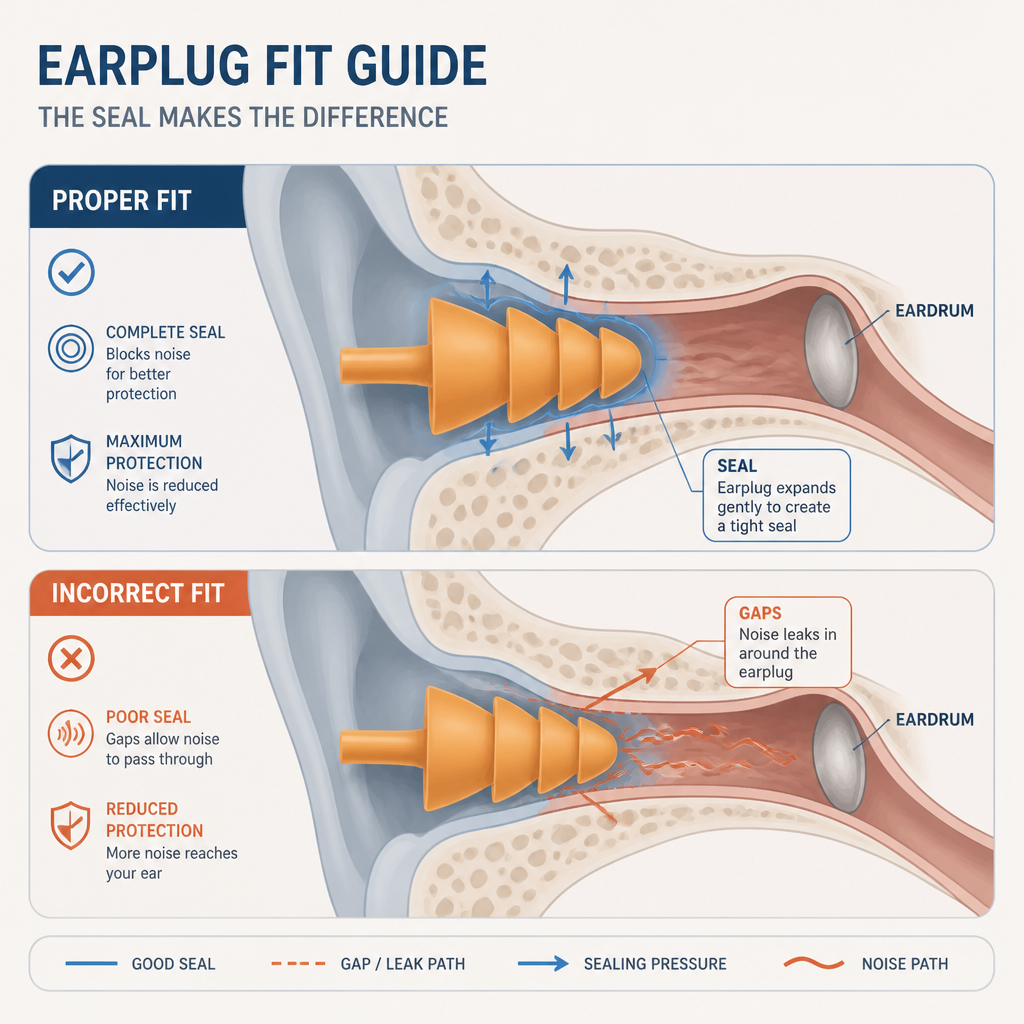
A poor fit does not just mean mild discomfort. It means the ear plug is not doing its job. When the tip is too small, it sits loosely in the canal and allows sound to travel around it. When it is too large, it presses against the canal wall with enough force to cause soreness, headaches, or a strange pressure sensation that makes you pull the plug out at 2am.
According to guidance published by earplug specialists, an oversized plug can cause ear canal irritation and even damage with repeated use, while an undersized plug offers minimal noise protection because the acoustic seal is broken. Neither outcome is acceptable when you are trying to get a full night of sleep or protect your hearing in a loud workplace.
The acoustic seal is everything. Noise reduction ratings on ear plugs (like the 32dB figure ATTENU8 delivers) are only achievable when the plug forms a complete seal against the ear canal wall. A 32dB reduction with the right fit is the difference between a jackhammer outside sounding distant versus directly next door. That number means nothing without the right size tip seated properly.
A proper fit ensures a secure seal, maximizing noise blocking capabilities and safeguarding hearing health. Prioritizing comfort is vital, as prolonged discomfort discourages consistent use, negating the benefits of ear protection.
Pro tip: If you have only ever used one-size-fits-all disposable foam ear plugs and found them either painful or ineffective, the issue is almost certainly sizing, not the concept of ear plugs itself. Switching to a product that offers multiple tip sizes eliminates that variable entirely.
Your ear canal is not a uniform cylinder. It has curves, bends, and a diameter that varies from person to person, and even between your left ear and your right ear. Some people have narrower canals that sit in the lower range for most adult sizing charts. Others have wider canals that require a medium tip to achieve any seal at all.
Depth matters just as much as width. A tip that sits too deep can bottom out against the eardrum area, causing pain. A tip that does not go deep enough will not seal and will fall out the moment you move your head. The goal is a gentle, full contact fit that stays in place without pressure.
A common mistake is assuming both ears are identical. In practice, many people need one size in one ear and a different size in the other. When you are testing fit, test each ear separately rather than assuming symmetry. This is one of the reasons products like ATTENU8 include three tip sizes (XS, S, and M) in every package, so you can mix and match without ordering separately.
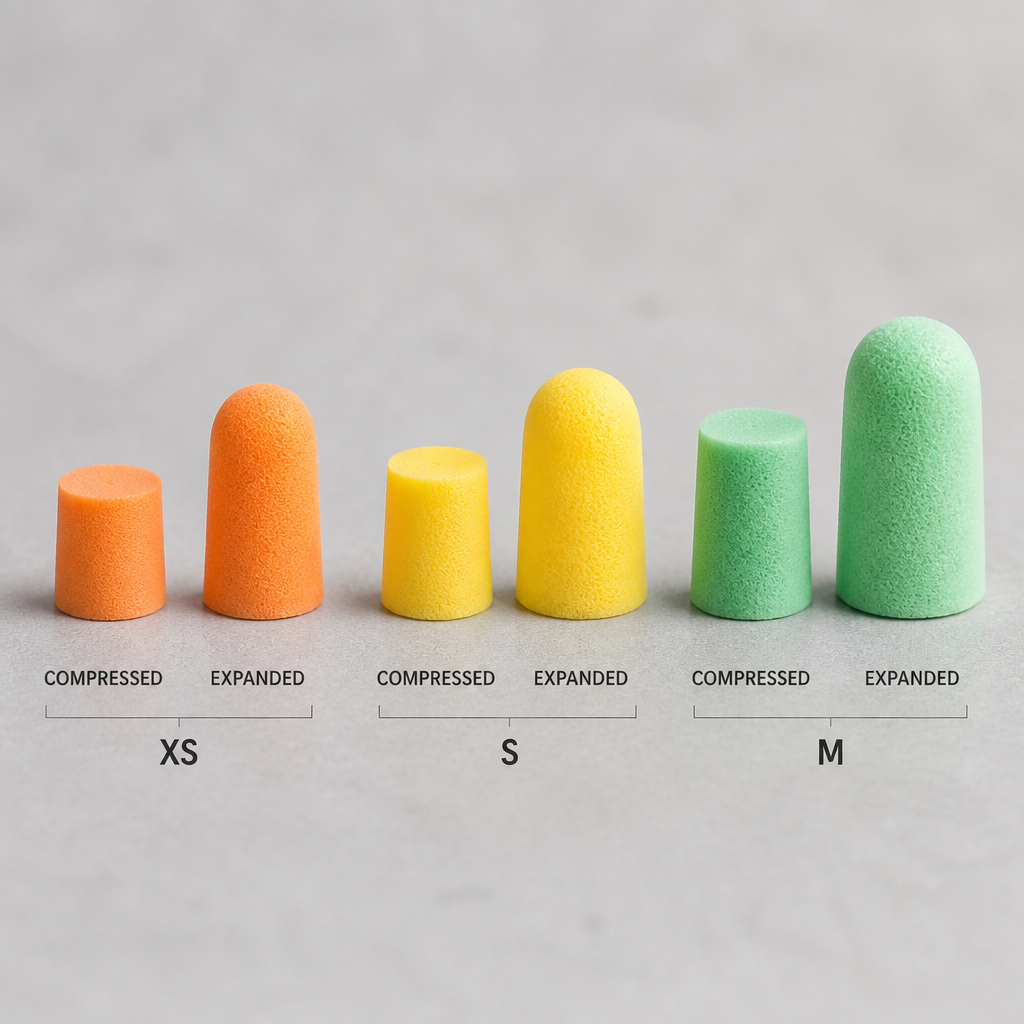
When you are looking at memory foam ear tip sizing, the letters XS, S, and M refer to the outer diameter of the tip, which determines how much of the canal wall the foam contacts when it expands. Understanding what each size is designed for saves you time and prevents you from defaulting to medium (the most common mistake) when a different size would actually serve you better.
XS tips are built for ear canals that are noticeably narrower than average. This includes many women, younger adults, and people who have consistently found standard ear plugs to be painful or too large. XS tips expand to fill a smaller diameter, meaning they apply less lateral pressure against the canal wall. If you have ever felt like ear plugs were being forced in or that they ached after thirty minutes, XS is your starting point for testing.
Small tips sit in the sweet spot for a large portion of adults who have never been told that “small” is an option. Many people assume they need medium because that is what comes preinstalled on most products. In practice, small tips deliver a full seal for average-to-slightly-narrow canals with significantly less pressure than medium. If your medium tips feel tight but your XS tips feel like they are barely there, S is almost certainly the right answer.
Medium tips are designed for canals at or above the average adult diameter. They provide maximum contact area and maximum noise reduction when they fit correctly. The key word is correctly. If medium tips require force to insert, expand uncomfortably, or leave your ears sore, they are too large. Medium is not the default correct answer; it is the correct answer only when your anatomy supports it.
You do not need specialist equipment to find your size. You need the three tip sizes, some patience, and a consistent testing method. Here is how to do this properly.
With memory foam tips, compress the tip gently between your fingers before insertion. Pull your outer ear upward and back slightly with your free hand to straighten the canal. Insert the tip with a gentle rotating motion and hold it in place for about 20 to 30 seconds while the foam expands. Do not let go early. Memory foam needs contact time to conform to your specific canal shape.
Once the tip has expanded, you should notice a significant muffle of ambient sound. Open and close your mouth a few times. A well-fitted tip will stay in place and maintain its seal as your jaw moves. If the tip shifts, pops out, or the sound muffle disappears when you open your mouth, either the size is wrong or the insertion was not deep enough.
There is a difference between the feeling of a complete seal and the feeling of pressure. A seal feels like a gentle full-contact hug around the canal. Pressure feels like the plug is pushing outward against canal walls that do not have room for it. If you feel pressure, move down a size. If you feel almost nothing and sound leaks in, move up a size or try inserting more deeply.
Pro tip: Test each size for at least five minutes in a normally noisy environment, not a silent room. A quiet room makes it impossible to judge whether your noise reduction is actually working, because there is nothing to reduce.
Wrong sizing does not always announce itself immediately. Sometimes it shows up after an hour of wear, or after waking up. Here are the specific signals to watch for with each sizing error.
Soreness or achiness inside the ear canal after wearing, a feeling of fullness or pressure that borders on painful, tips that require significant force to insert, and ear canals that feel raw or irritated after removal. These are all signs you are compressing foam into a space that is too small for that tip diameter.
Tips that fall out when you move your head or roll over in bed, sound that seems barely muffled even after correct insertion, a sense that the tip is floating in the canal rather than seated against it, and the plug sitting visibly proud of the ear entrance rather than sitting flush. Any of these means the tip is not creating a perimeter seal.
If you are getting partial noise reduction but not soreness, and you are using the middle size, the issue may be insertion depth rather than size. A tip inserted too shallowly will sit at the opening of the canal and provide a weak seal. Re-read the rolling and insertion steps above and hold the tip in place longer during expansion. In practice, most beginner insertion errors come from releasing the tip before the foam has finished expanding.
The table below compares the three memory foam tip sizes included with ATTENU8 ear plugs across the most relevant fit criteria, so you can map your experience directly to the right starting size.
| Size | Best For | What a Good Fit Feels Like |
|---|---|---|
| XS (Extra Small) | Narrow canals, users who find standard plugs painful, many women and younger adults | Gentle contact with no pressure; clear noise muffle; tips stay in place without force |
| S (Small) | Average-to-slightly-narrow canals; users who find medium too tight but XS too loose | Firm but comfortable seal; noticeable sound reduction; no soreness after prolonged wear |
| M (Medium) | Average-to-wider canals; users who find small tips insufficient or fall out easily | Full contact seal; maximum noise reduction; tips seat deeply without excessive force |
Understanding how to choose ear plug size also depends on knowing how your tip material behaves during insertion. Memory foam and silicone flanged tips handle sizing very differently, and that difference affects how forgiving each material is when you are between sizes.
Memory foam compresses, then slowly expands to fill the available space in your canal. This means a small tip will expand to fill a canal slightly larger than its nominal diameter, and a medium tip will compress slightly to fit a canal a fraction smaller than its nominal diameter. There is a tolerance range on either side of the labeled size. This is one of memory foam’s core advantages over rigid silicone flanged tips, which either fit your canal geometry or they do not, with almost no middle ground.
Silicone flanged tips offer consistent performance once you know your size, but they require more precise sizing because the flanges are rigid. If the flanges do not match your canal diameter, they either create pressure points or fail to seal. Memory foam tips, particularly slow-recovery foam, give you a wider margin for error while still delivering a consistent seal.
Disposable foam ear plugs force a complete replacement every time the foam degrades. With a reusable metal-bodied ear plug like ATTENU8, only the foam tip is replaced, roughly every 6 to 8 weeks. This matters for sizing because it means you can switch tip sizes between replacements if your needs change, or if you discover a better-fitting size without discarding the entire ear plug. The aluminium body remains the same; only the tip changes.
Light sleepers have a different set of sizing priorities compared to, say, a construction worker using hearing protection for a shift. During sleep, the ear plug is in contact with your canal for six to nine hours, and pressure or soreness compounds over that time in a way that a two-hour construction shift does not expose.
For sleep use, comfort takes priority alongside noise reduction, and that almost always means erring toward the smaller end of your size range rather than the larger. If both S and M deliver a workable seal in your testing, go with S for overnight wear. The slightly reduced lateral pressure over eight hours makes a meaningful difference in how your ears feel in the morning.
Side sleepers face an additional challenge: pillow pressure pushes the ear plug further into the canal or forces it sideways. A tip that fits well when you are upright may shift when your head is against a pillow. Test your fit lying on your side before committing to a size for sleep use. If the tip shifts when you press your ear against a surface, move up one size for a more stable seated fit, or adjust insertion depth before lying down.
For noise-sensitive professionals in loud environments such as construction or manufacturing, the priority reverses: maximum noise reduction takes precedence, which means using the largest tip size that does not cause discomfort, since a larger foam contact area generally produces a more complete acoustic seal. In these contexts, a medium tip that seats fully is almost always the better choice over a small tip, even if the small is slightly more comfortable.
The most reliable test is the noise muffle check combined with the open-mouth test. After inserting and allowing the foam to expand fully, ambient sound should be noticeably reduced. Then open and close your mouth several times. A correctly sized and inserted tip maintains its seal and stays in position as your jaw moves. If it shifts or the noise muffle decreases when you open your mouth, either the tip is too small or it was not inserted deeply enough.
Yes, and it is more common than most people expect. The ear canal diameter and shape can differ between your left and right ear. If you find that your S tip works perfectly in one ear but feels loose in the other, try an M tip on the looser side. ATTENU8 includes multiple sizes precisely so you can mix and match per ear rather than being locked into one size for both.
Start with small. The default assumption that medium is the correct size leads most beginners to use a tip that is too large, which creates pressure and discomfort and puts them off ear plugs entirely. Small is far less likely to cause soreness, and if the seal is insufficient you can move up to medium without having had a painful experience as your first impression.
Memory foam tips degrade over time as the foam loses its ability to compress and re-expand fully. With ATTENU8, the recommended replacement interval is every 6 to 8 weeks under regular use. A tip that no longer expands properly will not seat correctly regardless of size, so degradation can mimic a sizing problem. If a tip that previously worked well starts feeling loose or less effective, replacement rather than resizing is the first thing to try.
Yes. There is no universal standard for what XS, S, or M means in physical tip diameter across different manufacturers. A medium tip from one brand may be physically identical to a small from another. Always use the sizing guide specific to the product you are using, and run your own fit test rather than assuming your size carries across brands.
The aluminium body provides a stable, fixed-diameter nozzle that the memory foam tip mounts onto. Because the body does not flex or deform, the tip expands outward into your canal rather than the body shifting under pressure. This creates a more consistent seal than a fully foam plug, where the entire structure can compress unpredictably. The concave design of the aluminium body also means the outer portion of the plug sits naturally at the ear entrance without creating a suction effect on removal.
Before concluding that no size works, revisit your insertion technique. The most common reason all three sizes feel wrong is shallow insertion. The tip needs to be compressed, inserted with a gentle rotating motion while pulling the outer ear upward and back, and held in place for 20 to 30 seconds. If you have genuinely tested all three sizes with correct technique and none seal properly, your ear canal may have an unusual geometry that warrants a visit to an audiologist who can assess the canal and potentially recommend custom-molded options.
Have you tried switching tip sizes before landing on the right fit? Share what worked for you in the comments, or let us know if a particular size worked better in one ear than the other.

