


 0
0

Most people searching for ear plugs for sleep end up choosing between two very different philosophies: a fashionable silicone ring you wear as much for the look as the noise block, and a precision-engineered metal-bodied plug designed to deliver serious attenuation night after night. That is the core tension in the ATTENU8 vs Loop ear plugs debate, and it is worth settling with specifics rather than marketing language. This comparison covers noise reduction performance, comfort for side sleepers, build quality, running costs, and who each product actually suits. If you are a light sleeper, a shift worker, or someone in a loud environment who needs reliable hearing protection, the differences here matter more than any brand aesthetic.
| Key Insight | Explanation |
|---|---|
| ATTENU8 delivers approximately 32dB noise reduction | This is among the highest passive attenuation ratings available in a sleep-focused ear plug, sitting in the same range as professional hearing protection used in industrial settings. |
| Loop Quiet rates at 26.2dB SNR (14dB NRR) | Loop uses the European SNR standard, which reads higher than the US NRR figure. The practical real-world block is meaningful for moderate noise but falls short of ATTENU8 for serious noise exposure. |
| Silicone vs. memory foam tips changes the seal entirely | Loop Quiet uses soft silicone tips. ATTENU8 uses memory foam tips that conform to the individual ear canal shape, generally producing a tighter acoustic seal and better low-frequency attenuation. |
| Metal body vs. silicone body affects side-sleeper pressure | ATTENU8’s concave aluminium body is engineered to sit flush with the ear, reducing pillow pressure. Loop’s ring-shaped body protrudes further, which some side sleepers find uncomfortable over a full night. |
| ATTENU8 tips are replaced every 6-8 weeks, not the whole plug | The aluminium body is permanent. Only foam tips need replacing, which is both cheaper over time and significantly less wasteful than discarding entire pairs of disposable foam plugs. |
| Loop targets concert-goers and lifestyle users first | Loop’s product line, from Engage to Experience to Quiet, is designed around social situations and music events. Sleep is one use case. For ATTENU8, blocking noise for sleep and demanding environments is the entire mission. |
| Three tip sizes come included with ATTENU8 | XS, S, and M memory foam tips are included in the box. Finding the right size is essential for achieving rated attenuation, and having all three removes the guesswork up front. |
Before diving into the detail, it helps to understand what these two products are actually trying to do. Loop built its brand around making ear protection socially acceptable, producing plugs that look deliberate and stylish rather than clinical. ATTENU8 built its product around a different problem: making serious noise reduction comfortable enough to wear all night, every night, without the waste and inconsistency of single-use foam. That distinction in purpose shapes every spec, material choice, and design decision that follows.
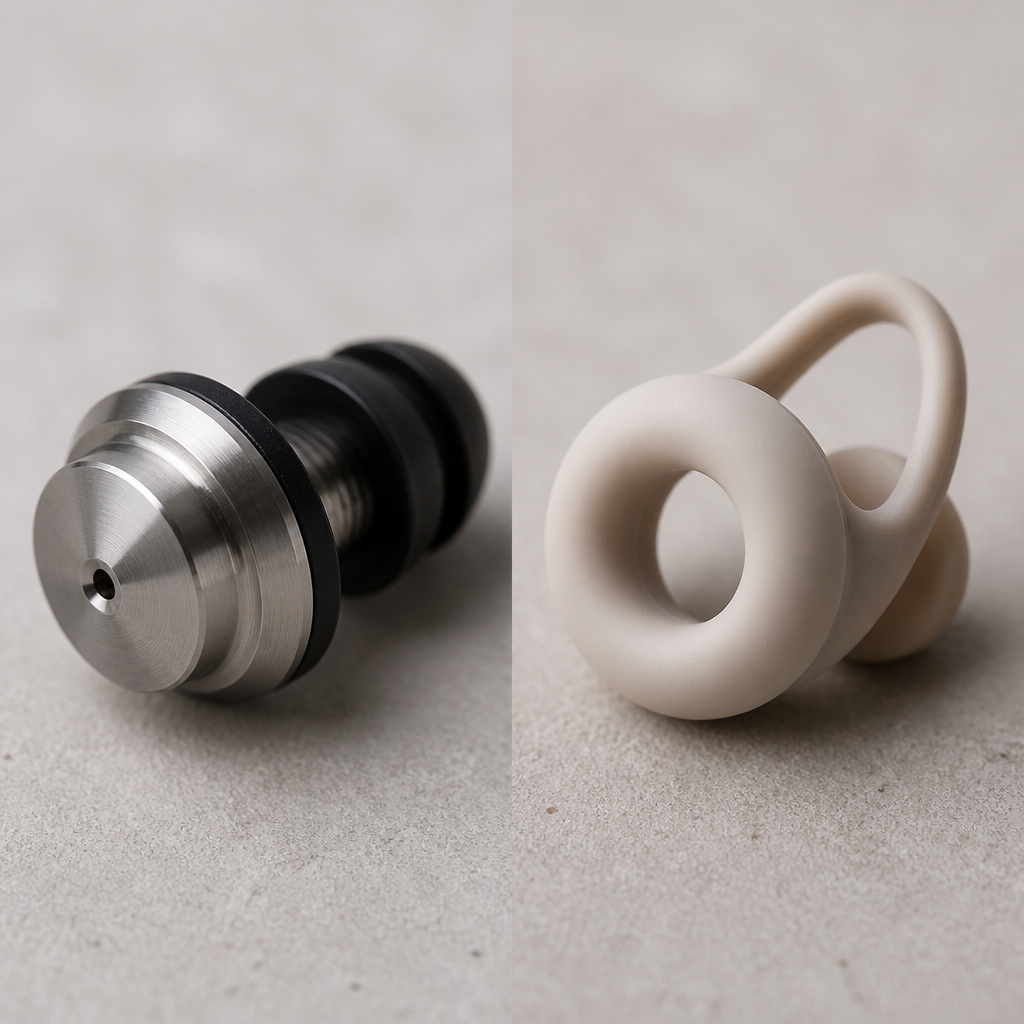
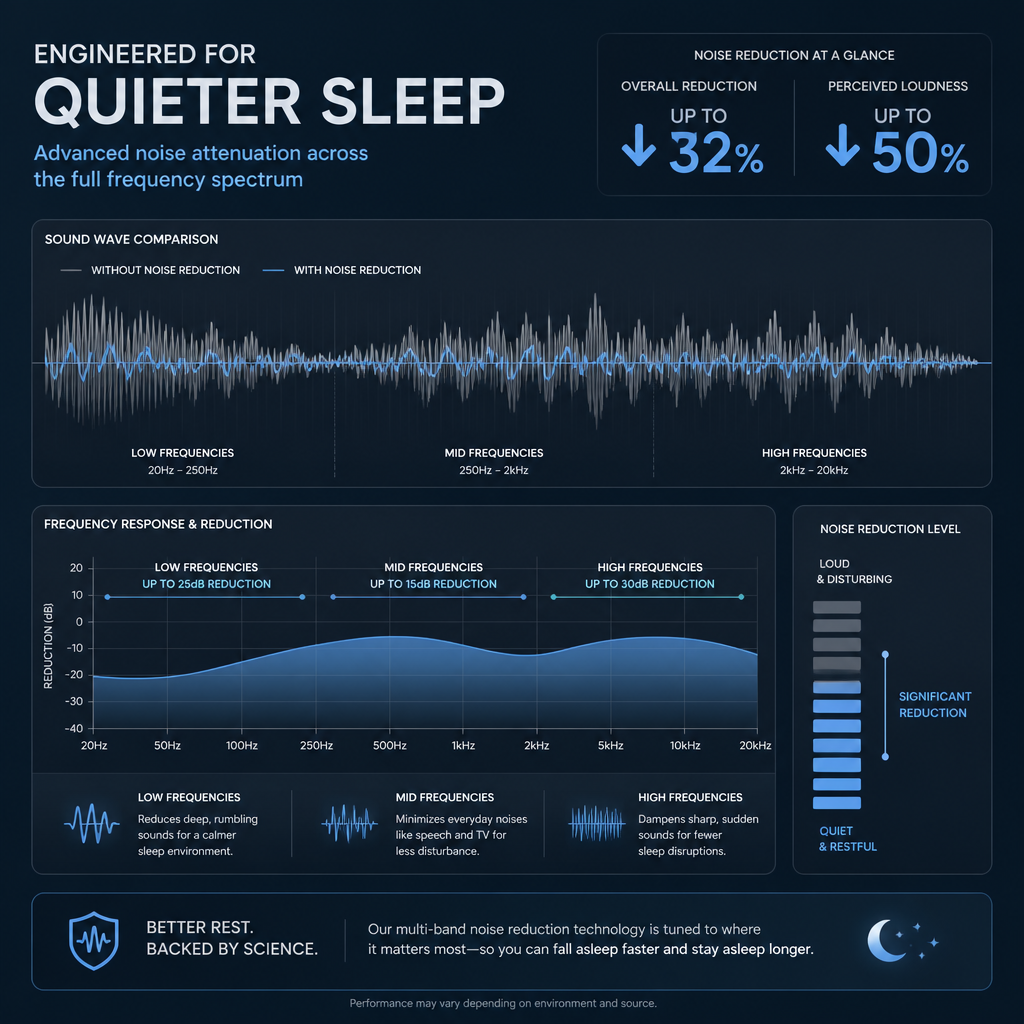
The first number buyers compare is decibel reduction, and it is also the number most often misread. ATTENU8 is rated at approximately 32dB noise reduction. Loop Quiet is rated at 26.2dB SNR and 14dB NRR. Those two ratings for Loop are not contradictory: SNR is the European standard and NRR is the American standard, and they use different test methodologies that consistently produce different numbers for the same product. The SNR figure is the one Loop leads with in marketing.
In practical terms, a 32dB rating means ambient sound energy reaching the eardrum is reduced by roughly half compared to a 22dB rating. For a light sleeper whose threshold for waking is low, that gap between 26dB and 32dB is not academic. It can be the difference between sleeping through a partner’s snoring or the neighbor’s early alarm, and waking up at 2am.
Ratings are measured under lab conditions with a perfect seal. In real ears, the seal determines whether you get the rated performance or something well below it. ATTENU8’s memory foam tips compress on insertion and then expand to conform to the exact shape of the ear canal. This self-adapting seal is the same technology used in professional hearing protection for manufacturing and construction workers, where consistency of fit is not optional.
Loop Quiet uses soft silicone tips in four sizes. Silicone is comfortable and easy to insert, but it does not self-adapt the same way. If your ear canal is irregular, slightly off-round, or simply not matched to one of Loop’s four shapes, the seal is less complete. That is not a flaw unique to Loop: it is a characteristic of all silicone-tipped ear plugs. It is simply worth knowing before you compare raw dB numbers between the two products.
A higher rated attenuation figure only matters if the seal is consistent. The best ear plug is the one that actually stays sealed in your specific ear canal through a full night of movement.
The noise that disrupts sleep, snoring, road traffic, air conditioning, bass from neighboring apartments, is predominantly low frequency, concentrated in the 125Hz to 500Hz range. Memory foam seals are particularly effective at blocking low-frequency sound because they create a dense, compliant barrier with no air gaps. The aluminium body of ATTENU8 adds mass, which further resists vibration transmission at lower frequencies. Silicone tips can be excellent at mid and high frequencies but are generally less effective at the very low end where sleep disruption is most common.
Noise reduction performance is irrelevant if you take the plugs out at 3am because they hurt. Comfort for sleep is a different engineering challenge than comfort for a two-hour concert, and the two products reflect their different priorities in how they sit in the ear.
Loop Quiet is made from super-soft silicone with a low-profile body. Reviewers and the brand itself note that it sits closer to the ear canal and does not protrude significantly, which reduces pillow pressure compared to earlier Loop designs. The ring shape, though flattened, still creates a point of contact against the pillow when sleeping on one side. For some users this is fine. For others, particularly those who move frequently during sleep or press their head firmly into the pillow, it causes cartilage discomfort over a full night.
ATTENU8’s aluminium body is concave, meaning it curves inward rather than protruding outward. When worn, the outer face of the plug sits approximately flush with the entrance of the ear canal rather than extending beyond the ear’s natural contour. For a side sleeper with their ear pressed against a pillow, this geometry matters enormously. There is simply less plug to press against.
The trade-off is that metal, even a well-finished aluminium alloy, has a different initial feel than silicone. First-time users occasionally notice the weight difference in the first few nights. In practice, once the memory foam tips have expanded and seated, most users stop noticing the body material within a few sessions.

ATTENU8 ships with XS, S, and M foam tips in the box. Loop Quiet ships with four silicone tip sizes. Both brands recognize that fit varies by individual, which is the right approach. The difference is in the material’s behavior once inserted. Memory foam requires a specific insertion technique: compress the tip, insert, hold for a few seconds while it expands. Silicone tips insert immediately with no technique required. For first-time ear plug users, silicone is easier to use correctly from day one. Memory foam delivers a superior seal once the technique is learned, typically within two or three uses.
Pro tip: When fitting ATTENU8 for the first time, compress the foam tip fully between your fingers before inserting, hold the plug in place for at least 10 seconds before releasing, and then gently tug to confirm the seal is holding. If you feel suction resistance when tugging, the foam has expanded correctly and you are getting the rated attenuation.
This is where ATTENU8 and Loop diverge most sharply, and where the comparison shifts from comfort preference to economics. Loop’s ear plugs are made primarily from silicone, which is durable but not indefinitely so. The tips and body are part of the same replaceable unit. ATTENU8 separates the permanent component, the aluminium body, from the consumable component, the foam tips.
The aluminium body of ATTENU8 is designed to last indefinitely under normal use. Aluminium does not degrade from moisture, it resists deformation, and it does not absorb odors the way foam and some silicones do over extended use. The foam tips, which are the interface with the ear canal and the component that actually compresses and expands, are replaced every 6 to 8 weeks. This is a much lower running cost than replacing an entire ear plug unit, and it produces significantly less material waste.
Many people switching to premium reusable ear plugs are coming from disposable single-use foam plugs, the orange or yellow cylindrical type sold in bulk bags. The running cost of disposable foam plugs is easy to underestimate. Daily users who replace plugs every one to two days spend considerably more over a year than the cost of an ATTENU8 pair plus several cycles of foam tip replacements. Beyond cost, there is the hygiene argument: a freshly replaced foam tip on a clean aluminium body is meaningfully more hygienic than a reused disposable plug that has been sitting in a nightstand drawer.
Pro tip: Keep your ATTENU8 aluminium bodies clean by wiping them with a slightly damp cloth every few weeks. The foam tips themselves should not be washed as water degrades the memory foam cell structure. Replace tips on schedule every 6 to 8 weeks regardless of how they look, because the foam’s expansion capacity decreases before visible wear appears.
Loop’s silicone construction is genuinely well-made for what it is. The Quiet model in particular is built to be washed and reused repeatedly, which puts it well above disposable foam. Loop recommends cleaning with warm water and mild soap. For occasional or moderate use, a pair of Loop Quiet plugs will last many months before the silicone starts to degrade or the tips lose their elasticity. For daily heavy-use scenarios, particularly industrial or construction environments where plugs are going in and out multiple times a day, the tip wear rate will be higher.
The table below compares ATTENU8 and Loop Quiet directly across the criteria that matter most for sleep and daily noise protection. Loop Dream, Loop’s dedicated sleep product, is included as a third column because it is the most directly competitive product in Loop’s line for the sleep use case.
| Feature | ATTENU8 | Loop Quiet | Loop Dream |
|---|---|---|---|
| Noise Reduction Rating | ~32dB | 26.2dB SNR / 14dB NRR | 27dB (as stated by Loop) |
| Body Material | Concave aluminium alloy | Soft silicone | Low-profile soft silicone with foam-lined oval tip |
| Tip Material | Memory foam (XS, S, M) | Silicone (4 sizes) | Foam-lined silicone (4 sizes) |
| Tip Replacement Cycle | Every 6-8 weeks | Replace whole unit when worn | Replace whole unit when worn |
| Side Sleeper Suitability | High (flush concave profile) | Moderate (ring protrudes slightly) | High (low-profile oval design) |
| Primary Target Use | Sleep, travel, industrial noise protection | Focus, travel, sleep, sensory sensitivity | Sleep-specific |
| Seal Type | Expanding memory foam (self-adapting) | Silicone (size-dependent fit) | Silicone plus foam layer |
| Long-Term Sustainability | High (permanent metal body, tip-only replacement) | Moderate (full unit replaced) | Moderate (full unit replaced) |
The honest answer here is that these products serve overlapping but not identical needs. Getting this wrong costs you money and sleep.
Choose ATTENU8 if your primary need is maximum passive noise reduction for sleep, and you are dealing with genuinely loud environments: a snoring partner, traffic from a main road, shift work with daytime sleeping in a noisy household, or a construction site adjacent property. The 32dB rating combined with an expanding memory foam seal means you are getting close to the ceiling of what passive ear protection can deliver. The metal body and tip-replacement model also makes ATTENU8 the right choice if you wear ear plugs every single night and want to minimize both running cost and material waste over the long term. Professionals in loud work environments, construction workers, people in manufacturing, those who need dependable hearing protection that travels well, will find the durable aluminium body more suited to daily demanding use than a silicone plug.
Choose Loop Quiet or Loop Dream if your noise problem is moderate rather than severe, you prefer a silicone material against your skin, or you want a plug that doubles comfortably as a social or focus tool during the day. Loop’s aesthetic and brand make it easier to wear in public without drawing attention. If your sleep disruption is from moderate ambient noise rather than a genuinely loud environment, the 26dB SNR attenuation of Loop Quiet is meaningful and may be sufficient. Loop Dream is worth considering specifically for side sleepers who have found the original Loop Quiet’s ring body uncomfortable over a full night.
Where Loop falls short relative to ATTENU8 is in the top end of noise scenarios and in the economics of daily use. If you need 32dB and you need it every night for years, Loop’s product architecture is not designed for that demand level. ATTENU8 is.
For most light sleepers dealing with significant noise, ATTENU8 delivers higher passive attenuation (approximately 32dB) than Loop Quiet (26.2dB SNR) and uses expanding memory foam that self-seals to the ear canal shape. This generally means a more reliable block of low-frequency noise like snoring and traffic. Loop Dream is a competitive option for side sleepers who prioritize comfort over maximum attenuation, but for raw noise reduction performance during sleep, ATTENU8 has the advantage.
Yes. The concave aluminium body of ATTENU8 is designed to sit flush with the ear rather than protruding outward, which reduces the pressure point against a pillow. Most side sleepers find this profile more comfortable over a full night than ring-shaped plugs that sit proud of the ear. As with any ear plug, individual ear anatomy varies, so trying all three included tip sizes (XS, S, M) to find the most flush-fitting option is worthwhile.
Loop Quiet is rated at 26.2dB SNR using the European standard, which equates to 14dB NRR under the American standard. ATTENU8 is rated at approximately 32dB. The difference reflects both the higher attenuation target of ATTENU8’s design and the self-sealing advantage of its memory foam tips over silicone tips. For moderate everyday noise, Loop Quiet performs well. For louder or more demanding environments, the gap in ratings becomes practically significant.
ATTENU8 recommends replacing the memory foam tips every 6 to 8 weeks with regular use. The aluminium body itself does not require replacement. This is a substantially lower running cost than replacing complete silicone ear plug units, and it means the only consumable cost is the foam tips. Daily users will find this maintenance cycle straightforward: the tips are easy to swap, and the schedule aligns roughly with other personal care product replacement cycles.
Loop Quiet is designed for everyday noise sensitivity, focus, and sleep in moderate noise environments. Its 26.2dB SNR rating is solid for general use but is below the threshold typically recommended for industrial hearing protection, where sustained exposure above 85dB requires more significant attenuation. For genuinely loud working environments, ATTENU8’s approximately 32dB rating and memory foam seal put it closer to professional-grade passive protection. Loop’s Experience and Engage products are explicitly designed for music and social settings, not hearing protection in hazardous noise environments.
ATTENU8 is designed for long-term cost efficiency. The aluminium body is permanent, and only the foam tips need replacement every 6 to 8 weeks. This structure means your ongoing cost is the tip replacements only, not full product replacement. Loop ear plugs are durable silicone that can be washed and reused for many months, making them far more economical than single-use foam. For daily users over a multi-year horizon, ATTENU8’s tip-only replacement model is generally the more economical choice.
If you have tried either ATTENU8 or Loop ear plugs for sleep and have thoughts on what worked, what did not, or how your experience compared to the specs on paper, share it in the comments below.
We would love your feedback and any insights you would share with others. What perspective would you add?

