


 0
0

You love your partner. You do not love the noise they make at 2am. If you have ever lain awake at night listening to a sound that sits somewhere between a freight train and a chainsaw, you already know that snoring is not just an annoyance – it is a genuine threat to your health, your relationship, and your ability to function the next day. Finding the right ear plugs for snoring partner situations is one of the most practical steps any couple can take, and yet most people waste months trying products that fall out, hurt their ears, or barely dent the noise. This guide cuts through the confusion and tells you exactly what works.
| Key Insight | Explanation |
|---|---|
| 32 dB or higher noise reduction is the target for snoring | Loud snoring commonly reaches 60-80 dB. You need meaningful noise reduction, not token attenuation, to actually sleep through it. |
| Fit matters more than the stated NRR number | An earplug rated at 33 dB that does not seal properly in your ear canal will perform worse than a well-fitted 28 dB earplug. The rating assumes a perfect fit. |
| Disposable foam is a short-term fix with real long-term costs | If you need ear plugs every night, buying disposable pairs adds up fast and creates a lot of waste. Reusable options are more economical after the first few weeks. |
| Side sleepers need low-profile designs | Bulky or protruding ear plugs press painfully into your ear canal when your head is on a pillow. Profile and softness matter as much as noise reduction rating. |
| Memory foam tips outperform rigid silicone for overnight comfort | Memory foam conforms to the shape of your individual ear canal, creating a seal without sustained pressure. Rigid tips cause soreness over a full night. |
| Multiple tip sizes are non-negotiable for a proper fit | Ear canals differ considerably between people. Ear plugs that include XS, S, and M tip options give you the best chance of achieving the seal you actually need. |
| Ear plug hygiene is the most overlooked factor in long-term use | Reusable ear plugs with replaceable tips eliminate the hygiene problem that makes people abandon daily use. Replace tips every 6-8 weeks, not when they feel disgusting. |
Sleep disruption from a snoring partner is not just about the noise level in the moment. The real damage comes from the pattern. Snoring is irregular – it surges, pauses, and surges again – which means your brain never fully habituates to it the way it might with steady background noise like a fan. Each unexpected peak pulls you out of deeper sleep stages, even when you do not fully wake up.
Research consistently shows that people who sleep next to heavy snorers suffer disrupted sleep architecture, meaning they spend less time in the slow-wave and REM stages that govern physical recovery and memory consolidation. The non-snoring partner can end up chronically sleep-deprived while the snorer sleeps through their own noise entirely. That imbalance creates real friction in relationships over time.
The practical answer that couples turn to, before considering separate bedrooms, is ear plugs. And that is a reasonable first step, provided you choose the right type. Early research suggests that wearing noise reduction earbuds or ear plugs to bed can help improve sleep quality and reduce daytime tiredness, which reinforces what most chronic non-sleepers already know from experience.
The non-snoring partner often carries the full sleep debt while the snoring partner feels completely rested. Solving the noise problem is not a luxury – it is a matter of basic daily function.
Ear plugs work through passive noise isolation: they physically block sound waves from reaching your eardrum by creating a seal in the outer ear canal. The effectiveness of that seal is measured by the Noise Reduction Rating (NRR) in the US, or the Signal-to-Noise Ratio (SNR) in Europe. These two systems use different test methodologies, so a European product rated at 27 dB SNR is not directly comparable to a US product rated at 27 dB NRR.
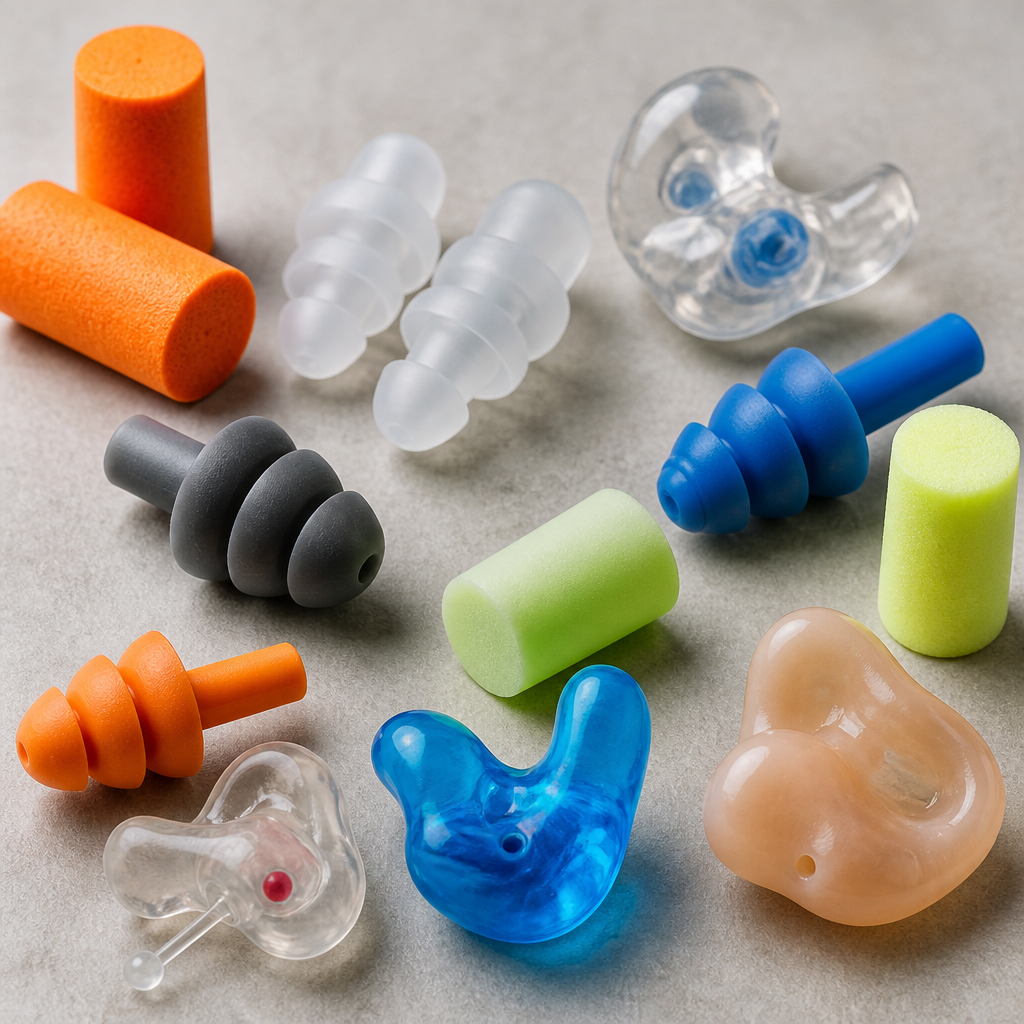

For snoring specifically, you want to be looking at products with an NRR of at least 30-32 dB. Snoring commonly sits between 60 and 80 decibels at close range – a sound level comparable to a busy restaurant or heavy traffic. Dropping that to a manageable background murmur requires serious attenuation, not the modest reduction that cheap wax or low-grade foam can provide.
The single biggest predictor of real-world performance is whether the ear plug creates a complete seal in your specific ear canal. No seal means no meaningful noise reduction, regardless of what the packaging claims. This is why so many people try cheap disposables, find they “don’t work,” and give up on ear plugs entirely – when the actual problem was a poor fit, not the concept itself.
Ear canals are not standardised. They differ in diameter, length, and shape between individuals. Ear plugs that come in multiple tip sizes, particularly XS, S, and M options, address this directly. A product that forces you to use a single size is always going to leave a significant portion of users with an imperfect seal and disappointing results.
Pro tip: When inserting foam-tipped ear plugs, roll the tip between your fingers to compress it, then hold it in place for 20-30 seconds while it expands. Releasing it too early is the most common reason foam ear plugs fail to seal properly.
The material and shape of the ear plug body affects comfort as much as the tip. Soft, floppy bodies compress easily against pillow pressure but can work their way out during the night. Rigid bodies hold their position but can feel hard and uncomfortable over hours of side sleeping. A structured body made from a smooth, low-friction material like aluminium holds its position reliably while remaining comfortable enough to wear through a full night.
If you need ear plugs every single night to sleep next to a snoring partner, the choice between disposable and reusable is not just about preference – it is about economics and hygiene. Here is a direct comparison of the three main approaches couples use.
| Approach | Best For | Main Drawbacks |
|---|---|---|
| Disposable foam ear plugs (single-use, high NRR) | Maximum noise reduction on a tight budget, short-term or occasional use | Ongoing cost adds up; wasteful; can feel dirty after one use if you try to reuse them; no size options mean poor fit for many people |
| Silicone or wax reusable ear plugs (mouldable) | People with very small ear canals or sensitivity to foam; occasional travellers | Wax picks up debris quickly; silicone tips wear out and harden; noise reduction is often lower than foam; can be hard to insert correctly every time |
| Premium reusable ear plugs with replaceable memory foam tips (structured body) | Nightly use over months and years; people who want consistent fit and hygiene; eco-conscious buyers | Higher upfront cost; requires tip replacement every 6-8 weeks; needs cleaning |
In practice, anyone using ear plugs nightly will find that disposables become expensive and wasteful very quickly. A pair of premium reusable ear plugs with replaceable memory foam tips costs more upfront but delivers consistent performance night after night without the recurring expense of constantly buying new boxes. The hygiene argument is equally strong: memory foam tips that are replaced on a regular schedule stay clean in a way that a crumpled, reused disposable foam plug simply cannot.
ATTENU8 ear plugs take this approach further with an aluminium body that holds its shape night after night, paired with soft memory foam tips in three sizes (XS, S, M) that are replaced every 6-8 weeks. The result is roughly 32 dB of noise reduction from a product that is genuinely built for long-term, nightly use – not a one-time purchase that you quietly abandon after two weeks because it hurts.
Pro tip: If you are switching from disposables to reusable ear plugs, give yourself at least a week to adjust. Your brain is accustomed to the exact feel of your old plugs, and a new product will feel strange for the first few nights even when it is performing better. Most people who abandon reusable ear plugs do so in the first three days – before the adjustment period ends.
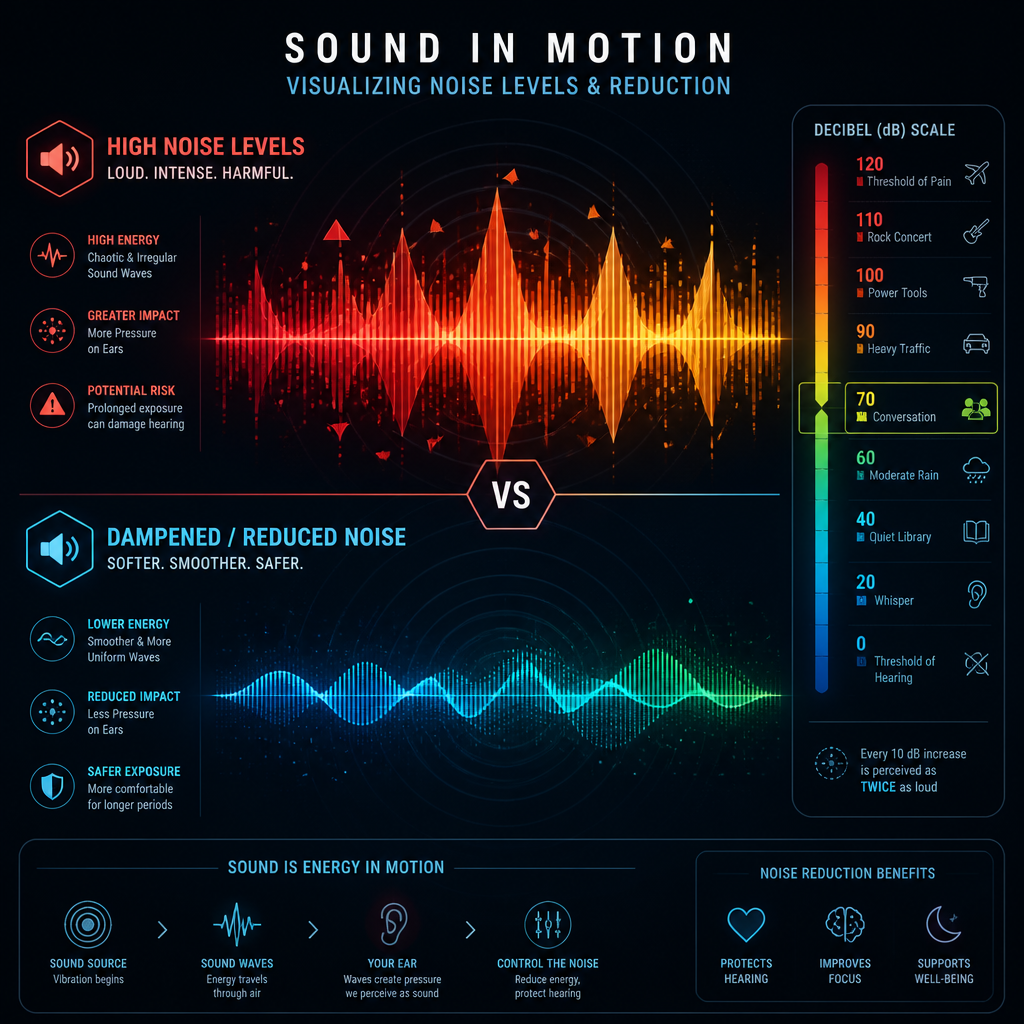
Ear plugs are the most direct solution, but how you use them and what else you pair them with determines whether they actually solve the problem. Here is what works consistently across different snoring situations.
Ear plugs reduce the absolute level of sound reaching your eardrum, but they do not produce silence. What remains after a well-fitted 32 dB ear plug is a muffled version of the snoring, still identifiable as a pattern. The most effective approach is to pair ear plugs with a consistent background sound – a fan, a white noise machine, or a rain sound from a speaker in the room – so that the reduced snoring is masked by neutral, non-intrusive audio. The combination works better than either solution alone.
The key is that the background sound should be constant and predictable. Your brain stops registering constant, patterned sound relatively quickly. It cannot stop registering the irregular peaks and troughs of snoring in the same way, which is why the masking strategy works.
A common and underrated approach is to fall asleep before your partner. Snoring typically becomes louder as the snorer enters deeper sleep, so if you are already in a deeper sleep stage yourself when the noise peaks, you are less likely to be roused by it. Ear plugs combined with an earlier sleep time relative to your partner can make a significant difference even when the snoring itself is quite loud.
Encouraging your partner to sleep on their side rather than their back also reduces snoring intensity for most people. Snoring is typically worse when someone sleeps on their back because the tongue and soft palate are more likely to partially obstruct the airway in that position. This is not always a solvable problem – some people roll back during the night regardless – but it is worth trying as a first line approach.
If your partner’s snoring is very loud, involves gasping or complete pauses in breathing, and leaves them feeling unrefreshed despite adequate sleep time, that is a pattern that warrants a conversation with a doctor rather than a better pair of ear plugs. Sleep apnea is a medical condition, not just a loud habit, and it has real health consequences for the snorer. No ear plug solves the underlying problem on that side of the bed.
Most people who share a bed with a snoring partner sleep on their side, partly because facing away from the source of noise provides a tiny reduction in perceived volume. But side sleeping creates a specific problem for ear plug users: the ear that is resting on the pillow is compressed. Bulky, protruding ear plugs dig into the cartilage of the outer ear and create a pressure point that makes it impossible to stay comfortable through the night.
The design of the ear plug body matters enormously here. Products with a large outer housing – including most consumer-grade earbuds and many silicone ear plugs – are not practical for side sleeping. You need an ear plug that sits flush with or just inside the ear canal opening, without a significant protrusion that catches the pillow.
A concave aluminium body, like the one used in ATTENU8 ear plugs, solves this directly. The shape is designed to sit cleanly in the ear without protruding outward, which means the pillow pressure is distributed across the smooth curved surface rather than a hard angular edge. Combined with soft memory foam tips that do not resist compression in the same way rigid silicone does, the result is an ear plug you can actually wear for eight hours on your side without waking up with a sore ear.
Pro tip: If you wake up with a sore outer ear after wearing ear plugs, the problem is almost always the body shape rather than the tip. Switching to a lower-profile design with a smooth curved housing will usually solve this without any sacrifice in noise reduction performance.
For most snoring situations, you want an NRR of at least 30-32 dB. Snoring can reach 60-80 dB at close range, and ear plugs in this range will reduce it to a level that most people can sleep through, especially when paired with some background sound masking. Products below 25 dB NRR are unlikely to make a meaningful difference against loud snoring.
A well-fitted reusable ear plug with quality memory foam tips can match or exceed the real-world performance of disposable foam plugs. The stated NRR of disposables is often slightly higher on paper, but disposables are frequently inserted poorly, which collapses their effective performance. A reusable product you know how to use correctly, every night, will outperform a disposable you rush into place half-asleep.
For most people, wearing ear plugs nightly is safe provided you keep them clean and replace tips or whole plugs regularly. The main risks are wax buildup (because ear plugs can push wax inward over time) and irritation or infection from dirty ear plugs. Using reusable ear plugs with replaceable tips and keeping them clean manages both risks. If you experience pain, itching, or a feeling of fullness that does not clear, see a doctor.
Disposable foam plugs are the most likely to migrate out during the night, especially if they were not inserted correctly or if your ear canal is on the larger side. Reusable ear plugs with a structured body and a correctly sized tip hold their position much more reliably. If you find your ear plugs regularly out by morning, the first thing to try is a different tip size rather than a different product entirely.
The feeling of occlusion, where your own voice and internal sounds become amplified, is a real issue for some people. Starting with a slightly lower-attenuation product and building tolerance gradually can help. Some people also find that pairing ear plugs with a familiar background sound in the room reduces the sense of isolation because there is still something to hear, just at a lower level. If the anxiety is specifically about not hearing a smoke alarm or baby, that concern is valid and worth weighing against the sleep deprivation being caused by the snoring.
Start with the medium size if you have no prior information about your ear canal size. Insert the tip, hold it in place, and note whether you feel a seal forming – a slight pressure change as you release, or a noticeable reduction in ambient sound. If the medium feels loose or falls out easily, move to small. If it feels like it will not seat properly, try the medium from a different brand before assuming you need larger. Most people find that one ear is slightly different from the other, and this is completely normal.
Have you found a combination that actually works for sleeping next to a snoring partner? Share what made the difference for you in the comments – your experience is exactly what other couples need to hear.

