


 0
0

If you fly regularly, you already know that aircraft cabin noise is not just annoying, it is genuinely damaging over time. Ear plugs for travel are one of the most underrated items in any frequent flyer’s kit, yet most people still grab a crumpled foam pair from the flight attendant and wonder why they wake up with sore ear canals and a ringing head. This guide cuts through the noise, literally, to explain what actually matters when choosing ear plugs for flights, why the standard disposable option falls short, and what a premium reusable pair built for comfort can do for your sleep, your hearing, and your overall travel experience.
| Key Insight | Explanation |
|---|---|
| Cabin noise peaks at takeoff and landing | Sound levels inside a cabin can reach up to 105 dB at takeoff and landing, dropping to around 85 dB during cruising. Both levels are at or above the threshold where prolonged exposure risks hearing damage. |
| Real-world noise reduction is lower than the label | In practice, ear plugs deliver roughly 50 to 75 percent of their rated NRR or SNR figure. A pair rated at 32 dB will realistically deliver 16 to 24 dB of reduction, which is still significant but not what the box implies. |
| Fit matters more than NRR rating | An ear plug that fits poorly will leak sound no matter how high its rated figure. Multiple tip sizes, like XS, S, and M foam tips, make a meaningful difference in achieving a proper seal. |
| Ear plugs help with pressure pain, not just noise | Properly inserted ear plugs slow the rate of pressure change in the ear canal, giving the Eustachian tube more time to equalize. This is why many travelers report less ear pain during descent when wearing plugs. |
| Disposable foam is wasteful and inconsistent | Cheap foam plugs are single-use and degrade quickly with body heat and moisture. Reusable metal-bodied plugs with replaceable foam tips maintain consistent performance across hundreds of flights. |
| Side sleepers need low-profile bodies | Bulky ear plugs push against the seat headrest or cabin pillow and create pressure pain on the outer ear. A compact, concave body design stays flush with the ear and does not dig in when you tilt your head. |
| Premium reusable plugs cost less per use over time | When you replace only the foam tips every 6 to 8 weeks rather than the entire device, the per-flight cost drops well below that of disposable alternatives, even budget ones bought in bulk. |
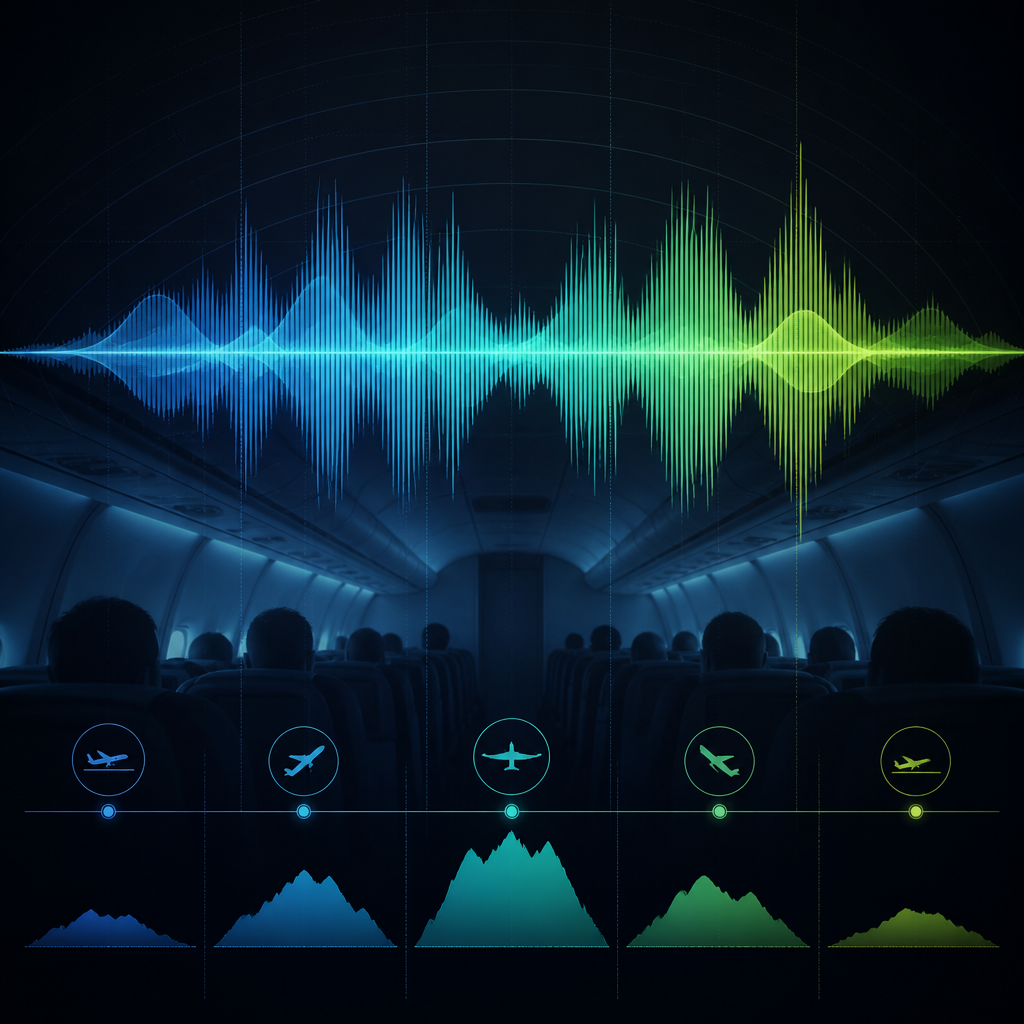
Most travelers treat in-flight noise as background ambience. It is not. Sound levels inside a standard aircraft cabin can reach up to 105 decibels during takeoff and landing, and settle at roughly 85 decibels during cruise altitude. Eighty-five decibels is the precise threshold at which extended exposure begins to carry a real risk of hearing damage, and it is also the level at which OSHA guidelines recommend hearing protection for workers exposed for eight hours or more.
A long-haul flight can easily exceed that eight-hour window. Add multiple flights per week for a frequent business traveler and the cumulative exposure becomes significant. This is not a theoretical risk dressed up for marketing purposes. It is the reason flight crew members are considered an occupational group with above-average rates of noise-induced hearing loss.
Beyond the pure decibel count, there is the fatigue factor. Continuous low-frequency rumble from engines forces your brain to work harder to filter and process sound, even when you are not consciously listening. That is why a long flight without ear protection leaves many people feeling drained in a way that goes beyond jet lag. Good ear plugs for travel do not just protect your hearing, they reduce cognitive load and make rest genuinely possible.
Not all ear plugs are designed with travel in mind. A pair optimized for a shooting range or a factory floor has very different engineering priorities from one designed to get you through a 14-hour flight. Here is what actually separates the useful from the mediocre when you are 35,000 feet in the air.
The NRR (Noise Reduction Rating) used in the United States and the SNR (Single Number Rating) used in Europe are both useful reference points, but treat them as relative comparisons rather than absolute guarantees. Real-world reduction is typically 50 to 75 percent of the rated value because lab conditions assume a perfect fit that most users never achieve. A pair rated at 32 dB NRR will realistically deliver 16 to 24 dB of effective reduction. That is still enough to bring peak cabin noise from 105 dB down to a manageable 80 to 90 dB range.
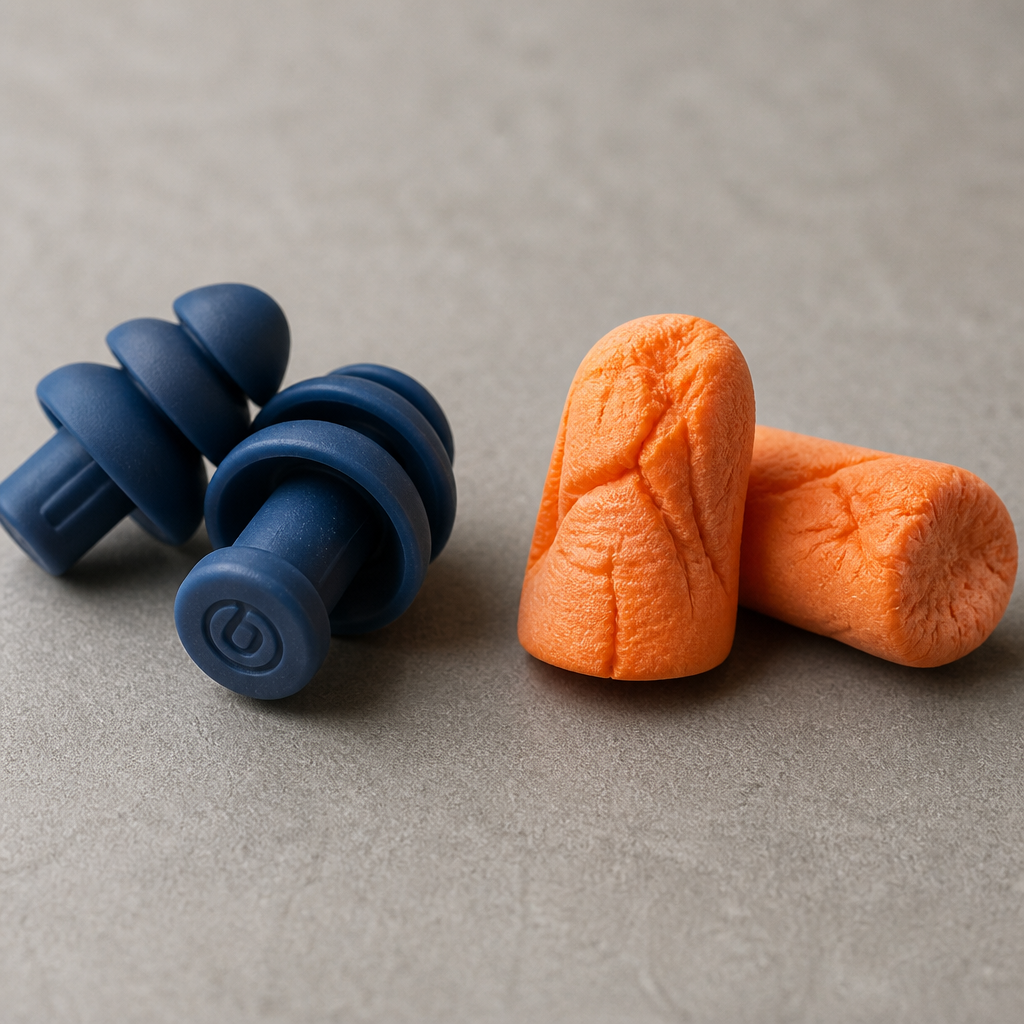
Foam earplugs typically achieve NRR ratings of 30 to 33 dB, while silicone alternatives usually fall in the 20 to 26 dB range. The key differentiator is not material alone but how well the design ensures a consistent seal in the specific geometry of your ear canal.
A common mistake is grabbing a one-size product and assuming it will work. Ear canals vary considerably between individuals, and an oversized tip creates discomfort while an undersized one creates leaks. Products that include multiple tip sizes, such as XS, S, and M soft memory foam options, allow you to match the fit to your anatomy rather than stretching or compressing the plug to compensate.
Pro tip: Always test your fit at home before a trip, not in your seat mid-boarding. Insert both plugs, snap your fingers next to each ear, and check that the sound is equally muffled on both sides. Uneven attenuation almost always means one plug is not seated correctly.
This is where travel-specific design separates itself from general-purpose hearing protection. Trying to sleep against a headrest or a window with a plug that protrudes several millimetres from your ear creates constant pressure on the outer ear, making sustained wear painful. A low-profile, concave body that sits flush with the ear canal opening eliminates that problem and makes overnight flights genuinely restful.
The market for ear plugs for flying broadly falls into three categories, each with a distinct set of trade-offs. The right choice depends on how often you fly, how long your typical routes are, and what you most need from the product.
| Type | Best For | Key Trade-offs |
|---|---|---|
| Disposable foam plugs (e.g., 3M, Flents) | Occasional travelers, short domestic routes, emergency backup | Cheapest upfront. NRR up to 33 dB. Single-use, environmentally wasteful, inconsistent fit, degrades with body heat and moisture during a long flight. Harder to use correctly, need to be rolled tight and held in place while expanding. |
| Filtered silicone plugs (e.g., Alpine FlyFit, Loop Quiet 2) | Travelers who need some ambient awareness, moderate noise reduction | Reusable. Typically 17 to 24 dB SNR. Pressure-regulating filter variants slow ear canal pressure change during altitude changes. Lower overall attenuation than foam. Silicone can cause irritation for some users on very long flights. |
| Premium metal-bodied plugs with memory foam tips (e.g., ATTENU8) | Frequent flyers, light sleepers, long-haul travelers, noise-sensitive individuals | Highest durability. Approximately 32 dB noise reduction with soft memory foam tips. Concave aluminium body sits flush for side-sleeping comfort. Multiple tip sizes (XS, S, M) for a precise seal. Only the foam tips need replacing every 6 to 8 weeks, not the entire device. |
The filtered silicone category is genuinely useful for travelers who need to hear announcements or conversations during a flight but want to take the edge off engine noise. The trade-off is a measurably lower noise reduction figure, which makes them a poor choice for anyone trying to sleep through a full overnight route.
For frequent flyers prioritising sleep quality and long-term hearing health, the premium reusable category offers the best overall value proposition once you account for the cost of replacing disposable plugs across dozens of trips per year.
The pair of ear plugs you bring on every trip should be chosen with the same care as your travel pillow or noise-cancelling headphones. Poor fit means poor protection, and poor protection accumulates into real hearing damage over years of regular flying.
Ear pain during flights is caused by the change in cabin pressure that occurs during takeoff and, more noticeably, during descent. As the aircraft descends and cabin pressure increases, a pressure difference builds between the air in your middle ear and the environment outside your eardrum. For most people, the Eustachian tube handles this automatically. For others, particularly those with any degree of congestion, the tube does not open fast enough and the result is sharp, throbbing pain.
Standard ear plugs help by slowing the rate at which pressure changes reach the ear canal, giving the Eustachian tube more time to equalize. Research published in The Laryngoscope found that travelers who used earplugs during flights experienced significantly less ear pain than those who did not. This is a secondary benefit that is rarely highlighted in marketing but matters enormously to anyone who has ever gripped their armrests during a rapid descent.
Pro tip: Insert your ear plugs before the cabin doors close, not just before landing. Pressure changes begin as soon as the aircraft climbs through the first few thousand feet, and starting with the plugs already seated means your Eustachian tube gets the full benefit of the slowed pressure gradient throughout the ascent.
The argument for disposable foam plugs is simplicity: buy a bulk pack, use one per flight, throw it away. In practice, this approach has several problems that compound the more you travel. A foam plug that has been sitting in a carry-on pocket absorbs lint, moisture, and skin oils, which degrade its expansion speed and seal quality. Using a dirty or deformed plug effectively means wearing a product that performs well below its rated NRR.
Reusable metal-bodied ear plugs with replaceable foam tips address this directly. The aluminium body, being non-absorbent and wipeable, maintains its structural integrity indefinitely. Only the foam tips, which are the component that actually contacts the ear canal and forms the acoustic seal, are replaced on a regular schedule. Replacing tips every 6 to 8 weeks rather than discarding the entire device dramatically reduces per-use cost and environmental waste.
For anyone flying more than twice a month, the economics are clear. The upfront investment in a quality pair of reusable ear plugs returns its cost within a relatively short time compared to ongoing disposable purchases, and the consistency of performance over each flight is significantly higher. Consistent performance is the real metric: a premium plug that delivers 24 dB of real-world attenuation reliably on every flight is worth more than a theoretically higher-rated disposable that varies wildly based on insertion and degradation.
There is also the hygiene dimension, which frequent flyers rarely think about until they develop ear canal irritation. Memory foam tips that are replaced on schedule maintain a level of cleanliness that a reused, degraded foam plug from the bottom of a bag simply cannot match. For travelers with sensitive skin or any history of external ear issues, this is not a minor consideration.
Even the best ear plugs for flying deliver poor results if inserted incorrectly. Most people, including experienced travelers, do not roll and insert foam-tipped plugs correctly, which is why so many first-time users of quality ear plugs report being surprised by how much better they work when used properly.
With memory foam tip plugs, the process is straightforward but requires a moment of patience. Compress the foam tip gently between your fingers until it is narrow enough to enter the canal comfortably. With your other hand, reach over your head and gently pull the top of your ear upward and backward to straighten the canal. Insert the plug with a slow, gentle rotating motion and hold it in place with light finger pressure for 20 to 30 seconds while the foam expands to fill and seal the canal. Releasing too early before the foam has fully expanded is the most common reason for a poor seal.
If you need to press hard to insert the plug or if you feel discomfort after the foam has fully expanded, the tip is too large. Drop to the next smaller size. If the plug feels loose, shifts when you move your jaw, or falls out, the tip is too small. Getting this right on the first flight you use a new pair is worth the few minutes of experimentation because a correctly fitted plug will still be comfortable six hours later.
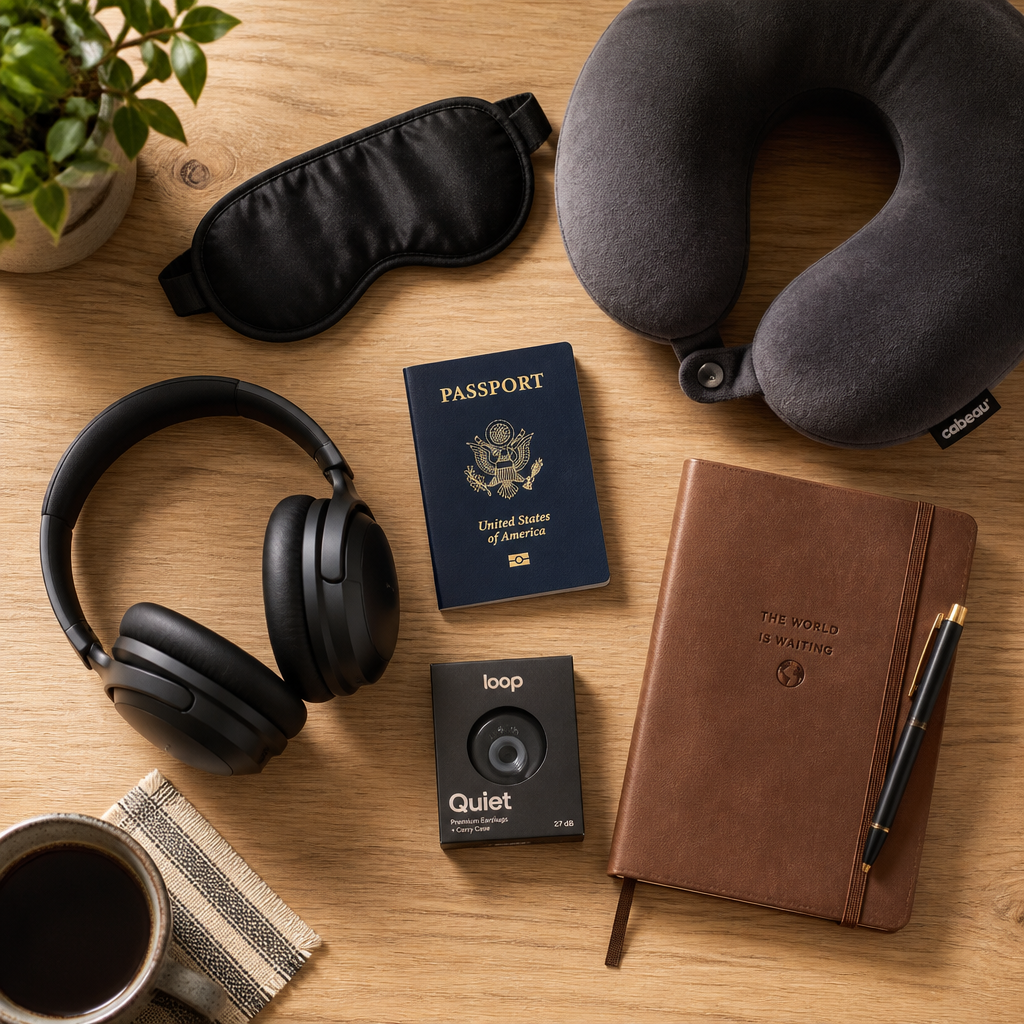
Ear plugs work best as part of a deliberate in-flight sleep setup rather than as a last-resort grab when noise becomes intolerable. Pair them with an eye mask, set your seat recline before insertion (so you are not fumbling with controls while wearing plugs), and avoid caffeine in the hours before your intended sleep window. The noise reduction ear plugs provide is most effective for sleep when the other environmental variables, light and physical comfort, are also managed. ATTENU8’s concave aluminium body design is particularly well suited to window seats with a pillow pressed against the side of the head, where protruding plugs would otherwise dig into the outer ear.
If you find yourself on a long-haul route where a window seat is not available, the low-profile body still performs better than conventional cylindrical or T-shaped plugs against an airline headrest. Aisle-seat travelers who cannot lean against the window particularly benefit from a plug that does not shift or dislodge when they tilt their head to rest on a travel pillow.
Yes, wearing well-fitted ear plugs for the duration of a long-haul flight is safe for most adults. The key is choosing plugs made from skin-safe materials and ensuring the foam tips are clean and replaced on a regular schedule. If you experience any pain, remove the plugs, check that the tip size is appropriate, and reinsert. Pain is almost always a sign of incorrect sizing or a hygiene issue with degraded tips, not a sign that ear plugs themselves are harmful.
Yes. Ear plugs slow the rate at which cabin pressure changes reach the ear canal, giving the Eustachian tube more time to equalize the pressure difference across the eardrum. Research published in The Laryngoscope found that travelers who used earplugs during flights reported significantly less ear pain than those who did not. This effect is most pronounced during descent, which is when the pressure change is fastest and most people experience discomfort.
For sleep on long-haul flights or for travelers who are sensitive to noise, aim for an NRR of at least 28 to 33 dB, or an SNR of around 25 to 32 dB. Remember that real-world attenuation is typically 50 to 75 percent of the rated figure, so a 32 dB NRR plug will realistically deliver 16 to 24 dB of effective reduction in-flight. That is enough to bring peak cabin noise from the 100 dB range down to levels that allow genuine sleep and substantially reduce hearing fatigue.
ATTENU8 uses a premium aluminium body with a concave profile designed specifically for low-profile wear, making them better suited for side-sleeping against a headrest or pillow. The memory foam tips deliver approximately 32 dB of noise reduction, which is higher than the 24 dB SNR offered by products like the Loop Quiet 2. Unlike competitors that use silicone tips throughout, ATTENU8 uses soft memory foam tips in three sizes (XS, S, M) that conform precisely to individual ear canal geometry for a more consistent seal. The tips are replaced every 6 to 8 weeks rather than replacing the entire device, which reduces long-term cost and waste.
Yes, and this is one of the practical advantages of investing in a quality reusable pair. A premium ear plug designed for noise reduction and comfort during travel, particularly one with a low-profile body for side-sleeping, performs equally well for blocking out street noise, a snoring partner, or early morning disturbances at home or in a hotel. Keeping a single high-quality pair for all noise-sensitive situations is more cost-effective and means you always have a broken-in, correctly sized pair available when you travel.
Every 6 to 8 weeks under regular use is the standard guidance, though this varies depending on usage frequency and how well you clean the tips between uses. Signs that tips need replacing sooner include a loss of elasticity (the foam no longer springs back fully after compression), visible discoloration, or a noticeable drop in the quality of the seal. Tip replacement is the only maintenance a metal-bodied plug requires, which is one of the core reasons premium reusable designs are more practical for frequent travelers than either disposable foam or full-silicone alternatives.
They serve different purposes. Noise-cancelling headphones are excellent for the mid-range frequencies where music and conversation sit, but they are bulkier, require battery power, and do not allow you to sleep comfortably against a headrest or pillow. Ear plugs deliver passive broadband noise reduction across all frequencies including low-frequency engine rumble, require no power, and are small enough to carry in any pocket. For sleep specifically, ear plugs outperform headphones because they allow natural head positioning and do not create a seal that breaks when a headphone slips. Many experienced long-haul travelers use both: headphones during waking hours for entertainment, ear plugs for sleep.
Have you found a specific tip size or insertion technique that works best for you on long flights? Share your experience in the comments, we read every one.

