


 0
0

Shift workers and night-shift nurses face a sleep problem that most people never have to think about: the world does not quiet down just because your shift ended at 7am. Lawnmowers, delivery trucks, kids heading to school, and a partner going about their morning routine all conspire against the sleep you desperately need. Finding the right ear plugs for shift workers is not a luxury, it is a basic occupational health decision. This guide cuts through the noise, identifies what actually works for daytime sleep, and explains why your choice of ear plug matters far more than most people realise.
| Key Insight | Explanation |
|---|---|
| 32dB noise reduction is the benchmark to aim for | Daytime ambient noise is significantly louder than a quiet night. You need maximum attenuation, not mid-range protection, to compensate for traffic, voices, and household activity. |
| Fit matters more than foam density | An ear plug that does not seal the ear canal properly loses most of its rated attenuation. Three tip sizes (XS, S, M) allow a personalised seal regardless of ear canal shape. |
| Reusable metal-bodied plugs outlast disposable foam by months | Shift workers use ear plugs every single day. A durable aluminium-bodied plug with replaceable memory foam tips costs far less over time than daily disposables. |
| Memory foam tips conform to the ear canal for comfort during long sleep | Sleeping on your side for 7-8 hours with rigid ear plugs causes soreness. Soft memory foam tips compress, conform, and stay comfortable through a full rest period. |
| Daytime noise blocking requires blocking broadband sound, not just high frequencies | Street noise and household sounds span low and high frequencies. Foam-tipped plugs with high NRR ratings address the full spectrum more effectively than acoustic filters alone. |
| Replacing tips every 6-8 weeks keeps attenuation performance consistent | Memory foam degrades with use and body oils. Worn-out tips lose their ability to seal the canal, reducing noise blocking precisely when you need it most. |
| A dark, cool room combined with good ear protection dramatically reduces sleep onset time | Noise and light work against each other in daytime sleep. Addressing both simultaneously compounds the benefit far beyond either intervention alone. |
The human body is wired to be alert during daylight hours. Your circadian rhythm, driven by light exposure and social cues, actively works against sleep between roughly 7am and 10pm. This is not a discipline problem. It is biology. For night-shift nurses finishing a 12-hour overnight rotation, or for construction workers on rotating rosters, this biological resistance to daytime sleep is a genuine occupational hazard.
Sleep deprivation in shift workers is linked to impaired reaction time, reduced clinical decision-making ability, and a higher risk of errors on the job. The solution is not willpower. It is creating an environment that systematically removes the signals your brain uses to stay awake. Noise is one of the most disruptive of those signals, because unlike light, you cannot simply pull a curtain across it.
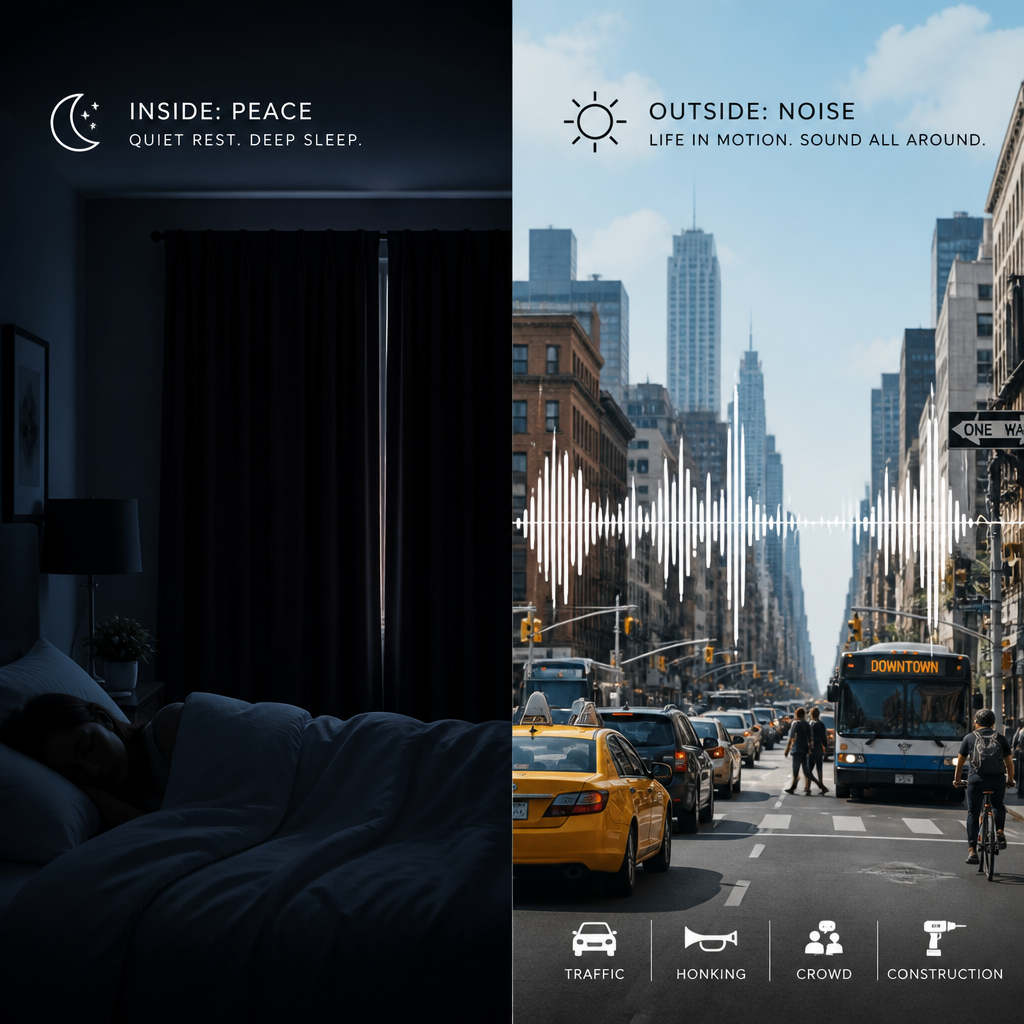
People who have never worked a night shift often underestimate how loud a residential neighbourhood is between 8am and 2pm. Garbage collection, postal deliveries, neighbour conversations, garden machinery, and traffic all peak during exactly the hours a shift worker needs to sleep. Apartment dwellers face the added burden of building noise: lifts, other residents, shared laundry facilities.
The problem is not a single loud event. It is the unpredictability of the noise. Research on sleep disruption consistently shows that it is intermittent, variable-loudness noise that causes the most arousals from sleep, not steady background sound. A truck engine idling outside is far less disruptive than a truck suddenly braking. This is precisely why passive noise blocking through high-NRR ear plugs is so effective for daytime sleep noise blocking: it compresses the dynamic range of external sound, reducing the spike that triggers waking.
Nurses on Night Shift Face a Specific Noise Profile
Night-shift nurses returning home often live in areas they cannot control: family homes with children, shared accommodation, or urban apartments. The sounds they encounter during their sleep window are intimate and unpredictable. A phone ringing in another room, a child coming home from school, a partner doing housework are sounds a well-fitted, high-attenuation ear plug can largely eliminate without requiring the wearer to negotiate their household’s behaviour.
The key is an ear plug that stays in position through hours of side-sleeping. Most disposable foam plugs work loose within an hour or two, particularly if the foam has been compressed and inserted multiple times. A well-constructed reusable plug with fresh memory foam tips holds its seal far more reliably.
Pro tip: If you share a bedroom with a partner who keeps day-time hours, agree on a “quiet window” of at least four consecutive hours and then use maximum-attenuation ear plugs to protect the remaining sleep time. You cannot negotiate away all household noise, but you can build a system around it.
Not all ear plugs are equal, and the marketing language around them is often imprecise. Here is what actually matters for a shift worker trying to sleep during the day.
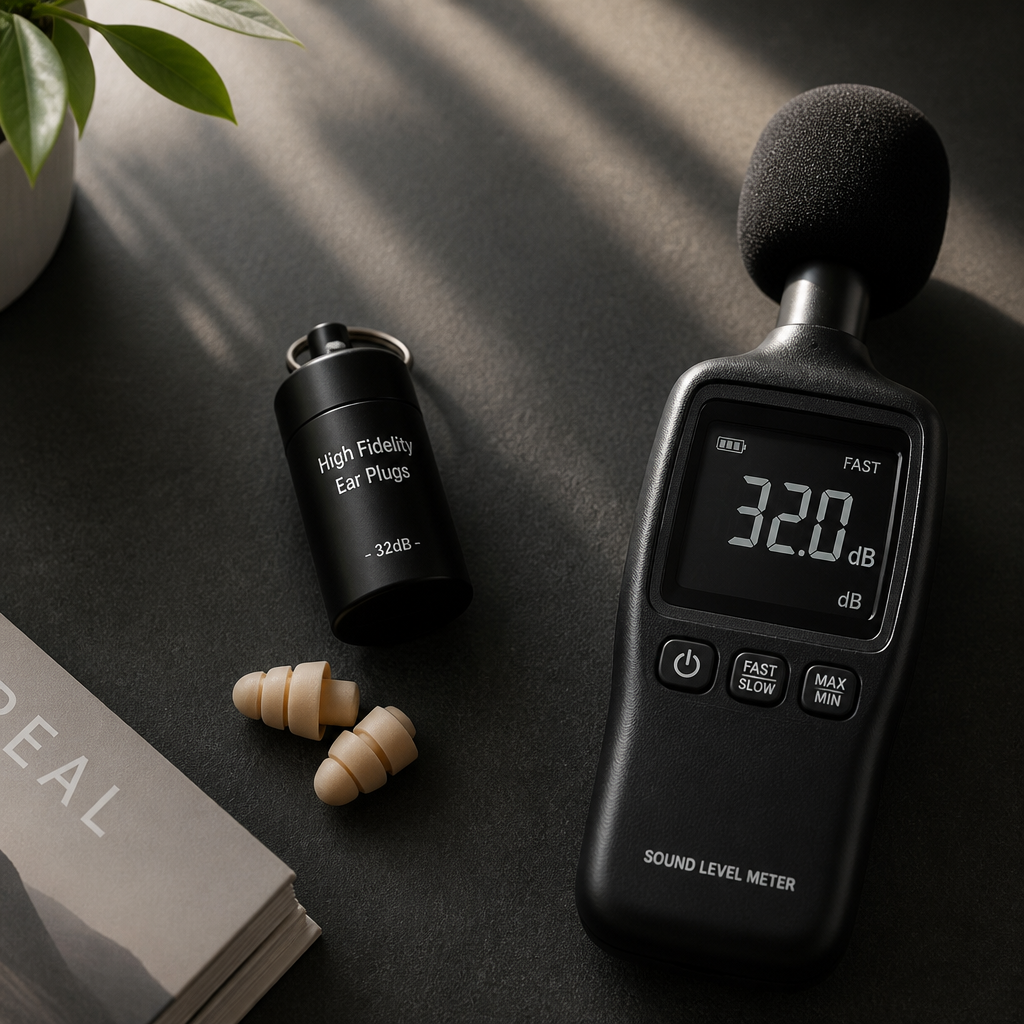
The Noise Reduction Rating (NRR) indicates how much sound attenuation a plug provides under controlled conditions. For daytime sleep, where ambient noise can regularly exceed 60-70dB, you want the highest NRR you can wear comfortably. An NRR of around 32dB is a strong target. At that level, the lawnmower outside your window drops from an intrusive roar to a background hum that your sleeping brain can largely ignore.
A nurse finishing a 12-hour shift needs to sleep for 7-8 hours. An ear plug that causes ear canal soreness after three hours is not a sleep aid, it is a guaranteed 3am wake-up. Soft memory foam tips address this directly. They compress on insertion and slowly expand to fill the canal without exerting sustained pressure against the canal wall. A concave aluminium body keeps the plug stable and prevents it from being pushed further into the ear as you shift sleeping position.
Side-sleeping, which is the most common position among adults, presses the outer ear against a pillow. This changes the geometry of the ear canal and can dislodge plugs with poor body design. Plugs with a low-profile, well-shaped body maintain their seal under pillow pressure. Plugs that protrude significantly from the ear do not.
The gap between the stated NRR and real-world performance almost always comes down to fit. A perfectly-rated plug inserted poorly provides almost no protection at all. Fit is the variable that matters most.
For someone who uses ear plugs once or twice a month, a box of disposable foam plugs is perfectly reasonable. For a shift worker using ear plugs six or seven days a week, the economics and the hygiene calculus shift completely.
A standard single-use foam ear plug is designed to be compressed, inserted once, and discarded. In practice, most people reuse them for several days because buying a fresh pair every morning is genuinely expensive over time. The problem is that repeatedly compressed and body-oil-saturated foam loses both its expansion properties and its sealing ability. You end up wearing a plug that feels like it is in, but is providing a fraction of its rated attenuation.
A reusable, premium ear plug with replaceable memory foam tips solves this directly. The structural body of the plug maintains its shape indefinitely. The tips are replaced every 6-8 weeks, which is the point at which foam degradation meaningfully affects performance. For a shift worker, this is a far more cost-effective and hygienically sound approach than a revolving supply of disposable plugs.
Pro tip: Keep two pairs of reusable ear plugs: one dedicated to sleep and one for on-the-job hearing protection if your workplace requires it. Mixing the two means your sleep plugs pick up industrial contaminants and your work plugs never get a full clean cycle. Separation is simple and worth it.
Ear plugs are the single most impactful intervention for how to sleep during the day, but they work best as part of a deliberate sleep environment. A few supporting habits significantly compound the benefit.
Light suppresses melatonin production, which is already compromised in shift workers whose schedules conflict with natural light-dark cycles. Blackout curtains are non-negotiable. A sleep mask adds a second layer of protection, particularly useful when travelling or sleeping in unfamiliar rooms. Do not rely on regular curtains. The light bleed around the edges of standard curtains is enough to suppress melatonin in sensitive individuals.
Core body temperature naturally drops when you fall asleep. Sleeping during summer afternoons in a warm room fights this process. Air conditioning or a fan set to a comfortable cool temperature accelerates sleep onset. A fan has the added benefit of generating consistent white noise, which helps mask the unpredictable external sounds that ear plugs do not fully eliminate.
The single most common cause of avoidable daytime sleep disruption for shift workers is the phone. Notifications, calls from people who forget you work nights, and the habit of checking the screen before sleep all fragment rest. Set a sleep schedule in your phone’s Do Not Disturb settings, communicate your sleep window clearly to family and close contacts, and charge the phone in another room if possible.
Eating a heavy meal immediately before sleep slows digestion and disrupts sleep quality. Caffeine consumed in the last four hours of a shift will still be active in your system when you try to sleep. Finish caffeine intake several hours before you need to be asleep, and aim for a lighter meal rather than a large one if you eat before bed.
There are three broad approaches shift workers take to managing sleep noise. Each has genuine trade-offs worth understanding before you commit to one.
| Approach | Strengths | Weaknesses for Shift Workers |
|---|---|---|
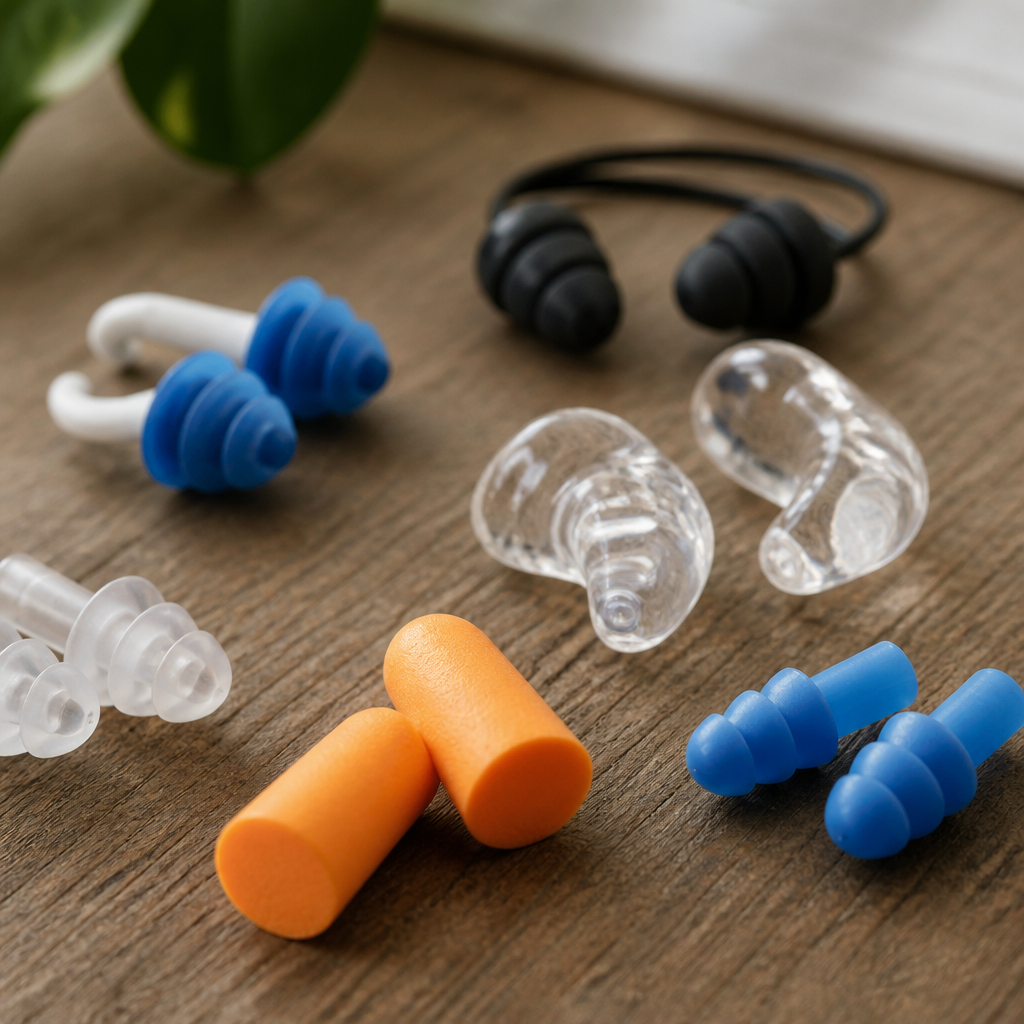
| Disposable single-use foam ear plugs | Cheap upfront, widely available, soft and comfortable initially, high NRR options exist | Degrade quickly with daily use, hygiene issues when reused, ongoing cost adds up, inconsistent fit across different brand shapes, environmentally wasteful |
| Reusable acoustic-filter ear plugs (silicone or rigid body, e.g. Loop, Flare Audio style) | Durable body, fashionable design, good for concert or social use where some sound pass-through is desired | Acoustic filters are designed to let some sound through, which is the opposite of what daytime sleepers need. NRR is typically lower than foam-tipped alternatives. Side-sleeping comfort varies. |
| Premium reusable metal-bodied ear plugs with replaceable memory foam tips (e.g. ATTENU8) | High NRR (around 32dB), durable aluminium body lasts indefinitely, memory foam tips replace every 6-8 weeks, three tip sizes for personalised fit, comfortable for long wear and side-sleeping | Higher initial cost than a box of disposables, requires remembering to replace tips on schedule |
For shift workers and night-shift nurses who need maximum noise blocking for sustained daily sleep, the third approach consistently outperforms the others. The acoustic-filter style plugs designed for social settings are engineered around a different use case entirely. Comparing them directly is like comparing a travel pillow to a proper mattress: both are pillows in a technical sense, but they are not solving the same problem.
Yes, provided you maintain basic hygiene. Reusable plugs should be cleaned regularly, and memory foam tips should be replaced every 6-8 weeks. Disposable plugs should not be reused for multiple days as they accumulate bacteria and lose their sealing ability. The ear canal is self-cleaning, but trapping debris against it with a dirty plug is a genuine hygiene issue.
For daytime sleep in a typical residential environment, aim for an NRR of 30dB or above. Around 32dB is a strong target that handles most household and street noise without requiring an uncomfortable, deeply-inserted plug. Going significantly higher than 32dB is rarely necessary unless you live directly adjacent to a construction site or major road.
Yes, but plug design matters. Plugs that protrude significantly from the ear canal get pushed and dislodged when your ear presses against a pillow. Low-profile plugs with a concave or flush body shape hold their position through side-sleeping far more reliably. Memory foam tips help here too, as their slow-recovery expansion maintains the canal seal even when the outer body of the plug shifts slightly.
Replace them every 6-8 weeks if you use them daily. Visual cues include tips that no longer spring back to their full shape after compression, discolouration from body oils, or a noticeable reduction in how well they seem to block noise. Do not wait until the foam feels hard or crumbly. Declining attenuation happens well before that point.
Not necessarily. Industrial hearing protection, such as earmuffs or deeply-inserted plugs, often has a higher NRR but is not designed for comfort over 7-8 hours of sleep. The better question is whether the plug provides enough attenuation for your specific noise environment and whether you can comfortably wear it for a full sleep period. A well-fitted premium sleep-focused plug at 32dB is almost always the right balance for daytime residential sleep.
White noise and ear plugs solve different parts of the problem. White noise masks unpredictable ambient sound by providing a steady, predictable background. Ear plugs reduce the overall volume of sound reaching the ear. Used together, they work well. Used alone, white noise is significantly less effective than a properly sealed, high-NRR ear plug because it cannot stop a sudden loud sound from spiking above the white noise floor.
Ear plugs for loud work environments are optimised for maximum attenuation and durability under repeated industrial exposure. They are not optimised for comfort over 8 hours of lying down. Sleep-focused ear plugs, particularly those with soft memory foam tips and low-profile bodies, prioritise sustained comfort, side-sleeping suitability, and reliable seal over extended rest periods. ATTENU8’s metal-bodied design bridges both worlds: it provides the high attenuation of a work-grade plug in a body designed for comfortable, all-night (or all-day) sleep use.
Have you found a sleep routine that works around your shift schedule? Share what made the biggest difference for you in the comments.

