


 0
0

Most people who struggle to sleep are not missing a pill or a gadget. They are missing a consistent set of habits. Research consistently shows that sleep hygiene, the collection of behavioral and environmental practices that promote regular, restorative sleep, is one of the most accessible interventions available for poor sleep quality. Yet most sleep hygiene checklists online are vague, generic, and fail to distinguish between habits with strong evidence and those that are largely overhyped. This guide does not hedge. It covers 12 science-backed items from a real sleep hygiene checklist, ranks them honestly, and explains the one product that addresses what habits alone cannot fix: environmental noise.
| Key Insight | Explanation |
|---|---|
| Consistent sleep timing is the highest-impact habit | Going to bed and waking at the same time every day, including weekends, reinforces your circadian rhythm more than almost any other single change. |
| Caffeine after midday is a silent sleep killer | Caffeine has a half-life of approximately 5 to 7 hours. An afternoon coffee is still significantly active in your system at midnight. |
| Bedroom temperature of 65 to 68°F supports sleep onset | Your core body temperature needs to drop to initiate sleep. A room that stays warm blocks this natural thermoregulatory process. |
| Noise above 65 dB worsens sleep quality measurably | Research using the Pittsburgh Sleep Quality Index found higher noise exposure consistently correlated with poorer sleep scores and increased neurological symptoms. |
| Earplugs outperform white noise machines for traffic noise | A University of Pennsylvania study published in the journal Sleep found earplugs were significantly more effective at protecting sleep from traffic noise than pink or broadband noise playback. |
| Morning exercise benefits sleep more than evening exercise | Population-based research on 2,050 adults found morning exercise showed a protective effect on sleep quality, latency, and nighttime awakenings. |
| Reusable earplugs reduce ongoing cost and waste | Single-use foam earplugs add up quickly. A product like ATTENU8 with replaceable memory foam tips every 6 to 8 weeks delivers the same protection at a fraction of the ongoing cost. |
Sleep hygiene is an array of behavioral and environmental practices that promote regular, sound, and sufficient sleep. It is not a single tip. It is a system. The reason most people fail to improve their sleep is that they pick one habit, stick with it for a week, see modest improvement, and quit. The compounding value of sleep hygiene only shows up when multiple habits reinforce each other consistently.
Poor sleep is not just inconvenient. Research links it to impaired immune function, reduced cognitive performance, elevated cardiovascular risk, disrupted thermoregulation, and increased susceptibility to mood disorders. For light sleepers, shift workers, and anyone in a loud or unpredictable sleep environment, the stakes are higher than average. A structured checklist cuts through the noise, literally and figuratively.
“Sleep hygiene is helpful, but the evidence is clearest when multiple behaviors are addressed together rather than in isolation. No single habit is a cure.”
This is the honest framing that most sleep content ignores. The habits below are ranked roughly by evidence strength, not alphabetically. Work through the list in order and you will feel the difference within two weeks.
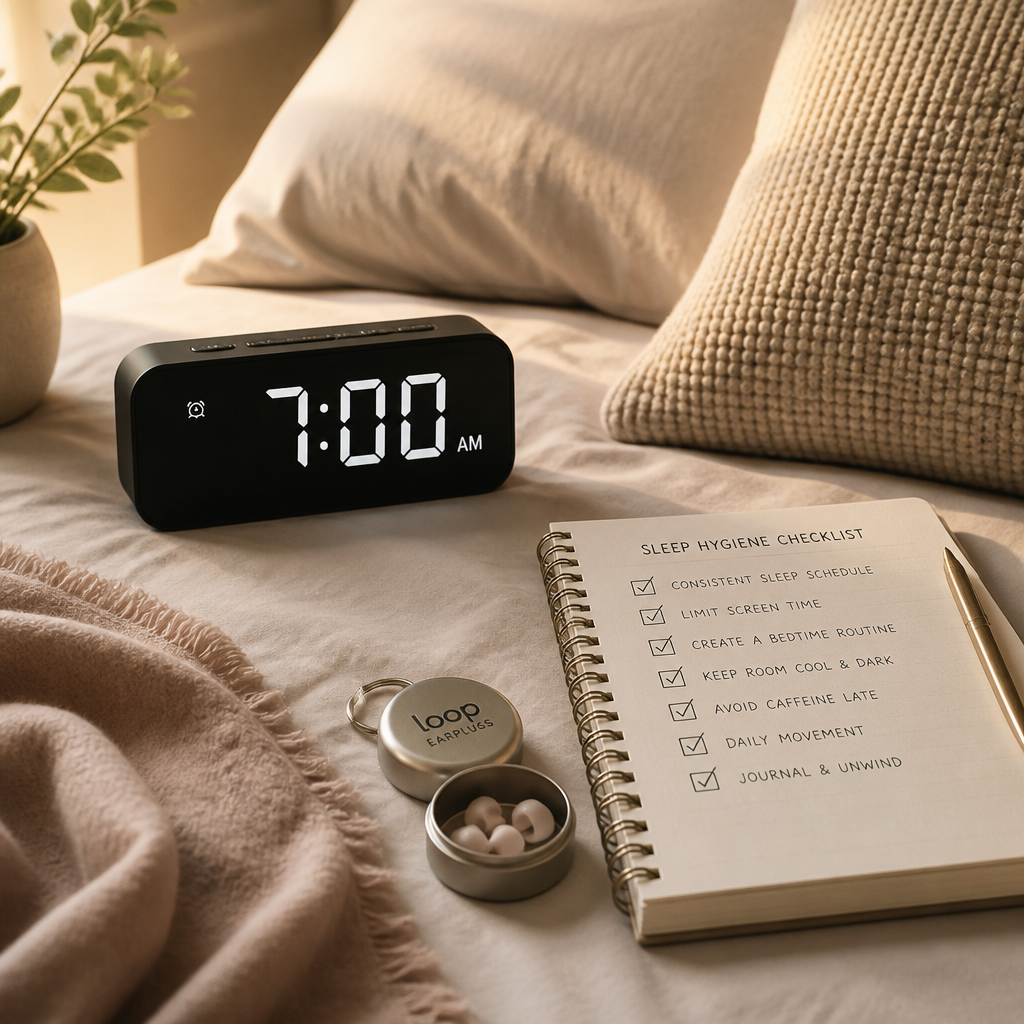
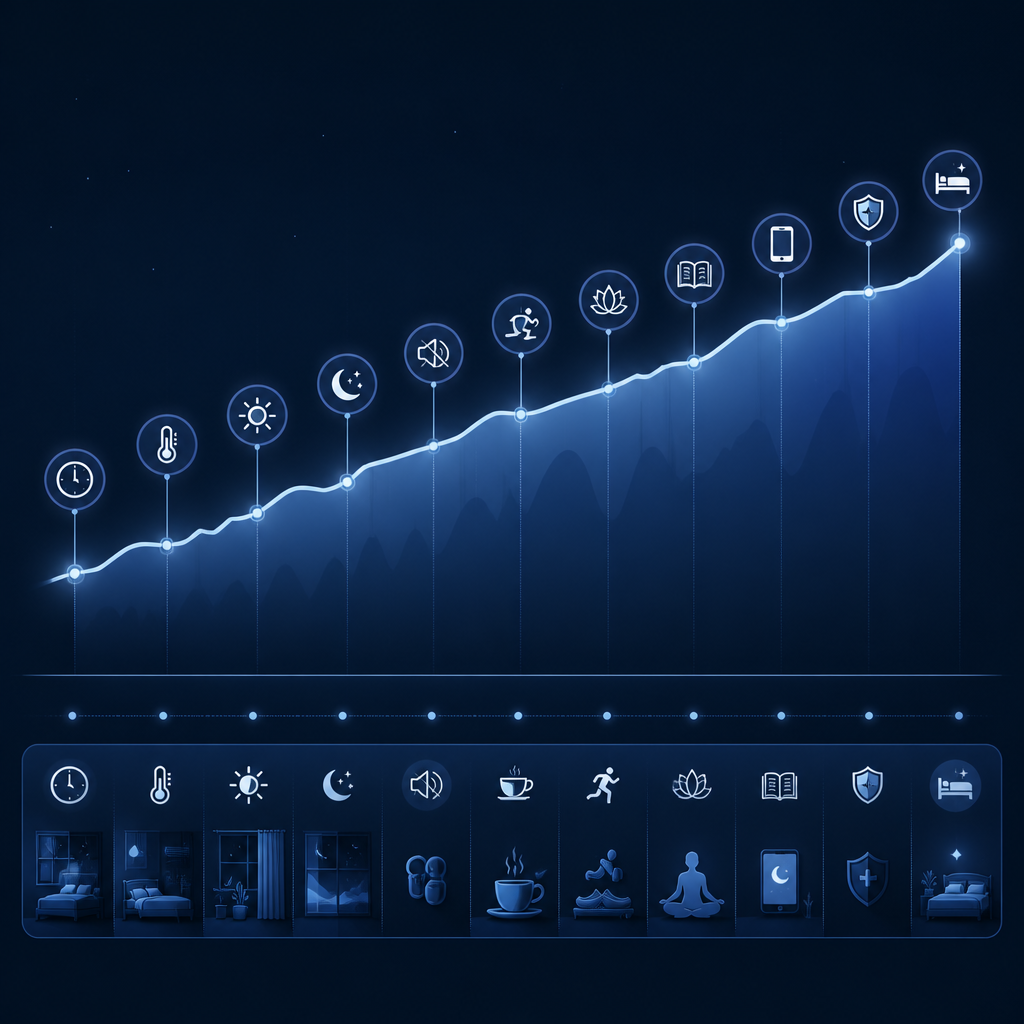
This is the single most evidence-supported habit on the list. Sleeping on a regular schedule strengthens circadian rhythms and improves sleep efficiency. Research indicates that inconsistent sleep schedules contribute to depression and lower sleep quality across age groups, including college students and working-age adults. The target is the same wake time every day, including weekends, even after a poor night.
Pro tip: Set your alarm for the same time regardless of when you fell asleep. The temporary discomfort of getting up early after a bad night resets your sleep drive faster than any supplement.
Caffeine has a half-life of approximately 5 to 7 hours. A cup of coffee at 2 pm still has a meaningful concentration in your bloodstream at 9 pm. Evening caffeine consumption is associated with shorter sleep duration and longer sleep latency. This is one of the clearest dose-response relationships in sleep research. The fix is simple but requires discipline: move your caffeine cutoff to 12 or 1 pm and hold it there for at least two weeks before judging the result.
Your body needs to drop its core temperature to initiate and sustain sleep. A bedroom kept at 65 to 68°F facilitates this thermoregulatory shift. A 2020 study published in the Oxford Academic Sleep journal, combining data from over 3.75 million nights, found that bedroom temperatures outside the 65 to 70°F range were associated with poorer sleep and higher rates of wakefulness. Sleeping hot is one of the most underestimated causes of frequent night waking.
Evening use of electronic devices with illuminated screens shows a negative effect on multiple sleep parameters including duration, latency, and nighttime awakenings. Blue light suppresses melatonin production. The practical rule: dim screens significantly two hours before bed, and shift to warm-toned lighting at or below 2700K in the bedroom. That said, research suggests the stimulating content on those screens, not just the light wavelength, is also a major factor. Turning off news and social media before bed matters independently of screen brightness.
Exposure to bright natural light early in the day anchors your circadian rhythm to the correct phase. This makes it easier to feel sleepy at the right time at night. Morning light and evening darkness are two sides of the same biological mechanism. If you cannot get outside within an hour of waking, a bright indoor light source pointed toward you while you eat breakfast is a reasonable substitute.
Population-based research on 2,050 adults found that morning exercise showed a protective effect on sleep quality, latency, and nighttime awakenings. Evening exercise close to bedtime raises core body temperature and can delay sleep onset for some people. Regular physical activity of any kind improves sleep, but if you have a choice, schedule harder sessions before noon.
Alcohol is widely misunderstood as a sleep aid. It reduces the time it takes to fall asleep but significantly disrupts sleep architecture, particularly REM sleep, in the second half of the night. For anyone waking between 2 and 4 am with racing thoughts, alcohol consumed within three to four hours of bedtime is frequently the culprit. The data on this is consistent. If you drink, move it to earlier in the evening and limit intake to one drink if sleep quality is a priority.
Research found that reporting dinner as the largest meal of the day was associated with shorter sleep duration and longer sleep latency. A full stomach diverts physiological resources toward digestion at exactly the time your body should be downregulating. Aim to finish eating at least two to three hours before bedtime.
Even small amounts of light during the night can interfere with melatonin production and sleep depth. Blackout curtains or a sleep mask are not luxury items for this reason. They are functional tools. Light leaking around curtain edges is a common overlooked problem. Mount blackout solutions outside window frames and add coverage to the sides to eliminate the light halo effect that standard curtains miss.
Pro tip: Cover any LED indicators on chargers, monitors, or smart speakers in your bedroom. These small light sources are often dismissed but can affect sleep quality over time, especially for light sleepers.
Your nervous system does not switch from full activation to sleep-ready in minutes. A consistent pre-bed routine of 20 to 40 minutes signals to your brain that sleep is approaching. This can include reading physical books, light stretching, journaling, or a warm shower. The specific activity matters less than the consistency and the absence of stimulating inputs like work email, social media, or stressful conversations.
Mental activation from worry and rumination is among the most common causes of insomnia. Stress and anxiety elevate cortisol at night, directly opposing the melatonin-driven sleep signal. Techniques such as writing down tomorrow’s tasks before bed, progressive muscle relaxation, or structured breathing exercises all have practical utility here. If chronic anxiety is driving your sleep problems, cognitive behavioral therapy for insomnia (CBT-I) has demonstrated effectiveness in improving sleep quality beyond what hygiene alone can achieve.
Working, watching entertainment, and scrolling on your phone in bed teaches your brain to associate the bed with wakefulness. The sleep environment association matters. When your body enters the bedroom and nothing else happens there except sleep, the physiological cue to wind down becomes automatic. This habit takes time to build but works gradually and persistently once established.
Most sleep hygiene checklists address light, temperature, caffeine, and screens. Very few give environmental noise the serious attention it deserves. This is a significant gap. Environmental noise pollution is a major public health issue. The World Health Organization sets nighttime noise thresholds for traffic at 45 dB, yet an estimated 72 million people in Europe alone are regularly exposed to nighttime noise levels above 50 dB. Sleep disruption is the primary mechanism of harm.
Research on 125 urban residents assessed using the Pittsburgh Sleep Quality Index found that higher noise exposure consistently correlated with poorer sleep quality and increased reports of headaches, dizziness, and irritability. Individuals exposed to noise levels above 65 dB showed significantly greater symptom burden. For light sleepers, a single noise event at the wrong moment in a sleep cycle can fragment sleep in a way that is disproportionate to its duration. This is because arousal from sleep during lighter sleep stages takes very little stimulus.
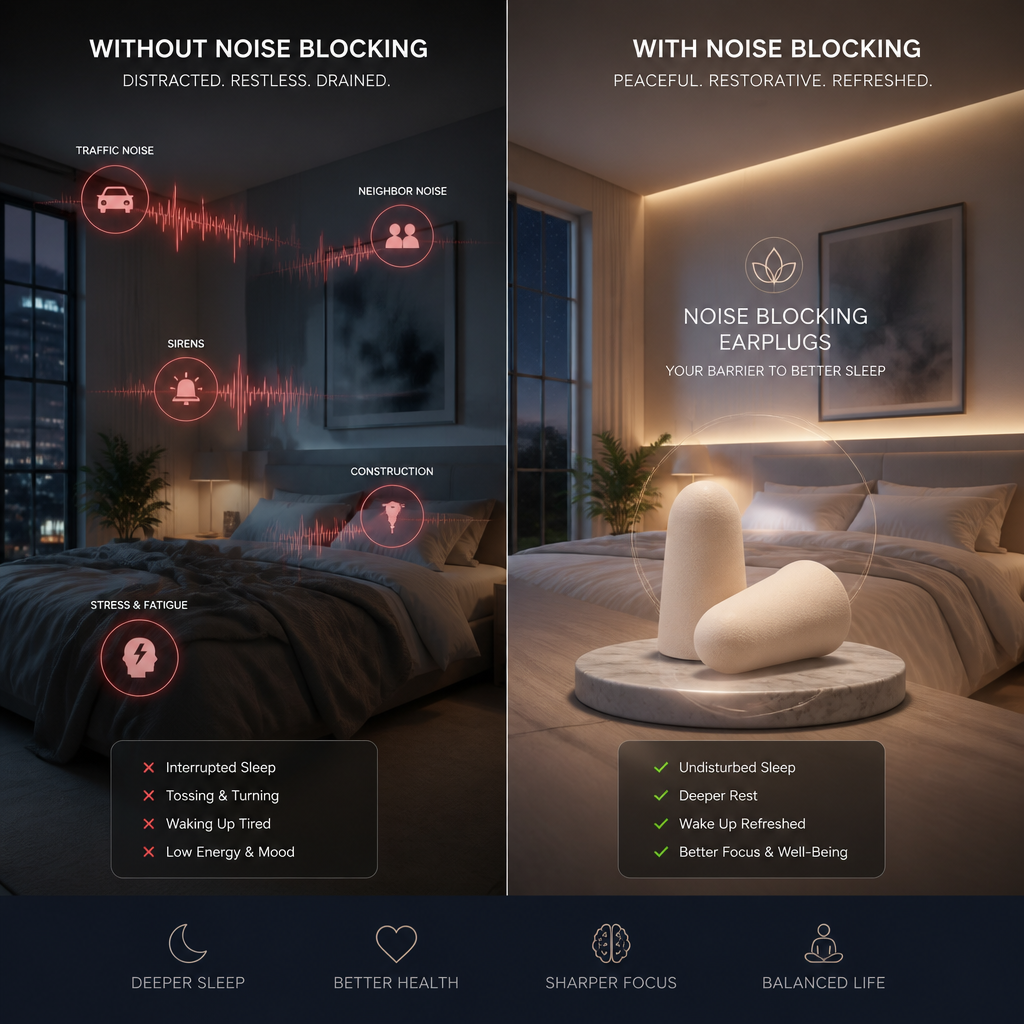
A study from the University of Pennsylvania Perelman School of Medicine, published in the journal Sleep, found that pink noise reduced REM sleep and that earplugs were significantly more effective at protecting sleep from traffic noise than broadband sound playback. This finding directly contradicts the growing market for white noise and pink noise machines, which millions of people now use under the assumption that masking noise with more noise is protective. It is not, at least not reliably, and in some cases it is actively harmful to sleep architecture.
The practical implication is clear: if you live in a city, near a road, near a snoring partner, or in any environment with unpredictable noise, earplugs are the most evidence-supported environmental intervention available. The question then becomes which type of earplug to use.
Single-use disposable foam earplugs are cheap, but they are also inconsistent, uncomfortable for extended wear, and wasteful if used nightly. ATTENU8 takes a fundamentally different approach. The earplugs feature a precision-machined aluminium body with three sizes of soft memory foam tips (XS, S, and M), delivering approximately 32dB of noise reduction. The metal body maintains its shape and hygiene in ways that disposable foam cannot.
For light sleepers using earplugs every night, the economics also work differently. Instead of replacing the entire product, you replace only the memory foam tips every 6 to 8 weeks. The aluminium body lasts indefinitely. Compared to Flare Audio and Loop Earplugs, which offer polymer or silicone-bodied options, ATTENU8’s metal construction provides a more durable and more hygienic long-term solution. For someone who needs reliable noise reduction every single night, durability is not a secondary concern. It is the point.
If you want to explore the full product range, ATTENU8’s site covers the sizing guide and foam tip replacement schedule in detail.
| Approach | Noise Reduction Method | Evidence Quality and Practical Verdict |
|---|---|---|
| Single-use disposable foam earplugs | Physical attenuation, typically 28 to 33 dB NRR | Effective for noise reduction but inconsistent fit, uncomfortable for prolonged wear, and expensive when used nightly. Generates significant waste. |
| White or pink noise machines / apps | Sound masking by adding broadband noise | Research shows pink noise reduces REM sleep. A University of Pennsylvania study found earplugs outperformed broadband noise for traffic protection. Weak overall evidence for sleep benefit. |
| ATTENU8 reusable metal earplugs | Physical attenuation, approximately 32 dB reduction with memory foam tips | Consistent fit due to three memory foam tip sizes. Durable aluminium body is hygienic and long-lasting. Replace tips every 6 to 8 weeks rather than the entire product. Best for nightly use. |
Not every sleeper has the same problem. A light sleeper kept awake by a partner’s movement has different needs than a shift worker whose schedule rotates weekly, or a construction professional who arrives home with residual auditory stress. The same checklist applies to all of them, but the priority order shifts.
Prioritize noise control first, then darkness, then temperature. A single noise event during light sleep can trigger a full arousal and reset the sleep cycle. Physical noise attenuation is more reliable than any behavioral habit for this group because the source of the problem is environmental, not behavioral. Add ATTENU8 earplugs to the routine before focusing on wind-down rituals, because even the most consistent routine cannot stop a garbage truck at 3 am.
Workers in construction, manufacturing, or the military face a different challenge: auditory system fatigue and elevated stress hormones from sustained noise exposure during the day. For these individuals, the wind-down period before bed needs to be longer and more deliberate. Cortisol elevated from a loud, high-stakes work environment does not fall quickly. A structured 45-minute wind-down, combined with physical noise attenuation at night, addresses both the physiological and environmental sides of the problem. ATTENU8’s aluminium body is also built for people who use hearing protection as standard equipment and understand the difference between a product that holds up and one that does not.
Hotels, shared accommodation, aircraft, and unfamiliar rooms disrupt sleep partly through noise and partly through the absence of familiar sleep cues. The most portable elements of a sleep hygiene checklist are the behavioral ones. You can maintain a consistent wake time, cut caffeine after midday, and dim your phone screen regardless of location. What you cannot control is the environment. A pair of reusable earplugs in your carry-on solves the environmental variable across every context.
Pro tip: When traveling across time zones, keep your wake time anchored to your destination’s local time from day one rather than trying to split the difference. Pair this with morning light exposure and ATTENU8 earplugs for the first two to three nights to protect sleep while your rhythm adjusts.
A sleep hygiene checklist is a structured list of behavioral and environmental practices that collectively support consistent, restorative sleep. Anyone who regularly takes more than 20 minutes to fall asleep, wakes during the night, or feels unrefreshed in the morning can benefit from systematically working through one. It is not reserved for people with diagnosed sleep disorders. It is a practical tool for anyone who treats sleep as a priority.
Most people notice meaningful improvement within one to two weeks of consistently applying the highest-impact habits, particularly a fixed wake time and caffeine cutoff. Full benefits, especially from temperature and noise control, are often felt within the first few nights because these are environmental changes rather than behavioral ones that require practice. Do not judge results after a single night. Judge after 10 to 14 consistent nights.
For the vast majority of adults, wearing well-fitted earplugs every night is safe. The main practical risk with disposable foam earplugs is hygiene, since foam accumulates earwax and bacteria when reused or poorly maintained. ATTENU8 addresses this directly with replaceable memory foam tips every 6 to 8 weeks and a durable, cleanable metal body. If you have recurring ear infections or significant earwax buildup, consult a doctor before using any in-ear product nightly.
The evidence is weaker than the market suggests. A study from the University of Pennsylvania Perelman School of Medicine found that pink noise actually reduced REM sleep, while earplugs proved significantly more effective at protecting sleep from traffic noise. While some research shows broadband noise can help certain people fall asleep, the overall quality of evidence is low, and there are potential downsides to continuous sound exposure during sleep. Physical attenuation via earplugs has a clearer evidence base.
Loop and Flare Audio both produce earplugs with polymer or silicone bodies, often marketed toward music, focus, and lifestyle use with varying noise reduction levels. ATTENU8 is specifically engineered for maximum comfort during extended sleep and noise-sensitive use, with a machined aluminium body, three sizes of memory foam tips for a reliable seal, and approximately 32dB of noise reduction. The replaceable tip model means you are investing in a durable product rather than repeatedly replacing cheap disposables or buying premium single units.
ATTENU8 includes XS, S, and M memory foam tips with each pair. A correctly sized tip should seal the ear canal comfortably without requiring force, and the earplug should stay in place without pressure when you lie on your side. Most adults find the S tip works well as a starting point. If you feel the plug shifting during sleep or feel no meaningful sound reduction, try a size up. Ear canals vary significantly between people, which is why having three sizes in the kit matters for consistent seal and attenuation.
Have you tried building a sleep hygiene routine before? Share which habit made the biggest difference for you, or what you are still struggling with, in the comments below.

