


 0
0

Most people shopping for earplugs to sleep in focus on the wrong number. They chase the highest NRR rating they can find, assuming more is always better. In practice, that logic produces earplugs you will pull out at 3am because they feel suffocating, or earplugs that block so much sound you sleep through your alarm or miss a smoke detector. 32dB noise reduction sits in a precise middle ground: enough attenuation to silence snoring, traffic, and hotel HVAC without cutting you off from the world entirely. This article explains exactly why that rating matters for sleep specifically, and why ATTENU8 built its metal-bodied reusable earplugs around it.
Environmental noise is not just an annoyance you adapt to. Research published in Sleep Science confirms that nocturnal noise provokes measurable biological stress responses and directly disrupts sleep architecture, meaning it alters the proportions of light, deep, and REM sleep you cycle through each night. These disruptions mirror those seen in clinical sleep disorders, even when the sleeper is not consciously aware of waking.
The downstream effects are documented and serious. Poor sleep from noise exposure is associated with daytime sleepiness, mood changes, reduced cognitive performance, and over time, adverse cardiometabolic outcomes. Nocturnal noise is considered the most health-significant form of noise pollution precisely because it acts both directly on biology and indirectly through the damage it does to sleep quality.
For light sleepers, even noise events well below conversation level (around 40 to 50 dB) can trigger cortical arousals, the micro-awakenings that fragment sleep without fully waking you. This is the problem a well-designed sleep earplug needs to solve: not silence, but a sufficient reduction to keep those spikes from crossing the arousal threshold.
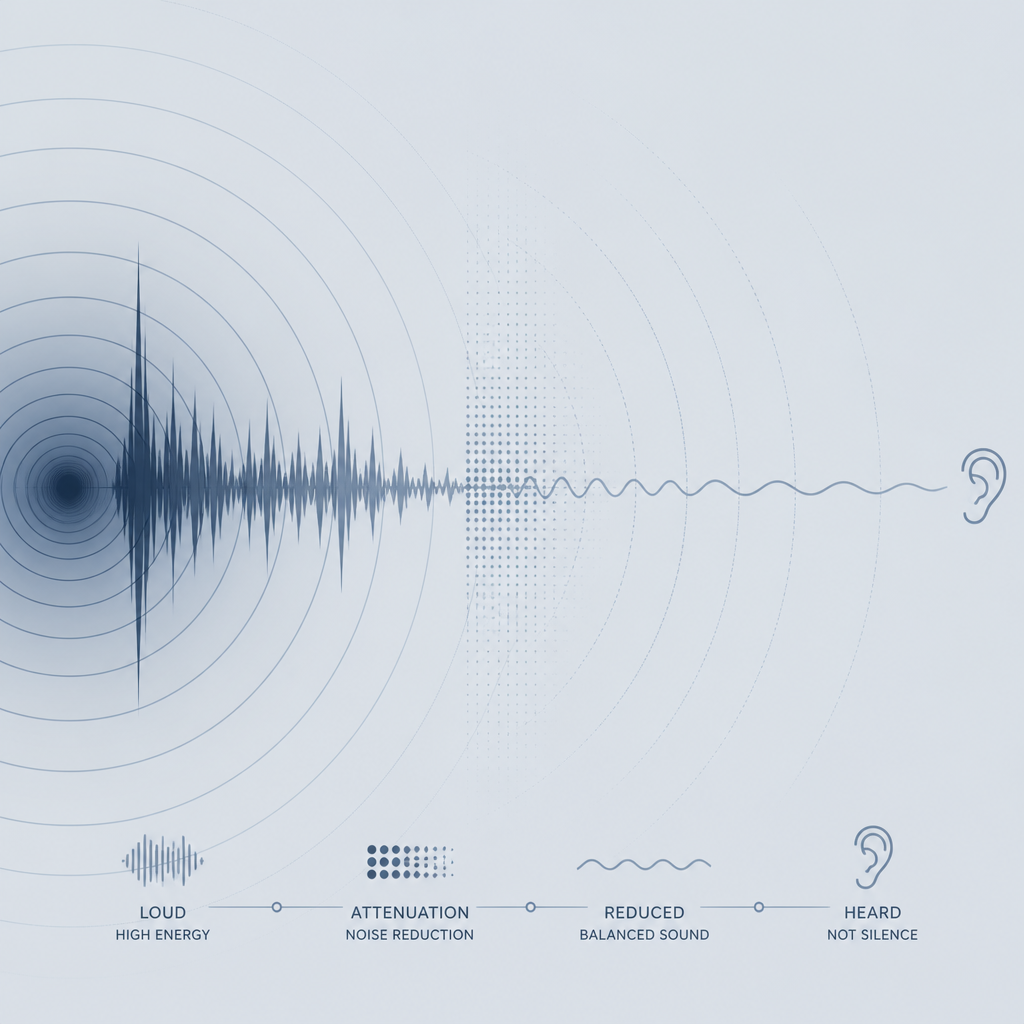
Decibels work on a logarithmic scale, which is not intuitive. A 10dB reduction is perceived as roughly halving the loudness of a sound. A 32dB reduction therefore represents a very substantial cut, not a marginal one.
We would love your feedback and any insights you would share with others. What perspective would you add?
A partner snoring typically registers somewhere between 50 and 70 dB at close range. With 32dB of attenuation, that lands closer to 20 to 38 dB, which is roughly the level of a quiet library or soft whisper. Urban traffic through a bedroom window, often in the 55 to 65 dB range, drops to the low 20s to mid-30s. Hotel air conditioning units and HVAC systems sit around 40 to 50 dB, and after a 32dB reduction they are effectively inaudible.
The key insight is that 32dB gets almost every common sleep noise into or below the threshold where sleep architecture is protected. You are not chasing silence. You are chasing a reduction deep enough that your brain stops treating noise as a threat during sleep cycles.
Sufficient noise reduction for sleep is not about eliminating all sound. It is about keeping sound levels low enough that the nervous system stays in a rest state rather than triggering arousal responses.
The NRR (Noise Reduction Rating) figure on earplug packaging is derived from laboratory testing under controlled, ideal conditions. Real-world attenuation is typically lower because most people do not insert earplugs with perfect technique. A common correction used in occupational health contexts is to halve the NRR to estimate real-world protection. At 32dB NRR, that still represents 16dB of dependable real-world attenuation, which is meaningful. At a rated 40dB NRR, you might get 20dB in practice, but the comfort trade-offs (discussed below) often make those earplugs unwearable for a full night.
Pro tip: If you find yourself removing earplugs during the night without remembering doing it, the fit is wrong rather than the noise reduction rating being too low. Start with the smallest foam tip size and work up before assuming you need higher attenuation.
Earplugs rated above 33 to 35dB typically achieve that rating through one of two compromises: extremely dense foam that generates significant pressure over hours, or a fit so deep and occlusive that it produces an uncomfortable sensation of total ear blockage called the occlusion effect. Both problems cause sleepers to remove their earplugs before getting the full night’s benefit.
Disposable foam earplugs at the high end of the NRR spectrum are dense enough to maintain a tight seal, but that density creates outward pressure against the ear canal wall. Lying on your side, which is the most common sleep position, presses that earplug further into the canal. After an hour, this stops being background comfort and becomes a specific pain that wakes you. The irony is that a 40dB rated earplug you remove at 1am provides zero protection for the remaining five hours of your sleep window.
Complete acoustic isolation is not desirable for most home sleepers. You need to hear a smoke alarm, a child calling out, or a front door. A 32dB reduction leaves enough of the environmental soundscape intact that genuine emergency sounds, which by design are very loud (smoke alarms typically exceed 85 dB), remain audible. At 32dB of attenuation, an 85 dB alarm still reaches you at approximately 53 dB, well above the threshold of conscious hearing even from sleep.
Earplugs pushed toward 40dB or beyond start making emergency sound detection a real concern for home sleepers, something worth considering seriously before prioritising maximum attenuation.
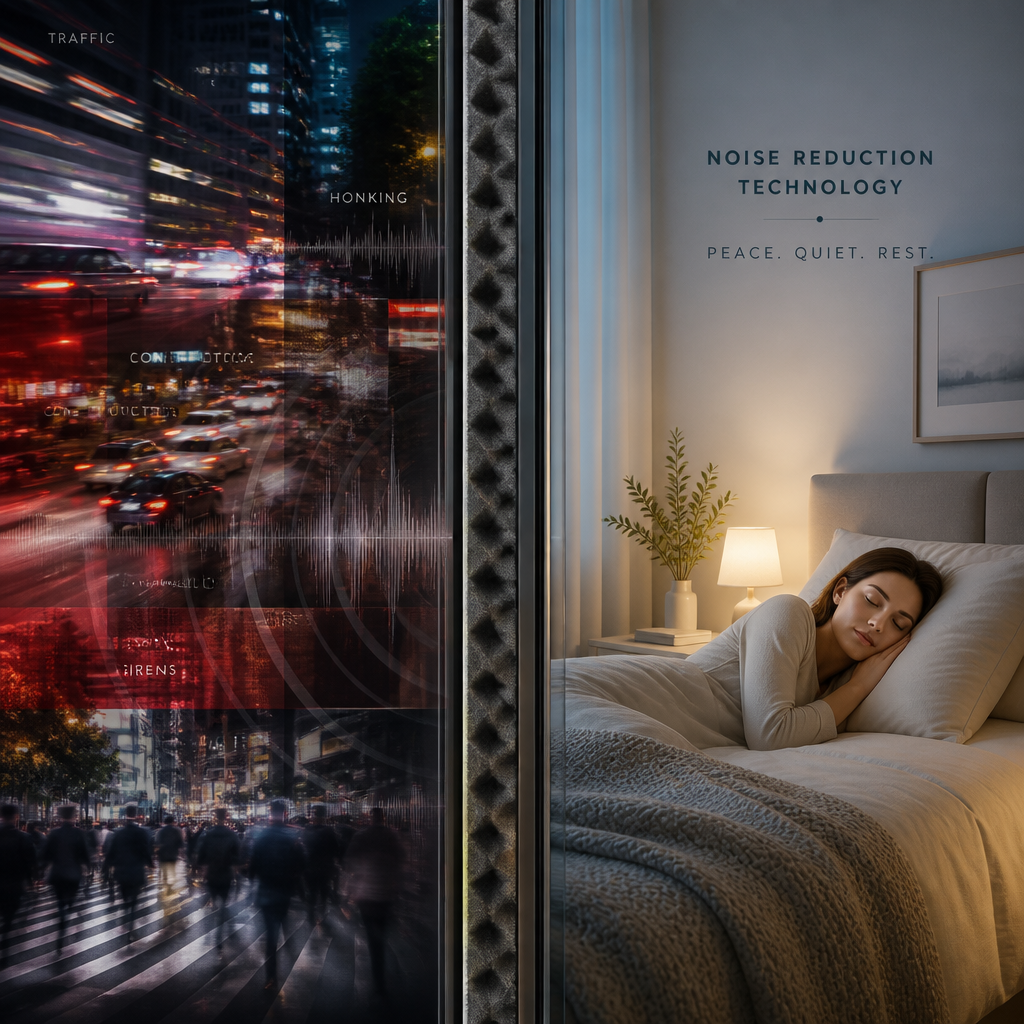
Achieving 32dB consistently through the night depends as much on the earplug body as it does on the tip material. This is where the design of reusable metal-bodied earplugs like ATTENU8 diverges meaningfully from disposable foam.
A standard disposable foam earplug is compressed and inserted, then expands in the canal. It works, but the expansion force is what creates pressure, and that pressure only grows if you adjust your sleeping position. The foam also degrades with each use, meaning the first and the tenth use of the same earplug deliver different levels of attenuation and comfort. By the end of a typical week, a “reused” disposable has lost meaningful sealing ability.
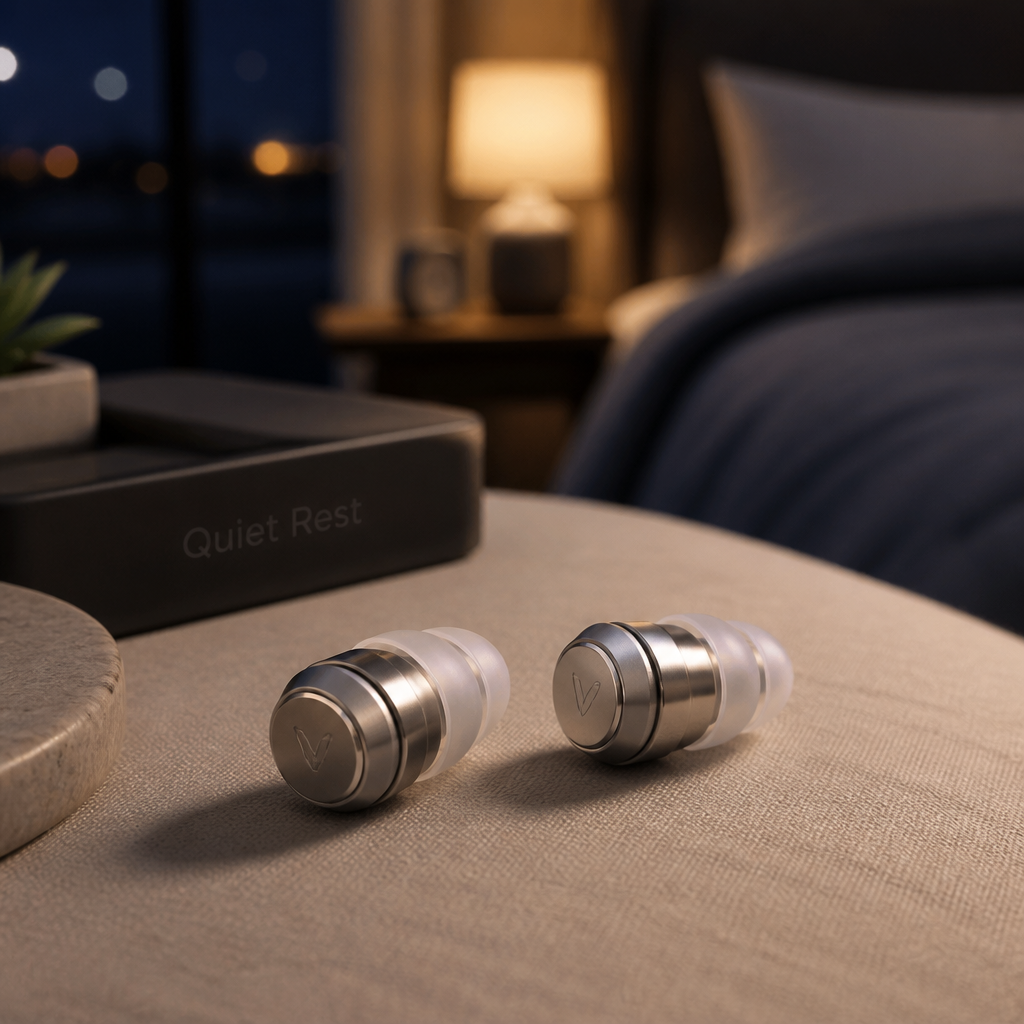
ATTENU8’s aluminium body holds a concave shape that positions the memory foam tip precisely at the canal entrance rather than deep inside it. That positioning achieves the seal needed for 32dB attenuation without the deep-insertion pressure that causes discomfort over a full night. The rigid body also means the earplug does not compress unpredictably when you roll onto your side.
Standard polyurethane foam is stiff when compressed and expands aggressively. Memory foam responds to body temperature and softens as it warms, which means the sealing pressure reduces over time rather than maintaining a rigid expansion force. For sleeping, that temperature-responsive softening is a significant comfort advantage. ATTENU8 includes three tip sizes (XS, S, and M) so the fit is anatomically matched rather than a single-size-fits-all compromise, which is how consistent 32dB attenuation is achieved across different ear canal geometries without needing an aggressively tight fit.
Pro tip: Replace memory foam tips every 6 to 8 weeks rather than when they look dirty. Foam that has lost its memory from repeated compression will not seal correctly, and you will lose meaningful attenuation without realising it, since the earplug will still feel like it is in place.
Not all earplugs marketed for sleep are solving the same problem. The table below compares three distinct approaches by the criteria that actually matter for overnight use.
| Earplug Type | Noise Reduction | Sleep Comfort | Longevity and Cost Over Time |
|---|---|---|---|
| Disposable foam (single-use) | Rated 29 to 33dB, but drops quickly with reuse. Insertion technique varies result significantly. | Expansion pressure causes discomfort after 1 to 2 hours, especially for side sleepers. No size options. | Low unit cost but ongoing expense. Environmental waste adds up rapidly. |
| Silicone or wax moulded plugs (e.g. Loop, Flare style) | Typically 20 to 27dB, tuned for situational awareness rather than maximum sleep noise reduction. | Better for short wear; hard silicone body can create pressure during extended side sleeping. | Body is durable but attenuation is a deliberate design compromise, meaning they serve a different use case. |
| Metal-bodied reusable with memory foam tips (ATTENU8) | Consistent 32dB across tip life when tips are replaced on schedule. Three tip sizes maintain seal integrity. | Concave body keeps foam at canal entrance rather than deep inside. Memory foam reduces overnight pressure. | Only foam tips require periodic replacement (every 6 to 8 weeks). Metal body is indefinitely reusable. |
Even the best earplug design underperforms when used incorrectly. A common mistake is assuming any insertion that feels snug is delivering the rated attenuation. The seal is what matters, not the sensation of fullness.
Start with the smallest tip (XS) and test it by cupping your hands over your ears while the earplug is in. If there is a significant difference in perceived noise between the cupped and uncupped position, the seal is incomplete and you need to move up a tip size. With a correct seal, cupping your ears should produce almost no perceptible change, because the earplug is already doing the work of blocking the canal.
Side sleepers should ensure the earplug sits flush with or just inside the ear canal opening rather than proud of it. An earplug protruding from the ear catches the pillow, creates lateral pressure, and often works its way out during the night. A low-profile metal body designed for this purpose sits flat enough against the ear that pillow contact does not dislodge it or create a fulcrum point pressing the tip deeper into the canal.
The combination of correct tip size and proper depth is what separates consistent 32dB performance from the variable, frustrating results most people associate with sleeping with earplugs. It is a skill that takes two or three nights to develop, not a product failure when the first night is imperfect.
For most snoring situations, yes. Snoring at close range typically falls between 50 and 70 dB. A 32dB reduction brings the loudest snoring into a range comparable to a quiet room, which is below the threshold that triggers sleep disruption for most people. In extreme cases of very loud snoring (above 75 dB consistently), a combination of earplugs and a white noise machine producing a masking sound is more effective than chasing higher earplug ratings alone.
Earplugs do not damage hearing. The concern with prolonged earplug use is earwax impaction if earplugs are pushing wax deeper into the canal, which is more relevant to deep-insertion foam plugs than to shallow-seating designs. Maintaining basic ear hygiene and switching to a correctly sized tip that seals at the canal entrance rather than deep within it eliminates this concern for the vast majority of users.
NRR (Noise Reduction Rating) is measured under laboratory conditions with trained testers inserting earplugs optimally. Real-world attenuation is consistently lower. For a 32dB NRR earplug, a conservative estimate of real-world protection is around 16dB using the standard halving correction. Even at that adjusted figure, 16dB of consistent nightly attenuation is the difference between sleep disruption and protected sleep for most noise environments.
The metal body of an earplug like ATTENU8 provides the structure and positioning that makes correct seal geometry repeatable night after night. The foam tip provides the actual acoustic seal. Memory foam degrades with compression cycles, body oils, and cleaning over time, losing the ability to conform and seal correctly. Replacing only the tip every 6 to 8 weeks costs a fraction of buying new earplugs and restores full attenuation performance without discarding the precision-engineered aluminium body.
Different contexts have different requirements. Occupational hearing protection in genuinely hazardous noise environments (construction sites, manufacturing floors) is governed by workplace safety regulations and typically requires higher sustained attenuation and specific compliance ratings. Sleep earplugs are optimised for comfort over 6 to 8 hours and for a level of attenuation appropriate to residential and travel noise rather than industrial noise. Using a 32dB sleep earplug in a workplace that requires industrial-rated PPE is not an appropriate substitution. Using an industrial foam earplug as a sleep aid is theoretically sufficient on attenuation but often fails on overnight comfort.
The best earplugs for sleeping are designed around three requirements that disposable or occupational earplugs do not prioritise: comfort across a full 7 to 8 hour wear period, a consistent seal that survives position changes during sleep, and a noise reduction level calibrated to sleep environments rather than industrial ones. A low-profile body, soft tip material that responds to body temperature, and multiple tip sizes to match different anatomy are the features that separate purpose-built sleep earplugs from everything else on the market.
If you have been struggling to find earplugs that actually stay comfortable through the whole night, we would love to hear what has and has not worked for you in the comments below.

