


 0
0

Side sleepers have it harder than back sleepers when it comes to earplugs. The problem is not just noise, it is the pillow. Press any earplug against a firm surface for six to eight hours and comfort becomes the deciding factor long before noise reduction does. Most people grab whatever is cheapest at the pharmacy, slip them in, and wonder why they wake at 3 AM with a sore ear. The material choice matters enormously, and it affects noise reduction, durability, hygiene, and whether you can actually make it through the night without pulling the earplug out in frustration. This guide covers everything you need to know about memory foam earplugs, wax, and silicone so you can make the right call.
| Key Insight | Explanation |
|---|---|
| Memory foam compresses without pushing deeper | Unlike hard-tipped earplugs, memory foam deforms under pillow pressure and slowly re-expands, maintaining the acoustic seal without being driven further into the ear canal. |
| NRR on the box is not what you get in practice | Real-world noise reduction is typically 50-70% of the rated value. An NRR 32 earplug delivers roughly 16 dB of practical reduction for most wearers, which is still significant for blocking snoring and traffic noise. |
| Wax earplugs sit outside the canal, not inside | This is why they feel gentler, but it also means lower noise reduction, typically 22-25 dB rated, and they cannot be reused past a couple of nights before hygiene becomes an issue. |
| “Silicone” covers two completely different products | Moldable silicone putty sits over the ear opening and performs like wax. Flanged or pre-formed silicone sits inside the canal and can create painful pressure when you sleep on your side. |
| Pillow pressure is the silent killer of earplug comfort | Hard or protruding earplugs act as a lever when your ear hits the pillow, pushing the plug deeper. Low-profile designs with soft tips avoid this entirely. |
| Disposable foam is not the same as reusable memory foam | Standard disposable foam absorbs skin oils and degrades after one or two uses. High-quality reusable memory foam tips retain their expansion properties and can last 6-8 weeks with normal wear. |
| A metal or rigid body paired with soft tips solves the core trade-off | A firm outer body prevents total deformation under pressure, while soft foam tips still compress against the pillow. This combination protects the acoustic seal without creating hard pressure points. |
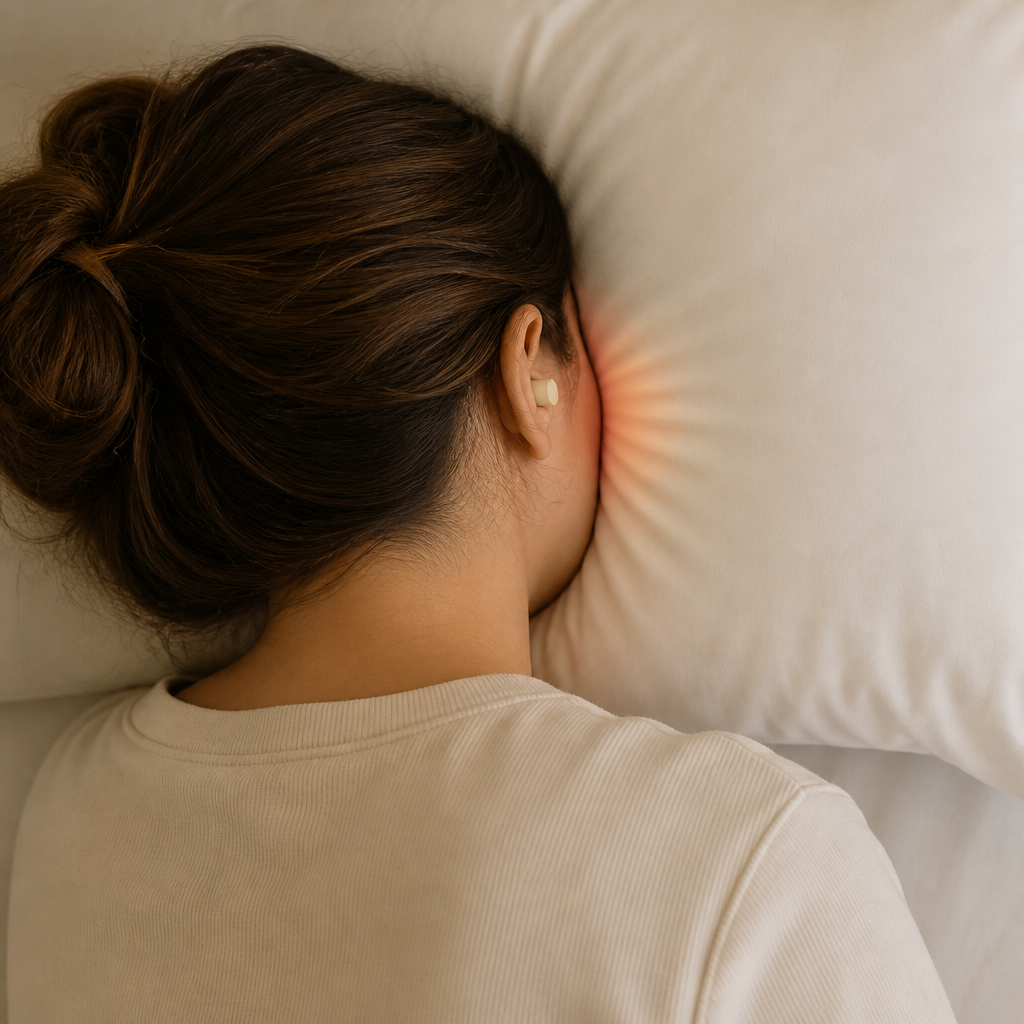
When you lie on your side, your ear is compressed against a pillow for hours at a time. Any earplug that protrudes from the ear canal or sits rigidly inside it will create pressure, and that pressure gets transmitted directly into your ear canal the longer you stay in that position.
Foam earplugs for side sleepers fail most often not because of noise reduction but because of geometry. The plug sticks out past the outer ear, the pillow pushes against it, and the whole thing acts as a lever. This is why some people using even the softest standard foam plugs report soreness after three to four hours. The plug did not get more painful, but it did get pushed slightly deeper over time.
The right material choice solves this before it becomes a problem. You need something that compresses under pressure without being rigid, stays in the ear canal without being driven further, and maintains its acoustic seal even after being repeatedly deformed throughout the night.
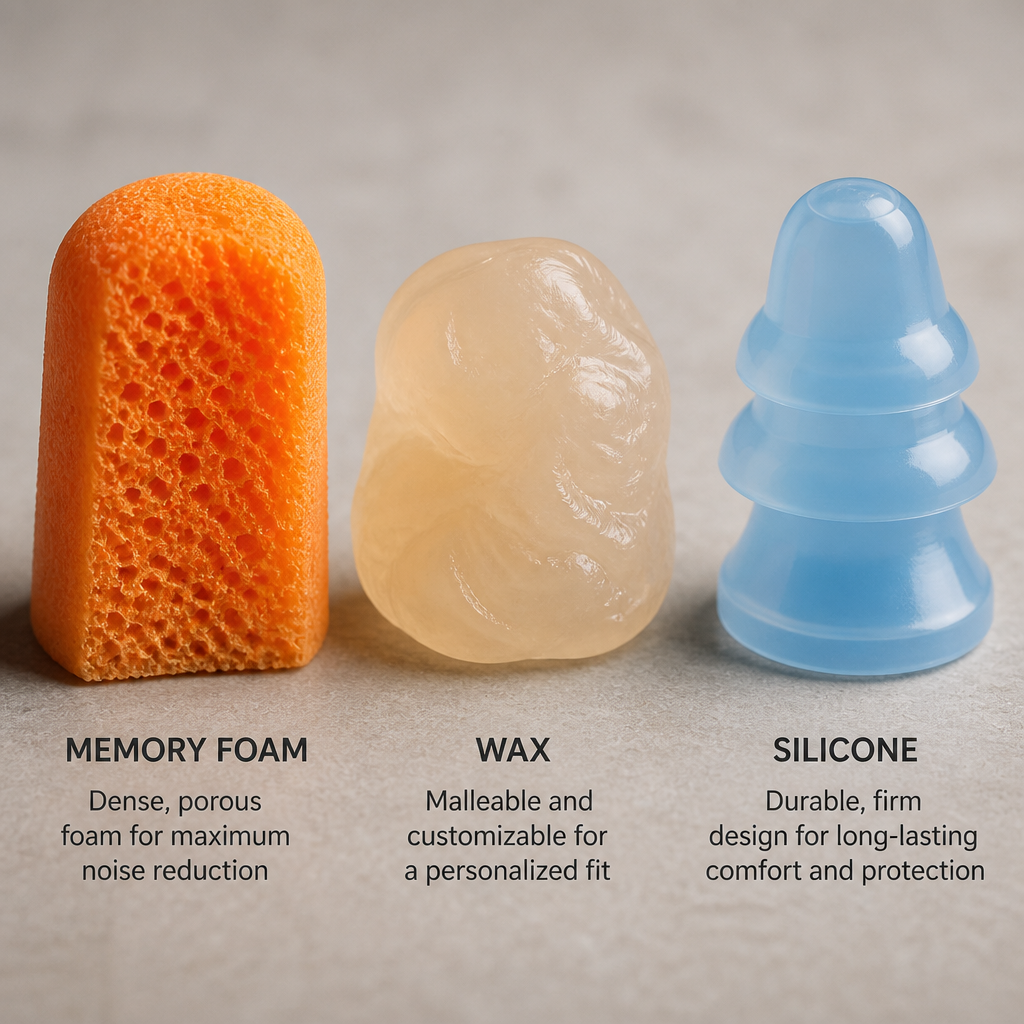
Memory foam is the benchmark material for sleeping earplugs, and the reason is the slow-rebound property. You compress it, insert it, and it gradually expands to fill the ear canal. When pillow pressure hits, it compresses again instead of being forced deeper, then re-expands to restore the seal. No other material does this as consistently.
High-quality memory foam earplugs reach NRR ratings of 28-33 dB, among the highest of any consumer earplug type. In practice, real-world reduction sits closer to 13-20 dB for most people, which is still enough to bring a 60 dB urban bedroom environment down to levels that allow uninterrupted sleep. The acoustic seal memory foam creates inside the canal is genuinely superior to external seals created by wax or moldable silicone putty.
The key variable is profile. Standard disposable foam cylinders protrude too far, causing the lever problem described above. Memory foam tips attached to a low-profile, concave body, like the design used in ATTENU8 earplugs, keep the outer surface flush with the ear. The aluminium body acts as a stable anchor while the foam tip handles the comfort and seal. This means the pillow contacts the body, not just the foam, distributing pressure rather than concentrating it.
Side sleepers consistently report 6-8 hours of comfort with well-designed memory foam earplugs compared to 3-4 hours with harder flanged silicone alternatives. That difference is the reason most serious side sleepers end up choosing foam tips regardless of what else they try.
This is where disposable foam and reusable memory foam diverge sharply. Standard foam disposables absorb skin oils and ear secretions after a single use and cannot be adequately cleaned. Reusable memory foam tips retain their expansion properties and remain hygienic when replaced on a regular schedule. ATTENU8 recommends replacing their memory foam tips every 6-8 weeks under regular use, which is a practical cycle that balances hygiene with cost over time.
Pro tip: When inserting memory foam earplugs, roll the tip into a tight cylinder, pull the outer ear back and upward to straighten the canal, then insert and hold for 20-30 seconds. Releasing early is the most common reason foam earplugs underperform.
Wax earplugs have been around since 1907 and the design has barely changed. You soften a ball of wax between your fingers, shape it over the ear canal entrance, and press it gently in place. Because it sits outside the canal rather than inside, there is no deep insertion, no pressure against the canal walls, and no protrusion for the pillow to push against.
For people who cannot tolerate anything inside the ear canal, wax is genuinely useful. The flat profile against the ear is comfortable for side sleepers, and the soft material deforms under pillow pressure without being pushed deeper. For occasional use, travel, or as a backup option, wax does the job reasonably well.
Noise reduction is the main limitation. Because wax seals only the canal entrance rather than sitting inside it, it typically achieves a noise reduction rating of 22-25 dB, noticeably lower than foam. For blocking heavy traffic, a snoring partner, or construction noise from nearby sites, this gap matters.
Hygiene is the other major problem. Wax is sticky by nature and traps dust, lint, and debris. Most wax earplugs are only good for one or two uses before they need to be replaced. For nightly use over weeks and months, this makes wax expensive and wasteful. If you are looking for a sustainable, reusable solution, wax is not the right material.
Pro tip: If you use wax earplugs, warm them between your palms for a full 30 seconds before shaping. Cold wax does not conform well and leaves gaps in the seal, which significantly reduces the noise attenuation you get.
“Silicone earplugs” is almost a useless category label because it covers two products that behave completely differently. Understanding the distinction is critical before making any purchase decision.
Moldable silicone putty works similarly to wax. You shape it, press it over the canal entrance, and it seals from the outside. It is waterproof, non-absorbent, and generally stays cleaner than wax. The noise reduction rating is similar to wax, typically in the 22-25 dB range, for the same reason: the seal is external, not internal. Moldable silicone putty is a practical option for people who want something reusable and gentle, but it will not compete with foam on raw noise reduction.
Pre-formed silicone earplugs with flanges or tips sit inside the canal like foam does, but they are made of a firmer material. This is where side sleepers run into serious problems. Silicone’s firmness becomes uncomfortable during side sleeping because the earplug body cannot compress under pillow pressure. Instead, that pressure is transmitted directly into the canal.
Most side sleepers report discomfort after three to four hours with flanged silicone, compared to six to eight hours with memory foam. The rated noise reduction of flanged silicone can be competitive with foam, sometimes reaching 24-27 dB SNR, but the comfort failure cuts the practical overnight use short before noise reduction even becomes relevant. Good noise reduction that wakes you up at 4 AM because of ear pain is not actually good noise reduction.
“If you sleep on your side, comfort tends to decide the issue faster than raw noise reduction. Side sleepers are dealing with two pressures at once: the room noise itself and the physical pressure of the pillow against the earplug.”
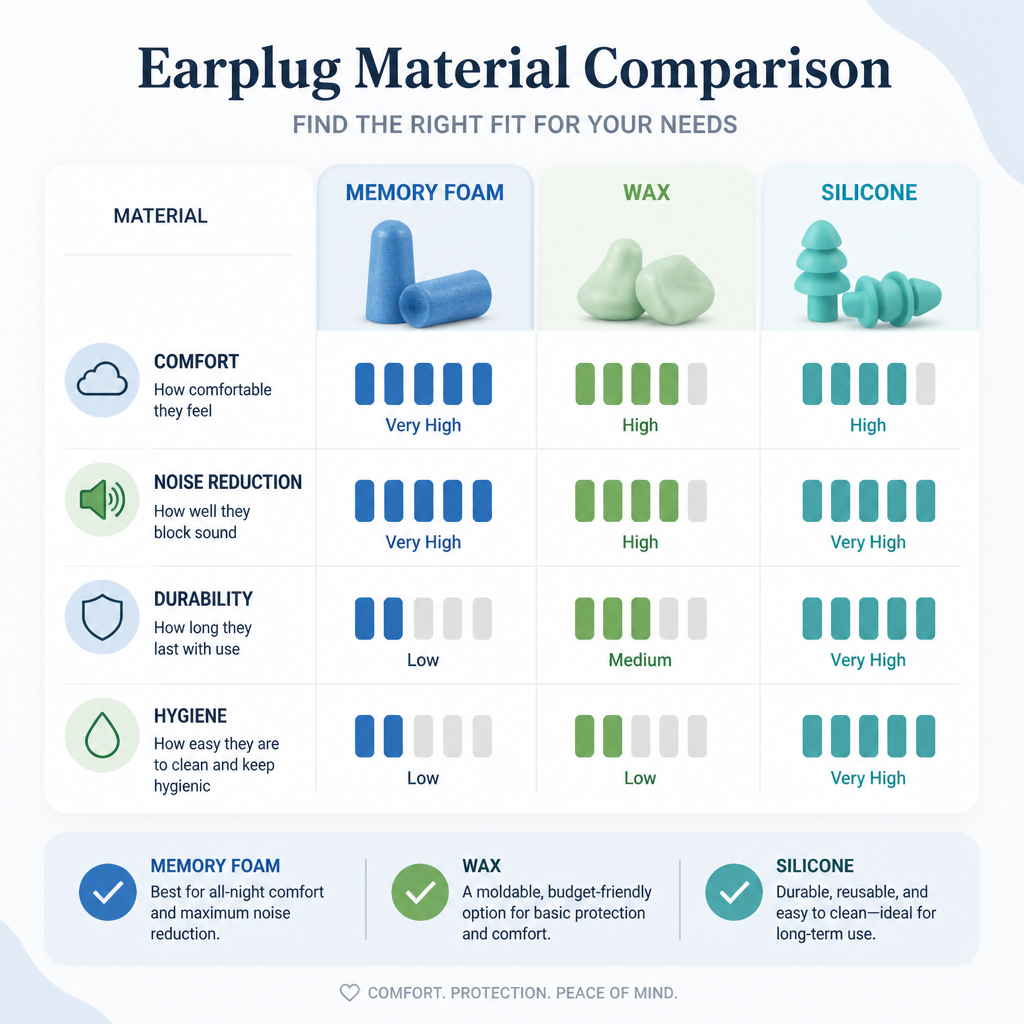
The table below summarizes how each material performs across the factors that actually matter for side sleepers sleeping through the night. Noise reduction figures refer to rated values, with the understanding that real-world performance is typically 50-70% of rated.
| Feature | Memory Foam (Reusable Tips) | Wax | Silicone (Flanged / Pre-Formed) |
|---|---|---|---|
| Noise Reduction (Rated) | 28-33 dB NRR | 22-25 dB NRR | 24-27 dB SNR |
| Side Sleeping Comfort | High. Compresses, re-expands | Moderate. Flat profile, lower seal | Low. Firm material creates pressure |
| Reusability | Yes. Tips replaced every 6-8 weeks | No. 1-2 uses maximum | Yes. Body lasts but tip hygiene varies |
| Hygiene | Good with tip replacement schedule | Poor. Traps dust and debris | Good. Non-absorbent material |
| Insertion Depth | Inside the canal | Over the canal entrance | Inside the canal |
| Pillow Pressure Impact | Low. Compresses without being driven deeper | Low. Deforms without deep insertion | High. Rigid material transmits pressure |
| Best For | Nightly use, high noise, side sleeping | Occasional use, sensitive ears, travel | Upright use, concert protection, daytime |
Once you have settled on memory foam as the material of choice for overnight side sleeping, the next step is evaluating specific design features. Not all memory foam earplugs are built the same way.
The outer body of the earplug should sit close to the ear, not protrude past the auricle. A concave or flush design eliminates the lever problem. When your ear presses into the pillow, the first point of contact should be the ear itself, not a protruding earplug tail. This is a feature ATTENU8 specifically engineered into its aluminium body: the concave shape nestles into the ear rather than sticking out from it.
Ear canals vary significantly in size, and a foam tip that is too large will cause pressure pain regardless of the material. A tip that is too small will not seal properly, destroying noise reduction. Look for products that include at least two or three tip sizes, such as XS, S, and M, so you can match the tip to your actual ear canal rather than forcing a compromise.
Standard disposable foam means buying a new pair every night or every few nights. Reusable earplugs with replaceable foam tips are significantly more economical and sustainable over time. The total cost of ownership is one of the most overlooked factors when people compare earplug types. An earplug with a durable metal body and foam tips you replace every six to eight weeks costs far less per night than nightly disposables over a year of consistent use.
For most side sleepers dealing with snoring, traffic, or urban apartment noise, a rated NRR of 28-33 dB, or roughly 14-20 dB in practice, is more than sufficient. For professionals in genuinely loud environments, such as construction or manufacturing, you want to be at the upper end of that range and should verify compliance with relevant occupational safety standards for your region. Sleep-oriented earplugs and industrial hearing protection sometimes look similar but are designed to very different specifications.
For most side sleepers, yes. Memory foam compresses under pillow pressure and slowly re-expands to maintain the acoustic seal, while flanged silicone remains rigid and transmits pressure directly into the ear canal. The difference in comfort over a full night is significant, with most side sleepers managing six to eight hours comfortably with memory foam compared to three to four hours with hard silicone tips.
It depends on the design. Standard disposable foam cylinders should not be reused past one or two nights because they absorb skin oils and cannot be cleaned effectively. Reusable memory foam tips on a durable body, like those used by ATTENU8, can be used nightly and replaced every six to eight weeks, which gives you proper hygiene without the cost of daily disposables.
Wax earplugs typically have a noise reduction rating of 22-25 dB, which is lower than memory foam because they seal over the canal entrance rather than inside it. In practice, this means they handle moderate noise like a quiet street or light snoring reasonably well but fall short against heavy traffic, loud partners, or industrial environments.
The most common cause is a combination of insertion depth and earplug rigidity. If the earplug protrudes from the ear or is made of firm material, pillow pressure is concentrated on a small, hard surface and transmitted into the canal. The solution is a low-profile earplug with soft, compressible tips that deform under pressure rather than being driven deeper. This is the specific problem that a concave aluminium body with memory foam tips is designed to solve.
Disposable foam should be replaced after every one to two uses. Reusable memory foam tips on a durable body should be replaced every six to eight weeks under regular nightly use. The signs that tips need replacing are visible compression that does not fully recover, visible soiling, or a noticeable reduction in perceived noise blocking. Trying to extend foam tips past their useful life is one of the main reasons people think their earplugs have stopped working.
The shape of the outer body matters more than most people realise. A cylindrical earplug that protrudes from the ear is a poor design choice for side sleeping regardless of the material. A concave, low-profile body that sits flush with the ear canal entrance distributes pillow pressure across the ear rather than concentrating it on the earplug. If you have tried multiple earplugs and found them all uncomfortable during side sleeping, the shape and outer body design is likely the issue, not the material alone.
Industrial hearing protection prioritises maximum attenuation and compliance with occupational safety standards, often at the expense of overnight comfort. Sleep-oriented earplugs balance noise reduction with comfort for extended wear in a lying position. The best earplugs for side sleepers during sleep achieve high noise reduction, around 30-33 dB rated, while maintaining a low enough profile and soft enough material to remain comfortable through a full night. For professionals who need protection in both contexts, a product that performs in both environments is worth investing in.
Have you tried switching earplug materials to solve a side-sleeping comfort problem? Share what worked for you in the comments below.

