


 0
0

You buy a pair of earplugs, the label says 33 dB, and you expect 33 dB of silence. Then you wear them on a construction site or try sleeping next to a snoring partner and wonder why they feel barely adequate. The problem is not the earplugs. The problem is that the earplug decibel rating printed on the box is a lab number, not a real-world guarantee. Understanding what NRR and SNR actually measure, how they are calculated, and how much protection you realistically get from them is the difference between choosing hearing protection that works and buying false confidence.
| Key Insight | Explanation |
|---|---|
| NRR is a US lab standard | The Noise Reduction Rating is set by the EPA and tested under ANSI S12.6 standards in controlled lab conditions. Real-world protection is always lower. |
| SNR is the European equivalent | The Single Number Rating follows EN 352 standards and is typically 3 dB higher than the NRR for the same product. The two numbers are not directly interchangeable. |
| The OSHA real-world formula is (NRR – 7) / 2 | This gives you a more realistic estimate of actual decibel reduction. An earplug rated NRR 33 delivers roughly 13 dB of real protection under typical wearing conditions. |
| NIOSH recommends halving the NRR for foam earplugs | The National Institute for Occupational Safety and Health derates formable foam earplugs by 50% to reflect inconsistent insertion quality in actual use. |
| Fit is the biggest variable | A poorly inserted earplug with NRR 33 can drop to just 10 dB of effective attenuation. Rating means nothing without a proper seal. |
| 85 dB is the critical threshold | Sustained noise exposure at or above 85 dB over an 8-hour period can cause permanent hearing damage. Your earplug choice should keep you comfortably below this level. |
| Higher NRR is not always better for sleep or travel | For light sleepers or commuters, a moderate but consistently well-fitting earplug delivering 25-30 dB reliably outperforms a high-NRR earplug inserted badly. |
An earplug decibel rating is a single number expressed in decibels (dB) that tells you, in theory, how much ambient noise a hearing protection device can block. Two systems dominate the market: NRR (Noise Reduction Rating), used in the United States, and SNR (Single Number Rating), used across Europe and increasingly elsewhere. Both ratings measure the same fundamental thing – attenuation, meaning the reduction in sound intensity that reaches your ear canal – but they use different test protocols, different frequency ranges, and different statistical methods, which is why the same pair of earplugs can carry two different numbers depending on which side of the Atlantic it is being sold on.
Before diving into the mechanics, it helps to understand what decibels actually represent. The decibel scale is logarithmic, not linear. A sound at 90 dB is not twice as loud as one at 45 dB. A 3 dB increase in sound intensity actually represents a doubling of sound energy. This matters enormously when evaluating earplug ratings, because even a few decibels of difference in real attenuation translates to a meaningful change in noise exposure at the eardrum.
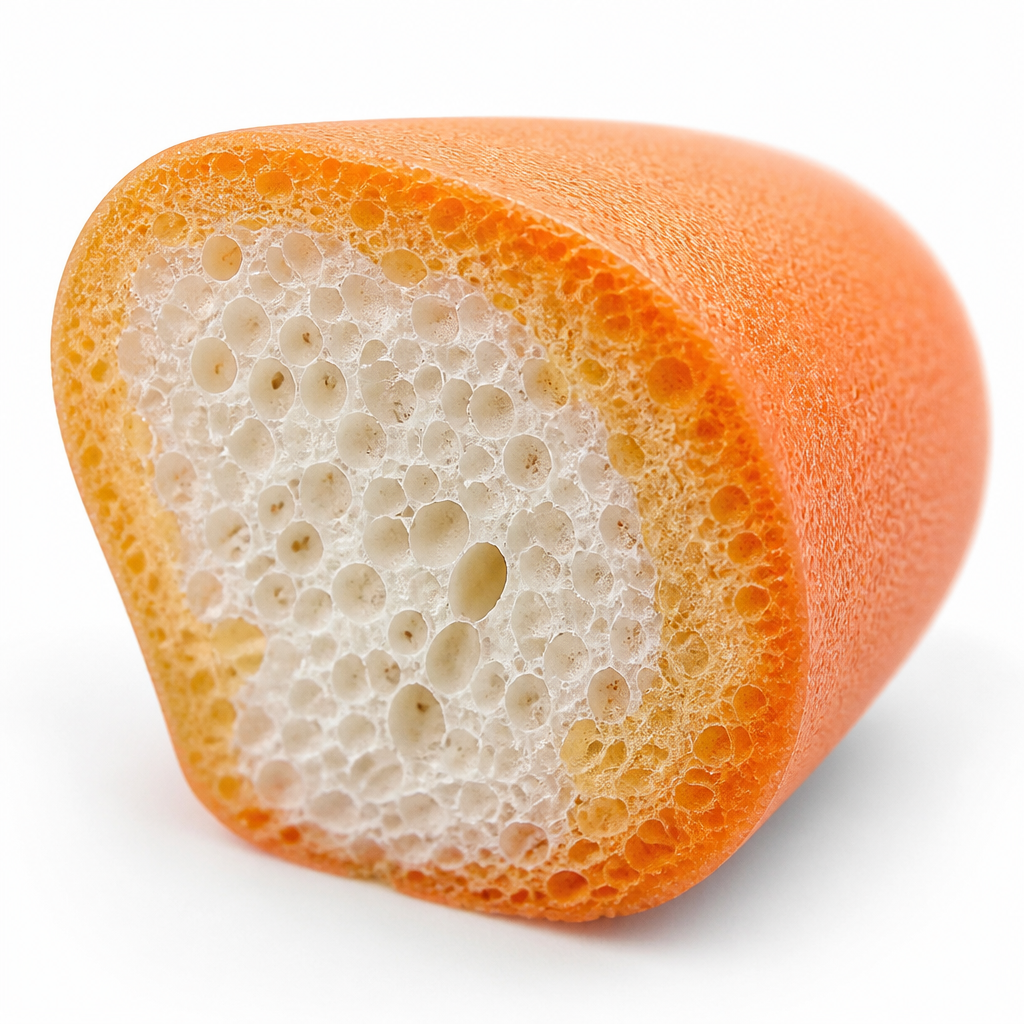
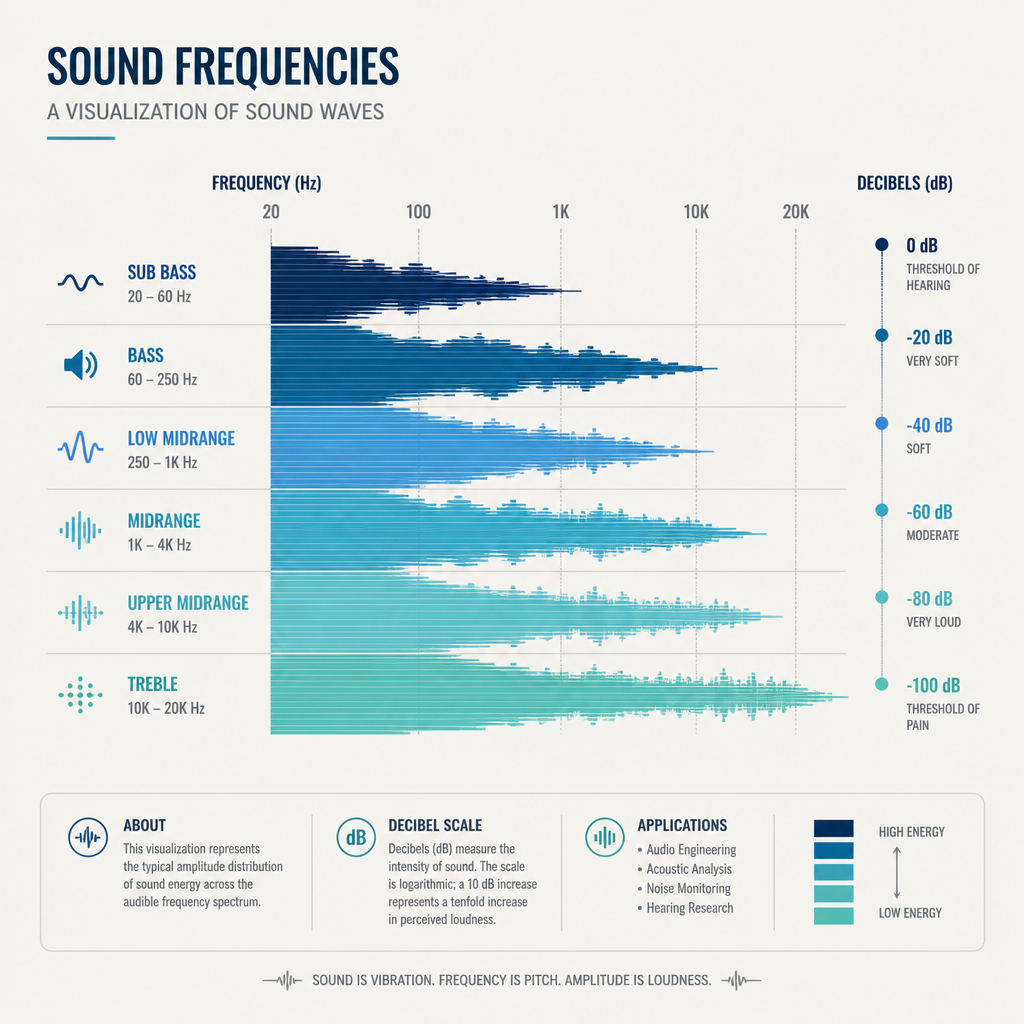
The Noise Reduction Rating is the standard measurement used in the United States to indicate how much noise a hearing protection device can reduce. It is expressed in decibels and is regulated by the US Environmental Protection Agency (EPA), which requires the NRR to be printed on the label of every hearing protector sold in the country. The testing process follows ANSI standards and involves exposing the hearing protection device to different frequencies of sound in a laboratory, then measuring the attenuation across those frequencies to produce an average.
The result is a single number: the NRR. A device with an NRR of 30 dB means it was measured, under ideal lab conditions with trained subjects inserting it perfectly, to reduce noise by 30 dB. The critical phrase is “under ideal lab conditions.” Real human ears, real insertion technique, and real environments introduce variation that the lab does not capture. This is why regulatory bodies and occupational health authorities consistently recommend applying a derating formula before treating the NRR as a practical guide.
The NRR is derived from a controlled test. Participants wear the hearing protection device, sounds at various frequencies are played, and the attenuation at each frequency is measured. An adjustment value is then applied to account for variability, and the final figure is divided by two. For earplugs, the adjustment value used is 7 dB. This means the rated NRR is already somewhat conservative compared to raw attenuation data, but it still reflects better-than-average insertion quality because laboratory subjects are trained in how to fit the device correctly.
Pro tip: When evaluating any earplug on the NRR alone, remember the number was generated by trained test subjects in a quiet lab. Your first-time insertion in a noisy environment will almost never match those conditions. Budget a real-world performance figure that is meaningfully lower than the label.
Because NRR overstates real-world protection, both OSHA and NIOSH apply derating methods. OSHA recommends derating all hearing protection by 50%. NIOSH goes further, recommending a 50% derating for formable foam earplugs and a 70% derating for all other earplugs, while applying only 25% derating to earmuffs. The most widely used practical formula for everyday estimates is the OSHA method: (NRR – 7) / 2. For an earplug with an NRR of 33, that calculation gives you (33 – 7) / 2 = 13 dB of realistic noise reduction. If ambient noise is 100 dB and you apply 13 dB of protection, your effective exposure is around 87 dB, still close to the 85 dB danger threshold.
This is not a flaw in the formula. It is an honest acknowledgment that rated performance and worn performance are not the same thing, and that hearing protection choices should be made with conservative estimates, not optimistic ones.
The Single Number Rating is the European equivalent of the NRR. It is the standard method used primarily in Europe under EN 352 standards to indicate the noise attenuation capability of a hearing protection device. The SNR provides a single-figure estimate of how many decibels a protector can reduce, averaged across a broad spectrum of sound frequencies from 63 Hz to 8,000 Hz. This wide frequency range is designed to account for both high-frequency sounds such as whistles and machinery whine, and low-frequency sounds such as engine rumble and bass noise.
For most earplugs and earmuffs, the SNR is roughly 3 dB higher than the NRR for the same product. This difference is not because European earplugs perform better. It reflects the different calculation methods and statistical approaches used by each standard. The two ratings are not directly interchangeable, and you should not compare an NRR from one product with an SNR from another and assume the higher number is superior protection.
To use the SNR, subtract it from the noise level you are exposed to. An SNR of 35 worn in an environment measuring 100 dB would give a theoretical exposure of 65 dB at the ear. As with NRR, this is a best-case figure. The EN 352 standard acknowledges that real-world attenuation depends heavily on the quality of fit, which varies from person to person and insertion to insertion.
The actual decibel reduction from wearing hearing protection may not match the rated number. Fit quality and insertion technique are the dominant variables that determine real-world performance, not the rating on the label.
If you are purchasing earplugs sold in both the US and EU markets, you will often see both ratings on the packaging. In that case, use the NRR and the OSHA formula if you are in the US, or the SNR if you are evaluating against European occupational exposure limits. Do not mix the two in the same calculation.
Understanding which standard applies to your context saves confusion when shopping for hearing protection. The table below compares the two systems across the dimensions that matter most to buyers and professionals.
| Feature | NRR (Noise Reduction Rating) | SNR (Single Number Rating) |
|---|---|---|
| Primary region of use | United States | Europe (and many international markets) |
| Regulatory body | US EPA (under ANSI S12.6) | European EN 352 standard |
| Frequency range tested | 125 Hz to 8,000 Hz | 63 Hz to 8,000 Hz (broader low-frequency coverage) |
| Typical value for same product | Lower number (e.g., NRR 29) | Higher number (e.g., SNR 32), typically ~3 dB more |
| Recommended derating | OSHA: 50% / NIOSH: 50-70% for earplugs | No universal mandatory derating formula, but real-world performance still falls below the label |
| Label requirement | Mandatory on all US hearing protectors | Mandatory for CE-marked products sold in Europe |
| Direct comparability | NRR and SNR are not directly comparable. Do not use one to evaluate a product rated only with the other. | |
This is where most earplug buying decisions go wrong. People see a high NRR rating and assume they are fully protected. In practice, the gap between the label and reality can be substantial. Laboratory NRR tests are performed by trained subjects who insert the earplugs correctly under controlled conditions. Real users, inserting earplugs quickly in noisy environments, often achieve significantly lower attenuation.
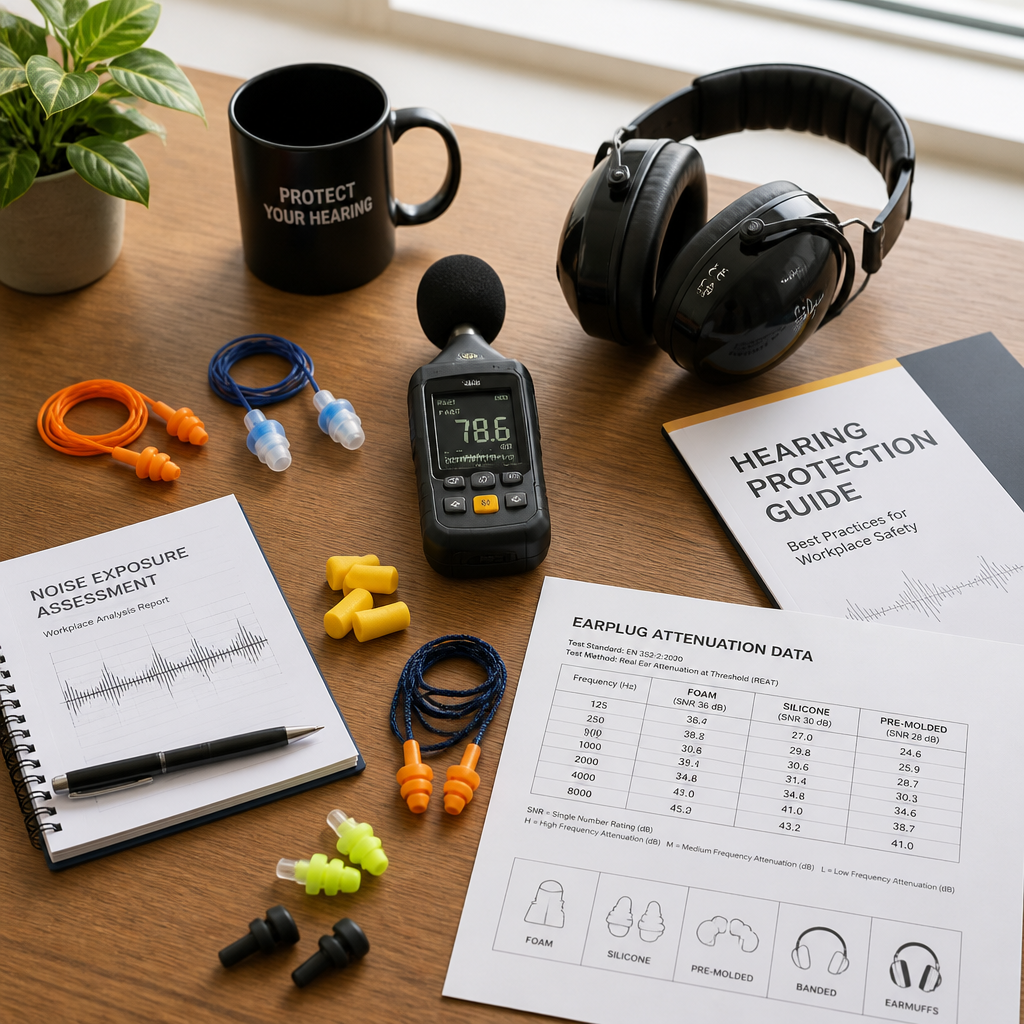
A commonly cited example from occupational health literature makes this concrete: an earplug rated NRR 33, inserted poorly, can drop to providing just 10 dB of effective noise reduction. That is not an edge case. That is what happens when people push foam earplugs into their ear canals without rolling them down first, or when an earplug body does not create a proper seal against the canal wall.
For practical planning, use the OSHA method: (NRR – 7) / 2 = estimated real dB reduction. Here is what that looks like across common NRR values:
Note that these estimates apply to conditions where fit is average. Earplugs that consistently deliver a reliable seal, because of their design, material, or adjustable tip system, will perform closer to their rated figure than earplugs that rely entirely on the user rolling and inserting a loose foam cylinder correctly every time.
If you are working in an extremely loud environment and need maximum attenuation, you can wear earplugs and earmuffs simultaneously. However, you cannot simply add the two NRR ratings together. When using two forms of hearing protection in combination, you add only 5 dB to the device with the higher NRR. This reflects the physical limits of sound blocking once you have created a basic seal around the ear canal.
Pro tip: For sleep and travel use, combining two protection devices is rarely practical or comfortable. Instead, focus on consistent fit quality from a single well-designed pair of earplugs with memory foam tips. A product that delivers a reliable seal every night is more valuable than a higher NRR that only materialises under perfect insertion conditions.
The answer depends entirely on what you are protecting against. There is no universal “right” NRR because the purpose matters. Noise reduction needs fall into two broad categories: occupational hearing protection, where you are preventing permanent hearing damage, and comfort and sleep use, where you are managing unwanted sound to preserve sleep quality or concentration.
For construction workers, manufacturing professionals, and anyone exposed to heavy machinery, the goal is keeping effective noise exposure below 85 dB. At or above this level for an 8-hour working day, the risk of permanent noise-induced hearing loss becomes significant. For an environment running at 100 dB, you need an earplug that delivers at least 15 dB of real-world reduction after applying the OSHA derating formula. That means an NRR of at least 29-33 on the label. Military personnel in particular may face impulse noise from firearms or explosions, which requires specialist hearing protection rated for both sustained and peak noise events.
For light sleepers, travellers, and people working in noisy open offices, the noise environment is typically much lower than an industrial site. Ambient traffic, a snoring partner, or aircraft cabin noise typically falls in the 60-80 dB range. In these cases, you do not need the maximum possible NRR. You need an earplug that fits comfortably enough to wear for hours, creates a reliable seal without causing ear canal irritation, and provides consistent attenuation night after night. A reusable earplug with memory foam tips such as those on the ATTENU8, which are designed in three tip sizes (XS, S, and M) to match individual ear canal geometry, solves the comfort-and-consistency problem that undermines many high-NRR disposable foam earplugs.
With approximately 32 dB of noise reduction, the ATTENU8 sits at the practical upper end of what a well-designed earplug can deliver for everyday use. Applied against the OSHA formula, that is roughly 12.5 dB of conservative real-world reduction, and likely more in practice for users who achieve a good seal with the correct foam tip size, because the concave aluminium body holds the memory foam tip securely in position throughout the night.
Of all the factors that determine how much noise protection you actually receive, fit is the most important and the most underestimated. A poorly fitting earplug creates gaps between the foam and the ear canal wall, and those gaps allow sound to bypass all the blocking material entirely. Even a small gap can reduce effective attenuation by 10 dB or more. This is why the same NRR 33 earplug can protect one person adequately and barely protect another at all.
The fit problem is particularly acute with standard disposable foam earplugs. They require a specific rolling and insertion technique. They need to be held in the canal while they expand. They work best in ear canals that fall within a narrow size range. When these conditions are not met consistently, the earplug decibel rating on the box becomes almost meaningless as a guide to actual protection.
Memory foam tip systems that come in multiple sizes address this problem directly. When you can select the tip size that matches your specific ear canal, the foam has less work to do in bridging gaps and more of its surface area is in contact with the canal wall from the moment of insertion. The result is a more reliable, more repeatable seal, which means the real-world attenuation you get is closer to the rated figure and stays there throughout the night or work shift rather than degrading as the earplug slowly works itself loose.
This is one of the key reasons that reusable metal-bodied earplugs with replaceable memory foam tips represent a meaningful step up from disposable foam cylinders for consistent users. The aluminium body maintains its position in the ear canal. The memory foam tip provides the seal. The combination reduces the insertion variability that is the primary cause of the gap between rated NRR and real-world performance.
Memory foam degrades over time, losing its ability to expand to a full seal. For regular users, this means the tips need periodic replacement, not the entire earplug. Replacing foam tips every 6 to 8 weeks maintains the consistent sealing performance that makes the rated noise reduction achievable in practice. This is both more economical and more environmentally sustainable than discarding the entire earplug every few uses.
An earplug’s decibel rating, expressed as NRR or SNR, represents the amount of noise reduction the earplug was measured to provide during standardised laboratory testing. It is not a guarantee of what you will experience in practice. Real-world reduction depends heavily on fit, insertion technique, and how well the earplug matches your ear canal size. Use the OSHA formula (NRR – 7) / 2 to estimate a more realistic figure for everyday conditions.
Not necessarily. A higher NRR rating is important when you are exposed to very loud noise, such as on construction sites, shooting ranges, or in manufacturing facilities. For sleep or travel, where the goal is comfort over extended periods, a slightly lower NRR in an earplug that fits reliably and stays in place all night will protect you more effectively than a higher-rated earplug that you remove at 3am because it is uncomfortable or has shifted out of position.
The NRR and SNR are calculated using different testing protocols. The NRR follows US ANSI standards while the SNR follows European EN 352 standards. The two use different frequency ranges and statistical methods, which is why the SNR for the same product is typically around 3 dB higher than the NRR. They measure the same physical property, but the numbers are not interchangeable. Always compare products using the same rating system.
Sustained exposure to noise at or above 85 dB over an 8-hour period poses a risk of permanent hearing damage. NIOSH and OSHA both identify 85 dB as the threshold at which a hearing conservation programme should begin. In practice, it is sensible to use hearing protection any time you are regularly exposed to persistent loud noise, even below this level, since cumulative lower-level exposure also contributes to long-term hearing decline.
The right tip size is the one that fills your ear canal without requiring excessive force to insert and without feeling like it is about to fall out. A well-fitted tip creates a gentle but complete seal around the canal wall. Most people discover they need a different size in each ear, which is normal. Starting with a medium tip and comparing it against small and extra-small options is a reliable way to find your correct size. The difference in effective noise reduction between a correctly fitted and an incorrectly sized tip is far larger than any difference between earplug models with similar NRR ratings.
Yes, and this is a common approach in very high-noise industrial environments. However, the combined NRR is not the sum of both ratings. When using dual protection, you add 5 dB to the device with the higher NRR to estimate total protection. For most everyday uses, including sleep and travel, wearing both simultaneously is impractical. Choosing a single well-fitting earplug with a strong NRR is the more workable solution.
Disposable foam earplugs should be replaced after each use, as they collect bacteria and lose their expanding ability quickly. Reusable earplugs with replaceable memory foam tips offer a more sustainable model: the earplug body itself lasts indefinitely, while the foam tips should be replaced approximately every 6 to 8 weeks of regular use to maintain sealing performance and hygiene. Replacing only the tips, rather than the entire device, also makes reusable earplugs more cost-effective over time.
Have you found a meaningful difference between the rated NRR and what you actually experience when wearing earplugs? Share your experience in the comments below.

