


 0

Most people who complain that earplugs “don’t work” are not using a bad product. They are using a good product badly. A poorly inserted earplug can deliver a fraction of its rated noise reduction, turning a 32dB shield into something closer to a windshield. Whether you are a light sleeper battling street noise, a construction worker protecting your hearing over a long career, or a frequent flyer trying to get rest on a plane, knowing how to insert earplugs correctly is the single highest-leverage thing you can do. This guide covers every step, every common mistake, and every check you need to get a true acoustic seal, every single time.
| Key Insight | Explanation |
|---|---|
| Pull your ear up and back before inserting | Straightening the ear canal is the step most people skip. Without it, the plug cannot seat deep enough to seal. |
| Roll memory foam into a thin cylinder first | A compressed plug enters the canal cleanly. An uncompressed plug bunches at the entrance and creates a shallow, leaky fit. |
| Hold the plug in place for 20 to 40 seconds | Memory foam needs time to expand and fill the canal. Releasing too early means the plug expands outward rather than inward. |
| Only about one-third of the plug should be visible | If you can see more than a third of the plug protruding, it is not inserted deeply enough to seal. |
| Tip size changes everything | A tip that is too small allows sound to leak around the sides. A tip that is too large causes discomfort and poor canal contact. |
| Dirty hands and oily skin break seals | Oils and debris on the foam surface prevent proper expansion against the canal wall. Wash hands before every insertion. |
| Metal-bodied reusable earplugs insert differently from disposables | With a rigid body like ATTENU8’s aluminium shell, you are seating the foam tip, not rolling the entire earplug. The technique is faster and more consistent once learned. |
The noise reduction number printed on an earplug’s packaging is measured in a laboratory under ideal conditions, by trained technicians fitting the plugs perfectly. In real-world use, a poor seal can cut your actual protection in half or worse. This gap between rated and real performance is not theoretical; it is the most important practical fact about hearing protection.
The fit is the product. A pair of ATTENU8 earplugs rated to approximately 32dB of noise reduction will only deliver that figure when the memory foam tips create a complete acoustic seal against the walls of your ear canal. A partial seal, even one that feels secure, lets low-frequency sound bypass the plug through the gap, which is exactly the rumble of engines, traffic, and snoring that sleepers and travellers most need to block.
A well-fitted earplug is not just more comfortable. It is a fundamentally different level of protection from the same piece of hardware.
Pro tip: Before spending money on a higher-rated earplug, check whether your current insertion technique is the actual bottleneck. A 32dB earplug inserted correctly will outperform a 36dB earplug inserted poorly, every time.
This guide covers both traditional rollable foam earplugs and metal-bodied reusable earplugs with memory foam tips, such as ATTENU8. The steps differ at the start, but the canal-opening and seating stages are identical.
Step 1: Wash your hands. Oils, skin cells, and debris on your fingers coat the foam and prevent even expansion against the canal wall. This is not optional hygiene advice; it directly affects acoustic performance.
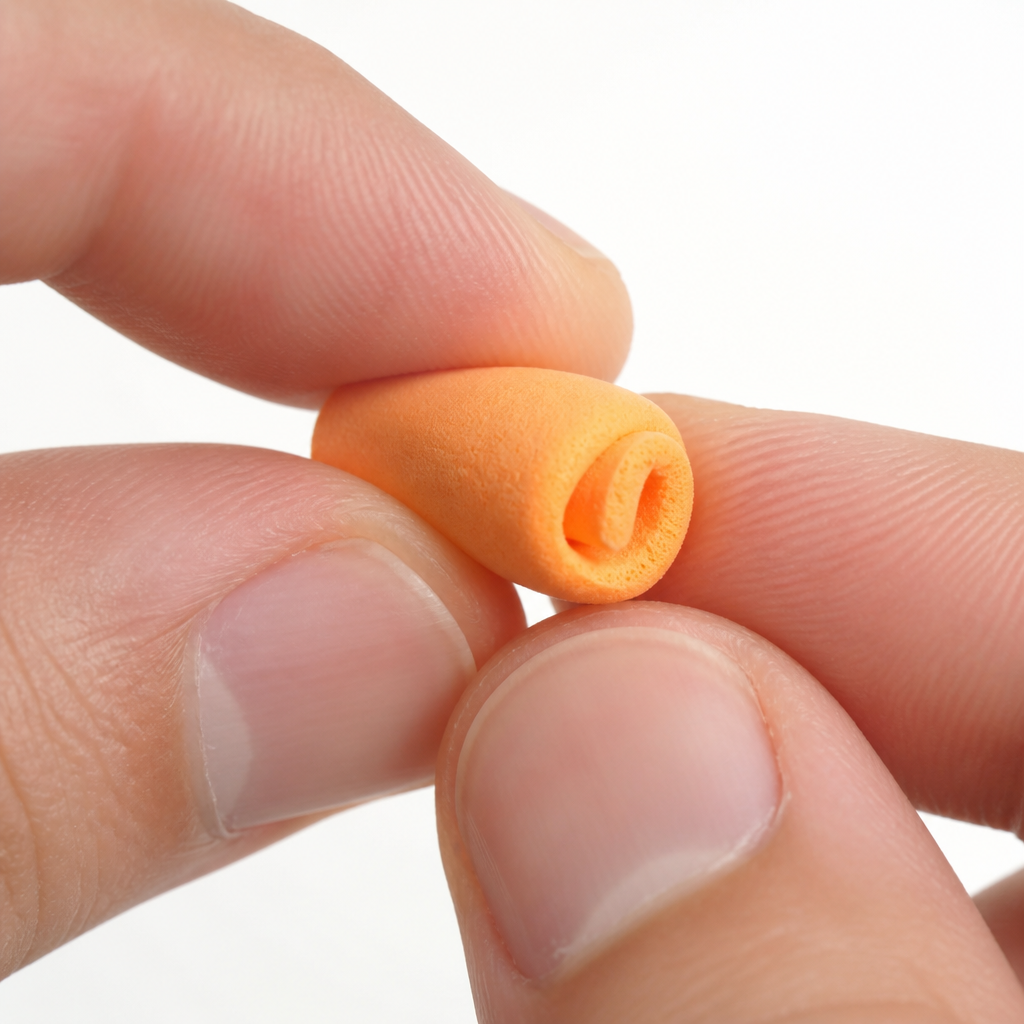
Step 2: Roll the earplug into a thin, crease-free cylinder. Use your thumb and index finger to compress the foam lengthwise. The goal is a smooth, narrow tube with no ridges or bulges. Creases create uneven expansion and gaps in the seal.
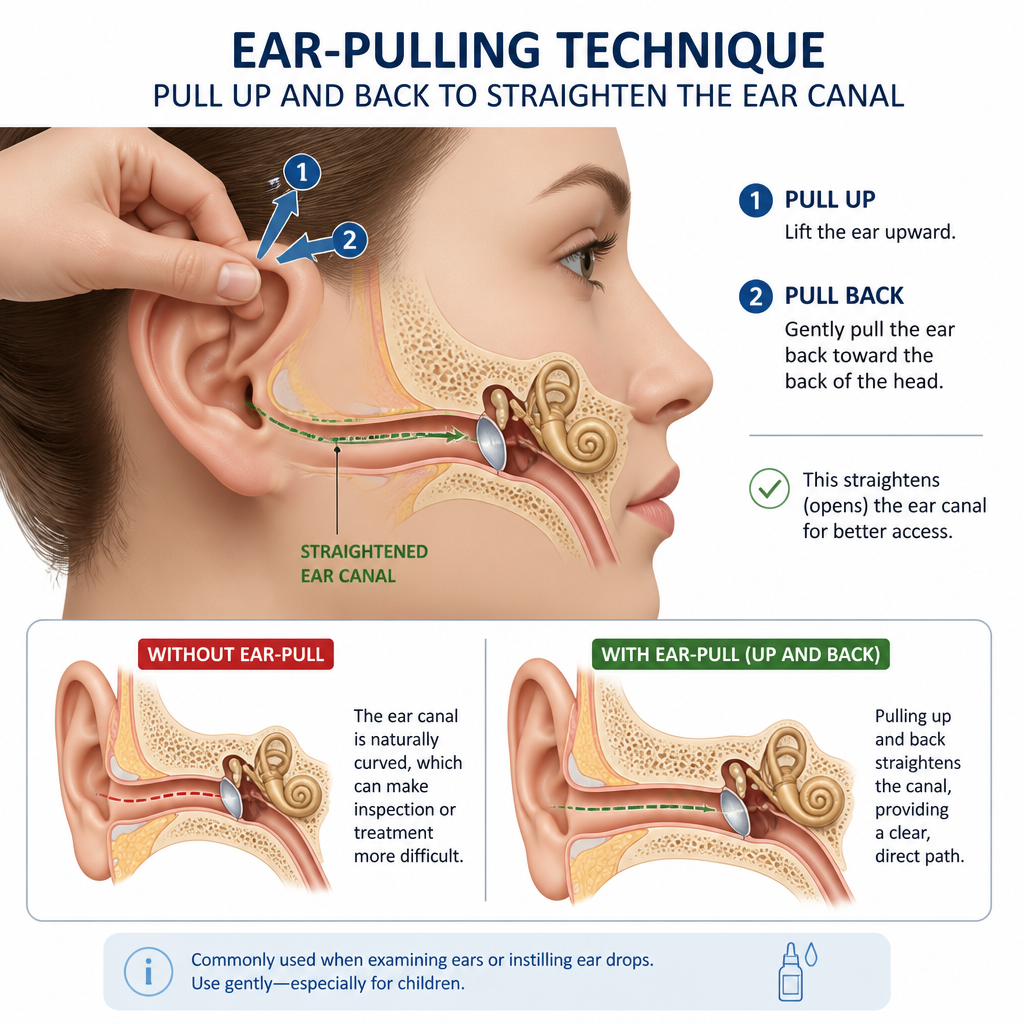
Step 3: Pull your ear up and back to open the canal. Reach your opposite hand over the top of your head and grasp the upper portion of your ear. Pull gently upward and slightly backward. This straightens the natural curve of the ear canal, creating a direct path for the plug.
Step 4: Insert with a slight rotating motion. Guide the compressed plug into the canal with a gentle screw-like movement. Push it in until roughly two-thirds of the plug is inside the canal, with only a small portion visible at the entrance.
Step 5: Hold for 20 to 40 seconds. Keep your finger pressed gently against the plug while the foam expands. Releasing too early lets the plug push itself partway out before it has seated properly.
Step 1: Wash your hands and select your tip size. ATTENU8 ships with XS, S, and M memory foam tips. Choose the size that fills your canal without causing pressure. When in doubt between two sizes, try the smaller one first; a firm seal with a smaller tip beats a painful fit with a larger one.
Step 2: Compress the memory foam tip between your fingers. You are not rolling the entire earplug. Gently squeeze the foam tip to reduce its diameter before insertion. Because the aluminium body gives you a firm grip, this step is quicker and more controlled than rolling a disposable.
Step 3: Pull your ear up and back with your opposite hand. The canal-opening step is identical regardless of earplug type. Do not skip it. This is the step that separates a true seal from a surface-level fit.
Step 4: Guide the tip into the canal with a gentle twist. The concave body of the ATTENU8 plug gives you a natural grip point. Insert with a slight rotating motion until the tip is seated inside the canal and the aluminium body sits flush against the ear entrance.
Step 5: Hold for 20 to 30 seconds. Memory foam tips on a rigid body expand the same way as on a disposable. Keep your finger on the body of the plug, not just the tip, for a stable hold while the foam seats.
The quickest seal check is the cupping test. Once both earplugs are in, cup your palms firmly over both ears and then remove them repeatedly. If the sound changes noticeably when you cup your ears, the earplug is not sealing well, and you are relying on your hands to fill the gap. A correct seal should sound roughly the same whether your hands are in place or not.
A second check is your own voice. When earplugs are seated correctly, your voice sounds slightly muffled or hollow to you, like hearing yourself speak with your fingers in your ears. If your voice sounds normal, the plugs are not deep enough. If it sounds extremely booming or pressurised, the tips may be too large or inserted too aggressively.
Pro tip: Try counting out loud at a steady pace while slowly cupping and uncupping your ears. If the muffled quality of your voice stays consistent whether your hands are on or off, your seal is good. This is the same self-check recommended by occupational health guidelines for workers without access to formal fit-testing equipment.
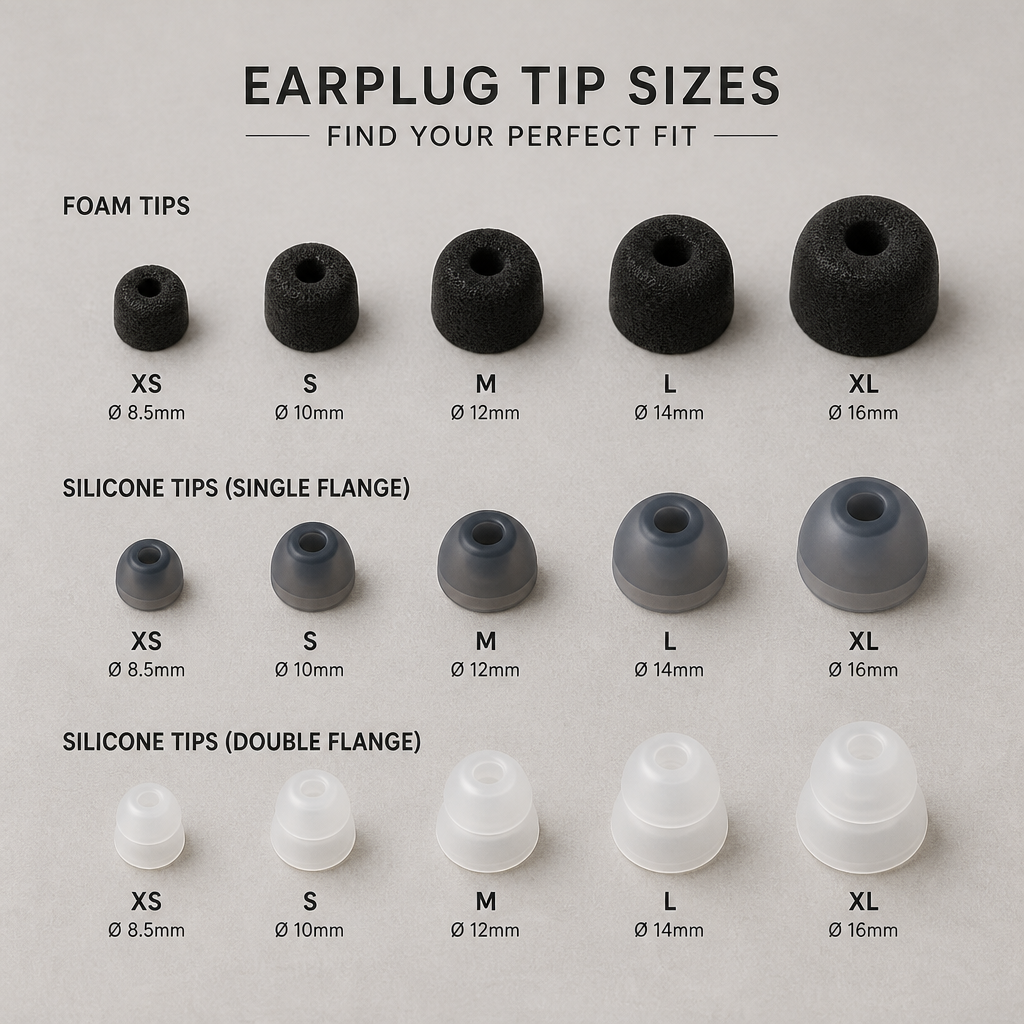
Tip size is not cosmetic. The right tip size is the one that matches your canal diameter well enough to create full circumferential contact with the canal wall once expanded. A tip that is too small will never seal, no matter how correctly you insert it. A tip that is too large causes pain, blocks natural insertion depth, and can actually reduce seal quality because it bunches at the canal entrance instead of seating inside it.
ATTENU8 includes three tip sizes (XS, S, and M) precisely because ear canal diameters vary significantly between individuals. The right approach is to start with the medium tip and assess comfort after a full hold period. If the tip is uncomfortable or feels like it is pressing against the canal walls rather than conforming to them, move down one size. If you feel no expansion pressure at all after the hold period, move up one size.
It is also worth knowing that your left and right ear canals may not be the same size. Some people need different tip sizes for each ear. This is normal, and it is one practical advantage of a system like ATTENU8’s that ships with multiple sizes rather than a single one-size-fits-all foam disposable.
Memory foam tips degrade over time. The foam loses its elasticity and stops expanding as fully as it did when new, which directly reduces seal quality even if your technique is correct. ATTENU8 tips are designed to be replaced every 6 to 8 weeks under regular use, at which point you replace the tips rather than the entire earplug. This replacement interval is not arbitrary; it is the point at which foam elasticity is typically no longer sufficient for a reliable seal.
The insertion technique and seal reliability differ meaningfully between earplug types. Understanding these differences helps you choose the right format for your situation and avoid applying the wrong technique.
| Earplug Type | Insertion Method | Seal Reliability and Longevity |
|---|---|---|
| Disposable rollable foam (single-use) | Full roll-pull-insert-hold technique required. Foam degrades after one use; seal quality drops sharply if reused. | Highest rated NRR available (up to 33dB), but consistency depends entirely on rolling quality. Single-use limits hygiene and long-term cost control. |
| Metal-bodied with memory foam tips (ATTENU8) | Compress the foam tip only. Rigid body provides better grip and more controlled insertion angle. Pull-ear step still required. | Consistent seal across uses because the body maintains shape. Tip replacement every 6 to 8 weeks maintains foam elasticity and seal integrity over months or years of use. |
| Pre-moulded silicone or flanged reusable | No rolling needed. Insert with pull-ear step and gentle twist to seat flanges. No hold time required. | Seal quality depends entirely on fit of fixed shape to your canal. Cannot adapt to minor canal shape variations. No degradation, but less adaptive than memory foam. |
The gap between a working earplug and a useless one is almost always one of a small number of repeatable errors. These are not edge-case problems. They are the norm for first-time users and surprisingly common even among experienced wearers who have developed bad habits.
This is the most common single mistake. The plug enters the canal opening but does not travel deep enough for the foam to expand against the canal walls. A shallow fit means that sound leaks in around the sides of the plug, reducing its noise-blocking ability significantly. The visual sign is more than one-third of the plug visible outside the ear after it has expanded.
The ear canal is not straight. It has a natural curve that makes deep insertion almost impossible without first straightening it by pulling the ear upward and back. Skipping this step is the reason many people find earplugs “impossible to insert properly.” The pull is not optional. It is what allows the plug to travel the full required depth.
Memory foam expands on a time delay. Releasing your finger after five seconds means the foam will push the plug outward as it expands, seating it at a shallower depth than where you placed it. The 20 to 40 second hold is the time required for the foam to conform to the canal before it exerts enough outward pressure to move the plug.
Choosing a tip size based on what seems comfortable in your fingers rather than what seals in your canal is a consistent source of poor protection. The right tip size is the smallest one that creates a full seal, not the largest one that fits without pain.
Oils and debris on the foam surface prevent the plug from making clean contact with the canal wall. Worn-out foam that no longer expands fully is an equally invisible problem, because the plug still feels like it is in place. Replace tips on a regular schedule rather than waiting until they visibly deteriorate. With ATTENU8, this means replacing memory foam tips every 6 to 8 weeks and keeping the aluminium body, which does not degrade.
The most reliable self-check is the cupping test. Cup both palms firmly over your ears and then release them. If sound changes significantly when you cup your ears, the earplugs are not sealing properly. A correctly sealed earplug should sound approximately the same whether your hands are over your ears or not. Your own voice will also sound slightly muffled when the seal is correct.
The most common reason is shallow insertion. If the foam has not expanded deep inside the canal, it has little to grip against, and movement during sleep pushes it out. Roll the foam thinner, pull your ear further up and back, insert deeper, and hold for the full 30 to 40 seconds. Using the correct tip size also matters. A tip that is too small provides minimal grip surface inside the canal.
Not necessarily. The left and right ear canals are often different sizes in the same person. Start by testing the medium tip in both ears. If one side consistently feels loose or fails the cupping test, try a smaller tip in that ear. ATTENU8’s multi-size tip system exists partly for this reason, allowing you to match each ear independently.
Memory foam tips lose their elasticity over time, which reduces how fully they expand inside the canal and weakens the acoustic seal. For regular daily use, plan to replace your tips every 6 to 8 weeks. The signs that tips need replacing include visibly compressed or discoloured foam, a feeling that the plug is looser than it used to be, or reduced noise attenuation that cannot be fixed by adjusting your technique. With ATTENU8, you replace only the foam tips rather than the entire earplug, which keeps ongoing costs low.
Technically you can insert them again, but the foam has already expanded once and loses much of its elasticity after the first use. A reused disposable earplug is unlikely to compress tightly enough for a clean insertion, which means a shallower fit and a weaker seal. For anyone using earplugs regularly, a reusable metal-bodied design with replaceable foam tips is both more hygienic and more economical over time.
Yes, and the difference is not subtle. The ear canal curves, and without pulling the ear upward and back, you are trying to push a soft foam cylinder around a corner. The pull straightens the canal, creates a direct insertion path, and allows the plug to reach the depth needed for a full seal. Most people who report that earplugs “never work for them” are skipping this step.
A correct seal creates a noticeable reduction in ambient sound, a slight sense of pressure or fullness in the ear, and a muffled quality to your own voice. It should not be painful. If you feel sharp pressure or pain, the tip may be too large or inserted too aggressively. If you feel nothing different from wearing no earplug, the plug is not deep enough or the tip size is too small for your canal.
Have you changed your insertion technique after reading this? Share what made the biggest difference for you, whether it was the ear pull, the hold time, or switching tip sizes, as your experience might help someone else.

