


 0

Hyperacusis turns ordinary life into an obstacle course. A kettle whistle, a neighbour’s television, or someone turning the pages of a newspaper can feel painful, even frightening. If you have lived with that reaction, you already know how quickly it shapes your choices: where you sit in a restaurant, whether you accept a dinner invitation, how you sleep. Ear plugs will not cure hyperacusis, but used with judgement they can lower the daily sound load that keeps your nervous system on alert. This guide explains where ear plugs fit into a coping plan, where they do harm, and how to choose a pair that actually stays in.
| Key Insight | Explanation |
|---|---|
| Hyperacusis is a sound tolerance problem, not only a hearing test problem | The Cleveland Clinic describes everyday sounds that seem unbearably loud, painful or even frightening. Not every case involves hearing loss, so a normal result does not mean your symptoms are imagined. |
| Ear plugs reduce the load, they do not fix the cause | Use them to get through predictable triggers like commutes, shops and workplaces. Treat them as one part of a plan built with a clinician. |
| Fit matters more than brand or price | A leaking plug lets through the high-pitched sounds that hurt most. Test the XS, S and M tips and pick the smallest one that seals without pressure. |
| Replace foam tips every 6 to 8 weeks | The metal body is built to last, but worn foam stops expanding evenly and seals poorly. Write the fitting date on your case so you know when to swap. |
| Do not wear plugs all day at home | Constant sound blocking gives your ears and brain less practice with ordinary sound, which can make tolerance worse over time. Remove them in safe, quiet moments. |
| Keep a trigger log before your appointment | Note the sound, place, time and your stress level for two weeks. This gives an audiologist far more to work with than a general description. |
Hyperacusis is a rare hearing disorder in which sounds that other people consider normal seem uncomfortably, and often unbearably, loud. Clinicians also call it decreased sound tolerance, or DST. The problem is less about how loud a sound is and more about how the auditory system reacts to it, which is why a moderate sound can feel as bad as a shout.
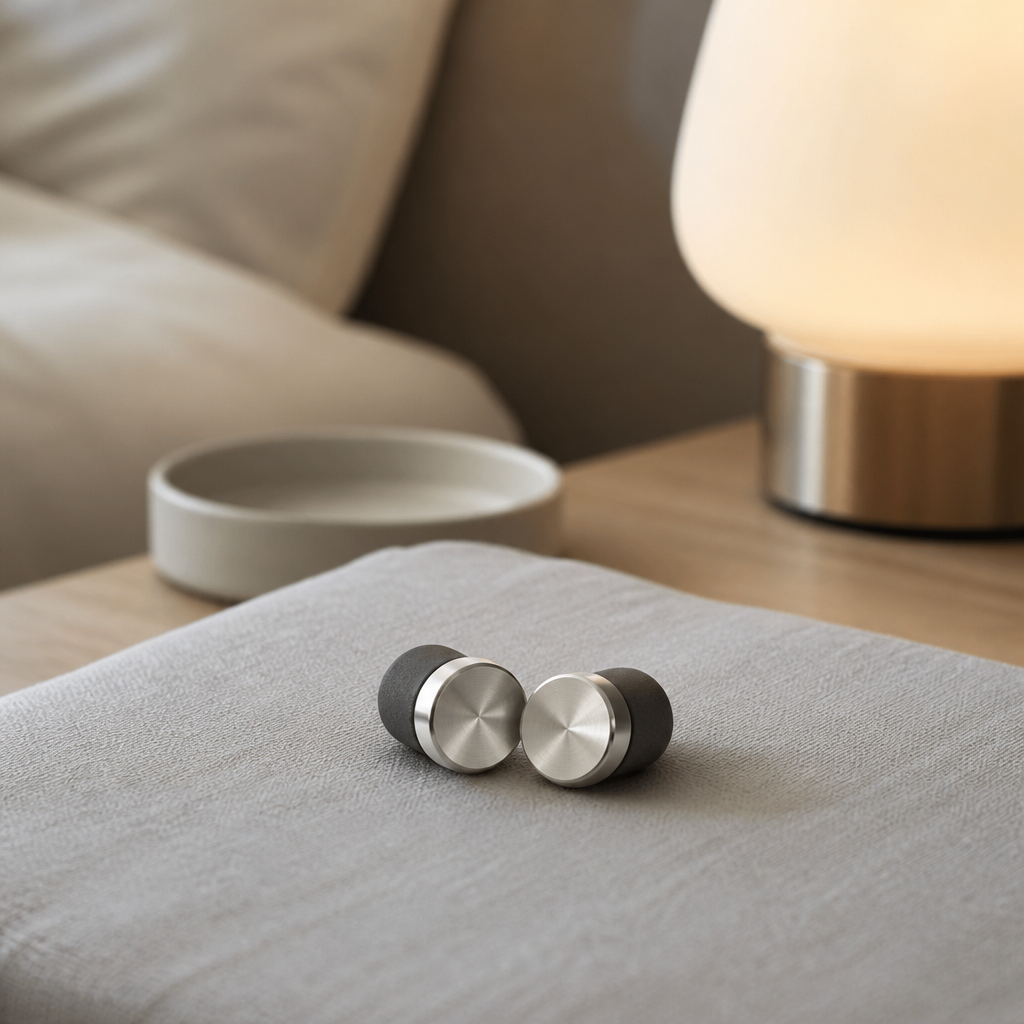
In practice, people describe the sensation as a volume knob stuck near maximum. A conversation in a café stops being background chatter and becomes a flood of competing voices. A tap running, a fridge humming or a page being turned can all register as sharp or painful.
Triggers are often everyday sounds that most people barely notice. The Cleveland Clinic lists people chatting, a car engine running, water running in a kitchen sink, household electrical appliances, and someone turning the pages of a book or newspaper as examples of sounds that can feel intolerable. Many people also find that high-pitched sounds such as whistling, screeching or cymbals are the worst.
Triggers are personal, and they shift over time. Someone may cope well with traffic and struggle badly with a dishwasher, and a week of poor sleep can make a normally tolerable sound unbearable. A simple trigger log, kept for two weeks with the time, place, sound and your stress level, is one of the most useful things you can bring to an audiologist.
Hyperacusis frequently appears alongside tinnitus, the ringing, whistling, clicking or roaring that you hear without an external source. The Cleveland Clinic notes that tinnitus is a more common condition related to hearing loss, but it also points out that not all cases involve tinnitus or hearing loss. That matters if your tests look normal and you still feel overwhelmed by noise, because your symptoms are still real.
Hyperacusis is not only a question of the ear. It is also a question of how the nervous system learns to treat sound, which is why the emotional side deserves as much attention as the hearing side.
Noise sensitivity is a broad term. Many people find certain sounds irritating, and some have a strong reaction to noise linked to anxiety, sensory processing differences, migraines or a stressful environment. Those experiences are real and worth taking seriously, but they do not always involve a change in how the ear and auditory nerve process loudness.
Hyperacusis is the more specific diagnosis. The sound itself becomes physically intolerable across a range of volumes, and the reaction often lingers after the sound stops. One audiology guide describes it as a condition affecting the inner ear that is most often found in people who have had noise-induced hearing loss, although the clinical picture is broader than that.
If a loud restaurant leaves you tired and irritable but you can still enjoy the meal once you move to a quieter table, you are likely dealing with ordinary sensitivity. Most people can plan around that. They choose seats near walls, carry earplugs in a bag and leave early.
The line gets blurry when the reaction spreads. If you start avoiding shops, skipping family gatherings or leaving a job because of how sounds make you feel, the issue has moved past preference. That is the point at which a formal assessment is worth the time, even if you have been managing things yourself.
Several signs are worth raising with a clinician: pain or discomfort from everyday sound rather than simple annoyance, a reaction that lasts minutes or hours after the noise stops, ear pain, and ringing. The audiology guide also lists difficulty sleeping, anxiety and depression among the symptoms that can come with the condition. Keep a short note of which of these you notice, because it helps a clinician separate hyperacusis from other causes.
Most people with hyperacusis avoid sound at some point, and that reflex is understandable. Avoidance buys short-term relief, but it often narrows your life. The Cleveland Clinic notes that some people avoid social situations to reduce the risk of intense loudness, and that the condition can leave you feeling irritable and anxious.
The trap usually works like this. You avoid a sound, the next exposure feels worse because you have had no practice with it, and your brain learns to treat the sound as a threat. Over months, the list of tolerable places gets shorter. Clinicians generally caution against total sound avoidance for this reason.
The same logic applies to ear plugs. They help when you use them to get through specific situations, and they become a problem when they turn into the only way you engage with the world. A pair in your bag for a difficult shift is a tool, but a pair in your ears from breakfast to bedtime is a wall.
The audiology guide lists several treatment routes: medication, hearing aids, tinnitus masking devices, wearing earplugs, and avoiding certain triggers. The Cleveland Clinic states that there is no single cause or cure that works for everyone, but that therapies can help treat the symptoms. The most effective plans tend to combine a few of these rather than relying on one device.
A realistic plan starts with an assessment by an audiologist or ENT, then adds sound management, then gradual, planned exposure to manageable sounds if your clinician recommends it. Ear plugs fit in as protection during the hardest parts of the day, not as the whole plan. The same guide also states that hyperacusis is not curable but that steps can keep it from getting worse, which is why early attention matters.
Ear plugs help by reducing the amount of sound that reaches your ear, which lowers the overall load on a system that is already overreacting. A pair rated at roughly 32dB of noise reduction, like the metal-bodied design ATTENU8 makes, takes the sharp edge off many everyday sounds. The result is not silence, but a level where a conversation or a station announcement becomes something you can tolerate for longer.
The biggest difference for most people is not the moment a siren goes off. It is the background hum of an open-plan office, a supermarket or a busy street that wears you down over an afternoon. Wearing plugs for a planned stretch, such as a commute, a shift or a lunch in a loud room, keeps that background from building into a full flare.
Use them deliberately. Decide before you walk into a space, not after the discomfort starts, because a plug inserted during an acute spike usually arrives too late to prevent the reaction you were trying to avoid.

Some sounds are sudden: a dropped tray, a car horn, a hand dryer, a name shouted across a platform. Those are the moments when hyperacusis tends to produce the strongest pain or fear. Carrying plugs in a small case, or in a coat pocket, means you can insert them within seconds rather than walking away in distress.
Pro tip: Practice inserting your plugs at home in a quiet room before you need them in public. Most people fumble the first few tries under stress, and a rehearsed insertion becomes quick once it is routine.
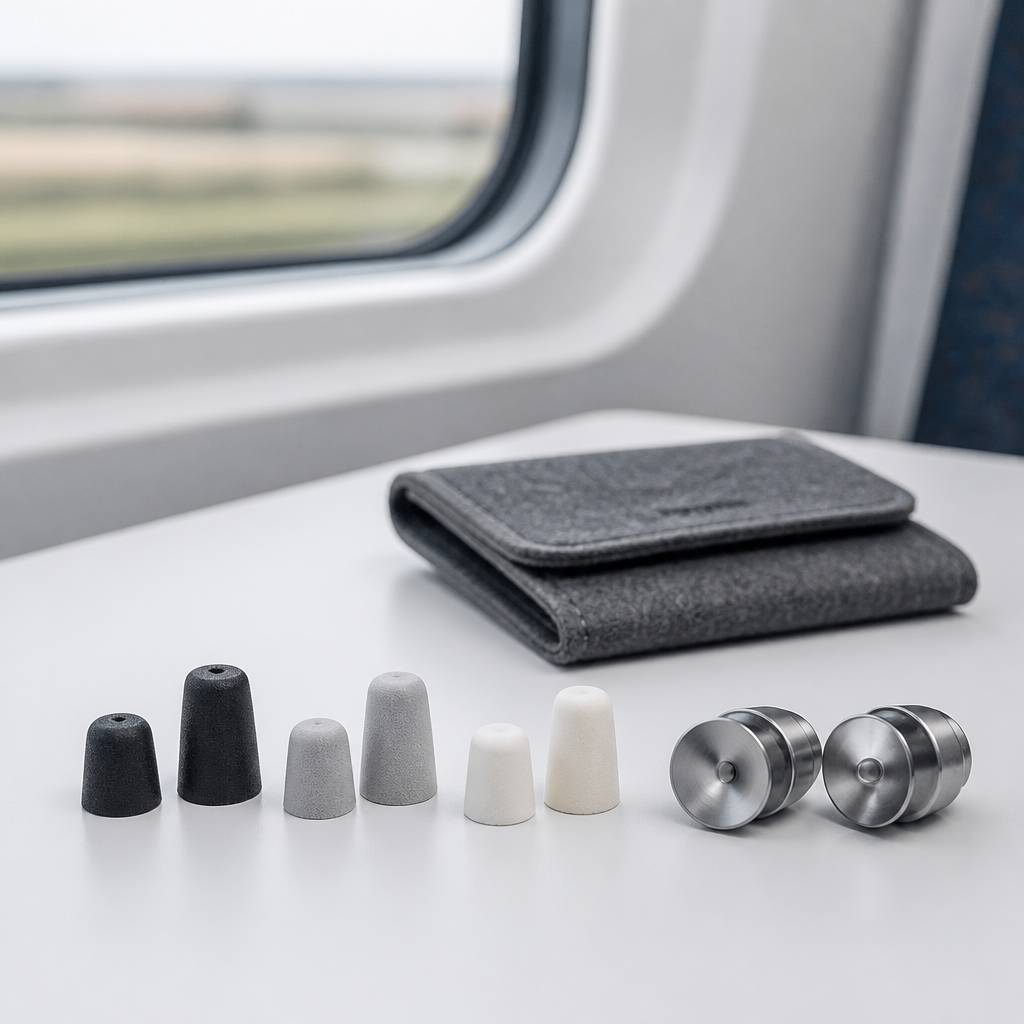
Fit decides almost everything. A plug that leaks reduces protection and lets in the sharp, high-frequency sounds that are often the most painful for people with hyperacusis. A plug pushed too deep can cause pressure and soreness, which makes you remove it just when you need it. ATTENU8 supplies three foam tip sizes, XS, S and M, so the goal is to find the one that seals without pressure.
Start with the size that feels smallest but still stays put when you move your jaw. Roll the foam tip into a thin cylinder, insert it, and hold it for 20 to 30 seconds while the foam expands. If your own voice booms or you hear a whistle when you yawn, the seal is off. Try the next size and repeat the check.
In practice, many people end up in S, but ear canals vary, and some people with narrow canals need XS to avoid soreness. Do not judge the fit by comfort in the first minute, because a proper seal can feel strange until the foam settles.
The metal body is designed to last, and the foam tips are the part that wears out. Plan to replace them every 6 to 8 weeks, or sooner if they feel hard, crumble or no longer expand properly. A tired tip seals poorly and can trap earwax, so a worn tip is not only less comfortable, it is less effective.
Pro tip: Write the date you fitted each new tip on the case or in your phone calendar. A fixed schedule is easier to follow than guessing when a seal has started to fail.
Ear plugs are one tool among several, and they suit some situations better than others. The table below compares three approaches that people commonly use alongside professional care. Each has trade-offs, and the right choice depends on whether you need protection for a few hours or for a full night.
| Approach | What It Does Well | Where It Falls Short |
|---|---|---|
| Disposable foam ear plugs | Inexpensive, easy to carry, and effective when fitted correctly | Single use, so you replace them constantly, and the fit can vary from pair to pair |
| Reusable metal-bodied ear plugs with foam tips (ATTENU8 design) | Stable reusable body, three tip sizes, rated at roughly 32dB of noise reduction | Needs a fit check, foam tips must be replaced every 6 to 8 weeks, and the upfront cost is higher than a single pack of foam |
| Sound generators or white noise devices | Mask low background sound and can help you fall asleep | Do not reduce the impact of sudden sounds, and can add to your overall noise load if the volume is set too high |
Custom-moulded plugs fitted by an audiologist are a further option, particularly for people who need consistent protection every day. They cost more and take longer to arrive, so they usually make sense once you know which environments you need to manage. Whichever you choose, the comparison works best when you bring the results to your clinician rather than deciding alone.
Three situations come up again and again for people with hyperacusis and noise sensitivity: sleep, travel and work in loud environments. Each one calls for a slightly different approach, and the common mistakes differ too.
Sleep is where poor sound tolerance costs the most. Traffic, a partner’s breathing, a neighbour’s door or a dripping tap can keep you awake, and a night without rest makes the next day’s sounds feel even louder. The audiology guide lists difficulty sleeping among the symptoms that can come with the condition, so it is worth treating sleep as a priority.
A workable bedtime setup includes plugs with a fit you have already tested, a dark room, and a low, steady background sound if silence feels unbearable. Remove the plugs if you need to hear something important, such as a smoke alarm. Avoid wearing plugs every night without a break unless your clinician advises it, because the ear canal can become irritated and the seal can change over time.
Planes, trains and buses combine constant low rumble with sudden announcements and slamming doors. A pair of plugs in a small case turns a difficult journey into one you can finish. Put them in before the engine noise peaks, not once the carriage has already overwhelmed you, and keep your tips clean and dry so the seal holds through the trip.
People who work around heavy machinery, drills or firearms face a different problem. Their hearing needs protection from damaging sound levels, and their sensitivity may already be high. For these settings, choose plugs against the requirements of your workplace and the hearing protection programme your employer provides, and fit them properly at the start of every shift.
Anyone who notices new pain, ringing or a change in sound tolerance after loud work should book a hearing assessment rather than adding more protection and hoping the symptoms pass. Early attention makes a practical difference, because the guidance on hyperacusis consistently points to assessment as the first step.
No. Ear plugs do not cure hyperacusis, and the Cleveland Clinic notes that there is no single cause or cure that works for everyone. They help by lowering the sound load during specific situations, which can make daily life more manageable while you work on a broader plan with a clinician.
Occasional daily use is not automatically harmful, but wearing them for all waking hours can increase sensitivity over time because your ears and brain get less practice with ordinary sound. Use them for planned situations, remove them at home when it is safe, and ask an audiologist for a schedule that fits your symptoms.
Pain or intense discomfort from everyday sounds, reactions that continue after the noise stops, and ear pain or ringing are strong signals. Only a hearing assessment by an audiologist or ENT can confirm the diagnosis, so book a test rather than relying on a guess.
Every 6 to 8 weeks is the schedule for ATTENU8 foam tips, or sooner if they harden, crumble or stop expanding. Keep the metal body in use and replace only the tips.
Many people try S first, but ear canal size varies. Test XS, S and M, and choose the smallest tip that seals without pressure or whistling when you speak or yawn.
If you have tried ear plugs for hyperacusis or noise sensitivity, tell us which tip size and situations worked for you and which ones were hardest to manage.
We would love your feedback and any insights you would share with others. What perspective would you add?

