


 0

Most people know the feeling of walking out of a loud restaurant or off a noisy shift and feeling oddly drained, irritable, and unable to think straight. Your ears may not hurt at all, yet your brain has been working hard the whole time to separate speech from background noise. That load has a name: auditory fatigue, sometimes called listening fatigue. This guide explains what it is, why it builds up, how to recognize it, and how to give your ears a real break, including where reusable ear plugs help and where they don’t.
| Key Insight | Explanation |
|---|---|
| Fatigue is a brain problem first | Auditory fatigue is exhaustion from processing sound. The effort happens in the brain, so it can drain focus and energy even when nothing feels painful. |
| Following speech over noise is the costliest task | Picking out one voice over traffic, machinery, or a crowd takes far more effort than hearing a quiet room. Background noise is the main multiplier. |
| Schedule 15 to 20 minutes of quiet every day | Reading, walking without headphones, or sitting in a quiet room gives your brain a break from decoding sound. Do it before the evening slump, not after. |
| Reduce loudness instead of just tolerating it | Reusable ear plugs lower the overall level of sound reaching your ears, which lowers the effort your brain spends on it. They do not make speech clearer. |
| Persistent fatigue with hard conversations needs a hearing check | Clinical guidance ties listening fatigue most closely to hearing loss. If you struggle to follow conversations, book an audiologist evaluation rather than guessing. |
| Keep the fit and the tips fresh | Replace foam tips every 6 to 8 weeks. Worn or misshapen tips seal poorly, so you get less reduction and more strain from trying to hear around the gap. |
Auditory fatigue is the tiredness that builds up when your brain spends hours decoding sound. It is a mental and sometimes physical exhaustion, not a condition inside the ear itself. The American Academy of Audiology describes the extra brainpower needed to follow speech as listening effort, and it notes that cognitive resources are limited.
That limit is the whole story. When you spend effort on a conversation in a loud room, you have less left for reading, remembering, or making decisions. The effect is cumulative. A noisy commute, an open-plan office, and a dinner with a lot of overlapping talk can leave you wiped out by early evening even though nothing you heard felt painful or too loud.
Most clinical material frames listening fatigue around hearing loss, because people with reduced hearing must shift more resources toward listening than people without it. In practice, though, anyone can hit that wall. A person with normal hearing working a loud shift or sleeping in a noisy hotel is still asking the brain to sort a constant stream of sound, and the bill comes due later in the day.
The term “auditory fatigue” is used loosely across consumer and clinical writing, and you will also see “listening fatigue” for the same experience. What matters for you is the practical pattern: fatigue tracks the amount and difficulty of sound you process, not just how loud it was at its peak.
A person with typical hearing does not usually experience the heavy kind of fatigue described in clinical guidance. The auditory system captures sound cleanly, and the brain processes it with relatively little strain. Fatigue appears when the brain has to fill gaps, sort competing sounds, or push through a volume of noise that keeps demanding attention.
Here is the mechanism I explain to people who come to us after a rough month on a job site or a few bad nights in a hotel. Your ears send a signal, and your brain has to decide what matters. Every sound you choose to follow, and every sound you have to ignore, costs something.
When some frequencies are harder to catch, the brain compensates by using context, lip movement, and guesswork to rebuild the message. That reconstruction is slow and tiring. It is why people with reduced hearing often describe conversation as work even when they can technically hear the other person.
The same thing happens in a noisy environment with normal hearing, just on a smaller scale. Consonants get smeared by echo or machinery, and your brain works to recover them. You may not notice the effort while it happens, which is exactly why it shows up later as a headache or flat mood.
Steady noise is tiring because your attention never fully switches off. A ventilation system, traffic hum, or a crowded café keeps the auditory system active in the background. Sudden spikes are worse because they trigger a startle response that pulls focus each time, even when the spike is short.
In my experience, unpredictable noise does more damage than steady noise at the same level. Your brain can adapt to a predictable hum, but a series of unexpected bangs, alarms, or shouted instructions keeps you on alert. That alert state is expensive, and it accumulates faster than most people expect.
Auditory fatigue rarely feels like sore ears. It feels like brain fog, low patience, and a need to lie down after a social event. Clinical sources describe it as mental and sometimes physical exhaustion, and that matches what people report: they feel flat, not injured.
That is why people often misread the problem. They assume they need more sleep or more coffee, when the real issue is that their brain has spent the day decoding sound. Reducing the sound load, not only adding rest, is what changes the outcome.
Ear fatigue usually shows up as a group of small, nonspecific complaints rather than one dramatic sign. Consumer guidance on listening fatigue lists mental exhaustion, low energy, difficulty concentrating, social withdrawal, memory trouble, irritability, headaches after long listening, and tension in the face, neck, or shoulders. Many people recognize two or three of these before they connect them to sound.
The timing is the clue. Symptoms that appear after conversations, meetings, or long periods in noisy spaces, and ease during quiet time, point toward listening load. Symptoms that stay the same regardless of your surroundings point somewhere else and deserve a medical opinion.
Watch for trouble remembering details from a conversation you just had, losing your place in instructions, or needing to ask people to repeat themselves. Irritability is common too, especially when you are the person who feels overwhelmed by a room but cannot explain why. These signs often appear first at work, where the demands are constant and the noise is high.
A simple test I suggest: after a loud day, notice whether you can still follow a written paragraph or a short podcast-free podcast-style story at home. If reading feels like effort and you keep rereading lines, your brain is probably running low on spare capacity.
The physical side often shows as tension in the jaw, neck, and shoulders, along with headaches that build after long periods of listening. People who grind their teeth or hunch over phones and tools tend to notice this more, because the muscles around the head are already working hard. Headache after noise exposure is a signal to lower the load, not to push through.
Fatigue becomes a pattern when it shows up on the same days each week, after the same commute, or after the same type of shift. Track it for two weeks in a notes app, with a line for the loudest environment you were in and a line for how you felt at 8 p.m. The pattern usually points to the specific source of your overload, which makes the fix much easier to choose.
Noise overload is rarely one catastrophic event. It is a set of ordinary exposures that stack up across the day. The people we hear from most often fall into three groups: light sleepers who lose rest to nighttime sound, frequent travelers who spend hours in transit, and workers in loud environments such as construction, manufacturing, and military settings.
Each group needs a different kind of break, and treating them the same is a common mistake. A quiet room helps a commuter very little if the commute is the problem, and a sleep solution does not solve a noisy shift. Start by naming the environment that drains you most, then pick the intervention that matches it.
Light sleepers often wake to small sounds that others never notice, such as a partner’s breathing, a neighbor’s door, or a fridge cycling on. Each waking, even a brief one, interrupts sleep and leaves you tired the next day. That morning fog is part of the same auditory fatigue cycle, because the brain never got full quiet to recover.
For many light sleepers, lowering the overall sound level at night does more than any single gadget. Close the bedroom door, move the bed away from the noisiest wall, and set a consistent wake time so your sleep rhythm is not disturbed by surprise sounds. Foam or reusable ear plugs can then take the remaining edge off the sounds you cannot control.
Planes, trains, and busy hotels combine steady engine noise with unpredictable announcements and voices. The steady part is tiring, and the unpredictable part keeps you alert. Many travelers arrive at their destination feeling worse than the flight itself should have caused, which is a classic sign of accumulated listening effort.
On a long trip, plan one hour per day with no headphones and no loud places. Use that hour for a walk, a quiet café table, or a room with the door shut. A common mistake is wearing noise-canceling headphones at high volume for the whole journey, which removes the outside noise but leaves your brain processing a constant stream of audio on top of it.
Workers in loud environments are the group where hearing protection is most important, and where listening fatigue is often ignored. Tools, machinery, and crews shouting over each other create a sound load that runs for an entire shift. By the end of the day, workers often report difficulty following instructions and feeling drained.
Protection needs to be worn consistently, not only when someone remembers. Many workers take their plugs out to talk, then forget to put them back, which lets exposure climb in the exact moments when the noise is worst. Pick a plug that you can insert correctly every time and carry a spare set, so you are not tempted to go without.
A real break means reducing the sound your brain has to process, then giving it time without demands. Quiet time alone helps, and lowering exposure at the source helps more, especially if you cannot remove the noise from your day. The most effective routines combine both.
The guidance I give most often is simple: decide in advance when your ears will rest, and decide in advance what protection you will use when rest is not possible. Relying on willpower in the middle of a loud day almost always fails.
Aim for 15 to 20 minutes of genuine quiet after your hardest listening block, such as a long meeting, a school pickup, or a loud lunch. Sit somewhere the sound is low, avoid screens with audio, and let your mind wander or read silently. The point is to let your brain stop sorting sound, not to meditate.
Evenings matter just as much. If you spend your day in noisy spaces, keep at least one evening block free of television, music, and background podcasts. Reading in a quiet room, cooking with the radio off, or a short walk without earbuds all count. Patterns of quiet at night often improve how you feel the next morning.
If you use headphones or earbuds, keep the volume at a level where you can still hear someone talking to you at a normal conversational volume. Many people push volume up to block noise, which only adds a second source of load. Clinical advice on earbuds also warns against sealed earbuds at high volume, since they can keep sound focused in the ear canal.
Look at the room too. Soft furnishings, closed doors, and a seat away from speakers or machinery can reduce the load more than any personal device. When you can change the environment, do it first, then use protection for what remains.

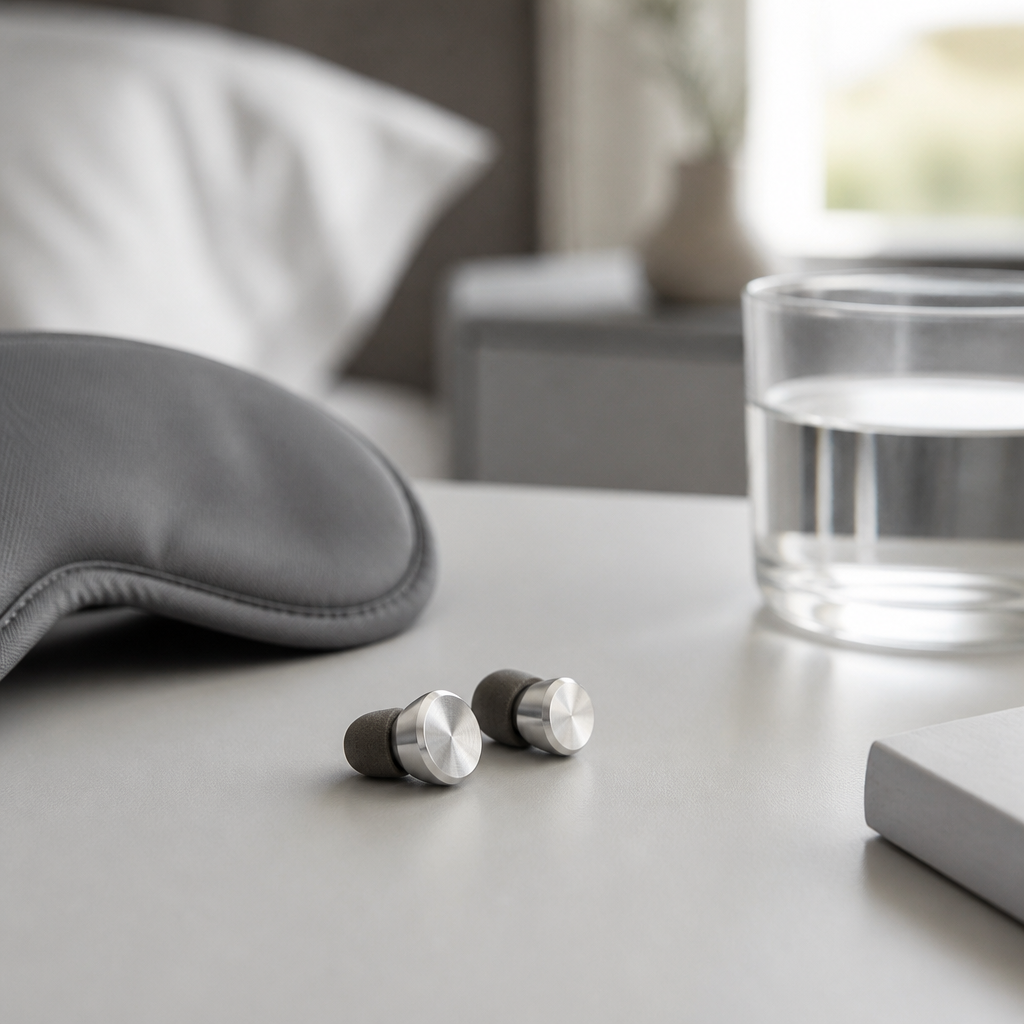
Reusable ear plugs work only if they fit and stay clean. Our metal-bodied design uses a concave aluminium body with three sizes of soft memory foam tips (XS, S, and M), rated for approximately 32dB of noise reduction. Choose the tip size that seals without pain, then check the seal by speaking aloud. Your own voice should sound muffled but not hollow.
Replace the foam tips every 6 to 8 weeks rather than waiting for them to crumble. Tips that have hardened, collapsed, or picked up wax and dirt lose their seal, and then you get less reduction and more strain from trying to hear around the gap. Keep the metal body clean with a dry cloth, and store it in a case so the tips do not collect lint.
Pro tip: Insert plugs by pulling your ear up and back, then pushing gently inward while the foam expands. Do this in the same way every time, and you will get a consistent seal instead of a plug that slowly works loose through the day.
Think of attention as a daily budget. Every sound you have to decode spends some of it, and unwanted noise is the expense you never agreed to pay.
Different tools solve different parts of the problem. Quiet time restores your brain, but it cannot reduce noise you have to work in. Reusable ear plugs lower the load while you are exposed, but they do not repair hearing or make speech clearer. A clinical evaluation addresses the underlying hearing picture, which matters most when conversations are hard even in calm rooms.
The table below compares the three approaches we see people combine most often. Most people need at least two of them, and the right mix depends on whether your fatigue comes from your environment, your sleep, or your hearing.
| Approach | Where It Works Best | Main Limitation |
|---|---|---|
| Scheduled quiet time (reading, walking, a quiet room) | Daily recovery after meetings, school runs, or loud social events | Does nothing for noise you cannot leave, such as a shift or a flight |
| Audiologist evaluation and fitted hearing aids | Persistent fatigue and trouble following conversation even in calm rooms | Requires clinical testing and fitting time, and does not replace protection in loud spaces |
| Reusable metal-bodied ear plugs with foam tips | Commutes, light sleep, and loud workplaces where you need consistent protection | Lowers overall loudness rather than improving speech clarity, and foam tips need replacing every 6 to 8 weeks |
If you only pick one, match it to the environment that drains you most. For a night-shift worker, that is usually protection plus a quiet sleep setup. For a parent with a busy office and a noisy home, scheduled quiet time combined with lower headphone volume often delivers the biggest change within two weeks.
Listening fatigue is closely tied to hearing loss in clinical guidance. People with hearing loss have to allocate more brainpower to understanding speech, so the fatigue often grows as the loss progresses. If you find yourself avoiding phone calls, asking people to repeat themselves often, or leaving social events feeling completely drained, a professional hearing evaluation is the right next step.
Audiology guidance recommends having your hearing evaluated and managed by a licensed audiologist. Clinical advice also notes that appropriately fitted hearing aids may reduce listening effort and susceptibility to mental fatigue. A 2013 study published in the journal Ear and Hearing examined how hearing aid use affected listening effort and mental fatigue during sustained speech processing, which is the reason clinicians take this symptom seriously.
Protection and rest still matter after a diagnosis. Hearing aids help you process speech, but they do not eliminate the value of quiet time or the need to protect your ears from loud noise. Treat the evaluation as one part of a plan, not a replacement for changing your daily sound load.
In most consumer and clinical writing, the two terms describe the same experience of exhaustion from processing sound. “Listening fatigue” is the more common phrase in hearing care, while “auditory fatigue” is widely used for the general sound-processing load people feel in noisy places.
Yes, if the problem is a high overall sound level in your environment. Lowering that level reduces the effort your brain spends processing it. Ear plugs do not make speech clearer, so they will not fix fatigue that comes from hearing loss on their own.
A practical starting point is 15 to 20 minutes of genuine quiet after your hardest listening block, plus at least one quiet evening block. Adjust based on how you feel. If you still feel drained the next day, increase the quiet time or reduce exposure at the source.
Replace foam tips every 6 to 8 weeks, or sooner if they look hardened, misshapen, or dirty. Worn tips lose their seal, which reduces protection and can leave you straining to hear around the gap.
See an audiologist if fatigue is persistent, you have trouble following conversations even in calm rooms, or you avoid calls and social events because of how hard listening feels. A licensed audiologist can evaluate your hearing and discuss whether hearing aids or other options would reduce your listening effort.
For most people, yes, provided they are clean, fit comfortably, and are not causing pain or irritation. Stop using them and speak to a doctor if you notice ear pain, discharge, or itching, because those symptoms need a medical opinion.
What does the noisiest part of your day look like, and which of these breaks have you actually managed to keep?

