


 0

Most packing lists cover chargers, adapters, and a spare pair of socks, then stop. The frequent traveller knows the real failure point is sleep. A cabin that hums for eleven hours, a hotel corridor with a lift that never stops, and a neighbour who snores through thin walls can wreck the first two days of any trip. That is why a solid travel earplugs packing list should treat hearing protection as seriously as a passport. In this guide, we explain why reusable earplugs earn a permanent place in every carry-on, how to choose the right fit, and where they outperform disposable foam.
| Key Insight | Explanation |
|---|---|
| Pack earplugs in the carry-on, not the checked bag | Checked luggage can be delayed or lost, and you still need protection on the first night at a new destination. |
| Choose the tip size by testing the seal | Try XS, S, and M at home, then pick the one that stays put when you yawn, chew, and lie on your side. |
| Replace foam tips every 6 to 8 weeks | Write the date you started a fresh set of tips so the replacement window is easy to track on the road. |
| Treat the decibel rating as a guide, not a guarantee | The approximately 32dB figure is the manufacturer’s rating, and real-world results depend on how well the tip seals your ear canal. |
| Reusable pairs cost less per trip over time | You pay once for the metal body and then replace only the foam tips, which removes the cost and waste of buying disposables for every journey. |
| Keep one pair dedicated to the travel case | A dedicated case means you never scramble for protection at 2am in a dim cabin or a late-night hotel check-in. |
| Check suitability before using earplugs at work | Compare the stated rating with your workplace requirements and follow your site’s hearing conservation rules. |
Earplugs belong in the same pocket every trip, which is the simplest way to make sure they are there when the noise starts. Here is how the frequent traveller can build that habit.
A carry-on is the one bag that never leaves your side, which makes it the right place for the items that protect your sleep. Checked luggage gets delayed, rerouted, or lost more often than most travellers want to admit. When that happens, the first night at a new destination is the one you cannot afford to lose, and a pair of earplugs in your jacket pocket is cheaper insurance than any hotel upgrade.
The packing list for noise is simple. You need something that fits your ears, survives being squashed under a laptop, and needs no thought when you are tired at midnight. Most people skip this because they assume the hotel will be quiet. In practice, hotels are rarely quiet on the nights that matter most, such as late-evening arrivals after a long-haul flight, when the room next door is still awake.
For us, a sleep kit is short: one pair of earplugs in a hard case, a spare set of foam tips, and a small eye mask. The earplugs do the heavy lifting, the tips are the maintenance item, and the mask handles light. Keep the kit in the same pocket every trip so you never have to hunt for it.
The best travel gear is the gear you do not have to think about. If protection lives in the same place every time, you use it every time.
Resist the urge to build a bigger kit. Extra gadgets add weight and clutter, and they tend to get left in hotel drawers. A small, consistent kit gets used, and a used kit is the only kit that does its job.
Cabin noise on a long flight is mostly a steady, low-frequency drone from the engines and airflow. That kind of noise is less startling than a door slam, but it wears you down because it never stops. Foam and well-fitted reusable tips tend to handle this type of sound better than the thin plastic and wax options some travellers try first.
Hotels are a different problem. Noise arrives in bursts: lifts, corridor voices, early housekeeping, and traffic outside a window that does not seal well. Bursts are harder for the brain to ignore, which is why light sleepers often wake more in hotels than at home.
On a flight, you need protection that stays put when you shift in a narrow seat or press your head against a window. On a hotel bed, you need comfort for a side sleeper who may roll onto an ear several times a night. A design that sits deep and feels light matters more than any headline number.
Earplugs should not replace a better room. If your room faces a busy road, ask for a quieter floor at check-in. The earplugs handle whatever noise remains.
Regional trains, sleeper services, and overnight coaches add another layer. Carriage noise and public announcements can ruin a rest stop, and earplugs are often more useful for a daytime nap in a seat than in a bed. Keep a pair within reach of your seat, not buried in a checked bag.
A decibel rating tells you how much noise a product can reduce under test conditions. It does not tell you whether the tip will seal in your ear canal at 3am after a long day. Our product is rated at approximately 32dB, but that number only means something if the fit is right.
Ear canals vary in width and shape, and a tip that feels fine in a shop can loosen after an hour of sleep. Treat fit as the first specification, not an afterthought.
Our tips come in XS, S, and M, and that range covers most adults without forcing a compromise. A tip that is too large creates gaps, while one that is too small slides out when you turn over. Try each size at home before a trip, not in a departure lounge.
Insert the earplug, then cup your hands over your ears and listen for a clear drop in sound. If the room goes quiet and the seal feels stable, you have a candidate fit. Next, yawn and chew, because jaw movement is where many pairs fail. Finally, lie on your side for ten minutes. If you feel pressure or the tip shifts, drop down one size.
Pro tip: Test your fit at home on a normal evening, not on the morning of a flight. Ear canals can feel different when you are tired or congested, so a single check tells you far less than a few nights of practice.
Disposable foam earplugs are cheap at the point of purchase and easy to find almost anywhere. The trade-off is that you throw away a pair after one use, and many travellers end up buying them in bulk and forgetting them at home. For a frequent traveller, that adds up to a steady stream of waste and a recurring cost you never planned for.
A reusable pair changes that equation. You pay once for the body, then replace only the foam tips every 6 to 8 weeks, which keeps the hard part of the kit in use for years. The cost per trip drops quickly once you travel several times a year.
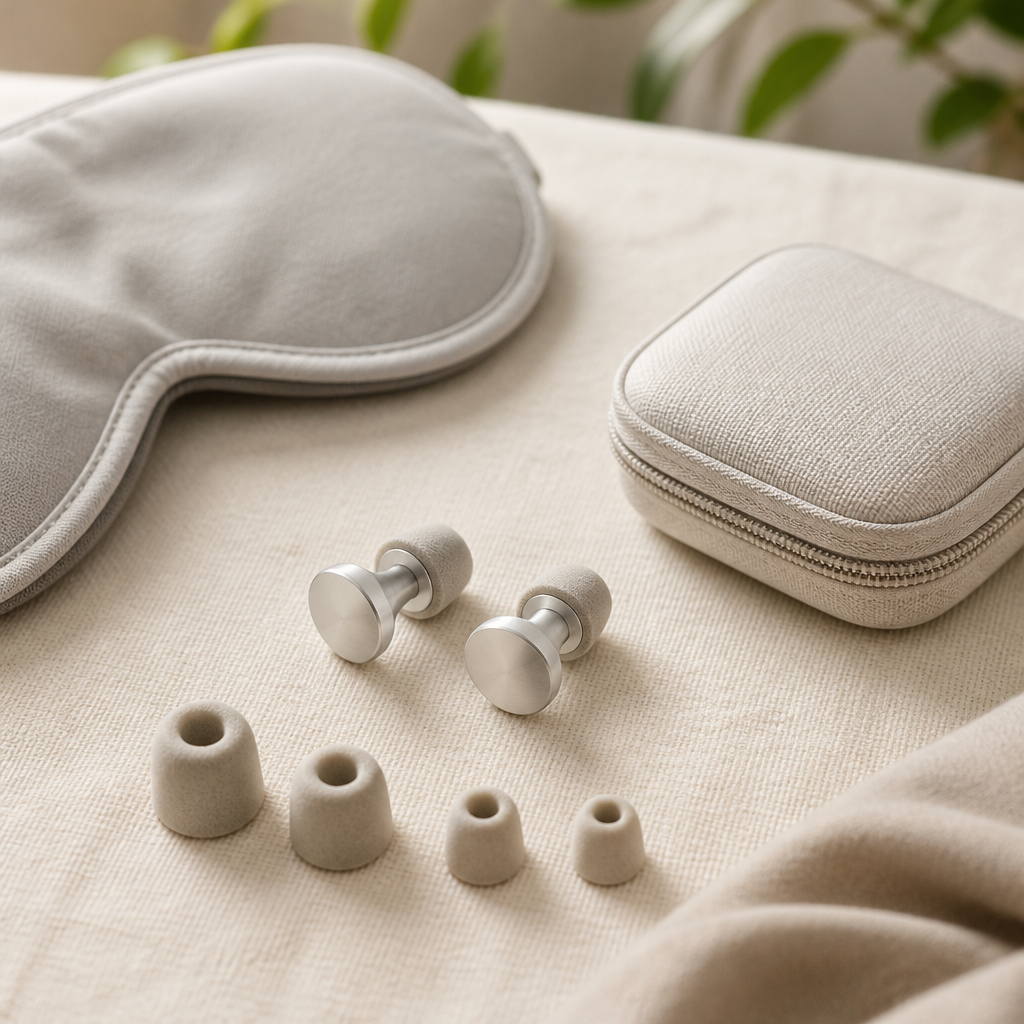
Foam tips are soft, compressible, and effective at reducing broad, steady noise. They are also the part that wears out, so the replacement schedule matters more than the rating on the box. Keep a spare set in the case so a worn tip never becomes the reason you skip sleep.
Wash the metal body with mild soap and water, dry it fully, and avoid storing it in a damp toiletry bag. Keep the tips dry as well, because moisture and earwax build-up shorten their useful life. Hygiene is the real reason to replace tips on schedule, not only comfort.
| Approach | Best For | Main Drawback |
|---|---|---|
| Disposable foam earplugs | Occasional travellers on a tight budget | Single-use waste, and you must buy a new supply for every trip |
| Reusable pairs with fixed silicone tips | Short trips where you want a low-cost, quick fix | The tip cannot be swapped if it loses shape, so a poor fit can mean replacing the whole product |
| Reusable metal-bodied pairs with replaceable foam tips (the ATTENU8 approach) | Frequent flyers, light sleepers, and workers who need repeat hearing protection | Higher upfront cost, and you must keep up with tip replacement every 6 to 8 weeks |
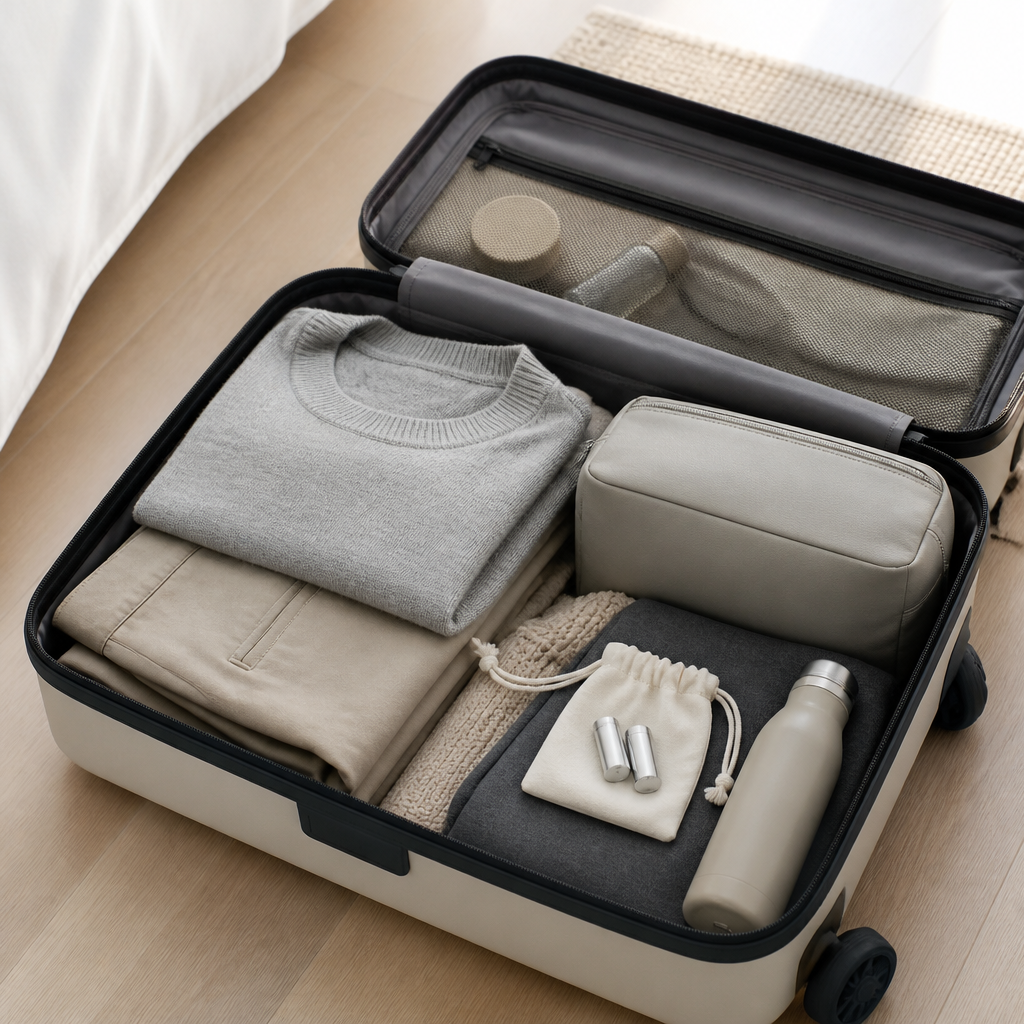
Position matters. Keep your earplugs in an outer pocket or small top compartment where you can reach them without unpacking the whole bag. Digging through a backpack at the gate is how pairs get left behind on the seat.
Store them in a hard case, not loose in a pocket with keys and coins. Grit and small metal objects can damage tips, and a crushed case is useless when you need it most.
A checked bag is the worst place for protection. If it is delayed, you spend the night without your tools. Our advice is simple: the earplugs travel with you, and the spare tips travel in the same pouch.
Add earplugs to your packing list as a named item, not a vague line such as “sleep stuff”. On a three-day city break you may only need one pair. On a longer rotation with overnight coaches, pack the spare foam tips as well, so one lost item does not end the trip.
Check tip condition the week before you leave. If the foam looks compressed, flattened, or discoloured, swap it now rather than discovering the problem on a night flight.
Pro tip: Write the date you fitted a fresh set of tips on a note in your phone or on the inside of the case lid. It takes seconds and makes the 6 to 8 week replacement window easy to track.
Overnight flights are where earplugs earn their keep. The cabin lights dim, the engines settle into a drone, and the people around you finally go quiet, but that quiet is broken by call bells, meal trolleys, and a neighbour’s phone chiming. A good seal covers the steady sound, while a fixed routine handles the rest.
The sequence we recommend is simple. Put the earplugs in before the cabin dims, add the eye mask, and leave the tips in until you land. Reading or scrolling after the earplugs are in tends to keep you alert, so close the screen first.
Time zone shifts make light sleep even lighter. When you arrive at a hotel during the day, the sound of daytime life can stop you from napping properly. Earplugs help you take a short recovery sleep without waking at every trolley or door.
Plan naps in advance and use the same earplug routine each time. Repetition trains your body to wind down as soon as the case opens.
If a tip works loose at 2am, do not force it back in. Ease it out, check it for wax or debris, and reseat it gently. If it still will not hold, switch to the next size. Carry the spare tips so you are never stuck without a working seal.
Many people who use our earplugs do not travel for pleasure. Site visits, plant floors, airside work, and field deployments all put people beside loud equipment for long hours. For them, earplugs are not a sleep aid but a daily safety tool that has to fit, stay comfortable, and be cleaned properly.
Be honest about the limits. A rating on the box is a test figure, and real protection depends on how well the earplugs are inserted and whether they stay sealed through a full shift. If your employer sets a required protection level, check the stated rating against that requirement and follow your site’s hearing conservation rules.
Some tasks produce constant noise, while others produce sharp bursts from impact tools or alarms. Earplugs work best for steady noise you can plan around. For sudden impacts or very high levels, your workplace may require additional protection, so do not treat one pair as a universal answer.
Daily users should clean the metal body after each shift and inspect tips for cracks or tears. Dust and dirt reduce grip and can irritate the ear canal. Replace tips on schedule even when they look fine, because wear is not always visible.
If you travel only once or twice a year, a cheap disposable pair may suit you well enough. Once you are on the road more often, a reusable pair with replaceable tips usually costs less per trip and produces far less waste.
Replace foam tips every 6 to 8 weeks, or sooner if they look compressed or discoloured, or if they no longer hold a seal in your ear.
Yes, earplugs are normally fine in hand luggage. Keep them in your carry-on so they are available during the flight and on arrival, and check your airline’s rules if you are carrying anything unusual in the same bag.
They reduce much of the broad, steady noise that gets through walls, but they cannot block everything. Very loud or sudden noise may still reach you, so pair them with a request for a quieter room when you book.
Test each size at home, then check the seal by yawning, chewing, and lying on your side for a few minutes. Choose the size that stays put, blocks the sound, and feels comfortable for a full night.
Tell us in the comments which trip taught you the most about sleeping with earplugs, and whether your current pair fits the way you need it to.

