


 0

Nobody warns you that the hardest part of the first months after birth is often not the lack of sleep itself, but the noise that keeps you from sleeping the hours you do get. A dishwasher, a partner’s breathing, a radiator clicking at 4 a.m., a car door two houses away. Each sound is small. Together they keep you in a shallow doze where everything lands. Ear plugs postpartum can cut that background layer, but only if you choose the right type, fit them properly, and keep the ability to hear your baby. Here is what actually works, and where ear plugs are the wrong tool.
| Key Insight | Explanation |
|---|---|
| Decide which sound you must still hear | Before the first night, name the sound you cannot miss, usually a baby crying or a monitor alarm, and test your setup against it. |
| Test during a daytime nap first | Put the baby in the same room, nap with the plugs in, and check that a normal cry still wakes you. |
| Fit beats price | Try all three foam tip sizes sitting up, then lie down and turn your head to check the seal. |
| Replace foam tips every 6-8 weeks | The seal loosens before the tips look worn, so replace on the calendar rather than by eye. |
| Use plugs for sharp noise, white noise for steady noise | Plugs handle a partner’s snoring or a slamming door, while a low, constant sound masks the background hum. |
| Split the night into blocks | One parent takes a set stretch of sleep while the other handles feeds, so each of you gets one unbroken block. |
| Get checked for ear symptoms | Ear pain, discharge, dizziness, or a sudden change in hearing means a clinician visit before you put anything in your ears again. |
Newborn sleep does not come in long blocks. A baby wakes to feed, the feed takes as long as it takes, and by the time you are back in bed your body is fully switched on. Even when the baby settles quickly, the adrenaline and the listening stay with you.
Noise makes this worse than most people expect. Sounds that do not fully wake you still push you out of deep sleep and into a lighter stage, so you feel unrested even when the clock says you slept for hours.
The most common culprits are not dramatic. The refrigerator cycling on, a neighbor’s television through the wall, a partner’s snoring, and the baby’s own grunts and snuffles all add up. The baby’s noises are the hardest to ignore because your brain is trained to treat them as urgent.
In practice, the sounds you mention most are usually the ones worth targeting first. Write down the three that wake you most often for a week and you will have a clear plan for what to block.
Many new parents wake at the first small sound, often before the baby has made a full cry. That reflex protects the baby, but it also turns harmless noise into a wake-up call. Reducing the background level gives your nervous system fewer reasons to stay on alert.
Ear plugs are a sleep tool, not a baby monitor. They work best when your problem is steady background noise, such as traffic, appliances, or a partner who snores. They work worst when you need to hear one specific sound at a specific volume.
Before you use plugs at night, decide what you must still hear. For most parents that is a baby crying in the next room or a monitor alarm. A well-fitting plug reduces sound across the range, so it will also soften a cry, and you need to know by how much.
Pro tip: Do a test run during a daytime nap with the baby in the same room. If you cannot hear a normal cry at a conversational volume, adjust the fit or the setup before you rely on the plugs overnight.
If you have ear pain, ear discharge, dizziness, or a sudden change in hearing after birth, see your doctor or midwife before adding anything to your ear canal. Ear plugs are not a nightly habit for everyone. A Wirecutter guide titled “You Shouldn’t Wear Earplugs Every Night” is a useful reminder that nightly use is not automatically the right choice, so give your ears a break on nights when you can sleep without them.
Fit matters more than most features when you are sleeping on your side with a baby on the other side of the bed. A plug that loosens after twenty minutes is worse than no plug, because it wakes you each time it slips. Reusable plugs only pay off if the seal holds through the whole sleep block.
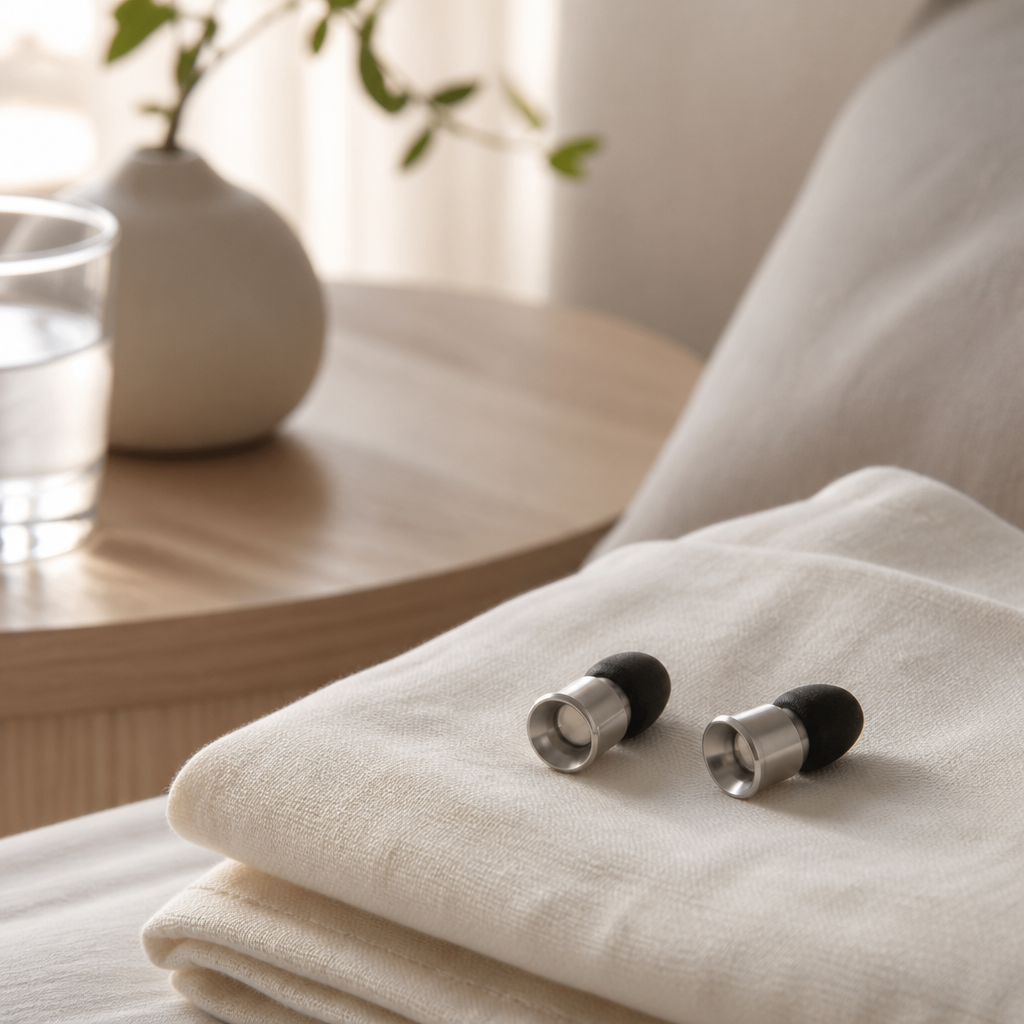
ATTENU8 ships with three foam tip sizes, XS, S, and M. Test each one during the day while you are sitting up, then lie down on your side and turn your head to check the seal. The right tip should sit at the opening of the canal, feel firm without pressure, and stay put when you move.
Pro tip: Insert the plug gently and do not push it deep. If it feels sore or sits uncomfortably, step down a size and try again in the morning rather than forcing a tighter fit at 3 a.m.
Foam tips wear down with ear wax and handling. Replace them every 6-8 weeks, not when they look obviously ruined, because by then the seal has already weakened. Put the replacement date in your phone so the reminder does not depend on your memory at 2 a.m.
Keep the metal body dry and store it in a case between uses so grit and moisture do not build up. That habit costs nothing and keeps the same pair comfortable for the long haul.
Some parents do better with a steady sound than with physical blocking alone. A 2025 review of white noise in maternal and neonatal care reports that it can help both mothers and newborns move into sleep more quickly, reduce sleep disruptions, and prolong sleep duration.
White noise is a constant, even sound. It masks sharp, irregular noises such as a door closing or a dog barking, because your brain has less contrast to react to. It works well for the low, steady hum of a house, but it does less for sudden spikes.
Using both tools can work well. The plugs reduce household noise and the steady sound covers what gets through. Keep the sound source out of the crib and set the volume low enough that you can still hear a cry from your bed.
Use the same test as before. If the combination makes it harder to hear the baby, drop one of the two layers rather than turning the sound up to compensate.
Most parents have tried some form of foam plug, a white noise device, or both. The table below compares the three most common approaches for postpartum sleep. The trade-offs matter more than the marketing, so read the right column before you buy.
| Option | Works well for | Falls short when |
|---|---|---|
| Disposable foam plugs | Low upfront cost and an easy first try | They must be compressed and reinserted each night, and you replace the whole pair regularly. |
| Reusable plugs with replaceable foam tips (ATTENU8) | A consistent seal, tips swapped every 6-8 weeks, and a metal body that lasts | You need to find the right tip size first, and they still block sound you may need to hear. |
| White noise machine or app on its own | No contact with the ears, and it can mask a partner’s snoring | It does little against sudden sharp noises and can be too loud near a baby’s sleep space. |
Read the table as a decision guide. If your main problem is a steady household hum, start with a sound source. If your problem is a snoring partner or a noisy street, start with plugs that you have tested.
Ear plugs help you sleep, but they cannot fix a schedule where one parent is on duty every night. The most effective change is splitting the night into blocks, so one person owns the first stretch and the other owns the second. Each of you gets one unbroken block instead of fragments.
Agree on a handover time, for example, one parent takes the early feeds and sleeps until a set hour, then hands over. The parent on duty handles feeds and diaper changes, while the parent off duty wears plugs in a separate room if possible. The handover should be a fixed time, not a feeling.
Rest you can plan for is rest you actually take.
Tell your partner which sound bothers you most, so they can help with the room setup. A shared plan also makes it easier to let go of the guilt of sleeping while the baby is awake.
Johns Hopkins Medicine advises new parents to keep a regular sleep schedule where possible, turning in and waking up at the same time each day. That is hard with a newborn, but even a loose rhythm helps your body anticipate rest. Aim for a consistent bedtime for the off-duty parent, even if the wake time moves.
BabyCenter recommends keeping your baby in a safe sleeping place close to your bed, so you can roll over, feed, and hopefully both get back to sleep quickly. That setup reduces the effort of each night feed, and it is the same setup that makes plugs safe to use, because you can still hear the baby from where you lie.
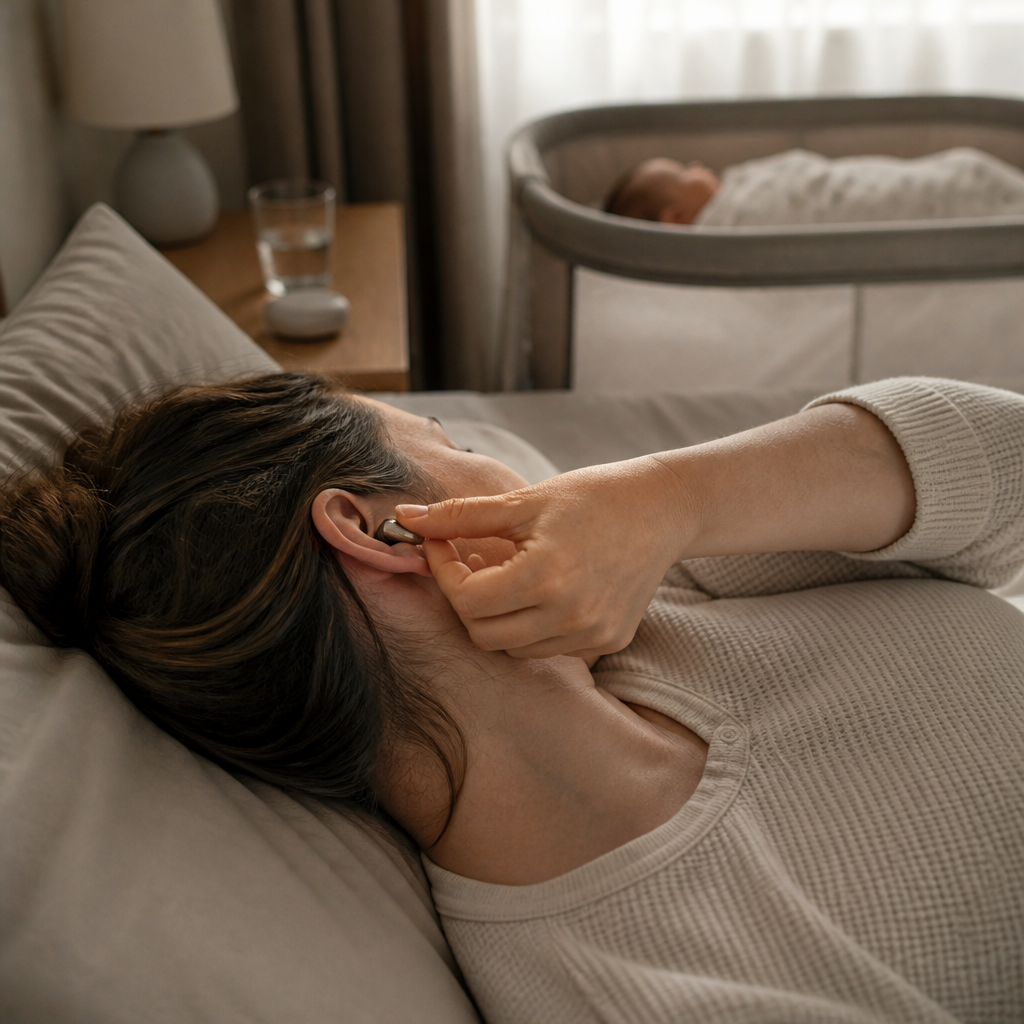
Keep a dim light, a glass of water, and a small case of plugs within reach of the bed. The fewer decisions you make in the dark, the faster you fall back asleep. Keep the monitor in the same spot every night so you never have to search for it.
Naps are the cheapest place to test a setup. Lie down with the plugs in while the baby sleeps nearby, and note whether you hear a cry clearly enough. Use daytime naps to find the setup that works before you need it at 3 a.m.
Yes, but test the setup first during a nap. Make sure you can hear a normal cry, keep the baby in a safe sleeping space, and keep the monitor on.
If you have ear pain, discharge, dizziness, or any change in your hearing, see your doctor or midwife before using anything in your ear canal. Otherwise, follow the fit and care steps in this guide.
Use them for the sleep block you need, not all day. Give your ears breaks on nights when you can sleep without them.
Replace the foam tips every 6-8 weeks. Waiting until they look worn usually means the seal has already loosened.
A well-fitting plug reduces many sounds, including a cry, so the answer depends on your setup. Test during naps, keep the monitor on, and take the plugs out if you are on call for a sick baby.
Neither wins outright. White noise handles steady background sound well, while plugs handle close or sharp noise better, so many parents use both.
What worked best for your nights after birth, and what would you tell a new parent who is about to try ear plugs for the first time?

