


 0

Anyone who has spent a cold week at home knows the bedroom sounds different after dark. A radiator starts knocking at 2 a.m., a neighbour’s car door sounds like it closed in your room, and the house seems to creak every time the temperature shifts. Winter is when sleep noise becomes its own problem, and it needs its own plan. The physics explains part of it, the heating system explains another part, and the quiet streets outside explain the rest. Here is what is happening and what actually helps.
| Key Insight | Explanation |
|---|---|
| Cold air carries sound farther | Denser cold air lets sound waves travel with less energy loss, so distant voices and traffic reach your bedroom more clearly. |
| Quiet nights expose small sounds | Less outdoor activity in winter means faint noises you ignored in summer become the ones that wake you. |
| Heating systems make rhythmic noise | Ducts, radiators, and heat pumps tick, knock, and cycle on and off, often at times you cannot predict. |
| Service the heating before the first cold snap | Bleeding trapped air from radiators and securing loose duct sections removes many of the sharpest sounds. |
| Thermostat swings create extra noise | Sharp overnight temperature changes force the system to restart repeatedly, adding sound events when you are falling asleep. |
| Check your ear plug seal under winter bedding | Heavier duvets and side sleeping can push plugs out, and foam tips should be replaced every 6 to 8 weeks. |
In practice, the first thing people tell me about winter sleep is that they can hear more from outside. Sound moves through air, so the air itself matters. Cold air is denser than warm air, and that density helps sound waves travel with less energy loss. A voice on the pavement or a truck two blocks over can reach a bedroom that felt silent in July.
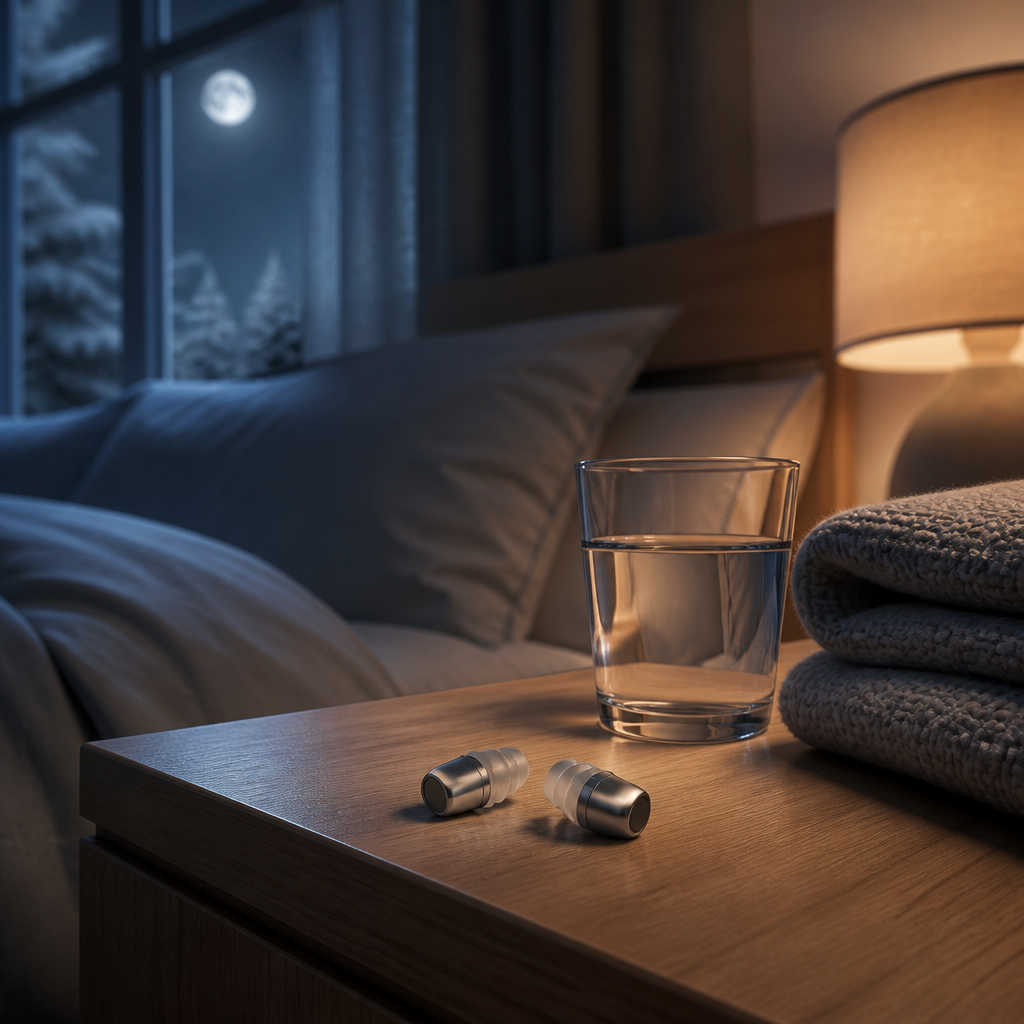
Temperature and humidity both shape how sound behaves in the atmosphere. Discovery’s explainer on sound on cold days describes how these factors change the way sound travels, and the effect is easy to notice once you know to listen for it. You do not need a lab to test this. Stand in your garden on a frosty evening and then on a mild one, and compare how far a closing door or a distant conversation seems to carry.
Calm, cold nights tend to be the worst. On a windy night, sound is scattered and mixed with moving air, but a still, cold night gives sound a clear path. That is why many winter nights feel unusually loud even when nothing on your street has changed.
Low-frequency sound, such as traffic hum, bass from a neighbour’s television, or a generator, is the kind that gets through walls most easily. Winter does not create these sounds, but it does make them easier to detect. A bedroom with a closed window still carries the deep rumble that a summer breeze used to cover.
Once you see this pattern, the fix is not always more insulation. Sealing gaps reduces draughts and some noise, but sound can still reach you through the wall cavity and the glass. Plan for it rather than hoping one weatherstrip will solve the problem.
Summer is loud in a way that hides things. Fans run, windows stay open, neighbours sit outside, and crickets or traffic fill the gaps. In winter, most of that background activity disappears. The faint sounds you ignored for months, like a tap dripping or a hallway floor settling, suddenly become the ones you hear.
A community discussion on why everything sounds louder on cold nights makes the same point in plain language: there tends to be less activity about, so you hear faint noises you otherwise might not. It is not a scientific paper, but the explanation matches what light sleepers describe. Your ears have not changed. The soundscape has.
Masking is the reason a fan can help you sleep in July. Constant, broadband sound covers the spikes that would otherwise wake you. When the fan switches off in November and the house goes still, that cover disappears. Many people blame new noises, when the real change is that the masking layer is gone.
Keep this in mind when you plan your winter setup. If you rely on a fan, a humidifier, or a running dishwasher to block out the street, those sounds will not be there on cold mornings when the heating cycles on and off.
Sleep does not switch off your hearing. Your brain keeps monitoring the environment for sounds that are new, sudden, or potentially important. In a quiet winter house, a single creak stands out as a novelty, and novelty is what pulls you back toward wakefulness.
The loudest thing in a winter bedroom is often the thing you stopped noticing in autumn.
The heating system is the biggest source of new sound in most winter bedrooms. Many of the noises are not faults. They are the normal result of metal expanding and contracting, water moving through pipes, and equipment starting and stopping on a schedule you cannot see. The trouble is that a sound you cannot predict is harder to sleep through than one you can.
The sounds people complain about tend to fall into three groups. Each has a different cause and a different fix.
When a forced-air system starts, warm air moves through metal ducts and the metal expands. As it cools, it contracts. That shifting produces ticks, pings, and sometimes a sharp bang near the start or end of a cycle. Ducts running through a ceiling or wall next to a bed are the most likely to be heard.
Loose duct sections and fasteners can make this worse, because metal that rattles against brackets is louder than metal that moves freely. Ask a technician to check for loose sections and rattling covers at your next service, and ask them to inspect the registers in the bedroom as well.
Hot water radiators have their own sound profile. Trapped air can cause hissing and gurgling, and pipes that expand and shift can produce knocking. These sounds usually arrive early in the heating cycle, which is often when you are trying to drift off or when you wake at the same time each night.
Bleeding trapped air from each radiator is a simple task that many households skip. A radiator key costs very little, and the job usually takes minutes per unit. Do it before the first cold snap, not after the first sleepless night.
Heat pumps and some modern boilers run more frequently at low output, which means more clicks, fan starts, and short bursts of airflow. The outdoor unit may hum or rumble. Thermostats also click when they switch, and a programmed schedule can cause sudden changes in fan speed at exactly the time you are falling asleep.
A common mistake is to drop the thermostat sharply at bedtime and raise it again in the early morning. Each big change forces the system to restart and work harder, which means more noise at the moments your sleep is most fragile. A steadier overnight setting, if your home allows it, often produces fewer sound events.
Pro tip: Note the times you wake during a cold week, then compare them with your heating schedule. If the wakings line up with a restart, you have found the source, and a small timing change may fix it without any new equipment.
Noise is only part of the story. Winter changes sleep in other ways, and those changes can make you more reactive to sound. Restonic’s guide on why winter changes sleep needs describes how shorter days and colder temperatures shape rest patterns, which is useful context when you are trying to explain why you feel more fragile in January than in June.
When the body is already struggling to settle, a small sound becomes a bigger event. That is why I treat light, temperature, and noise as one problem rather than three separate ones.
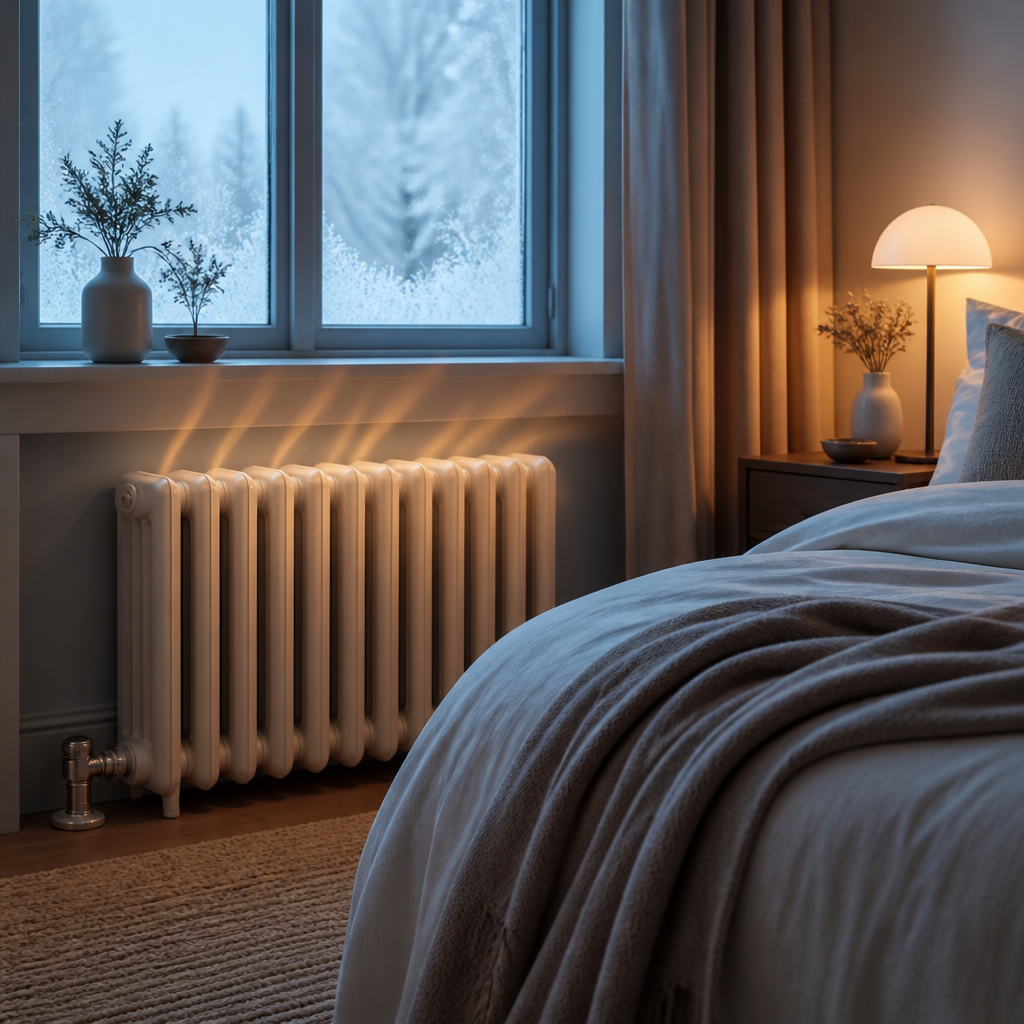
Restonic notes that less daylight increases melatonin production. In practical terms, shorter days can shift your body clock and make you sleepy at odd hours, which means a noise that would normally be ignored can feel like an interruption to sleep you were not ready to leave.
Get outside for daylight early in the day when you can. Even a short walk before work helps anchor your body clock, and a fixed wake time matters more in winter than most people expect.
Restonic also points out that colder temperatures can support deeper sleep. Many people find a cool, steady bedroom easier to sleep in. The catch is that a cold room with a heavy duvet can also trap you in a position that presses your ears into the pillow. Side sleeping in thick bedding is a common reason plugs slip out in the early hours.
There is a difference between hearing a sound and waking up because of it. Light sleepers often hear a noise, register it, and then drift back, but the second wake-up is what leaves you tired. The more fragmented your night, the more each sound costs you, so a quiet bedroom is about protecting continuity as well as volume.
Some people sleep through a thunderstorm and others wake at a dropped spoon. Sleep depth varies, and so does the way people process unexpected sound. If you are a noise-sensitive sleeper, winter is hard because the number of unexpected sounds goes up while the masking that used to hide them goes away.
This is not a character flaw, and it is not something you can train away in a week. The practical goal is to reduce the number and intensity of sounds that reach your ears, then add a barrier for the ones you cannot control.
Light sleepers tend to stay closer to the surface of sleep for longer. For them, a sudden change in noise pattern is more likely to cause a full waking than a steady sound. The fridge hum you never noticed becomes a problem only when the house around it goes quiet.
If you wake more readily in winter, keep a simple note for a week. Write down the time, the sound you remember, and whether it came from inside or outside the house. The pattern is usually clearer than you expect.
Once a sound has woken you, you may start waiting for it. Expectation makes the next sound feel louder and harder to drift back from. This is why the same radiator can feel acceptable on Tuesday and unbearable on Thursday after a bad night.
Breaking that loop is often as simple as removing the sound you dread. Ear protection does that job without requiring you to change your heating or move house.
Shift workers and people who sleep during daylight face a different winter problem. Daytime sleep already competes with traffic, household activity, and neighbours’ schedules. In cold months, windows stay shut and the house holds sound differently, so a delivery van or a door slam can cut through a daytime sleep you had carefully planned.
For this group, a fixed sleep window, blackout curtains, and dependable ear protection tend to work better than hunting for a perfectly silent room.
Ear plugs are the most direct tool for a noise-sensitive sleeper, but winter is when they fail most often. Heavier bedding, hats, and side sleeping push plugs out or change the seal. Reusable plugs with a snug fit can handle this better than loose, single-use foam, provided the tips are clean and in good condition.
Ear plugs are not a replacement for fixing a faulty heating system. Consumer guides that review earplugs tend to ask whether you should wear them every night, and that question deserves a straight answer. For most people, the honest answer is that they are a reliable bridge while you sort out the source, rather than a permanent substitute for it.
When you sleep warm, your ears can sweat and your head may turn more often under layers of blanket. A plug that held perfectly under a light summer sheet may loosen at 3 a.m. under a winter duvet. Check the fit before bed, and reseat the plug if you feel it shift rather than waiting for a sound to break through.
A metal-bodied design with three sizes of soft memory foam tips (XS, S, and M) gives you more control over the seal than a single size. Try each tip in the evening, not when you are already exhausted, so you know which one holds.
Foam tips need replacing on a schedule. For ATTENU8 plugs, the foam tips typically last around 6 to 8 weeks, so you replace the tip rather than the whole plug. In winter, many sleepers wear them every night for longer stretches, so a regular tip change keeps the seal dependable.
Wash your hands before handling the plugs, and store them in a dry case. Damp tips do not hold their shape well, and that changes the seal.
The table below compares three approaches people use for winter sleep noise. None is perfect, and the right choice depends on whether your main problem is steady background sound, sudden spikes, or both.
| Approach | Where It Works Well | Where It Falls Short |
|---|---|---|
| White noise machine | Covers steady hum from heating systems and traffic | Does little against sudden clanks or door slams, and some people find it hard to sleep with |
| Disposable foam plugs | Low upfront cost and easy to buy | The seal loosens with use, and you replace them often |
| Reusable metal-bodied plugs with foam tips | Stable fit, replaceable tips, and effective against sudden noises | Higher upfront cost and needs regular tip replacement |
In my view, a white noise machine is a good partner for a steady hum, but it cannot replace a physical barrier for sudden noise. Pair the two if your winter nights include both.
Start with what you can change before the cold settles in. Most winter sleep noise falls into a short list of causes, and each has a simple fix. Work through them in order, and keep notes so you can see what made a difference.
If you are reading this in mid-October, you still have time to book a heating check. Ask for trapped air to be bled from radiators, loose duct sections to be secured, and any rattling vents to be inspected. These tasks are quick, and they remove many of the sharpest sounds without touching your sleep routine.
Also check the bedroom vent. A register placed directly above the bed can carry air and sound toward your pillow. Before you close any vents, ask a technician, since closing too many can strain the system.
Draught stoppers at doors and window seals reduce both cold air and the sharp sounds that come through gaps. Rugs and curtains absorb reflected sound, and a bare wooden floor can make every footstep and dropped item echo. These inexpensive fixes work alongside ear protection rather than replacing it.
Keep the bedroom door closed at night, too. A closed door cuts sound from the hallway and kitchen, where most appliances are, and it helps the room hold its temperature better.
The most reliable setup is a routine. Insert your plugs at the same point each evening, after you have brushed your teeth and before you get into bed. A routine makes it easier to remember them when you are cold and tired, and it removes the decision from a night when your willpower is low.
A common mistake is to try ear plugs once, find them uncomfortable, and give up on the whole idea. Give a new pair a fair test over two to three weeks, adjusting the tip size and seal, before you decide whether they suit you.
Pro tip: Keep a spare set of foam tips in your bedside drawer. Winter nights are when you are most likely to lose a tip or notice a seal failing, and a spare saves you from a sleepless night while you hunt for a replacement.
Closed windows reduce some noise, but winter changes the sound that does get through. Low-frequency traffic and voices carry well through cold air, and fewer daytime sounds mean that faint noises stand out more clearly at night.
Not always. Ticking and pinging from ducts are often caused by normal expansion and contraction, but knocking, banging, or sudden loud bangs are worth a service call. Ask a technician to check for loose parts and trapped air before you assume the noise is harmless.
For most healthy adults, wearing ear plugs during sleep is a common and practical choice, provided they stay clean, dry, and well fitted. If you notice pain, discharge, itching, or any change in your hearing, speak with a doctor or audiologist rather than trying to fix it yourself.
For ATTENU8 plugs, the foam tips typically last around 6 to 8 weeks with regular use. Replace them sooner if they look compressed, dirty, or no longer hold a seal, because a worn tip lets sound through even when the plug looks intact.
A white noise machine can soften a steady hum from the heating system or a street, but it struggles with sudden noises like door slams, clanks, and voices. Many people pair one with physical ear protection for the best results.
Cold weather affects sleep through several routes, including shorter days, changes in body clock timing, and the way bedding and temperature affect comfort. Noise is one of these routes, so a practical plan should address light, temperature, and sound together rather than focusing on just one.
Tell us which winter sound keeps you awake most often, whether it is a radiator, a neighbour, or the wind outside, and what has helped you so far.
We would love your feedback and any insights you would share with others. What perspective would you add?

