


 0

Ask a surfer who has spent a winter in cool water what hurts after a session, and you will hear about shoulders and paddling fatigue long before anyone mentions their ears. That changes over time. Cold water, wind across the head, and repeated soaking can leave the ear canal irritated, waterlogged, and eventually narrowed by bone growth. Ear plugs for surfers are one of the simplest fixes available, but only if they stay seated, seal properly, and survive salt water session after session. This guide covers what actually causes the trouble, what to look for in a plug built for the water, and the habits that protect your hearing through the cooler months.
| Key Insight | Explanation |
|---|---|
| Cold water is the main trigger for surfer’s ear | Repeated cold exposure in the ear canal is linked to bony growth, and keeping water out is the most reliable prevention. |
| Fit matters more than the rating on the packet | A plug rated at about 32dB does nothing if the tip does not seal. Check the seal on dry land before every trip. |
| Wind noise and cold are separate problems | Wind roar tires you out during a session, while cold water works on the canal over seasons. Choose gear that handles both. |
| Replace foam tips every 6-8 weeks | Salt and sand break down foam. Replacing the tip on schedule costs far less than replacing the whole plug. |
| Dry your ears after every session | Tilt your head to drain water and dry the outer ear with a towel. Skip cotton buds, which push moisture deeper. |
| Pair plugs with a hood or neoprene cap in cold water | A hood covers the ear opening and cuts wind noise, but it does not seal the canal. Use both, not one or the other. |
Surfer’s ear is the common name for external auditory exostosis, a condition where bone inside the ear canal grows outward in small, hard lumps. The growths are benign and rarely hurt at first, which is why most people only notice them when water starts getting trapped or hearing feels muffled. By the time a surfer visits a clinic, the canal may already be narrowed on one or both sides.
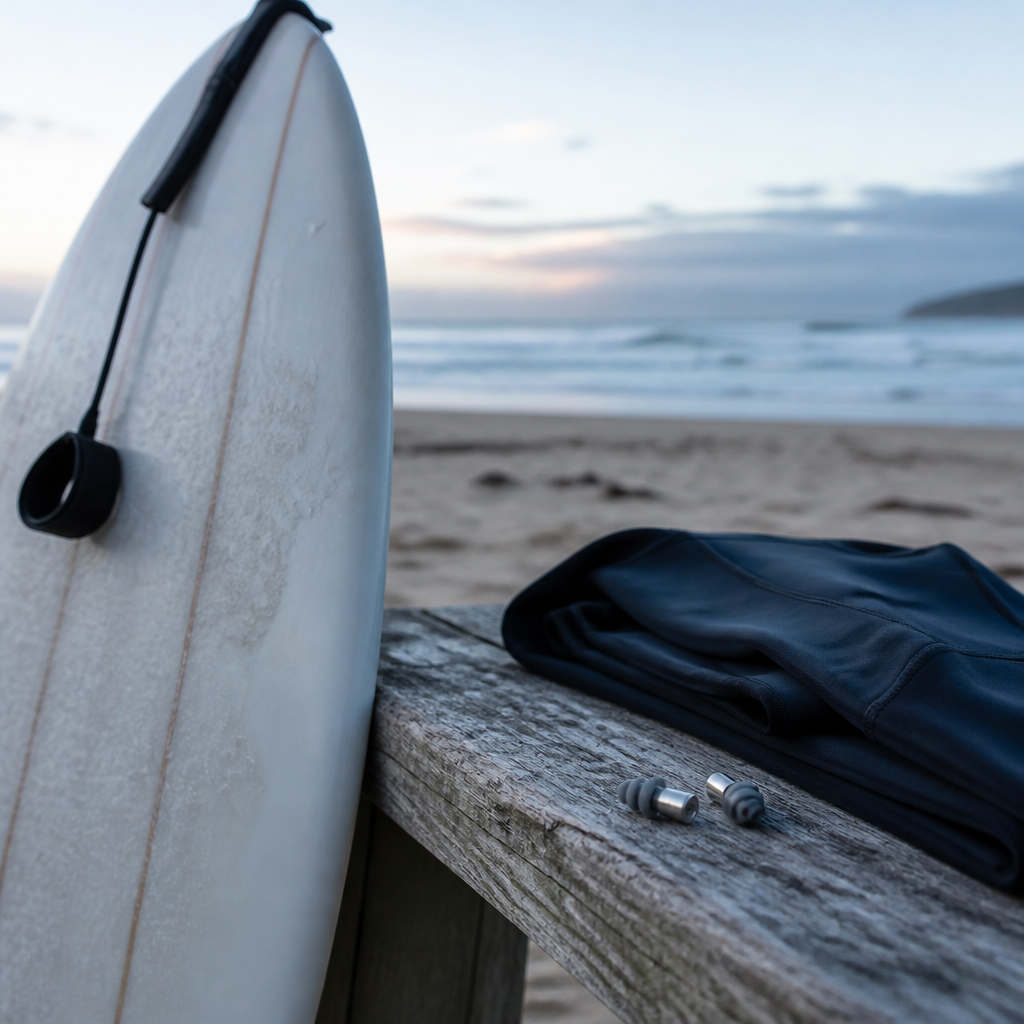
The bone in the canal responds to repeated cold stimulation by thickening over time. Each cold session adds exposure, and the changes build up across a season rather than appearing after one bad day. That slow pattern is why the condition shows up in people who surf often in cool water, not only in those who take the occasional chilly dip.
Cold water in the canal chills the bone and the thin skin lining it, and the cycle of cold exposure followed by warming between sessions is the pattern most often linked to the growths. Water that stays trapped after you leave the sea adds to the problem. In practice, the most reliable prevention is keeping cold water out of the canal in the first place, which is exactly what a well-fitted plug does every session.
Most surfers lump wind and cold together as one discomfort, but they cause harm in different ways. Wind noise is a constant, low roar that builds through a session, while cold water acts directly on the bone and skin of the canal. A plug that handles one may not handle the other, and choosing gear without separating the two is a common mistake.
Wind wears you down during a session, while cold water does slow damage over seasons. Treat them as two separate problems and your gear choices become much clearer.
Wind moving across the ear creates turbulence that can sound like a steady rush even on a fairly calm day. On a board, the roar is often worst when you paddle into a headwind or sit up in the lineup with your ears fully exposed. Over a two-hour session, that constant noise is fatiguing, and it can make you miss a shouted warning from another surfer.
A plug that reduces overall loudness helps here, but only if it stays in place through paddling, duck dives, and wipeouts. A plug that pops out after the first wave gives you neither comfort nor protection.
Cold water does its damage through the canal itself, and the risk does not end when you climb out. Water that lingers after a wipeout, a long paddle, or a shower can keep the skin wet and cold for hours. A loose plug that lets water creep in around its edges can hold moisture against the bone, which is a poor trade for the wearer.
A plug built for surfing has to do three things at once: seal the canal, stay put while your head moves, and survive a day in salt water. Many people buy plugs designed for sleep or workplace noise and find they fall out after the first duck dive. The features below separate plugs that last in the water from those that end up lost in the sand.
Fit matters more than any single number on the packaging. A plug with a strong noise reduction rating that does not seal in your canal will protect you less than a lower-rated plug that does. Sizing is the usual culprit, so three tip sizes, XS, S, and M, let you match the canal rather than forcing one size to fit everyone.
Test the seal on dry land first. Chew, turn your head, and tug gently on the outer ear. If the plug shifts, try the next size up or down before you go out, because a tip that feels slightly too tight will eventually work its way out.
Salt, sand, and sunscreen are harder on earplugs than most people expect. Foam tips absorb moisture and degrade, while aluminium bodies hold up well when they are rinsed and dried properly. Look for a design where the foam tip is a replaceable part, so you are not throwing out the whole plug when the tip wears out.
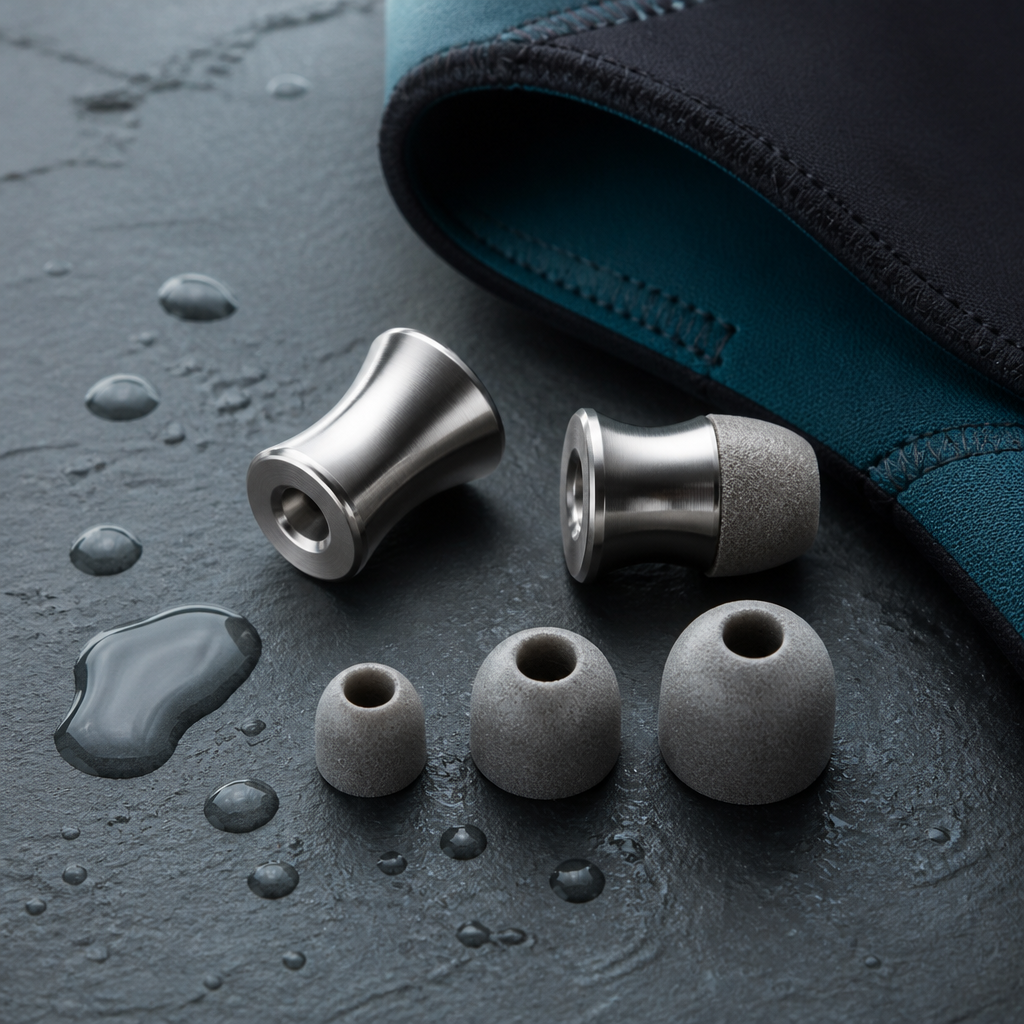
Surfers usually choose between three approaches. Each has a place, but they fail in different ways, and the table below shows where each one works and where it lets you down.
| Option | Where It Works | Where It Falls Short |
|---|---|---|
| Moldable silicone putty | Cheap, shapes to the canal, and fine for a single trip | Wears out quickly in salt water, is hard to clean, and often gets replaced every session |
| Single-use foam plugs | Inexpensive and easy to buy almost anywhere | Lose their seal after repeated wet use, so you keep buying new pairs |
| Reusable metal-bodied plugs with foam tips | Stable fit, replaceable tips, and a long service life | Higher upfront cost and requires a rinse and dry routine |
If you surf once a month in warm water, a cheap disposable pair may be enough. Surfers who log several sessions a week in cool water need something that holds up. The upfront cost of a reusable plug is quickly offset when you stop buying new pairs every few weeks.
Pro tip: Keep one spare set of foam tips in a dry pouch in your board bag, not in your wetsuit pocket. A torn or worn tip is the most common reason surfers paddle out without a seal.
Durability is where reusable plugs earn their price. Most of the wear happens in the foam tip rather than the body, so tip care matters most. A plug that lasts several seasons changes the cost comparison completely.
Rinse the plugs in fresh water as soon as you get out of the sea, shake off the excess, and let them dry on a towel away from direct sun. Salt crystals left in the foam make the tip stiff and less able to seal. Avoid storing them damp in a sealed bag, because trapped moisture speeds up breakdown.
For a surfer in the water several times a week, foam tips typically need replacing every six to eight weeks. The signs are easy to see: the tip looks discoloured, feels hard, or no longer springs back after you compress it. Replacing tips on schedule is far cheaper than replacing the whole plug, and it keeps the seal reliable when you need it most.
Your ear care after the session matters almost as much as what happens during it. Water left in the canal is the main reason cold exposure keeps building up. A short routine after each surf takes less than a minute and removes most of that risk.
After you leave the water, tilt your head to each side for a few seconds so gravity drains the canal. Dry the outer ear with a towel, and keep your fingers out of the canal itself. Cotton buds push moisture and debris deeper, and they can scratch the delicate skin inside.
A neoprene hood or swimming cap covers the ear opening and reduces both wind and water hitting the canal. It is worth wearing in cold conditions, but it does not replace a seal. Use a hood with plugs, not instead of them, because a hood cannot keep water out of a canal that is already open to the sea.
The same ear problems show up across the water sports world, though the pattern shifts with the activity. Kitesurfers face sustained wind, paddleboarders spend long periods with their ears in cold water, and sailors deal with spray and wind on deck. Each group needs a slightly different plan.

Kite sessions tend to be long, fast, and loud, and the wind roar rarely lets up. Plugs that stay seated through hard turns and hold their seal matter more than any headline rating. If you can hear the wind more than your own breathing, the seal is probably not doing its job.
Paddlers and open-water swimmers spend long periods with their heads in cold water and often skip the drying routine because they are already heading to the car. A plug that stays sealed for the full session pays off most in this kind of setting. Keep the same rinse and dry habits you would use after a surf.
Surfer’s ear develops slowly, so the first signs are easy to dismiss. Catching them early gives you more control over how much cold water your ears take on, and it keeps any future treatment simpler. Pay attention to symptoms that return after each session.
Water trapped behind bony growths can cause repeated ear infections, often called swimmer’s ear, along with muffled hearing that lingers for days. If you get water stuck in the same ear after every session, your current setup is not sealing well enough. Change the plug or the routine before the problem becomes chronic.
Pro tip: If one ear always feels full after a session, track which plug size you used and whether the tip was worn. Small changes in fit often explain a problem that seems to come from the water itself.
See a clinician if you notice pain, discharge, a blockage that does not clear, or hearing loss that lasts more than a few days. Ask for the canal to be examined with a microscope or otoscope, and mention that you surf regularly in cold water. That history changes what the clinician looks for.
They cannot reverse growth that has already formed, but keeping cold water out of the canal is the most reliable prevention available. A plug that seals every session does exactly that job.
Some reduction is expected, and most surfers adjust within a session or two. A well-fitted reusable plug keeps the lineup audible enough to stay aware, but test your plugs in shallow water before relying on them in a crowded break.
For regular surfers, replace the foam tips every six to eight weeks. Replace them sooner if they look discoloured, feel hard, or no longer seal when you compress them.
Usually not. Putty breaks down quickly in salt water, is awkward to clean, and rarely seals the same way twice, so it suits occasional use better than a regular routine.
Yes. A hood helps with wind and cold on the head but does not seal the canal, so water can still enter. Combining a hood with a well-fitted plug gives you the most coverage.
See a doctor if you have recurring blockages, muffled hearing, or infections after sessions. An early check gives you a clearer picture of the canal and a better chance to change your habits before the problem worsens.
Share your experience: which ear plugs have stayed put through your cold-water sessions, and which ones failed you?

