


 0

If you have ever bought a pack of foam ear plugs and watched them go flat after a few nights, you already know the appeal of something sturdier. Reusable ear plugs promise a different deal: pay once and wear them for years. How long reusable ear plugs last depends on which part wears out, though, and the answer is less simple than the packaging suggests. This guide breaks down the metal body, the foam tips, and the signs that tell you it is time to change something, so you can work out the real cost of a good night’s sleep or a long shift near loud machinery.
| Key Insight | Explanation |
|---|---|
| The body outlasts the tips | The aluminium body is the long-lived part. The memory foam tips are the wear item and should be treated as replaceable. |
| Swap tips every 6 to 8 weeks | With regular nightly use, replace the foam tips on that schedule to keep the seal consistent. |
| Clean after every use | Wash the body and tips with mild soap and warm water, then dry both fully before storing them in the case. |
| Replace tips that stop springing back | If a tip stays flat after being squeezed, looks discoloured, or feels tacky, it is finished regardless of the calendar. |
| Judge value by cost per night | Divide the upfront price plus replacement tips by the number of nights you wear them. The result is far more useful than the sticker price. |
| Keep them dry and out of heat | Heat softens foam and damp tips grow odour and mould. A dry case at room temperature protects both parts. |
| Never share or reinsert a dirty tip | Every ear canal is a different shape, and a tip that has touched the floor or a pocket should be cleaned or replaced first. |
The honest answer to how long reusable ear plugs last is that two different parts wear out at different speeds. The body is built to outlast the tips by a wide margin, and most of the decisions you make about lifespan come down to treating each part correctly.
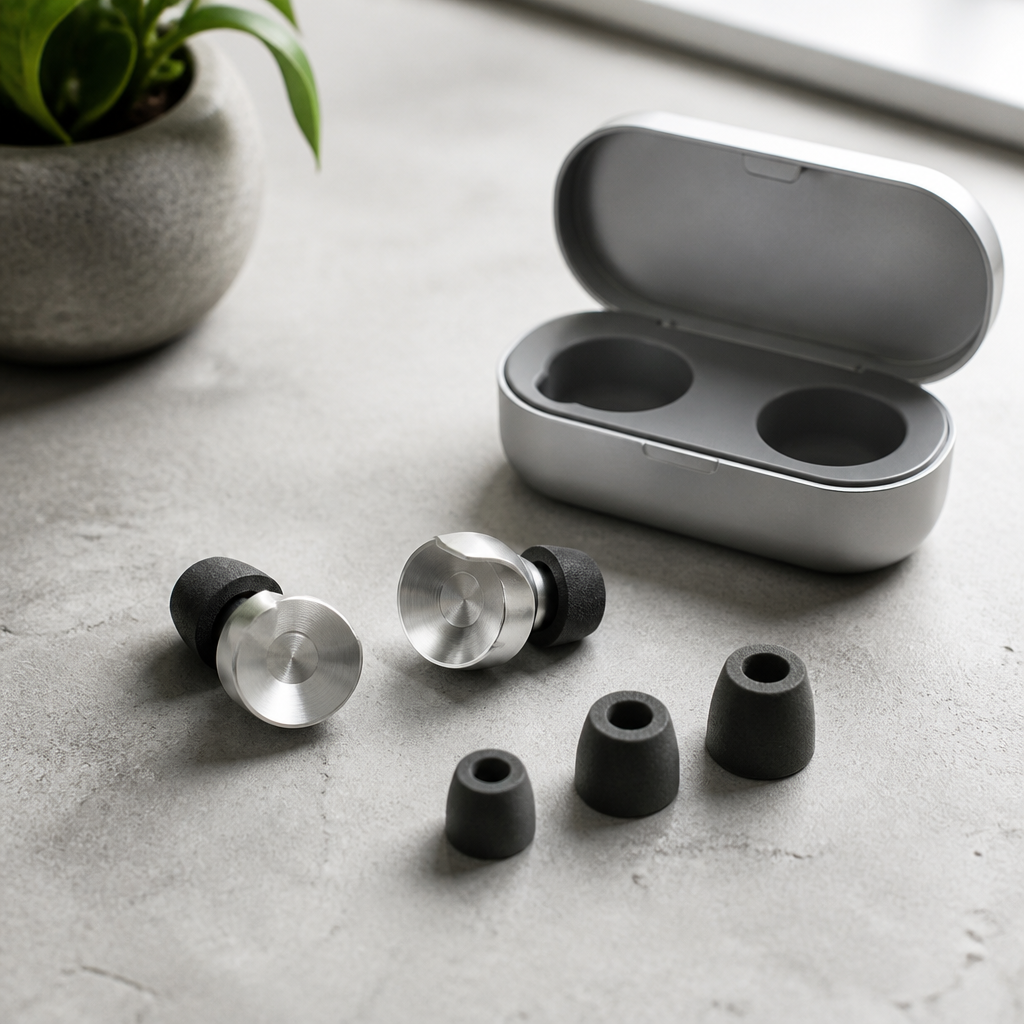
A common mistake is to judge the whole product by its tips. When someone says their reusable ear plugs stopped working after three months, the body is almost never the problem. The foam has compressed, collected debris, or lost its shape, and the fix is a replacement tip rather than a new pair.
The concave aluminium body is the structural part. Aluminium does not absorb sweat, does not crack from routine insertion, and does not degrade from skin oils the way soft materials do. With ordinary care, the body should stay usable for years, which is why the product makes financial sense over time.
What damages it is usually abuse rather than age. Dropping it onto concrete, bending the rim, or tossing it loose in a bag with keys can deform the fit surface enough to affect how the tip seats. Treat it like a small tool rather than a disposable item.
The memory foam tips are the wear item, and they are designed to be replaced. The foam holds its shape by compressing and recovering, and every insertion, every trace of earwax, and every night of body heat slowly breaks that cycle down. Our guidance is to replace them every 6 to 8 weeks with regular use.
Replacing foam tips is not a sign of failure. It is the normal maintenance cycle, much like changing the blades on a razor. Keeping a spare set of the same size means you never have to go without protection while a tip dries out.
Protection depends on the seal, and the seal depends on the tip. A sturdy body with worn foam performs worse than a fresh tip on the same body.
Lifespan depends heavily on design. Disposable foam is built for one use, while reusable designs spread the cost over far more nights. The table below compares the three approaches people most often choose between, based on how each one holds up in daily use.
| Ear Plug Type | Typical Working Life | Best Fit |
|---|---|---|
| Disposable foam | Single use, though many people stretch a pair over several nights | Occasional use, one-off events, or emergency backup |
| Reusable silicone or rubber with fixed tips | Varies with material, cleaning habits, and heat exposure. When the tip wears, the whole unit is usually replaced. | Light use where the shape stays comfortable and replacement cost is not a concern |
| Metal body with replaceable foam tips | Body lasts for years. Foam tips are replaced every 6 to 8 weeks with regular use. | Nightly sleep, frequent travel, and daily exposure to noise |
Silicone sets feel comfortable at first, but they tend to lose their shape in ways that are hard to spot. Once a fixed tip goes stiff or tacky, the whole unit goes in the bin, and the cost per night climbs quickly.
Disposable foam is rated for one use, yet the reuse question comes up constantly in community forums. Some people keep the same pair for several nights, and the foam often still seals at first. The problem is hygiene and shape. Foam that has been pulled out, rolled, and dropped into a pocket picks up debris and loses its recovery.
If you do reuse disposable foam, check it before each insertion. A tip that does not spring back, looks grey, or feels sticky should be thrown away, even if it has only been used a few times.
Fixed-tip designs avoid the question of replacement tips, but they trade that convenience for a larger bill when the unit wears out. Silicone and rubber also react more strongly to heat and oils, so a set left in a hot car or on a bedside lamp can soften or stiffen faster than expected.
These designs can still be a sensible choice for light use. The key is to match the product to how often you wear it, because a fixed-tip set worn every night will need replacing much sooner than a light user expects.
For most people wearing their ear plugs every night, the 6 to 8 week interval is the right starting point. Heavy use, such as wearing them through a long shift or a stretch of travel, can shorten that window. Occasional weekend use can stretch it. Keep a dated note on your phone or inside the case so you are not guessing.
Pro tip: Write the date you fitted a new tip on the inside of the case lid. Within a few months you will know your personal interval better than any general guideline.
The schedule works best when you swap tips in pairs. Replace both tips at the same time so the left and right seals wear evenly and you do not end up with a comfortable ear and a leaky one. Keep one spare set in the case, so the replacement never has to wait for a shop visit.
If you notice a change in how the tips feel before the interval is up, trust that feeling. The schedule is a guide for typical use, and your own habits set the real limit.
Three sizes, XS, S, and M, are supplied so the seal fits ear canals that vary a lot from person to person. A tip that is too large feels tight and pushes outward, while one that is too small lets sound leak around the edge. Test each size in a quiet room before you rely on it for sleep or work.
If you change sizes between sessions, a tip may fail to seal even when it is brand new. Pick the size that stays put when you sleep on your side, not the one that feels softest on first insertion.
Cleaning is the single biggest lever you control. Earwax and skin oil break foam down faster than anything else, and they also reduce grip on the metal body. A quick wash after each use keeps the seal consistent and stops residue from building up on the tip.
Wash the aluminium body with mild soap and warm water, rinse it, and dry it fully before putting it away. For the foam tips, gently squeeze out the water without twisting, then let them air dry on a clean cloth. Never put them back in the case while they are still damp.
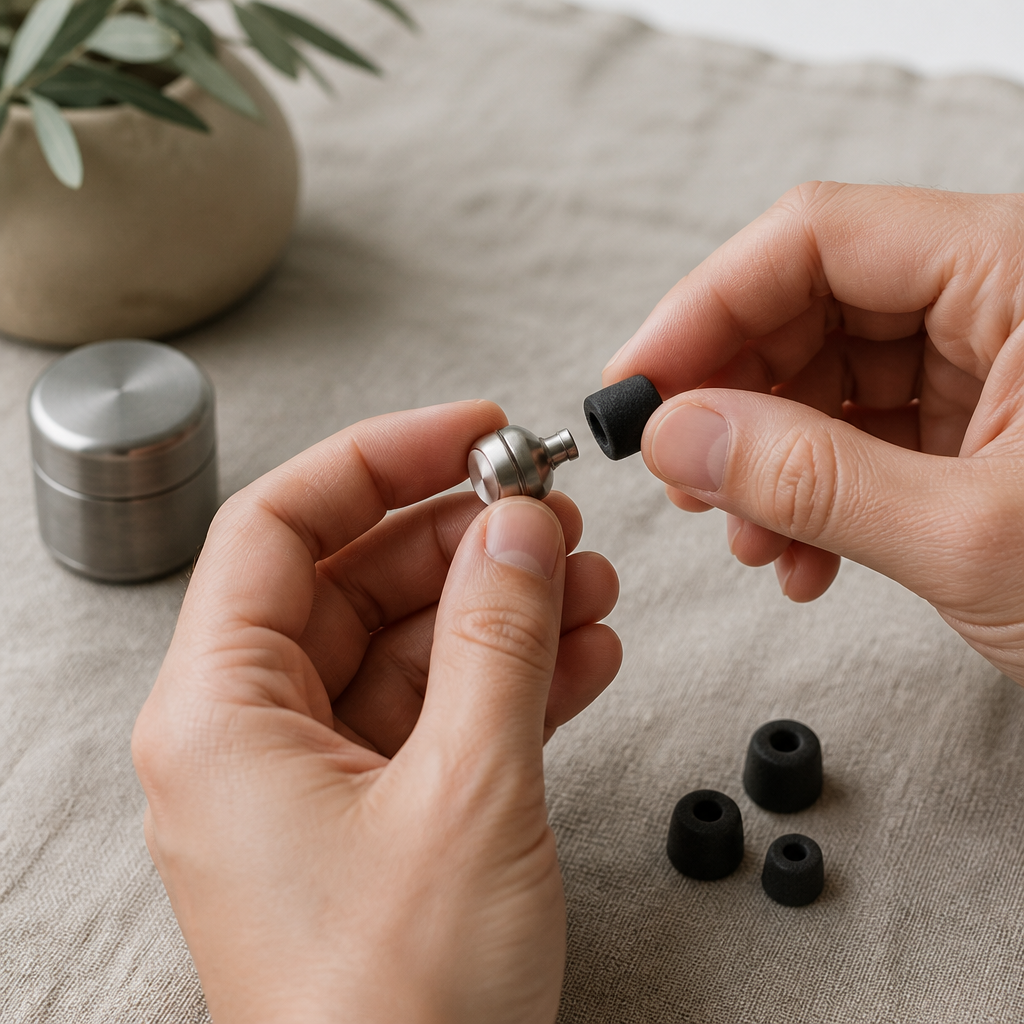
The routine takes about two minutes once it becomes habit. Rinse the body, wipe the tips with a soft cloth, check the foam for grit, and leave everything to dry on the cloth while you brush your teeth. The next morning, the parts are ready to store.
Pro tip: Keep a small microfibre cloth in the case. It removes most residue without any liquid, which is useful when you are away from a sink.
Avoid alcohol-based cleaners, hand sanitiser, and anything containing solvents on the foam. These can dry it out and change how it recovers after being squeezed. Boiling, microwaving, and scrubbing with abrasive pads all cause damage that is easy to miss until the seal starts to fail.
Do not clean the inside of a tip with a cotton bud or a pin. Pushing debris deeper can compact the foam and leave residue in the seal area. A soft, dry cloth removes most of what needs removing.
You do not need a calendar to know a tip is finished, although the calendar helps. The foam tells you through touch and performance. The clearest sign is that the tip no longer springs back to shape after being squeezed flat.
Look for discolouration, hardness, cracks, or a tacky surface that does not clean off. Any of these means the foam is no longer doing its job, even if it still looks acceptable at a glance. A tip that smells stale after a full drying cycle has also reached the end of its useful life.
Check the metal body too. If the rim is dented or the surface is scratched deeply enough to catch on the tip, the seal will suffer. Smooth out minor marks, but replace the whole unit if the structure is bent.
Sound that suddenly seems louder during sleep or work is usually the first sign of a seal problem. Before you blame the design, reinsert the tip, check that it sits flush, and compare it to a fresh one. If the difference is obvious, the old tip is done.
Fit changes can also come from ear canal changes, such as a cold or a build-up of wax. If the fresh tip also feels wrong, check your ears before assuming the product has failed.
Value only makes sense when you divide the cost by use. A pack of disposable foam looks cheap until you need a fresh pair every night for a year. Reusable designs look expensive at the start, so the useful comparison is cost per night over the life of the product.
To work it out, add the price of the body to the cost of replacement tips over the period you plan to use it, then divide by the number of nights you wear them. For example, a body that lasts three years with tip replacements every two months needs about 18 sets of tips across that period. Price those tips, add them to the body, and the result is your real figure.
Most of the ongoing cost is tips, not the body. Buying replacement tips in the correct size and keeping a spare set on hand means you pay for the part that wears while the body keeps working. This is why the replacement design matters more than the initial price tag.
Compared with fixed-tip designs, the saving shows up at the first replacement, since you are not buying a whole new unit. Compared with disposable foam, the break-even point arrives sooner than most people expect if you wear them most nights.
Count the cost of lost or damaged pairs too. A set that goes missing on a flight or gets left on a site bench costs you the body, not just the tips. Storing them in a case and keeping them in the same pocket every time reduces that risk considerably.
Also count the cost of poor sleep or unprotected work hours. If better protection means you sleep through the night, the value is not just in the price per night but in the rest you get back.
Construction, manufacturing, and military settings put different strain on ear plugs than a bedside table does. Dust, sweat, greasy hands, and frequent insertion all shorten tip life. Expect the 6 to 8 week interval to shrink if you wear them through full shifts in dusty conditions.
Check your workplace hearing protection requirements before you rely on any product. Employers set their own standards, and the protection a device provides depends on how it is worn. This section covers lifespan and hygiene, not compliance.
Inspect the tips at the start of every shift, not only when they feel wrong. A quick squeeze test shows whether the foam still recovers. If a tip is slow to return to shape, swap it before the shift starts, since a leaky seal in a loud room is a real hazard.
Keep your hands clean before insertion. Grease and cutting fluid soak into foam quickly and can be hard to clean out, which shortens the tip’s life faster than almost anything else on site.
Wipe the body at the end of every shift and inspect the tips for embedded grit. Grit scratches the seal surface and can irritate the ear canal. A clean, dry cloth in your work bag is enough for most jobs.
Pro tip: Carry at least one spare pair of tips in a sealed pouch. A tip that has dropped on a site floor should not go back in your ear until it has been washed and checked.
Storage is where many good sets lose their shape before their time. A case stops the tips from being crushed under other items and keeps dust and lint out of the foam. Store them in a dry place at normal room temperature, not in a glovebox or on a sunny windowsill.

When travelling, carry them in their case inside a zipped pocket, away from keys and loose coins. Metal objects can scratch the body and leave grit on the foam before you even reach your hotel.
Heat softens foam and can make it lose its recovery faster. Humidity encourages mould on any tip left damp, which is why drying is a non-negotiable step. A tip that has been sealed inside a case while still wet will often smell within a day.
Keep the case out of direct sunlight and away from radiators. A small change in where you store them can add weeks to the life of a tip.
Pack one spare tip set for each size you rely on, a clean microfibre cloth, and the case. Leave the cloth in the case between uses so it stays dry and ready. A small kit like this stops a missing tip from turning a good night into a bad one.
Most early failures come from a handful of habits. They are easy to fix once you know them, which is why this section is short and direct.
Sharing ear plugs is a poor idea for both hygiene and fit. Every ear canal has a different shape, so a tip that seals perfectly for one person may leak for another. The foam also absorbs the other person’s wax and skin oils, which cannot be fully washed out.
Swapping a single tip between your own ears can also cause problems. If one ear has a different seal, the tip may fit one side well and the other poorly, so keep a note of which tip goes where.
Putting a tip back into your ear after it has been on the floor, in a pocket, or in your mouth is a fast route to irritation. Clean it or replace it. Replacing a tip costs far less than dealing with an ear infection.
Another common error is sealing damp foam into a bag or case. Trapped moisture makes foam stiff and smelly quickly, so always separate the parts and let them dry before storing them.
The metal body can last for years with ordinary care. The foam tips are the part that wears out, and with regular use they should be replaced every 6 to 8 weeks.
Yes. Rinse them gently in mild soap and warm water, squeeze out the water without twisting, and let them air dry fully on a clean cloth before putting them back in the case.
Many people reuse them for a few nights, but the foam loses its recovery and picks up debris with each use. If a tip stays flat, looks discoloured, or feels sticky, throw it away regardless of how many nights it has lasted.
Test the XS, S, and M sizes in a quiet room. The right tip feels snug without pushing outward and stays in place when you sleep on your side or move your head.
Rarely, if they are handled carefully. Damage usually comes from drops, bending, or storage loose with other objects, so keep the body in its case and replace it only if the structure is bent.
For people who wear them most nights, they usually cost less per night than disposable foam over time. The value depends on how often you use them and how carefully you maintain the tips.
Tell us how many weeks your tips lasted and what finally made you replace them, since real-world wear varies a lot from one person and one environment to the next.

