


 0

A package that says approximately 32 dB looks like a promise. In practice, that number only holds if the plug seals against the ear canal wall for the whole time you wear it. Most people who buy ear plugs for sleep, travel, or a loud job never check the seal, so they assume the rating is what they get. Ear plug fit noise reduction is the variable that decides whether a high rating turns into real quiet or into a muffled sound that still lets the alarm, a snoring partner, or a generator through. This article explains why fit matters more than the decibel figure, how to check your own fit, and what to change when your plugs leak.
| Key Insight | Explanation |
|---|---|
| A rating assumes a seal | Ratings come from controlled tests with the plug inserted correctly. Any gap at the canal wall lets sound through that the number never accounts for. |
| Run the derating formula | Subtract 7 from the rating, divide by 2, then subtract that result from your exposure level. A 32 rating works out to roughly a 12.5 dB real-world allowance on paper. |
| Do the voice check after every insertion | Your own voice should sound muffled and closer. If it sounds normal or echoey, the seal is off and you should reinsert. |
| Pick tip size by trying all three | Test XS, S, and M in the same session and keep the one that holds a light seal without an ache at the canal opening. |
| Replace foam tips every 6 to 8 weeks | Worn foam loses its shape and springiness, which changes the seal faster than most people notice. |
| Judge plugs by the job, not the box | Sleep needs comfort for hours on your side. Industrial noise needs a stable seal through movement, sweat, and head turns. |
The noise reduction rating, or NRR, is a standard measurement of how much sound a hearing protection device reduces, determined through tests. It is a useful comparison tool, but it is a lab number. The test conditions assume the device is inserted properly and stays that way for the duration of the measurement.
Your ears do not work that way. Canal shape, jaw movement, and the angle you insert at all change how much of the plug actually contacts the wall. A rating tells you what the plug can do when it seals. It does not tell you whether it is sealing in your ear right now.
A rating is a single figure derived from testing, so it cannot describe the range of ears that will wear the product. Some people have wide, smooth canals that a foam tip fills easily. Others have narrow or curved canals where even the right size needs careful placement. Both groups can buy the same plug and get very different results.
The rating also says nothing about comfort, and comfort is where many people quietly lose protection. If a plug aches after an hour, most wearers push it in less far or pull it out to reset it. Each adjustment breaks the seal, and the rating on the box is no longer what you are getting.
Sound takes the path of least resistance. A plug only blocks what it touches, so a thin channel of air along the canal wall is enough to let through the hum of a fan, traffic, or a neighbour’s television. The result often feels like the plug is working, because the loudest sounds drop, while the lower and mid-range sounds keep coming through.
We publish a figure of approximately 32 dB for our plugs, and we treat that number as a ceiling you earn by sealing. Anyone who wants the number to match their experience needs to treat fit as the first step, not an afterthought.
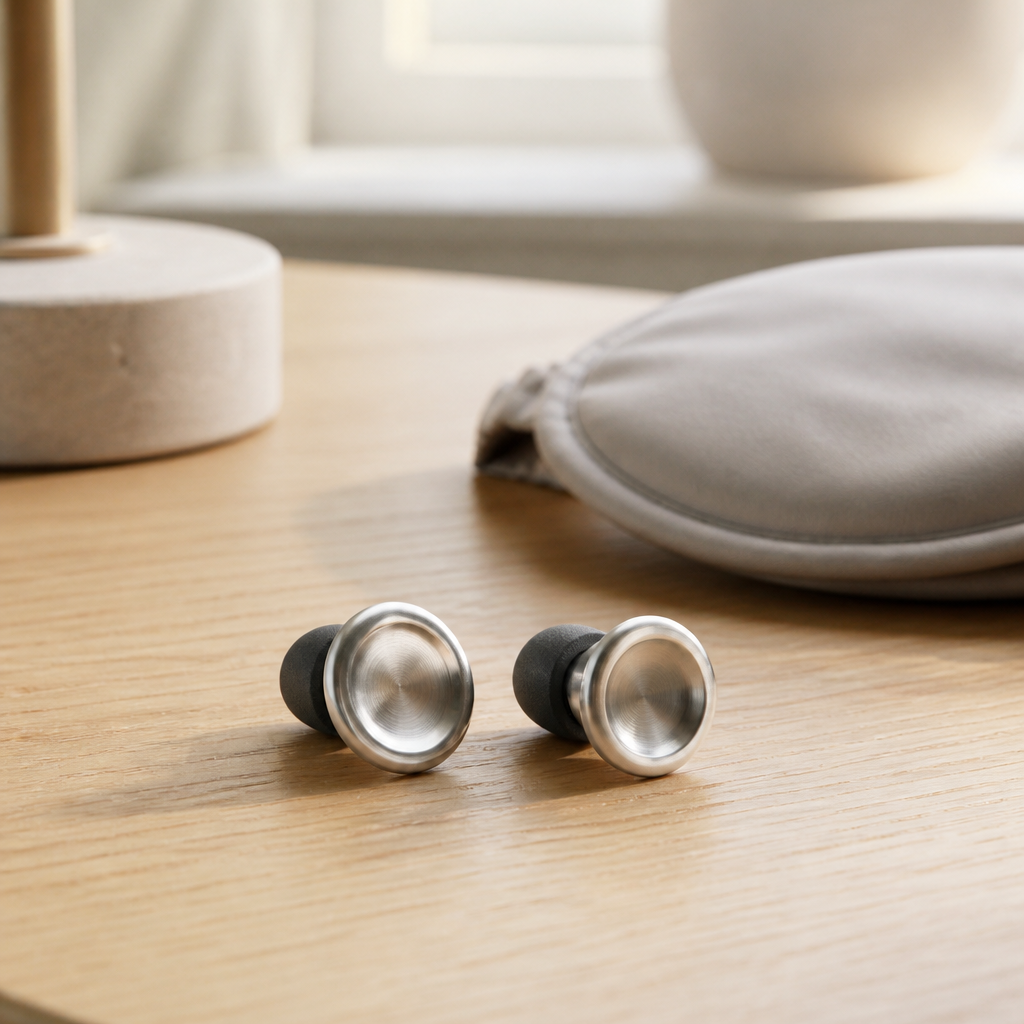
If you want a rough estimate of how much protection you will get in a specific environment, the rating needs a correction before you use it. The standard method is simple, and it is the one most safety guides use as a starting point.
Take the rating, subtract 7, and divide the result by 2. Subtract that number from the noise level you are exposed to in decibels. For a plug rated 32 in a 95 dB environment, you get 32 minus 7 equals 25, then 25 divided by 2 equals 12.5, so the estimated exposure is about 82.5 dB.
That figure is a planning estimate, not a guarantee. It still assumes you inserted the plug correctly and that the seal held for the entire period. If your fit is poor, the actual result will be lower than the calculation, and the calculation will not warn you about it.
A 2023 study indexed in PubMed Central looked at how attenuation changed over a 2-hour work period for devices that had been properly fitted, using workers exposed to hazardous noise. The question it asks is the one that matters on a long shift. A plug that fits well at the start of the day may not give you the same protection three hours later.
In practice, that means you should check your fit at the start of a shift, at lunch, and after any long break where you took the plugs out. Sweat, movement, and the gradual shifting of the plug in the canal all change the seal over time, and none of them show up in the rating.
A seal is not a feeling of tightness. It is the absence of any air path between the plug and the canal wall. You can have a plug that feels snug and still leak, and you can have one that feels loose and still seal, depending on the shape of your canal and where the tip sits.
A leaking plug usually sounds like a whistle, a rush, or a sudden return of sound you thought was gone. At night, the giveaway is often a clock tick or your partner’s breathing coming through clearly while the snoring stays quiet. During the day, the most common sign is a hum from machinery that seems to stay at the same level no matter how much the plug is pressed in.
Low-frequency noise is the hardest to stop, and it is also the sound most likely to leak. Engines, generators, and heavy equipment produce rumble that travels through small gaps, so a plug that seems to block high-pitched sounds can still fail badly against a low hum.
Side sleepers face a specific problem. When you lie on the side with the plug, the pillow pushes the outer end of the plug and changes the angle of the seal. Many people then wake with the plug half out, without realising it.
Our practical advice is to choose a plug size that stays put in the position you sleep in most, not the position you use while sitting upright during the test. If you change sides, check the seal before you sleep, and do not assume that a plug which held at 10 p.m. is still sealing at 3 a.m.
A plug that measures well in a controlled test can still leak in your ear, and the leak is the one variable a decibel rating cannot account for.
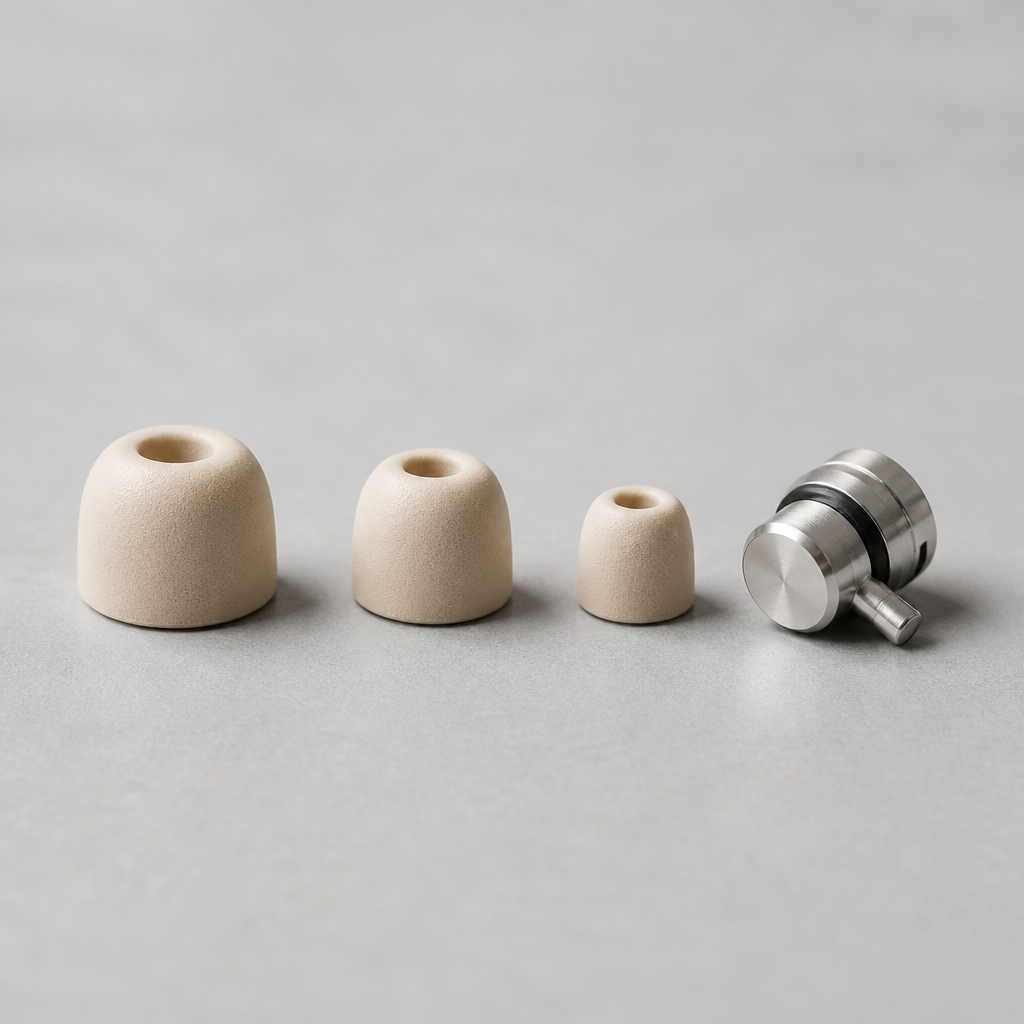
Size is the first decision that controls fit, and it is where many buyers make a guess. Our plugs come in three tip sizes, XS, S, and M, because ear canals vary in width and depth. The right size is the one that seals without pressure, not the one that feels most comfortable on the first try.
Start with the size that feels right at the canal opening, then insert it and check the seal. If you hear a whistle when you move your jaw, try the next size up. If the plug feels like it is pushing against the back of your ear, try the next size down.
Do not rely on the first test alone. Try all three sizes in one session, sit quietly, and note which one sounds the most muffled while still feeling easy to wear. That tip size is usually the right one for your canal, even if it is not the one you expected.
Pull the top of your ear up and back to straighten the canal, then insert the plug with a gentle twist. Hold it in place for several seconds while the foam takes its shape. Rushing this step is the most common reason a plug seals at the canal opening but leaks deeper in.
The National Institute on Deafness and Other Communication Disorders notes that after inserting earplugs, your voice should sound different to you, possibly louder. That change is the occlusion effect, and it is your quickest signal that the plug is sealing. If your voice sounds normal, reinsert the plug before you assume the rating is doing its job.
Pro tip: Insert the plug, then cup your palms over your ears for a few seconds and release. If the sound changes and the plug stays put, the seal is holding. If the plug pops out or the sound stays the same, the size or angle is wrong.
Reusable plugs change the fit conversation because the metal body lasts, while the foam tip is the part that wears out. Most of the seal lives in the tip, so keeping the tip in good condition matters more than keeping the body shiny.
Foam tips pick up earwax, skin oil, and dust every time they go in and out of the ear. Over time they compress more slowly, lose their rebound, and stop filling the canal the way they did when new. The change is gradual, so most people do not notice the loss until the plug starts leaking.
We recommend replacing foam tips every 6 to 8 weeks. Treat that as a maximum, not a target. If a tip looks discoloured, feels stiff, or has lost its shape, replace it sooner.
Wipe the metal body with a dry or slightly damp cloth after use, and let it dry completely before you store it. Keep the tips clear of debris, and store the plugs in a case rather than a pocket, where lint and grit can work into the foam.
Wet or dirty tips lose their ability to recover their shape, which weakens the seal before the tip looks damaged. A tip that feels tacky or sticky is past the point where it will seal reliably, even if it still looks usable at a glance.
There are several ways to get a seal, and each one fails in a different place. Knowing where a method usually goes wrong makes it easier to choose one for your situation, and easier to spot the failure when it happens.
The table below compares three common approaches. The right choice depends on how often you wear the plugs, how long you wear them, and how much noise you need to block.
| Approach | How the Seal Forms | Where Fit Usually Fails |
|---|---|---|
| Pre-formed foam plugs (compress, then insert) | The foam expands inside the canal after it is compressed and inserted | Shallow insertion, or uneven recovery in narrow canals, which leaves a channel along the wall |
| Reusable memory foam tips on a metal body (ATTENU8 design) | You choose from three tip sizes, and the soft tip conforms to the canal within the first few minutes of wear | Choosing the wrong size, or wearing tips past the 6 to 8 week replacement window |
| Custom molded plugs (made from an ear impression) | The shape is built from a mould of your own ear canal | Requires a professional impression and fitting, and changes in ear shape over time may need a refit |
For sleep, a reusable tip with a good size match is often the most practical option, because the plug can stay in for hours and the foam is soft enough to reduce pressure. For occasional loud environments, pre-formed foam can work well if you take the time to insert it properly.
For daily exposure at high noise levels, a custom fit often delivers the most consistent seal. The cost is a fitting appointment and a longer lead time, but the fit is tailored to your ear rather than to the average ear the sizing was designed around.
When a plug leaks, most people try to push it in harder. That is usually the wrong fix. Pressure can compress the tip into a shape that seals briefly and then slides out, or it can cause ear discomfort that makes you remove the plug altogether.

Remove the plug and inspect the tip for shape, colour, and stiffness. Reinsert it using the upward and back pull, then perform the voice check. If the voice sounds normal, try the next tip size and repeat the process before you give up on the product.
If the plug still leaks after changing size, check the body and the tip for debris. Replace the tip if it is worn, because a tired tip will not seal even in a correct size.
If you keep hearing through the plugs in a loud workplace, the answer may be a different type of protection rather than a better plug. Earmuffs can add protection over plugs in very loud settings, and a custom fit can help if your canal shape consistently defeats standard sizes.
Do not accept a leak as the normal cost of hearing protection. A plug that fails repeatedly is telling you something about your ear, your size, or your wear pattern, and each of those can be fixed.
Pro tip: Keep a note of the tip size you use and the date you last replaced the tips. A simple log makes it obvious when a seal starts to drift, and it stops you from relying on a worn tip because it still looks fine.
Not necessarily. A higher rating means the plug can reduce more sound when it is sealed properly, but a poorly fitted high-rated plug can perform worse than a well-fitted lower-rated one. Fit is the variable that determines how much of the rating you actually receive.
Use the voice check. After insertion, your voice should sound muffled and closer to you. Then move your jaw and turn your head. If you hear a whistle, a rush, or a sudden return of sound, the seal has broken and you should reinsert or change size.
You can use it as a planning estimate. Subtract 7 from the rating, divide by 2, and subtract that from your exposure level in decibels. The result assumes correct insertion and a consistent seal, so treat it as a best-case figure and verify fit on the job.
Comfort and seal are not the same thing. A plug can sit comfortably in the outer part of the canal while a narrow channel remains deeper in, usually along one wall. Lower-frequency sounds are the most likely to come through that channel, which is why the hum of machinery can stay audible.
Replace them every 6 to 8 weeks, or sooner if they look discoloured, feel stiff, or lose their shape. Earwax and skin oil degrade the foam gradually, so a tip that still looks usable may no longer seal well.
They can be, when the size is right and the tips are in good condition. Reusable tips with a consistent fit can give you a reliable seal over many uses, but the advantage depends on choosing the correct size and replacing tips on schedule.
Tell us which fit problem you have run into most, whether it is a whistle at night or a leak during a shift, because that feedback shapes the guidance we publish next.

