


 0

Parents often ask whether ear plugs for children are a sensible tool or an accident waiting to happen. The honest answer is that they can help a child who is kept awake by a noisy sibling, traffic, or a household that never fully quiets, but only if the child is ready to manage them, the fit is right, and an adult stays in charge of every insertion. Most problems come from skipping those steps. This guide covers the age question, the safety rules that matter most, and a practical way to introduce ear plugs to a child who is sensitive to sound.
| Key Insight | Explanation |
|---|---|
| Start only when readiness is clear | A child who can follow a stop instruction, keep a plug in without chewing it, and tell you if it hurts is a candidate. A child who pulls at their ears or forgets where plugs are is not ready to manage them alone. |
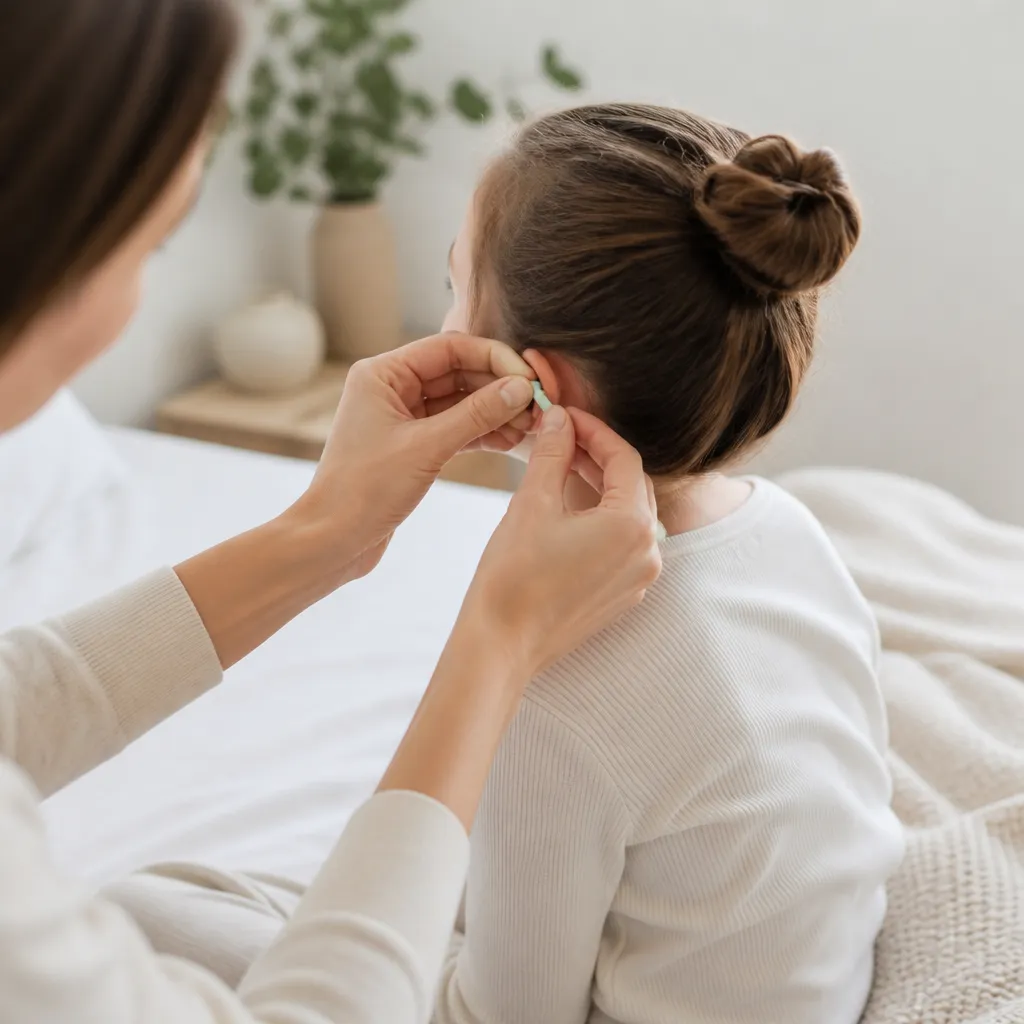
| Adults handle insertion and removal | For younger children, a parent should insert and remove every plug at bedtime. Never leave a young child to fit or retrieve a plug in the dark. |
| Tips stay at the entrance | The tip should sit at the opening of the ear canal. If it needs pushing to stay put, the size is wrong, so stop and change the tip rather than forcing it. |
| Remove detachable parts and check daily | Small children put objects in their mouths. Keep spare tips in a labelled case out of reach, and inspect plugs each morning for tears or loose pieces. |
| Test audible alarms before sleep | Run a daytime test with the plugs in. If the child cannot clearly hear a smoke or carbon monoxide alarm, do not use plugs while they sleep in that room. |
| Keep adult-sized products for older children | Our plugs are designed for adult ear canals. Talk to a pediatrician or audiologist before using any adult-sized plug on a child, and choose the tip size with them. |
| Stop at any sign of ear pain | Pain, discharge, redness, or a child who keeps pulling at the ear means the plugs come out and a doctor should check the ear before any further use. |
Yes, with conditions. Ear plugs are not automatically dangerous for a child, but the risks come from poor fit, deep insertion, and a lack of supervision. Most parents who ask this question are dealing with a child who wakes at a dishwasher, a sibling’s music, or a car passing the window. Ear plugs reduce the sound that reaches the ear. They do not fix the source of the noise.
Some children have a heightened sensitivity to sound, and a quieter sleeping environment can help them settle. Ear plugs are one tool for that, not a treatment for a sleep disorder or a sensory condition. If the child is distressed by noise during the day as well as at night, that is a conversation to have with a clinician rather than something to solve with a pair of plugs.
In practice, plugs work best as one layer. A door that closes fully, a rug or curtain that dampens echo, and a steady low background sound placed away from the bed all reduce the load before the plug does any work. We have found that families who add plugs to a messy noise environment get less benefit than families who first address the room. A plug should be the final step, not the only step.
There is no single age that works for every child. Readiness matters more than a birthday, and two children of the same age can be at very different stages. The question to ask is whether the child can follow simple instructions, keep a plug at the entrance of the ear, and remove it without tugging or losing it.
A child who is ready can say when something feels wrong, leaves the plug alone once it is in, and does not chew or mouth it. They can also be trusted to tell you if the plug has fallen out. If a child keeps trying to take plugs out as soon as they go in, that is a signal to wait, not to push through. Readiness is about behaviour, not just age.
For young children, the safest approach is that a parent inserts and removes every plug at bedtime. The child should never be left to fit or retrieve a plug alone, especially in a dark room. This also means the parent can see whether the plug is sitting correctly before the child settles, which catches most problems early. Older children can take on more of this task, but a parent should still check the fit and the tip condition every few nights.
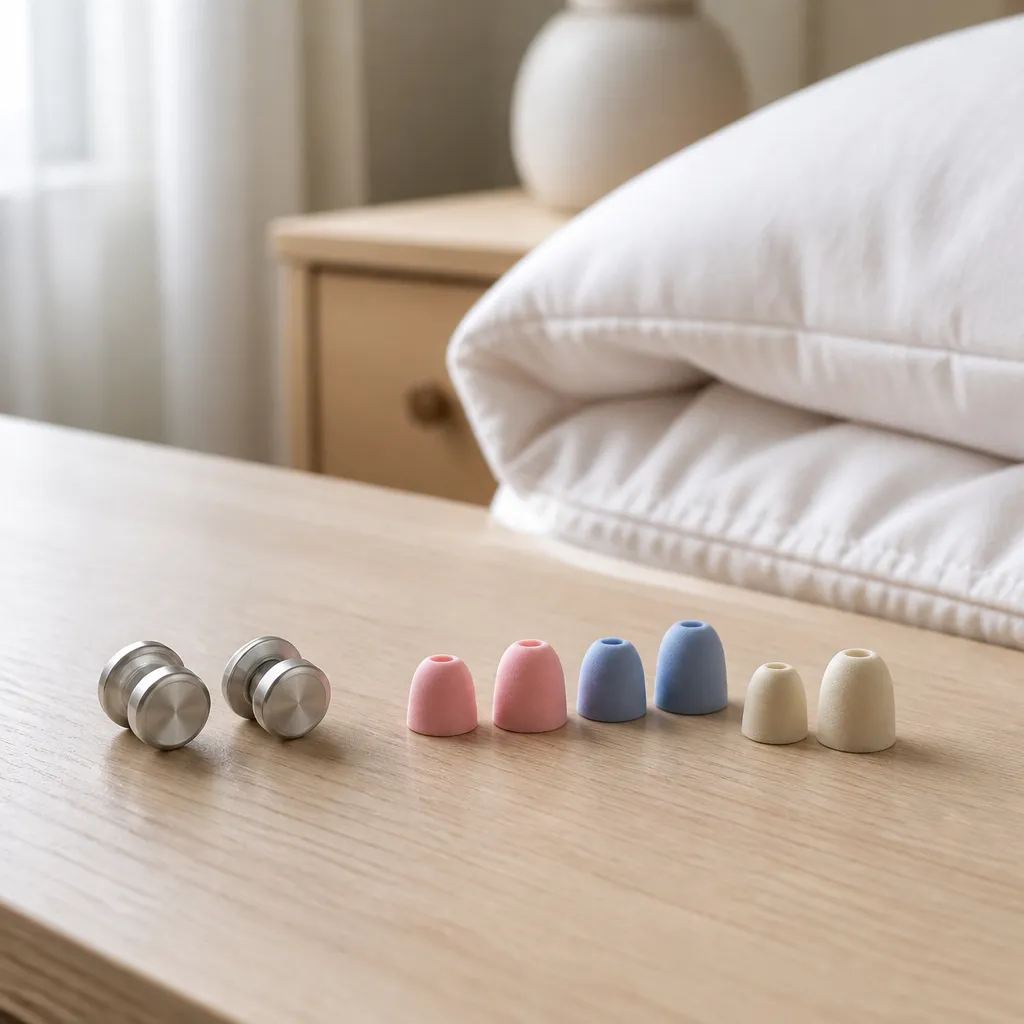
A child’s ear canal is smaller than an adult’s, so a tip that seals well on an adult can sit differently on a child. Our plugs come with XS, S, and M foam tips. The XS tip is the usual starting point for a smaller canal, but size should be checked by feel and by looking at how the tip sits, not assumed from the label. Any choice for a child should be confirmed with a clinician.
A good seal feels snug but not painful, and the child should not be able to hear the room at full volume. One practical check is to have the child hum quietly with the plugs in. If the hum sounds very boomy, that is the occlusion effect, a common feature of plugs that seal well. If the hum sounds unchanged, the plug may not be sealing at all, and the tip may be too small or sitting wrongly.
Pain, a feeling of pressure, a plug that falls out, or a child who keeps reaching for their ear all point to a wrong fit. Stop and try a different tip size. Do not try to force a plug to stay in by pushing it further. Long-term users of ear plugs often find that changing the shape or type of plug relieves pressure points, and the same principle applies to children. A different tip is a better fix than a deeper insertion.
Most of the safety problems with ear plugs for children come from habits rather than the product itself. Simple rules, applied every night, prevent nearly all of them. The rules below are the ones we would want any parent to follow before the first night.
The tip belongs at the entrance of the ear canal, not inside it. Deep insertion can irritate the skin, press on wax, or push material toward the eardrum. A child cannot tell you when this is happening until it hurts, so the parent has to check the depth every time. If you need to push, stop.
Young children explore the world with their mouths, so any small part is a risk. Remove detachable tips when the plugs are not in use, store spares in a labelled case out of reach, and check each plug every morning for tears or pieces that have come away. If a child swallows a tip or part, seek medical advice immediately, and call emergency services straight away if the child is choking or has trouble breathing.
Ear plugs should not be used when a child needs to hear something important. That includes smoke alarms, carbon monoxide alarms, a parent calling from another room, or a child who is unwell. Ear pain or discharge is a reason to skip plugs entirely until a doctor has checked the ear.
Pro tip: Run a daytime test with the plugs in. Ask your child to say when they hear a smoke alarm test or a dropped pan. If they cannot hear a clear alarm, do not use plugs while they sleep in that room.
The first night should never be the first time a child wears plugs. A slow introduction in daylight shows you whether the fit works, lets the child get used to the feeling, and gives you a calm moment to fix problems before bedtime. Introducing plugs as a choice rather than a rule makes a large difference to how the child responds.
Pick a calm part of the afternoon when the child is relaxed. Let them wear the plugs for a few minutes while playing quietly with an adult, then remove them. Praise the attempt rather than the outcome, and never use plugs as a punishment or a threat. A child who associates plugs with a fight will resist them at night.
Once the child tolerates plugs during play, try a short nap or quiet rest with them in. Then move to a full night. A sensible sequence looks like this:
Move to the next step only when the previous one has gone smoothly for several days.
Refusal is common and usually fixable. Let the child choose between two tip colours or sizes, if the choice is safe, and let them help put the plug in while you guide it. If they still refuse, drop the plugs for a few nights and try again later. Forcing the issue almost always makes the next attempt harder.
The main reason parents reach for plugs is sleep, and that is a reasonable goal. The trick is to block enough noise to help a child sleep without blocking so much that they miss sounds they need to hear. More noise reduction is not automatically better, and that is one of the most important points for children.
Our plugs are rated at about 32dB of noise reduction under test conditions. That is a manufacturer figure, and real-world results depend on the seal and the sound. For a child, a very high reduction can hide a parent’s voice, an alarm, or a child’s own cry. A smaller reduction that takes the edge off a noisy house is often more useful than maximum isolation. Reviewers who test plugs for daily use make the same point: a plug that cuts out too much can make a space harder to live in.
Before adding plugs, look at what is making the room loud. A bedroom next to a kitchen, a street-facing window, or a sibling’s music are all easier to fix than to block at the ear. Moving the bed away from an outside wall, sealing a gap under the door, and agreeing on a quiet period in the house often help more than any plug. Plugs then cover what is left.
If a child is still waking often, struggling to fall asleep, or seems exhausted during the day after you have addressed the room and tried plugs, talk to a pediatrician. Ear plugs do not treat sleep disorders, and a doctor can check for other causes. Persistent problems are a clinical question, not a product question.
The best plug for a child is the one an adult can insert, check, and remove without a struggle. If the routine is hard to repeat, the plug is not the right answer for that child yet.
Several approaches are used for children who need quieter ears, and each suits a different age and purpose. The table below compares three common options. None of them replaces a clinician’s advice, and the right choice depends on the child’s age, ear size, and the situation.
| Approach | Best suited for | Main drawback |
|---|---|---|
| Disposable soft foam plugs sized for children | Short-term trials, daytime practice, and travel with a child’s own supply | Single use creates waste, and sizing for a small canal can be hard to judge |
| Reusable metal-bodied plugs with XS foam tips, designed for adult ears | Older children and teens with clinician approval, whose ear canals are close to adult size | Not designed for young children, requires careful insertion, and tips need replacing every 6 to 8 weeks |
| Earmuffs or ear defenders | Loud daytime events, such as concerts, fireworks, or a noisy workshop, where a child can keep them on | Bulky for sleep and uncomfortable against a pillow |
Sleep is only one part of the picture. Children also face loud daytime settings such as sports events, school shows, fireworks, and power tools in a garden or workshop. Late October brings Halloween and, in many regions, fireworks season, so this is a good time to plan for a child who is noise sensitive. Ear plugs can help, but they are not a substitute for proper protection in genuinely hazardous noise.
Fireworks and starter pistols produce short, sharp bursts rather than steady noise. For these, a child may be better served by ear defenders, which are easier to remove and check than plugs. If plugs are used, make sure the child can still hear adults giving instructions, and move away from the loudest speakers or the firework display.
Older children who help with a lawnmower, power tools, or a farm job need hearing protection that matches the noise level. A teen who has been given the right protection and understands why it matters is far more likely to keep it on. Plugs and muffs should be chosen for the task, not just for comfort at home.
Keep a labelled case with spare tips and a clean pair of plugs somewhere accessible for busy weekends. Replace foam tips when they look dirty, torn, or misshapen, and do not wait for the full 6 to 8 week window if the tip has been in a dusty or wet environment.
Pro tip: Before a loud event, let your child practise putting plugs in and out at home for a few minutes. Confidence matters more than the product when the crowd noise starts.
There is no single age that suits every child. Readiness depends on whether the child can follow instructions, keep the plug in place, and tell you if something hurts. For younger children, a parent should handle every insertion and removal, and a pediatrician or audiologist should be consulted before regular use.
They can be, if the plug is correctly sized, inserted by an adult, kept at the entrance of the ear canal, checked daily, and removed if there is pain or discharge. Plugs should never be used where a child needs to hear alarms or a caregiver’s voice.
The smallest tip that seals comfortably without pressure is the right one. Our XS tip is a common starting point for a smaller ear canal, but the final choice should be checked with a clinician, particularly for a young child.
They can reduce some of the noise that disturbs sleep, but they do not treat sleep disorders or sensory conditions. The best results come from reducing noise at the source first, then adding plugs as a final layer. Persistent sleep problems should be discussed with a doctor.
Seek medical advice immediately, even if the child seems well. If the child is choking, has trouble breathing, or is distressed, call emergency services straight away. Keep detachable tips in a labelled case out of reach to prevent this from happening.
Wash reusable plugs and tips with mild soap and water, dry them fully, and inspect them daily. Replace foam tips every 6 to 8 weeks, or sooner if they are dirty, torn, or misshapen.
We would love to hear from parents who have tried this: what age did your child start, and what worked or failed in the first week?

