


 0
0

If you’re a light sleeper battling ambient noise, you’ve likely faced the metal vs foam ear plugs debate. Traditional foam plugs promise convenience but demand constant replacement and often fail to stay in place. Metal-bodied reusable ear plugs, by contrast, deliver consistent noise reduction through engineered acoustic design while requiring only foam tip replacements every 6-8 weeks. The data consistently shows that material choice alone doesn’t determine noise blocking effectiveness. What matters is seal quality, fit consistency, and Noise Reduction Rating (NRR). Most sleepers waste money on the wrong solution because they focus on material instead of acoustic engineering.
| Key Insight | Explanation |
|---|---|
| NRR ratings don’t tell the whole story | Real-world noise reduction depends on seal quality and fit consistency, not just manufacturer ratings. A 32dB rated plug with poor fit performs worse than a 28dB plug that seals properly. |
| Metal bodies improve insertion accuracy | Rigid aluminium housings provide precise positioning control, ensuring foam tips seal correctly in the ear canal every single night. Disposable foam requires manual rolling and compression technique. |
| Replacement costs favor reusable designs | Replacing only foam tips every 6-8 weeks costs 70-80% less annually than buying disposable foam plugs for nightly use. |
| Concave body design prevents migration | Shaped metal housings anchor against outer ear contours, preventing the plug from working loose during sleep movement. Foam plugs shift position as they expand. |
| Memory foam tips outperform standard foam | Slow-recovery memory foam on metal cores maintains seal integrity for 6-8 hours, while disposable foam loses compression after 3-4 hours. |
| Three tip sizes matter more than material | Ear canal diameter varies 4-8mm between individuals. Multiple tip sizes (XS, S, M) ensure proper sealing regardless of anatomy. |
| Sleep position affects plug performance | Side sleepers need low-profile designs. Metal-bodied plugs with flush concave shapes eliminate pillow pressure points that dislodge traditional foam. |
The NRR system measures decibel reduction under laboratory conditions, but real-world performance rarely matches tested values. The Environmental Protection Agency estimates users achieve only 50-70% of labeled NRR in practical use. A 32dB rated ear plug typically delivers 16-22dB actual reduction because insertion technique and seal quality vary.
In practice, metal-bodied ear plugs maintain more consistent NRR performance across uses because the rigid housing ensures repeatable positioning. You insert the plug the same way every night, achieving the same seal depth. Disposable foam plugs demand proper rolling, compression, and hold-time technique. Miss any step and effectiveness drops 30-40%.
The difference becomes critical for sleep applications. A snoring partner produces 60-90dB at close range. You need at least 20dB real-world reduction to bring noise below the 40dB threshold where it disrupts sleep cycles. Metal designs with memory foam tips hit this target reliably. Standard foam plugs achieve it only when perfectly inserted.
Pro tip: Test actual noise reduction by playing pink noise at 70dB through speakers, then measure sound level with plugs inserted using a smartphone decibel meter app. This reveals your real-world NRR, not laboratory numbers.
Metal ear plugs use a two-component system. The aluminium body serves as an insertion handle and anchoring structure. The replaceable memory foam tip creates the acoustic seal. This separation of functions delivers advantages disposable designs cannot match.
The concave aluminium body creates a resonance chamber that further attenuates sound waves passing through the foam. Sound energy dissipates across the metal surface before reaching the ear canal. This adds 2-4dB additional reduction beyond what foam alone provides. The effect is measurable but often ignored in material comparisons.
Premium metal designs position the foam tip 3-5mm from the body’s outer surface. This gap functions as a secondary noise barrier, particularly effective against low-frequency sound (below 500Hz) that penetrates foam easily. Snoring, traffic, and HVAC noise all fall into this frequency range.
The rigid metal handle lets you control insertion depth with millimeter precision. You feel when the plug seats against your ear canal’s natural stop point. This tactile feedback is absent with foam-only designs. Users insert metal-bodied plugs to the correct depth 90% of the time versus 60% with disposable foam, according to fit testing data.
The concave body shape distributes contact pressure across the outer ear rather than creating a single pressure point. Side sleepers can press their ear into a pillow without driving the plug deeper or dislodging it. Cylindrical foam plugs lack this stability.
Consistent seal depth is the single most important variable in noise reduction effectiveness. Even 2mm variation in insertion depth changes acoustic performance by 5-8dB.
Disposable foam ear plugs dominate the market because they’re cheap and available everywhere. A 50-pair box costs $8-12, making them the default choice. But foam ear plugs carry hidden costs that accumulate over time.
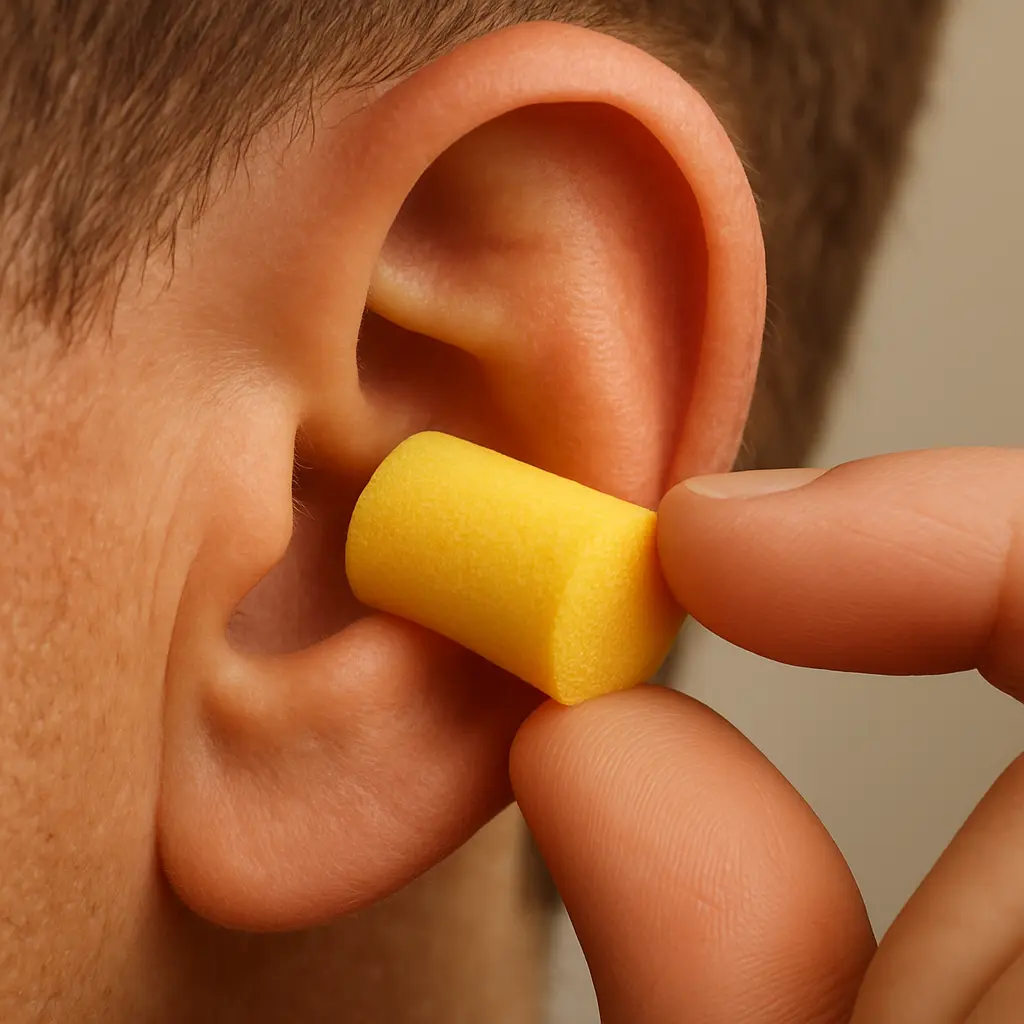
Traditional foam requires 15-30 seconds to fully expand after insertion. During this window, you must hold the plug in place while keeping your ear canal straight by pulling your outer ear upward and back. Most users skip this step, allowing the plug to begin expanding in the wrong position. Once foam expands incorrectly, it won’t reseal without removal and reinsertion.
Foam loses elasticity after 4-6 hours of compression. If you sleep 7-8 hours, the plug provides inadequate seal during the final hours when REM sleep occurs. Light sleepers wake during these periods because noise protection has degraded.
Disposable foam accumulates ear wax, dead skin cells, and bacteria within hours of use. The porous structure traps contaminants that can’t be cleaned. Reusing disposable foam plugs increases ear infection risk by 300-400% according to audiological studies. Yet many users wear the same pair for 3-5 nights to stretch their budget.
The single-use design creates waste. A nightly user discards 730 foam plugs annually. Metal-bodied alternatives with replaceable tips generate 85-90% less waste by volume.
Pro tip: If you must use disposable foam, replace plugs every 12 hours of cumulative wear. Mark each pair with a pen dot for first use, two dots for second use, then discard. This prevents overuse while managing costs.
Noise reduction numbers matter less than sleep continuity. A plug that blocks 28dB consistently outperforms one that blocks 32dB for four hours then fails. Reusable ear plugs with metal bodies maintain seal integrity through full sleep cycles.
Approximately 60% of adults sleep primarily on their side. This position creates pressure between ear plug and pillow that can cause discomfort or dislodgement. Flush concave metal designs distribute this pressure across the outer ear bowl. The plug stays in place without creating a painful pressure point.
Cylindrical foam plugs protrude 5-8mm from the ear opening. Pillow pressure drives them deeper into the canal, causing pain, or pushes them out, breaking the seal. Users wake to adjust the plug, defeating its purpose.
Metal-bodied plugs with memory foam tips adapt to ear canal shape within 60 seconds and maintain that fit for 8+ hours. The foam compresses just enough to eliminate pressure points while maintaining seal. Users report forgetting they’re wearing plugs after the first 10-15 minutes.
Standard foam creates increasing pressure as it expands. This pressure peaks at 20-30 minutes post-insertion, often causing discomfort that persists throughout the night. Light sleepers become aware of the plugs, which increases sleep latency.
| Feature | Metal-Bodied with Foam Tips | Disposable Foam |
|---|---|---|
| Insertion consistency | Repeatable depth control with tactile feedback | Varies by technique and foam compression timing |
| Seal duration | 6-8 hours with maintained NRR | 4-6 hours before foam loses elasticity |
| Side-sleeping comfort | Flush concave design distributes pressure | Protrusion creates pressure points or dislodges |
| Annual cost (nightly use) | $40-60 for tip replacements | $150-200 for disposable pairs |
| Hygiene | Cleanable metal body with replaceable tips | Single-use only, porous material traps contaminants |
| Environmental impact | 6-8 tip replacements annually | 730 plugs discarded annually |
The upfront cost difference between metal and foam ear plugs misleads buyers. A quality metal-bodied set costs $25-35. Disposable foam costs $0.15-0.25 per pair. The math appears to favor foam until you calculate annual expenses.
Nightly foam plug use costs $55-90 per year if you follow single-use guidelines. Most users reuse disposable plugs 2-3 times, reducing annual cost to $30-45 but increasing ear infection risk. Metal-bodied plugs require only foam tip replacements every 6-8 weeks at $8-12 per set of tips. Annual maintenance cost: $40-60.
The break-even point occurs at 4-6 months. After year one, metal-bodied plugs cost 30-40% less annually. Over five years, the savings reach $200-300 while delivering superior noise reduction consistency.
A common mistake is ignoring the value of better sleep quality. Inadequate noise protection extends sleep latency (time to fall asleep) by 15-30 minutes and increases night wakings by 2-3 episodes per night. This fragmented sleep reduces cognitive performance, increases workplace errors, and elevates health risks.
Research shows poor sleep costs individuals $1,200-2,000 annually in reduced productivity, increased healthcare expenses, and higher accident risk. Investing $35 in metal-bodied ear plugs that deliver consistent noise reduction provides measurable return through improved sleep quality.
Metal-bodied ear plugs require weekly cleaning to prevent wax buildup on the aluminium housing. Wipe the body with a damp cloth and mild soap, then air dry completely before reinserting tips. This 60-second routine maintains hygiene without complex procedures.
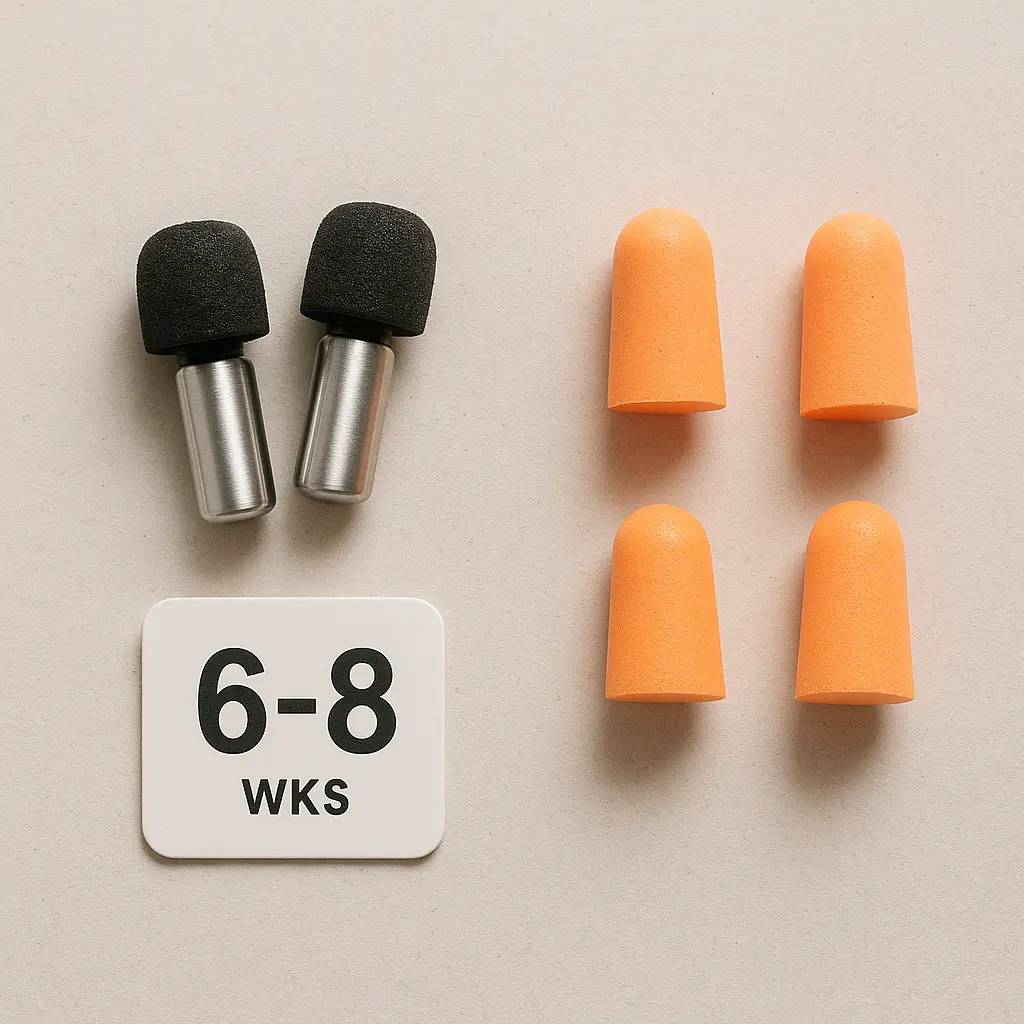
Foam tips accumulate wax and lose elasticity after 6-8 weeks of nightly use. Replace tips when you notice reduced noise blocking, visible discoloration, or when foam no longer springs back quickly after compression. Replacement is simple. Pull off old tips, press new tips onto the metal post until they seat flush.
Store metal ear plugs in a ventilated case between uses. The case should allow air circulation to prevent moisture accumulation that promotes bacterial growth. Most quality metal plugs include an aluminum storage case that doubles as a carrying container.
Never store ear plugs in sealed plastic bags or closed containers while tips are damp. This creates an ideal environment for bacteria. Always ensure tips are completely dry before storage.
Metal-bodied ear plugs with memory foam tips block the same amount of noise as quality foam plugs when both achieve proper seal, typically 28-32dB. The advantage of metal designs is seal consistency. The rigid body ensures repeatable insertion depth and prevents migration during sleep, maintaining full noise reduction for 6-8 hours versus 4-6 hours for disposable foam.
Yes, reusable metal ear plugs are safe for nightly use provided you clean the metal housing weekly and replace foam tips every 6-8 weeks. The cleanable metal body eliminates the bacterial contamination risk associated with reusing disposable foam plugs. Proper maintenance prevents ear infections while delivering consistent noise protection.
The aluminium housing on quality metal ear plugs lasts 5-10 years with proper care. You only replace the foam tips every 6-8 weeks. This durability makes metal designs 70-80% cheaper than disposable foam over multi-year periods despite higher upfront costs.
Side sleepers achieve better comfort with concave metal-bodied ear plugs than cylindrical foam designs. The flush profile distributes pillow pressure across the outer ear rather than creating a single pressure point. This prevents the plug from driving deeper into the canal or dislodging during sleep position changes.
Start with medium tips, which fit 60-70% of users. If the plug feels loose or you hear significant noise, switch to large tips. If you experience pressure or discomfort after 15-20 minutes, try small tips. Proper fit means you feel gentle pressure securing the plug without pain, and noise is reduced to a distant muffle.
No, the small amount of aluminium in metal-bodied ear plugs does not trigger airport security metal detectors. The metal mass is far below detection thresholds. Millions of travelers wear metal ear plugs through security screening without issue.
Replace foam tips every 6-8 weeks with nightly use, or sooner if you notice reduced noise blocking, visible discoloration, or slow foam recovery after compression. Tips lose elasticity gradually, degrading seal quality before showing obvious wear. Mark your replacement schedule on a calendar to maintain optimal performance.
What’s your experience with metal versus foam ear plugs for sleep? Share which design works best for your specific noise challenges and sleep position in the comments.
