


 0
0

Anyone who has struggled with traditional foam ear plugs knows the frustration. You roll them between your fingers, try to jam them into your ear canal before they expand, and often end up with inadequate protection because they never seated properly. The data consistently shows that foam ear plugs difficult insertion is the primary reason users abandon hearing protection altogether. According to NIOSH research, improper insertion reduces noise reduction by up to 50%, turning a 32dB rated plug into a 16dB disappointment. The problem isn’t your ears. It’s the product design itself.
| Key Insight | Explanation |
|---|---|
| Compression window is too short | Foam ear plugs begin expanding within 2-3 seconds, forcing rushed insertion that compromises seal quality |
| Dirty hands contaminate foam | Oil and moisture from fingers reduce foam expansion rate by 30-40%, creating inconsistent protection |
| Roll-and-hold technique fails frequently | Most users under-compress the foam or release too early, preventing proper canal depth |
| No physical insertion guide | Foam offers no stem or handle to control angle and depth during the critical insertion moment |
| Single-use design encourages shortcuts | Users skip proper technique because they view each pair as disposable, creating bad habits |
| Pre-shaped alternatives eliminate guesswork | Reusable ear plugs with metal stems provide tactile feedback and consistent insertion angle every time |
| Memory foam tips combine both benefits | Replaceable foam tips on rigid bodies give you the comfort of foam with the control of a handle |
The roll-down method for foam ear plugs sounds simple until you try it in practice. You need clean, dry hands to compress the foam into a tight cylinder without creases. Any wrinkle or fold creates an air channel that destroys the seal.
The bigger issue is compression consistency. Industrial hygiene studies show that even trained workers compress foam ear plugs to different diameters on successive attempts. One insertion might achieve 28dB reduction while the next barely reaches 18dB, all because the starting diameter varied by 2-3mm.
Pro tip: If you must use foam ear plugs, roll them on a clean surface rather than between your palms. This creates a more uniform cylinder and keeps skin oils off the foam surface.
Temperature affects everything. Foam compresses differently at 15°C versus 25°C. In cold environments like construction sites in winter, the foam becomes stiffer and harder to roll. In hot warehouses, it becomes tacky and sticks to your fingers instead of sliding into position.
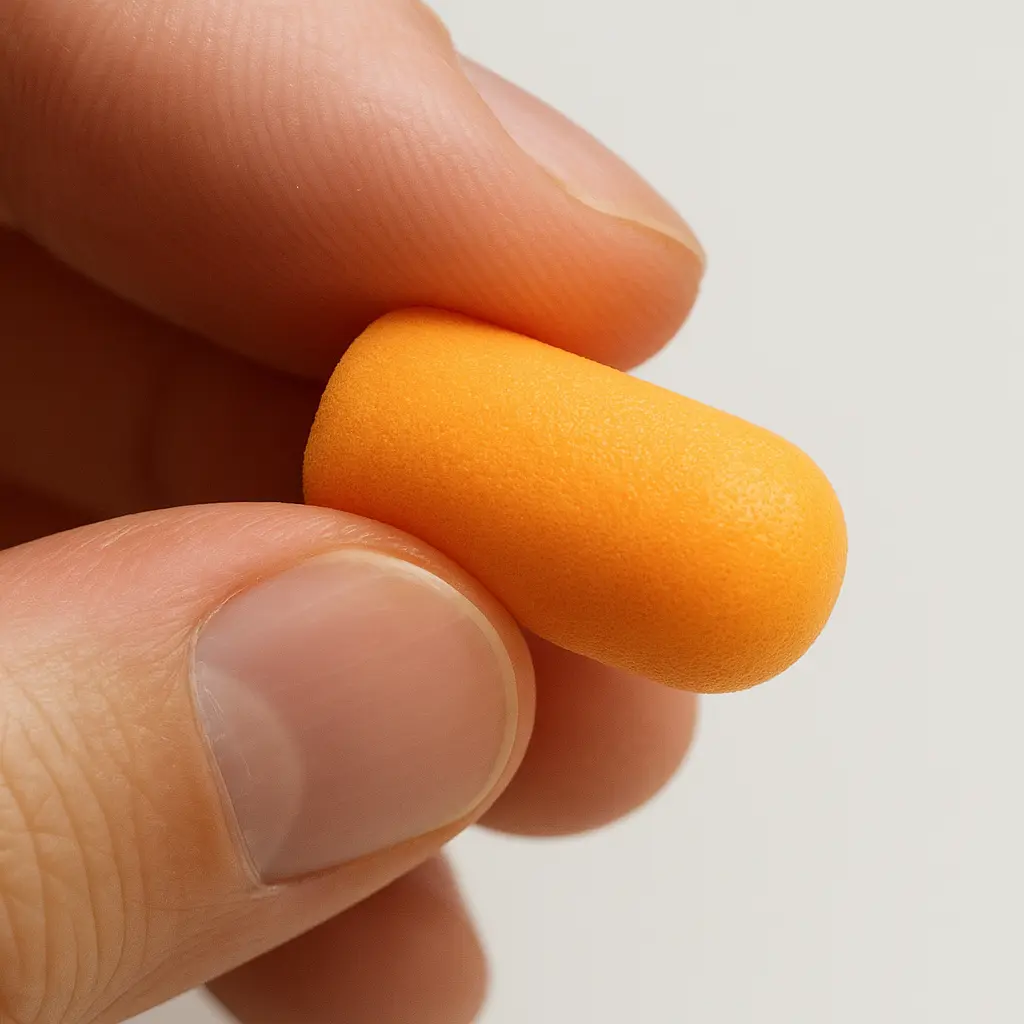
Once compressed, you have roughly three seconds before the foam begins recovering to its original shape. This creates a panicked insertion process where speed matters more than technique. Most users sacrifice proper ear canal alignment just to beat the clock.
In practice, reaching behind your head to straighten the ear canal while simultaneously inserting a rapidly expanding foam plug requires coordination that feels unnatural. Miss the window, and you need to start over with a fresh plug because re-compressing foam that has already partially expanded never works as well.
The ear canal straightening technique adds another layer of complexity. You need to reach over your head with the opposite hand, pull your ear up and back, then insert the compressed foam plug with your other hand before it expands. All while maintaining the tight compression.
A common mistake is inserting the plug straight into the ear without straightening the canal first. The human ear canal curves forward at roughly a 30-degree angle. Foam inserted straight in hits the canal wall and stops short of the optimal depth, leaving you with 15-20dB reduction instead of the rated 32dB.
Proper ear plug insertion requires the plug to reach past the first bend in the ear canal, typically 10-15mm deep for adults. Surface-level insertion provides minimal protection regardless of the plug’s rated NRR.
Night-time insertion compounds these challenges. Trying to properly compress and insert foam ear plugs in the dark, while lying down, when you are already tired, explains why so many people give up on hearing protection for sleep entirely.
Ear canals vary dramatically between individuals. Some people have narrow canals that require smaller plugs, others have wide canals that standard foam cannot seal effectively. The standard foam ear plug comes in one or maybe two sizes, forcing a one-size-fits-most approach that actually fits few people well.
Canal shape matters as much as size. Oval canals, round canals, and irregularly shaped canals all respond differently to uniform foam compression. An oval canal might achieve a good seal on the horizontal axis but leak on the vertical, creating inconsistent protection that users cannot detect without specialized testing equipment.
Pro tip: If foam ear plugs fall out while you sleep, your ear canal is likely too narrow or too curved for that plug diameter. This is not a technique problem but a fit problem that no amount of practice will solve.
Ear wax interferes with foam plug insertion more than most users realize. Even a thin coating prevents the foam from gripping the canal walls properly. The plug might feel seated but slips out easily because the wax creates a lubricated surface.
Moisture from showering or swimming makes insertion nearly impossible. Wet foam compresses into a dense, heavy cylinder that refuses to expand once inserted. Swimmers and people who shower at night before bed face this challenge repeatedly.
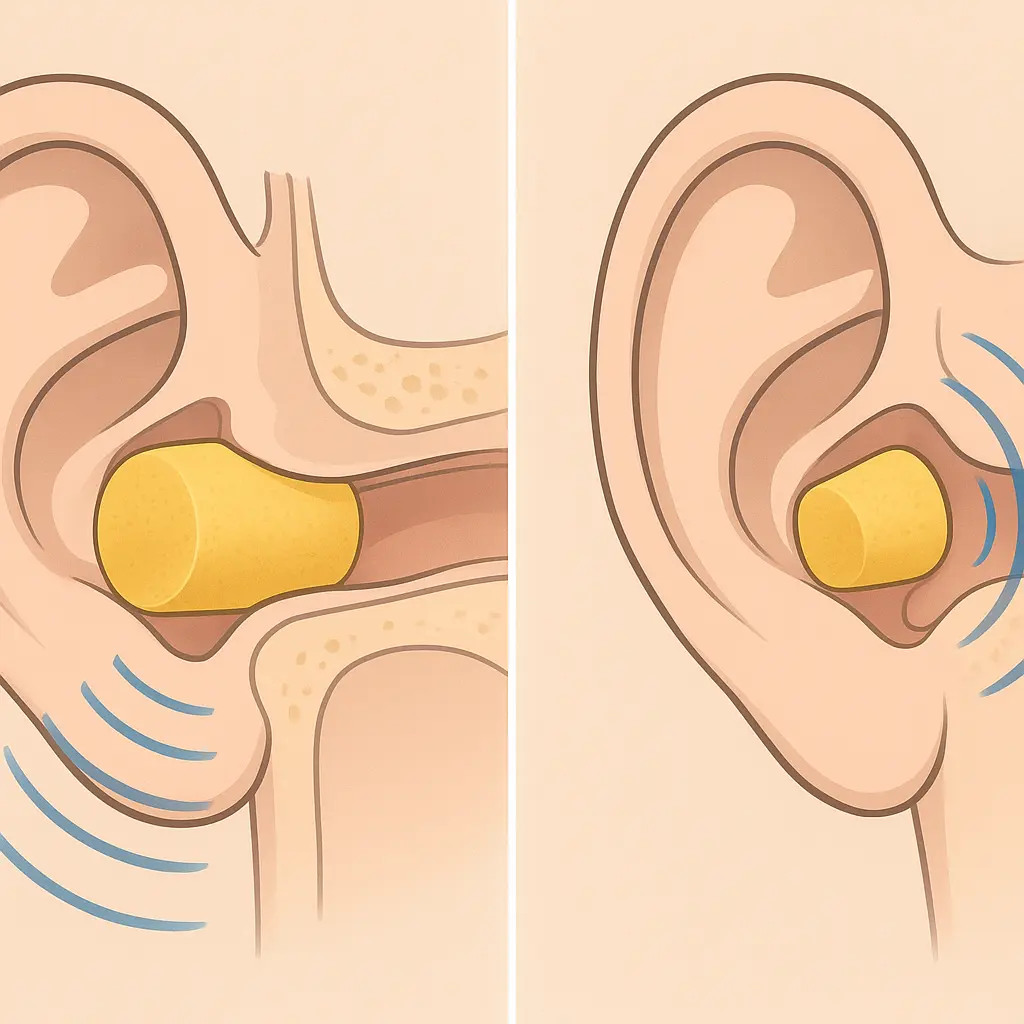
Reusable ear plugs with rigid metal bodies eliminate every foam compression problem. There is no roll-down step, no timing pressure, and no guessing about proper compression. You hold the aluminum stem, align it with your ear canal, and insert to a consistent depth every time.
The easy to insert ear plugs distinction comes down to tactile feedback. A metal-bodied plug lets you feel the insertion angle and depth through the stem. You know when it has seated properly because the concave body contours to your outer ear structure. Foam provides no such feedback until it is too late to adjust.
ATTENU8 plugs use this principle with three sizes of memory foam tips attached to aluminum stems. You get the comfort and noise reduction of foam without the insertion gymnastics. The foam tips compress naturally as you insert them, but the metal body gives you complete control over angle and depth.
Offering XS, S, and M foam tips addresses the ear canal variation problem that standard foam cannot. Light sleepers with narrow canals use XS tips for comfortable all-night wear. Construction workers with larger canals use M tips for maximum noise reduction and retention during physical activity.
Swapping tips takes five seconds, letting you optimize fit for each ear independently. Many people need different sizes for left and right ears due to natural asymmetry. Disposable foam makes this impossible without buying multiple products.
The ear plug insertion tips that actually work focus on handle control rather than foam manipulation. Hold the stem like a pencil, pull your ear up and back with the opposite hand, then insert at a slight upward angle while twisting gently.
The memory foam tips compress against the canal walls automatically, creating a custom seal without requiring perfect pre-compression. If the seal feels incomplete, you simply withdraw slightly and reinsert at a different angle. Try that with traditional foam and you have ruined the plug.
| Feature | Traditional Foam Ear Plugs | Metal-Bodied Reusable Plugs |
|---|---|---|
| Insertion time required | 15-30 seconds per attempt, often multiple attempts needed | 5-10 seconds, single attempt success rate above 90% |
| Technique complexity | Requires compression, timing, and canal straightening coordination | Straightforward insertion using stem as guide and control point |
| Consistency between uses | Varies significantly based on compression quality and timing | Nearly identical insertion depth and seal quality every time |
| Dark or lying down insertion | Extremely difficult, high failure rate without visual reference | Easy due to tactile stem feedback and no compression step |
| Adjustment after insertion | Impossible without removing and using fresh plug | Simple to withdraw slightly and reposition for better seal |
| Size customization | Limited to one or two universal sizes | Three tip sizes plus independent left/right ear selection |
Traditional foam ear plugs cost £0.20 to £0.50 per pair. Used nightly, that is £73 to £182.50 per year. ATTENU8 reusable plugs cost £24.99 with foam tip replacements at £9.99 every 6-8 weeks. Annual cost totals roughly £60 with superior insertion ease and consistent performance.
The math becomes more compelling for professionals who use hearing protection daily. A construction worker going through two pairs of foam plugs per shift spends over £300 annually while dealing with constant insertion frustration. Switching to reusable plugs with replaceable tips cuts that to under £80.
Foam ear plugs become contaminated immediately upon handling. The oils, dirt, and bacteria from your fingers transfer to the foam during the compression process, then sit in your ear canal for hours. Single-use disposal is the only hygienic option.
Metal-bodied reusable plugs separate the insertion handle from the ear canal contact point. You touch the aluminum stem with your fingers while the clean memory foam tip enters your ear. The aluminum body rinses clean under water, and foam tips replace every 6-8 weeks before bacterial buildup becomes a concern.
Foam ear plugs fall out because they were never properly inserted past the first bend in your ear canal, or because the foam has compressed over time and lost its grip on the canal walls. Side sleeping puts lateral pressure on plugs that were not seated deeply enough, pushing them back out. Reusable plugs with metal stems insert to consistent depth and the concave body helps anchor them against your outer ear, preventing migration during sleep movement.
Reusing foam ear plugs creates two problems. First, the foam loses elasticity after the first compression and expansion cycle, reducing its ability to seal properly on subsequent uses. Second, the accumulated ear wax, skin cells, and bacteria make them unhygienic. If you want to avoid repeated insertion difficulty, switch to purpose-built reusable ear plugs with replaceable tips rather than trying to extend the life of disposable foam.
Most people have asymmetrical ear canals that differ in size and shape between left and right. Traditional foam ear plugs force you to use the same size for both ears, which often means one ear gets inadequate protection or comfort. ATTENU8 ear plugs come with three tip sizes specifically so you can optimize fit independently. Many users find they need size S for their left ear and size M for their right, which is impossible with standard foam.
The ear canal runs forward and slightly upward, so the correct insertion angle is toward your nose and the opposite eye, not straight into your head. You need to reach over your head with your opposite hand, pull your ear up and back to straighten the canal, then insert the plug at approximately a 30-degree forward angle. Metal-bodied reusable plugs make this easier because the stem gives you precise angle control throughout the insertion process rather than rushing to beat foam expansion.
Properly inserted ear plugs should sit 10-15mm deep, past the first bend in the adult ear canal. You should not see the plug body when looking at someone wearing them correctly. The plug needs to seal against the canal walls in the cartilaginous section, not just block the outer opening. Shallow insertion is the most common mistake with foam ear plugs because users cannot feel the proper depth during the rushed insertion process. Reusable plugs with stems provide tactile feedback that lets you insert to consistent depth every time.
Ear pain from foam plugs typically results from oversized foam expanding against the ear canal walls with too much pressure, or from repeatedly jamming plugs into the canal at incorrect angles during rushed insertion attempts. The foam can also dry out the ear canal by absorbing natural moisture. If you experience persistent ear pain, try reusable plugs with properly sized memory foam tips that compress to fit your canal shape rather than forcing your canal to accommodate oversized foam expansion.
Standard foam ear plugs often fail for people with small or narrow ear canals because the minimum compressed diameter is still too large for comfortable insertion, and the expansion force creates painful pressure. Purpose-designed reusable ear plugs offering XS tip sizes solve this problem. ATTENU8 includes XS memory foam tips specifically for narrow canals, providing the same 32dB noise reduction without forcing oversized foam into undersized spaces.
Have you struggled with foam ear plug insertion, or found a technique that works consistently? Share your experience and what finally solved the problem for you.
