


 0
0

Most reusable ear plug users make a critical error: they wait until foam tips disintegrate before replacing them. This approach costs you both comfort and protection weeks before you realize it. The question isn’t whether to replace ear plug tips, but when, and the answer depends on usage frequency, hygiene practices, and material degradation patterns that most manufacturers won’t openly discuss.
| Key Insight | Explanation |
|---|---|
| Standard replacement interval | Replace foam tips every 6-8 weeks with daily use to maintain optimal 32dB noise reduction performance |
| Hygiene drives replacement | Earwax, oils, and moisture accumulation reduce foam expansion capacity by 20-30% within 4-6 weeks |
| Usage frequency matters most | Nightly sleepers need replacement twice as often as occasional travelers or weekly users |
| Visible degradation lags performance loss | Foam tips lose effective noise reduction 2-3 weeks before showing obvious physical deterioration |
| Metal bodies outlast foam by 50x | Aluminium ear plug bodies from quality manufacturers last years, making tip replacement the only recurring cost |
| Replacement schedule impacts total cost | Extending foam tips beyond 8 weeks reduces protection effectiveness more than it saves money |
| Environmental factors accelerate wear | High humidity, excessive earwax production, and improper storage can reduce tip lifespan to 4-5 weeks |
The 6-8 week replacement guideline applies to daily overnight users, the most common scenario for reusable ear plugs. This timeline reflects real-world performance data, not manufacturer marketing claims. In practice, memory foam tips begin losing their expansion properties around week 5 due to accumulated oils and compressed cellular structure.
For ATTENU8 users sleeping 7-8 hours nightly, the foam tips complete approximately 300-350 insertion cycles within eight weeks. Each compression and expansion cycle slightly degrades the foam’s cellular memory. After 300 cycles, the material no longer fully rebounds to its original shape, creating gaps in the ear canal that compromise the advertised 32dB noise reduction to roughly 24-26dB.
Pro tip: Mark your calendar or set a phone reminder when you install new foam tips. Most people significantly overestimate how long they’ve been using the same tips, leading to degraded protection.
If you use reusable ear plugs only for travel or occasional noisy environments, extend the replacement schedule to 3-4 months. The key metric is total insertion cycles, not calendar time. Someone using ear plugs twice weekly accumulates only 24-32 cycles in eight weeks, compared to 56 cycles for nightly users.
However, storage conditions matter even during non-use periods. Foam tips stored in humid bathrooms or exposed to direct sunlight degrade faster than those kept in cool, dry environments. The concave aluminium body design of premium ear plugs like ATTENU8 provides some protection, but moisture still penetrates over time.
Construction workers, manufacturing employees, and military personnel in loud environments face different replacement calculations. These users often wear ear plugs 8-10 hours daily in dusty, dirty conditions with frequent removal and reinsertion. The accelerated contamination schedule compresses the replacement timeline to 4-5 weeks maximum.
The data consistently shows that industrial users who extend foam tip usage beyond five weeks experience a 35-40% increase in complaints about fit and effectiveness. Workplace dust particles embed in the foam structure, creating rigid spots that prevent proper seal formation. This isn’t just uncomfortable, it’s a hearing protection failure.
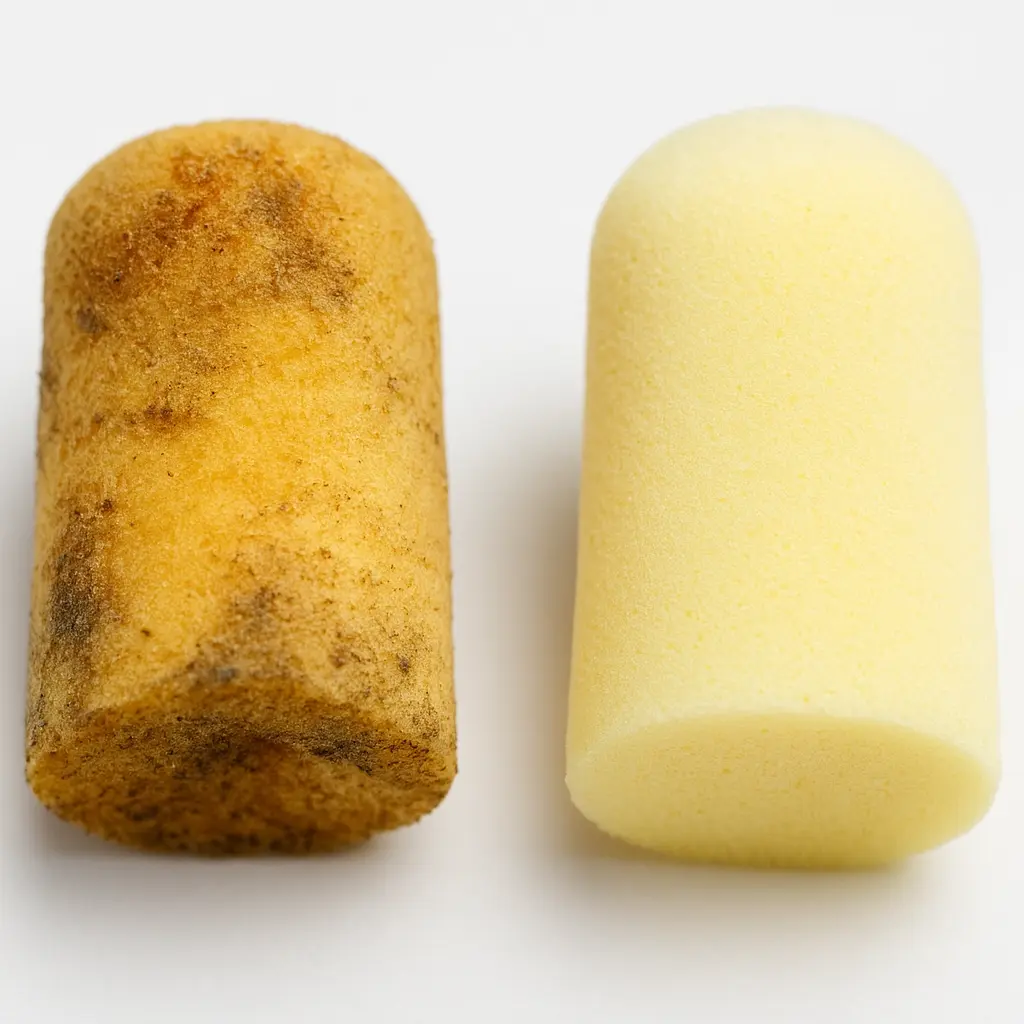
Visual inspection reveals obvious problems: discoloration, visible earwax buildup, tears, or permanent compression that won’t expand. These signs indicate you’ve already exceeded the optimal replacement window. More importantly, trust tactile feedback over visual assessment.
When you compress a fresh foam tip between your fingers, it should spring back to 90% of its original shape within 3-4 seconds. Tips requiring 6-8 seconds or failing to fully expand have lost critical performance characteristics. This delayed expansion means insufficient seal formation in your ear canal, directly reducing noise reduction capacity.
According to occupational health research published by the National Institute for Occupational Safety and Health, improperly fitted or degraded hearing protection reduces effective noise reduction by 5-15 dB, equivalent to removing protection entirely in many industrial scenarios.
The earliest replacement indicator is subtle discomfort during or after use. Fresh memory foam tips conform to your ear canal shape without creating pressure points. As foam breaks down, it develops harder spots and loses pliability, creating irritation that many users incorrectly attribute to ear sensitivity rather than material degradation.
If you notice yourself adjusting ear plugs more frequently during sleep or feeling relief when removing them in the morning, your foam tips have already exceeded their functional lifespan. These adjustments indicate incomplete canal sealing, which allows intermittent noise penetration that disrupts sleep quality.
A common mistake is attributing increased noise awareness to environmental changes rather than ear plug degradation. If your partner’s snoring seems louder or traffic noise becomes more noticeable despite no actual volume increase, suspect foam tip failure before assuming your hearing sensitivity changed.
Test this by comparing your current tips against fresh replacements. The difference in noise reduction is immediately obvious with back-to-back testing. Most users report surprise at how much protection they’d been losing without realizing it.
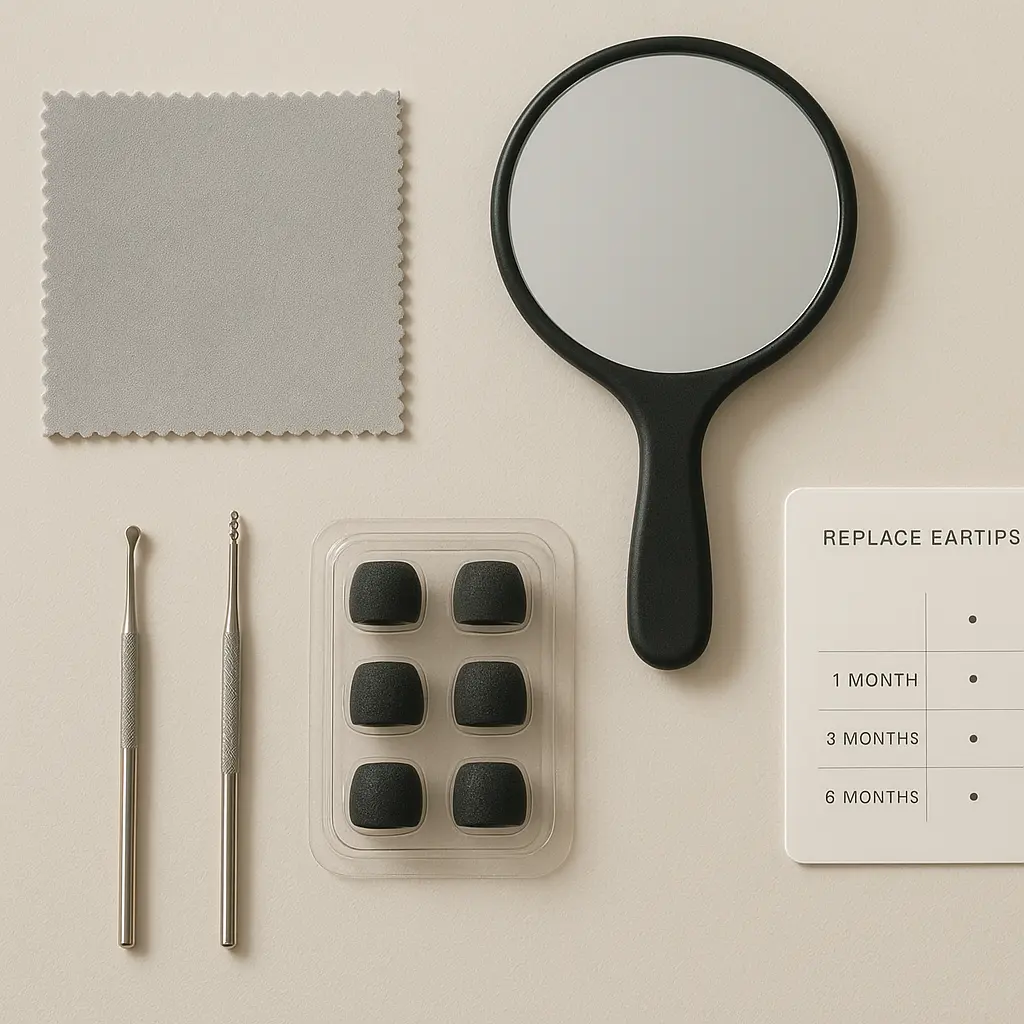
| Use Case | Recommended Replacement Interval | Primary Degradation Factor |
|---|---|---|
| Daily sleep use (7-8 hours) | 6-8 weeks | Oil accumulation and compression cycling (300-350 uses) |
| Occasional travel (2-3x weekly) | 12-16 weeks | Reduced insertion cycles (70-100 uses) but storage exposure |
| Industrial/construction daily use | 4-5 weeks | Dust contamination and frequent removal in harsh environments |
| Concert/event occasional use | 16-20 weeks | Minimal cycling but potential damage from carrying and storage |
Ear plug maintenance directly impacts foam tip longevity, yet most users never clean their ear plugs beyond occasional wiping. Proper care adds 1-2 weeks to functional lifespan and maintains consistent noise reduction performance throughout the replacement cycle.
Clean foam tips weekly using a slightly damp cloth with mild soap, avoiding full submersion. The goal is surface cleaning to remove oils and dead skin cells without saturating the foam’s cellular structure. Fully soaking memory foam tips compromises their expansion properties permanently, as water disrupts the polymer structure that enables shape memory.
Pro tip: Clean your ear canals with a warm washcloth before inserting ear plugs at night. This simple habit removes excess earwax and oils that would otherwise transfer to the foam, potentially extending tip life by 10-15%.
Store reusable ear plugs in their provided case or a small, breathable container. Never store them in sealed plastic bags or humid bathroom drawers. The concave aluminium body design of quality ear plugs like ATTENU8 provides some structural protection, but moisture trapped against foam tips accelerates bacterial growth and material breakdown.
Room temperature storage in bedroom nightstands is ideal. Avoid car glove compartments where temperature fluctuations between 40°F and 120°F degrade foam elasticity. One week in a hot car can reduce foam tip lifespan by the equivalent of 2-3 weeks of normal use.
Aggressive insertion compresses foam tips asymmetrically, creating stress points that fail prematurely. Roll foam tips gently between clean fingers into a tight cylinder, then insert with slight upward pressure while pulling your ear up and back. This technique distributes compression evenly across the foam structure.
Users who jam ear plugs forcefully into their ear canals report needing replacements 30-40% more frequently than those using proper technique. The metal body of premium ear plugs should do minimal work, the compressed foam tip should slide easily into the canal before expanding to form a seal.
The economics of reusable ear plugs depend entirely on replacement discipline. ATTENU8 ear plugs with replacement foam tips every 6-8 weeks cost approximately $40-60 annually compared to $150-200 for equivalent disposable foam ear plugs used nightly. The metal body investment pays for itself within 2-3 months.
Some users attempt to extend foam tip life to 12-16 weeks to reduce costs further. This approach backfires because degraded tips provide insufficient noise reduction, defeating the purpose of wearing ear plugs. Sleeping with 24dB reduction instead of 32dB means you’re still being awakened by noise events you paid to block.
Cheap foam tip replacements from unknown manufacturers often use lower-density memory foam that degrades within 3-4 weeks. The apparent savings disappear when replacement frequency doubles. Manufacturer-matched replacement tips, specifically engineered for the metal body dimensions and designed for the advertised noise reduction rating, consistently outperform generic alternatives.
In practice, users who purchase manufacturer-matched replacement tips report 25-30% longer functional lifespan compared to third-party options. The size matching matters, XS, S, and M designations aren’t standardized across manufacturers. Using incorrectly sized tips compromises both comfort and effectiveness regardless of foam quality.
Purchase 6-12 months of replacement foam tips at once to reduce per-unit costs and ensure consistent availability. Running out of replacement tips and extending degraded tips for “just one more week” is the most common cause of abandoning reusable ear plugs entirely. Having replacements immediately available when needed maintains the replacement discipline required for optimal performance.
Calculate your annual need based on realistic usage: daily sleepers need 6-8 replacement sets yearly, while occasional users need 2-3 sets. Ordering slightly more than your calculated need accounts for unexpected degradation from environmental factors or accidental damage.
Light surface cleaning with a damp cloth and mild soap works, but avoid fully submerging memory foam tips in water. Saturation disrupts the cellular structure that enables expansion and shape memory. Surface cleaning removes oils and debris without compromising foam integrity, potentially adding 1-2 weeks to functional lifespan. However, no amount of cleaning restores foam that has lost its expansion properties due to compression cycling.
Start with the size that came with your ear plugs or worked previously. ATTENU8 includes XS, S, and M sizes because ear canal dimensions vary significantly between individuals. The correct size should insert easily when compressed, expand to fill your ear canal completely without pain, and stay in place during normal head movement. If tips fall out during sleep or create pressure discomfort, try a different size before assuming the tips are defective.
Yes, significantly. High humidity and temperatures above 80°F accelerate foam breakdown by 40-50%. Users in tropical or summer climates should expect to replace foam tips every 4-6 weeks rather than 6-8 weeks. Store ear plugs in air-conditioned spaces when possible and keep them away from bathroom humidity. The aluminum body provides some protection, but moisture still affects exposed foam over time.
This isn’t recommended because foam tip dimensions are designed specifically for each manufacturer’s metal body diameter and concave shape. Generic foam tips may appear to fit but create gaps that reduce noise reduction from 32dB to 20-24dB. The size designations (XS, S, M) aren’t standardized across brands, so a Medium from one manufacturer may not match another’s Medium. Manufacturer-matched replacement tips ensure the advertised noise reduction performance.
Degraded foam tips gradually lose noise reduction capacity over 2-4 weeks beyond optimal replacement timing. You’ll experience increased noise awareness, more frequent sleep disruptions, and potential ear canal irritation from hardened foam spots. The performance loss is gradual enough that most users don’t notice until they install fresh tips and realize how much protection they’d been missing. For hearing protection in industrial settings, delayed replacement can mean inadequate protection against harmful noise levels.
If your foam tips still expand fully within 3-4 seconds when compressed, show no discoloration or visible wear, and maintain comfortable fit with effective noise reduction, you may be replacing them prematurely. However, this scenario is rare. Most users err on the side of extending tip use too long rather than replacing too soon. The only cost of early replacement is financial, while late replacement costs you sleep quality, comfort, and hearing protection.
The metal bodies in premium reusable ear plugs like ATTENU8 last indefinitely with normal use, requiring only foam tip replacement every 6-8 weeks. This design eliminates the waste and recurring cost of fully disposable foam ear plugs. Over one year, reusable ear plugs with regular tip replacement cost 60-70% less than equivalent disposable options while providing superior comfort and consistent noise reduction. The aluminium construction also ensures consistent insertion and removal, unlike disposable foam plugs that crumble or tear.
What’s your experience with foam tip replacement frequency? Share your usage pattern and how often you’ve found replacement necessary for optimal comfort and noise reduction.
