


 0
0

The wrong ear plug material can mean the difference between restful sleep and waking up at 3 AM to traffic noise. Most people grab whatever is available at the pharmacy, but the material you choose affects noise reduction, comfort duration, and total cost over time. Memory foam, silicone, and wax each excel in specific situations, and choosing the wrong one wastes money while your sleep suffers. Understanding how these materials actually perform in practice eliminates trial-and-error frustration.
| Key Insight | Explanation |
|---|---|
| Memory foam delivers highest noise reduction | Properly inserted memory foam achieves 30-33dB reduction, significantly better than silicone’s 22-25dB |
| Silicone wins for swimming and moisture | Waterproof properties make silicone the only practical choice for water exposure |
| Wax offers single-use customization | Moldable wax conforms to any ear shape but degrades within hours, making it expensive for regular use |
| Memory foam requires proper insertion technique | Roll, compress, insert, and hold for 30 seconds or performance drops by 50% |
| Reusable designs reduce long-term costs | Metal-bodied ear plugs with replaceable memory foam tips cost less after 3 months compared to disposables |
| Material firmness affects comfort duration | Softer memory foam maintains comfort for 6-8 hours, while firm silicone causes pressure points after 4 hours |
| Hygiene varies dramatically by material | Memory foam needs replacement every 6-8 weeks, wax is single-use, silicone can last months with cleaning |
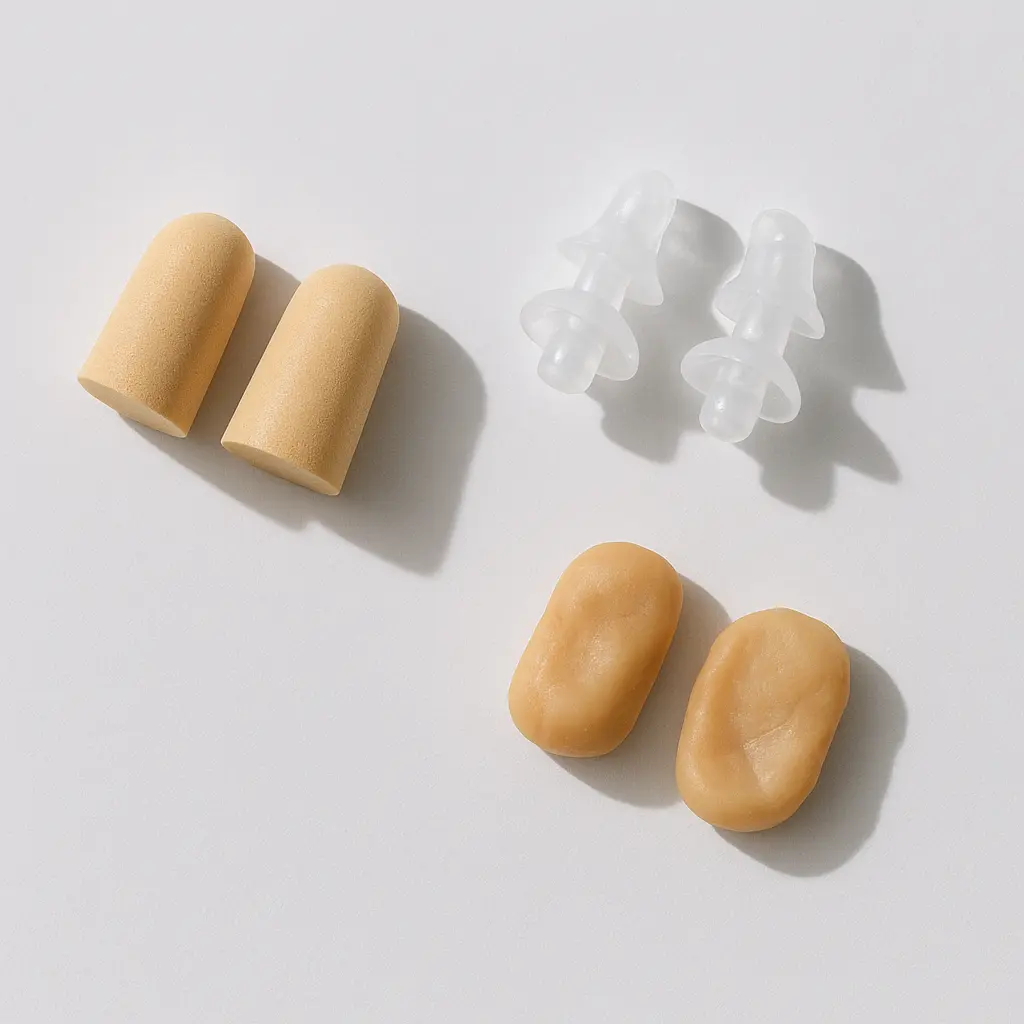
Memory foam ear plugs compress when rolled between your fingers, then expand inside your ear canal to create a complete seal. This expansion property delivers the highest noise reduction ratings available in consumer ear plugs, typically between 30-33dB when properly inserted. The material’s softness makes it comfortable for extended wear during sleep, which is why it dominates the sleep ear plug market.
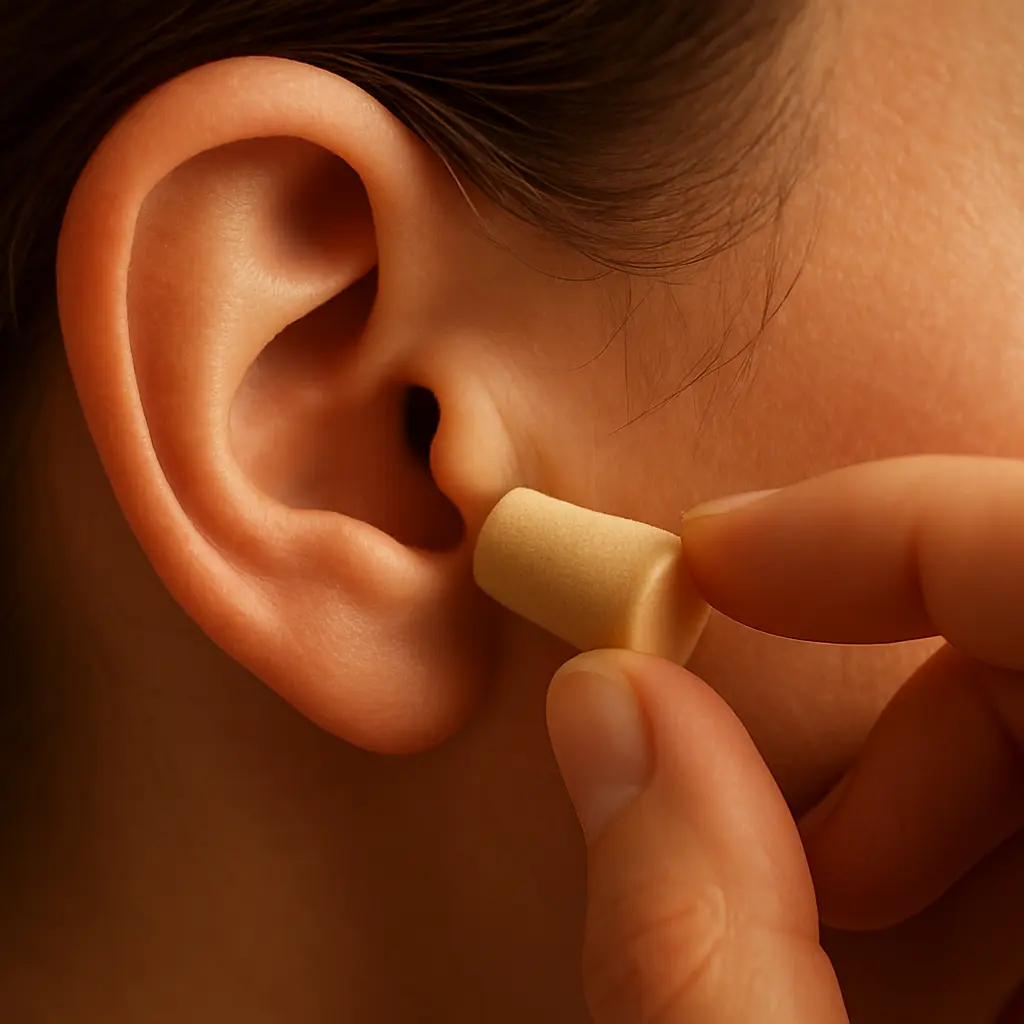
The primary drawback is insertion technique dependency. Roll the foam tightly between your fingers, pull your ear up and back to straighten the canal, insert deeply, then hold for 30 seconds while the foam expands. Skip any step and you might get only 15-18dB reduction instead of the rated 32dB. In practice, most first-time users insert too shallowly, leaving a gap that lets mid-frequency sounds through.
Memory foam degrades with use, absorbing ear wax, moisture, and oils from your skin. Disposable foam tips lose their expansion capability after 3-5 uses, becoming compressed and ineffective. This is where reusable designs with replaceable memory foam tips offer clear advantages. The ATTENU8 system uses a durable aluminum body with memory foam tips that maintain their expansion properties for 6-8 weeks before requiring replacement, not complete ear plug disposal.
Pro tip: Always check that memory foam tips have fully expanded after insertion by gently pressing on your tragus. If you hear your own voice become muffled and enclosed, the seal is complete.
The National Institute for Occupational Safety and Health data shows memory foam consistently outperforms other materials across frequency ranges. Low-frequency sounds like traffic rumble and neighbor bass get reduced by 28-30dB, while high-frequency sounds like voices and alarms still remain partially audible at reduced volume. This selective filtering prevents complete isolation while blocking disruptive noise.
Memory foam’s cellular structure absorbs sound energy rather than just blocking it. When sound waves enter the foam, they cause the cell walls to vibrate and convert acoustic energy into minimal heat. Denser foams with smaller cells perform better, which is why premium memory foam ear plugs feel noticeably different from cheap bulk packs.
Silicone ear plugs come in two distinct types: pre-molded flanged designs and moldable putty. Flanged silicone features multiple ridges that create progressive seals at different ear canal diameters, while moldable silicone putty gets shaped over the ear opening rather than inserted into the canal. Both share waterproof properties that make them the default choice for swimming and showering.
Flanged silicone typically achieves 22-25dB noise reduction, noticeably less than memory foam. The rigid material does not expand to fill irregular ear canal shapes, leaving small gaps that allow sound leakage. People with oval or non-circular ear canals experience particularly poor performance with standard silicone flanges.
The major advantage is durability. Quality silicone ear plugs last 3-6 months with regular cleaning, far longer than memory foam. They rinse clean under water, dry quickly, and maintain their shape indefinitely. For travelers who need ear plugs that survive being stuffed in carry-ons and washed after flights, silicone handles abuse that would destroy foam.
Pro tip: Silicone flanged ear plugs work better when slightly undersized. Choose the size that enters comfortably without force, as oversized flanges create pressure points that become painful after 2-3 hours.
Silicone’s firmness becomes uncomfortable during side sleeping. The ear plug body presses against your pillow, transmitting pressure directly into your ear canal. Most side sleepers report discomfort after 3-4 hours with flanged silicone, compared to 6-8 hours with memory foam. This makes silicone poorly suited for overnight use despite its other advantages.
Moldable silicone putty solves the pressure problem by sitting outside the ear canal, but sacrifices noise reduction performance. The external seal allows more sound through, typically achieving only 18-22dB reduction. It works adequately for blocking water during swimming but underperforms for serious noise control.
Wax ear plugs use cotton-covered wax or wax-paraffin blends that soften with body heat and mold to your unique ear anatomy. The custom fit can achieve good noise reduction, typically 25-28dB, without requiring precise insertion technique. You simply warm the wax between your fingers, press it over your ear opening, and it conforms to every contour.
The fundamental problem is single-use limitation. Wax absorbs ear debris, loses its moldability, and becomes unhygienic within one use. Some manufacturers claim 3-5 uses, but in practice the wax picks up so much contamination that most people discard them after a single night. At $0.50-1.00 per pair, daily use costs $180-365 annually compared to $40-60 for reusable memory foam tip replacements.
Wax works well for occasional situational use. Flying twice per year? Wax ear plugs handle the job. Attending a concert? The custom seal works without requiring practice. But for nightly sleep or daily workplace hearing protection, the economics make wax impractical compared to reusable alternatives.
Proper wax ear plug application requires clean, dry hands and ears. Excess moisture prevents proper adhesion, and the wax will fall out during sleep. Warm the wax for 15-20 seconds until pliable, form it into a ball, then flatten it slightly before pressing it over your ear opening. Cover the entrance completely but avoid pushing wax into the canal itself, which can cause blockage.
| Material | Noise Reduction | Best Use Case |
|---|---|---|
| Memory Foam | 30-33dB with proper insertion, 15-18dB if poorly inserted | Nightly sleep, workplace hearing protection, any situation requiring maximum noise blocking without water exposure |
| Silicone Flanged | 22-25dB consistent performance | Swimming, showering, travel where durability matters more than maximum noise reduction |
| Silicone Moldable Putty | 18-22dB external seal | Water sports, young children, anyone who cannot tolerate in-canal insertion |
| Wax | 25-28dB single-use custom fit | Occasional use, flying, situations where custom fit matters but frequency is low |
Disposable memory foam ear plugs cost $0.25-0.50 per pair and last 3-5 uses before losing effectiveness. Daily users spend $50-100 annually on disposables. Reusable metal-bodied ear plugs with replaceable memory foam tips cost $30-40 initially, then $12-18 every 6-8 weeks for tip replacements, totaling $55-75 annually after the first year. The break-even point arrives within 3 months.
Silicone flanged ear plugs cost $8-15 per pair and last 3-6 months with proper care, making them the most economical option for people who need moderate noise reduction. Wash them weekly with mild soap and water, let them air dry completely, and store them in their case to maximize lifespan. Degraded silicone becomes cloudy and loses its flexibility, signaling replacement time.
According to industry supply chain data, premium memory foam production costs 3-4 times more than standard foam due to tighter cell size tolerances and consistency requirements, which directly translates to better noise reduction performance.
Wax ear plugs represent the highest annual cost for regular users. At $0.75 average per single-use pair, nightly use costs $270 per year. The only scenario where wax makes economic sense is occasional use fewer than 50 times annually.
Disposable ear plugs generate substantial waste. A nightly user discards 365-730 foam ear plugs annually, adding polyurethane foam to landfills. Wax ear plugs include cotton fibers but the wax-paraffin blend does not biodegrade readily. Reusable systems with replaceable components reduce waste by 85-90%, requiring only periodic tip replacement rather than complete disposal.
Memory foam cannot be cleaned effectively. The porous cellular structure traps bacteria, ear wax, and moisture that washing cannot remove. Attempting to clean memory foam with water or alcohol damages the expansion properties. This is why memory foam tips must be replaced every 6-8 weeks regardless of visible cleanliness. Systems that allow tip replacement without replacing the entire ear plug body maintain hygiene while preserving the durable metal components.

Silicone ear plugs tolerate thorough cleaning. Wash flanged silicone weekly with antibacterial soap and warm water, scrubbing between flanges with a soft brush. Rinse completely and air dry before storing in a ventilated case. Never use paper towels or cloth that leave lint, as fiber contamination reduces noise reduction performance. Properly maintained silicone stays hygienically safe for months.
Wax ear plugs are inherently single-use from a hygiene perspective. The sticky wax surface immediately collects ear canal debris, dead skin cells, and bacteria. Reusing wax ear plugs risks introducing contamination back into your ear, potentially causing irritation or infection. The cotton covering provides no barrier to bacterial growth.
Ear plugs that push ear wax deeper into the canal cause impaction over time. This primarily affects memory foam and flanged silicone when inserted too deeply. The correct insertion depth stops before reaching the second bend in your ear canal, typically 1-1.5cm from the opening. If you experience gradual hearing reduction or fullness sensation after weeks of ear plug use, consult an audiologist about possible wax impaction.
Allergic reactions occur rarely but affect certain users with each material. Memory foam occasionally causes sensitivity in people with latex allergies, though most modern foam uses polyurethane without latex. Silicone allergies are extremely rare but documented. Wax ear plugs can trigger reactions in people sensitive to paraffin or petroleum products. Any persistent itching, redness, or discharge requires discontinuing use and medical evaluation.
Memory foam blocks the most noise when properly inserted, achieving 30-33dB reduction compared to 22-25dB for silicone and 25-28dB for wax. The key is correct insertion technique: roll the foam tightly, insert deeply while pulling your ear up and back, then hold for 30 seconds while it expands. Reusable metal-bodied ear plugs with memory foam tips like ATTENU8 combine maximum noise reduction with long-term cost efficiency, requiring only tip replacement every 6-8 weeks rather than buying disposable plugs constantly.
No, memory foam cannot be effectively cleaned because its porous cellular structure traps bacteria, oils, and ear wax that washing cannot remove. Water damages the expansion properties that create the noise-blocking seal. Disposable memory foam ear plugs should be discarded after 3-5 uses when they no longer expand fully. Reusable ear plug systems solve this by using replaceable memory foam tips on durable metal bodies, maintaining hygiene through periodic tip replacement without discarding the entire product.
Silicone’s firmness creates pressure points when compressed between your ear and pillow during side sleeping. The rigid material does not compress like memory foam, transmitting pressure directly into your ear canal. This becomes painful after 3-4 hours for most side sleepers. Memory foam ear plugs remain comfortable for 6-8 hours because the soft material compresses without creating hard pressure points. If you must use silicone for its waterproof properties, choose a smaller size than feels snug while standing, as this reduces pressure during sleep.
Wax ear plugs are single-use products despite some manufacturers claiming 3-5 uses. The sticky wax surface immediately collects ear debris, dead skin cells, and bacteria that make reuse unhygienic. The wax also loses its moldability after one use as it absorbs contamination and hardens. For occasional use like flying or concerts, wax works well, but nightly use costs $270 annually compared to $55-75 for reusable ear plugs with replaceable memory foam tips.
Yes, material properties make certain types better for specific situations. Use memory foam for sleep and workplace noise protection where maximum noise reduction matters. Choose silicone for swimming, showering, or any water exposure since it is the only waterproof option. Wax works for occasional situations requiring custom fit without practice, like flying a few times per year. Most regular users benefit from investing in quality reusable ear plugs with memory foam tips for daily use, then keeping a backup pair of silicone for water activities.
Memory foam loses effectiveness as its cellular structure compresses permanently from repeated use, reducing its ability to expand and seal your ear canal. This degradation becomes noticeable after 3-5 uses with disposables or 6-8 weeks with higher-quality reusable tips. Silicone degrades when oils and cleaning gradually break down the polymer structure, causing it to become cloudy and lose flexibility after 3-6 months. Wax loses moldability within hours as it absorbs moisture and debris. Regular replacement according to material-specific timelines maintains consistent noise reduction performance.
Premium ear plugs use tighter manufacturing tolerances and higher-grade materials that deliver measurably better performance. Expensive memory foam has smaller, more consistent cell sizes that create better seals and last longer before degrading. Quality silicone maintains flexibility across temperature ranges instead of becoming rigid in cold conditions. The difference between $0.25 disposable foam and a $35 reusable system with replaceable tips is not just durability but actual noise reduction capability. In practice, cheap ear plugs often achieve 18-22dB reduction compared to 30-33dB from premium options, which is the difference between hearing muffled conversations and actual silence.
What has been your experience comparing different ear plug materials for sleep or noise protection? Share your insights in the comments.
