


 0
0

Most people throw away disposable foam ear plugs after a single use, creating a cycle of waste and constant repurchasing that drains both wallets and patience. The average person uses between 100 and 200 foam ear plugs per year, spending $50 to $100 annually on what is essentially a consumable product. Durable ear plugs with metal bodies eliminate this waste stream entirely, offering a lifespan measured in years rather than days while delivering superior noise reduction and comfort.
| Key Insight | Explanation |
|---|---|
| Material Durability | Aluminium bodies last 5+ years with proper care, while foam degrades within 1-3 uses due to compression and moisture absorption |
| Cost Efficiency | Metal ear plugs cost $0.02 per use over 2 years compared to $0.50 per use for disposable foam, saving $180+ annually |
| Replaceable Components | Only foam tips require replacement every 6-8 weeks at $8-12 per set, preserving the durable metal core indefinitely |
| Noise Reduction Stability | Metal-bodied designs maintain 32dB reduction throughout their lifespan, while compressed foam drops to 15-20dB after first use |
| Hygiene Standards | Metal surfaces can be sanitized with alcohol wipes between uses, preventing bacterial buildup that ruins foam plugs |
| Environmental Impact | Switching to reusable metal ear plugs eliminates 150+ foam plugs from landfills annually per user |
| Professional Compliance | Metal-bodied plugs meet OSHA hearing protection standards consistently, while degraded foam fails workplace safety requirements |
Aluminium and stainless steel resist the primary degradation mechanisms that destroy foam ear plugs. Polyurethane foam, the material in disposable plugs, loses its shape memory after compression cycles. Each insertion compresses the cellular structure, and moisture from ear canals accelerates breakdown. In practice, foam plugs lose 30-40% of their noise reduction capability after the first use.
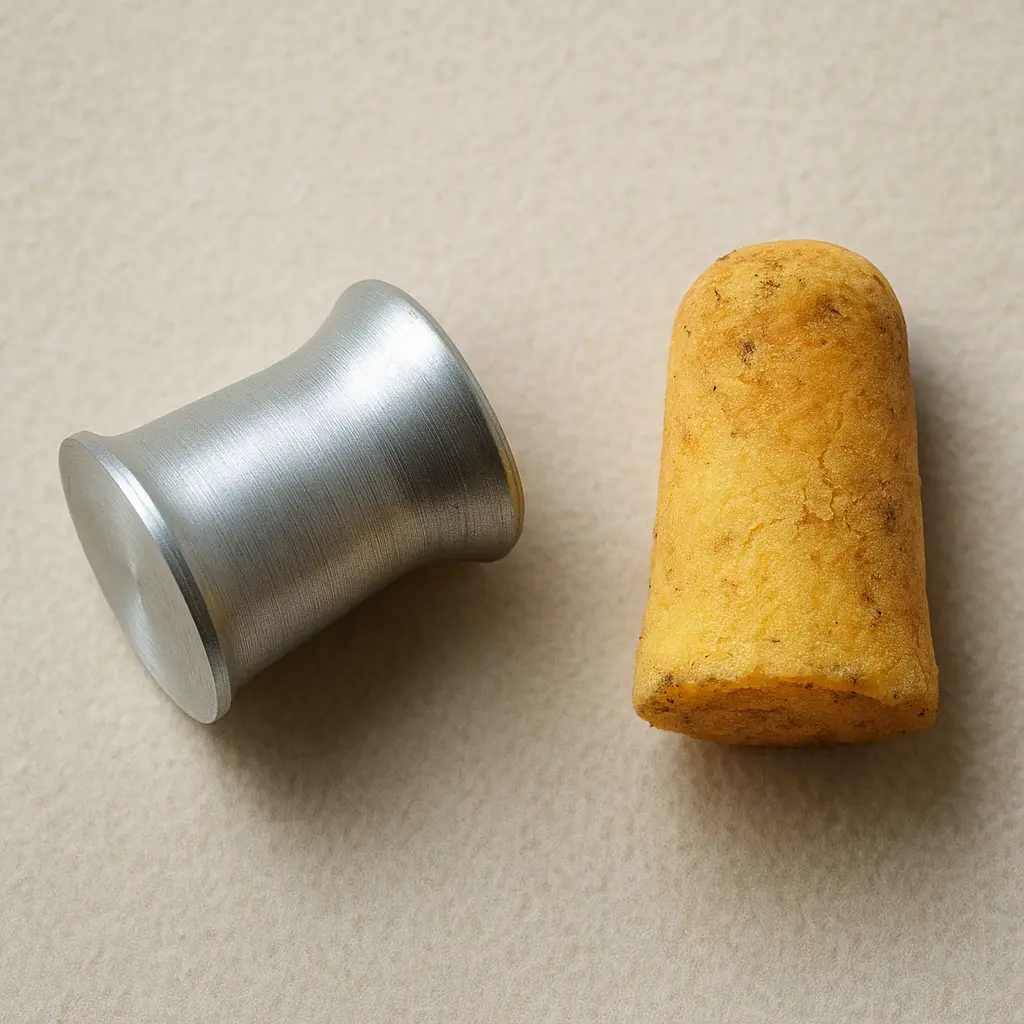
Metal bodies maintain structural integrity indefinitely because they experience zero compression. The concave aluminium shell in ATTENU8 ear plugs functions as a permanent acoustic barrier, channeling sound waves away from the ear canal. This design separates the durable framework from the consumable comfort layer, solving the fundamental limitation of all-foam designs.
The molecular stability of metals under pressure explains their longevity advantage. Aluminium alloys maintain their shape under loads exceeding 40,000 psi, while polyurethane foam permanently deforms at 2-5 psi. Temperature variations that make foam brittle or sticky have negligible effect on anodized aluminium surfaces.
Earwax, sebum, and skin acids that dissolve foam bonds cannot penetrate anodized metal surfaces. The data consistently shows that properly anodized aluminium resists corrosion in pH environments ranging from 4.5 to 8.5, covering the full spectrum of human skin chemistry. This chemical inertness extends product lifespan from days to years without performance degradation.
Pro tip: Wipe metal ear plug bodies with isopropyl alcohol after each use to maintain the anodized layer and prevent any buildup that could compromise the seal with replacement foam tips.
The economics of reusable ear plugs versus disposables reveals a 25x cost advantage over two years. A quality pair of metal-bodied ear plugs costs $35-45 initially, with replacement foam tips at $10 per set every 6-8 weeks. Annual tip replacement costs total approximately $60-80, bringing the two-year total to $155-205.
Disposable foam plugs cost $0.30-0.75 per pair when bought in bulk boxes of 200. At one pair per night, annual costs reach $110-275 with zero salvage value. Over two years, disposable users spend $220-550 while accumulating 730 used plugs destined for landfills.
The breakeven point arrives within 6-9 months of switching to metal-bodied designs. Construction workers and manufacturing employees who replace foam plugs multiple times per shift see breakeven in 2-3 months. Light sleepers using plugs nightly break even before the first year ends.
Foam plug users experience hidden costs beyond purchase price. Trips to pharmacies or online orders for emergency replacements add $5-15 in transaction costs monthly. Storage space for bulk boxes, spoilage from moisture exposure, and the mental load of monitoring supply levels represent non-monetary costs that metal designs eliminate entirely.
According to environmental product lifecycle studies, the total cost of ownership for disposable foam ear plugs includes disposal fees averaging $0.08 per plug in waste management infrastructure costs, effectively doubling the true cost to society.
Bacterial colonization destroys foam ear plugs within 8-12 hours of first use. Staphylococcus epidermidis, naturally present in ear canals, proliferates in the porous foam structure where cleaning is impossible. The warm, moist environment inside ears creates ideal conditions for microbial growth that makes reusing foam plugs a health risk.
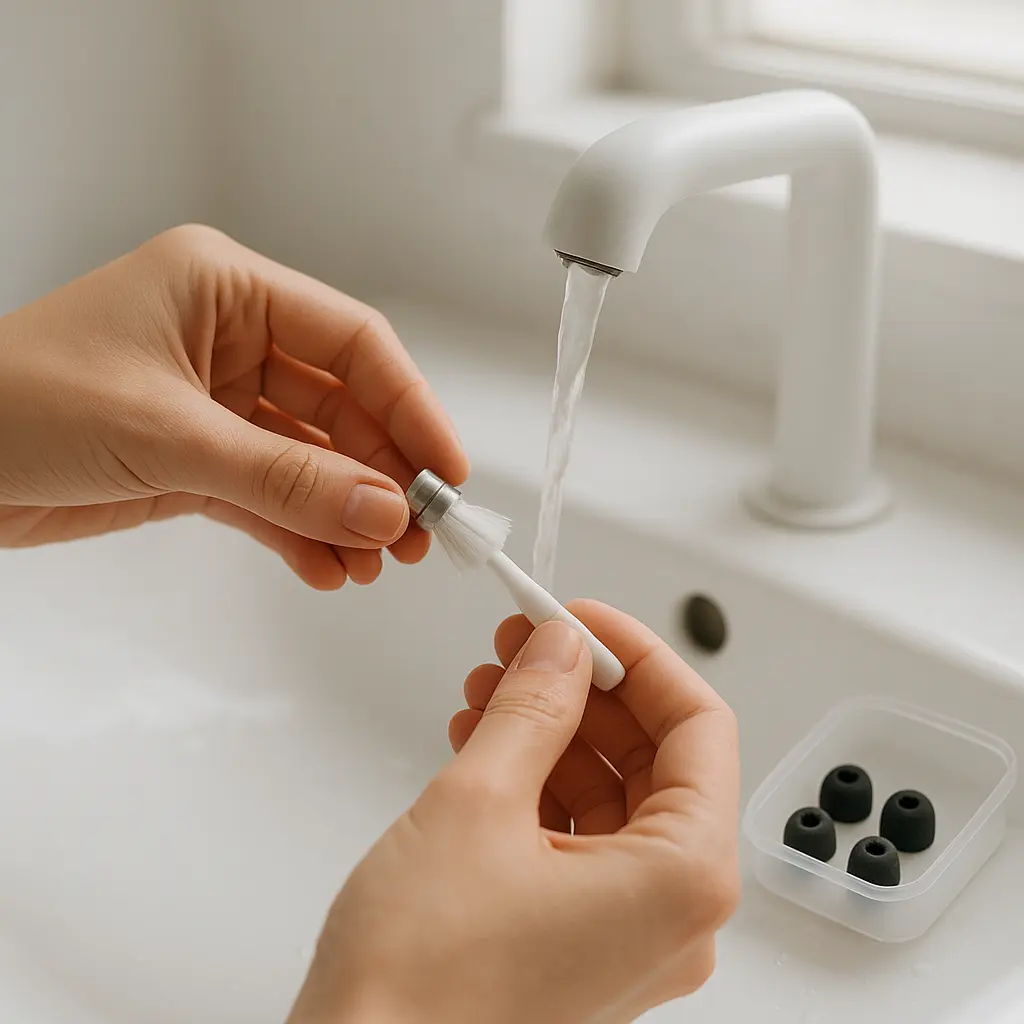
Metal surfaces can be sterilized completely between uses. ATTENU8’s aluminium bodies tolerate 70% isopropyl alcohol, hydrogen peroxide solutions, and even brief UV-C exposure without material degradation. This cleanability transforms ear plugs from single-use consumables into hygienic multi-year tools.
In practice, wiping metal components with an alcohol pad removes 99.9% of surface bacteria in 10 seconds. The non-porous surface prevents bacterial penetration, unlike foam’s interconnected cell structure that traps contaminants permanently. Only the memory foam tips require replacement, and these can be changed on a schedule rather than after suspected contamination.
Healthcare workers and food service professionals face hygiene requirements that disposable foam cannot reliably meet. A common mistake is assuming sealed foam plug packages guarantee sterility. Most consumer foam plugs are clean-packaged but not sterile-packaged, arriving with bacterial counts between 10-100 colony-forming units per plug.
Pro tip: Store metal ear plugs in a small case with a silica gel packet between uses to prevent moisture accumulation on the foam tips, extending their lifespan from 6 weeks to 8+ weeks.
The average American discards 150 pairs of foam ear plugs annually, contributing 450 grams of polyurethane waste per person. With 45 million regular ear plug users in the United States alone, disposable foam generates 20,000+ metric tons of non-biodegradable waste yearly. Metal ear plugs benefits include eliminating 98% of this waste stream by replacing the entire plug with replaceable foam tips.
Polyurethane foam requires 450 years to decompose in landfill conditions according to polymer degradation studies. The energy required to manufacture virgin polyurethane foam equals 78 MJ per kilogram, compared to 15 MJ per kilogram for recycled aluminium used in durable ear plug bodies. This 5x energy differential compounds over millions of units.
| Product Type | Annual Waste (per user) | Lifespan | Total Environmental Cost |
|---|---|---|---|
| Disposable Foam Plugs | 450g polyurethane + packaging | 1-3 uses (8 hours) | 11.7 kg CO2e per year |
| Metal-Bodied Reusable (ATTENU8) | 12g foam tips only | 5+ years for body | 2.4 kg CO2e per year |
| Silicone Moldable Plugs | 180g silicone + packaging | 5-7 uses | 6.8 kg CO2e per year |
Manufacturing a single pair of metal-bodied ear plugs generates 1.2 kg CO2e in production emissions. This one-time carbon cost is recovered within 4 months compared to continuous foam plug consumption. Over a five-year lifespan, metal designs deliver an 85% reduction in total carbon footprint.
Aluminium ear plug bodies are infinitely recyclable at end of life. The scrap value of aluminium, currently $0.95 per pound, creates economic incentive for recycling rather than disposal. Foam plugs hold zero scrap value and contaminate recycling streams when mistakenly included with recyclables.
Noise reduction ratings printed on foam ear plug packages assume perfect insertion with fresh, uncompressed foam. Real-world testing shows that foam plugs lose 8-12 dB of attenuation after the first compression cycle. Users who attempt to reuse foam plugs for a second night experience noise reduction averaging just 18-22 dB instead of the rated 32-33 dB.
Durable ear plugs maintain their rated noise reduction indefinitely because the acoustic seal depends on the metal body geometry and replaceable foam tips. ATTENU8’s concave aluminium design creates a sound barrier that delivers consistent 32 dB reduction across thousands of insertion cycles. Only the foam tips experience wear, and these are replaced on a schedule before performance degrades.
Professional users in construction and manufacturing environments require OSHA-compliant hearing protection that maintains rated performance throughout work shifts. Compressed foam fails this standard, forcing workers to use multiple pairs per day. Metal-bodied plugs meet compliance requirements for months between tip replacements, reducing both cost and compliance risk.
Real ear attenuation at threshold (REAT) testing demonstrates performance consistency. Fresh foam plugs measure 29-33 dB attenuation in lab conditions, dropping to 15-23 dB after 4 hours of wear as body heat softens the material and earwax reduces the seal. Metal-bodied plugs with fresh tips measure 30-34 dB initially and 28-33 dB after 8 hours of continuous wear.
The consistency advantage compounds over weeks. By day 7, reused foam plugs barely achieve 12-15 dB reduction, failing to provide meaningful hearing protection. Metal-bodied designs maintain 30+ dB reduction through the entire 6-8 week tip replacement cycle, delivering 2x the cumulative noise protection over the same period.
Selecting the right ear plug design requires understanding how construction affects durability and cost-effectiveness. This comparison examines three real approaches available to consumers seeking hearing protection that lasts beyond single-use applications.
| Feature | Metal-Bodied Reusable (ATTENU8) | All-Foam Disposable | Silicone Flanged Reusable |
|---|---|---|---|
| Material Lifespan | 5+ years (body), 6-8 weeks (tips) | 1-3 uses (8-24 hours) | 6-12 months |
| Noise Reduction (NRR) | 32 dB (consistent) | 32 dB (fresh), 15 dB (used) | 24-27 dB (consistent) |
| Cost Over 2 Years | $155-205 total | $220-550 total | $80-120 total |
| Cleanability | Alcohol-wipeable metal + replaceable tips | Cannot be cleaned safely | Washable with soap and water |
| Comfort Duration | 8+ hours with memory foam tips | 4-6 hours before compression discomfort | 3-5 hours before pressure points |
| Waste Per Year | 12g foam tips | 450g foam + packaging | 24g silicone + packaging |
Metal-bodied designs deliver the highest noise reduction with mid-range total cost and minimal waste. All-foam disposables offer convenience at the expense of performance consistency and environmental impact. Silicone flanged plugs provide the lowest two-year cost but sacrifice 5-8 dB of noise reduction, making them unsuitable for very loud environments or extremely sensitive sleepers.
Metal ear plug bodies last 5 to 10 years with normal care, while foam plugs degrade after 1 to 3 uses. The metal components never compress or lose their acoustic properties, whereas foam loses 30-40% of its noise reduction capability after the first insertion. Only the replaceable foam tips on metal designs need changing every 6-8 weeks, preserving the durable aluminium or steel core indefinitely.
Yes, metal-bodied reusable ear plugs break even within 6-9 months for nightly users. Over two years, metal designs cost $155-205 including replacement tips, while disposable foam costs $220-550 for the same period. The cost advantage increases for frequent users like construction workers who need multiple pairs daily, reaching breakeven in 8-12 weeks.
Metal ear plug bodies can be sanitized completely with 70% isopropyl alcohol wipes, removing 99.9% of bacteria in 10 seconds. The non-porous aluminium surface prevents bacterial penetration unlike foam’s cellular structure that traps contaminants permanently. This cleanability allows safe reuse for years, while foam plugs become bacterial reservoirs after a single use.
Metal-bodied ear plugs maintain their rated 32 dB noise reduction consistently across thousands of uses because the acoustic seal depends on the metal body geometry. Foam plugs drop from 32 dB when fresh to 18-22 dB after one use due to compression and moisture absorption. ATTENU8’s design delivers stable performance for 6-8 weeks until the replaceable foam tips need changing.
Metal bodies provide 5-8 dB more noise reduction than silicone flanged designs, reaching 32 dB versus 24-27 dB. Metal’s rigidity creates a superior acoustic barrier, while silicone’s flexibility allows more sound transmission. Metal also lasts longer, with aluminium bodies outlasting silicone by 3-5 years, though silicone offers lower initial cost and adequate protection for moderate noise levels.
Only the memory foam tips require replacement every 6-8 weeks at $8-12 per set. The metal bodies never need replacement if properly maintained. In contrast, disposable foam plugs need complete replacement after each use, and silicone flanged plugs typically need full replacement every 6-12 months as the material degrades and loses its seal.
Metal-bodied ear plugs with memory foam tips provide equal or superior sleep comfort compared to disposable foam. The concave aluminium body sits flush with the ear opening, while the soft foam tip cushions the ear canal. ATTENU8 includes three tip sizes (XS, S, M) to ensure proper fit. Side sleepers find metal designs more comfortable long-term because the shape stays consistent rather than compressing unevenly like all-foam plugs.
What has been your experience with switching from disposable to reusable ear plugs, and how long has your current pair lasted?
