


 0
0

Approximately 1.1 billion young people worldwide are at risk of noise-induced hearing loss, according to the World Health Organization, yet most people cannot identify the exact moment their hearing begins to deteriorate. That is the insidious nature of this condition: it is painless, cumulative, and permanent. Unlike a broken bone, damaged hair cells in the cochlea do not regenerate. Once gone, they are gone. This guide covers exactly how noise-induced hearing loss develops, what the science says about safe exposure thresholds, and which hearing protection strategies actually work for light sleepers, shift workers, construction professionals, and anyone caught between the modern world’s noise and the silence their ears need to stay healthy.
| Key Insight | Explanation |
|---|---|
| 85 dB is the damage threshold | Prolonged exposure above 85 decibels begins destroying cochlear hair cells. A busy restaurant often hits 85 dB without anyone noticing. |
| Damage is cumulative and permanent | Each loud exposure adds to a lifetime total. Hair cells in the cochlea do not regenerate, making prevention the only real treatment. |
| Short bursts of loud noise are also dangerous | A single exposure to 120 dB, such as a gunshot or concert speaker burst, can cause immediate and lasting damage without any warning pain. |
| NRR ratings matter and are often misunderstood | A Noise Reduction Rating of 32 dB does not mean all sound is blocked. Actual real-world attenuation is roughly half the rated figure under typical wearing conditions. |
| Fit quality determines protection quality | The best ear plug on paper provides zero protection if it does not seal properly. Consistent fit, like that provided by memory foam tips in three sizes, is what determines real-world effectiveness. |
| Reusable ear plugs outperform disposables for regular users | Disposable foam ear plugs degrade and are frequently inserted incorrectly. A well-constructed reusable ear plug with replaceable tips maintains consistent performance over months of use. |
| Hearing loss affects sleep, cognition, and mental health | Research links untreated hearing loss to cognitive decline and depression, making prevention a broader health priority, not just an occupational safety checkbox. |
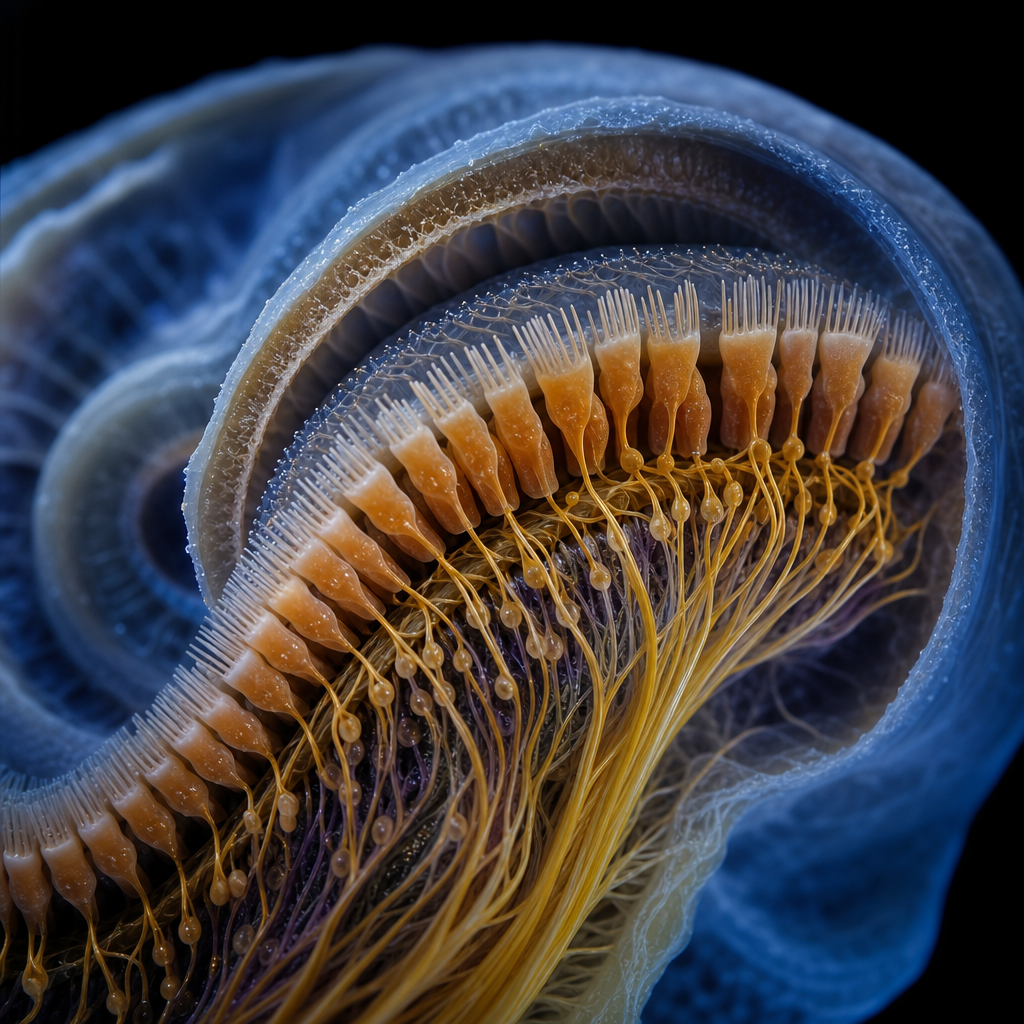
Noise-induced hearing loss (NIHL) is a permanent reduction in hearing ability caused by exposure to excessive sound levels. It occurs when sound pressure waves are intense enough to physically damage the sensory hair cells lining the cochlea, the snail-shaped fluid-filled organ in the inner ear responsible for converting sound vibrations into electrical signals the brain interprets as sound.
NIHL can be acute, caused by a single explosive event such as a gunshot or industrial blast, or it can be gradual, developing over years of repeated exposure to moderately loud environments. The gradual form is far more common and far more underdiagnosed because the person experiencing it rarely notices the slow erosion of their hearing range until significant damage has already occurred.
The condition is also entirely preventable. That distinction is important. Conditions like age-related hearing loss involve biological processes that medicine cannot yet reverse. NIHL, by contrast, is a direct consequence of choices and environments that can be controlled with consistent and correctly used hearing protection.
After a single loud exposure, many people notice a temporary muffling of sound or ringing in the ears. This is called a temporary threshold shift (TTS). The cochlear hair cells have been stressed but not yet destroyed. With adequate rest in a quiet environment, hearing often returns to baseline within 16 to 48 hours.
The danger comes from repeated TTS events. Each episode inflicts micro-damage that compounds over time. Eventually, some hair cells die entirely, producing a permanent threshold shift (PTS). By the time most people seek medical attention for hearing loss, they have already crossed from TTS territory into PTS, meaning no intervention will restore what was lost.
The decibel scale is logarithmic, not linear. This trips most people up. An increase from 80 dB to 90 dB does not represent a 12.5 percent increase in sound intensity. It represents a tenfold increase. That distinction matters enormously when assessing risk.
The Occupational Safety and Health Administration (OSHA) in the United States sets the permissible exposure limit at 90 dB for an 8-hour workday. The National Institute for Occupational Safety and Health (NIOSH), which is the research arm of the CDC, uses the more protective standard of 85 dB for 8 hours, with the exposure time halving for every 3 dB increase above that limit.
“Noise-induced hearing loss is 100% preventable. All individuals exposed to hazardous noise levels should be fitted, trained, and required to use hearing protectors.” – National Institute for Occupational Safety and Health (NIOSH)
To make these numbers practical: normal conversation sits around 60 dB. Heavy city traffic averages 85 dB. A motorcycle at close range reaches 100 dB. Power tools and pneumatic drills commonly hit 110 dB. A live music concert near the stage routinely measures between 110 and 120 dB.
At 110 dB, the NIOSH exposure limit before damage risk begins is approximately 1 minute and 53 seconds. Most concert-goers spend two to three hours at those levels. The math is not in their favour, and this applies equally to construction workers operating without protection, travellers on long-haul flights through engine noise, and light sleepers sharing walls with traffic or snoring partners.
Pro tip: Download a calibrated sound level meter app such as NIOSH’s SLM app for iOS to measure the actual decibel level in environments where you spend significant time. The readings are often higher than intuition suggests, particularly in open-plan offices, gyms, and transit hubs.
The CDC estimates that approximately 17 percent of adults in the United States, around 26 million people, have some degree of noise-induced hearing loss in the high-frequency range. Among those aged 20 to 69 who have been exposed to workplace noise, the figure rises to 24 percent. These are not edge-case statistics. This is a mainstream public health problem.
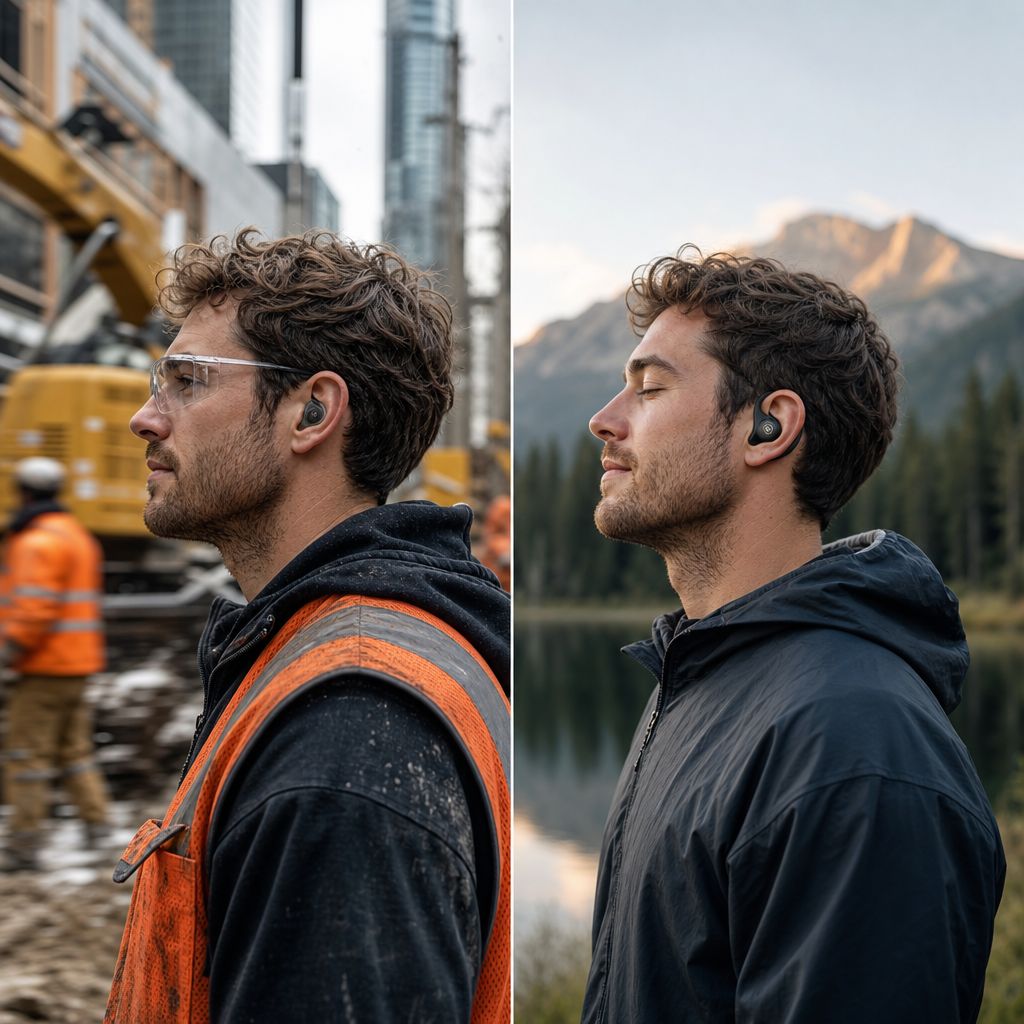
Construction workers, military personnel, manufacturing workers, musicians, airport ground crew, and emergency responders are the most consistently documented high-risk groups. In practice, exposure in these environments is not just occasional. It is sustained, daily, and spans careers that run 20 to 40 years. At 85 dB for 8 hours a day over a working lifetime without protection, measurable permanent hearing loss is effectively certain.
The recreational exposure category is growing. Regular concert attendance, motorised sports, hunting without hearing protection, and extended use of in-ear headphones at high volumes all contribute meaningfully to cumulative exposure. Light sleepers and shift workers face a different but equally real problem: chronic sleep disruption from noise forces the auditory system into prolonged alert states. While low-level chronic noise may not damage cochlear hair cells directly, the compounding fatigue and stress it causes impairs overall physiological resilience and quality of life in documented ways.
The cochlea contains roughly 15,000 to 20,000 hair cells organised along a structure called the basilar membrane. High-frequency sounds stimulate cells near the base. Low-frequency sounds stimulate cells toward the apex. This organisation is why noise-induced hearing loss typically first appears at 4,000 Hz, a frequency range critical for speech clarity, particularly consonant sounds, before progressively affecting adjacent frequencies.
When a hair cell is exposed to excessive sound energy, the mechanical stress causes the stereocilia, the tiny projections on the top of each hair cell, to become overstimulated. This triggers a cascade of biochemical events including the production of reactive oxygen species. These free radicals essentially attack and kill the hair cell from the inside. The cell then undergoes apoptosis and is replaced by scar tissue.
The critical biological fact: mammals, including humans, do not regenerate cochlear hair cells. Fish and birds do. Humans do not. Every hair cell lost to noise damage is permanently gone. This single biological reality is why hearing protection is not optional for anyone serious about long-term health.
Tinnitus, the perception of ringing, buzzing, or hissing in the absence of external sound, is closely associated with noise-induced hearing loss. When hair cells are damaged, the auditory nerve fibres they connect to begin firing spontaneously and erratically. The brain interprets this abnormal electrical activity as sound. For approximately 50 million Americans, according to the American Tinnitus Association, tinnitus is a chronic condition. For many, it is a direct consequence of noise damage that proper hearing protection could have prevented.
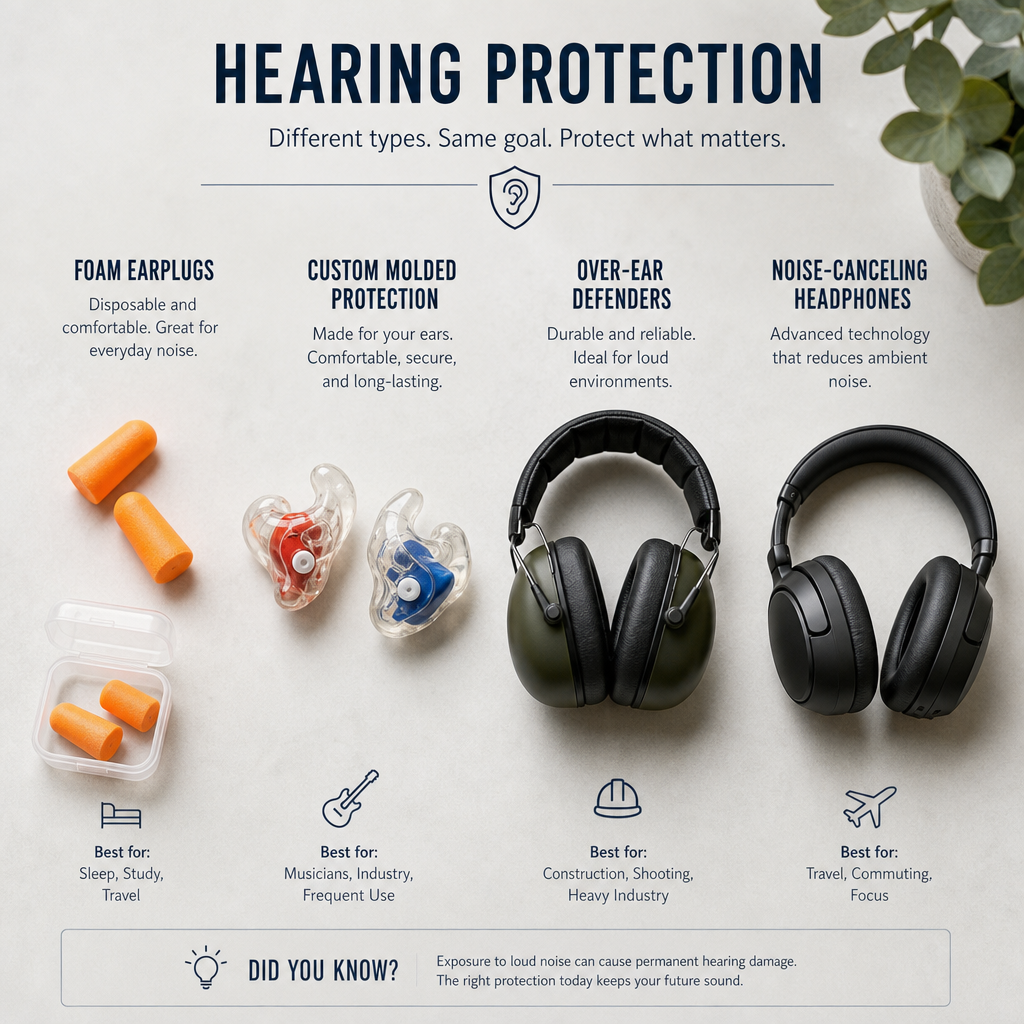
Not all hearing protection is equivalent. The gap between a disposable foam ear plug rolled incorrectly into the ear canal and a properly fitted reusable ear plug with a certified 32 dB NRR is not marginal. It is the difference between meaningful protection and a false sense of security.
| Protection Type | Noise Reduction Rating (NRR) | Key Strengths and Weaknesses |
|---|---|---|
| Disposable foam ear plugs | 29-33 dB (rated); 13-17 dB (real-world with typical fit) | Low cost, widely available. High error rate in self-insertion reduces actual attenuation significantly. Degrade quickly. Generate ongoing waste for regular users. |
| Reusable metal-bodied ear plugs with memory foam tips (e.g., ATTENU8) | Up to 32 dB; consistent across uses due to structured body and three-size tip system | Durable aluminium body maintains shape and hygiene. Memory foam tips in XS, S, M sizes allow proper canal fit. Tips replaced every 6-8 weeks rather than the whole unit. Reliable attenuation for daily use in sleep, travel, and occupational contexts. |
| Earmuffs (over-ear hearing protectors) | 20-30 dB typical | No insertion required, reducing fit error risk. Bulky and impractical for sleep, travel, or extended wear. Can cause discomfort and heat in warm environments. Often combined with ear plugs for double protection in extreme noise. |
A common mistake is choosing hearing protection based solely on NRR rating rather than real-world wearability. Protection that is uncomfortable enough to be removed during a noisy shift provides zero benefit for the hours it sits in a pocket. Consistent wear of a well-fitted 32 dB ear plug outperforms intermittent use of any alternative.
Pro tip: If you use ear plugs for sleep, the material and body design matter as much as the NRR. Soft memory foam tips attached to a structured, low-profile body, rather than a loose foam cylinder, reduce the pressure discomfort that causes side sleepers to remove their plugs in the night, defeating their purpose entirely.
Prevention is not complicated in concept, but it requires consistency in practice. The data consistently shows that the largest gap between people who develop NIHL and those who do not is not knowledge. It is the habitual, correctly executed use of protection every time they enter a hazardous sound environment.
Audiologists commonly recommend the 60/60 rule: listen at no more than 60 percent of maximum volume for no more than 60 minutes at a time before taking a break. This is a practical middle ground. In practice, enforcing it requires turning off auto-volume normalization settings on smartphones and resisting the habit of raising volume to compensate for ambient noise, which is better addressed by using noise-isolating ear tips or switching environments.
The hierarchy of controls, as defined by occupational health frameworks, places engineering controls above personal protective equipment. Reducing sound at the source, through acoustic dampening, equipment maintenance, or distance from the noise source, is always preferable to relying entirely on ear plugs. In practice, this means requesting quieter machinery, using soundproofing panels in home studios, and choosing accommodation away from traffic-facing walls when travelling.
Light sleepers and travellers face a specific challenge: noise exposure during sleep is not just a comfort issue. Chronic nighttime noise above 40 dB has been linked by the World Health Organization to sleep disturbance, cardiovascular effects, and cognitive impairment in children. Using well-fitted ear plugs during sleep in noisy environments, whether from snoring partners, urban traffic, or hotel corridors, is a legitimate medical-grade intervention, not a luxury.
For long-haul flights, where engine drone typically measures 85 dB or above throughout the cabin, ear plugs that seal properly against cabin pressure changes are preferable to both passive earmuffs and standard uncupped foam inserts. The consistent fit of a structured ear plug body with appropriately sized memory foam tips maintains attenuation even as cabin pressure fluctuates.
The research on ear plug effectiveness is clear and has been consistent for decades. Properly fitted ear plugs with adequate NRR ratings prevent cochlear hair cell damage in noise environments that would otherwise produce measurable permanent threshold shifts. The operative phrase is properly fitted.
A 2017 study in the Journal of the Acoustical Society of America found that self-inserted disposable foam ear plugs achieved, on average, only 50 percent of their rated NRR due to improper insertion technique. Most users roll the foam, insert it, and release before the foam has fully expanded into the canal, leaving gaps that allow significant sound energy through. Structured ear plug bodies with external rims eliminate this variable almost entirely because the fit does not depend on exact insertion depth or timed compression.
Memory foam conforms more slowly and holds its shape longer than standard polyurethane foam. This means it adapts to the individual contours of the ear canal rather than simply expanding to fill space. The result is a more complete and comfortable seal, particularly for users with irregular or smaller canal geometries who have historically found standard large-format foam ear plugs painful or ineffective. Offering three tip sizes, as ATTENU8 does with XS, S, and M options, is not marketing segmentation. It reflects the anatomical reality that ear canal diameter varies significantly between individuals and between left and right ears in the same person.
A factor rarely addressed in hearing protection discussions is hygiene. Disposable foam ear plugs accumulate cerumen, skin oils, and bacteria and are meant to be discarded after one or a small number of uses. In practice, many users reuse them far beyond this point, increasing infection risk. A metal-bodied ear plug with replaceable foam tips separates the durable structural component from the consumable contact component, maintaining hygiene through regular tip replacement every 6 to 8 weeks while eliminating the waste and cost of discarding the entire unit.
Most people with early-stage noise-induced hearing loss do not know they have it. The high-frequency range where damage first appears, around 4,000 Hz, is not the frequency range of everyday conversation. Life can feel normal while significant damage accumulates.
The following signs warrant a formal audiological evaluation. Requiring the television volume to be set noticeably higher than other household members. Regularly asking people to repeat themselves, particularly on the phone or in background noise. Difficulty distinguishing consonants in speech, such as confusing S, F, and TH sounds. Persistent tinnitus after exposure to loud noise, even when the ringing eventually subsides. A sense of sound being muffled in one or both ears after noise exposure.
None of these symptoms should be self-managed through acceptance or compensation. An audiologist can conduct a pure-tone audiogram that maps your hearing thresholds across the full frequency range and identify whether any loss exists and in which frequencies. The earlier damage is identified, the more effectively further decline can be prevented through consistent hearing protection use going forward.
No. Cochlear hair cells do not regenerate in humans. Once destroyed by noise exposure, hearing loss in those frequency ranges is permanent. Research into hair cell regeneration is ongoing, but no clinically available treatment currently reverses established noise-induced hearing loss. Prevention through consistent use of effective hearing protection is the only reliable strategy.
Ear plugs with a high NRR rating, properly fitted, are highly effective at preventing noise-induced hearing loss. The key qualification is properly fitted. A 32 dB NRR ear plug correctly inserted can reduce a 110 dB environment to approximately 78 dB, well within safe exposure limits. The same ear plug inserted poorly may reduce exposure by only 10 to 15 dB, which is insufficient protection in high-noise environments.
NRR (Noise Reduction Rating) is the standard used in the United States, governed by ANSI/ASA standards. SNR (Single Number Rating) is used in Europe under EN 352 standards. Both describe the attenuation a hearing protector provides, but the testing methodologies differ, making direct numeric comparisons misleading. When evaluating ear plugs, check which standard is being applied and compare only within the same system. A 32 dB NRR product and a 32 dB SNR product are not equivalent in terms of real-world protection.
Memory foam tips on reusable ear plugs should be replaced approximately every 6 to 8 weeks for regular daily users. This interval reflects both hygienic considerations, foam accumulates oils, cerumen, and bacteria, and performance considerations, memory foam loses its elastic recovery properties over time, reducing the quality of the acoustic seal. Replacing only the tips rather than the entire ear plug significantly reduces both cost and waste for long-term users.
For anyone using ear plugs regularly, whether nightly for sleep or daily for occupational noise, reusable ear plugs with replaceable tips are the superior choice. They maintain consistent structural integrity across hundreds of uses, provide repeatable fit quality, reduce ongoing cost, and generate significantly less waste than daily-use disposable alternatives. The initial investment in a durable unit pays for itself quickly compared to purchasing disposable ear plugs at scale.
The conservative standard, recommended by NIOSH, is to use hearing protection for any environment where you must raise your voice to be heard by someone at arm’s length. This corresponds roughly to 85 dB. If you are uncertain, measure. A sound level meter app gives you real data. For sleep, the WHO recommends keeping nighttime noise below 40 dB. Any environment consistently above that threshold makes hearing protection a sensible intervention for sleep quality and long-term health.
Have you noticed changes in your hearing or started using ear plugs to manage noise in your daily life? Share your experience in the comments so others can learn from what has actually worked for you.

