


 0
0

Most people who complain that ear plugs do not work are not using the wrong product. They are using the wrong size. A poor fit leaves microscopic gaps around the ear canal, and those gaps are enough to let traffic noise, snoring, or construction sounds pour straight through. Research published by the National Institute for Occupational Safety and Health confirms that an improperly fitted ear plug can reduce its rated noise attenuation by more than 50 percent in real-world use. Getting your ear plug sizes right is not a preference issue. It is the single most important variable in whether your hearing protection actually works.
A common mistake is treating ear plug sizing as optional, something you figure out after purchase and work around if the fit is imperfect. In practice, the ear canal is one of the most variable anatomical features across the human population. Some adults have ear canals as narrow as 5mm in diameter. Others exceed 11mm. That is a more than twofold range, and standard one-size foam plugs simply cannot accommodate it reliably.
The consequence of an oversized tip is pain, pressure, and the urge to remove the plug during the night exactly when you need it most. The consequence of an undersized tip is acoustic leakage: low-frequency sounds such as traffic rumble and snoring bass tones slip around the plug and reach the eardrum almost unimpeded. Neither outcome is acceptable when you are trying to sleep or protect your hearing on a worksite.
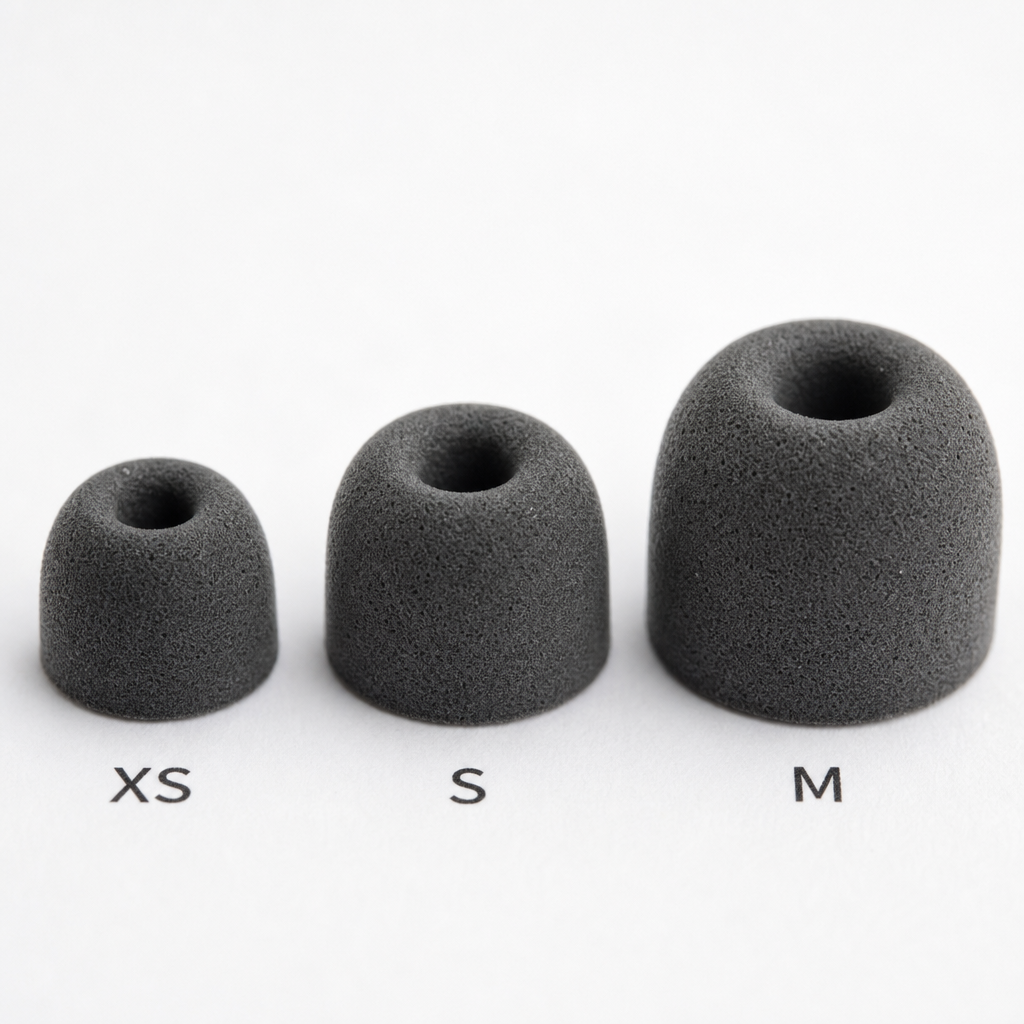
ATTENU8 addresses this directly by including three tip sizes, XS, S, and M, with every pair of its aluminium-bodied ear plugs. That design choice is not a marketing feature. It is an engineering necessity driven by the reality of human anatomy.
The ear canal is not a straight tube. It curves inward and slightly upward from the outer opening, and its walls are lined with skin that reacts to foreign objects by generating pressure signals interpreted as discomfort. This is why a tip that feels fine for ten minutes can become genuinely painful after an hour in bed.
Two dimensions matter when sizing ear plugs. The first is the width of the canal opening, which determines how large a tip you can insert comfortably. The second is the depth at which the tip needs to sit to create a full acoustic seal. Most consumer ear plugs, including traditional single-use foam rolls, are designed to sit at a shallow to mid-canal depth. Premium reusable options with memory foam tips, like those ATTENU8 uses, conform to the canal walls at the correct insertion depth rather than relying on radial pressure alone.
The data consistently shows that a meaningful percentage of adults have ear canals that differ in size between the left and right ear. This is not unusual. It means the ideal tip size for your left ear may be one size smaller or larger than your right. ATTENU8 supplies multiple tip sizes per pack precisely to handle this reality. Do not assume symmetry before you test.
“Hearing protector fit testing has demonstrated that the real-world attenuation achieved by workers is substantially lower than laboratory-rated values, primarily due to improper insertion and sizing.” – National Institute for Occupational Safety and Health (NIOSH), Hearing Protector Effectiveness Research
ATTENU8 memory foam tips come in three sizes. Understanding what each one is designed for saves you the trial-and-error cycle that frustrates most first-time users of multi-size systems.
XS tips are designed for narrow ear canals, typically found in smaller adults, many women, and some younger adults. If you have previously found standard foam ear plugs painful or difficult to insert fully, XS is your most likely starting point. An XS tip that fits correctly will expand to fill the canal without creating a feeling of outward pressure against the canal walls.
S tips cover the most common adult ear canal range. In practice, the majority of users land on S as their correct size. If you have used standard foam earplugs without significant pain but also without a reliably good seal, an S tip properly inserted will outperform what you have experienced before. The memory foam conforms to the unique contour of your canal rather than applying uniform radial pressure like a cylinder of compressed foam does.
M tips suit wider ear canals and users who have historically found that ear plugs fall out easily during sleep or physical activity. If an ear plug consistently migrates out of your canal overnight, it is almost certainly undersized. An M tip that fits correctly stays seated without needing to be pushed in aggressively.
Pro tip: Start with the S tip for both ears on your first fitting session. Then use the simple seal test described in the section below before committing to that size. If one ear fails the test, move to M. If insertion feels uncomfortable or tight, try XS.
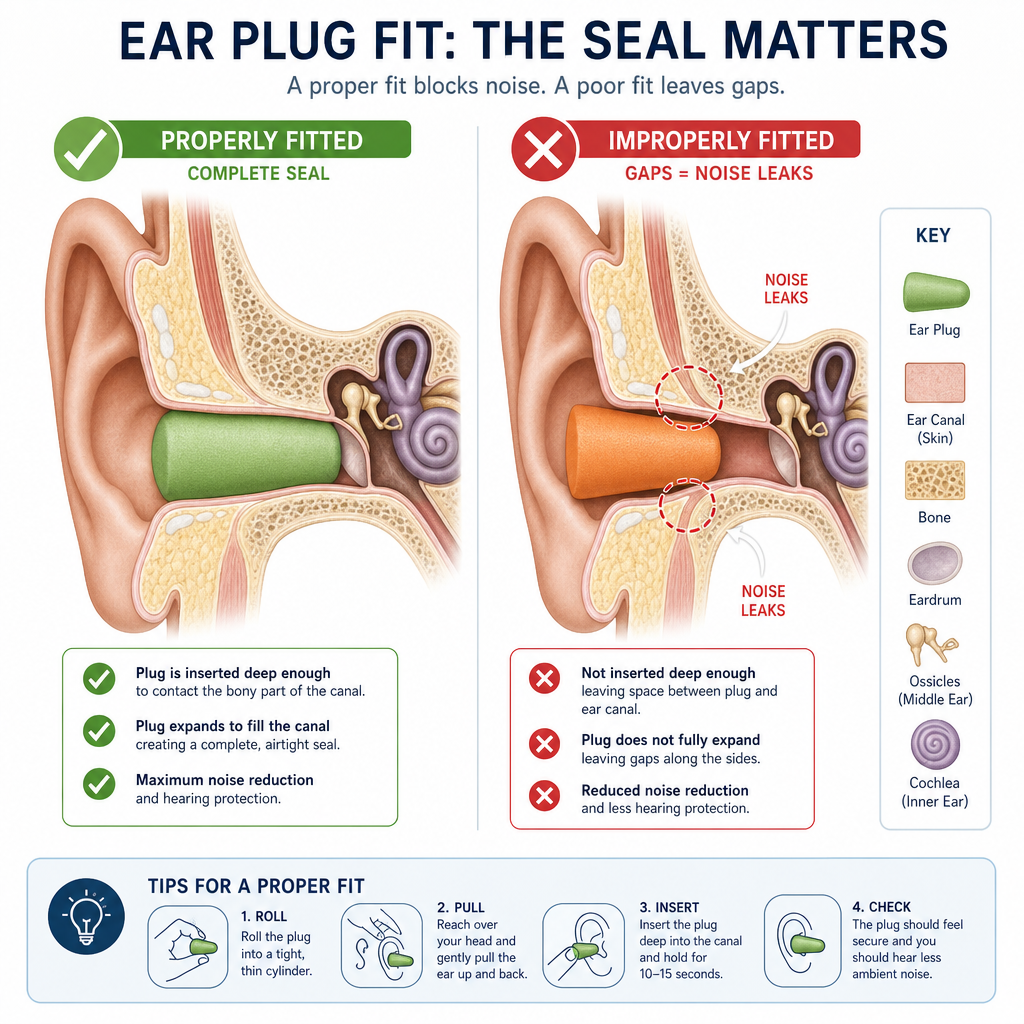
Knowing your size is half the equation. The insertion technique determines whether that size performs at its rated 32dB noise reduction or underperforms by a significant margin. This is where most users, even experienced ones, lose most of their noise attenuation.
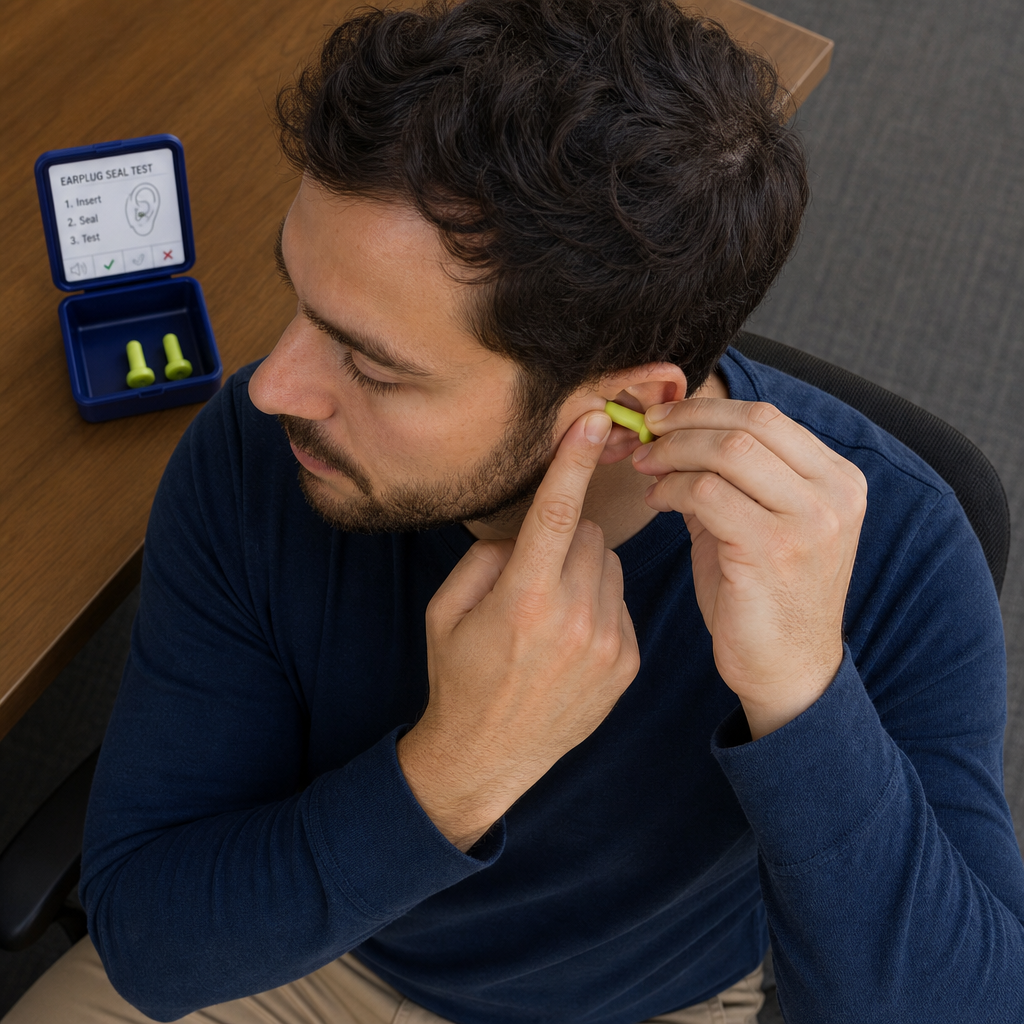
Pull your outer ear (pinna) upward and slightly backward with the opposite hand before inserting the plug. This straightens the natural curve of the ear canal and opens the entry point. Insert the tip with a gentle rotating motion rather than pushing straight in. Once the tip is at the canal opening, hold it gently in place for 20 to 30 seconds while the memory foam expands to fill the space. Releasing too early before the foam has fully expanded is the single most common cause of an incomplete seal.
The tip should sit far enough inside the canal that the outer face of the foam sits flush with or just inside the canal opening. You should not be able to see a significant gap between the tip and the canal wall when looking in a mirror. If the foam tip is still visibly proud of the canal entry, it has not been inserted to the correct depth.
With ATTENU8’s aluminium-bodied design, the rigid body of the plug gives you a reliable grip point for insertion without compressing the foam tip before it enters the canal, a problem that plagues traditional roll-down foam plugs where you compress and insert before the foam has time to re-expand fully.
Pro tip: If you are fitting ear plugs for sleep, do your fitting session while standing in a well-lit room before bed rather than lying down in the dark. Proper insertion requires both hands and clear visibility, especially during the first few uses of a new size.
A properly fitted ear plug produces a very specific subjective experience: your own voice sounds louder and more resonant when you speak (the occlusion effect), external ambient sounds drop noticeably, and there is a mild but not painful sense of fullness in the ear. If you do not get all three of these indicators, the seal is incomplete.
With both plugs inserted, cup both palms firmly over your ears. If you hear a significant increase in sound when you cup your hands compared to without the plugs seated, your plugs are not sealed. A properly seated plug means cupping your hands adds almost nothing because the plug is already blocking the canal. A leaking plug means the extra barrier of your palms makes a noticeable difference.
Insert one plug at a time. With one ear open and one sealed, stand in a normally ambient environment and compare the perceived loudness between ears. The plugged ear should sound substantially quieter, not just marginally different. If the difference is subtle, re-insert with the correct technique and retest.
Not all ear plug systems approach sizing the same way. Understanding the trade-offs helps you see exactly why a multi-tip system with memory foam outperforms alternatives for consistent noise reduction across different users and use cases.
| Sizing Approach | How It Works | Noise Reduction Consistency |
|---|---|---|
| Single-size roll-down foam (standard disposable) | User compresses foam, inserts, and waits for expansion. One diameter fits all canal sizes by relying on high radial pressure. | Highly variable. NIOSH data shows real-world attenuation is often 50 percent or less of the rated NRR due to sizing and insertion failures. |
| Silicone flange tips (multiple sizes) | Rigid flanges create a mechanical seal at set diameters. Users select the flange size closest to their canal width. | Good when sized correctly, but the rigid structure does not conform to canal shape variation, leaving gaps in irregular canals. |
| Multi-size memory foam tips on a rigid body (ATTENU8 XS, S, M) | User selects the nearest size then inserts using a pull-and-rotate technique. Memory foam expands and conforms to the exact canal profile. | High and consistent. Foam conformation eliminates gaps caused by canal irregularity, and the rigid aluminium body preserves tip shape during insertion. |
After working through the sizing and insertion process, the following errors account for the vast majority of cases where users report that their ear plugs are not performing as expected.
A common mistake is selecting the smallest tip that does not cause discomfort and stopping there. Comfort is necessary but not sufficient. A tip that is one size too small for your canal may feel pleasant because it causes no pressure, but it will not expand to fill the canal walls and will leave an acoustic gap. The correct size feels snug but not painful, and produces the occlusion effect described above.
Memory foam degrades with repeated compression and contact with skin oils. ATTENU8 recommends replacing tips every 6 to 8 weeks under regular use. A worn tip does not expand fully, which means a size that fitted correctly in week one may be effectively undersized by week ten. The aluminium body of ATTENU8 plugs is designed to last for years. Only the foam tips need periodic replacement, and this is a significant cost and waste advantage over disposable plug systems.
Skipping the step of pulling the pinna upward and back before insertion means you are trying to push a tip around a curve rather than into a straightened tube. The tip seats at the bend, not at the correct depth, and the acoustic seal is incomplete. This mistake is nearly universal among first-time users of any ear plug system.
Asymmetric ear canals are common enough that assuming both ears take the same tip size is a genuine risk. Always test each ear independently with the seal tests above before finalising your size selection for each side.
The most reliable method is to start with a medium (S) tip and test the seal using the palm cup test and the occlusion effect check. If the seal fails or insertion is painful, adjust one size in the appropriate direction. Most adults find S fits one or both ears correctly. ATTENU8 includes all three tip sizes with each purchase, which eliminates the need to guess before buying.
Yes, and this is more common than most people assume. Ear canal dimensions are not necessarily symmetrical across the two sides of the same person. Always test each ear independently and do not assume the size that works for your right ear will work for your left. ATTENU8 provides multiple tip sizes per pack specifically to accommodate this variation.
Three indicators confirm a correct seal: your own voice sounds louder and more resonant when you speak (the occlusion effect), ambient room noise drops substantially, and the palm cup test produces minimal additional sound reduction. If cupping your hands over the plugged ears makes a noticeable difference, the plug is not fully sealing the canal.
Under regular nightly use, memory foam tips should be replaced every 6 to 8 weeks. The foam loses its elasticity over time due to repeated compression and exposure to skin oils, which reduces its ability to expand and fill the canal wall. ATTENU8’s design means only the foam tips need replacing, not the entire plug, which keeps the long-term cost well below disposable foam alternatives.
Ear plug size determines whether the plug physically seals your canal. The noise reduction rating (NRR or SNR) describes the maximum attenuation a correctly fitted plug can deliver. An incorrectly sized or poorly inserted plug never reaches its rated attenuation, regardless of how high the NRR figure is. Getting the size right is what allows the rated figure to be realised in practice. ATTENU8’s 32dB noise reduction is achievable only when the correct tip size is properly inserted.
No. A larger tip than your canal requires does not increase noise reduction. It creates discomfort, outward pressure, and often a paradoxically worse seal because the tip cannot seat at the correct depth. The correct size for your canal, properly inserted, delivers the full rated noise attenuation. Oversizing is as problematic as undersizing.
In most cases, previous discomfort comes from using the wrong size or an incorrect insertion technique, not from an inherent intolerance to ear plugs. The two most common causes are tips that are too large creating canal wall pressure, and tips inserted without straightening the canal first. Starting with an XS tip and using the pinna-pull technique before insertion resolves the problem for the majority of people who believe they simply cannot wear ear plugs.
Have you struggled to find the right ear plug size, or do you have a fitting tip that worked for you? Share your experience in the comments.

