


 0
0

Most people buy a bag of foam ear plugs, lose half of them, and repeat the cycle every few weeks without ever doing the math. The real cost of disposable ear plugs adds up faster than almost anyone expects, and the environmental toll is worse. If you use ear plugs regularly for sleep, travel, or noise exposure at work, switching to reusable ear plugs is not just an ethical choice. It is the financially smarter one by a significant margin. This article breaks down exactly what you spend, what you save, and which option actually protects your hearing and your wallet over the long run.
| Key Insight | Explanation |
|---|---|
| Disposable ear plugs cost far more annually than most users realise | A regular user spending $3-$5 per box every two weeks spends $78-$130 per year on disposable foam plugs alone. |
| Premium reusable ear plugs have a payback period under three months | A quality metal-bodied reusable pair like ATTENU8 costs far less over 12 months once the initial purchase is made and only foam tips need replacing every 6-8 weeks. |
| Foam tip replacements are the only recurring cost with quality reusables | Unlike disposables where the entire product is thrown away, ATTENU8 users replace only the soft memory foam tips, keeping the aluminium body indefinitely. |
| Disposable ear plugs generate significant plastic and foam waste | A single daily user discards roughly 730 individual foam plugs per year. Reusable ear plugs reduce that waste to near zero. |
| Noise reduction ratings between disposable and premium reusable plugs are comparable | ATTENU8 delivers approximately 32dB noise reduction, matching or exceeding most standard disposable foam plugs rated at 29-33dB NRR. |
| Comfort and fit improve with reusables designed for extended wear | Memory foam tips in three sizes (XS, S, M) on a metal body provide a consistent seal that standard disposable foam plugs rarely achieve for light sleepers. |
| Hygiene is easier to manage with reusable plugs that have replaceable tips | Replacing only the foam tips every 6-8 weeks is cleaner in practice than re-using a disposable plug for multiple nights, which many users do despite manufacturer guidance. |
The sticker price on a box of disposable foam ear plugs looks reasonable. A box of 10 pairs typically costs between $3 and $6 at a pharmacy or hardware store. The problem is the usage rate. Most consistent users go through a pair every one to two days, whether that is for sleeping through a snoring partner, blocking construction noise on a commute, or protecting hearing on a job site.
Run the numbers for a daily user replacing one pair every two days. That is roughly 180 pairs per year, or 18 boxes at the conservative end. At $4 per box, you are spending $72 annually on plugs you throw straight in the bin. A person using a fresh pair every single night for sleep hits 365 pairs, which pushes annual spending toward $146 or more before you factor in any premium or travel-sized packs.
Beyond the direct purchase price, disposable ear plugs carry costs that are easy to overlook. There is the time cost of remembering to restock, running out at 11pm before a flight, or paying airport retail prices that can be two to three times the standard rate. There is also the quality inconsistency: low-cost disposables vary in density between production batches, which means the noise seal you got last month may not be the same as this month.
In practice, people who rely on ear plugs for serious noise protection, such as construction workers or light sleepers, often find themselves doubling up or discarding pairs mid-use because the foam has already compressed and lost its seal. That effectively doubles consumption and cost.
Pro tip: Track your ear plug spending for one month by keeping the empty boxes. Most people are surprised to find they are spending $10-$15 per month on disposables without noticing. That number compounds to $120-$180 per year and goes up every time prices increase.

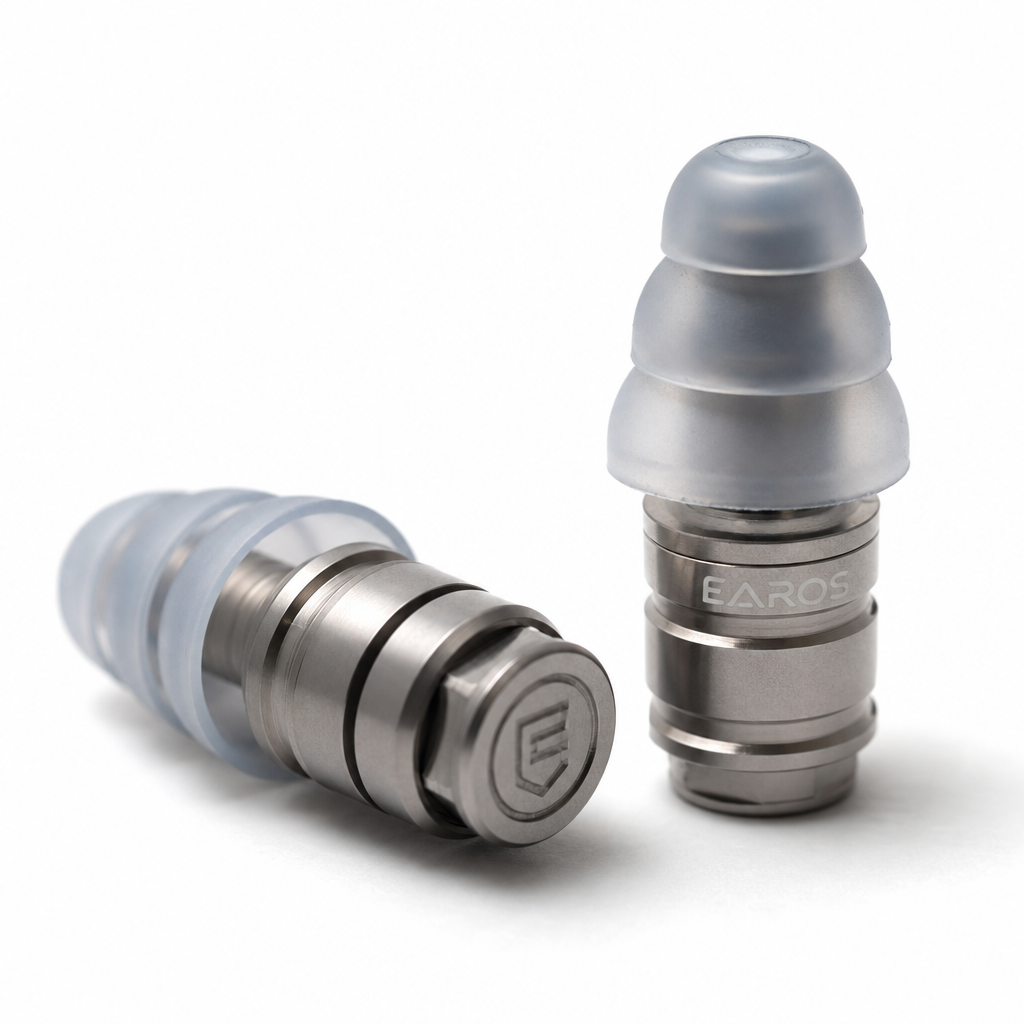
The upfront cost of a quality reusable ear plug is higher than a box of foam disposables. That is simply true and worth stating plainly. A premium metal-bodied pair, such as those made by ATTENU8, represents a one-time investment in the aluminium body, with the only ongoing cost being foam tip replacements every 6-8 weeks.
Those tip replacements are a fraction of the cost of continually buying new disposable pairs. The aluminium body itself does not degrade with normal use. You are not replacing the entire product. You are only replacing the small memory foam sleeves that make contact with your ear canal. This is a fundamentally different cost model, and it favours the reusable option heavily over any period longer than two to three months of regular use.
Not all reusable ear plugs are built to the same standard. Soft silicone options from brands like Loop Earplugs offer reusability but use a single-piece design where the entire unit must eventually be replaced when the tips wear out. Flare Audio takes a similar approach with fixed-tip designs. The ATTENU8 model separates the durable metal body from the consumable foam tips, which means the most expensive component, the precision-machined aluminium housing, is never thrown away.
This matters because the aluminium body is what holds tolerances and delivers the consistent acoustic performance. Once you own it, you own it. The cost structure over a two-year period for ATTENU8 users is predominantly in tip replacements, not full product repurchases.
Pro tip: When calculating the cost of any reusable ear plug, always ask what gets replaced and at what frequency. A pair that requires full replacement every 12 months is only marginally better economically than a high-end disposable. A pair where only low-cost tips are replaced is a fundamentally better investment.
The table below compares three scenarios for a daily ear plug user over 24 months: standard disposable foam plugs, a silicone reusable with periodic full-unit replacement, and ATTENU8 with tip-only replacements. All figures are approximate and based on typical retail pricing patterns.
| Ear Plug Type | Year 1 Cost (Estimate) | Year 2 Cost (Estimate) |
|---|---|---|
| Standard disposable foam (daily use, 1 pair per day) | $120-$150 | $120-$150 |
| Silicone reusable with full-unit replacement every 12 months (e.g. Loop, Flare) | $30-$60 (initial purchase) | $30-$60 (full replacement) |
| ATTENU8 metal-bodied reusable with tip-only replacement every 6-8 weeks | Initial purchase + low-cost tip replacements (approximately 7-8 tip sets) | Tip replacements only (approximately 7-8 tip sets, significantly lower than Year 1 total) |
The comparison makes clear that the only scenario where disposable foam plugs are cheaper is if you use ear plugs fewer than a dozen times per year. At that usage level, any reusable option is overkill economically. For everyone else, and particularly for daily users, the reusable path is the less expensive one by month three and continues to pull further ahead with every passing month.
“Hearing loss is permanent. The economics of ear plug choice are not just about comfort or cost. They are about whether your protection is reliable enough to actually be used every time.” – National Institute for Occupational Safety and Health, guidance on hearing conservation programs.
A common assumption is that cheap disposable foam plugs offer acceptable protection because they carry standard NRR (Noise Reduction Rating) numbers on the box. And it is true that a well-inserted standard foam plug rated at 33dB NRR technically provides strong attenuation. The operative word is well-inserted.

The data consistently shows that real-world attenuation from disposable foam plugs is substantially lower than laboratory NRR ratings. The U.S. Environmental Protection Agency and NIOSH have both noted that field attenuation is typically 50 to 70 percent less than the rated NRR value because most users do not insert disposable foam plugs correctly or consistently. A rated 33dB plug may only deliver 10-15dB of real-world protection for the average user who is not trained in insertion technique.
ATTENU8’s concave aluminium body with three tip sizes (XS, S, M) addresses this problem directly. The structured body guides correct placement in the ear canal, and the soft memory foam tips seal consistently regardless of ear canal size variation. For a light sleeper who puts plugs in half-asleep at 2am, this consistency is not a luxury. It is the difference between the plug actually working and waking up an hour later because the seal collapsed.
The approximately 32dB noise reduction delivered by ATTENU8 is a reliable, repeatable figure because the fit is engineered rather than dependent on user technique. Most disposable foam plug users never achieve that level of attenuation outside of controlled test conditions.
A daily disposable ear plug user generates roughly 730 individual foam plugs per year going directly to landfill. Standard polyurethane foam ear plugs are not recyclable through any mainstream municipal recycling stream. They accumulate in household waste and eventually in landfill, where they take decades to break down.
The environmental cost of this is real, even if it never appears on a receipt. For noise-sensitive individuals and professionals using ear plugs every day, the cumulative waste over five or ten years becomes genuinely significant. Switching to sustainable ear plugs with a metal body that lasts indefinitely and foam tips that are replaced only every 6-8 weeks reduces individual ear plug waste by more than 95 percent for a daily user.
The aluminium body in ATTENU8 ear plugs is a durable, non-degrading material. It does not absorb oils, bacteria, or moisture the way foam does across its full structure. The body can be wiped clean and reused for years. This is a practical hygiene and sustainability advantage that compounds over the product’s lifespan. A foam plug, by contrast, begins to harbour bacteria after its first use and is intended to be discarded immediately.
The broader point for consumers making a purchasing decision is this: sustainable ear plugs are not a premium product category reserved for environmentally motivated buyers. They are simply the rational choice for anyone doing the math on cost, hygiene, and waste over a twelve-month period.
The answer is anyone who uses ear plugs more than twice per week. That threshold is low because the economics shift that quickly. Below that usage level, keeping a small box of disposables for occasional use is entirely reasonable. Above it, the cost argument for disposables collapses.
For light sleepers using ear plugs nightly, reusable ear plugs are the clear choice on every dimension: cost, comfort, consistency of fit, and hygiene. The ATTENU8 memory foam tips in three sizes allow a precise fit that disposable one-size foam plugs cannot match, particularly for people with smaller ear canals who have historically found standard foam plugs uncomfortable or ineffective.
Construction workers, manufacturing professionals, and anyone in a hearing conservation program face a different calculus. Workplace hearing protection requirements under standards such as those published by Safe Work Australia or OSHA in the United States typically specify minimum attenuation levels. A reusable plug delivering a reliable 32dB attenuation every single insertion is a better compliance and safety tool than a disposable that depends heavily on user technique for its rated performance.
In a professional context, the cost savings also become significant at volume. A site where workers go through a pair of disposables per shift across a crew of 20 people over a year represents thousands of dollars in consumables. Transitioning to reusable ear plugs with replaceable tips changes that cost structure substantially.
A common mistake among employers is purchasing the cheapest disposable option in bulk and assuming the NRR number on the box means workers are fully protected. The gap between rated and actual field performance in disposable foam plugs is well-documented and should inform procurement decisions on any site where hearing damage is a real risk.
For travellers, reusable ear plugs also eliminate the frustrating scenario of reaching into a bag on a flight and finding a pair of crushed, already-used foam plugs as the only option. The metal body of a reusable pair survives bag life indefinitely.
For most regular users, foam tips on a quality reusable pair like ATTENU8 should be replaced every 6-8 weeks with daily use. The replacement frequency depends on how often you use them, how you clean them, and how well the foam retains its expansion. If you notice the tips no longer expanding back to their original shape or the noise seal feels looser, it is time to replace them regardless of how many weeks have passed.
Premium reusable ear plugs with memory foam tips match or exceed the real-world performance of most disposable foam plugs. ATTENU8 delivers approximately 32dB noise reduction, which is comparable to the rated NRR of most disposable options. The practical advantage of reusables is consistency: the structured body and correctly sized tip produce a reliable seal every insertion, whereas disposable foam plug performance varies significantly with user technique.
For a daily user spending roughly $4-5 per box of 10 pairs on disposables, the break-even point against a quality reusable pair is typically between 8 and 12 weeks. After that point, the reusable option is simply cheaper with every passing week, with the gap widening as tip replacements are the only recurring expense.
Yes, provided you follow basic maintenance. Wipe the metal body clean regularly with a damp cloth and replace the foam tips every 6-8 weeks. This is actually a more hygienic routine than the common practice of reusing a disposable foam plug across multiple nights, which many people do despite the fact that disposable foam absorbs oils and bacteria and is designed for single use only.
Loop and Flare Audio offer reusable silicone-bodied ear plugs that are a step above standard disposable foam in durability. However, both use integrated designs where the tip and body are effectively one unit, meaning the entire product needs replacing when the tips wear out. ATTENU8 separates the durable precision-machined aluminium body from the replaceable foam tips, which means the most durable component is never discarded. Over a two to three year period, this produces a lower total cost of ownership and less material waste.
Yes, and in many respects they are better suited to professional environments than disposable options. The consistent fit and reliable 32dB attenuation from a well-designed reusable pair like ATTENU8 means workers are not dependent on correct foam rolling and insertion technique to achieve rated protection. For compliance with hearing conservation program requirements, a predictable and repeatable fit is more valuable than a higher theoretical NRR that is rarely achieved in field conditions.
Have you made the switch from disposable to reusable ear plugs? Share what made the difference for you, whether it was cost, comfort, or something else entirely.

