


 0
0

Construction workers face one of the most aggressive noise environments on the planet. The CDC reports that approximately 22 million workers in the United States are exposed to hazardous noise levels at work each year, and construction consistently ranks among the highest-risk industries for noise-induced hearing loss. Yet the most common hearing protection complaint on job sites is simple: foam plugs fall out, get dirty, and workers stop wearing them. Choosing the right ear plugs for construction workers is not just a comfort preference, it is a decision that determines whether your hearing survives a 30-year career.
| Key Insight | Explanation |
|---|---|
| NRR 32dB is the gold standard for heavy construction | Tools like jackhammers and concrete saws regularly exceed 100dB. An NRR of 32dB brings effective exposure to a safer range for prolonged shifts. |
| Fit quality outweighs brand name every time | Even a high-rated plug worn incorrectly delivers a fraction of its rated protection. Proper insertion technique is non-negotiable on a loud site. |
| Disposable foam plugs fail workers over a full shift | They compress, absorb sweat, and lose their seal. A worker relying on degraded foam by hour six has almost no real protection. |
| Multiple tip sizes are essential for a diverse workforce | Ear canal diameter varies significantly between individuals. A single-size plug in a shared toolbox means many workers are underprotected. |
| Reusable plugs reduce site waste and long-term cost | Premium reusable ear plugs with replaceable foam tips cost more upfront but eliminate the daily waste and recurring spend of bulk disposables. |
| Metal-bodied ear plugs survive job site conditions | Aluminium bodies resist crushing, sweat corrosion, and contamination that destroy plastic-bodied alternatives within weeks of heavy use. |
| Hearing loss from construction is permanent and cumulative | There is no medical treatment that reverses noise-induced hearing damage. Every unprotected hour compounds over a career. |
Construction noise is relentless. A standard framing nail gun peaks at 97dB. A circular saw hits 110dB. A jackhammer at close range reaches 130dB. OSHA mandates hearing protection when workers are exposed to 85dB or more averaged over an eight-hour shift, a threshold that is breached routinely before morning coffee break on most active sites.
The damage is not dramatic. It does not hurt. Workers feel fine for years while the sensory hair cells in their cochlea are being progressively destroyed. By the time a worker notices they are asking people to repeat themselves, the loss is already significant and irreversible. Noise-induced hearing loss is entirely preventable, which makes the failure to wear adequate protection genuinely inexcusable from a safety management standpoint.
In practice, the reason most workers skip ear plugs is not defiance. It is discomfort and inconvenience. A plug that falls out every time a worker tilts their head, or that causes ear canal soreness after two hours, will not get worn. This is where plug design matters more than any compliance poster on the site office wall.
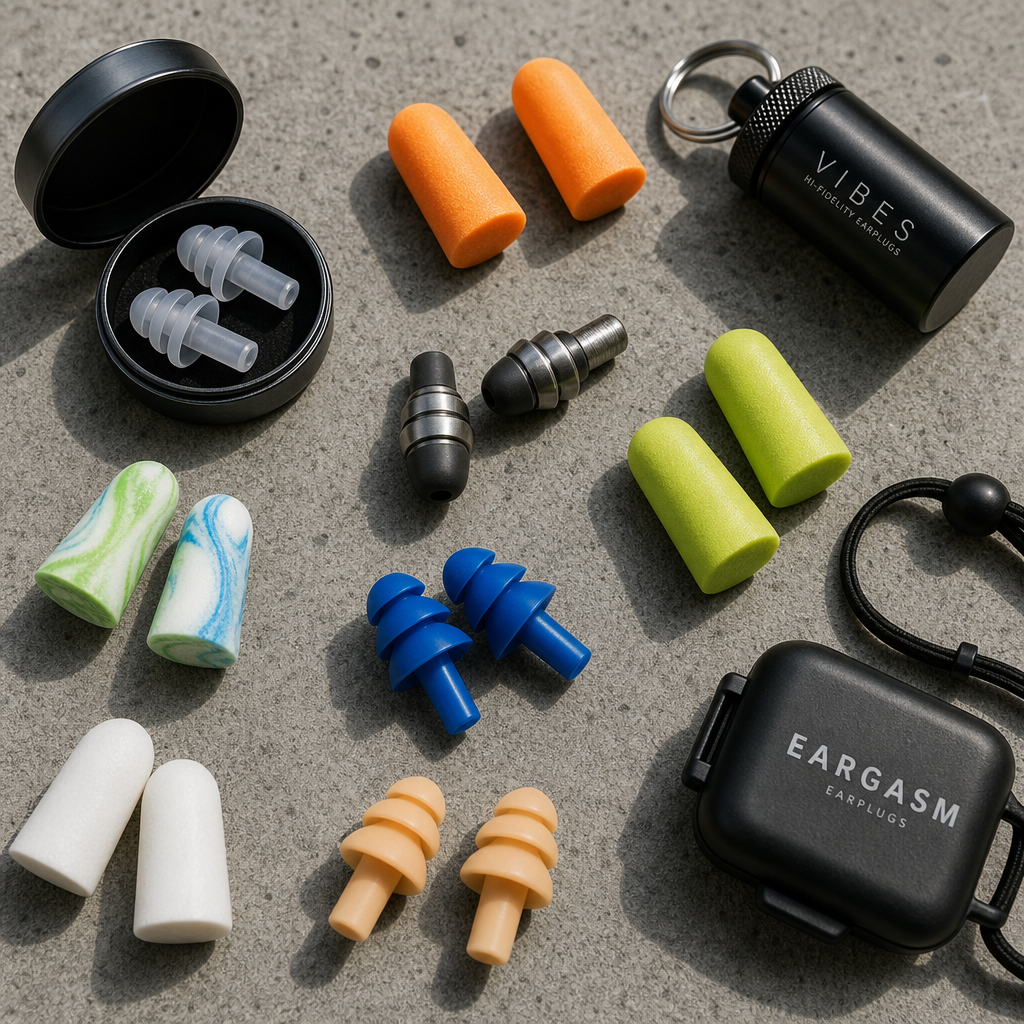
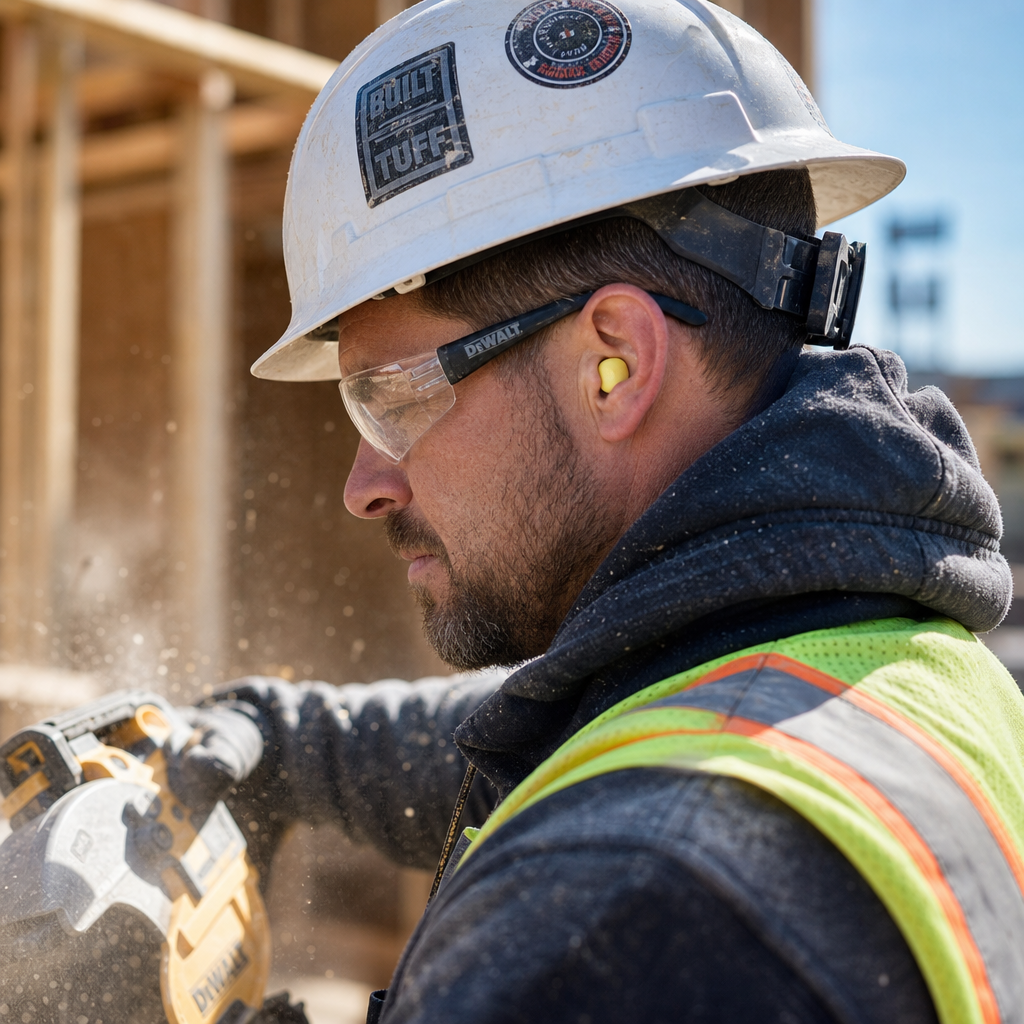
The Noise Reduction Rating (NRR) is an EPA-regulated measurement expressed in decibels that indicates how much sound a hearing protector blocks under controlled laboratory conditions. A plug rated NRR 32dB is among the highest ratings available for insert-style ear plugs, which is precisely what workers in concrete breaking, steel work, or demolition need.
The EPA recommends using a derating formula for real-world estimates. Take the NRR, subtract seven, then divide by two. For an NRR 32 plug, that calculation gives approximately 12.5dB of real-world attenuation. Add that to your ambient noise level calculation. For most heavy construction, this still brings exposure below OSHA action levels during a standard shift.
The data consistently shows that workers consistently underperform laboratory NRR ratings by 30 to 70 percent depending on plug type and insertion technique. This is not a product failure. It is a training and fit failure. High-quality plugs with proper instruction consistently achieve closer to their rated attenuation than cheap plugs worn carelessly.
Pro tip: When selecting ear plugs for a construction crew, look for plugs that include multiple tip sizes. A worker with a narrow ear canal using a medium foam tip will achieve a poor seal regardless of the plug’s NRR rating.
In Australia and Europe, hearing protection is often rated using the Single Number Rating (SNR) system rather than NRR. SNR values are generally higher numerically than their NRR equivalents. If you are sourcing ear plugs internationally for Australian construction sites, verify which standard applies and never assume the numbers are directly comparable.
Not every ear plug design works equally well in a construction context. There are four main types used in industrial and construction settings, and each has meaningful tradeoffs that affect real-world compliance and protection.
These are the yellow rolldown plugs that fill every site safety cabinet. They are cheap, single-use, and almost universally hated by workers after the first hour. They compress and loosen as they absorb moisture, they collect sawdust and grime, and they are typically one-size, which means poor fit for many users. A common mistake is assuming that having boxes of disposable foam plugs on site means workers are protected. Distribution does not equal compliance.
Banded plugs connect two foam or pod-style tips with a rigid band that sits under the chin or behind the neck. They are faster to remove and reinsert than rolldown plugs, which makes them popular in environments where workers need to communicate regularly. However, they typically offer lower attenuation than well-fitted insert plugs and the band can interfere with hard hat straps and chin guards.
This category includes premium options like ATTENU8’s metal-bodied ear plugs, which combine a durable aluminium body with interchangeable memory foam tips. The body is built to last indefinitely under job site conditions. Only the foam tips require periodic replacement, roughly every six to eight weeks depending on use frequency. This design directly addresses the two biggest failure modes of disposable plugs: hygiene degradation within a single shift, and cumulative waste cost.
Earmuffs are effective but incompatible with many construction tasks. They cannot be worn easily with hard hats, welding helmets, or respirators. In high heat, they are uncomfortable enough that workers actively avoid wearing them. For tasks requiring prolonged high-noise exposure without other PPE conflicts, dual protection combining earmuffs over foam plugs is the highest-attenuation option available.
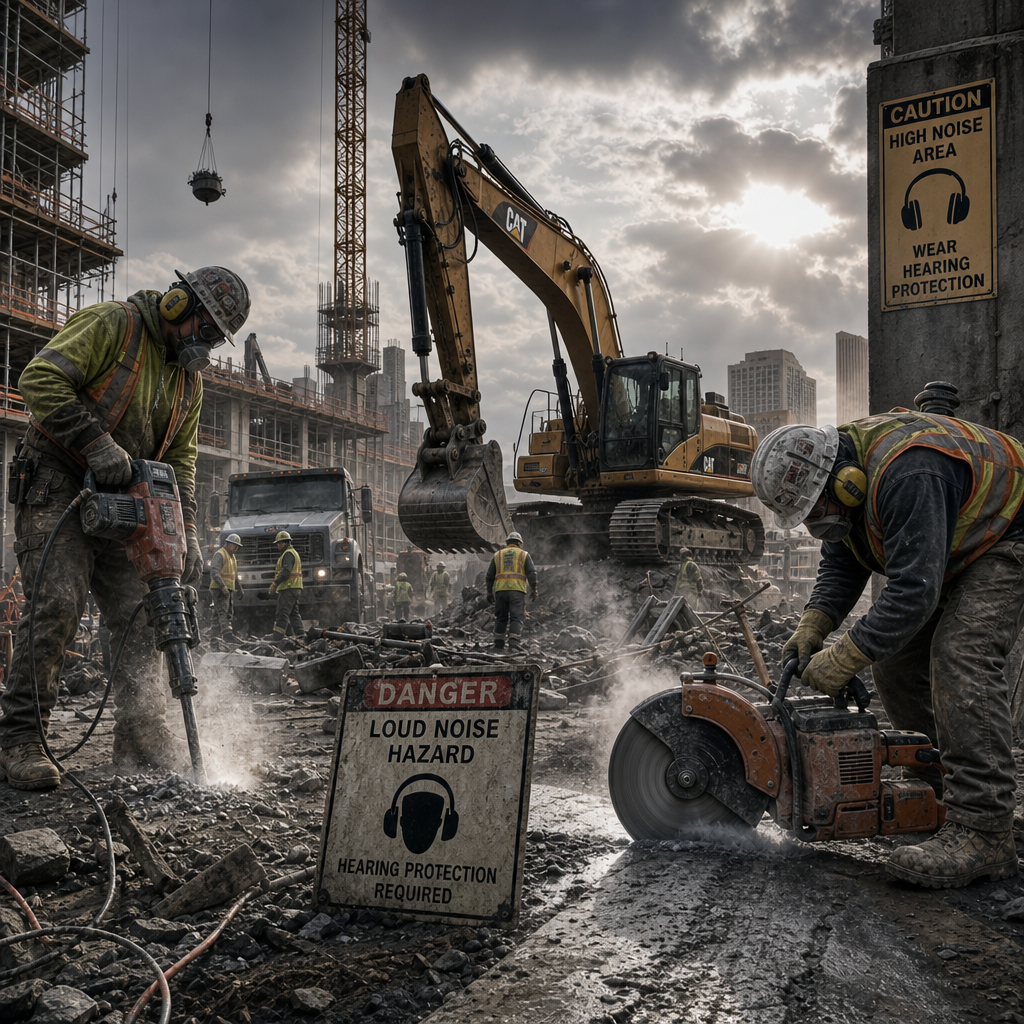
The best ear plugs for loud environments share a specific set of characteristics that separate them from general-consumer products. Understanding these features allows safety managers and individual workers to make defensible purchasing decisions rather than defaulting to whatever is cheapest per unit.
Memory foam creates a superior acoustic seal compared to standard polyurethane foam because it conforms to the irregular geometry of individual ear canals. It recovers its shape more slowly, giving it time to expand and seat properly rather than springing back before the canal walls have been reached. ATTENU8’s three tip sizes (XS, S, and M) address the reality that a single size cannot serve a diverse construction workforce adequately.
Plastic-bodied reusable plugs crack when dropped on concrete, deform in high heat, and become brittle with UV exposure over time. Aluminium bodies do not have these failure modes. They survive being dropped from scaffolding, sitting in a tool bag all week, or being cleaned repeatedly with harsh solvents. For workers who are investing in a piece of PPE they will use every day for years, material quality is not a luxury specification. It is a basic functional requirement.
Workers wearing thick gloves cannot execute the precise rolldown-and-hold technique required for disposable foam plugs without removing their gloves. A plug with a solid body that can be inserted and seated with a simple push-and-hold motion is far more likely to be worn correctly on an active site. Compliance depends on convenience, and any design that creates a friction barrier to use will be avoided.
“The most effective hearing protector is the one the worker will actually wear consistently, all day, every day.” NIOSH, National Institute for Occupational Safety and Health
A disposable foam plug worn for a full shift in summer heat has absorbed sweat, skin oils, and airborne dust. Continuing to wear it the next day is a hygiene problem. Premium reusable plugs with replaceable foam tips solve this cleanly. The aluminium body can be wiped down, and tips are replaced on a scheduled cycle rather than discarded after every use. This is both more hygienic and more cost-effective at scale.
Pro tip: For construction crews managed by a safety officer, ordering replaceable memory foam tips in bulk and scheduling a six-week replacement cycle across all workers is far simpler to manage than maintaining a supply of disposable plugs that disappear unpredictably and inconsistently.
The table below compares the three main categories of industrial ear plugs across the criteria that matter most to construction workers and safety managers.
| Criterion | Disposable Foam Plugs | Standard Reusable Plugs (Plastic Body) | Premium Reusable Plugs (Aluminium Body, e.g., ATTENU8) |
|---|---|---|---|
| Typical NRR Rating | 29-33dB (lab), much lower in real use | 25-30dB | Up to 32dB with correct tip size and insertion |
| Durability Under Construction Conditions | Single shift, then discarded | Weeks to months, prone to cracking and deformation | Years with tip replacements every 6-8 weeks |
| Hygiene Across a Full Shift | Poor. Absorbs sweat and particulates | Moderate. Body can be wiped but foam degrades | High. Metal body wipeable, tips replaced on schedule |
| Fit for Diverse Ear Canals | One size only, poor seal for many workers | Typically 2 sizes | Three sizes (XS, S, M) for consistent seal across workforce |
| Cost Over 12 Months (per worker) | Low per unit, high in aggregate volume | Moderate | Higher upfront, lower ongoing via tip replacement only |
| Ease of Use with Work Gloves | Very difficult, requires removing gloves | Moderate | High. Solid body allows gloved insertion |
| Environmental Waste | High. Daily disposal for every worker | Moderate | Low. Only foam tips replaced periodically |
Correct insertion technique is the single most controllable variable in real-world hearing protection performance. The gap between an NRR 32 plug worn correctly and the same plug inserted lazily can be 15 to 20dB of lost protection. On a 110dB construction site, that difference is the margin between manageable exposure and active hearing damage.
For premium memory foam tips like those used in ATTENU8 ear plugs, the process is straightforward. Reach the opposite hand over the top of the head to pull the outer ear upward and backward. This straightens the ear canal. Insert the plug with the other hand using a gentle pressing motion, holding it in place for five to ten seconds while the memory foam expands and fills the canal. A properly seated plug will feel snug without being painful, and background noise will noticeably reduce.
Cup both hands over your ears briefly after insertion. If noise noticeably decreases further when you add this extra barrier, the plug has not achieved a full seal. Reinsert and try again. This simple field check takes three seconds and confirms whether a worker has adequate protection before walking into a high-noise area.
Some workers find that one ear requires a different tip size than the other. This is more common than most assume. A product offering multiple tip sizes, including XS for narrower canals, directly addresses this. Trying different sizes on each ear separately and identifying the optimal combination is the correct approach, not defaulting to the same size bilaterally without verification.
Hearing protection for construction is not optional in most jurisdictions. OSHA in the United States requires employers to implement a hearing conservation program when workers are exposed to time-weighted average noise levels of 85dB or above over an eight-hour shift. Safe Work Australia imposes similarly structured requirements under the Work Health and Safety regulations, mandating both engineering controls and personal protective equipment where noise cannot be controlled at source.
Employers must provide appropriate hearing protection at no cost to workers, ensure it is properly fitted and worn, and offer training on correct use. Simply having PPE available in the site office does not meet compliance requirements. Documented training records showing workers have been instructed on correct fitting technique are part of a defensible compliance program.
For Australian construction sites, ear plugs should meet the AS/NZS 1270:2002 standard for hearing protectors. Ensure any product purchased, particularly through international online retailers, carries certification to the applicable local standard. ATTENU8’s ear plugs are designed for the premium end of the protective range, targeting the 32dB attenuation that makes them viable across the full spectrum of construction noise environments.
A common mistake at the procurement level is selecting hearing protection based purely on unit price. The real cost calculation must account for replacement frequency, compliance failure rates, and the long-term liability exposure of a workforce with preventable hearing damage. Premium reusable ear plugs with documented attenuation ratings are a straightforward risk management investment.
For most heavy construction environments, an NRR of 29 to 33dB is appropriate. Tools like jackhammers, concrete saws, and pneumatic drills operate at 100 to 130dB, and an NRR 32 plug is the highest attenuation commonly available in insert-style ear plugs. Apply the EPA derating formula (NRR minus 7, divided by 2) to estimate realistic field performance rather than relying on the lab rating alone.
For premium reusable ear plugs with replaceable foam tips, the tips should be changed every six to eight weeks under regular daily use. The solid body of a metal-bodied plug like ATTENU8 does not need replacement, only the foam tip components. This is significantly less waste and cost than replacing disposable plugs daily. Inspect tips regularly for visible compression, tearing, or hardening, and replace earlier if degradation is observed.
Yes. Insert-style ear plugs are the most compatible hearing protection option for workers wearing hard hats, as they sit entirely within the ear canal and do not interfere with the helmet’s fit or suspension system. Earmuffs are far more problematic with hard hat compatibility. This is one of the primary reasons insert plugs are the dominant PPE choice on active construction sites rather than muffs.
In practice, premium reusable ear plugs with scheduled foam tip replacements are more hygienic for regular workers. A disposable foam plug worn through a sweaty eight-hour shift in dusty conditions has absorbed significant contamination by the end of the day. A metal-bodied plug can be wiped down, and its foam tips replaced on a regular maintenance cycle rather than being a single-use item that workers often reuse anyway because they run out of replacements mid-shift.
NRR (Noise Reduction Rating) is the American standard regulated by the EPA. SNR (Single Number Rating) is used in Europe and Australia under the EN 352 and AS/NZS 1270 frameworks. They measure similar properties but use different test methodologies, and SNR values are numerically higher for equivalent protection levels. Never directly compare NRR and SNR numbers without applying the appropriate conversion. For Australian construction sites, look for AS/NZS 1270:2002 certification on any hearing protector you purchase.
Standard disposable foam plugs lose their seal when workers move their jaw (talking, eating), tilt their head, or when the foam compresses and loses elasticity from heat and moisture. They also rely entirely on a rolldown-and-hold insertion technique that is difficult to execute correctly in work gloves. Premium insert plugs with a solid body maintain their position independently of the foam tip’s elasticity, which is why their retention across a full shift is meaningfully better than rolldown disposables.
Loop and Flare Audio products are primarily designed for lifestyle applications including concerts, commuting, and everyday noise management. They are not rated or designed for heavy industrial noise environments. ATTENU8’s 32dB NRR target and durable aluminium construction are specifically appropriate for construction-level noise exposure. Workers who try lifestyle ear plug brands in a construction context are likely underprotected, even if the products look similar in form factor.
Have you tried switching your construction crew from disposable foam plugs to a premium reusable system? Share what worked or what held you back, your experience helps other safety managers make better decisions.

