


 0
0

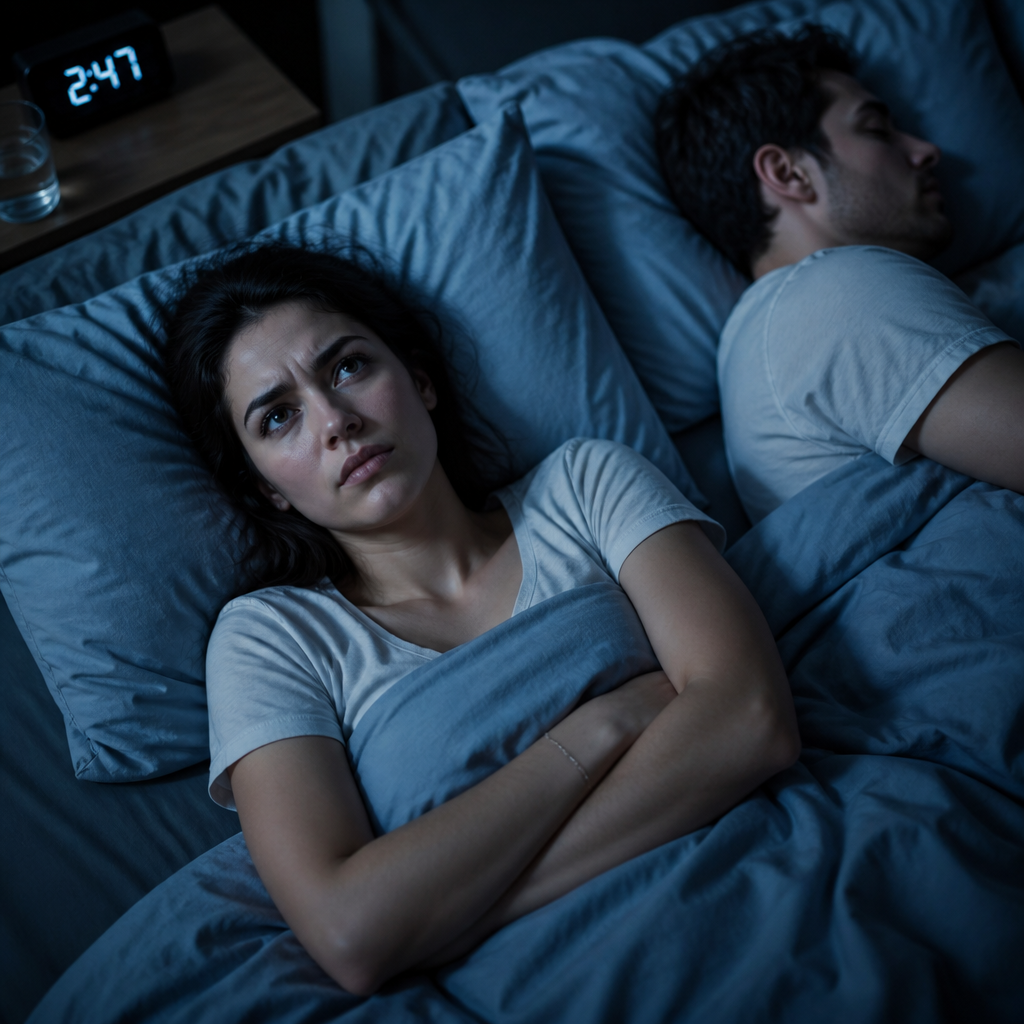
Roughly 45 percent of adults snore occasionally, and about 25 percent do so habitually, according to data published by the American Academy of Sleep Medicine. If your partner is in that majority, you already know the damage it does: fragmented sleep, morning irritability, and a growing resentment that no amount of good intentions can easily fix. Ear plugs for snoring partner noise are not just a short-term workaround. Used correctly, with the right product, they are a clinically sensible, relationship-preserving tool backed by sleep science. This article explains exactly why snoring disrupts sleep, what ear plugs can and cannot do about it, and which type of ear plug is actually worth using long-term.
| Key Insight | Explanation |
|---|---|
| Snoring peaks between 50 and 80 dB | That range overlaps with a vacuum cleaner. Standard disposable foam plugs rated at 33 NRR reduce perceived noise to a tolerable level in most cases, but fit determines everything. |
| Noise Reduction Rating (NRR) is not the same as real-world attenuation | The EPA requires NRR figures to be halved for real-world estimates. A plug rated 32 dB NRR delivers roughly 16 dB of practical attenuation in most ears, which is still significant. |
| Disposable foam plugs lose effectiveness within one to two uses | Compressed foam absorbs oils and debris quickly. A reusable metal-bodied plug with replaceable memory foam tips maintains a consistent seal every night. |
| Fit size matters more than material alone | Ear canals vary significantly between individuals. Plugs that come with XS, S, and M foam tips allow genuine customisation, not guesswork. |
| Sleep fragmentation from noise is cumulative | Even brief arousal events caused by snoring that do not fully wake you still reduce slow-wave and REM sleep. The damage adds up across weeks and months. |
| Long-term ear plug use requires hygiene planning | Reusable plugs with replaceable tips every 6 to 8 weeks are more hygienic and cost-effective than buying new disposables every few days. |
| White noise combined with ear plugs outperforms either alone | A fan or white noise machine raises the ambient sound floor, reducing the contrast between silence and snoring peaks. Ear plugs then handle the residual difference. |
The mechanism is straightforward and unforgiving. Snoring creates intermittent, unpredictable noise spikes. The human brain is wired to treat unpredictable sound as a potential threat, which means the auditory cortex stays partially active even during sleep. This is why a steady hum from an air conditioner rarely wakes you, but a single snore at the same decibel level pulls you out of deep sleep instantly.
Research from the journal Sleep Medicine Reviews confirms that partners of snorers lose an average of one hour of sleep per night. Over a working week, that compounds into a five-hour deficit. The consequences are not trivial: impaired glucose regulation, elevated cortisol, reduced immune function, and measurably worse cognitive performance during the day.
The frustrating part is that the snorer is usually oblivious. They wake rested while you drag yourself through the morning. That asymmetry breeds resentment, and resentment in a sleep-deprived person escalates faster than it would otherwise. Addressing the noise problem directly, rather than waiting for your partner to fix their snoring, is the pragmatic move.
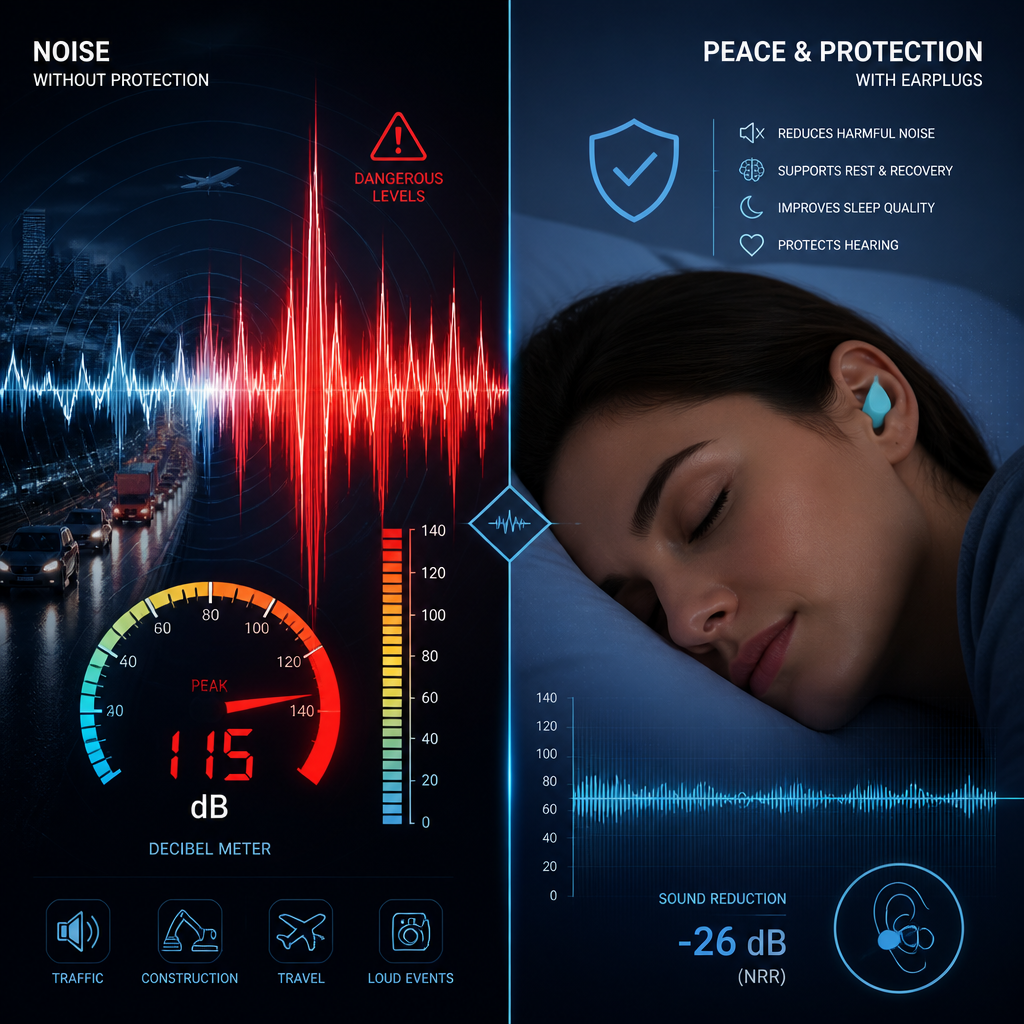
Light snoring sits around 40 to 50 dB, roughly equivalent to a quiet conversation across a room. Moderate snoring reaches 55 to 65 dB, comparable to an office environment. Severe snoring, particularly associated with obstructive sleep apnoea, can exceed 80 dB, which is louder than city traffic. The World Health Organisation recommends nighttime environmental noise stay below 40 dB for healthy sleep.
That benchmark is almost impossible to meet in the same bed as a habitual snorer without some form of noise attenuation. Earplugs are the most direct physical intervention available to the non-snoring partner.
Snoring is not a single frequency. The rumbling, low-frequency component travels through bone and tissue, not just air. Most foam ear plugs attenuate high-frequency sound very effectively but are less efficient at low frequencies below 500 Hz. This is why some people try foam plugs and still hear the bass “rumble” of their partner’s snoring even with a good seal. A tight-fitting plug with dense memory foam tips performs better in this range than a loosely inserted standard foam plug.
There is no single fix, and anyone selling you one is oversimplifying. The approach that actually works combines multiple strategies, with ear plugs as the most reliable and immediately effective layer.
This is not a joke. Falling asleep first means you are already in deeper sleep stages before the snoring begins. Your brain is less reactive to sound during established deep sleep than during the light, transitional stage at sleep onset. In practice, even a 15 to 20 minute head start can meaningfully reduce how often you are woken through the night.
Snoring is loudest from a supine position, when the tongue and soft palate collapse backward. If your partner sleeps on their back, gently nudging them to a side position often reduces the volume by 10 to 20 dB. This is not a cure but it shifts the snoring from severe to moderate, which makes a real difference to how much work your ear plugs need to do.
This is where most people fail. They grab the cheapest foam plugs from a petrol station, insert them incorrectly, and conclude that ear plugs do not work. A properly fitted, high-NRR ear plug inserted correctly creates a seal that genuinely reduces snoring to a manageable level. The technique matters: roll the foam tip down, pull your outer ear up and back to straighten the canal, insert the plug, and hold it for 20 to 30 seconds while the foam expands. Most people skip the holding step entirely.
Pro tip: If you wake up and your ear plug has partially backed out of your ear canal, the tip size is too small for your anatomy. Try the next size up before assuming the product has failed.
Not all ear plugs are equal, and the differences matter significantly when you are using them every single night. Below is a direct comparison of the three main categories available to someone dealing with a snoring partner on an ongoing basis.
| Type | Noise Reduction and Comfort | Long-Term Suitability for Nightly Use |
|---|---|---|
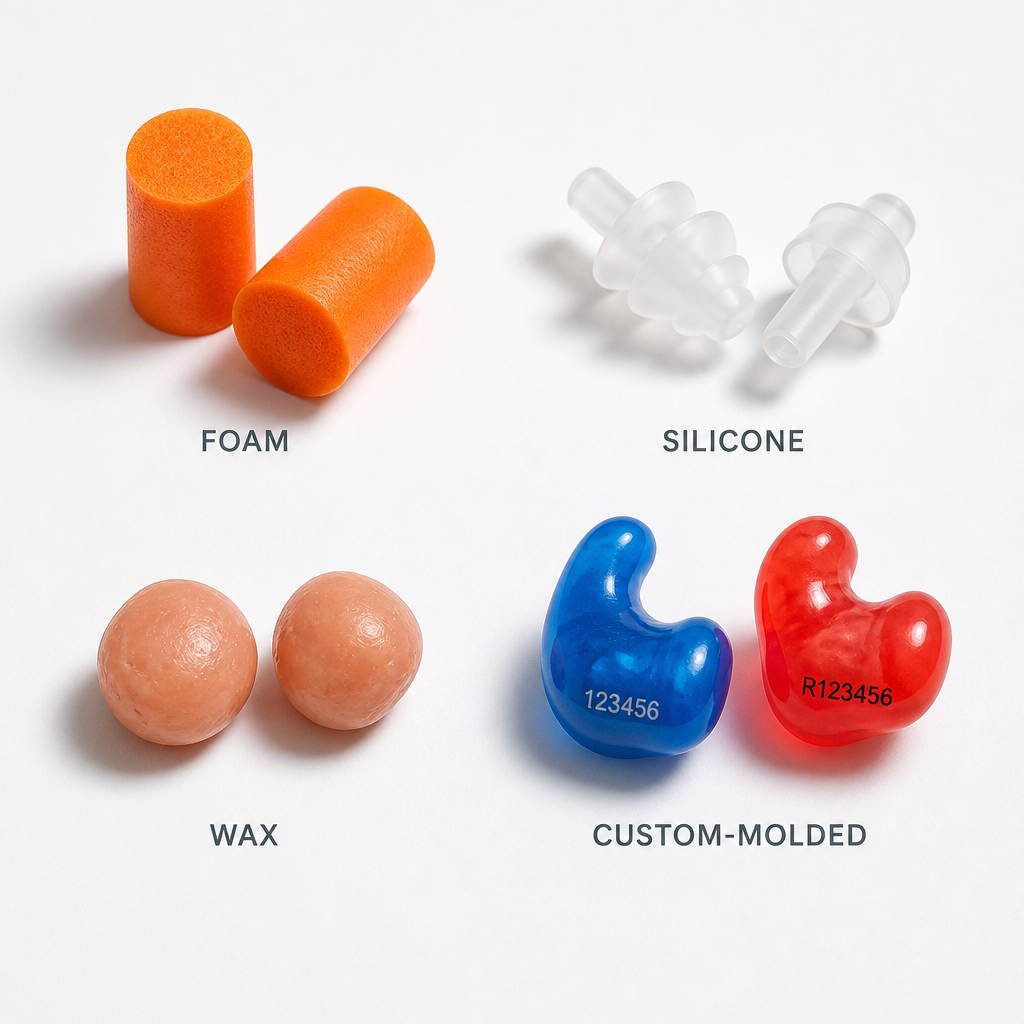
| Disposable foam plugs (standard drugstore) | NRR up to 33 dB but degrades after 1 to 2 uses as foam compresses permanently. Comfort drops sharply by the second use. One-size approach fails many ear canal shapes. | Poor. Requires daily replacement for hygienic use. Cost adds up quickly. Inconsistent fit means inconsistent results. |
| Silicone or wax mouldable plugs | NRR typically 22 to 27 dB. Comfortable for some users but prone to movement during sleep. Cannot be reliably disinfected. Warm climates soften the material unpredictably. | Moderate. Better for occasional use than nightly. Wax plugs in particular attract debris and require careful hygiene management. |
| Reusable metal-bodied plugs with memory foam tips (ATTENU8) | 32 dB noise reduction with a rigid aluminium shell that positions the replaceable memory foam tip correctly in the canal. Three tip sizes (XS, S, M) allow a genuine anatomical fit. Comfort remains consistent because the body structure does not deform. | Excellent. Tips replaced every 6 to 8 weeks maintain hygiene and seal quality. The aluminium body lasts indefinitely. Designed specifically for repeated nightly use. |
The data consistently shows that the primary reason people abandon ear plugs is discomfort, not lack of noise reduction. A rigid-body plug with soft replaceable tips solves both problems simultaneously: the body ensures correct positioning, and the fresh foam tip provides the comfort and seal quality needed for a full night’s sleep.
“Sleep is the single most effective thing we can do to reset our brain and body health each day.” Matthew Walker, neuroscientist and author of Why We Sleep (Scribner, 2017)
The NRR system is frequently misunderstood, and that misunderstanding leads people to either over-trust or under-trust their ear plugs. Here is what the numbers actually mean in practical terms.
The EPA formula for real-world attenuation is: subtract seven from the NRR, then divide by two. For a 32 dB NRR plug, that gives you 12.5 dB of estimated real-world attenuation. If your partner snores at 65 dB, you are hearing approximately 52 dB after attenuation. That is still audible, but it is now comparable to a quiet conversation rather than a jackhammer. Most people can sleep through 50 to 52 dB if the sound is relatively consistent rather than sudden and irregular.
A plug rated at 32 NRR inserted with a poor seal will underperform a 29 NRR plug inserted correctly. The acoustic seal is the mechanism. Without it, sound bypasses the plug entirely through the gap between the foam and the canal wall. This is why tip size selection is not optional. Using the ATTENU8 XS, S, or M tip options to find the size that expands to fill your specific ear canal without pressure is the single most impactful step most users skip.
Pro tip: Test your ear plug seal in a moderately noisy environment before relying on it in bed. Rub your fingers together near your ear while the plug is inserted. If you can hear the rubbing clearly, the seal is incomplete and you need a larger tip size or a deeper insertion.
A common mistake is using the same foam ear plug for more than two or three nights and expecting it to perform as well as it did on day one. Standard foam compresses irreversibly with use, losing both its expansion force and its surface hygiene. The seal degrades, the attenuation drops, and the user concludes that ear plugs simply do not work for snoring. That conclusion is wrong. The product failed, not the concept.
The ear canal is not straight. It curves, which means a plug pushed in without pulling the outer ear up and back sits in the outer portion of the canal rather than deep enough to seal properly. Most instructional diagrams on ear plug packaging show this step but it is routinely ignored. In practice, correct insertion technique alone can add 5 to 10 dB of effective attenuation compared to a careless insertion of the same plug.
Industrial ear plugs designed for construction or manufacturing sites are built for daytime, upright use. They tend to be larger, firmer, and shaped for quick insertion and removal rather than comfortable overnight wear. Side sleepers in particular experience significant pressure from oversized plugs pressed against a pillow. A plug designed for sleep, like the low-profile ATTENU8 design, sits flush enough to allow side sleeping without creating a pressure point that wakes you at 3am.
If your partner’s snoring is severe, meaning it regularly exceeds 75 dB or is accompanied by breathing pauses, gasping, or choking sounds, they may have obstructive sleep apnoea (OSA). This is a medical condition, not just an annoyance. OSA is associated with increased risk of hypertension, stroke, and type 2 diabetes. Ear plugs are entirely appropriate for the non-snoring partner, but your partner needs a sleep study, not just a nasal strip.
Refer your partner to a GP or sleep specialist for polysomnography if you observe any of the following: snoring that stops and then resumes with a gasp, observed breathing pauses lasting longer than 10 seconds, or your partner reporting excessive daytime sleepiness despite a full night in bed. These are clinical indicators, not just loud-sleeper quirks.
For couples where the snoring is moderate and the non-snoring partner simply needs better sleep protection, the layered approach works reliably. Ear plugs rated at 32 dB NRR, correctly fitted with the right tip size, combined with a white noise machine set to 50 to 55 dB, will bring most moderate snoring environments within a tolerable range. The ATTENU8 approach, using a reusable aluminium-bodied plug with fresh memory foam tips, is built specifically for this kind of consistent nightly deployment rather than occasional industrial use.
The alternative solutions from competitors in the premium ear plug space tend toward acoustic filter designs that are better suited to live music or commuting than to blocking the irregular, low-frequency rumble of snoring. Filtering designs intentionally allow certain frequencies through to preserve sound fidelity. That is the wrong engineering goal for someone trying to block out their partner at 2am.
No ear plug completely eliminates sound, and any product claiming otherwise is overstating its capability. A well-fitted 32 dB NRR plug will reduce snoring by roughly 12 to 16 dB in real-world conditions, bringing most moderate snoring from an intrusive level down to a manageable background noise. Combined with white noise, this is sufficient for most light sleepers to maintain uninterrupted sleep through the night.
Yes, provided you maintain basic hygiene. For reusable plugs with replaceable foam tips, replacing the tips every 6 to 8 weeks prevents bacterial buildup. The ear canal is self-cleaning, and using clean plugs does not interfere with that process. The main risk with nightly ear plug use is impacted earwax, which is more likely with daily use of large, deeply inserted plugs. A low-profile design that does not push wax inward is preferable for long-term nightly use.
For light to moderate snoring (40 to 60 dB), a plug rated at 25 to 33 NRR is sufficient when correctly inserted. For severe snoring above 70 dB, you need the highest available NRR combined with a white noise layer to mask residual sound. The ATTENU8 32 dB rating sits at the top of the practical range for sleep-specific use.
This happens for two reasons. First, the tip size is too small, so the foam does not create enough friction against the canal wall to stay seated as you move. Second, the foam has been used enough times that it no longer expands properly. Either switch to the next size up, or replace the tips if you are using a reusable product. A rigid outer body, like the aluminium shell on ATTENU8 plugs, also gives the foam tip a stable platform so it maintains its position rather than working itself loose against pillow fabric.
The most effective non-plug strategies are: going to sleep 15 to 20 minutes before your partner, using a white noise machine at 50 to 55 dB, nudging your partner onto their side, and positioning yourself further from the sound source by moving to the far side of the bed or adjusting pillow height. In practice, these strategies reduce the problem but rarely eliminate it for genuine light sleepers. Ear plugs remain the most reliable single intervention available without requiring your partner to change their behaviour.
On day one, a cheap foam plug and a premium reusable plug may deliver similar NRR performance. The difference emerges over time. Cheap foam degrades within one to two uses, meaning you are using a compromised seal by night three. A reusable aluminium-body plug with fresh memory foam tips maintains the same seal quality on night 90 as it did on night one. For a nightly snoring problem, the cost per use calculation strongly favours the reusable option within the first two to three months.
Yes, this matters. Plugs designed for industrial use are typically large enough that lying on your side creates noticeable pressure between the plug body and the pillow. A low-profile plug, where the body sits close to flush with the ear opening rather than protruding outward, is significantly more comfortable for side sleeping. This is a design feature worth confirming before purchasing, particularly if side sleeping is your natural position.
Have you tried ear plugs for your partner’s snoring? Share what worked and what did not in the comments below, your experience might help someone else find a better night’s sleep faster.

