


 0
0

You grab a pair of ear plugs off a shelf, squint at the packaging, and see “32dB noise reduction” printed next to a European CE mark. Impressive, you think. But impressive compared to what? Most people have no practical frame of reference for that number, and that gap in understanding is exactly why so many ear plugs end up abandoned in a bedside drawer after a week. Whether your problem is a partner who snores at 65dB or a street outside that never fully quiets down, knowing what 32dB noise reduction actually delivers in practice, not just in a testing lab, is the difference between a product that transforms your sleep and one that disappoints.
| Key Insight | Explanation |
|---|---|
| 32dB is a logarithmic cut, not a linear one | A 32dB reduction drops perceived loudness to roughly one-eighth of the original intensity, which is far more dramatic than the arithmetic gap suggests. |
| SNR and NRR are not the same number | SNR is the European standard; NRR is the US standard. For the same ear plug, SNR typically reads 2-3dB higher. They are not directly interchangeable. |
| Lab ratings overstate real-world performance | Ratings are measured under perfect insertion conditions. A loose or incorrectly inserted plug can cut real-world attenuation to roughly half the rated value. |
| The WHO recommends below 30dB in bedrooms at night | Most urban bedrooms exceed that threshold. A 32dB SNR ear plug can bring ambient noise down into the WHO recommended range for most common sources. |
| Snoring sits between 60-70dB for most people | A 32dB rated ear plug, properly fitted, can reduce snoring to somewhere between 30-38dB, well inside the range for uninterrupted sleep. |
| Fit and seal matter more than the rating number | An ear plug with a 32dB rating and a poor seal will underperform one with a 24dB rating and a tight, consistent seal every night. |
| Tip size is the single biggest lever for seal quality | Using the wrong foam tip size is the most common reason rated performance fails to translate into quieter sleep. Three sizes exist for a reason. |
The most common mistake people make when reading an ear plug rating is treating it like a straightforward subtraction problem. If a noise source is 70dB and the ear plug is rated at 32dB, surely the result is 38dB, right? Arithmetically, yes. Practically, that framing misses everything important about how decibels actually work.
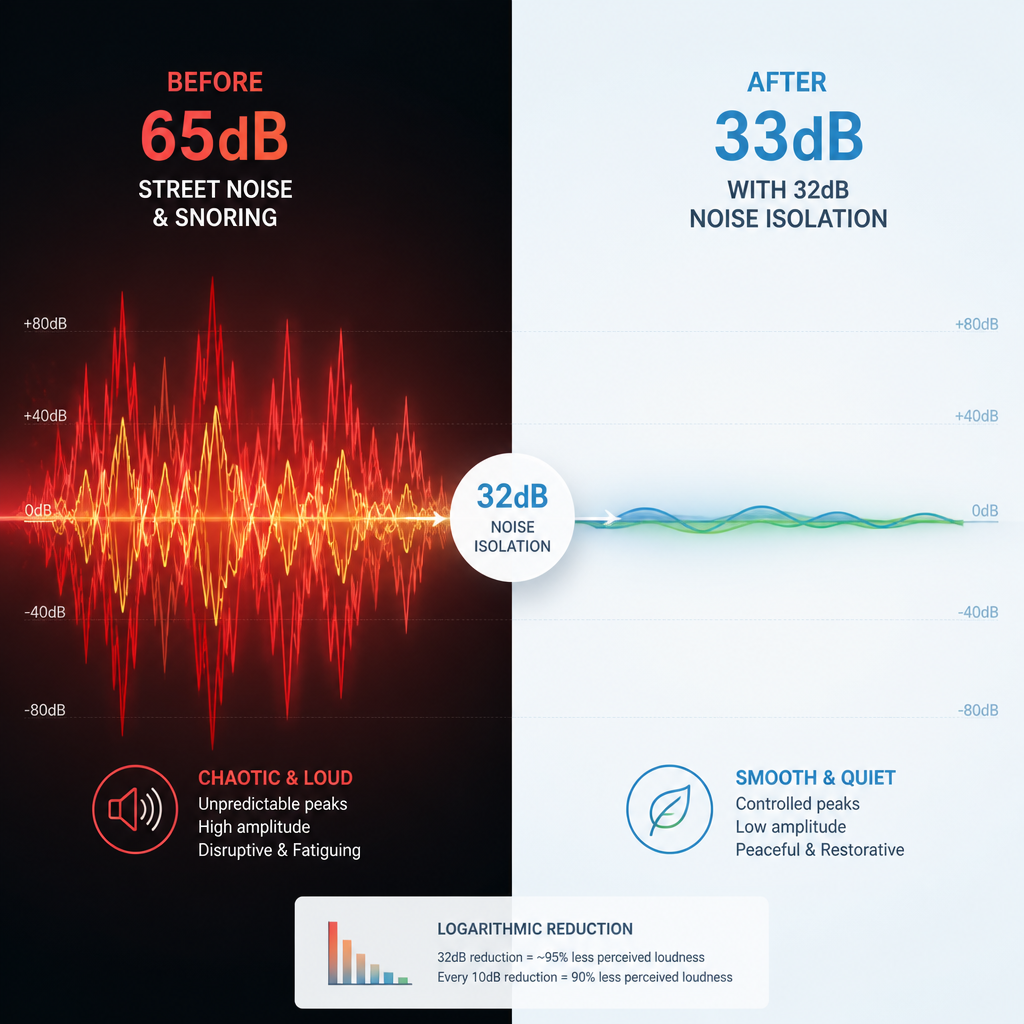
The decibel scale is logarithmic. A reduction of 10dB does not cut loudness by 10 percent, it cuts the perceived loudness roughly in half. A 20dB reduction cuts it to about one-quarter. A 32dB reduction therefore brings perceived volume down to somewhere around one-eighth of its original intensity. The subjective experience of that reduction is far larger than the gap between two numbers on a page can convey.
A 3dB increase in noise represents a doubling of sound intensity. That means the difference between 85dB and 88dB is not a small step, it is a 200% jump in energy reaching your ears.
This matters for sleep in a very direct way. When your partner’s snoring registers at 65dB and your ear plug brings that down by 32dB to approximately 33dB, you are not experiencing a modest improvement. You are experiencing a shift from “loud conversation level” to “a quiet whisper in a library.” That is the kind of difference that separates lying awake at 2am from sleeping through to your alarm.
Pro tip: When comparing ear plug ratings, do not ask “how many dB less is this one?” Ask “how many times quieter will this make the sound?” A 32dB SNR rating makes a source sound roughly eight times quieter than it would without protection. That reframe is far more useful than treating the number as a simple volume dial.
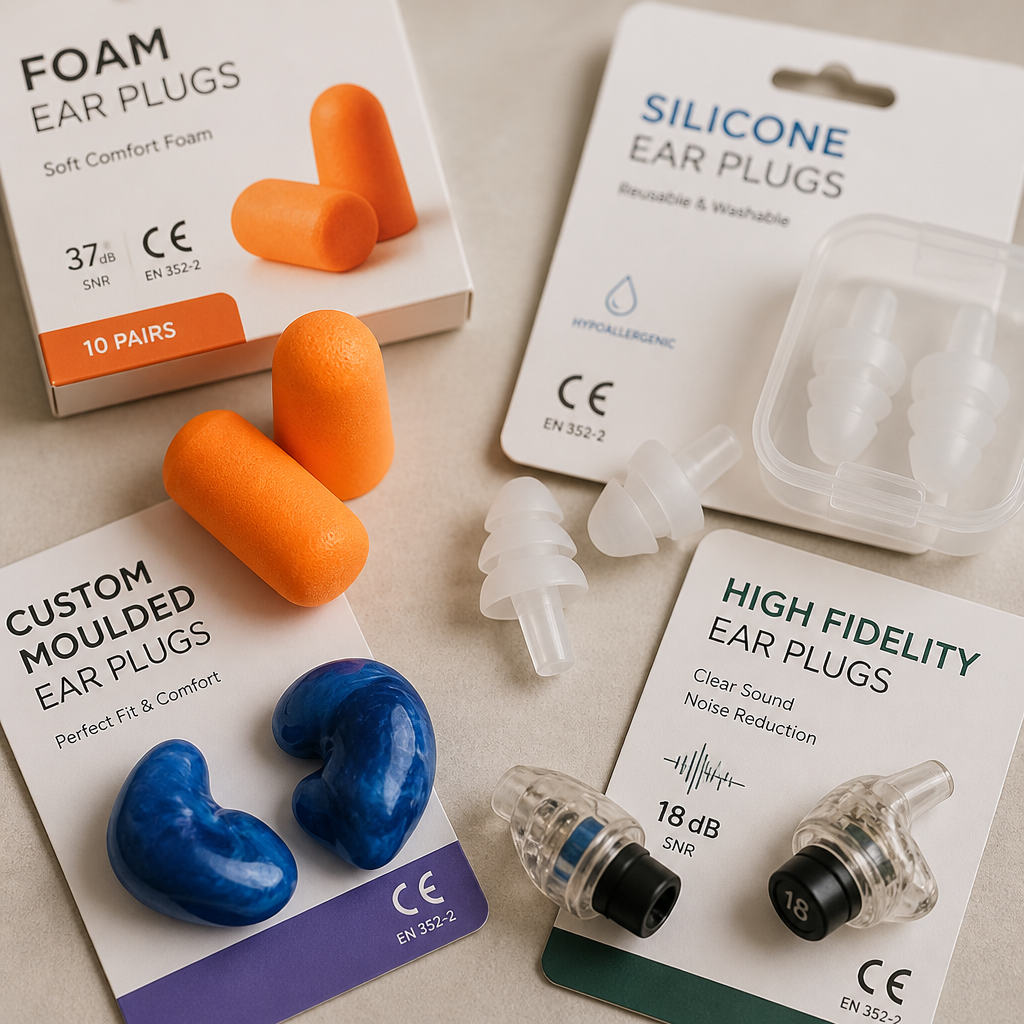
When you are shopping for ear plugs and comparing specifications across different brands, you will encounter two rating systems. Understanding which one you are looking at, and why you cannot simply stack the numbers against each other, is essential before any purchasing decision.
SNR stands for Single Number Rating, and it is the European standard for measuring how much noise an ear plug attenuates. It appears on products manufactured or sold under EU or CE certification, including those certified to the BS EN 352-2 standard. ATTENU8 ear plugs carry an SNR 32 rating, measured under this framework. The SNR represents the average noise reduction across test frequencies, expressed as a single figure in decibels.
The Noise Reduction Rating is the US equivalent, regulated by the Environmental Protection Agency and tested under the ANSI S3.19 standard. The NRR is derived from laboratory tests where subjects insert ear plugs following written instructions only, without hands-on fitting guidance. For the same physical ear plug, the SNR figure typically reads about 2 to 3dB higher than the NRR. A product with an NRR of 33 and a product with an SNR of 32 are not delivering equivalent real-world performance.
Both ratings are generated under ideal laboratory conditions with perfect insertion technique. In practice, even a well-intentioned user can insert a foam tip too loosely, choose the wrong tip size for their ear canal, or position the plug at a depth that breaks the acoustic seal. Any of these errors meaningfully reduces actual attenuation. A plug rated at 32dB can realistically deliver somewhere between 16dB and 32dB depending entirely on how well it fits and seals.
That is not a reason to dismiss the rating. It is a reason to treat the rating as a ceiling, not a guarantee, and to prioritize fit, tip selection, and seal quality when choosing an ear plug for sleep.
To understand what 32dB buys you in practice, you need a reference point for the noises you are actually trying to block. Most of them are louder than people assume.
The World Health Organization recommends that indoor bedroom noise levels stay below 30dB during the night for undisturbed sleep. The WHO also recommends that average noise outside bedrooms stay below 40dB at night to prevent adverse health effects. Most urban bedrooms do not come close to meeting either of those thresholds without intervention.
Snoring typically ranges from 60 to 70dB, roughly comparable to a normal conversation at close range. Road traffic noise for people living near busy streets frequently falls between 70 and 85dB. Air conditioning units typically hum around 50dB. Even sounds well below those levels, a refrigerator, a fan, an HVAC system, can sit in the 40-50dB range that is sufficient to disrupt deep sleep stages over the course of a night.
Pro tip: If you are uncertain how loud your bedroom actually is, most modern smartphones have a free decibel meter app that gives a reasonably accurate reading. Measure the noise that disturbs you most (partner snoring, traffic, HVAC) and compare it against the 30dB WHO threshold for sleep. That gap tells you exactly how much attenuation you need.
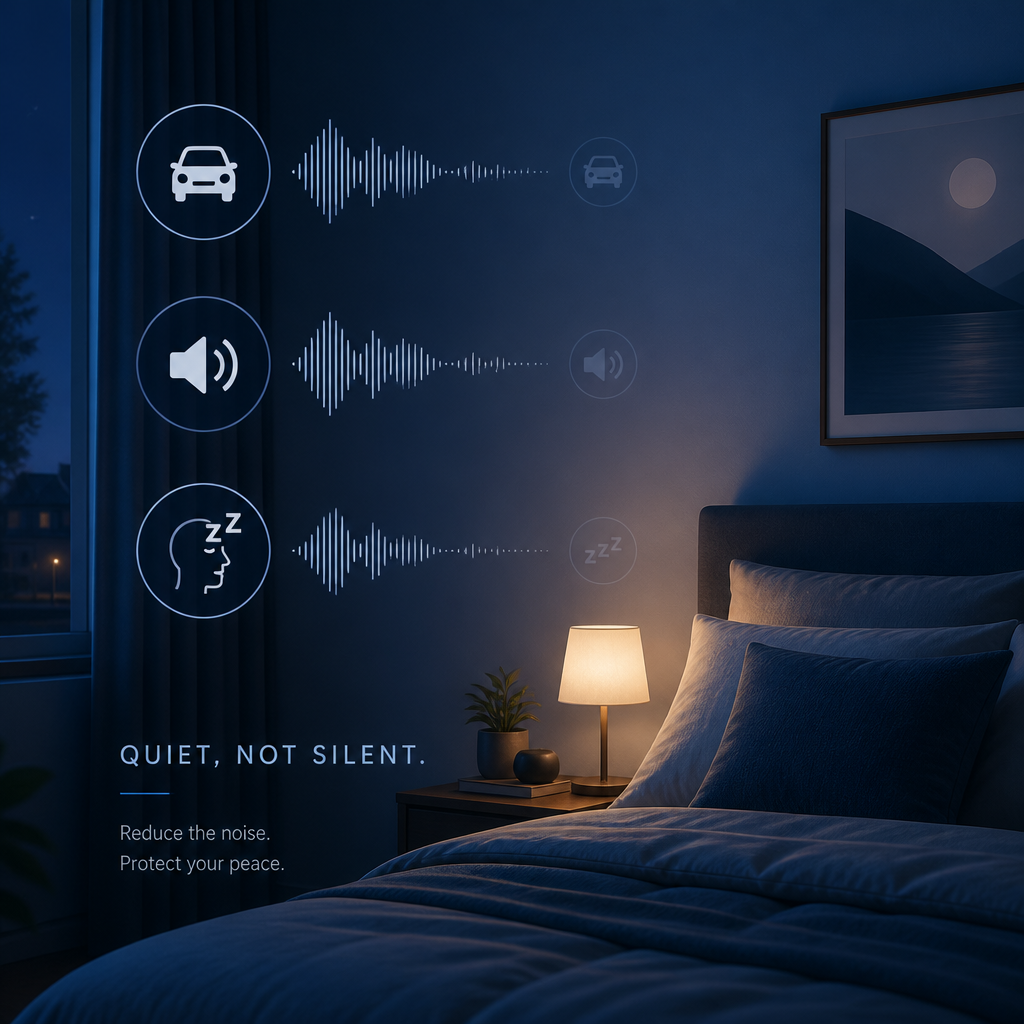
With real noise levels as a reference, the practical value of a 32dB SNR rating becomes concrete rather than abstract.
A partner snoring at a moderate 65dB, properly attenuated by a 32dB rated ear plug with a good seal, would reach your ears at roughly 33dB. That is below the WHO’s 35dB classroom recommendation and within the quiet library range. You would still perceive that something is there, sounds never disappear entirely, but it would register as a distant murmur rather than a disruptive presence.
Urban traffic noise at 75dB, reduced by 32dB, arrives at approximately 43dB. That is still audible but equivalent to a quiet office environment rather than a busy street. For light sleepers who currently lie awake listening to traffic, this shift is often enough to allow sleep onset and maintenance through the night.
The harder case is extreme snoring, which can reach above 80dB in severe cases. Even with 32dB of attenuation, the residual sound sits above 50dB, which remains potentially disruptive for highly sensitive sleepers. In those cases, maximizing the seal becomes critical, because every decibel of real-world attenuation beyond the baseline matters significantly on a logarithmic scale.
The Importance of Matching the Rating to Your Specific Problem
A 32dB SNR rating is among the highest available for consumer ear plugs. Most products on the market sit between 20dB and 35dB SNR. At the 32dB level, you are at the top of what you can reasonably achieve without industrial hearing protection equipment that is impractical for sleeping. If 32dB with a good seal is not solving your problem, the issue is almost certainly not the ear plug rating. It is fit, insertion technique, or a noise source that sits genuinely above what any consumer ear plug can fully address.
The rating on the packaging assumes something that almost nobody achieves without deliberate attention: a perfect acoustic seal with the ear canal, achieved every single time the plug is inserted. In the real world, fit varies significantly, and the consequences for noise reduction performance are severe.
An ill-fitting ear plug can substantially reduce the actual attenuation delivered compared to its rated value. The seal is the entire mechanism. Sound does not care about the material an ear plug is made from if there is a gap between that material and the ear canal wall through which sound waves can travel.
Ear canals vary considerably in size between individuals, and even between a person’s left and right ear. Using a tip that is too small creates a loose seal that fails under movement during sleep. Using a tip that is too large causes pressure and discomfort that makes wearing the plug through the night impractical. Neither scenario delivers rated performance.
This is precisely why ATTENU8 includes three sizes of memory foam tips (XS, S, and M) with every pair. The rated 32dB SNR performance is achievable, but it requires the right tip for your canal geometry. A common mistake is selecting the medium tip by default without testing the others. In practice, many people find they need XS in one ear and S in the other, or that the size they assumed was correct created just enough gap to reduce effective attenuation by 8-10dB.
Traditional foam ear plugs require you to roll them down, insert them quickly, and hold them in place while they expand. If you remove your hand too early, the plug expands before it has fully seated and the seal is compromised. Each insertion is slightly different, which means performance varies from night to night.
A metal-bodied design with foam tips separates two functions that foam plugs combine into one. The aluminium body holds a fixed position in the ear canal. The memory foam tip conforms to the canal wall and creates the seal. This separation makes consistent insertion more reliable, which means the gap between rated performance and real-world performance narrows compared to a traditional rolled foam plug.
Understanding how different ear plug designs approach noise reduction, comfort, and durability helps explain why the specification on the box does not tell the full story. Below is a direct comparison of the three main categories available to sleep-focused buyers.
| Feature | Traditional Disposable Foam | Silicone / Shaped Plug (e.g., Loop, Flare) | Metal-Bodied with Memory Foam Tips (ATTENU8) |
|---|---|---|---|
| Typical SNR / NRR Rating | NRR 29-33 / SNR 30-35 | SNR 18-27 (varies by model) | SNR 32 |
| Real-world attenuation consistency | Variable. Insertion technique heavily affects result each time. | More consistent insertion but lower peak attenuation. | High consistency due to fixed body position and conforming foam tip. |
| Side sleeper comfort | Poor. Foam protrudes and creates pillow pressure. | Moderate. Shaped plugs vary in profile. | Designed with side sleepers in mind; optional flat foam bottom cap reduces profile pressure. |
| Durability and ongoing cost | Single-use. Cost accumulates significantly over months. | Reusable body, but may require cleaning and eventual replacement. | Reusable aluminium body. Only foam tips replaced every 6-8 weeks. |
| Fit customisation | One size expands to fit. No sizing options. | Limited size options depending on brand. | XS, S, and M foam tips included. Mix and match per ear. |
| Best for | Occasional use where convenience outweighs performance. | Moderate noise environments, concerts, travel. | Daily sleep use, high-noise environments, noise-sensitive individuals seeking long-term solution. |
The table makes one pattern clear: high SNR rating and long-term wearability rarely coexist in a single product category, except in a metal-bodied design with replaceable foam tips. Disposable foam can match or exceed the SNR number, but the inconsistency of insertion and the discomfort for side sleepers means that the rated number is rarely what you actually experience night after night.
For most snoring levels, yes. Snoring typically sits between 60 and 70dB. A properly fitted 32dB SNR ear plug reduces that to approximately 30-38dB, which is within the range the World Health Organization recommends for undisturbed bedroom sleep. Extreme cases above 80dB may still leave a perceptible residual sound, but the reduction in intensity is significant enough that most people sleep through it. Fit quality is the critical variable: a well-seated plug with the correct tip size will always outperform a loosely inserted higher-rated alternative.
SNR (Single Number Rating) is the European measurement standard. NRR (Noise Reduction Rating) is the US equivalent regulated by the Environmental Protection Agency. Both measure attenuation in decibels, but they use different testing methodologies. For the same physical ear plug, the SNR figure typically reads about 2 to 3dB higher than the NRR. You cannot directly compare an SNR 32 product to an NRR 32 product and assume they perform the same. ATTENU8 ear plugs carry an SNR 32 rating under CE certification to the BS EN 352-2 standard.
Because the rated value is measured under ideal laboratory conditions with perfect insertion technique. In real-world use, the most common causes of underperformance are using the wrong tip size for your ear canal, inserting the plug too shallowly, or not achieving a complete acoustic seal. Start by testing all three tip sizes and check that the foam tip fully contacts the ear canal wall around its entire circumference. A tight, consistent seal is the only route to approaching the rated attenuation in practice.
Yes, for the vast majority of people. Ear plugs rated at 32dB SNR are designed for consumer use and reduce noise rather than eliminating it entirely. You will still hear loud sounds like alarms through them. The practical consideration for nightly use is hygiene and comfort: with a reusable metal-bodied design, the aluminium body remains clean and the foam tips should be replaced every 6-8 weeks to maintain both performance and ear canal hygiene. Avoid wearing any ear plug that causes pain, persistent pressure, or irritation.
Yes, and this is one area where a 32dB SNR rating genuinely matters beyond the bedroom. Industrial environments regularly exceed 85dB, which is the threshold at which sustained exposure causes hearing damage. A well-fitted 32dB SNR ear plug brings an 85dB environment down to approximately 53dB at the eardrum, well within safe exposure limits. The same product that helps you sleep through urban traffic is providing meaningful hearing protection during a shift in a noisy workplace, which is a meaningful advantage of choosing a premium ear plug over a sleep-specific low-attenuation product.
For extreme industrial settings above 100-110dB (heavy machinery, certain manufacturing processes), double protection combining ear plugs and ear muffs is sometimes warranted, and 32dB alone may not fully address the exposure level. For sleep and everyday high-noise environments, 32dB SNR sits at the upper end of what consumer ear plugs deliver, and finding a plug with a higher real-world seal is more effective than chasing a higher rating number with a product that fits poorly.
Memory foam tips degrade over time as the foam loses its ability to fully expand and conform to the ear canal wall. When that happens, the seal quality drops and real-world attenuation falls well below the rated value, even if the plug feels similar to wear. For daily sleep use, replacing foam tips every 6-8 weeks maintains the seal quality needed to consistently approach the rated 32dB SNR performance. This is considerably more economical than replacing disposable foam ear plugs every day or two.
If you use ear plugs for sleep, we would love to hear which noise source disrupts you most and how much of a difference the right ear plug has made for you, share your experience in the comments.

