


 0
0

Most people who buy disposable foam ear plugs think they are making the sensible, budget-friendly choice. They cost almost nothing per pair, they are available everywhere, and you just throw them away when you are done. What this thinking ignores is the cumulative math. If you use ear plugs every night for sleep, or every working day in a loud environment, those near-zero per-pair costs stack into a surprisingly large annual expense, alongside a growing pile of single-use plastic and compressed foam heading straight to landfill. Reusable ear plugs reframe the economics entirely, and this article shows you exactly why.
| Key Insight | Explanation |
|---|---|
| Disposable foam adds up fast for daily users | Used every night, cheap foam ear plugs can cost anywhere from roughly £70 to £180 per year, depending on how frequently you replace them and what you pay per pair. |
| Foam loses its protective shape after one use | Compressed foam softens inside the ear canal and begins degrading in effectiveness after a single use, meaning re-using disposables does not just save money, it actively reduces noise protection. |
| Reusable ear plugs have a far lower cost per wear | A quality pair of reusable ear plugs costs more upfront but delivers a fraction of the per-use cost of disposables once you factor in their lifespan. |
| Fit consistency is where reusables win on noise reduction | Foam plugs can show high lab ratings, but real-world results are inconsistent due to fit variability. Reusables with sized tips (XS, S, M) deliver more predictable attenuation wear after wear. |
| Reusing disposables carries genuine hygiene risks | Compressed foam traps moisture and debris, creating conditions for bacterial buildup if a disposable pair is worn multiple times. |
| Replaceable tips are the smarter maintenance model | Products like ATTENU8 require only memory foam tip replacements every 6 to 8 weeks, not complete product replacement, keeping ongoing costs predictable and low. |
| Landfill contribution from disposables is significant for daily users | A person using disposable foam ear plugs nightly generates hundreds of pairs of single-use waste per year. Reusables cut that figure to almost zero. |
The sticker price on disposable foam ear plugs is deliberately low. Bulk boxes make them feel even cheaper. But the actual cost of disposable ear plugs is not what you pay per pair. It is what you pay per year, per decade, and per pair of ears that has been subjected to inconsistent fit and degraded foam.
According to data from hearing protection sources, disposable foam plugs typically cost around 20 to 50 pence per pair in the UK market. Used nightly, that translates to roughly £70 to £180 over a year before you account for the pairs you lose, the pairs you forget to replace, or the ones you pick up again the next morning because you ran out. In industrial settings where workers go through multiple pairs per shift, the recurring spend at facility level climbs considerably higher.
There is also the cost of what you do not get. Cheap foam plugs, when reused even once or twice, lose the compression memory that creates a proper seal. A plug that does not seal correctly is not delivering 32 dB of noise reduction. It might be delivering 10 dB, or 5 dB, or nothing measurable. You are paying for noise reduction you are not receiving.
Pro tip: If you wake up in the night and can clearly hear ambient noise through your ear plugs, the foam has degraded. Replace them. If that happens every two nights, recalculate what you are actually spending annually on “cheap” protection.
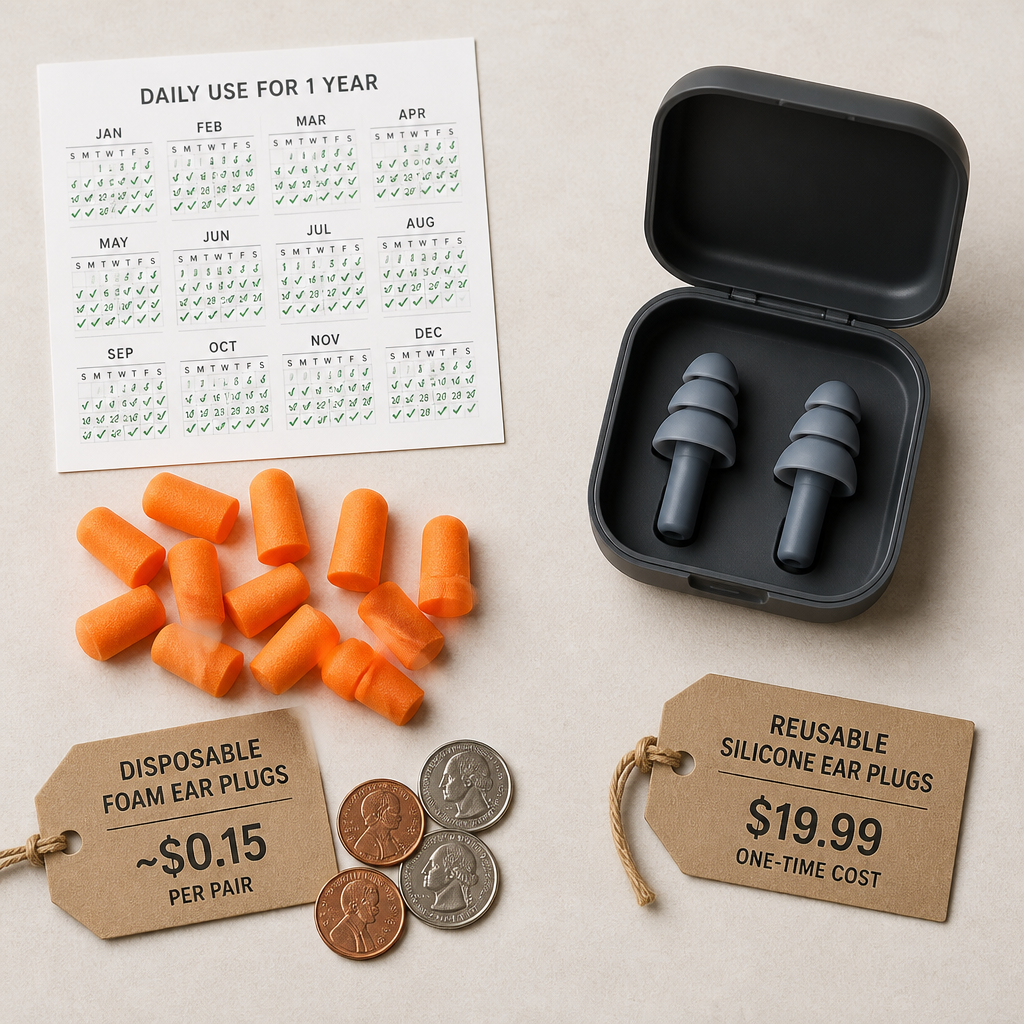

Buying 200 pairs of foam plugs for a low flat fee feels like a win. In practice, it encourages complacency. People hold onto pairs longer than they should because they feel like they have plenty in stock. This behaviour is predictable and it is exactly how cheap disposables erode the noise protection you are paying for.
The bulk-buy mindset also obscures the per-year cost. A box of 200 pairs sounds like it will last forever. For a light sleeper using one pair every night, it lasts about six months. Then you buy another box. Then another. The annual cost becomes real, even if the per-pair number stays small.
Disposable foam plugs come in one size. That is the core problem. Human ear canals vary significantly in diameter and shape, and a product designed to fit everyone ends up fitting no one perfectly. The roll-compress-insert method works in a controlled setting, which is exactly where those impressive NRR and SNR ratings are measured. Your ear canal at midnight, when you are half-asleep and jamming a piece of foam in without much care, is not a controlled setting.
This fit variability is well documented in occupational health literature. Lab ratings for foam plugs can reach NRR 33, which sounds excellent. Real-world attenuation, once you account for improper insertion, degraded foam, and individual ear canal variation, frequently falls well short of that figure.
Reusable ear plugs with multiple tip sizes solve this. When ATTENU8 includes XS, S, and M memory foam tips with its aluminium-bodied plug, the goal is to let you find the specific fit that creates a reliable acoustic seal in your actual ear. That seal does not degrade between uses the way compressed foam does, because the rigid body of the plug holds its shape. The tip is the only component that contacts the canal, and replacing it every 6 to 8 weeks keeps the hygiene profile clean and the seal consistent.
Pro tip: When sizing ear plug tips, test the smallest size first. A smaller tip that seats correctly will outperform a larger tip that creates only partial contact with the canal wall. The goal is a gentle but complete seal, not bulk filling the ear canal.
For people who sleep on their side, bulky foam plugs create a secondary problem. The pressure of a pillow against a large foam plug pushes it deeper into the canal or distorts it, which breaks the seal and causes discomfort that disrupts sleep. Low-profile reusable plugs with a fitted tip address this directly. The lower profile of a product like ATTENU8 reduces the surface area pressing against the pillow, making side sleeping genuinely comfortable rather than a negotiation between noise and pain.
The upfront cost of reusable ear plugs is higher than a single pair of disposables. That is simply true, and pretending otherwise would be dishonest. What changes the calculation is the cost per wear over time.
A quality reusable pair, used nightly, amortises its cost over hundreds of uses. The only ongoing expense is tip replacement, which for ATTENU8 users happens every 6 to 8 weeks. Compare that to buying disposable foam plugs 365 nights per year and the arithmetic tilts sharply in favour of reusables within the first few months of use.
For professionals in construction, manufacturing, or military environments who wear hearing protection every working day, the savings are even more pronounced. Facilities that supply disposable foam to daily wearers carry a recurring per-person cost that compounds across a workforce. Switching daily wearers to reusable, washable plugs they manage themselves dramatically reduces both unit cost and waste disposal burden.
The disposable-versus-reusable decision is a program decision, not just a product one. Single-use foam plugs win on upfront cost and zero maintenance. Reusable plugs win on cost-per-wear over time and on cutting waste. For daily wearers, the reusable case is clear.
Most reusable ear plug products ask you to replace the entire unit when it wears out. ATTENU8 takes a different approach. The aluminium body is permanent. The memory foam tips are the only consumable, and they are the only component that actually degrades from contact with the ear canal. Replacing just the tips every 6 to 8 weeks costs a fraction of buying a new pair outright, and it keeps the acoustic performance consistent because the rigid body that delivers the 32 dB noise reduction never changes.
This model is worth understanding before you compare prices. You are not buying a product that becomes landfill in two months. You are buying a piece of precision hardware that stays in service indefinitely, with a small, predictable tip replacement cost.
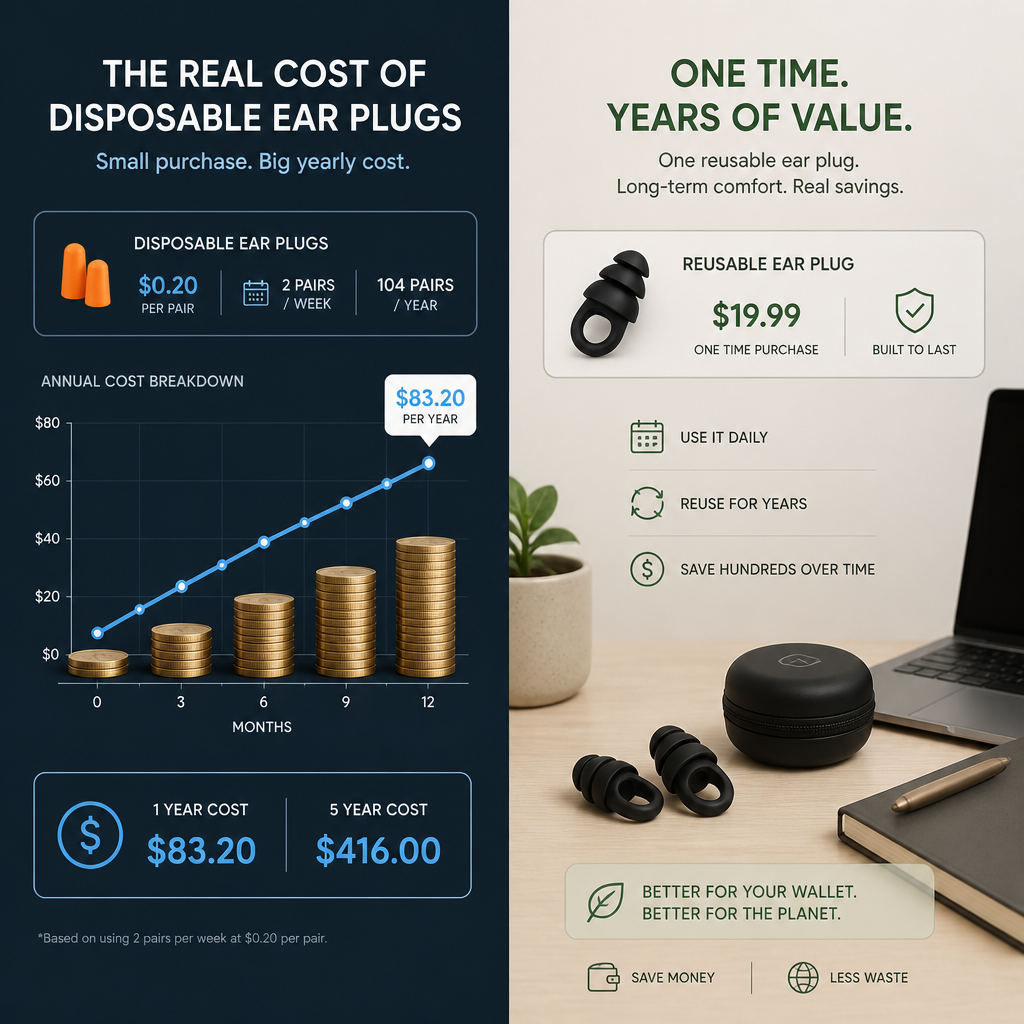
Not all reusable ear plugs are equal. A flanged silicone plug from a safety supply catalogue and a precision-machined aluminium-bodied plug with graded memory foam tips are both technically reusable, but they serve different users and deliver different experiences. The table below breaks down the three main categories against the factors that matter most for daily use.
| Factor | Disposable Foam | Standard Reusable Silicone/Flanged | Premium Reusable (e.g. ATTENU8) |
|---|---|---|---|
| Upfront cost | Lowest per pair | Moderate | Higher upfront, lower over time |
| Cost per wear (daily use) | Highest over a year | Low for daily wearers | Lowest once amortised |
| Noise reduction consistency | Highly variable, fit-dependent | Moderate, improves with correct size | High, with sized tips and rigid body |
| Comfort for sleep and side sleeping | Bulky, pressure issues on pillow | Better, but flanges can protrude | Low-profile body reduces pillow pressure |
| Hygiene over time | Clean per use, risky if reused | Requires regular washing | Tips replaced every 6 to 8 weeks |
| Environmental impact | High: hundreds of pairs per year | Low: one pair lasts weeks to months | Very low: only tips are consumable |
| Best suited for | Visitors, one-off use, dirty environments | Industrial daily wearers | Sleep, travel, noise-sensitive daily users |
Disposable foam plugs are designed for one use. The foam is porous, which is what allows it to compress and expand. That same porosity makes it an effective trap for moisture, earwax, skin cells, and the bacteria that feed on all three. Using a disposable foam plug for a second or third night is not a neutral act. You are inserting a compressed bacterial habitat into a warm, enclosed environment with limited airflow. Ear canal infections from this kind of repeated reuse are a real outcome, not a theoretical one.
This is where the hygiene model of ATTENU8 makes practical sense. The aluminium body does not absorb moisture or degrade. The memory foam tips are soft enough to create a comfortable seal but are designed to be replaced on a regular schedule, before bacterial accumulation becomes a problem. You are not cleaning a foam plug and hoping it is hygienic. You are replacing the only component that contacts the ear canal, on a schedule that is easy to maintain.
For light sleepers who use ear plugs every single night, this distinction matters. Waking up with an itchy or irritated ear canal is its own kind of sleep disruption, and it is preventable with the right product and maintenance approach.
A daily disposable foam plug user generates roughly 365 pairs of single-use waste per year. These are small items, which makes them easy to underestimate. But they are also largely non-recyclable. Polyurethane foam does not decompose quickly, and most local recycling programmes do not accept it. Across a population of regular users, the aggregate landfill contribution from disposable ear plugs is substantial.
Reusable ear plugs cut this to near zero for the body of the product. In ATTENU8’s case, only the foam tips become waste, and they are replaced every 6 to 8 weeks rather than every single use. That is a reduction in waste volume of well over 90 percent compared to a daily disposable habit.
For buyers who factor environmental impact into purchasing decisions, this is not a marginal consideration. It is a primary one. The best value ear plugs are not the ones that cost least per pair. They are the ones that deliver consistent protection, good hygiene, and minimal waste across the full period of use.
The case for reusable ear plugs is strongest for anyone who uses hearing protection regularly. The break-even point against disposables arrives quickly, and every use after that is pure savings. But beyond the financial case, certain users get specific benefits that disposables simply cannot match.
For someone who depends on ear plugs to sleep through a partner’s snoring, street noise, or early-morning urban sound, consistency is everything. Waking up at 3am because a degraded foam plug has lost its seal is not an inconvenience. It is the entire problem you were trying to solve. A reusable plug with a properly sized tip delivers the same seal on night 90 as it did on night one, because the body does not degrade and the tip is replaced before it does.
ATTENU8’s 32 dB noise reduction rating, combined with three tip sizes to match individual ear canal dimensions, is specifically designed for this use case. It is not a product designed for occasional industrial use and then recommended for sleep as an afterthought.
Construction workers, manufacturers, and military personnel who wear hearing protection for extended periods every working day need two things above all: reliable attenuation and all-day comfort. Disposable foam plugs, when worn for an eight-hour shift, can cause pressure and canal soreness, particularly if the user re-rolls and reinserts them multiple times throughout the day. A reusable plug with a push-fit design eliminates the re-rolling process entirely, reducing insertion effort and canal irritation over the course of a full working day.
For facilities managers making bulk purchasing decisions, the cost-per-wear argument applies directly to your budget line. Daily wearers on reusable plugs cost your programme significantly less per person per year than daily disposable users, and they generate less workplace waste.
Frequent flyers and commuters face a specific version of the foam plug problem. Airport noise, cabin pressure, and the general chaos of public transport make ear plugs genuinely useful. Disposable foam plugs, carried loose in a bag, pick up grime before they even reach the ear. A metal-bodied reusable plug stored in its own case travels cleanly, inserts without the compression and waiting time foam requires, and delivers consistent noise reduction whether you are on a flight to Singapore or a train through a tunnel. The convenience gap between disposables and a quality reusable is widest for people who travel regularly.
For daily users, the break-even point arrives within the first few months, depending on what you were paying per disposable pair. After that point, every use costs only a fraction of what disposables would have cost, with tip replacements being the only ongoing expense. The savings compound significantly over a full year.
Disposable foam plugs can achieve higher lab-tested NRR ratings, up to NRR 33 in some cases. However, those ratings assume perfect insertion. In real-world use, the fit variability of one-size foam means actual attenuation is often considerably lower than the rated figure. Reusable plugs with correctly sized tips deliver more consistent real-world performance because the fit is repeatable wear after wear.
Disposable foam ear plugs are not designed for reuse. The foam absorbs moisture and debris, and reusing them creates conditions for bacterial buildup inside the ear canal. Reusing disposables also degrades the foam structure, which reduces the acoustic seal and therefore the actual noise reduction you receive.
ATTENU8 recommends replacing the memory foam tips every 6 to 8 weeks under regular daily use. The aluminium body itself does not need replacing. This maintenance schedule keeps the hygiene profile clean and ensures the acoustic seal remains consistent, without the cost and waste of replacing the entire product.
Standard silicone flanged plugs are durable but can still degrade over time, and the body itself may need periodic replacement. A precision-machined aluminium body, like the one used by ATTENU8, does not compress, deform, or wear in the way softer materials do. This means the body maintains its shape and the fit characteristics you set on day one remain consistent for the life of the product. Only the foam tips, which are the soft contact layer, require replacement.
Yes, provided the product offers multiple tip sizes. ATTENU8 supplies XS, S, and M memory foam tips with each pair, which covers a wide range of canal dimensions. The XS tip in particular is important for users who have consistently found standard ear plugs too large, uncomfortable, or prone to falling out during sleep.
For frequent travellers, a premium reusable plug with a hard-body design and a carry case is the practical answer. Disposable foam plugs degrade quickly in a bag environment, are awkward to insert without a clean surface to roll them on, and require the compression-and-wait process that is inconvenient on a plane or train. A reusable plug with push-fit memory foam tips inserts cleanly, stays hygienic in its case, and delivers consistent noise reduction across every journey.
Have you made the switch from disposable to reusable ear plugs, or are you still on the fence? Share what is holding you back or what finally made you switch in the comments.

