


 0

If you share a bed with a snorer, you already know the ritual: lying awake in the dark, staring at the ceiling, counting the seconds between rumbles. The exhaustion is real, the resentment builds quietly, and eventually the relationship starts paying the price. Finding the right earplugs for a snoring partner is not a luxury or an overreaction. For light sleepers especially, it is one of the most direct, practical steps you can take to protect both your health and your relationship. This guide covers exactly what to look for, what to avoid, and how to use earplugs so they actually work.
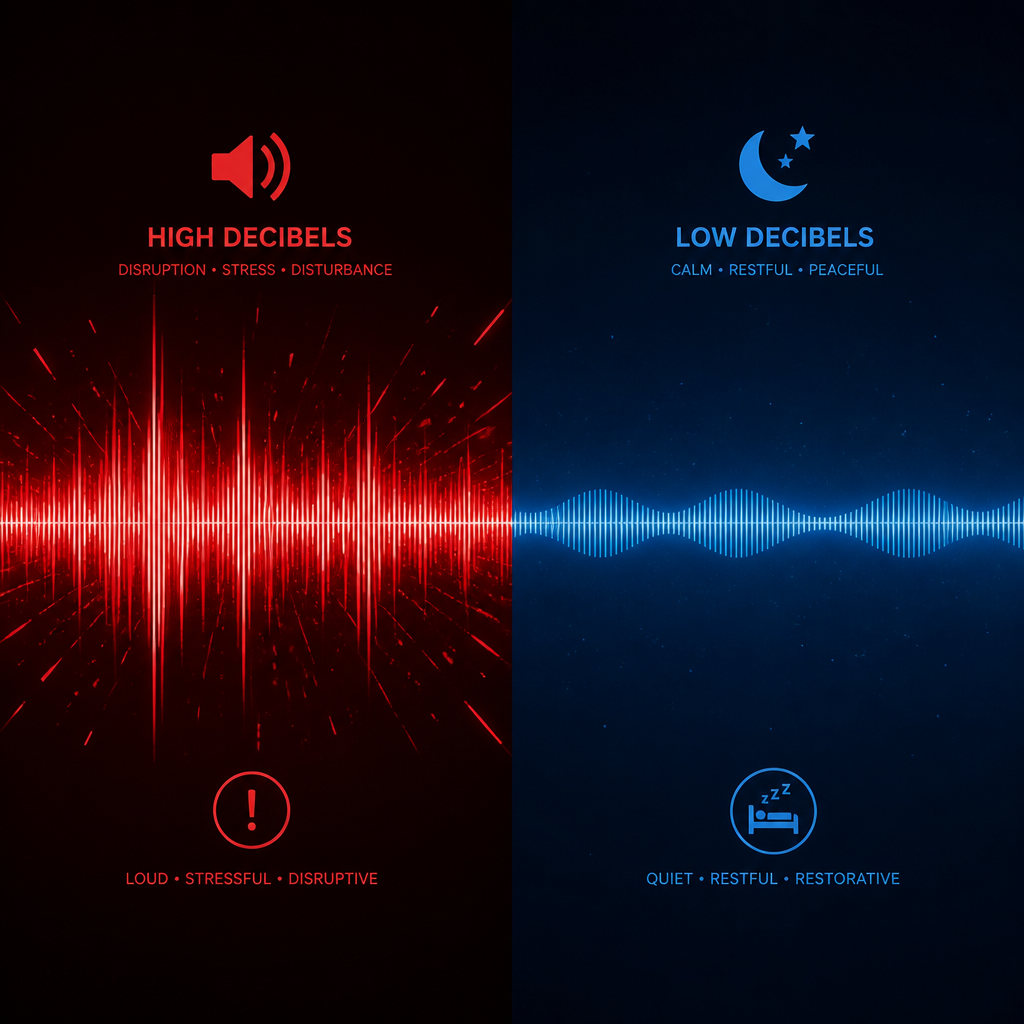
Most people underestimate how loud snoring is until they try to sleep through it. Snoring can range from around 50 decibels up to over 100 decibels, and the threshold at which noise starts disrupting sleep is only about 40 decibels. To put that in perspective, research shows mean peak snoring levels sit between 50 and 65 decibels, roughly equivalent to a vacuum cleaner at full throttle running beside your head all night.
The health consequences of sleeping next to a snorer go well beyond feeling tired in the morning. Studies have found that exposure to loud snoring can contribute to high blood pressure, heart disease, and stroke. These are not edge-case outcomes. They are the predictable result of chronic sleep fragmentation.
The relationship damage is equally well-documented. Roughly one-third of couples report relationship problems because of a partner’s snoring, and around 23 percent have resorted to sleeping in separate rooms to cope. Losing the shared bed is often framed as a practical solution, but for most couples it is a slow erosion of intimacy. Earplugs offer a way to stay in the same room without suffering through the noise.
| Key Insight | Explanation |
|---|---|
| Aim for at least 30 dB noise reduction | Snoring regularly hits 50-65 dB or higher. An earplug rated below 30 dB NRR will take the edge off but is unlikely to let a light sleeper stay asleep through the night. |
| Fit determines performance, not just rating | An earplug with a 32 dB rating inserted incorrectly gives you far less than 32 dB of real protection. Proper insertion technique matters as much as the product specification. |
| Memory foam outperforms hard foam for side sleepers | Firm or pre-moulded plugs create pressure points when you press your ear against a pillow. Soft memory foam compresses without pushing back, making it far more comfortable through the night. |
| Multiple tip sizes are not optional | Ear canals vary significantly between people. An ill-fitting earplug not only blocks less noise, it also risks falling out mid-sleep or causing irritation. Always choose a product with multiple size options. |
| Reusable earplugs save money and reduce waste | Disposable foam plugs need to be replaced every use. A well-designed reusable earplug with replaceable tips, where only the foam is swapped every 6-8 weeks, costs far less over a year of nightly use. |
| Snoring harms the listener’s health, not just their sleep | Chronic exposure to partner snoring is linked to cardiovascular strain. Addressing noise exposure is a genuine health decision, not just a comfort preference. |
| Earplugs work best as part of a conversation, not a secret fix | Using earplugs unilaterally without discussing the snoring issue with your partner delays the root-cause conversation. Use them to protect your sleep short-term while addressing the broader issue together. |
Snoring noise is not uniform. It spikes, stops, and restarts unpredictably, which is precisely why light sleepers find it so disruptive. A sudden snore following a moment of silence is often more jarring than continuous background noise. The right earplug reduces the amplitude of those spikes so your nervous system stops treating them as alarms.
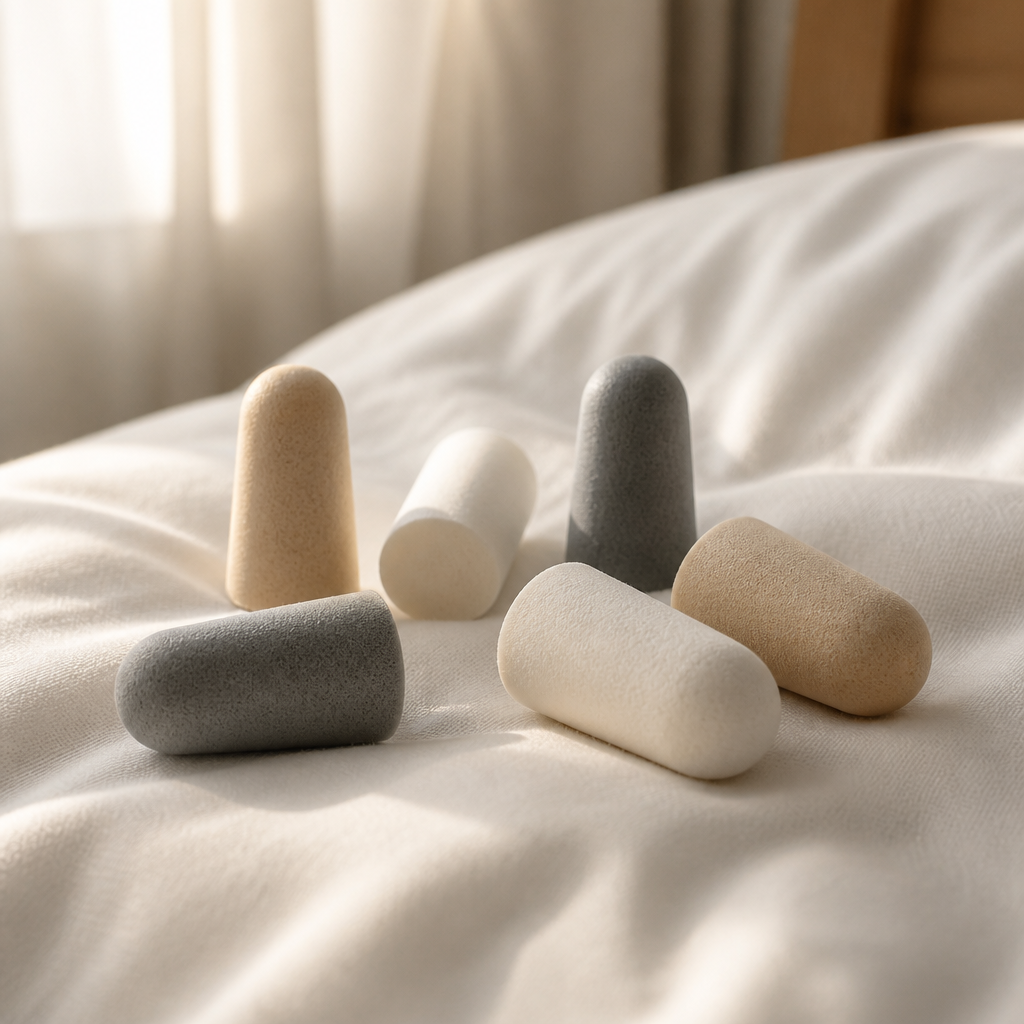
Not every earplug that claims to help with sleep is up to the job of blocking snoring noise. There are three factors that actually determine performance: noise reduction rating, fit quality, and comfort over hours of wear.
The Noise Reduction Rating, or NRR, is the standardized measure of how many decibels an earplug reduces sound by under laboratory conditions. NRR values for earplugs generally range from 14 to 33 dB. For snoring specifically, you want an NRR of at least 30 dB for optimal sound blocking.
In practice, real-world performance is always somewhat below the laboratory figure because most people do not achieve a perfect seal. This means a 32 dB rated earplug, correctly inserted, will realistically give you somewhere between 25 and 30 dB of actual reduction. That is still enough to bring a 60 dB snore down to a level your brain can stop flagging as a threat. An earplug rated at 15 dB gives you roughly 10-12 dB in real conditions, which is simply not enough for most light sleepers.
A common mistake is treating earplug sizing as a minor detail. It is not. Ear canals differ significantly in diameter and depth between individuals. An earplug that is too small creates an incomplete seal and falls out. One that is too large causes pressure and pain, especially for side sleepers who compress the plug against a pillow for hours.
Multiple tip sizes, including XS, S, and M options, allow you to match the earplug to your actual ear canal rather than hoping for a universal fit that rarely exists. This is the single most overlooked variable when people report that earplugs “don’t work” for them. In most cases the product is fine. The size is wrong.
Pro tip: If you wake up with your earplugs on the pillow rather than in your ears, the tips are almost certainly too small. Try the next size up and retest for two nights before writing the product off.
Side sleeping is the default position for most adults, and it is the position earplugs are least designed for. Hard pre-moulded plugs create significant pressure points when compressed against a pillow. Memory foam provides a softer feel that may be better for side sleepers because it conforms to the ear canal without a rigid outer shell pushing back against the pillow surface.
The body design of the earplug matters too. A slim, low-profile body sits closer to flush with the ear, reducing the leverage that creates pressure. Bulky earplug bodies with protruding flanges are fine for short-term daytime use but become uncomfortable well before a full night’s sleep is complete.
Understanding how different earplug types perform for snoring noise specifically will save you from buying the wrong product twice. The table below focuses on the three main categories relevant to nightly sleep use.
| Earplug Type | Best For | Main Drawbacks for Nightly Sleep Use |
|---|---|---|
| Disposable foam (single-use) | Occasional use, low upfront cost, highest NRR ceiling available | Absorbs ear oils after one use, unhygienic for repeated wear, inconsistent sizing, generates significant waste over time, and costs more per night than reusable alternatives over a year |
| Reusable metal-body with memory foam tips | Nightly use, light sleepers needing consistent 30+ dB reduction, side sleepers, hygiene-conscious users | Higher upfront cost than a bag of foam plugs, foam tips require replacement every 6-8 weeks (though this is a straightforward swap rather than a full replacement) |
| Mouldable silicone or wax | People who find foam canal insertion uncomfortable, occasional use | Lower NRR than foam alternatives, can tangle in hair, residue buildup with wax, less reliable noise block at peak snoring volumes, not ideal for people who need maximum reduction |
For anyone who needs to block snoring noise every single night, the disposable foam route looks cheap until you run the actual numbers. Replacing foam plugs nightly over a year adds up quickly. A reusable earplug with a durable body and replaceable foam tips keeps the hygiene benefits of fresh foam without the ongoing cost or waste of full replacement.
The gap between an earplug’s rated NRR and its real-world performance comes almost entirely from incorrect insertion. Most people push them in too quickly, too shallowly, or without straightening the ear canal first.
For memory foam tips, compress the tip between your fingers to make it as slim as possible before insertion. Pull the top of the ear up and back with your other hand to open and straighten the ear canal, then insert the compressed foam and hold a finger gently over the end while it expands. Do not let go immediately. Holding it in place for 20-30 seconds lets the foam expand into a full seal rather than partially expanding and sliding back out.
To remove, slowly twist the earplug to break the seal with the ear canal before pulling it out. Pulling straight out without twisting creates a brief vacuum that can be uncomfortable and may irritate the ear canal over time.
Foam that has absorbed skin oils, earwax, and moisture is not only less effective at noise reduction, it is also a potential source of ear infections with repeated use. Foam earplugs absorb skin oils after a single use and cannot be adequately cleaned. This is a genuine hygiene problem for anyone using the same foam plug night after night.
A reusable metal-body earplug solves this at the structural level. The durable body can be wiped clean, and the foam tips, which are the part that actually contacts the ear canal, are replaced on a defined schedule. Replacing tips every 6-8 weeks keeps the contact surface fresh without replacing the entire earplug each time. Clean hands before insertion and a quick wipe-down of the body every few days are the only additional steps required.
Pro tip: Keep your replacement foam tips in the carry case with the earplug itself. When you notice the foam starting to feel stiff, discoloured, or less springy on compression, that is the signal to swap them out. Do not wait for discomfort to tell you the tips are past their best.
The case for reusable earplugs is not just environmental, though that matters. For nightly users specifically, the difference in experience is significant.
Disposable foam plugs are made to a price point. The foam is often coarser, the consistency varies between units in the same bag, and they are almost always one-size-fits-all. Reusable earplugs are more economical in the long run, can be customized to your ear, are made from higher-quality materials, and are ideal for prolonged wear. That last point is the one that matters most for sleep: prolonged wear comfort is what determines whether you still have both earplugs in at 3am or whether you have unconsciously pulled one out.
A premium reusable earplug with a metal body also carries a specific practical advantage. The rigid body does not compress under pillow pressure the way a fully foam plug does. When a full-foam disposable is pressed against a pillow, the outer section compresses and can drive the plug deeper into the canal or alter the seal geometry. A metal body maintains its shape, and the foam tip does the sealing work it is designed to do regardless of external pressure.
The best earplug is the one you are still wearing at 6am. Comfort over hours matters far more than the NRR number on the packaging.
For light sleepers sharing a bed with a snorer, the ATTENU8 approach, a concave aluminium body with soft memory foam tips in three sizes delivering approximately 32 dB of noise reduction, addresses each of the failure points above. The body profile stays low against the ear for side sleeping, the memory foam tips expand into a proper seal, and three size options mean you are not forcing your ear canal to accept a generic fit. The full product can be explored at attenu8.co.
Earplugs are a personal solution to what is actually a shared problem. Used well, they protect your sleep and buy time for a calmer conversation about what to do long-term. Used as a permanent substitute for that conversation, they can quietly widen the distance between partners.
Sleep deprivation does specific things to how you treat the people you live with. Research has shown that sleep-deprived people show less empathy toward their partners and have reduced communication skills. The snoring partner often does not understand why the non-snoring partner is chronically irritable. The non-snoring partner often cannot articulate it clearly because they are too tired to do so effectively. Earplugs break this cycle by giving you back enough sleep to approach the conversation from a less reactive place.
Snoring is sometimes a symptom of obstructive sleep apnea, a condition with its own serious health implications. Chronic exposure to partner snoring has been linked to high blood pressure, and the health consequences become more serious the longer sleep deprivation continues. If the snoring is severe, includes gaps in breathing, or has been present for years, a sleep study is worth raising with a doctor. Earplugs protect the non-snoring partner’s health in the interim, but they do not address what the snoring partner may be experiencing.
The couples who handle this best tend to treat it as a health issue rather than a personal failing. Addressing the issue together may go a long way toward finding peaceful nights, and earplugs are a practical, low-friction starting point that lets both people get more rest while working toward a longer-term solution.
Sleeping in separate rooms stops the immediate noise problem but creates its own costs. Physical proximity during sleep has real effects on intimacy and relationship closeness that are difficult to replicate from another room. About 23 percent of couples sleep in separate rooms because of one partner’s snoring. For many of these couples, the move was made out of desperation during an acute sleep crisis rather than as a considered long-term arrangement. Good earplugs make it possible to stay in the same room, which matters more to most relationships than it initially appears to.
Pro tip: If you are new to sleeping with earplugs, give yourself at least five nights to adjust. The sensation of reduced ambient sound can feel strange initially, and some people find it affects how quickly they fall asleep in the first few days. This normalises quickly. Do not judge the product based on night one.
Full blocking depends on how loud the snoring is and the NRR of the earplug. A 32 dB rated earplug used correctly will reduce a 60-65 dB snore to roughly 30-35 dB, which is low enough for most people to sleep through. Extremely loud snoring above 80 dB will still be audible at a reduced level but significantly less disruptive. In practice, the goal is not perfect silence but reducing spikes to below your arousal threshold.
Yes, provided you maintain basic hygiene. The main risks from nightly earplug use are ear infections from dirty plugs and ear canal irritation from incorrect removal. Using a reusable earplug with replaceable foam tips, cleaning the body regularly, and replacing tips on schedule every 6-8 weeks eliminates the hygiene risk. Correct insertion and a gentle twisting removal technique prevents canal irritation. Millions of people sleep with earplugs every night without issue.
Aim for at least 30 dB NRR. Snoring noise typically sits between 50 and 65 dB, with loud snorers reaching higher. A 30-32 dB rated earplug with a proper fit will bring this down to a level most light sleepers can sleep through. Below 25 dB and you are taking the edge off rather than solving the problem, which is frustrating for committed light sleepers.
Earplugs that fall out are almost always the wrong size. The foam tip is not expanding into a full seal, so there is nothing holding it in place. Try the next size up first. If sizing is already correct, check your insertion technique. The foam should be compressed, inserted into a straightened ear canal, and held in place while it fully expands, which takes about 20-30 seconds. Rushing this step is the most common cause of poor fit and early ejection.
A 30 dB reduction does reduce alarm volume. Most phone alarms at full volume sit above 70 dB, which means they remain clearly audible even with 30 dB of attenuation. A reasonable precaution is placing the alarm physically closer to you, such as on a bedside table rather than across the room, or using a vibrating alarm option. Very heavy sleepers may want to test their alarm responsiveness during the first few nights before relying entirely on it.
For nightly use, foam tips typically need replacing every 6-8 weeks. The signs that tips need swapping are: foam that no longer springs back fully after compression, discolouration or visible buildup, a stiffer texture than when new, or a noticeable reduction in noise blocking effectiveness. On a tip-only replacement schedule, the durable metal body of a premium earplug lasts far longer, making the ongoing cost lower than continuous disposable foam plug purchases.
Both help, but they work differently. White noise adds a masking layer of continuous sound that makes intermittent spikes like snoring less jarring by reducing the contrast between silence and noise. Earplugs reduce the absolute volume of all incoming sound. For most light sleepers dealing with genuine snoring, earplugs provide more direct and reliable relief because they address the volume itself rather than masking it. Some people use both together for the best result.
If earplugs for a snoring partner are something you have tried before without success, we would love to know what did and did not work for you. Share your experience in the comments.

