


 0

You finish a 10-hour night shift, drive home in broad daylight, and crawl into bed while the rest of the world is mowing lawns, running deliveries, and letting their kids play outside. If you are a shift worker trying to sleep during the day, noise is not just annoying. It is physiologically working against you. Studies consistently show that daytime sleep is shorter, lighter, and more fragmented than nighttime sleep, even when the person is genuinely exhausted. Choosing the right earplugs for shift workers is not a comfort upgrade. It is a health decision. This guide explains exactly what to look for, what actually works, and why a premium pair of reusable earplugs beats a bag of disposables every single time.
According to research cited by the American College of Emergency Physicians, daytime sleep while working night shifts is routinely impacted by reduced sleep quality and duration, increased sleep latency, and fragmented sleep. This is not just about noise. Your circadian rhythm is actively signaling your body to stay awake during daylight hours, and external sounds amplify that problem considerably.
The scale of the issue is significant. According to the US Bureau of Labor Statistics, roughly 15 to 20 million American workers work nights or rotating shifts, representing a meaningful share of the entire adult workforce. Research estimates that up to 62% of night-shift workers complain of short sleep duration. That chronic sleep debt accumulates quickly, and its effects go well beyond tiredness. Shift work sleep disorder is associated with increased risks of cardiovascular disease, metabolic disorders, gastrointestinal problems, mood disturbances, and reduced cognitive performance.
Noise is one of the few variables a shift worker can actually control. And it is worth controlling properly.
| Key Insight | Explanation |
|---|---|
| 32dB noise reduction is the target for daytime sleep | Daytime ambient noise levels are significantly higher than nighttime. A high-NRR earplug at approximately 32dB gives you meaningful attenuation against traffic, voices, and household activity. |
| Disposable foam fails daily users quickly | Single-use foam earplugs were designed for occasional industrial use. Used every day, they compress unevenly, accumulate bacteria, and stop forming a reliable seal within days. |
| A hard earplug body causes real pain for side sleepers | Many shift workers sleep on their side. A rigid or bulky earplug presses against the ear canal and pillow, causing soreness that disrupts sleep regardless of noise reduction rating. |
| Multiple tip sizes are essential, not optional | Ear canals vary significantly between people. An earplug that does not seal properly loses most of its rated noise reduction. Three tip sizes (XS, S, M) allow a proper, comfortable fit for nearly every user. |
| Reusable earplugs save money and reduce waste | A pair of premium reusable earplugs with replaceable foam tips every 6-8 weeks costs a fraction of buying disposable packs weekly. For a daily shift worker, this adds up fast. |
| Earplugs work best as part of a layered noise strategy | Combining earplugs with other noise-reduction measures (white noise, acoustic curtains) produces better results than either alone, particularly against low-frequency rumble. |
| Consistency of use matters more than perfection | The best earplug is the one you will actually wear every sleep session. Comfort and ease of insertion determine long-term use more than any single specification. |
Not all earplugs are built for the specific demands of a shift worker sleeping in a noisy, sunlit environment during peak daytime hours. There is a short list of features that genuinely matter, and a longer list of marketing terms that do not.
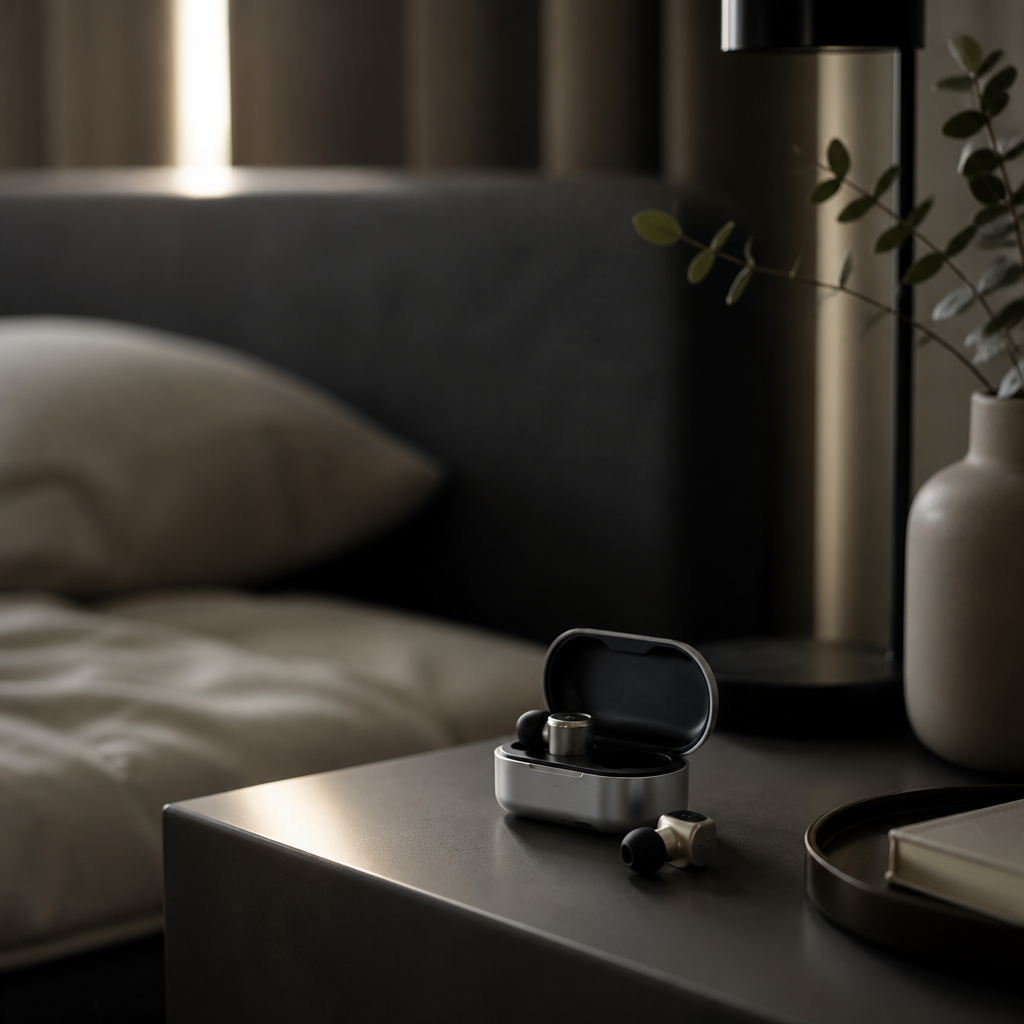
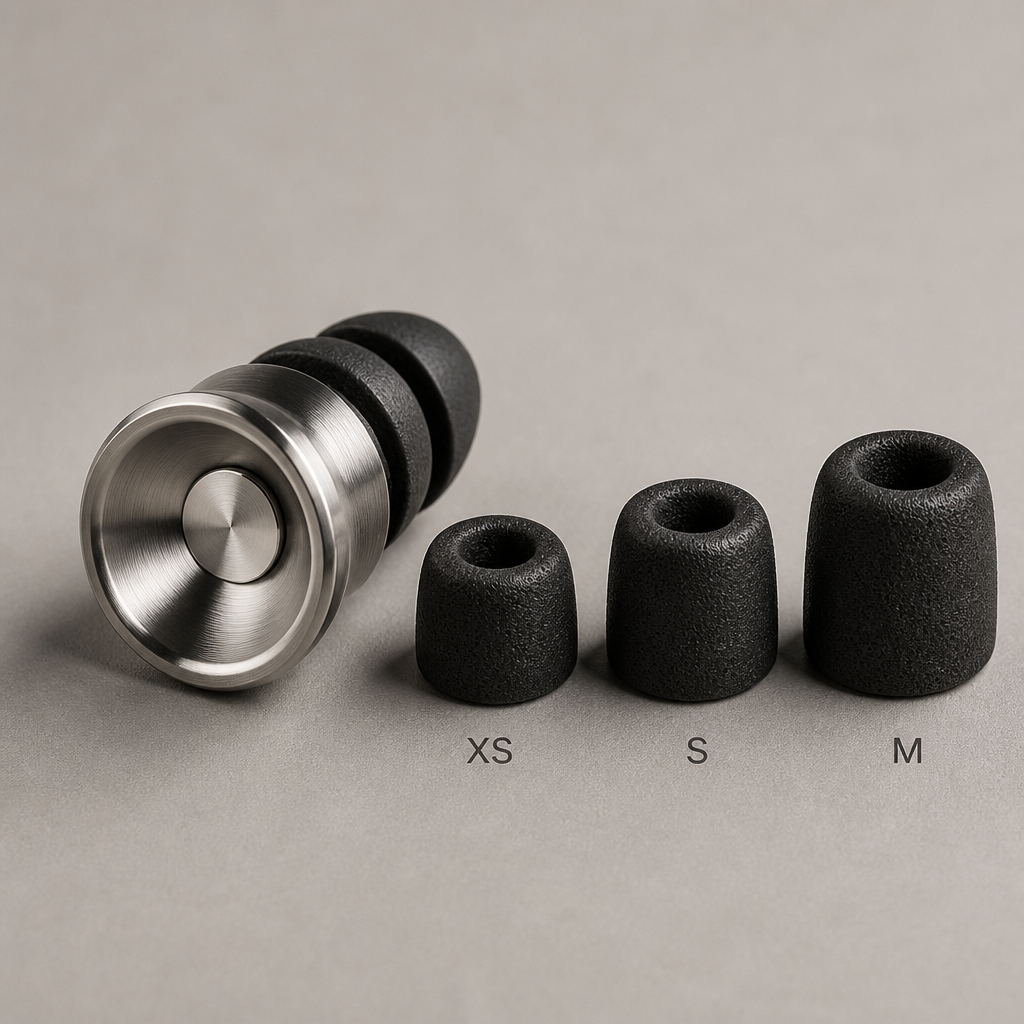
Look for an NRR (Noise Reduction Rating) of 30dB or higher for daytime sleep. Daytime ambient noise, including traffic, construction, lawnmowers, and children, regularly exceeds 70dB. A 32dB noise reduction rating brings that down to a manageable level that allows the brain to stay in deeper sleep stages without being jolted awake. This is the rating ATTENU8 earplugs are engineered to deliver, placing them at the high end of what is appropriate for sleep use without over-isolating the wearer.
This is where most generic earplugs fail shift workers. A thick, protruding earplug body is tolerable sitting upright. It becomes a pressure point the moment your head hits a pillow on its side. ATTENU8’s concave aluminium body sits flush rather than protruding, which means side sleepers are not fighting a lump pressed between their ear and the pillow for hours at a stretch.
Soft memory foam tips conform to the individual ear canal shape and hold a seal without the wearer needing to constantly re-insert. The ATTENU8 design comes with XS, S, and M tip sizes precisely because a one-size earplug is genuinely not a good fit for most people. A poor fit does not just reduce comfort, it directly reduces the effective noise attenuation you receive. Using the wrong size can cut your actual noise reduction by 10dB or more.
Pro tip: To find your correct tip size, insert each size and hum quietly. The size that produces the most resonance in your own voice is the one forming the best seal in your ear canal. Start with S if you are unsure.
Shift workers use their earplugs every single day, not occasionally. A disposable foam earplug used daily accumulates ear wax, compresses unevenly, and degrades its seal within a few uses. A metal-bodied earplug with replaceable foam tips solves both problems at once. The body stays clean, durable, and consistent. The tips are replaced every 6-8 weeks, ensuring a fresh seal without the cost or waste of replacing the entire unit.
Earplugs are your most direct tool for blocking daytime noise, but they work best inside a layered environment designed to reduce the total sound load before it reaches your ears. Think of it as building concentric rings of noise control around your sleep space.
Noise, even if it does not fully awaken you, will alter sleep cycles and reduce the restorative quality of sleep. Shift workers experience this effect continuously and cumulatively. Reducing the noise burden at every layer is not overkill. It is necessary maintenance for a functioning sleep environment.
Seal gaps under doors and around windows with acoustic weatherstripping. Thick curtains or acoustic panels absorb mid-to-high frequency sounds like voices and traffic. A white noise machine or a steady brown noise source played at low volume can mask the irregular, unpredictable sounds that are most likely to trigger arousal, such as a door slamming or a dog barking. These sounds are difficult for earplugs alone to fully mask because they are sudden and broadband.
This is where your earplugs sit. At 32dB of noise reduction, a quality earplug is doing the heavy lifting of bringing residual room noise down to a level your sleeping brain can ignore. The combination of a treated room and high-performance earplugs is meaningfully more effective than either alone, particularly for low-frequency sound like traffic rumble that passes through walls relatively easily.
Pro tip: If you live in a particularly noisy area (near a highway, flight path, or construction zone), combine earplugs with a white noise machine set to brown noise rather than white. Brown noise has more low-frequency energy and does a better job masking rumble and bass-heavy outdoor sounds.
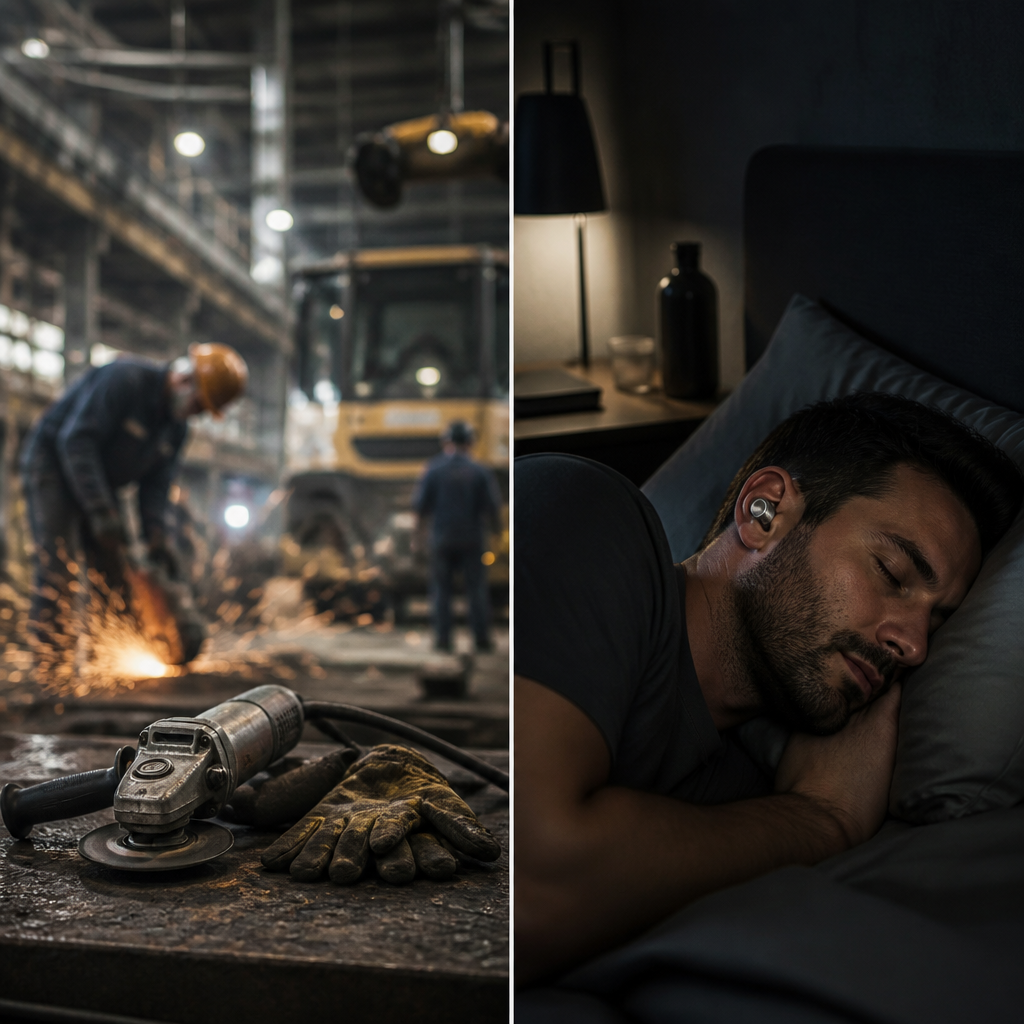
There are three main categories of earplug available to shift workers for daily daytime sleep use. Here is an honest comparison of how they perform in real, everyday conditions.
| Earplug Type | Best Suited For | Key Limitations for Daily Shift Workers |
|---|---|---|
| Disposable foam | Occasional, high-noise industrial environments. Inexpensive entry point. | Degrades quickly with daily use. Accumulates bacteria. Uncomfortable for side sleepers due to expansion pressure. Generates significant waste over weeks of use. Inconsistent seal as foam ages. |
| Soft silicone or wax plug-style | Light sleepers sensitive to in-canal pressure. Occasional travel use. | Generally lower NRR (22-27dB), which may be insufficient for noisy daytime environments. Less consistent seal than foam. Some styles can work loose during sleep. |
| Premium reusable with replaceable foam tips (e.g., ATTENU8) | Daily shift workers needing consistent 32dB noise reduction with long-term comfort. | Higher upfront cost than disposable foam. Tips need replacement every 6-8 weeks, though this is minimal ongoing cost compared to daily disposable use. |
In practice, the disposable foam option is tempting purely on unit price, but it is the most expensive over a month of daily use and produces the most inconsistent results. The reusable metal-body design wins on every practical metric for a daily shift-work user: consistent seal quality, hygiene, side-sleeper comfort, and long-term cost.
Earplugs handle the noise problem directly. But if the rest of your sleep environment and pre-sleep routine is working against you, even the best earplugs will only get you so far. These are the night shift sleep tips that make a measurable difference and the ones that are mostly theater.
Blackout curtains with sealed edges are non-negotiable. Light suppresses melatonin production regardless of your level of exhaustion. Standard curtains with gaps around the sides let in enough light to keep your circadian clock confused. Use curtains with a 99-100% blackout rating and consider tape or magnetic strips to seal the edges if gaps remain.
Keeping your bedroom temperature in the range of 16-19 degrees Celsius (60-67 degrees Fahrenheit) actively supports the drop in core body temperature that accompanies sleep onset. This is one of the few environmental factors with consistent research support, and it costs nothing beyond a habit adjustment.
Consistent sleep scheduling, even on days off, reduces the cumulative misalignment between your body clock and your environment. Varying your sleep window by more than an hour or two on rest days effectively resets the disruption you spent the rest of the week trying to minimize.
Leaving screens on for background noise is counterproductive. The visual flicker and irregular audio spikes from television or video content produce micro-arousals in ways that steady white noise does not. Use a dedicated white noise device or a simple fan instead.
Posting “Day Sleeper” signs on your door has limited practical effect unless you also communicate with the specific people in your household or building who are actually disrupting your sleep. The sign does not reach the neighbors. A direct conversation, and a set of quality earplugs, does.
Shift workers in loud industries face a compounding challenge: they need hearing protection at work and noise reduction for sleep. Using the same premium reusable earplug for both contexts, or having a dedicated pair for each, is a more sustainable approach than constantly cycling through disposable foam. ATTENU8’s design specifically addresses this by pairing a durable aluminium body with soft memory foam tips that protect comfort across extended wear periods, whether that is an 8-hour shift or an 8-hour sleep window.
A common mistake is choosing earplugs based on NRR rating alone without considering insertion comfort and daily wearability. A 33dB foam earplug that you stop wearing after two weeks because it causes ear soreness delivers zero noise reduction. A 32dB reusable earplug you can wear comfortably every day delivers its full rated benefit, compounded across months of consistent use.
Yes, provided you keep them clean and replace worn components. The main risks with daily earplug use are ear wax buildup and hygiene issues, both of which are directly addressed by reusable designs with replaceable tips. With a metal-bodied earplug like ATTENU8, the body can be wiped clean regularly, and foam tips are swapped every 6-8 weeks so you are never sleeping on degraded, bacteria-laden material. Wearing clean, well-fitting earplugs every day poses no inherent risk to your hearing health.
Aim for a minimum of 28-30dB NRR, with 32dB being the practical sweet spot for daytime sleep in a typical residential environment. Daytime ambient noise in suburban and urban areas commonly sits between 60-75dB, including traffic, lawn equipment, children, and general household activity. A 32dB reduction brings that into the range where your sleeping brain can stay in deeper sleep stages rather than being repeatedly pulled toward lighter, more fragmented sleep.
Yes, but earplug design matters enormously here. Bulky or protruding in-ear designs press against the ear canal when your head is on a pillow, creating pressure and soreness that disrupts sleep over a long session. ATTENU8’s concave aluminium body sits flush rather than protruding, which specifically addresses this problem. Memory foam tips also compress against pillow pressure rather than transmitting it directly to the ear canal wall.
For daily use, memory foam earplug tips should be replaced every 6-8 weeks. Daily insertion, removal, and the natural accumulation of ear wax and skin oils gradually degrades the foam, reducing both its sealing ability and its hygiene. With ATTENU8 replacement tips, the process is straightforward and inexpensive because you are only replacing the consumable component, not the entire earplug. This is a significant practical advantage over disposable designs that require purchasing an entirely new unit.
No earplug blocks all noise, and a 32dB NRR earplug is not intended to. At that level, a standard alarm clock or phone alarm set to a reasonable volume remains audible and effective. What changes is the baseline of ambient noise that surrounds your sleep, which is the traffic, voices, appliances, and background activity that pull you out of deep sleep stages repeatedly. If you are genuinely concerned about sleeping through alarms, place your phone closer to your head or use a vibration-based alarm as a backup. Most shift workers find this is not a practical problem with standard 32dB earplugs.
Earplugs attenuate sound entering the ear canal across a broad frequency range. A white noise machine works differently: it creates a consistent ambient sound that masks the sudden, irregular noises most likely to cause micro-arousals, such as a door slamming or a vehicle backfiring. Used together, they address complementary problems. Earplugs reduce the overall noise floor. White noise smooths out the unpredictable peaks that earplugs alone cannot fully neutralize. For shift workers in particularly noisy environments, the combination is meaningfully more effective than either alone.
Have you found a particular combination of noise-blocking strategies that finally made daytime sleep work for you? Share your experience below. What you have tried, and what actually helped, could make a real difference for another shift worker reading this.

