


 0

Most people who lose hearing at work never get a clear warning that it is happening. The first signs are often a ringing ear at the end of a shift that is still there the next morning. Occupational noise exposure in Australia is governed by a clear numerical standard, and knowing that standard is the difference between a site that controls noise and one that simply hands out earplugs and hopes for the best. This guide sets out the limits, explains how they are measured at the worker’s ear, and shows what they mean when you choose hearing protection.
| Key Insight | Explanation |
|---|---|
| The exposure standard has two parts | An eight-hour average of 85 dB(A) and a peak limit of 140 dB(C). Exceeding either one means the workplace is too noisy under the regulations. |
| Measure at the ear, not at the machine | Exposure is assessed at the employee’s ear position, so a meter held near the source tells you very little about what the worker actually receives. |
| Ringing after a shift is a warning sign | Temporary hearing reduction or ringing when people leave work means the noise problem is real, whatever a single spot reading showed. |
| Shouting at one metre is a red flag | If people must raise their voices to talk at a distance of one metre, the site needs a formal noise assessment. |
| A labelled rating is a ceiling, not a result | A rating of around 32 dB assumes a perfect fit. Real protection depends on the right tip size and consistent wear, so plan for less. |
| Protection is the last line of defence | Employers should eliminate or reduce noise at the source first, then rely on hearing protection for the residual risk. |
The Occupational Health and Safety Regulations 2017 in Victoria set a noise exposure standard for workplaces, and the Work Health and Safety Regulation 2011 in Queensland uses the same numbers. The standard has two parts. The first is an average of 85 dB(A) over an eight-hour period, written as LAeq,8h. The second is a peak limit of 140 dB(C), written as LC,peak.
The rule is simple to state and easy to misread. If employees are exposed to noise above this standard, the workplace is too noisy, and the employer has a legal duty to act. A site can pass the average and still fail on peak, which is why both numbers need checking every time an assessment is done.
Offshore petroleum workplaces regulated by NOPSEMA work to the same limits in its guidance, which is a useful signal that the national benchmark is consistent across sectors. If you work on a construction site, a factory floor, or a rig, the numbers you are checking against are the same.
The eight-hour average is an energy average, not a simple mean of readings. Louder sound counts for far more than quiet sound, and the time spent at each level is weighted in. The practical effect is that time becomes a lever you can pull. Under the equal energy approach used in these assessments, each 3 dB increase roughly halves the time a worker can spend at that level before the limit is reached.
In practice, this means 88 dB(A) is roughly the limit for four hours, not eight. A worker who spends most of a shift next to a grinder or a loud compressor can be over the limit even if the rest of the day is quiet. A common mistake is to assess noise by asking whether the area is loud, when the real question is how long each person is in it.
Peak limits exist because damage can happen in a single event. Heavy hammering, gunshots and explosions can cause immediate hearing damage, and the average limit alone would not catch them. The peak is measured with C-weighting, which keeps more of the low frequency content that A-weighting filters out.
Impact work is where sites most often get caught out. A crew might record an acceptable eight-hour average and still produce peaks above 140 dB(C) from a few sharp strikes each hour. Ask for peak readings specifically when you commission an assessment, because an average report on its own will not show them.
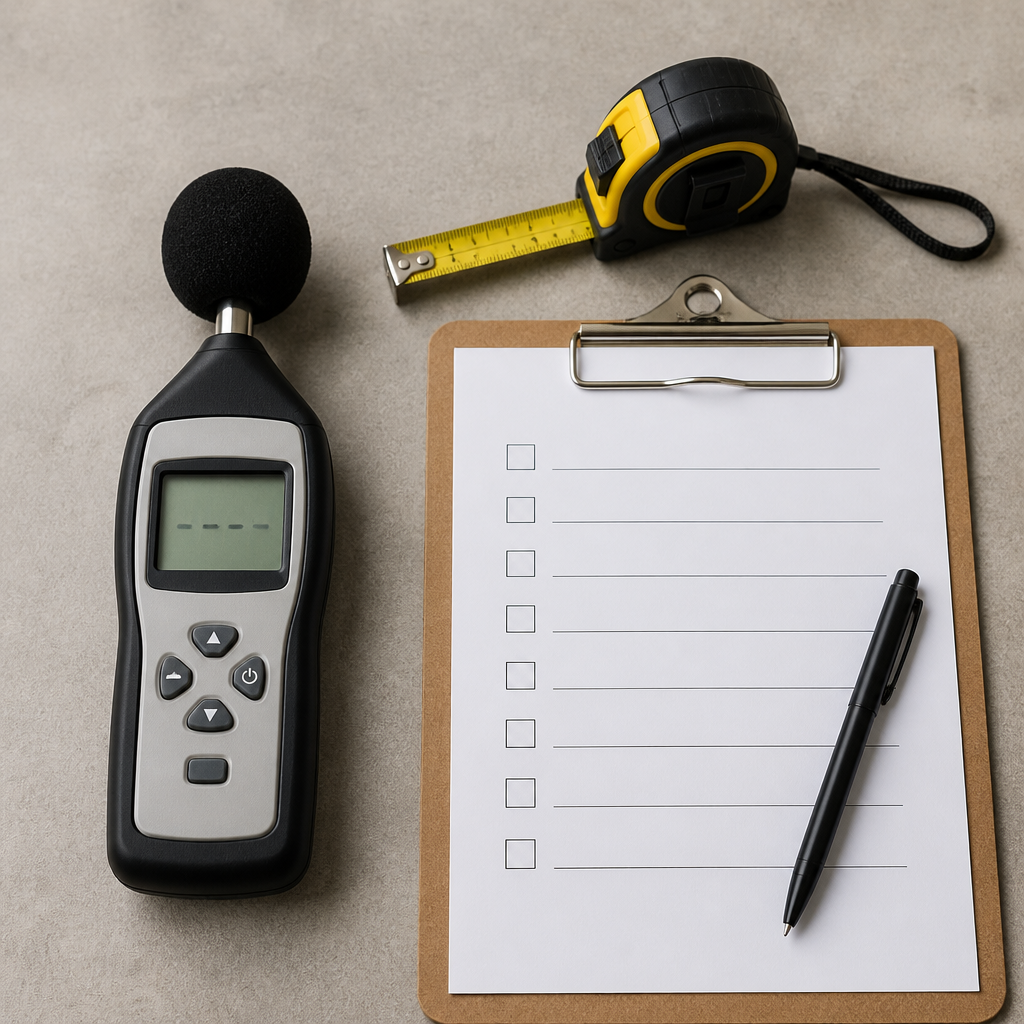
Sound pressure level is measured in decibels, and the exposure standard is assessed at the employee’s ear position. This matters more than most managers expect. A reading taken next to a machine can be far higher or lower than what the operator actually hears, because distance, reflections and the worker’s position all change the result.
Spot readings have a real role, but they are a starting point rather than a verdict. If it is not clear whether there is a problem, a few spot measurements can show where to look. Where the picture is unclear or the work pattern varies, a noise assessment by a qualified person is the right next step.
Most sites measure the wrong thing first. Someone walks around with a handheld meter, points it at the compressor, and writes down a number. That number tells you about the compressor. It does not tell you what the apprentice standing two metres away receives across a shift.
Pro tip: Record where each reading was taken, which task the worker was doing, and how long they stayed there. A reading without those three details cannot be used to show compliance.
A spot reading is enough to tell you that a space needs a closer look. It is not enough to sign off a worker’s exposure, particularly where tasks move around or the noise comes in bursts. Use the Victorian noise compliance code or an equivalent checklist to identify hazards and work out whether the standard is exceeded.
In practice, the best approach is to combine short spot checks to map the site with a proper personal assessment for the roles that look highest risk. Repeat the assessment whenever a machine, process or layout changes, because the old numbers no longer describe the room.
You do not need a meter to spot a problem. The regulator’s guidance points to two simple signs that noise is likely above the standard. The first is that employees have to raise their voices to communicate at a distance of one metre. The second is that they have a temporary reduction in hearing, or ringing in the ears, after leaving work for the day.
Both signs are easy to ignore because they feel normal. Crews treat ringing as part of the job and shouting as part of the banter. That normalisation is exactly what makes the hazard dangerous, because the damage builds up quietly over years.
Stand at arm’s length from a co-worker and try a normal conversation while the work is running. If you cannot be understood without raising your voice, the space is almost certainly above the standard for a full shift. This is a rough screening tool, not a measurement, but it is a useful one that anyone on site can run.
A practical tip is to run the test at the busiest point of the shift, not at the start when the line is still warming up. Many sites that pass at 7 am fail at 11 am when every machine is running.
Temporary hearing loss usually recovers within 24 hours under quiet conditions, but ringing or buzzing that lasts beyond that is a signal to act. Repeated exposure over time can cause permanent hearing loss, and it reduces the ability to hear high pitched sounds first. Workers often notice it when they struggle with a phone call or with speech in a restaurant.
Noise-induced hearing loss cannot be repaired, which is why prevention is the only control that really works.
Treat any worker who reports ringing as a case to review, not a complaint to dismiss. Check their protection, look at the task they were doing, and consider whether their exposure needs a formal assessment.
It helps to have a reference point for the sounds people encounter every day. The table below sets out approximate sound levels for common sources. Actual levels on a particular site can vary a lot from these figures, so treat them as a guide for where to look first rather than a substitute for measurement.
The pattern is clear. Many common tasks sit at or above the 85 dB(A) line, and some sit well above it. The quiet end of the scale is not where workplace hearing loss usually comes from.
Sheet-metal workshops are typically around 100 dB, and chainsaws and angle grinders are around 110 dB. A rock drill sits near 120 dB, and a rivet hammer reaches around 130 dB, where pain can be felt. Even welding and lathe work, at around 80 dB, can build up over a long shift when combined with other sources nearby.
Front-end loaders sit right at 85 dB, which means a loader operator who stays in the cab for a full shift is already at the limit with no margin. Lawnmowers at around 90 dB are a reminder that landscaping and grounds crews need the same attention as heavy industry.

Listening to a personal music player in a quiet room is also around 85 dB, which surprises many people. That matters on a site where workers commute with earbuds in, or where music is played through a radio at a high volume. Noise at home or on the bus does not cancel out a full day of exposure at work, and it can add to it.
Kerbside heavy traffic at around 80 dB is another common source for workers who spend long hours near roads. The exposure is easy to overlook because it comes from outside the workplace boundary, but it counts toward the total the worker receives.
When engineering and administrative controls cannot bring noise under the standard, hearing protection becomes necessary. In Australia and New Zealand, the performance requirements for hearing protection devices are set out in AS/NZS 1270. The standard outlines the criteria a device must meet, which gives buyers a common basis for comparing products.
A standard only helps if it is used. Buyers should ask for evidence that a product has been tested to the standard, not just a marketing claim about noise reduction. A rating printed on a box is useful only when it comes from a documented test.
The standard sets out how attenuation is tested and reported, which is what allows you to compare a foam tip with a moulded plug or an earmuff on a like-for-like basis. Without that common method, a rating on a box can mean very different things from one brand to the next.
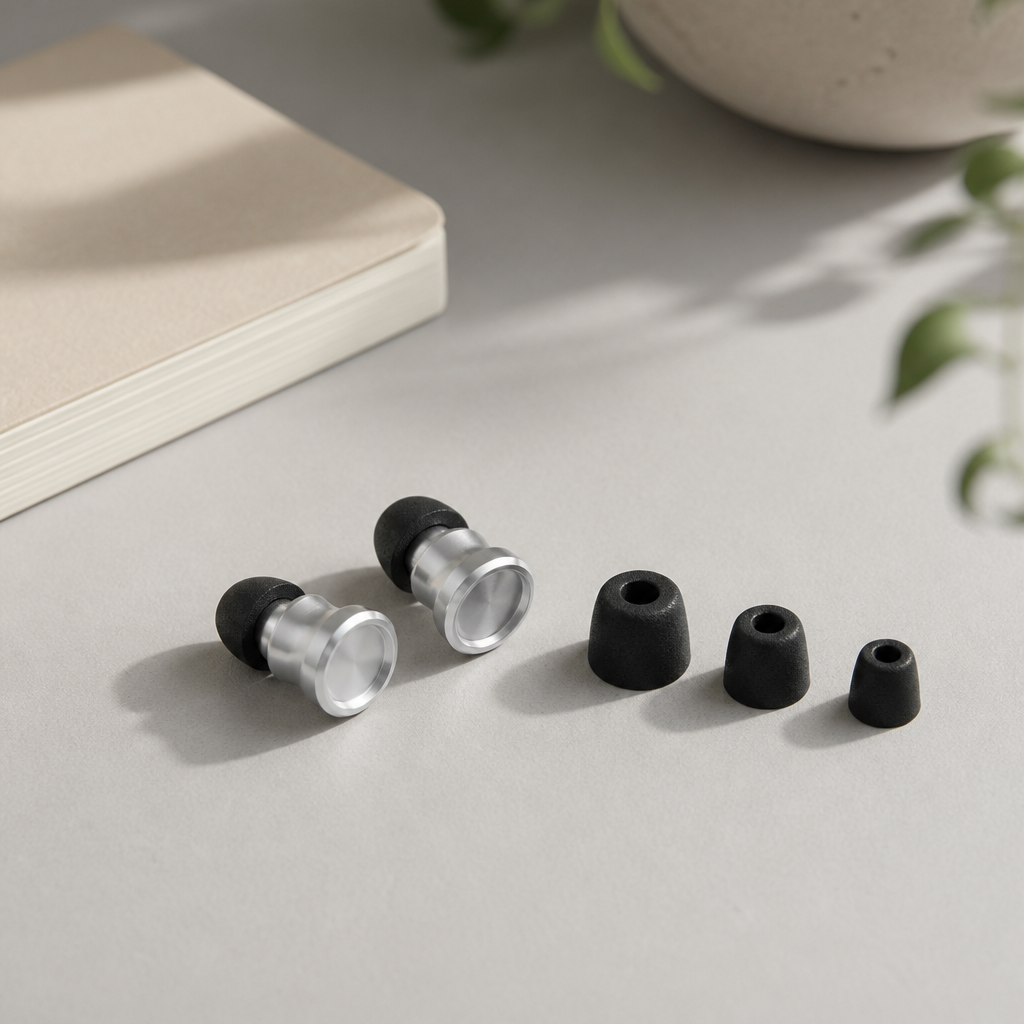
ATTENU8 products carry a labelled rating of approximately 32 dB. Ask for the test documentation under AS/NZS 1270 before you rely on any label for compliance, including ours. A good supplier will send it without fuss, and a supplier who cannot is telling you something useful.
Poorly fitted earplugs may offer little protection at all, and ear canals vary enormously in size and shape. A plug that seals well in one worker can leak in the next, even when both are following the same instructions. Fit is therefore a compliance issue, not just a comfort preference.
Pro tip: Ask for the test certificate, not the marketing sheet. If a product’s rating cannot be traced to a documented test, do not use it as the basis for a compliance decision.
The right device depends on the task, the noise profile and whether workers need to hear speech or alarms. No single option wins in every situation, and the best programs usually use more than one type across different roles. The table below compares three common approaches used in Australian workplaces.
| Approach | Where it works best | Main limitation |
|---|---|---|
| Single-use foam earplugs | Low-cost cover for short tasks and visitors who need protection for one shift | Often discarded after a single use, which adds waste and cost over time, and fit depends heavily on how well each plug is rolled and inserted |
| Reusable metal-bodied earplugs with replaceable foam tips | Daily wear for workers in loud environments, sleep and travel, where a repeatable fit and durability matter | Requires a correct tip size and regular tip replacement, with foam tips typically needing swapping every six to eight weeks |
| Passive earmuffs | Tasks with high noise where workers need a quick on and off routine and a visible sign of protection | Heavier and hotter to wear for long periods, and they can clash with other PPE such as safety glasses or helmets |
For workers who wear protection every shift, reusable designs reduce the daily decision about which plug to grab. A worker who knows their size and keeps the same body in their kit is far more likely to insert it correctly each time. That consistency is where the real attenuation comes from.
The trade-off is maintenance. Tips wear out, and a worn tip seals poorly. Set a replacement schedule rather than waiting until a worker complains that the plug feels loose.
Earmuffs suit workers who need to put protection on and off many times a day, or who find insertion difficult. They are also easier for supervisors to check at a glance. The weak point is comfort in heat and the interaction with other gear, so test them alongside the rest of the kit before rolling them out.
Every protection device is rated under controlled conditions. Real workers, working in real conditions, rarely achieve those ratings. The gap between a label and what a worker actually receives is one of the most important and least discussed issues in hearing conservation.
The practical response is to treat the label as an upper limit. Plan your program on the assumption that protection will fall short of the printed figure, and then check that it does not fall short by too much. Fit testing and supervision are how you find out.
Labelled ratings assume a consistent, correct fit and continuous wear. In the field, plugs are inserted too shallowly, worn with hair or cable in the way, or removed for conversation and not reinserted. Each of these reduces protection, and the cumulative effect across a shift can be large.
A common mistake is to assume that a worker wearing protection is protected. The question to ask is whether the protection is working at the level the program depends on, and that requires checking, not assuming.
Start with size. ATTENU8 supplies three tip sizes, XS, S and M, and size selection is the first step in any fit check. Workers with smaller canals often need the smallest tip, and a plug that feels comfortable is not always the one that seals best.
Then check insertion. Pull the outer ear up and back, insert the plug, and confirm it sits securely without pressure pain. Have supervisors spot-check insertion during the first week of a new program, and again after any change in task or site layout.
Employers carry the primary duty to manage noise risk, and hearing protection is one part of that duty rather than a substitute for it. Under the work health and safety framework, the usual order is to eliminate the hazard where possible, then substitute, isolate or engineer the noise at source, then use administrative controls such as rotation and scheduling, and only then rely on personal protection. Each state and territory applies these rules through its own regulations, so check the instrument that covers your workplace.
The regulator will not accept a box of earplugs as evidence that noise has been managed. It will expect to see an assessment, a record of what was done about the findings, and evidence that workers were trained and supervised in wearing protection.
A defensible record shows the date, the location, the task, the measurement method and the result at the worker’s ear. It also shows which controls were applied and when they were reviewed. Without these details, a noise assessment is little more than a number on a page.
Keep records of protection issued, sizes chosen, tip replacements and any reported ringing or hearing changes. These records are what allow you to spot a pattern early, before it becomes a claim or a permanent injury.
Hearing protection is the last control in the hierarchy, not the first. Sites that rely on it as the main answer usually have a noise problem that has not been addressed. The better approach is to reduce noise where you can, then use protection for what remains, and then monitor the result.
In practice, this means that a supplier of protection can help you run a good program, but cannot replace the engineering and planning work that the standard expects. Treat protection as part of the answer, with the rest of the work done alongside it.
The standard in the Victorian and Queensland regulations is an eight-hour average of 85 dB(A) and a peak limit of 140 dB(C). If employees are exposed above either figure, the workplace is considered too noisy under those rules.
85 dB(A) is the compliance threshold, not a guarantee that no one will be harmed. Damage depends on level, duration and individual susceptibility, so some workers can be affected at or below the limit. Treat the limit as the minimum you must meet, not the target you aim for.
A phone app can give you a rough indication of where noise is high, which is useful for screening. It is not a substitute for calibrated equipment and an assessment by a qualified person, and it should not be used to sign off a worker’s compliance.
Earplugs can bring a worker’s exposure under the standard, but only if they are sized correctly, inserted properly and worn throughout the relevant tasks. Because the labelled rating assumes perfect fit, you should verify protection through supervision and fit checks rather than relying on the label.
Treat it as a warning sign and review the task, the noise levels and the protection the worker used. Short-term ringing that resolves within a day is a signal to act, and persistent symptoms should be referred for a proper health assessment.
What did your last noise assessment or hearing protection check turn up, and was anything about it surprising?

