


 0

Ride for an hour at highway speed and your ears are absorbing a constant, low-frequency roar that sits on top of engine and traffic noise. Ear plugs for motorcyclists are the simplest fix, but only if they are chosen for riding and not borrowed from a bedside drawer. Riders who skip protection often find out the hard way, with ringing in their ears the next morning or a dull, muffled feeling that lasts into the following day. This guide covers what wind noise actually does to your hearing, where plugs help and where they fall short, and how to keep enough awareness of traffic to ride safely.
| Key Insight | Explanation |
|---|---|
| Wind noise is a real hearing risk | The broadband roar at speed adds to your daily sound exposure, even on short commutes that feel harmless. |
| Protect before you feel ringing | Noise-related hearing loss builds up over time and does not reverse, so plugs belong in your standard gear. |
| Fit matters more than the brand | A plug that sits shallow lets wind whistle past. Test the seal before you ride. |
| Keep the horn and traffic audible | Pick plugs that lower the whole soundscape evenly rather than muffling everything into silence. |
| Replace foam tips every 6-8 weeks | Earwax, skin oil, and sweat break down foam. The metal body lasts, so you only swap the part that wears. |
| Plugs do not replace a good helmet | Helmet fit, visor shape, and vents still control much of the buffeting and noise that reaches your ears. |
| Test new setups before a long trip | Ride a short loop with your helmet on and confirm you can still place a horn and hear your engine normally. |
Wind noise on a bike is not a single sound. It is turbulence created as air moves over your helmet, shoulders, mirrors, and the gap between helmet and jacket, and it grows quickly as speed increases. Most riders notice the roar on the highway, but the same turbulence exists at city speeds in a milder form, which is why short daily rides still add up.
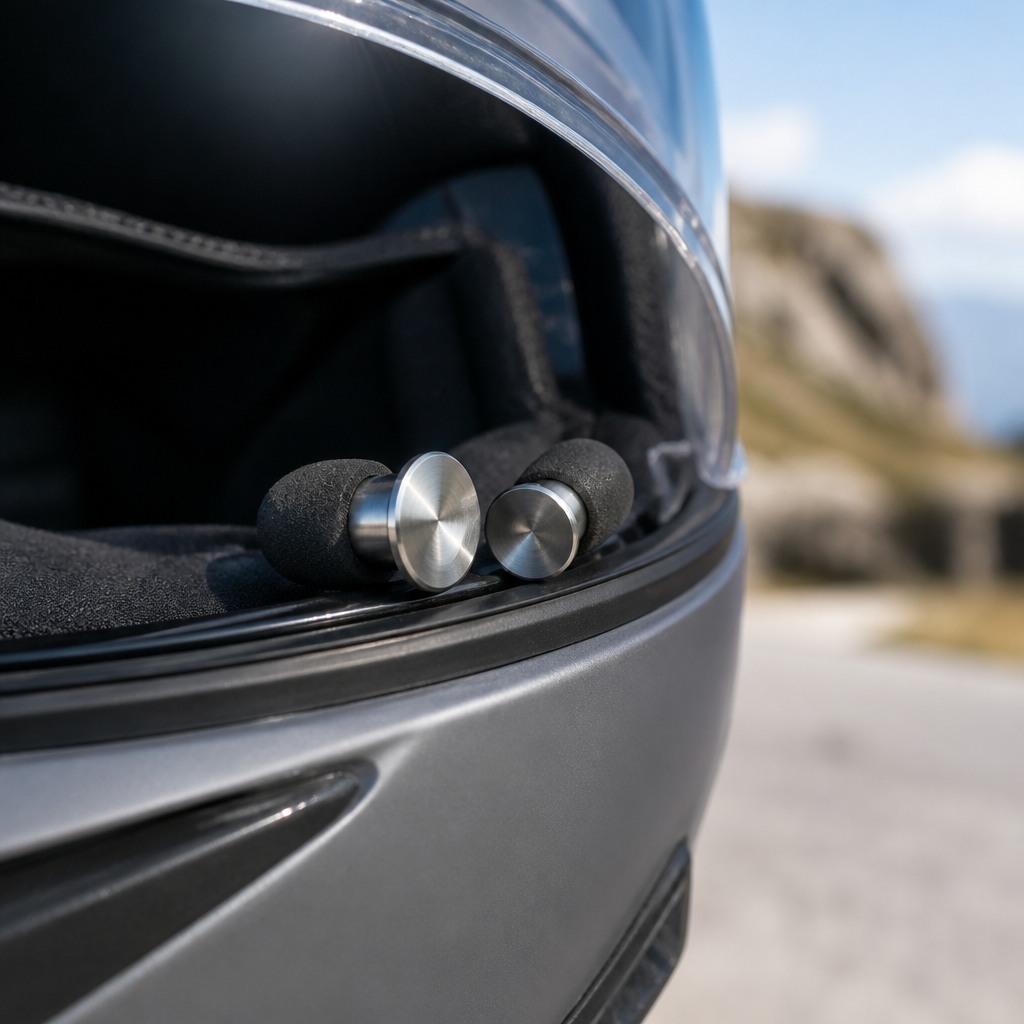
The noise is mostly low frequency and broadband, meaning it fills a wide band of pitches at once. That matters because it masks the mid and high frequencies you rely on to pick out a horn, a siren, or a car’s tyres on the road. Your brain works harder to filter the roar, and many riders finish a ride tired without quite knowing why.
Engine noise gets blamed for most ringing, but at highway speeds wind is often the louder source at your ears. In practice, the sound level at your head climbs with speed, so a rider cruising for three hours takes in far more total sound than someone doing short, stop-start trips. Speed and time are the two variables to watch, not just how loud the exhaust sounds.
Open-face and half helmets let turbulence reach the ear more directly, while full-face helmets reduce it but still leave gaps around the chin bar, visor seal, and neck roll. A helmet is not a hearing device. Even a well-fitting one leaves a noise floor that a plug has to reduce, and the plug can only work with the gaps it is given.
A common mistake is assuming a quiet helmet means you do not need plugs. Many riders who own a quieter helmet still report a steady roar at speed, especially on touring routes with long sustained cruising.
Noise-induced hearing loss does not arrive as one bad day. It develops through repeated exposure that damages the tiny hair cells in the inner ear, and those cells do not repair themselves. The most common mistake is treating your hearing as fine until you notice a problem, by which point some of the loss may already be permanent.
Ringing and muffled hearing after a ride are warning signs. If your ears feel full or sounds seem dull for hours afterwards, treat that as your body telling you the dose was too high for that day. Waiting to see if it passes is the habit that causes long-term trouble.
A single long ride rarely causes lasting harm for most people, but a riding season adds up. Riders who spend most weekends on the road and commute daily can accumulate many hours of exposure each week, often without a break. The risk is the total over months, not one trip, which is why the habit of wearing plugs matters more than wearing them occasionally.
Many riders describe a high whine or hiss that fades by the next morning. That fade does not mean nothing happened. Repeated episodes can leave a version of the same sound that does not go away. If ringing lingers beyond a day or two, book a check with a doctor or audiologist rather than waiting for it to clear.
Pro tip: Plan plug use around time at speed, not mileage. A three-hour highway run is a bigger noise dose than a longer trip on slow, twisty roads, so put plugs in before you hit sustained speed.
Hearing protection is a safety tool only if you can still hear the road. Most of the sounds that matter on a bike are not loud, they are sharp and short: a car horn, a siren approaching from behind, a truck’s air brakes, or a tyre squeal at an intersection. A plug that cuts those sounds to nothing is a hazard in its own right.
The goal is even reduction, not silence. A good plug lowers the whole soundscape so the roar drops while the horn still stands out clearly against it.
If you cannot hear the car you are trying to avoid, your plugs are working against you. The right pair lowers the roar and leaves the warning sounds intact.
Riders rely on sound to know a car is changing lanes before the mirror shows it. Test plugs in a quiet car park with a helper sounding a horn at different distances and angles. If you cannot place the direction of the horn, the plugs are too closed for road use, and you should try a smaller tip or a different design.
Your bike has a normal sound, and a change in that sound can be an early warning of a fault. Riders who lose their sense of the engine note often miss the first signs of trouble. Keep your plugs for the parts of the ride where you need them, and check your engine note on a short, plug-free run at the start of each season.
Ear plugs for motorcyclists need to do two jobs at once. They must seal the canal well enough to cut wind roar, and they must stay put while you put on and take off a helmet, turn your head to check a mirror, and ride for hours. Many general-purpose plugs fail at least one of these tests.

Helmet pressure is the first thing that tests any plug. A snug helmet presses the plug inward, and a loose chin strap or a tilted head can push it back out. Pick a design you can seat firmly and check after you clip the strap, not before.
Fit matters more than spec sheets. A plug that is too shallow will be pushed out by helmet pressure or chafed by the strap. Insert it so the tip sits deep in the canal and the body rests just outside. ATTENU8 uses a concave aluminium body with three soft memory foam tip sizes (XS, S, and M), so the seal depends on choosing the right tip for your canal.
Riders often pick the largest tip for maximum block, then find it uncomfortable after an hour. An undersized tip leaks wind noise, and an oversized one aches around the canal. Try each size with your helmet on, ride a short loop, and choose the smallest tip that still gives you a clean seal at speed.
Helmet liners compress as they age, and a tighter fit can push a plug forward over time. If a plug works in the shop but loosens after a few miles, check whether the helmet padding has changed. Wearing plugs in a hot, sweaty helmet also softens the foam and changes how the plug sits, so re-check the seal on long rides.
Riders usually choose between three approaches. Each has a place, but the trade-offs are different on a bike than they are on a job site or in a bedroom.
| Approach | How It Performs on a Bike | Main Drawback |
|---|---|---|
| Disposable foam plugs | Cheap and easy to carry in a jacket pocket, with a good seal when pushed in deep. | They compress, loosen under helmet pressure, and need frequent replacement, so many riders end up without them. |
| Reusable metal-bodied plugs with interchangeable memory foam tips | A stable fit once seated, with three tip sizes to match different canals. Only the tips need replacing every 6-8 weeks. | Higher upfront cost, and you still need the correct tip size and a careful insertion. |
| Custom-molded plugs | A precise fit to your ear canal, giving a consistent seal from ride to ride. | They require an appointment and an impression, and they may need refitting if your ear shape changes. |
For riders who cover real distance and want the same seal every time, a reusable design wins on cost per ride over a season. Disposables are fine for an occasional trip, but they are the ones most often left in a pocket and forgotten. Custom molds make sense if you have already found that off-the-shelf sizes never seal properly for you.
Good plugs fail quickly when they are poorly maintained. Earwax, skin oils, and sweat break down foam, and grit from road spray can wear down the seal. A simple routine keeps the seal working and your hearing protected for the whole riding season.
Pull the top of your ear up and back to straighten the canal, then push the plug in with a slight twist until it sits snugly. Hold it for a few seconds while the foam expands. If wind still whistles at speed, the plug is either the wrong size or not seated far enough, so push it in a little further before you change tips.
Wipe the metal body with a dry cloth after each ride, and remove any wax or dirt from the body before the next insertion. Store plugs in a dry case rather than loose in a pocket with keys and tools. Dirty plugs cause irritation and reduce the seal, which can make you push them in harder than you should.
The foam tips are the part that wears out. For riders using plugs several times a week, replace tips every 6-8 weeks, and sooner if they look discoloured, feel hard, or no longer expand after a gentle squeeze. The metal body is the long-term investment, so you only swap the component that is worn out.
Pro tip: Keep a spare set of tips in your tank bag or jacket. A lost or torn tip in the middle of a ride is an easy way to end up riding unprotected.
Ear plugs are not a complete answer to wind noise. They reduce what reaches the ear canal, but they do nothing about the buffeting that pushes your helmet, the thud of wind on the chin bar, or the pressure changes that come with a poorly ventilated lid. A helmet that is badly vented or ill-fitting can produce more noise than plugs can realistically cancel.
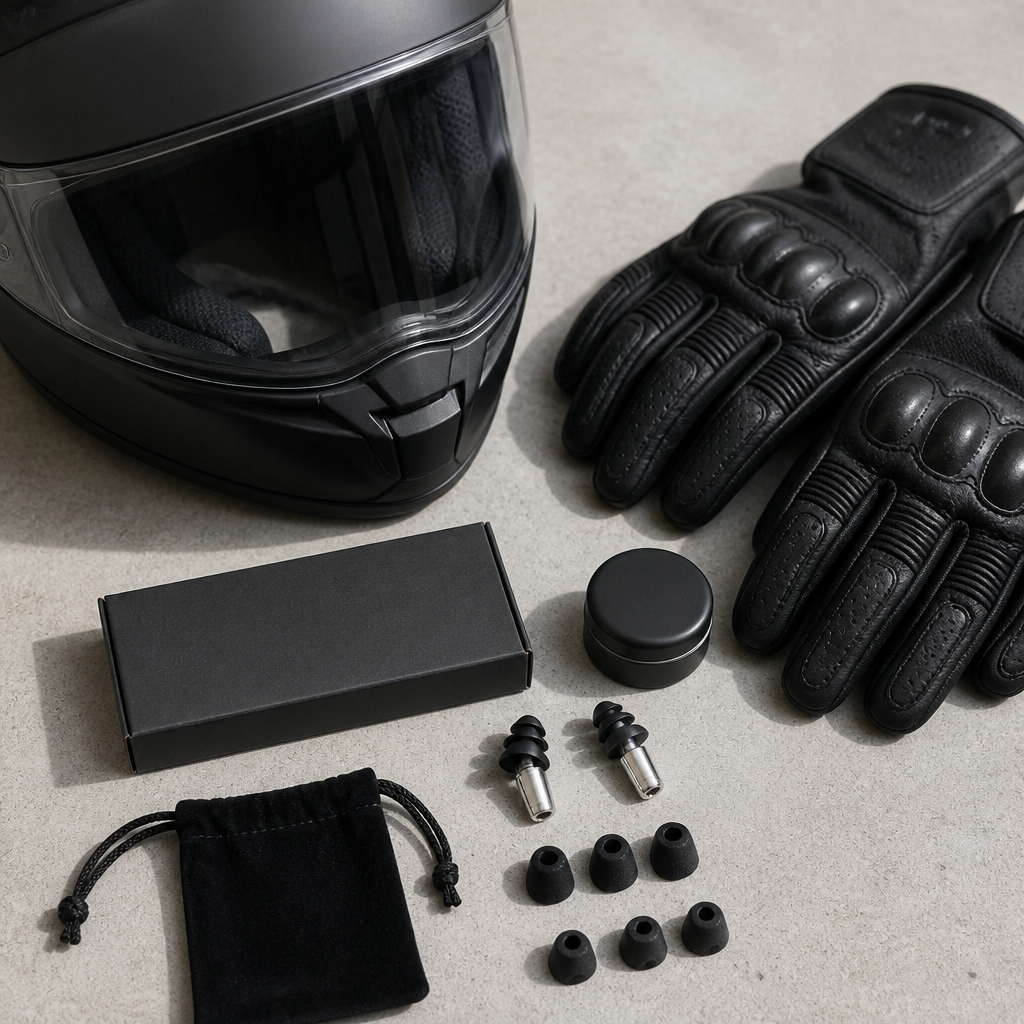
Plugs also cannot fix a poor riding position. Sitting upright with your head fully exposed to the airstream increases noise at the source, so the same plug will work less well than it does in a tucked, sheltered posture. Position, helmet, and plug all have to be considered together.
A taller screen or a better-sealed helmet cuts noise at the source and lets your plugs focus on what gets through. Compare helmets in person where you can, with the screen in each position you actually ride. Your plugs will perform better in a helmet that already limits turbulence.
Cold weather can make foam tips stiffer and slower to expand, and rain or sweat can loosen the seal. Carry a dry pair for wet rides, and check the fit at each stop rather than assuming it has held since the start of the day.
Yes, when they are chosen for riding and fitted correctly. The aim is to lower wind roar while keeping horns, sirens, and traffic audible. Plugs that block everything are the unsafe choice.
You can, but disposable foam often loosens under helmet pressure and with sweat. If you use them, check the seal at each stop and carry spares for longer rides.
Test them in a quiet, low-traffic spot with someone sounding a horn at different distances and angles. If you can tell the direction and rough distance, they are usable. If you have to remove them to hear your bike or the road, they are too restrictive.
No. They reduce what reaches the ear canal, but helmet design, visor shape, and riding position still affect the noise you hear. Plugs work best as one part of a setup that includes a well-fitting helmet.
For regular riders, replace foam tips every 6-8 weeks. Replace them sooner if they look discoloured, feel hard, or no longer recover their shape after you squeeze them.
Yes, if ringing or muffled hearing lasts more than a day or two, or if it keeps coming back. A doctor or audiologist can check your hearing and advise on next steps.
What has your experience been with ear plugs on the road, and did they change how much you could hear around you?

