


 0

Most people treat noise as an irritation, something that makes a night harder or a commute more tiring. The research on noise pollution and mental health points to a bigger problem. Long-term exposure to traffic, construction, neighbours, and crowded offices is linked with stress hormone changes, disrupted sleep, and the low-level tension that makes anxiety harder to switch off. If you are a light sleeper, work near heavy machinery, or feel drained after a loud shift, the sound around you may be doing more damage than you realise. This guide explains how that happens and what you can change this week.
| Key Insight | Explanation |
|---|---|
| Sleep is the main pathway | Noise can fragment sleep even when you do not wake up fully. Track how often you wake, not just how many hours you log. |
| Unpredictable sound hits harder | Irregular spikes such as door slams or footsteps keep your attention on watch. Steady sound is easier to ignore, so target the spikes first. |
| Use 85 dBA as a working line | NIOSH sets 85 dBA, averaged over an eight-hour day, as its recommended exposure limit. If you cannot hold a conversation at arm’s length over the noise, assume you need protection. |
| Hearing loss carries a mental cost | Hearing loss is associated with tinnitus, communication difficulty, and poor mental health. Protecting your hearing also protects your mood. |
| Schedule quiet recovery | Give yourself 20 quiet minutes after a loud shift or commute before you start on screens or other demands. |
| Replace foam tips on time | Worn or dirty foam tips fit poorly and let more sound through. For ATTENU8 tips, replace them every 6-8 weeks. |
| Judge changes by two weeks of notes | Log sleep quality and daytime tension for two weeks after each change. Keep what measurably helps and drop the rest. |
Your ears do not switch off when you fall asleep. The auditory system keeps processing sound overnight, and the brain keeps sorting it into harmless or possibly threatening. That is why noise affects mental health: it activates the same alarm circuits you rely on for real danger, even when nothing dangerous is happening.
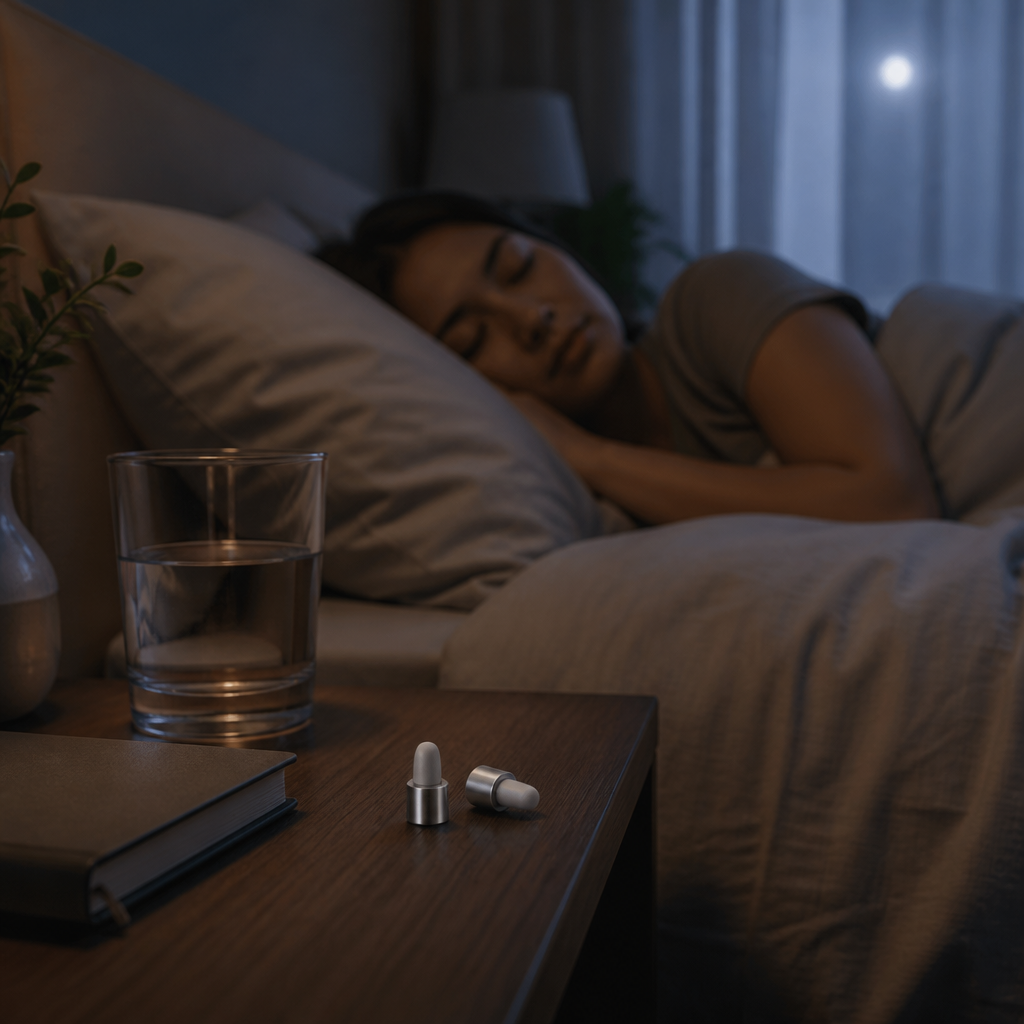
Research on chronic exposure points the same way. A UCLA Health overview of noise pollution lists effects on stress hormones, heart disease risk, and mental health problems among the consequences of long-term exposure. The damage is cumulative. It comes from repeated activation over months and years, not from one bad night.
Sleep is where noise does its most measurable everyday damage. One study summarised in a systematic review of urban noise and psychological distress found that sleep quality dropped sharply under noise exposure, falling from 5.8 to 3.7 on the scale the researchers used. A tired brain reads ambiguous sounds and small problems as threats more readily, so poor sleep feeds anxiety the following day.
In practice, the nighttime wake-ups people describe are rarely dramatic. The cause is often a delivery van reversing, a neighbour’s door, or a pipe that knocks when the heating kicks in. The sound may be too quiet to wake you fully, but it still triggers a brief arousal, and by morning you remember only feeling unrested.
Noise that does not wake you can still change the quality of your sleep. Lighter stages of sleep become more common, and the body does not get the deep recovery it needs. That is why people who sleep eight hours in a noisy flat can still feel exhausted, irritable, and short on patience.
Noise rarely feels dangerous while it is happening. Its cost shows up later as a shorter fuse, worse sleep, and a baseline of tension you stop noticing.
Anxiety responds to noise differently than annoyance does. A steady fan or distant motorway is easy to filter out after a few nights. Irregular sounds, like a car alarm, a slamming door, or footsteps on the floor above, keep part of your attention on watch, and that watchfulness drives much of the noise-related anxiety people describe.
Many people who are sensitive to noise describe a loop. A disturbed night makes them more alert the next evening, and that alertness makes them notice every creak and voice in the hallway. Over several weeks, the bedroom stops feeling like a place to rest and starts feeling like a place to wait.
A common mistake is to treat this as a personality issue. It is usually a learned response, and learned responses can be changed by altering what the brain experiences at night. Reducing the number of unexpected spikes that reach your ears is the first practical step.
White noise machines are often recommended as a cure-all. They work well for steady background sound because they mask it, but they do little for a sudden bang. A common mistake is to turn the machine up to cover everything, which adds its own load across a full night.
Pro tip: Set masking sound just loud enough to cover the steady hum, then deal with the spikes using a physical barrier. Turning the masker up to cover a door slam only trains you to expect the next one.
Some people start to brace before they even lie down, checking whether the neighbours are home or whether the building is quiet. Anticipation keeps the nervous system active, so the noise does not have to be happening to cause tension. A predictable routine, such as the same earplug fit and the same wind-down time, gives the brain a stable signal that the night is under control.
Burnout is usually described as exhaustion that builds over time, with withdrawal and a sense that effort no longer matters. Noise can add to that load quietly. People on construction sites, factory floors, and military training grounds often spend whole shifts in sound that wears down both hearing and concentration.
The NIOSH guidance is clear on the basics. Noise is considered hazardous when it reaches 85 dBA or higher, and the recommended exposure limit is 85 dBA averaged over an eight-hour workday. Workers exposed at or above that level are at risk of significant hearing loss over a working lifetime.

Occupational hearing loss is permanent, but NIOSH notes that it can nearly always be prevented. The health links matter for mental health too. NIOSH associates hearing loss with communication difficulties, tinnitus, heart problems, cognitive decline, and poor mental health. Struggling to follow conversations can push people to withdraw from colleagues and family, which can deepen isolation and low mood.
The burnout pattern shows up when the body never gets a real break. A worker leaves a ten-hour shift with ringing ears, drives home through traffic, and sits down to a television that is still loud. The nervous system has been on alert all day, and it does not come down just because the machinery has stopped.
In practice, the workers who recover best build a short, deliberate quiet period into the end of the shift and the start of the evening. They do not need hours of silence. They need one clear stretch where the sound level drops and the input slows down. A common mistake is to fill that gap with more stimulation, such as loud music or a crowded gym, which keeps the stress system running.
No single tool fixes noise pollution, but the options differ sharply in how well they suit sleep, travel, and loud work. The table below compares three common approaches. ATTENU8 quotes approximately 32dB of noise reduction for its reusable metal-bodied design, which is a useful benchmark when you compare options.
| Approach | Best for | Where it falls short |
|---|---|---|
| Disposable foam earplugs | Occasional use, emergencies, and travel kits | Often used once and thrown away, so costs add up with frequent use. Fit varies between wearers. |
| Reusable metal-bodied earplugs with foam tips (ATTENU8) | Nightly sleep, commuting, and regular noisy work | Higher upfront cost. Foam tips need replacing every 6-8 weeks, and fit depends on choosing the right size from XS, S, or M. |
| Environmental controls (window seals, rugs, masking sound) | Steady or structural noise from neighbours, traffic, or building systems | Slower to set up and often costly in rented homes. Little effect on sudden spikes on their own. |
The most effective approach usually combines two of these. Use a barrier for the spikes and environmental changes for the steady background. Relying on one method alone tends to leave a gap that your nervous system keeps noticing.
Start with the sound that hits you most often, not the loudest sound you can imagine. For most light sleepers that is a single repeating source, such as traffic outside or a flat above. Map it for one week by noting times and triggers. That map usually reveals a pattern you can act on.
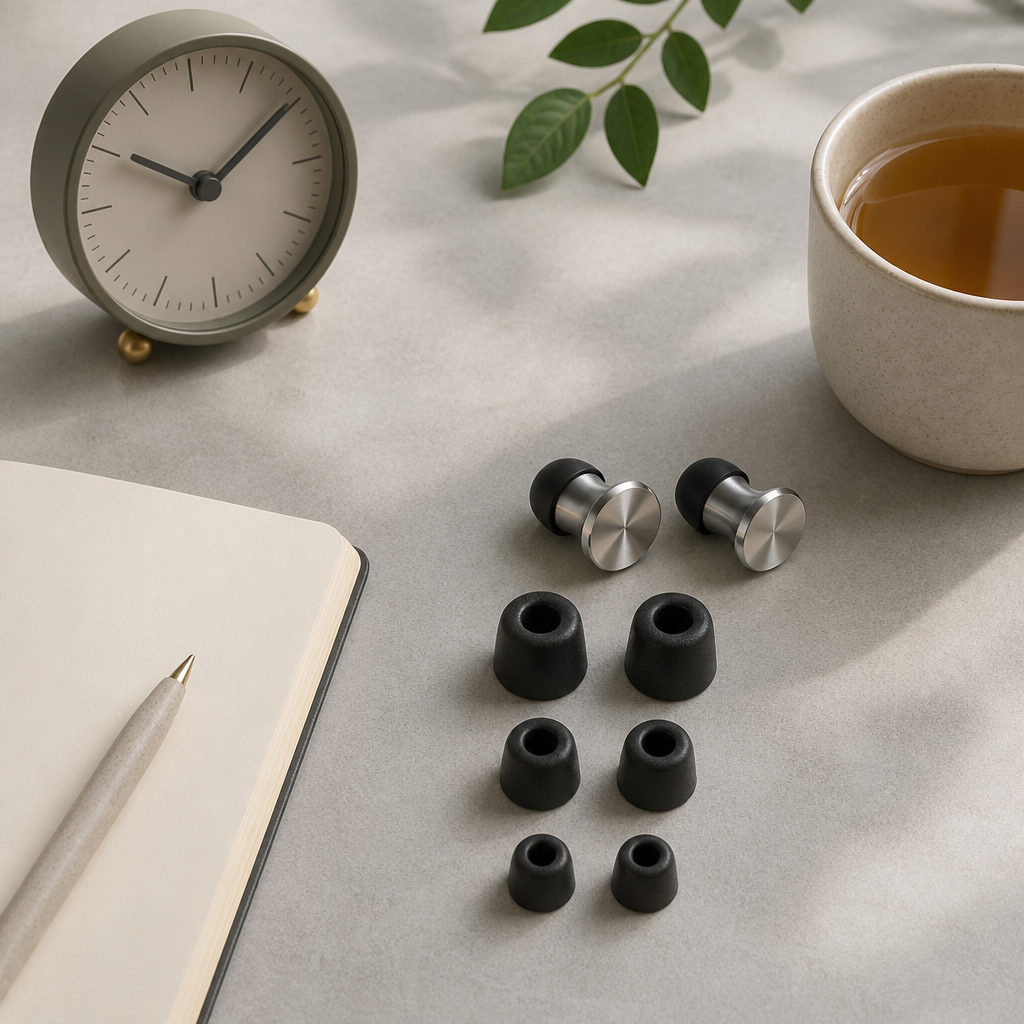
Comfort decides whether you keep earplugs in. Tips that feel tight after an hour become the reason people stop wearing them. Try the three sizes before committing, check the fit by lying on your side, and keep a spare set in your bag so you are not caught without them.
Pro tip: Insert plugs with a gentle twist and hold for a few seconds while the foam expands. If sound still leaks in around one side, the tip is the wrong size or has worn down, not the design.
Move the bed away from shared walls, close the door, and use heavy curtains on street-facing windows. These changes are cheap and reduce what reaches your ears before any protection is needed. Pair them with a fixed wind-down that starts 30 minutes before sleep, so the brain learns when the quiet period begins.
After a loud shift or a noisy commute, take 20 minutes with low sound and no demands. Read, walk without headphones, or sit in a quieter room. Write down how you feel afterward. Over two weeks, the pattern tends to show whether the window helps your mood and tension levels.
Pro tip: Treat the quiet window as part of the workday, not a reward for finishing it. Most people skip it on the busiest days, which is exactly when it matters most.
Noise is not the only cause of anxiety, but long-term exposure is linked with stress hormone changes and mental health problems. For many people, sleep loss from noise makes anxiety worse the next day, which is why sleep is often the most practical place to start.
Noise burnout is a practical term for exhaustion that builds when someone is repeatedly exposed to loud conditions without enough quiet recovery. It is not a formal diagnosis. If you feel persistently drained, irritable, or unable to switch off, talk with a doctor.
NIOSH identifies 85 dBA as the hazardous level, with a recommended exposure limit of 85 dBA averaged over an eight-hour workday. If you have to raise your voice to be heard by someone an arm’s length away, the environment is likely loud enough to justify protection.
Earplugs reduce the sound that reaches your ears, which lowers the number of spikes your brain has to process. They do not remove the source or break the habit of bracing for noise, so pair them with a consistent bedtime routine and, where possible, changes to the room itself.
For ATTENU8 tips, replace the foam every 6-8 weeks. Replace them sooner if they feel hard, collect dirt, or stop sealing well against the ear canal.
See a GP or audiologist if you notice persistent ringing, muffled hearing, or ongoing anxiety and sleep problems. Hearing changes are easier to manage when they are caught early.
Tell us which noise source affects your sleep or focus the most, and which change, if any, has made a real difference for you.
We would love your feedback and any insights you would share with others. What perspective would you add?

